… domes of foliage from which burst forth
a polyphony of lemons and oranges
and the ephemeral veil of a foam,
of a sea powder that no human foot
has ever touched or seems about to, but unfortunately
the train accelerates ...
Towards Tellaro by Eugenio Montale
There are about 350 members in the federation of the Borghi Piu Belli d’Italia (Italy’s most beautiful villages), but how many of them can claim that a poem has been dedicated to them by a Nobel-Prize- winning author?
Tellaro may very well be the only one.
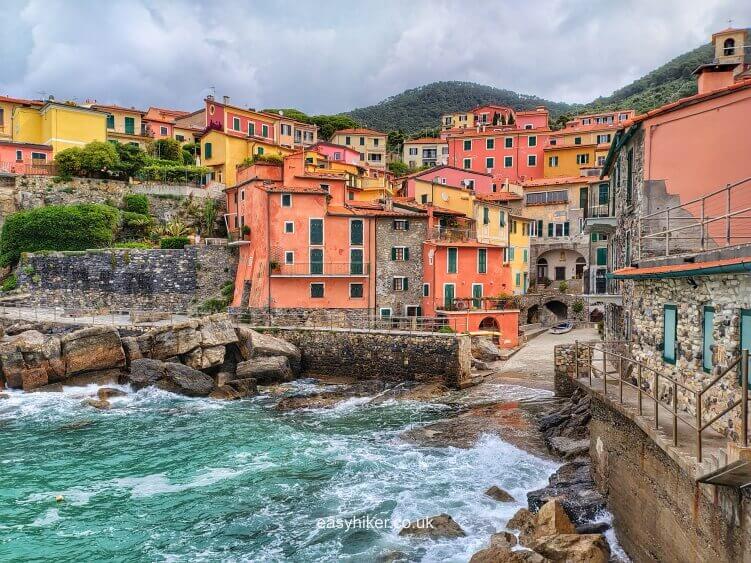
The poem, admittedly, does not tell you much about Tellaro. It is, in fact, less about Tellaro than it is about seeing it briefly from the window of a train, and on a deeper level about the common human wish to freeze an image so it cannot disappear forever before we have fully understood its meaning.
The title of the poem implies a journey rather than an arrival – leaving us just about enough wiggle room to understand it also as a call for further exploration, for searching out what is there to discover beyond ephemeral veils of foam and sea powder:
Towards Tellaro!
Towards Tellaro is a short poem, just six lines between the dots at the beginning and the end, but you might say that its size fits Tellaro well: the village, located on the Gulf of Poets a few kilometres south of Lerici, is equally compact.
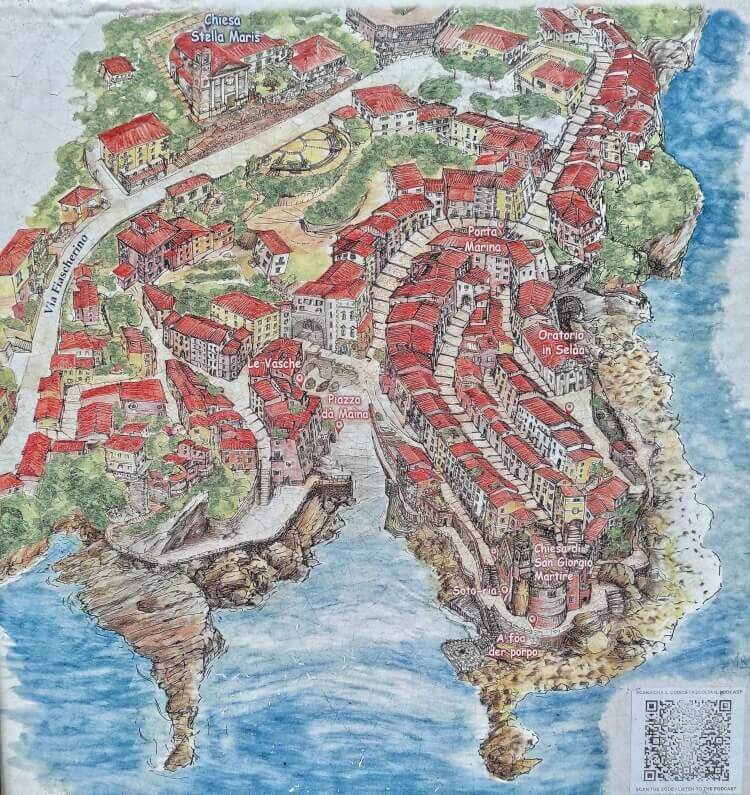
You can walk towards Tellaro from Lerici and return before lunch – more about that in a moment – but a walk through the village will take you a little more than a single hour. An hour, however, that is well spent, because there are quite a few interesting things to see.
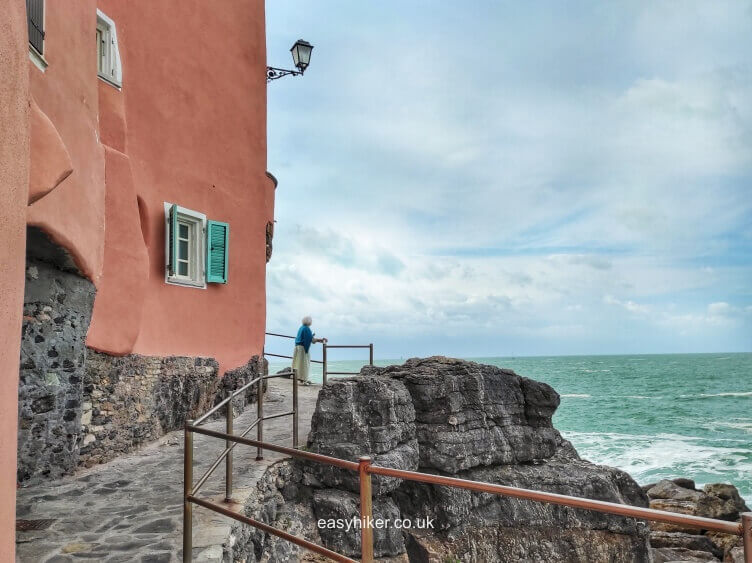
Above all, Tellaro is not only different from Lerici but from virtually any coastal town in Liguria. Nearly all of these towns are holiday resorts today, and many can look back on a tradition of providing hospitality (hosting visitors for a living) that goes back nearly 200 years.
These towns are friendly, open and live in joyous harmony with the ocean in front of their doorsteps: unsurprisingly, one might add, since this sea has brought them wealth and prosperity over the past two centuries.
Tellaro, by contrast, appears to have barricaded itself against its maritime environment and all the bad things that can come from there: high winds and strong waves, invaders, pirates – the monsters of the sea.
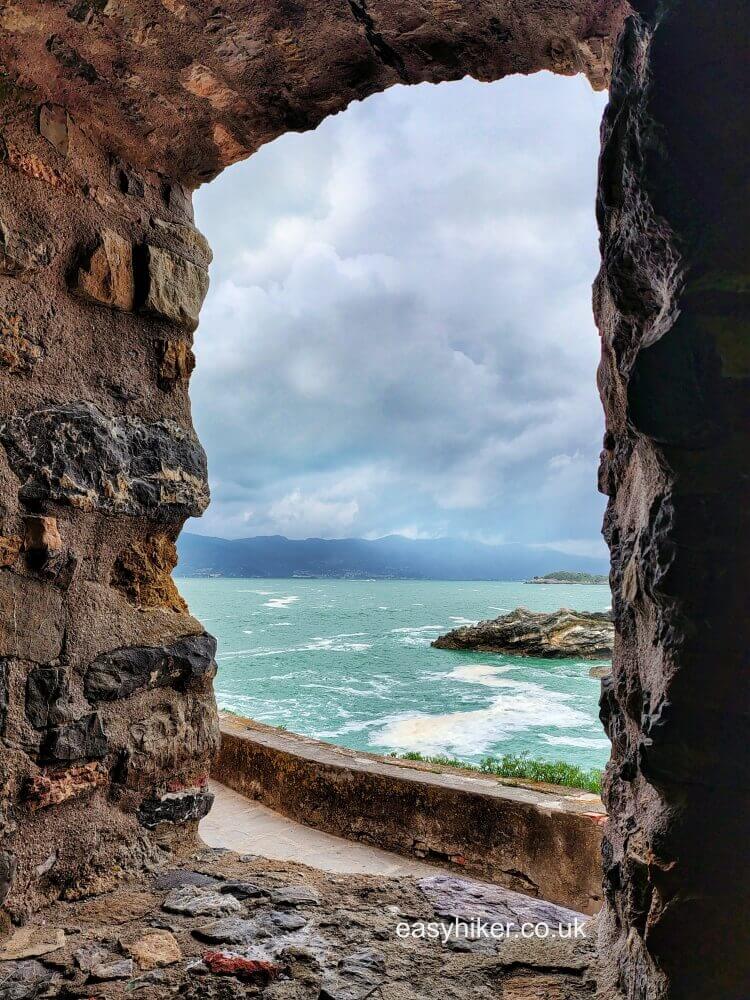
Even the town centre church, built on top of a protruding rock, looks like a fortress.
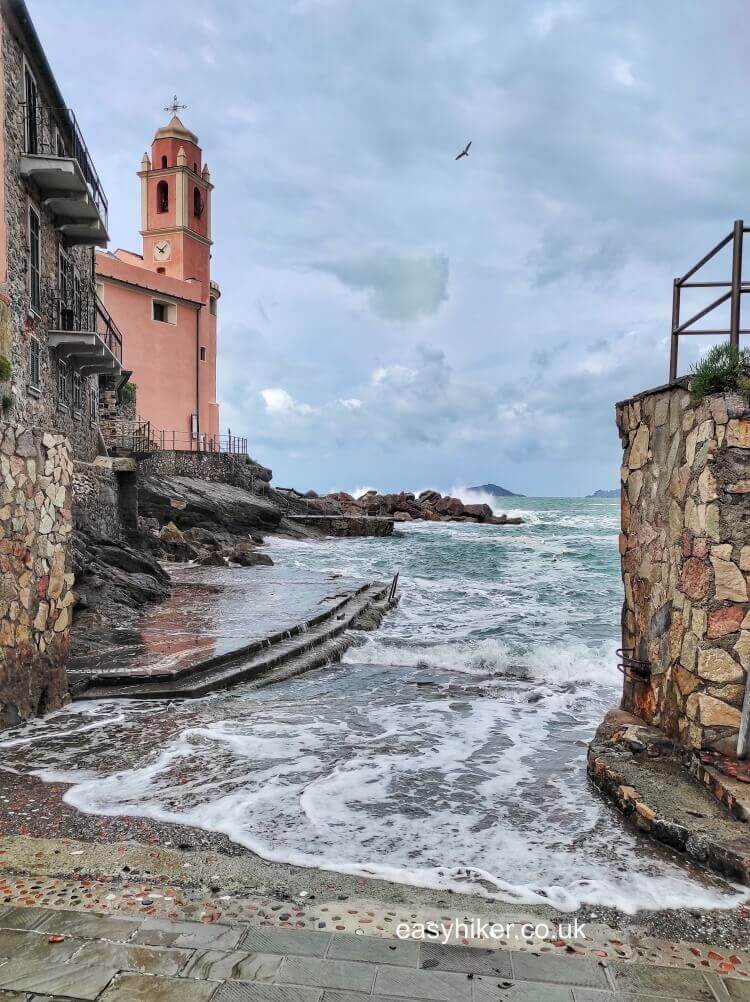
And indeed: the church tower was once integrated into a seawall fortification that was dominated by a square tower on the other end of the village (now demolished). The 70-metre-long So-Toria gallery, however, which once connected the two towers, still exists. It served both as a lookout and as a base for the defence of the village.
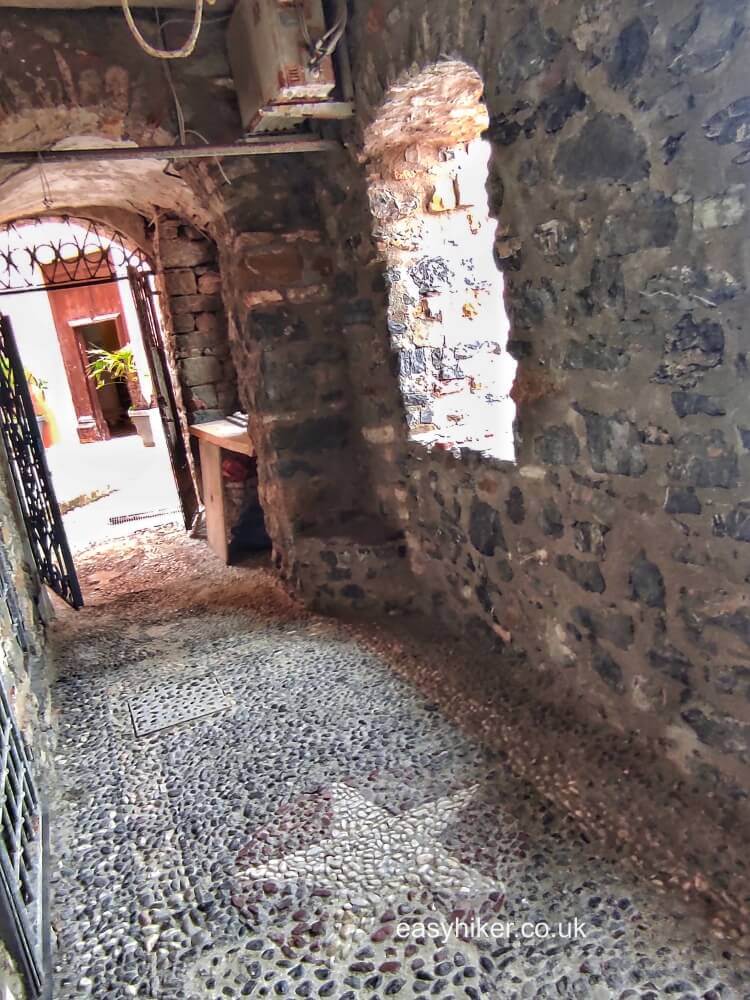
The residential homes of the village, meanwhile, look equally primed for battle, ready to defy any intruder with a tightly packed defensive phalanx.
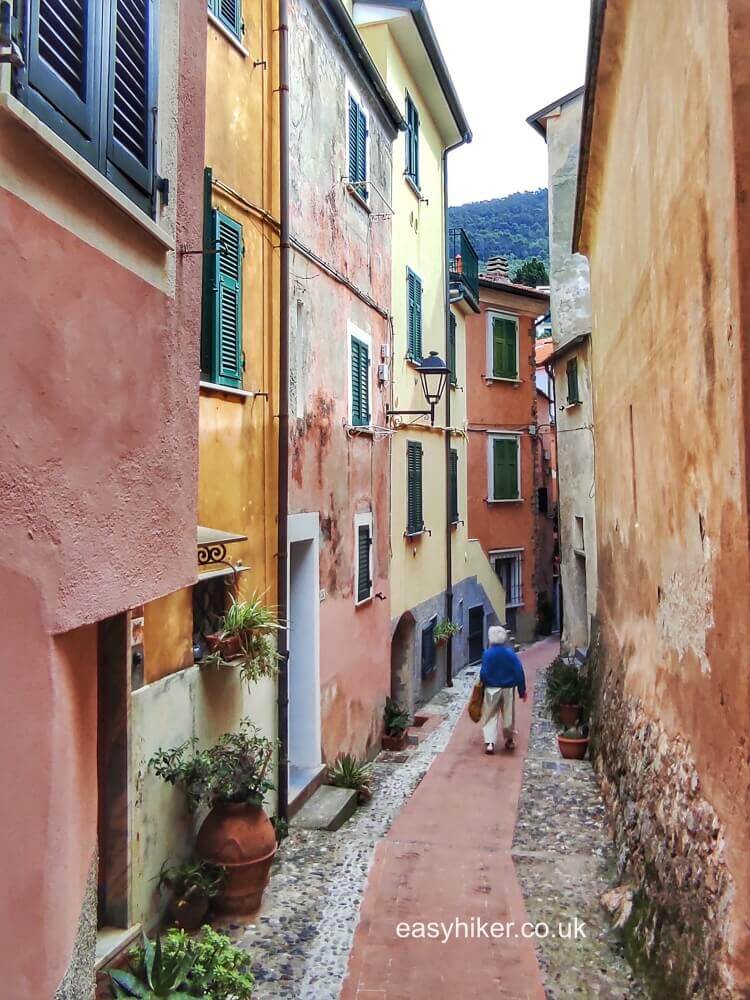
In some places, the streets are so narrow that you can touch either side without stretching your arms.
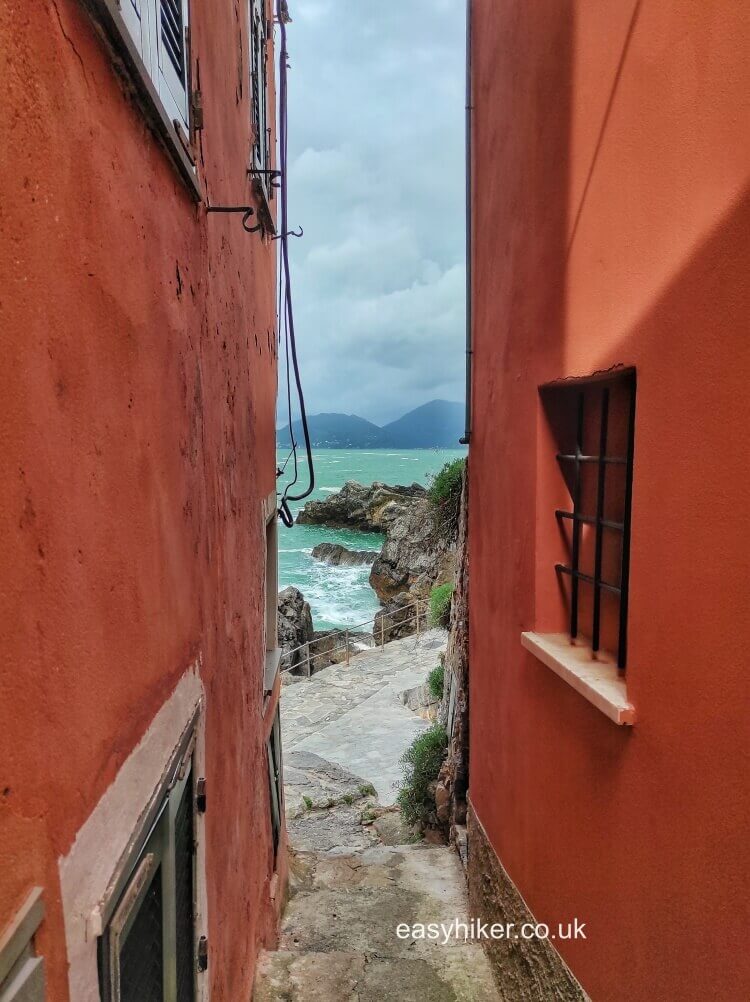
For a small and historically not very prosperous town, Tellaro is still surprisingly rich in buildings that speak of the citizens’ grim determination to defend the little they have.
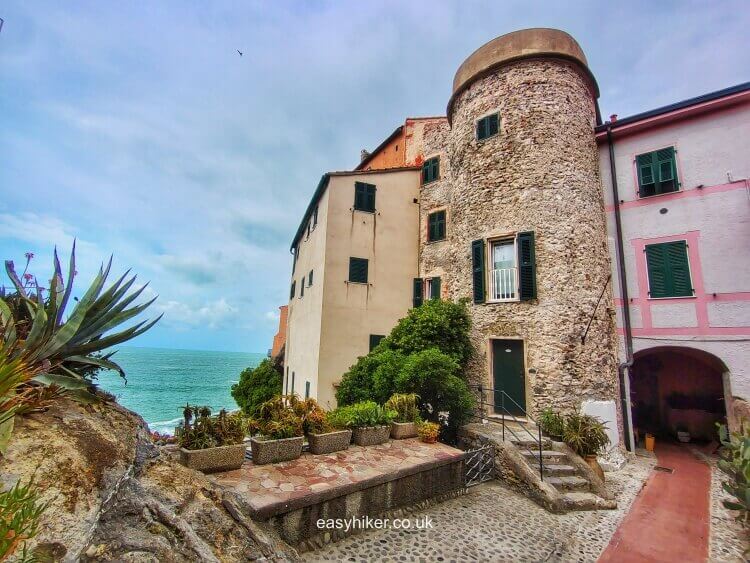
The overall effect can be a trifle intimidating …
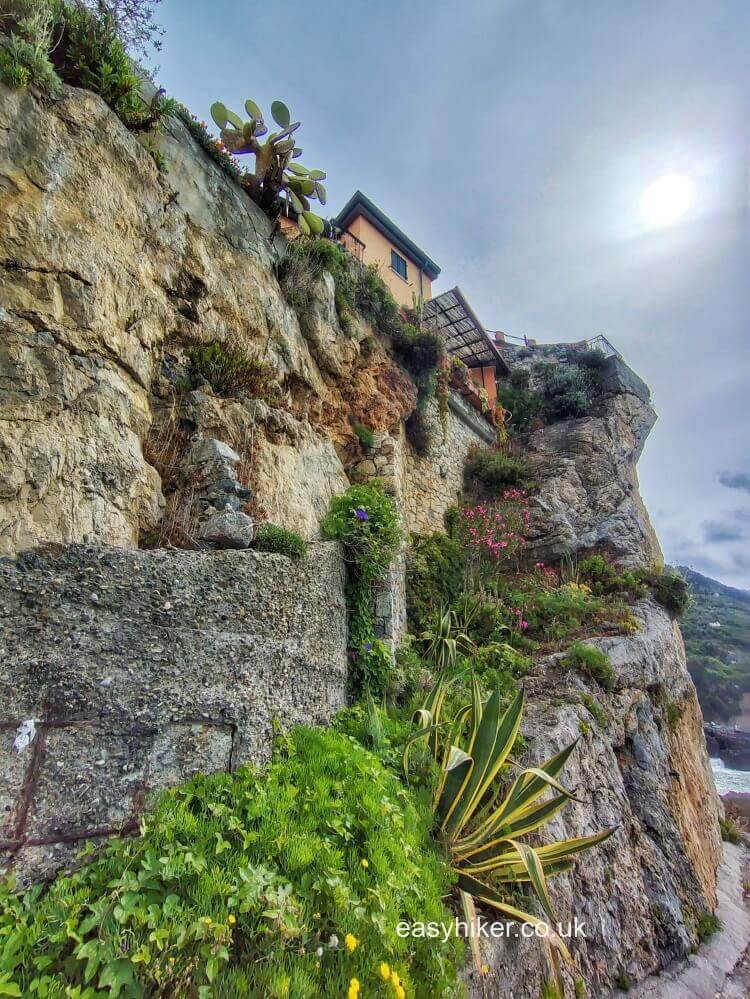
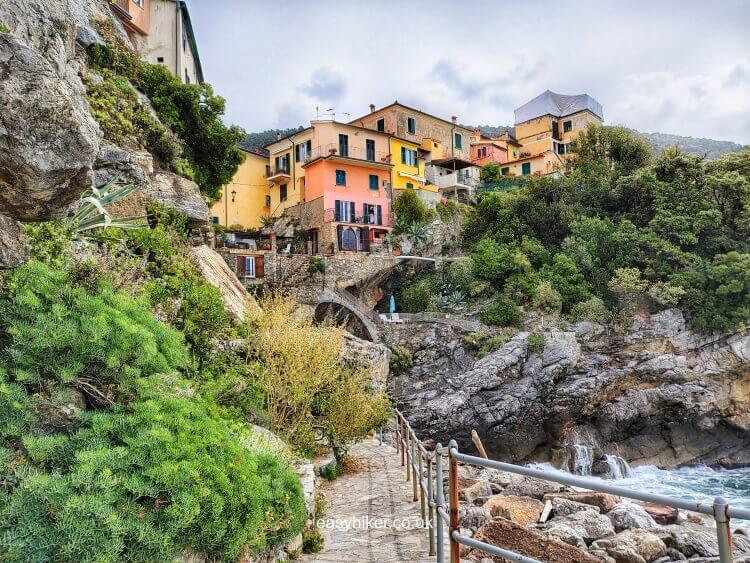
… but Tellaro, though small, leaves enough room for the picturesque.
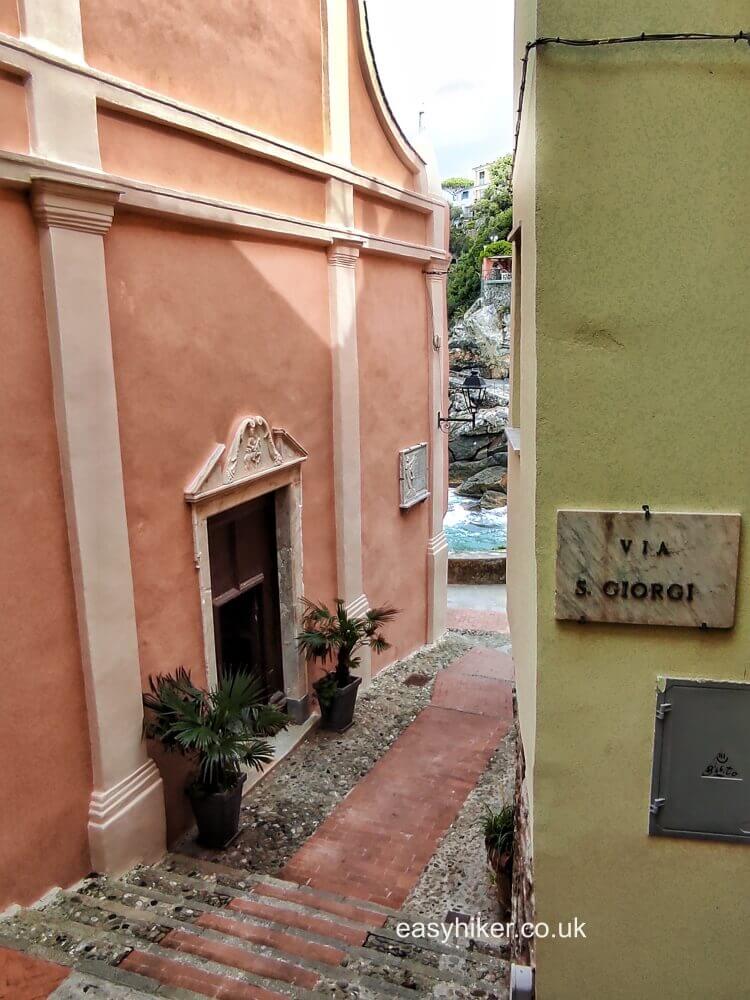
It also never lets you forget that you are in Italy …
… and, of course, near the open sea.
Views of the big sky and the Gulf (you can look across to Portovenere and the island of Palmaria to its left) are an excellent remedy against any attack of claustrophobia from which a visitor may suffer.
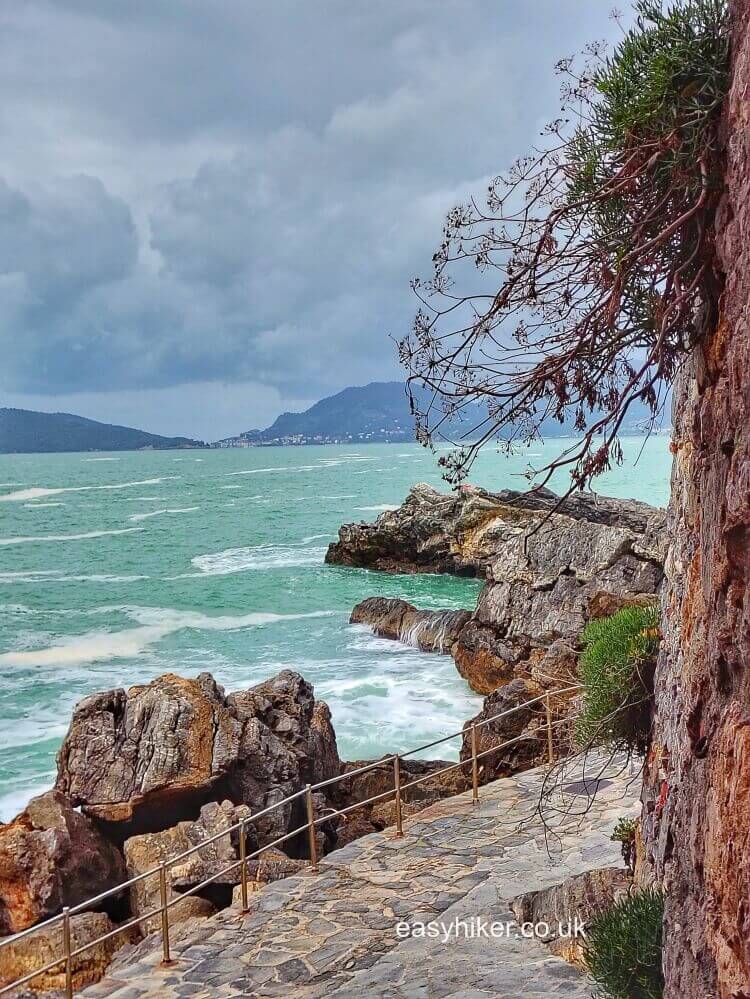
The poetry, in other words, is not only in Montale’s short vignette: you can also find it in the streets of Tellaro.
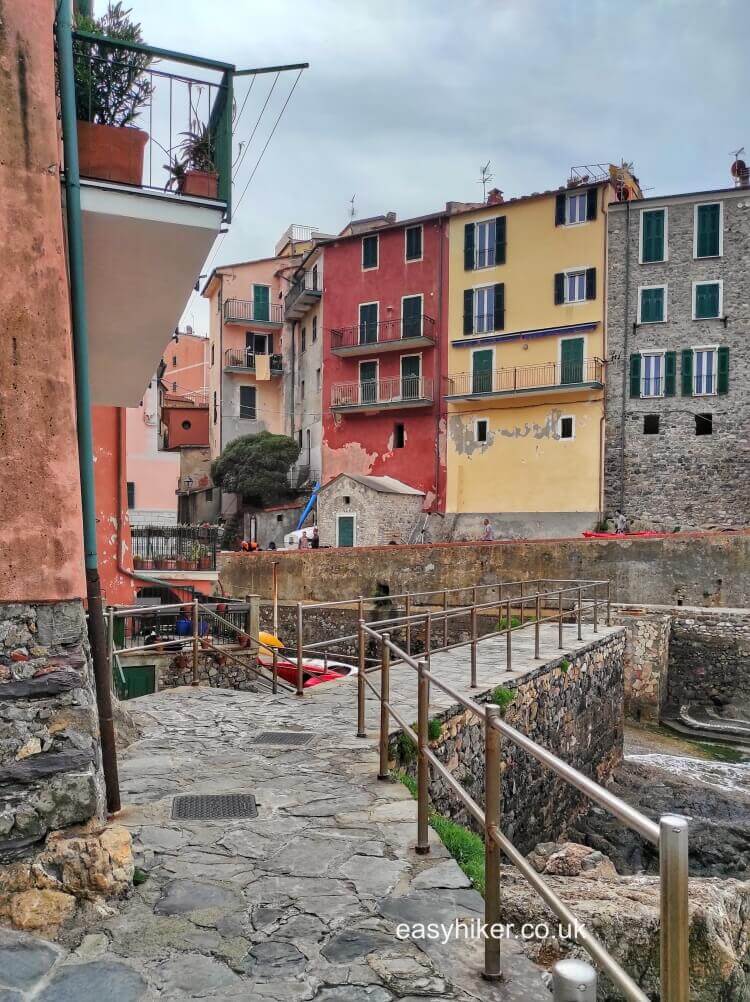
Come to think of it: this section of the Mediterranean may be known as the Gulf of Poets, but surprisingly little poetry has been written about it, considering how many big beasts of literature spent some time there.
During his time in Lerici, Shelley wrote more poems dedicated to Jane Williams, part of his coterie of friends at the Villa Magni (as was her husband), than about the nature in front of their door – and even the one poem he did write about the Gulf, Lines Written in the Bay of Lerici, is essentially about Shelley’s infatuation with his lady friend and housemate. (The atmosphere in the Villa Magni is usually described as somewhat tense.)
Other literary visitors were similarly uninspired. Byron, a frequent visitor of the area who also loved to swim in the Gulf’s waters, failed to write a single line about his experiences.
Mary Shelley, a celebrated writer in her own right (she was the author of Frankenstein), had this to say: “To see the sun setting on this scene, the shining stars, the moon rising was a sight of marvellous beauty”.
Virginia Woolf described San Terenzo as “a windy little town, of high pink & yellow Southern houses”. Maybe she was on to something when she added: “That kind of perfection no longer makes me feel for my pen – it’s too easy.”
Even Eugenio Montale, winner of the Nobel Prize for literature in 1975, seems to have skipped the Bay of Lerici. Montale spent every childhood summer in his parents’ summer residence at Monterosso, one of the Cinque Terre on the far side of the Portovenere promontory. Of all the places on the Gulf of Poets, meanwhile, he only ever name-checks two: Portovenere – and Tellaro.
Which, for all we know, he may have only seen from a distant train – or a boat, more likely, since there has never been a railway line near the village. (I guess you have to file that away under poetic licence.)
But enough poetry for the day, and we shall finish today’s post with some prosaic advice of how best to travel to Tellaro. The easiest option is to take one of the hourly buses from Lerici. (The stop is located opposite the big church at Piazza Garibaldi in Lerici’s town centre.)
If you want to walk to Tellaro, you have the choice between two routes. The shorter trail (2.8 km long) takes you up and down an asphalted country road that never strays too far away from the coast.
This road is not overly busy but has long stretches without any kind of a sidewalk. On the plus side, however, it features good views of the coast and the sea. You will also pass through Fiascherino where D.H. Lawrence stayed for almost a year and where he wrote the first draft of Women in Love. (Having visited Tellaro, he called it “a pirate’s den of two hundred souls”.)
Alternatively, you can take a longer route through the back country and the hills above Lerici. (You will find more information on this route here.)
But for today’s trip – whatever the philosophers may say – it is the destination that counts, not the journey.
Towards Tellaro!