Morocco’s tourism industry ploughs a lone furrow. Alone among countries on the southern rim of the Mediterranean, Morocco has opened itself up to cultural tourism as opposed to resort tourism where visitors are carefully quarantined to prevent them from infecting the national soul.
The ox in front of Morocco’s tourism plough is the city of Marrakesh. Since the 1980s when it was a medium-sized provincial town with 400,000 inhabitants, it has developed into one of the world’s tourism hotspots and owns the only airport in the wider region that has been fully integrated into the air traffic network of Europe’s discount carriers.
Nowadays, Marrakesh counts 4 million visitors a year, roughly as many as mid-ranking major league destinations such as Budapest and Lisbon.
Marrakesh
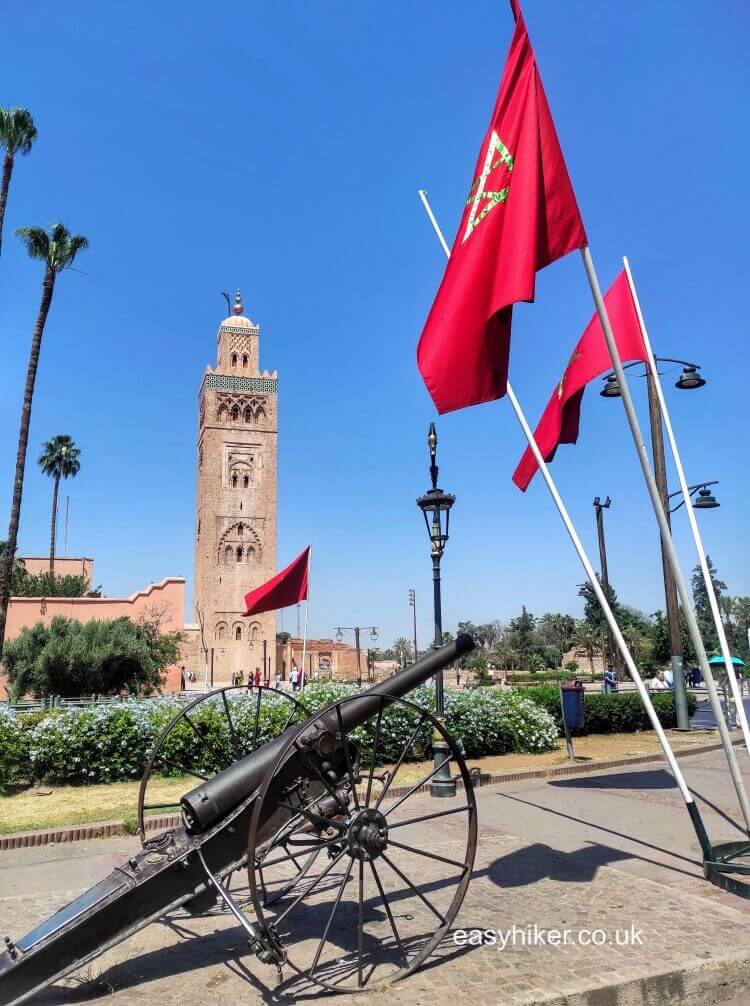
But while these cities must compete with essentially similar but more seasoned destinations in their neighbourhood, Marrakesh has established itself as an undisputed market leader. Its virtual monopoly on exoticism remains unchallenged – so far, that is: the project is young enough to still be considered as an experiment, one that is surely observed with great attention throughout the region and beyond.
Is it all worth it? That’s what these observers will want to know. What do the citizens of the city and the wider country get out of it: does all the money that comes in from abroad trickle down to create wide-spread prosperity? Or do the folks who serve the tourism industry merely exchange rural poverty for its urban variety?
Until conclusive answers have been found, the citizens of Marrakesh will continue to carry the burden of the pioneer: the Dark Man’s Burden, as Rudyard Kipling might say.
And a heavy burden it is, one that strains not just the local people but also the country’s infrastructure. There is little in terms of public transport, either urban or regional, and preciously few options exist of just setting out on your own to explore the region. The restaurant scene could equally benefit from an increase in variety. (You like Tajine? Good. You have come to the right place.)
Shopping in Marrakesh, meanwhile, is a stressful experience. Many shops do not mark their goods with price tags. No matter how far you can negotiate them down from their obviously absurd opening gambits, you always leave with the feeling that you have vastly overpaid. (Probably, you are right.)
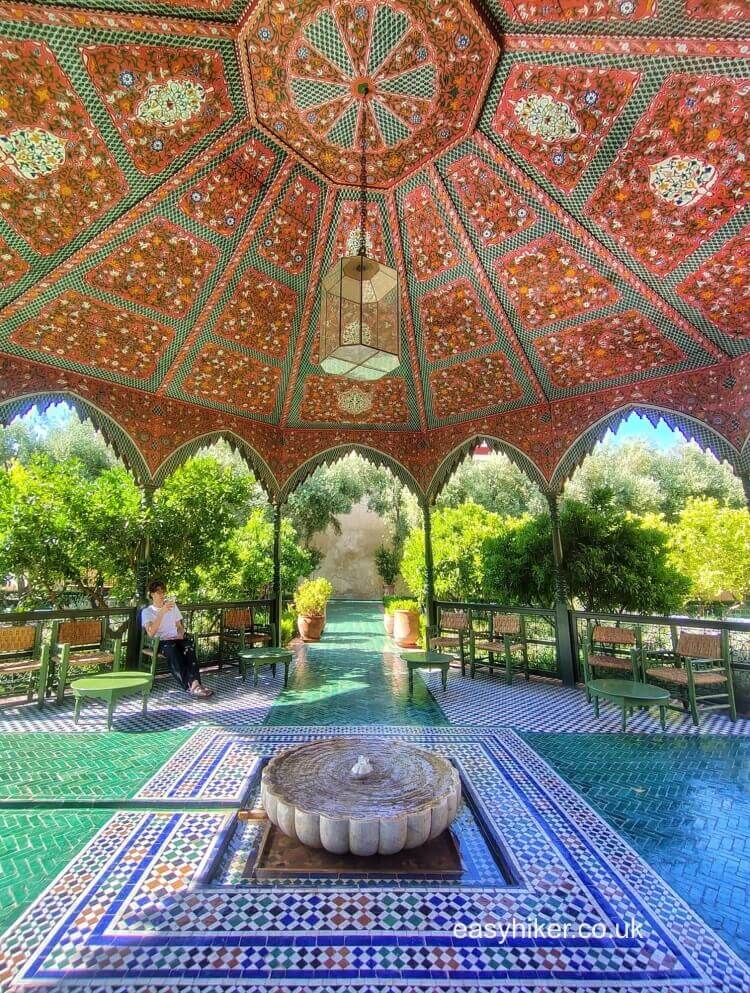
So what is in it for the tourists? There are some historic buildings in Marrakesh …
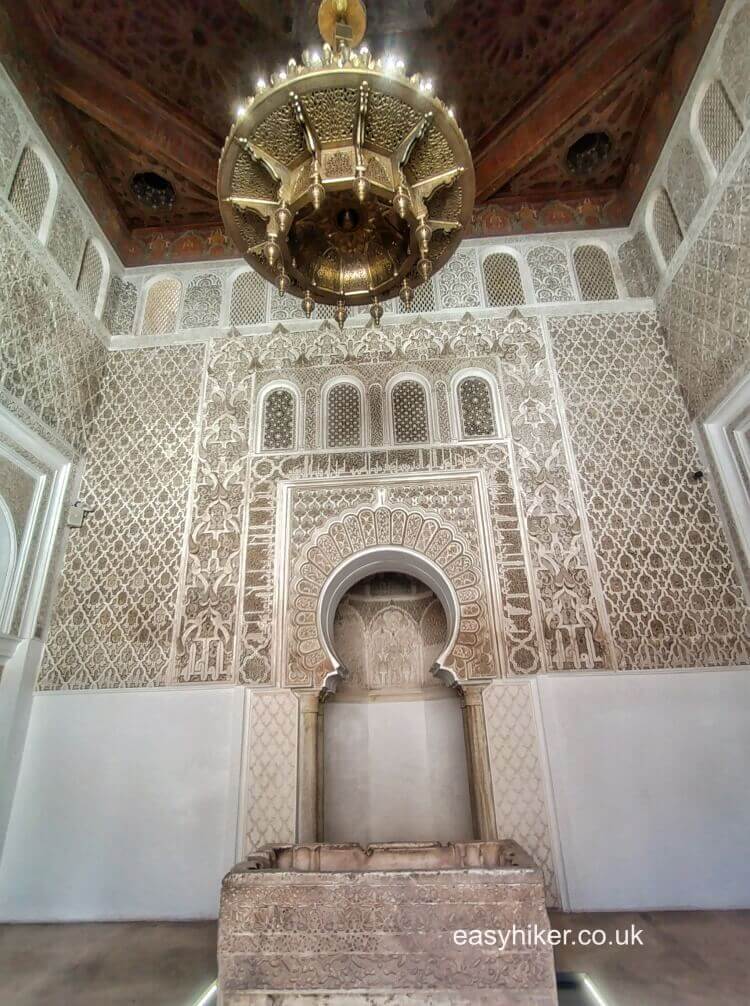
… but it is worth pointing out that the city cannot rival the variety of architectural splendours in Spanish Andalus.
At the height of its powers, Marrakesh was ruled by two austere dynasties, the Almohads and Almoravids, both from the Puritan wing of the medieval Muslim world. Only the 16th century Saads left behind something like an architectural legacy.
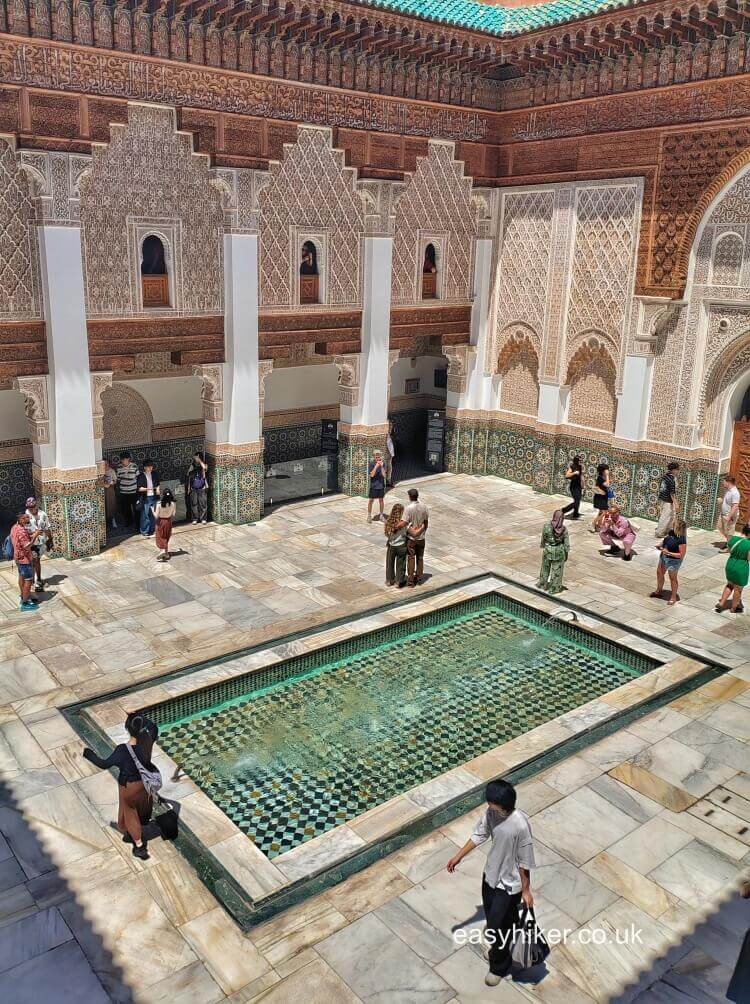
Besides, architecture is not why people travel to Marrakesh. Few visitors would, on arrival, be able to name a single building that they are planning to see over the next few days. They go to see the Madrasa Ben Youssef because they are there, they are not there because they want to visit the Madrasa.
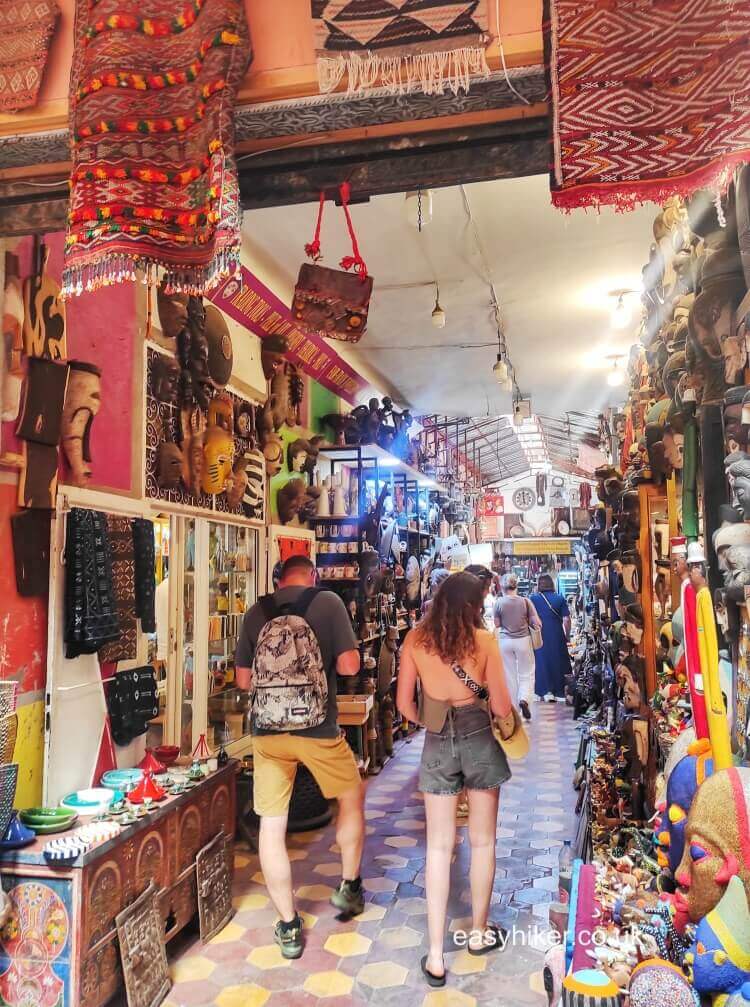
The Marrakesh souk, meanwhile, is oversold and rather boring. It is a soulless souvenir shop, not a living market, offering little but costume jewelry, fridge magnets, African masks.
But the tourists do not come here specifically for the souk, either. They have been lured on board the Marrakesh Express by something else: the promise of exoticism.
It is left to Moroccans to fill that promise with concrete experiences. Which is where the snake charmers and camel rides come in.
This, after all, is the logic of all industries: the successful entrepreneur is not the one who makes the “best” product but the one who finds out what consumers are willing to pay for and then gives them more of it.
The truly exotic, meanwhile, is all there, and not even very hard to find. You must only be ready to leave the beaten track.
Do not start your search outside the Medina, the walled old town: you will only walk into places such as the French City, which brings to mind medium-sized towns in the US sun belt rather than urban environments in France inasmuch as you can stop anywhere and look around without seeing much that would have been there a mere 20 years ago.
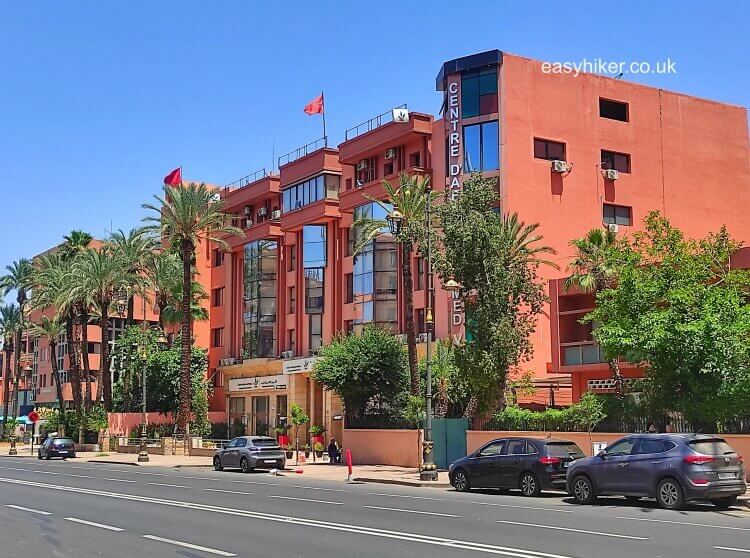
No. The “exotic” lives on the fringes of the Medina, in the quartiers populaires that belong to the inhabitants rather than the tourists.
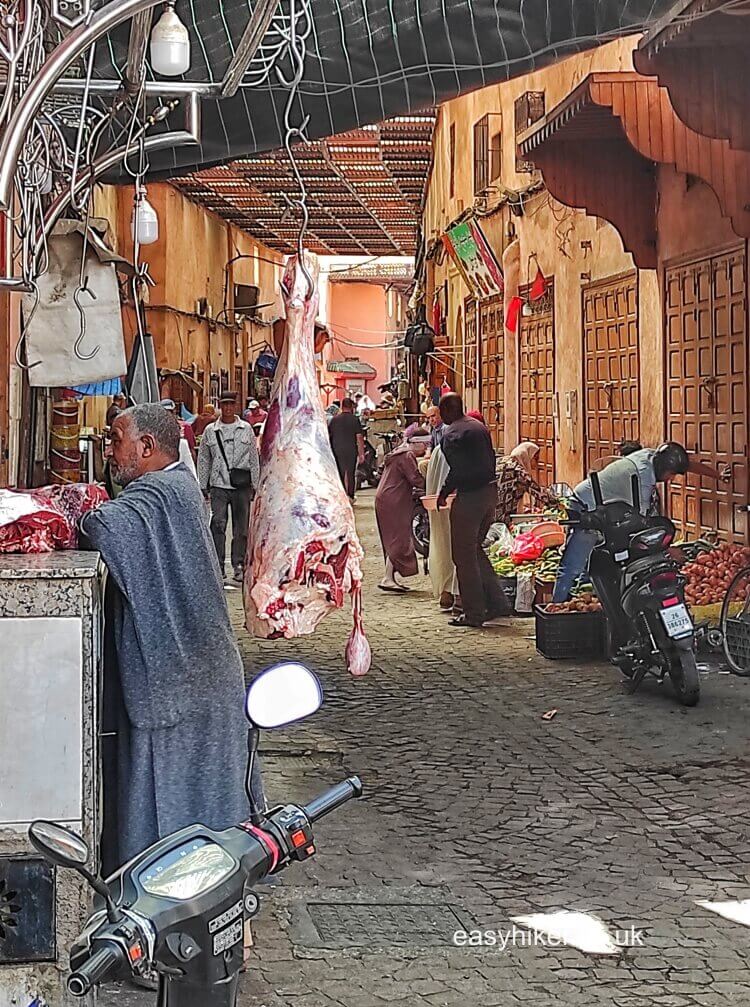
Places where you can visit a local estate agent or a fabric warehouse that live in a different world from their cousins in your home town.
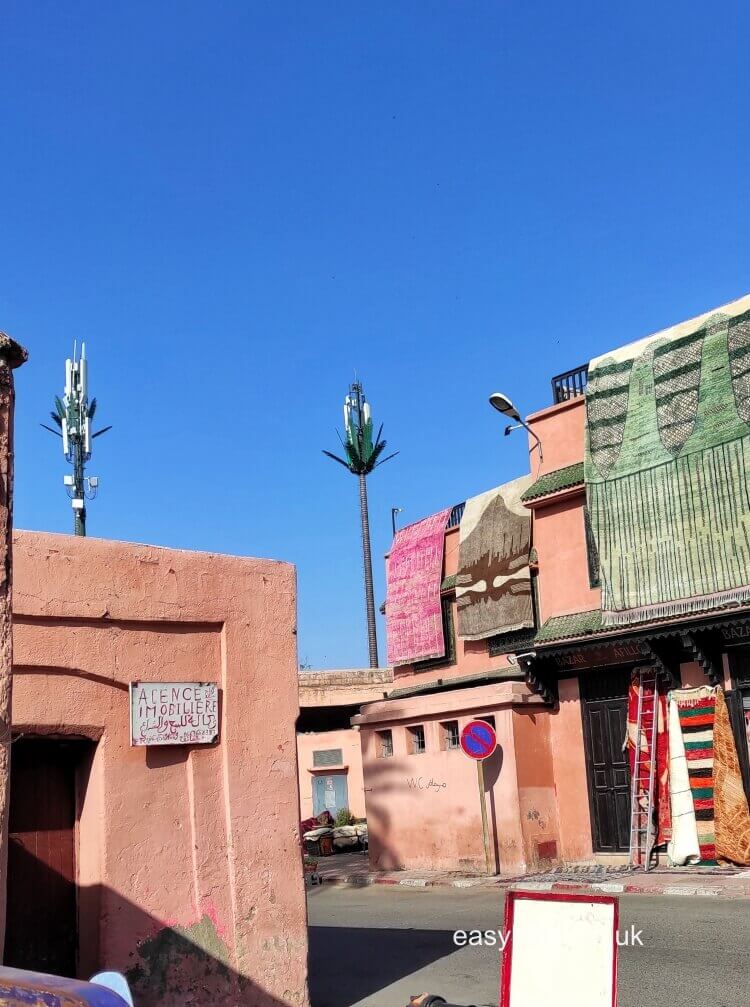
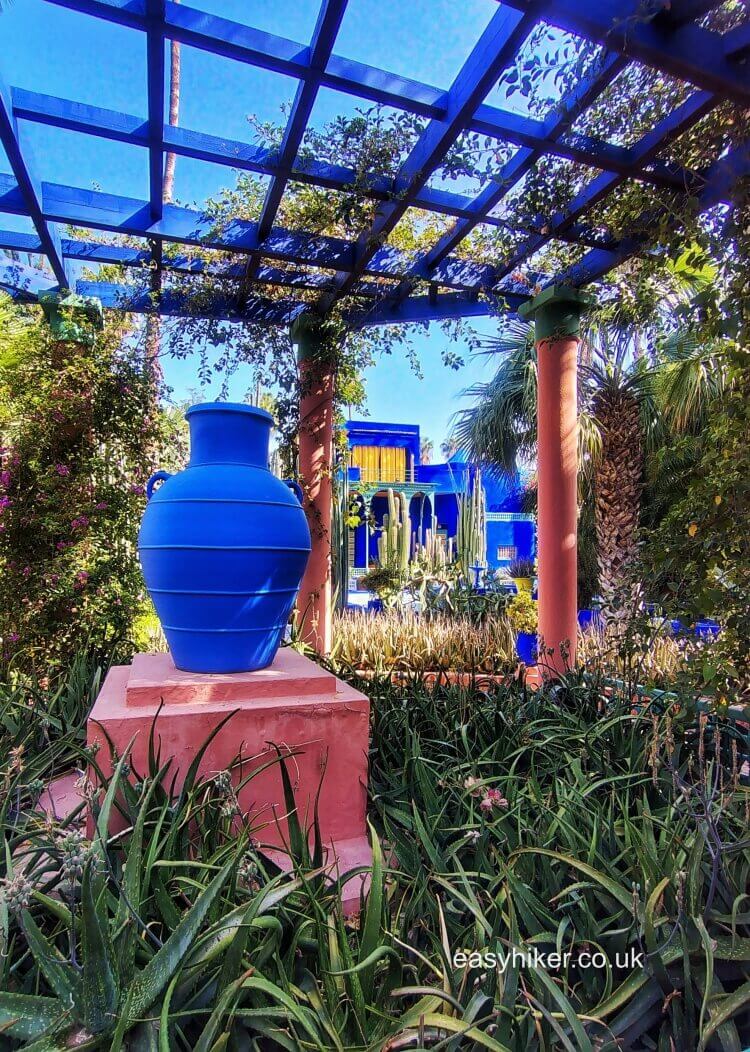
(Also take a closer look at the palm trees in the background of the photo: they are not palm trees at all.)
Everywhere you go, you will stumble upon things that appear to have come from different worlds.
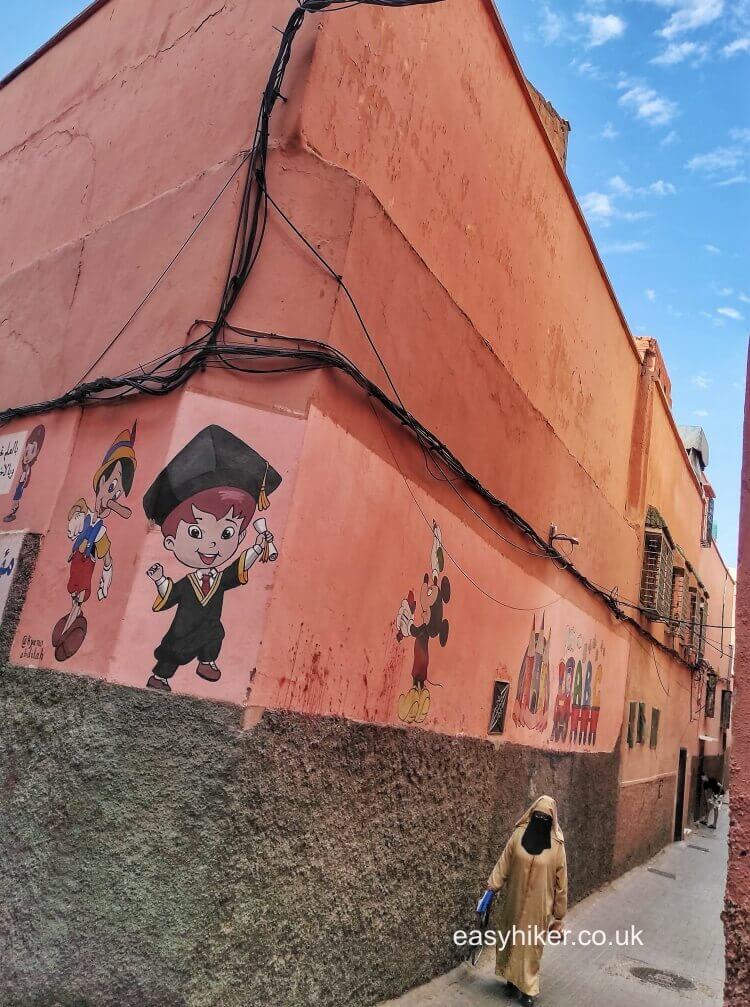
But do your exotic-game-hunting in the first two days. The human mind has an extraordinary capacity to adjust, and after a couple of days in town, you will already have started to consider things as normal that would have made you reach straight for your camera when you saw them for the first time.
What else is there for tourists to do? One popular outdoor experience on offer is a day trip to Imlil in the Atlas mountains …
… which also includes a walk to the village’s near-by waterfall.
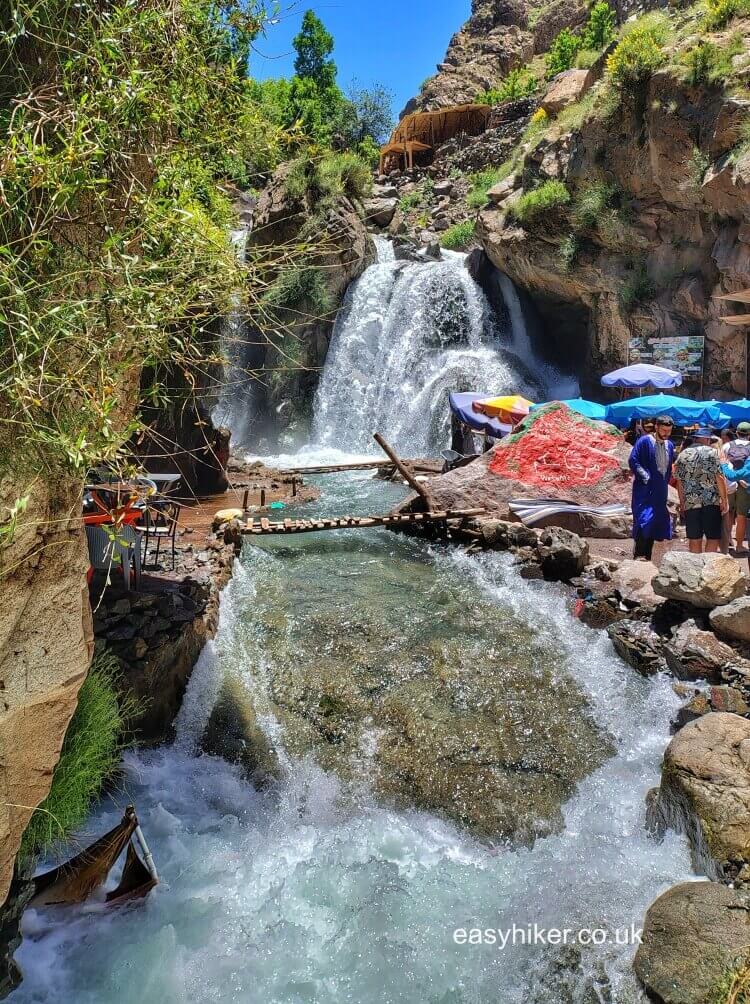
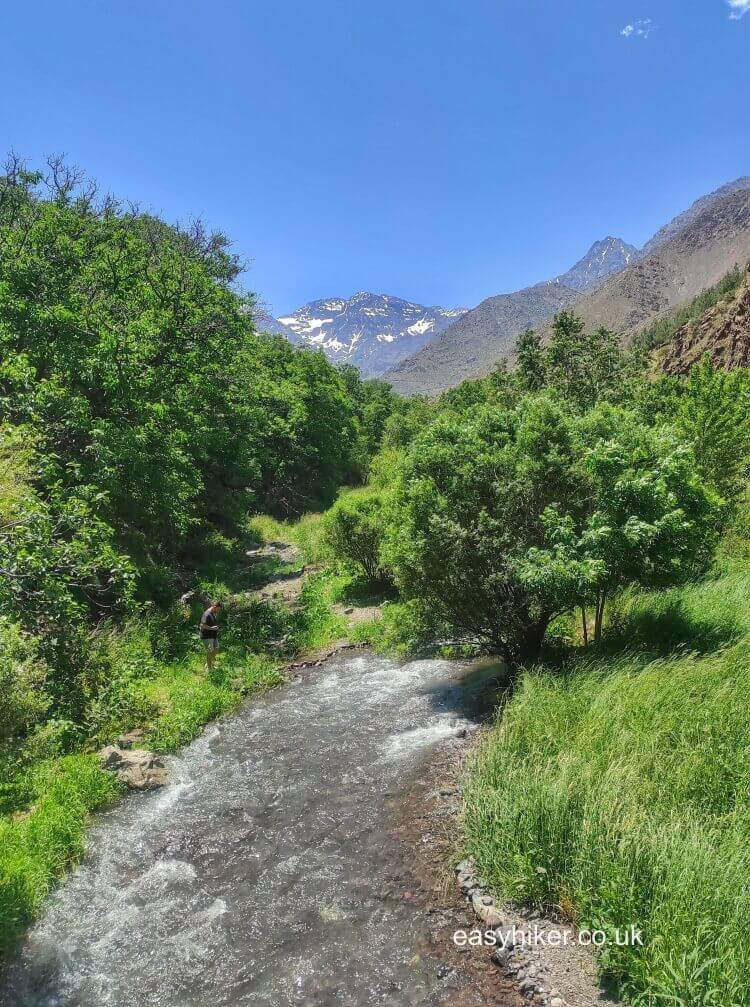
We did this as an organised journey: almost all local companies have Imlil in their programme and ferry small groups in small buses to the mountain village for a 90-minute group hike. You will not have much time to roam around freely but at least get to see a different face of Morocco – one that even includes some snow-peaked caps.
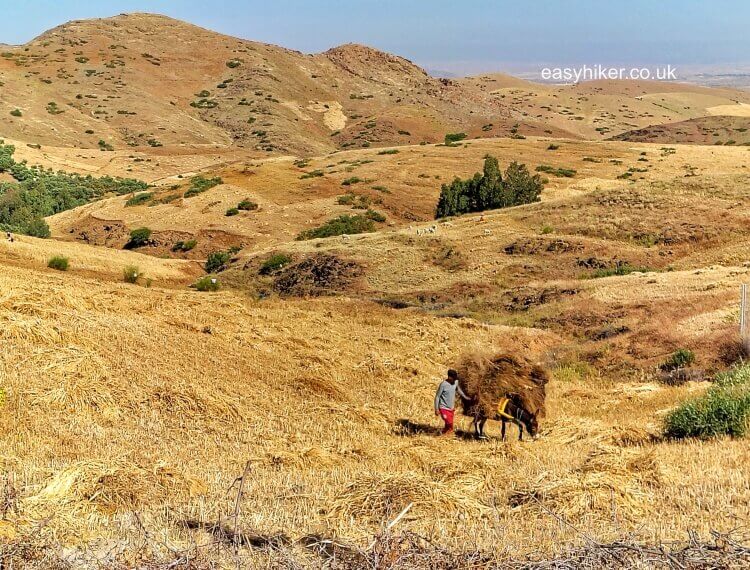
The one-hour-plus bus journey itself is also an interesting experience, since you will have the time to study the landscape at leisure. The colours, the trees, the hilltop buildings, the rolling hills: the scenery is vaguely reminiscent of Tuscany, …
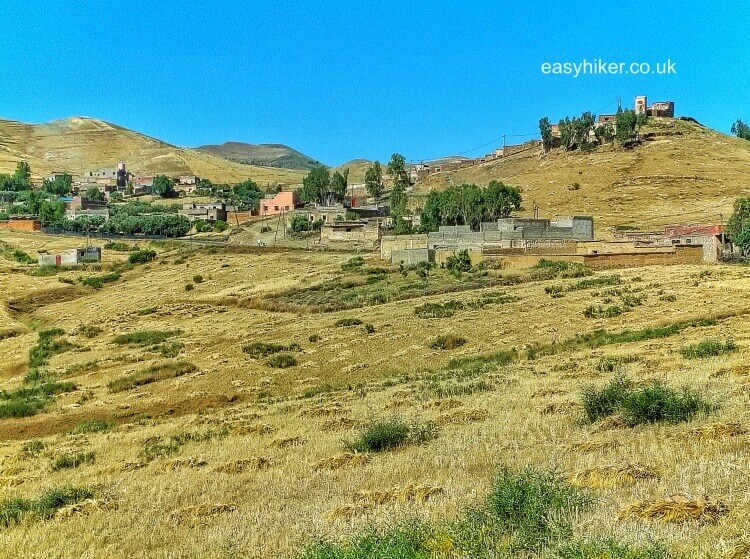
… although something feels not quite right.
For some strange reason, I find that the images we made during our brief stopovers look as though they had been painted by artists who were commissioned to create representations of Tuscany but, never having actually seen the place themselves, entirely relied on descriptions from others. For even stranger reasons, I felt reminded of what medieval artists did to create representations of lions and elephants.
At any rate, the best experience you can make while in Marrakesh is a visit to the Jemaa-el-Fna in the city centre, reputedly the largest square in the whole of Africa. Don’t go there in the day time, when the Jemaa-el-Fna has all the charms of an empty parking lot …
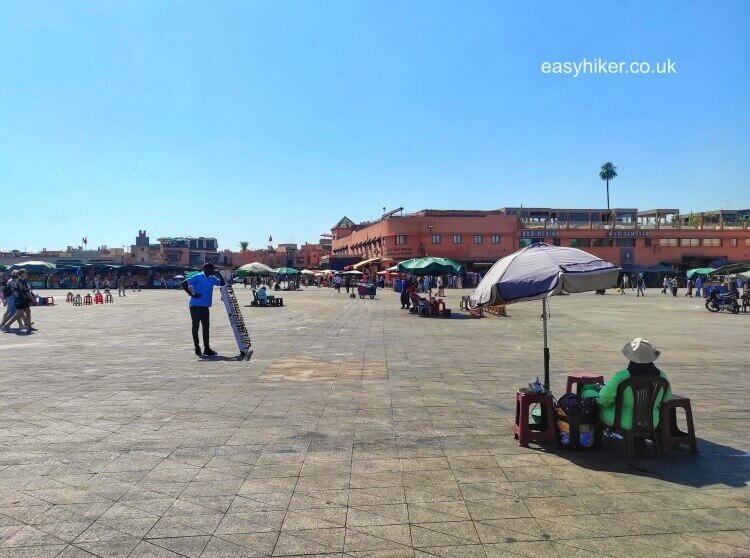
… but after dark when they bring out the chairs, the tables and the country folk music bands that turn an entire corner of the square into Marrakesh’s most animated disco: this is party time for the inhabitants of a city where afternoon temperatures can reach 40 degrees centigrade as early as during the month of May.
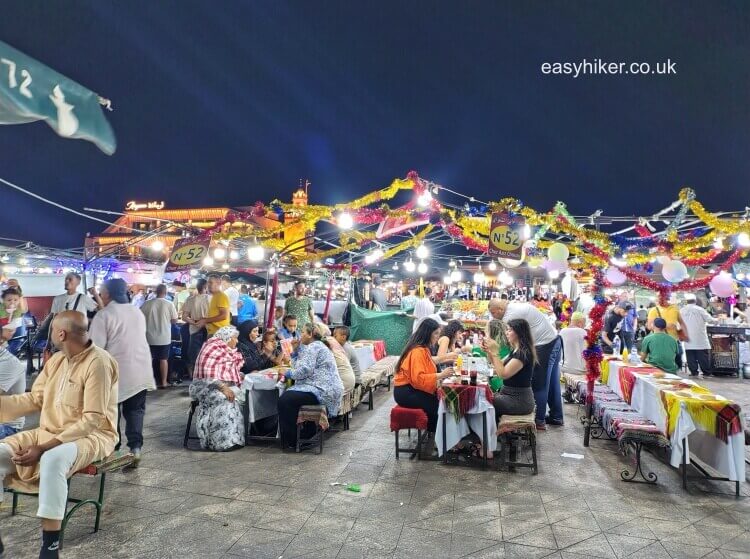
That’s the best but not the only interesting experience you can make in town. Ready for more? Then join us next week when we seek out the local green spaces. See you then!