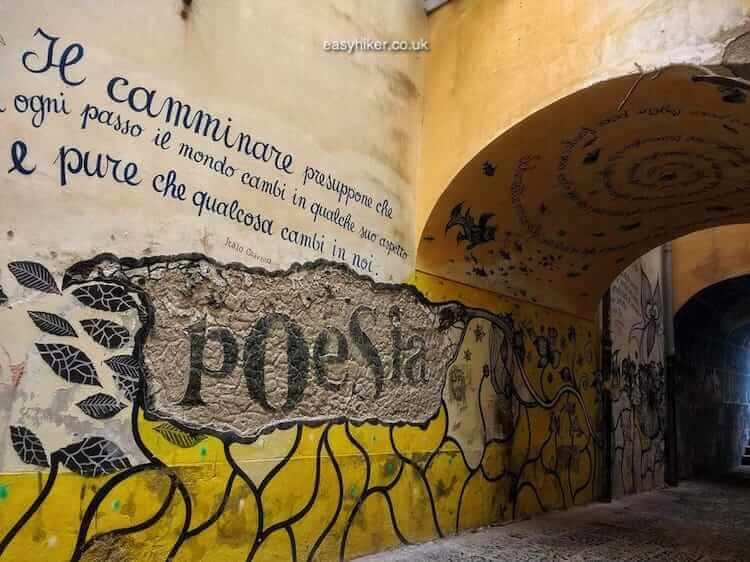
The concept of a journey implies that with every step of the way, the world changes in some aspect and also that something changes in us. (Italo Calvino)
There is no Italian town without tourists. You only have the choice between different degrees of crowdedness: some towns at the extreme end of the spectrum function like tourism monocultures, something more akin to a banana plantation or a factory floor than a living urban organism, while for other towns, tourism is just one melody among many in their soundscape.
The problem for the visitor is that the mechanisms of the modern tourism industry make it difficult to predict where in this spectrum any specific town along your route may fall.
Salerno in the east of Campania (a 45-minute train ride away from Naples) ticks all the boxes of destinations where tourists might be expected to be thin on the ground: an industrial past, not much history (certainly not featuring people you would ever have heard of), no Roman ruins.
In fact, however, there are loads of foreign visitors in Salerno – shiploads of them, in fact, because the town is a favourite port of call for cruise ships, thanks to its proximity to both the Amalfi Coast and Pompei.
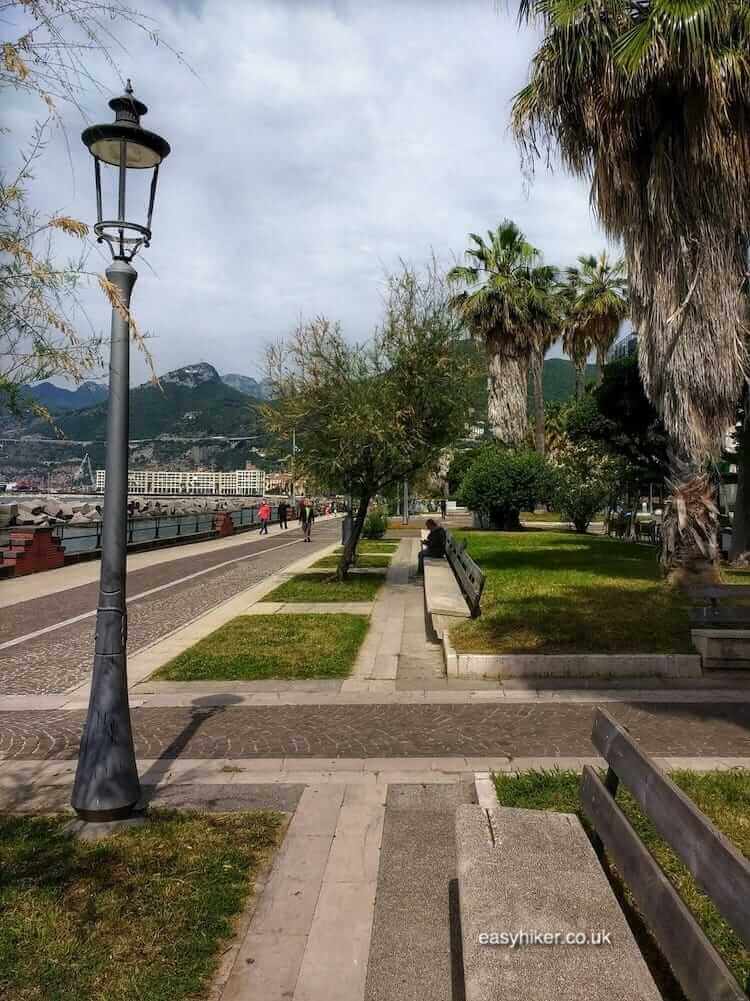
But while tourists fill some of the streets, much of the town goes about its ordinary, every-day business. This is because most cruise ship passengers do not venture out much further than to the coastal promenade, …
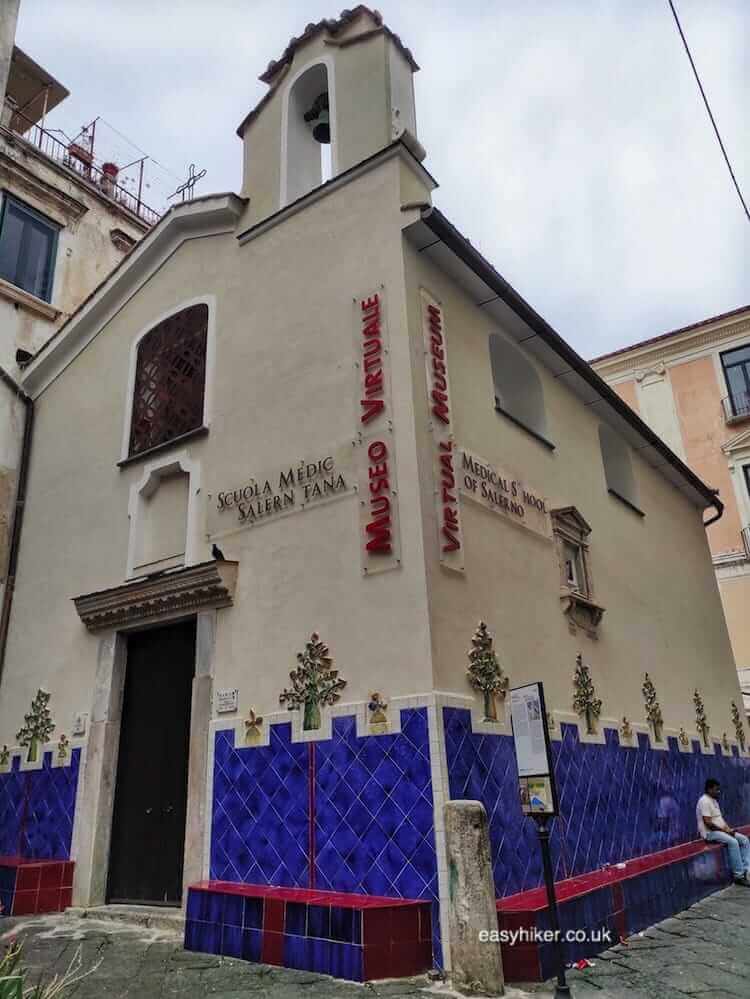
… and those who do visit the Old Town go there mainly in search of ceramics shops (one of Salerno’s heritage artisanal industries). Even the traces of the one major contribution that Salerno has made to the story of Western civilization – Christian Europe’s first Medical School was founded here in the 9th century – are largely left unperturbed.
At any rate, tourists who stick to the beaten paths miss the best Salerno has to offer.
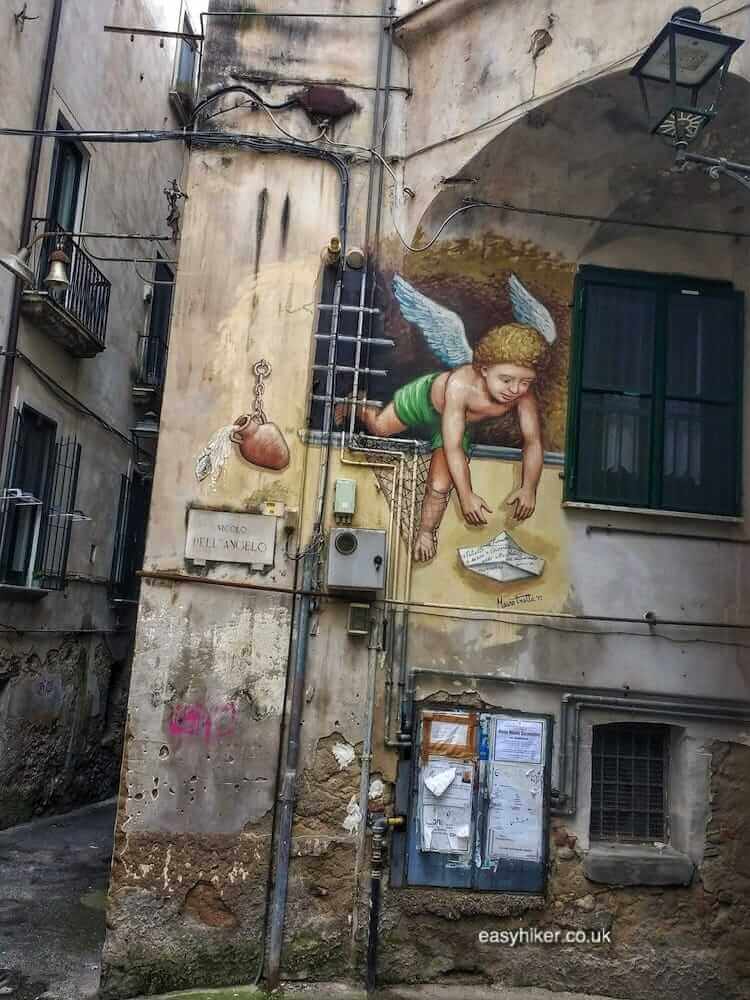
For the past 30 years or so, Street Art has probably been the biggest success story in the book of urban regeneration. Once considered an act of vandalism and delinquency, municipal administrations all over the world now actively promote it as a supposed panacea for all urban ills.
As a consequence, Street Art is now gracing all kinds of urban environments from an ancient residential quarter in Florence to tower blocks in Eastern Europe– and in danger of becoming a visual cliché.
The artists’ collective that wanted to brighten up inner city Salerno’s historic working-class quarter …
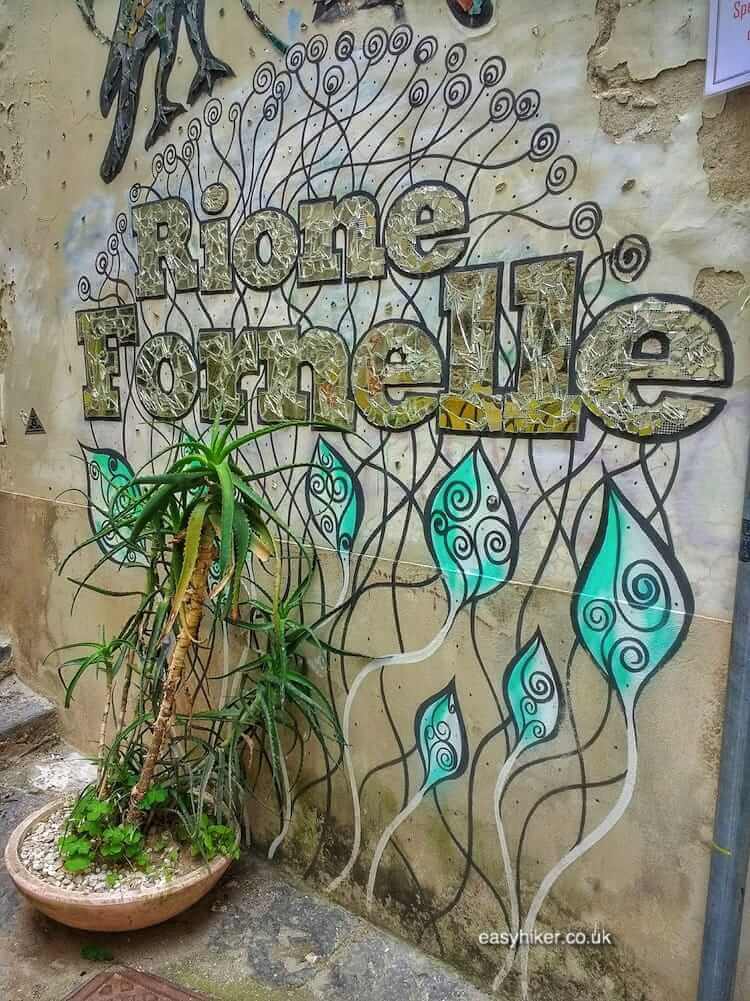
… appears to have recognized this risk and decided to develop a new take on what is quickly becoming a stale recipe, taking its inspiration from the neighbourhood’s most famous son: Alfonso Gatto, one of Italy’s leading poets of the 20th century, spent the first 20 years of his life in the Fornelle quarter around Via Portacatena and Via Torquato Tasso. (Gatto’s works are notoriously difficult to translate, which is one reason why he is so little known in the Anglo-Saxon world.)
In Search of Campania beyond Naples, Discover the Poetry of Salerno
The project’s second source of inspiration may have been Paul Simon – it was him, after all, who claimed the walls of residential buildings, of tenement halls, as the natural places for visionary poetry: this was where the words of the prophets are written nowadays, he observed, and possibly where they belong.
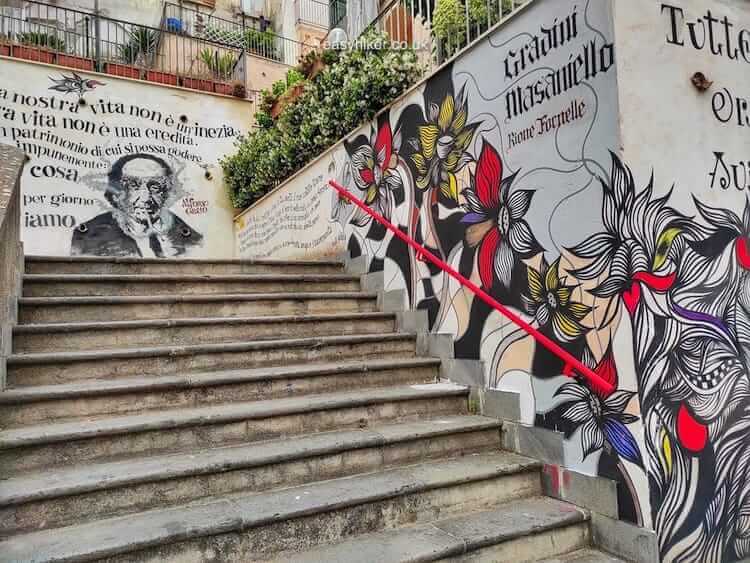
For visitors, this strategy of the Fondazione Alfonso Gatto – under their custody, artists from Italy and other countries have contributed to the Muri d’Autori project since 2014 – works best when the messages are short, concise and relatively easy to decipher.
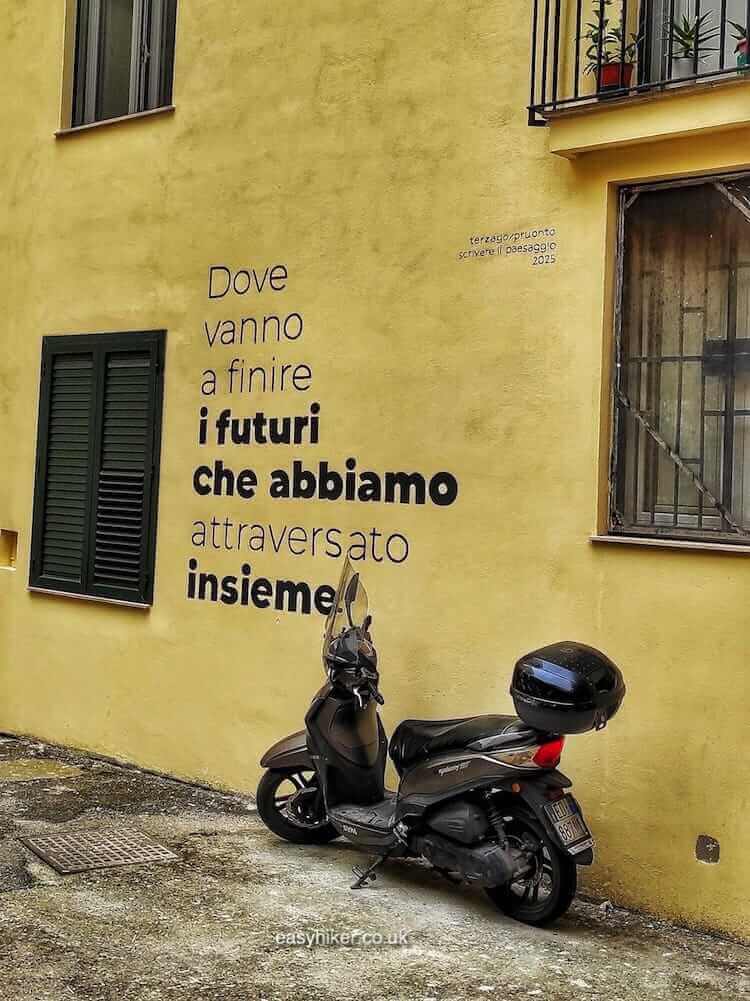
“What will happen to the futures that we have experienced together”, the autore of the writing above is musing. Give it a go and try to work out what the messages say, aided by bits of “Opera Italian” and bits of half-remembered school French. If you fail, you are at least guaranteed to come up with interesting results.
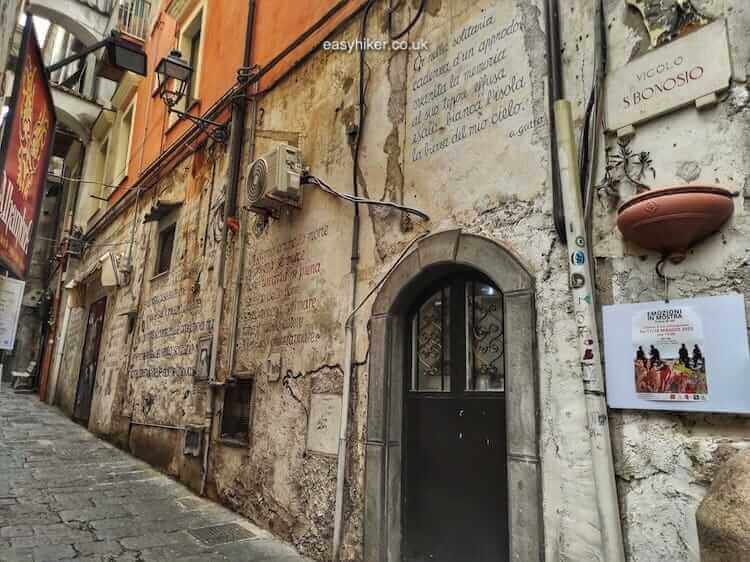
The strategy works least well when too many messages are competing for attention in the same space, leaving the passer-by confused and overwhelmed. Even fluent and native speakers will probably be tempted to give some of those writings a waive.
For the most part, at any rate, you will be able to enjoy the Rione’s Street Art even if you do not speak any Italian at all. Nearly all presentations feature a strong visual component, taking their cue from Gatto for whom the sound of his lines and their rhythm were as important as the meaning of the words.
Here, these suggestive, non-linear functions of poetry are performed by fonts and imagery.
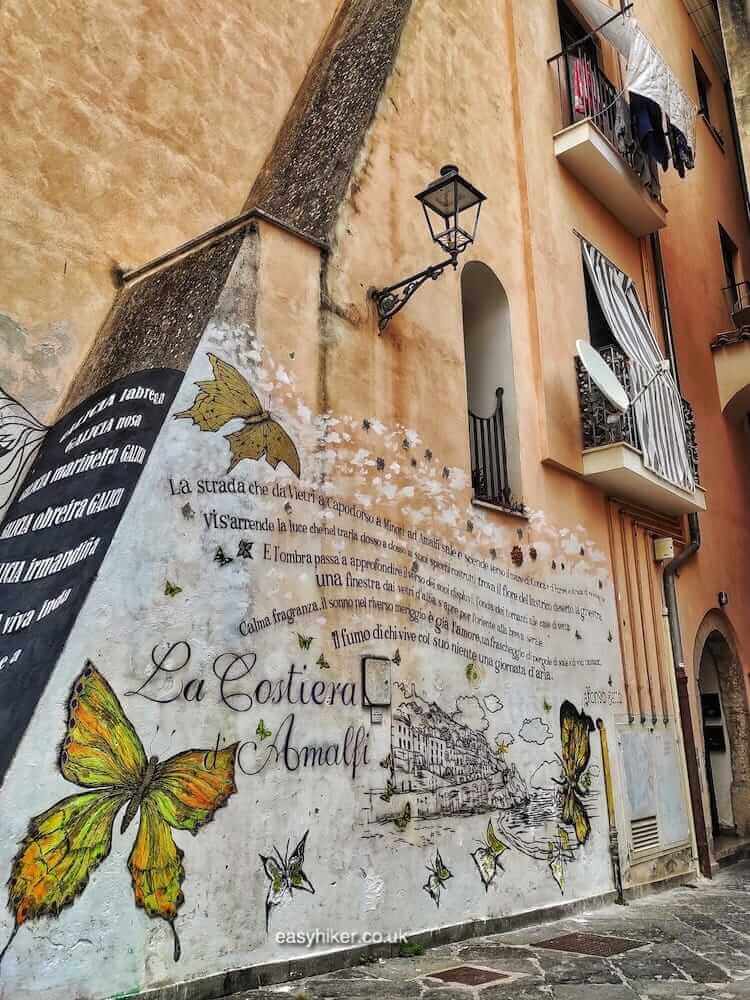
The Amalfi Coast is, for example, a recurring theme on the Rione Fiorelle walls: it becomes alive through shapes and colours as well as through texts.
On top of that, many entirely text-free images have been added by official as well as unofficial contributors over the years, …
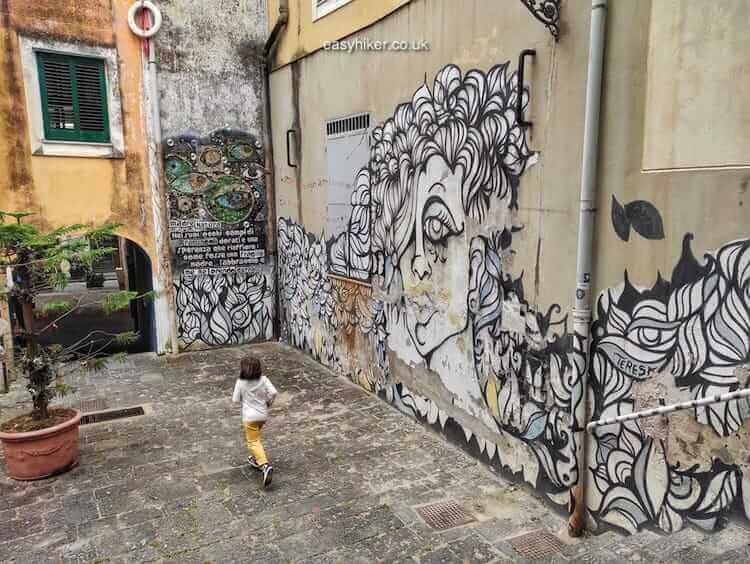
… serving to remind us that Italy is, after all, primarily a visual culture.
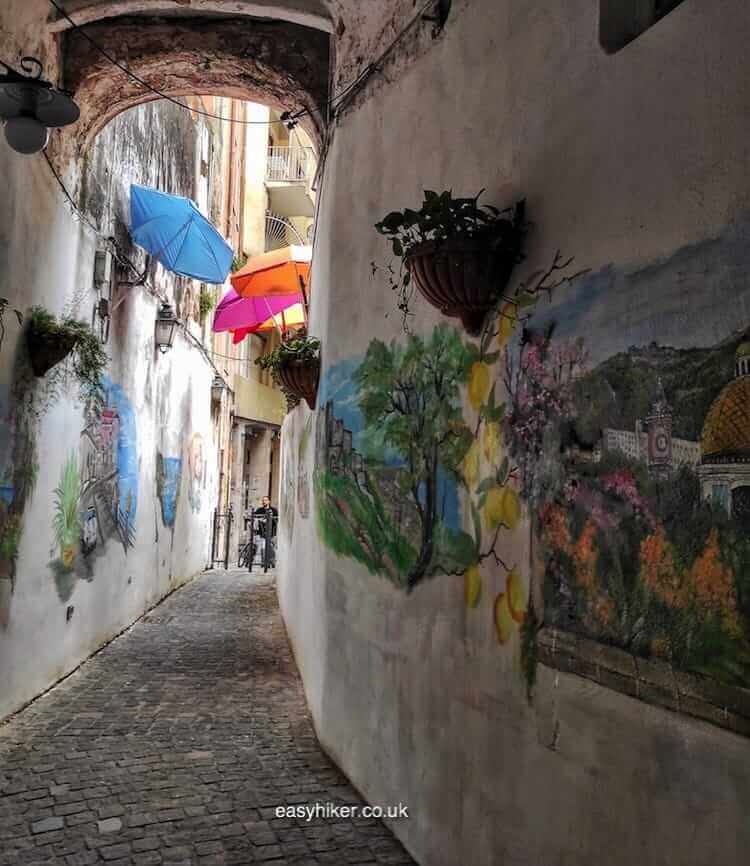
If one can (up to a point) ignore the meaning of the words on the wall, the meaning of the project as such is more crucial. The Gatto Foundation never wanted to deliver a cheap and merely cosmetic alternative to the restoration of the city’s urban fabric – putting lipstick on, well, a run-down tenement hall – and had conceived its project as the cornerstone of an ambitious scheme with a strong socio-political dimension.
What they wanted was to build a community, uniting people from various walks of life through an initiative for a shared objective and the common good. And there are signs that this has worked. Everybody appears to have fallen in line: the municipal department responsible for labelling streets …
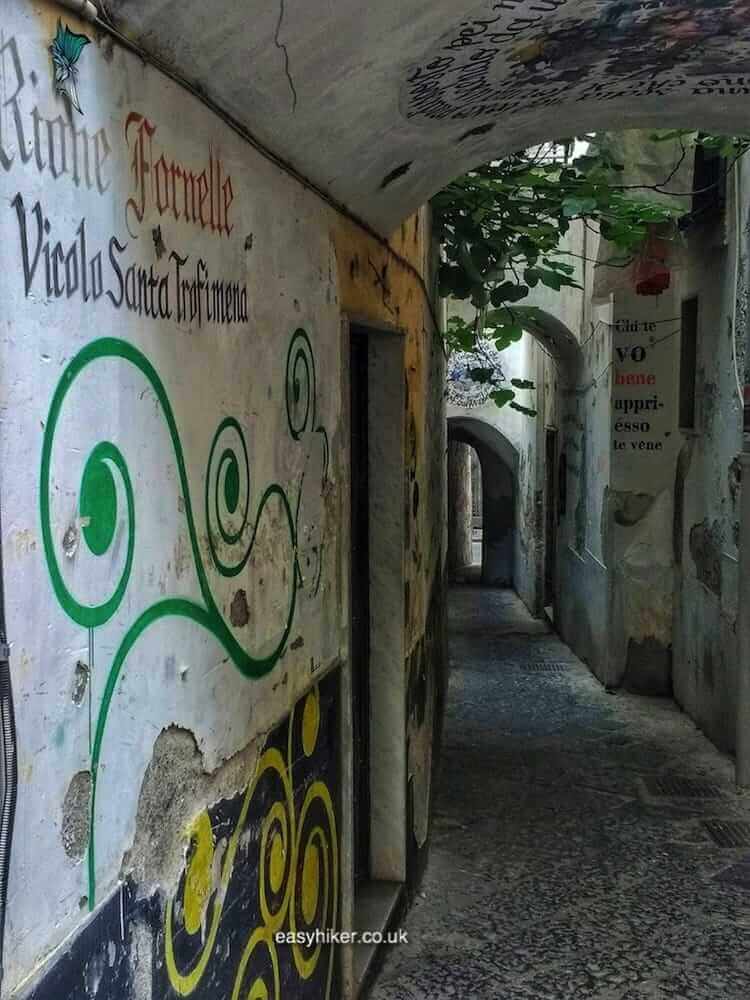
… as well as the corporate owners of large and modern residential buildings …
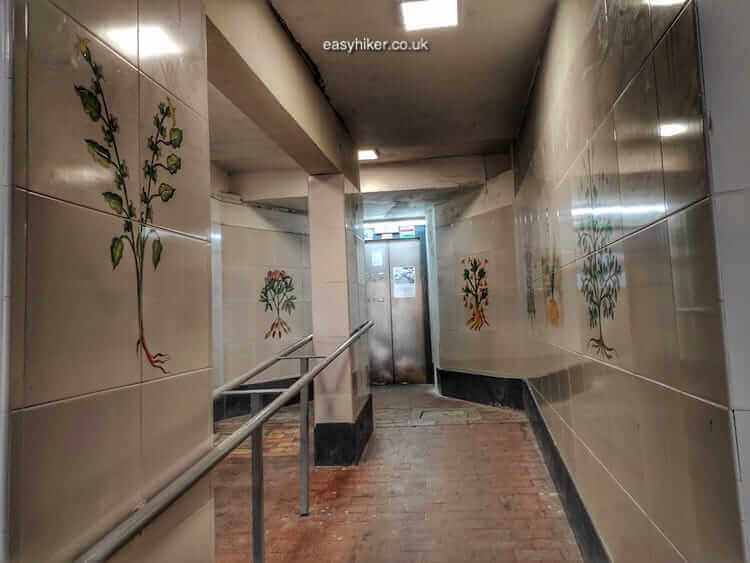
… and the owners of private homes.
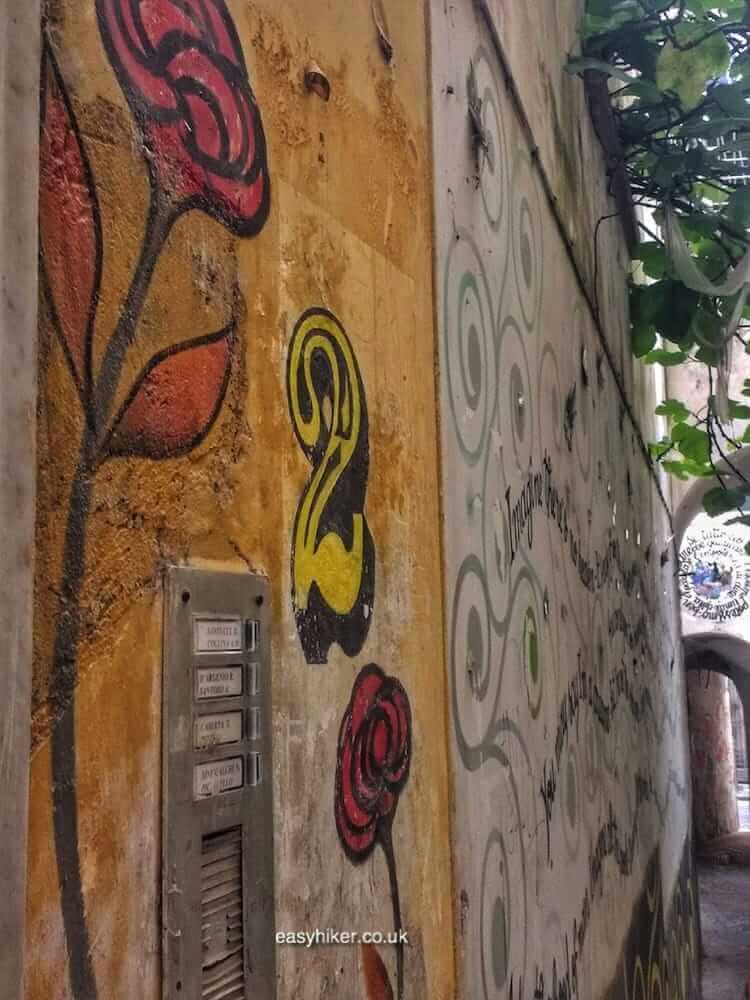
For us, the icing on the cake was that we ran into a guy who had painted some of the images in the quarter, a genial elderly gentleman called Giovani Moreno …
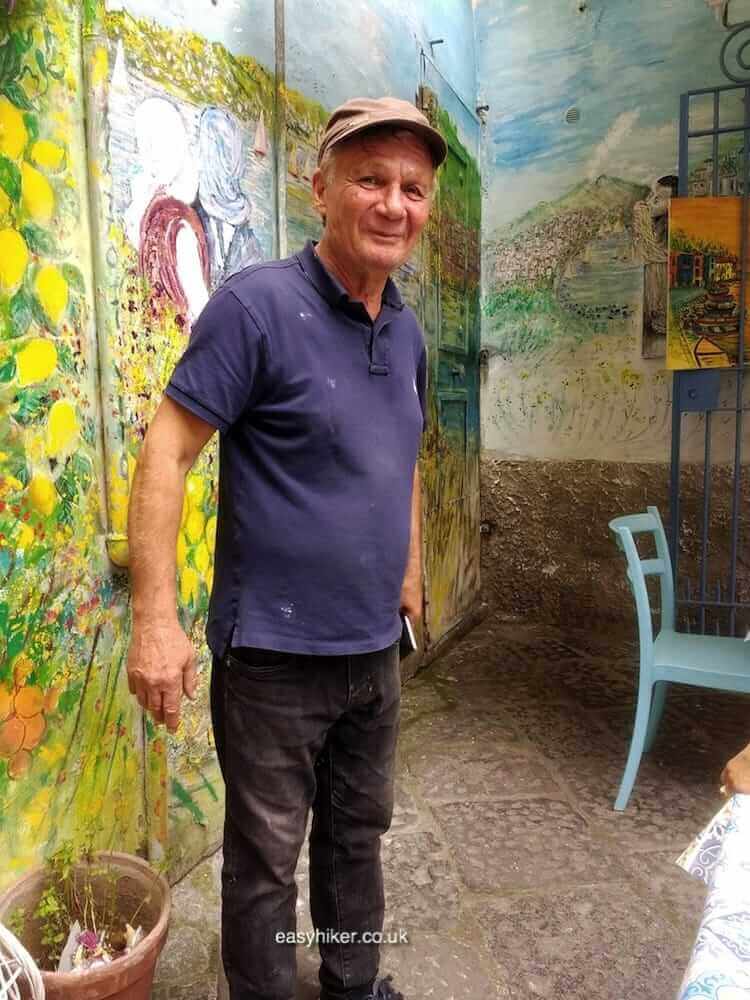
… who has a small office-cum-atelier on Via Masuccio Salernitano opposite the restaurant where we had our lunch and where he appears to be some kind of a neighbourhood institution.
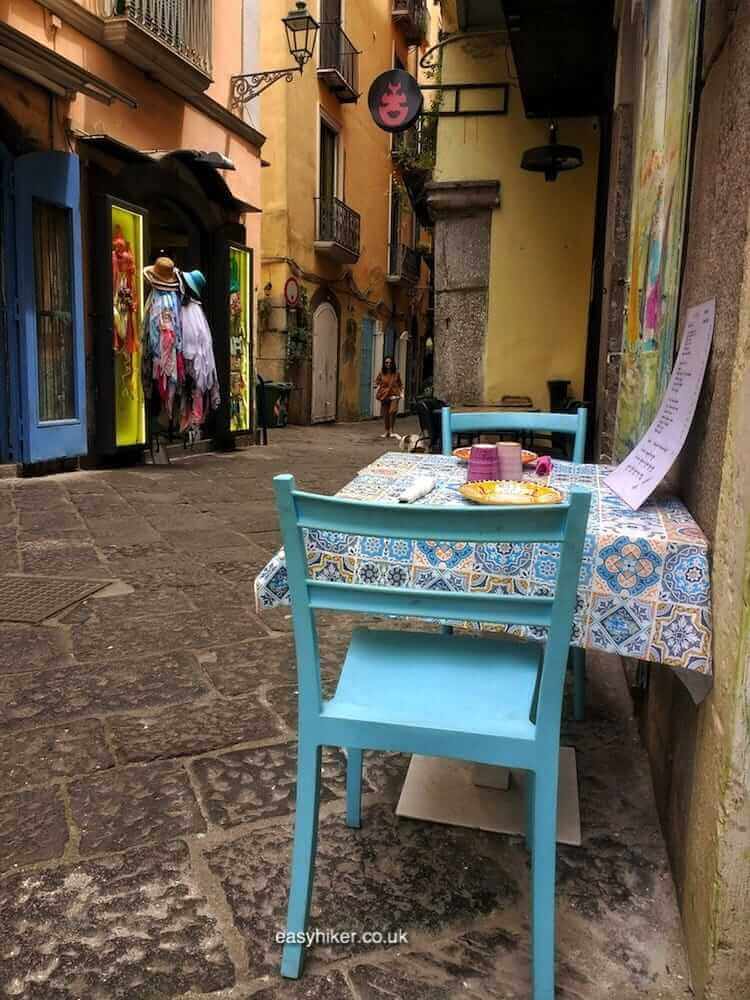
This is what Salerno is like: you can discover something interesting “every step of the way”, as Italo Calvino says in his definition of a journey.