Good travel destinations, I said a few weeks ago, should offer their visitors three things: character or history, green spaces for a walk, an interesting day trip destination.
In our two last posts, we told you where in Marrakesh to find authentically exotic experiences and the most interesting and beautiful gardens. Today, we will turn our attention to the last item on the list.
Most major destinations are offering a wide range of away-day options. Marrakesh is less generous in this regard. Moroccan high-speed trains are reliable and inexpensive, but Marrakesh is the southern outlier in a network that largely serves the large cities in the North.
Fez, the cultural and spiritual capital of medieval Morocco, is 7 hours away, while a journey to Tangiers, the cultural and spiritual capital of gay American writers in the 1960s, may be shorter but will still take well over 5 hours (one way) out of your time budget.
The good news, day-trip-wise, is that the desert – for many visitors the epitome of the oriental experience – is less than one hour away from Marrakesh: the Agafay desert, that is, NOT the Sahara, and a place full of stones rather than sand dunes (although they are still happy to arrange a camel ride for you).
The bad news is that the actual Sahara will take you a 7-hour drive to reach, so the bare minimum time investment for this trip is two-full-days-plus-one-night.
All things considered, we decided to spend our away-day in the town of Essaouira. Here are the three reasons why.
Essaouira is Something Else!
Day trip destinations should, this is the most important consideration when making your choice, provide a contrast to what is on offer at your holiday base. If you are looking for more of the same: why leave at all?
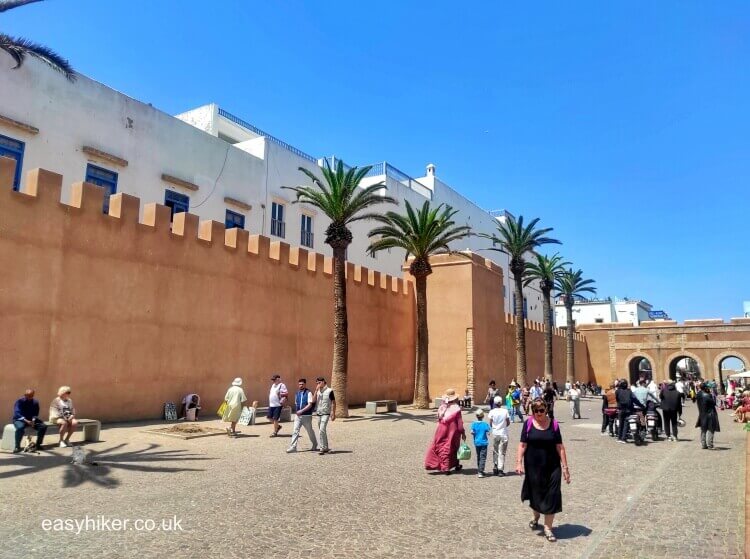
All contrasts start with the optical contrast: this is the first box that Essaouira ticks. The palette of Marrakesh, the “Ochre City”, is dominated by reddish browns, whereas Essaouria is a city of blue and white, …
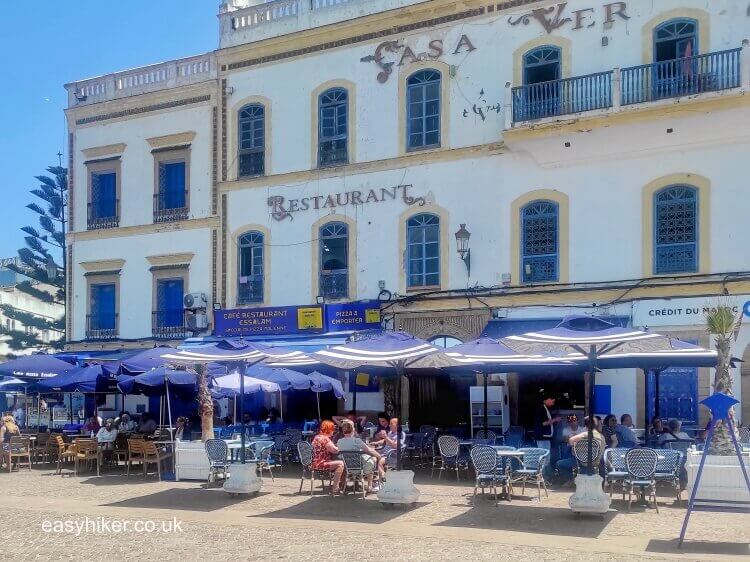
… and while the Marrakesh Medina confuses visitors with its mad jumble of passages and sideways, Essaouira was constructed around an orderly grid with a spine of relatively wide and sometimes even leafy avenues.
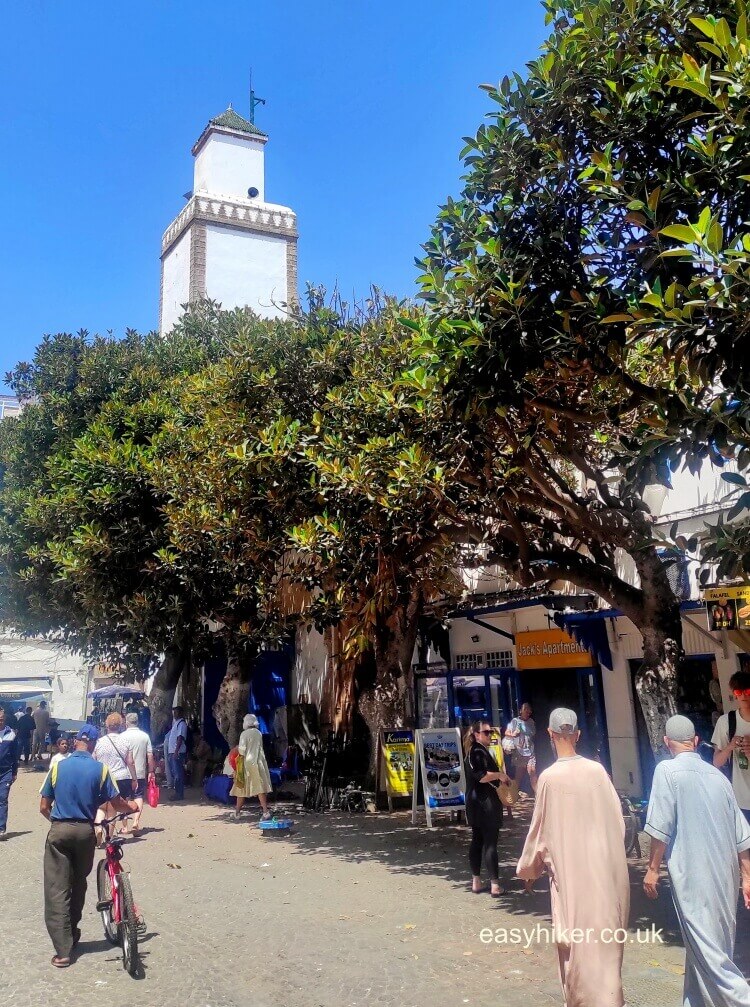
But the biggest contrast is this: Marrakesh is landlocked, while Essaouira faces the open sea. An interesting fact: when you stand on Essaouira’s stony shore of the Atlantic Ocean, …
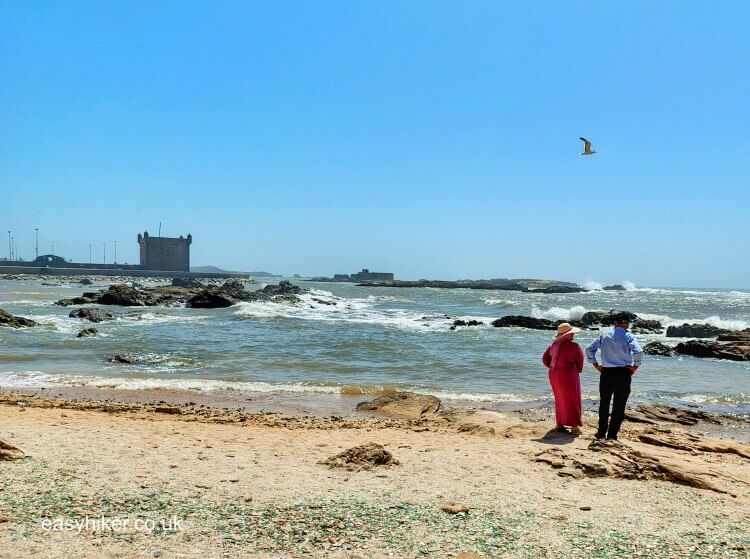
… you will find yourself further to the west than every major city in Europe. (Only Iceland and western Ireland have more westerly longitudes.) More proof that Morocco may be “oriental” in some but not in all senses of the word.
Much of Essaouira is indeed of Western origin: the town was established by the Portuguese in the 16th century (they called it Mogador, a name that remained in official use until the 1960s) as a sea hub for the country’s African trade, and Essaouira’s most eye-catching architectural feature, the harbour fortification with the adjacent citadel, …
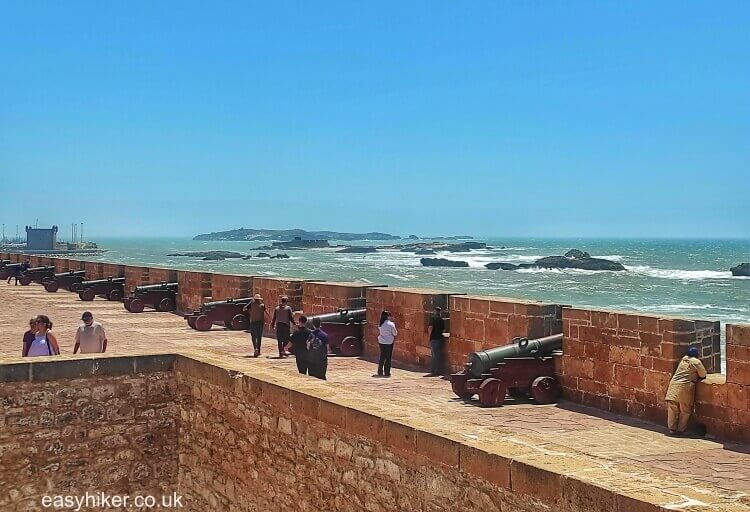
… was constructed by European engineers in the 1700s.
Many residential buildings in town, too, reflect Western influences, although it is fair to say that on a stroll through today’s city, …
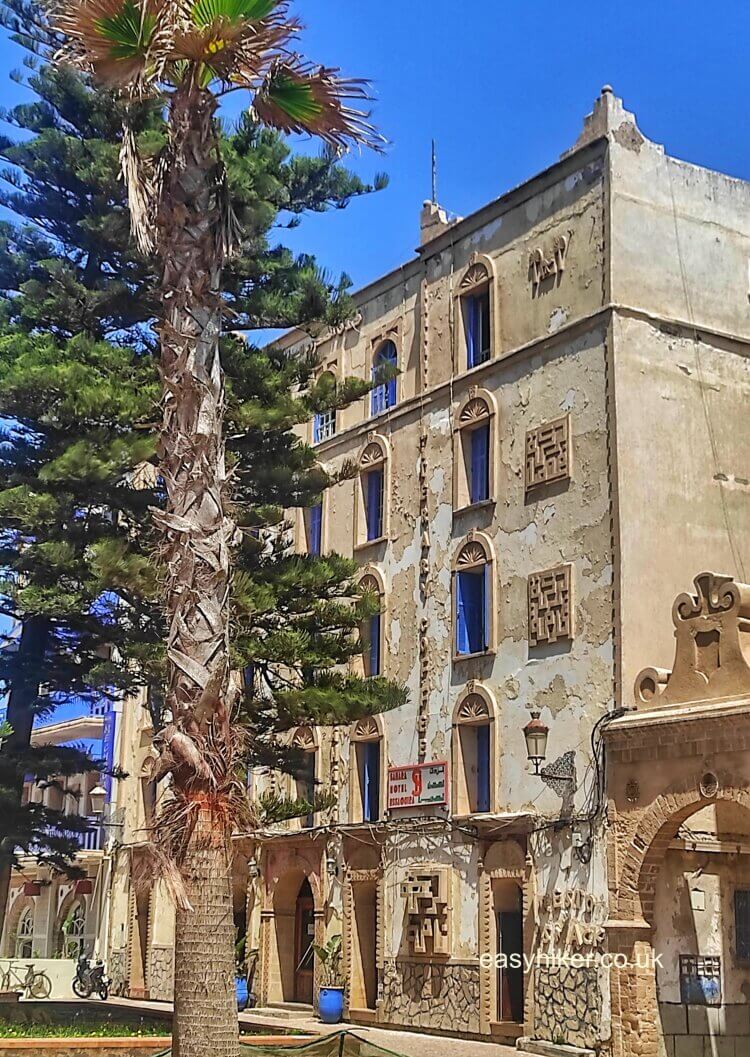
… you will rarely be at risk of mistaking modern Essaouira for anything but a Muslim town.
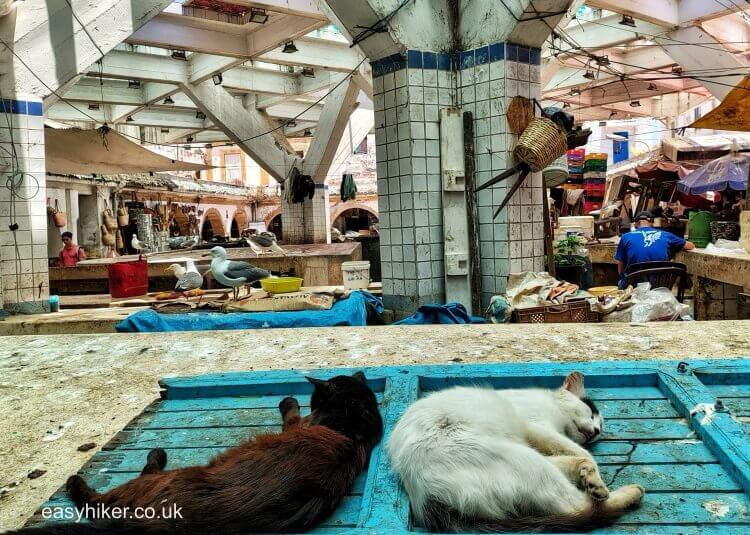
Essaouira also provides a culinary contrast to the Tajines of Marrakesh. Seafood rules the local menus, but we suggest you shun the restaurants that line the port around Place Moulay Hassan and make your way to the fish market opposite the Place du Marché des Grains on Avenue Mohamed Zerktouni.
Buy whatever you fancy for lunch at one of the stalls (negotiate the vendors down a little: they do not expect you to accept their first quote), and then let the fishmongers guide you to a separate stall where someone will prepare both the fish and the table for you. We guarantee that you will have an experience that will linger on in your memory for a long time.
The Size Is Right
Day trip destinations should not be so big that you leave in the evening with a feeling that you watched the trailer instead of the full film: that you have seen only a tiny portion of what there is to see, not enough to weave your impressions into a coherent image. Away-day destinations should come in small bites: after all, there is only so much that you can wolf down in half a day.
Essaouira is perfectly sized for such a short trip. Once you have familiarised yourself with the blend of spacious main streets and narrower side alleys, …
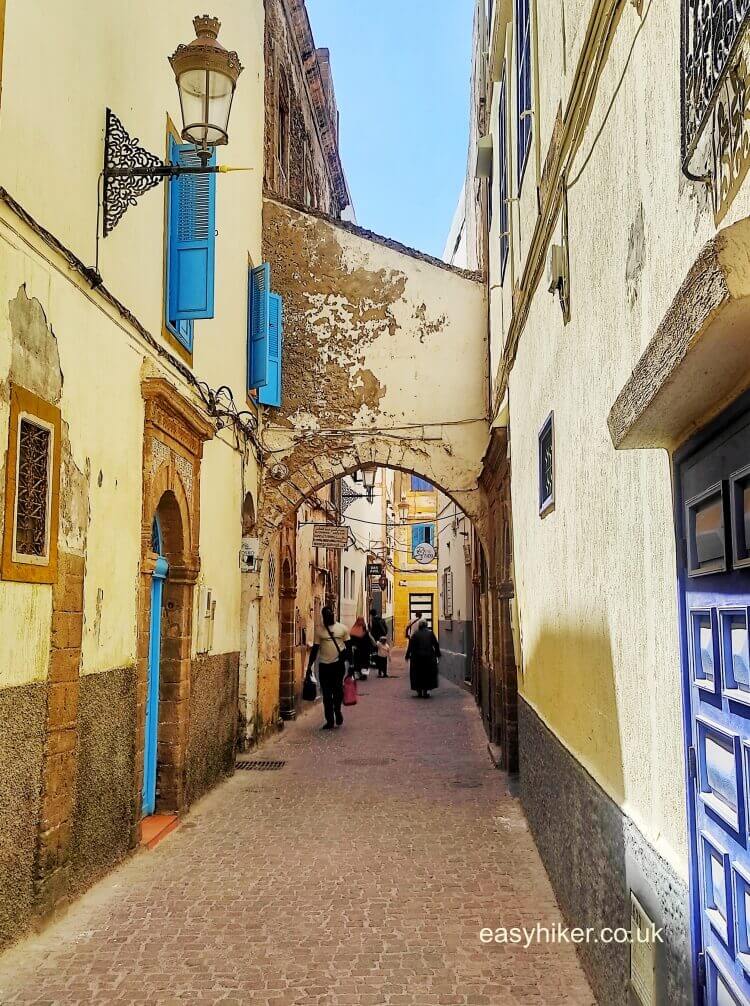
… explored the souks …
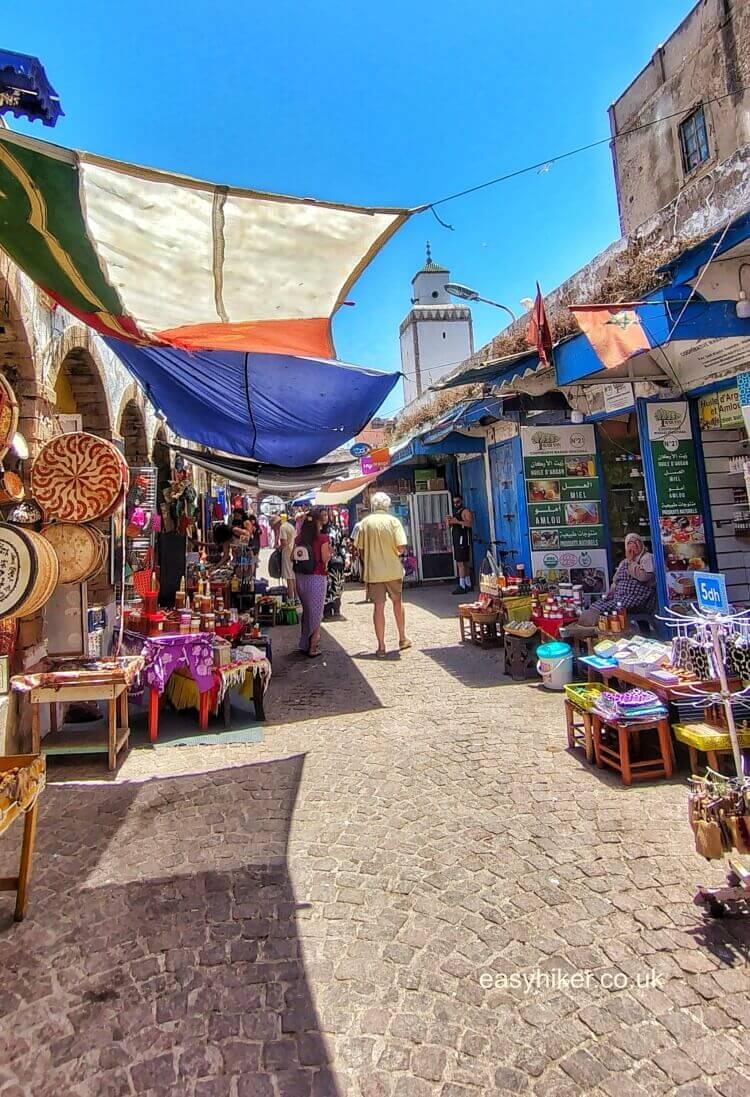
.. and taken a little seaside walk, …
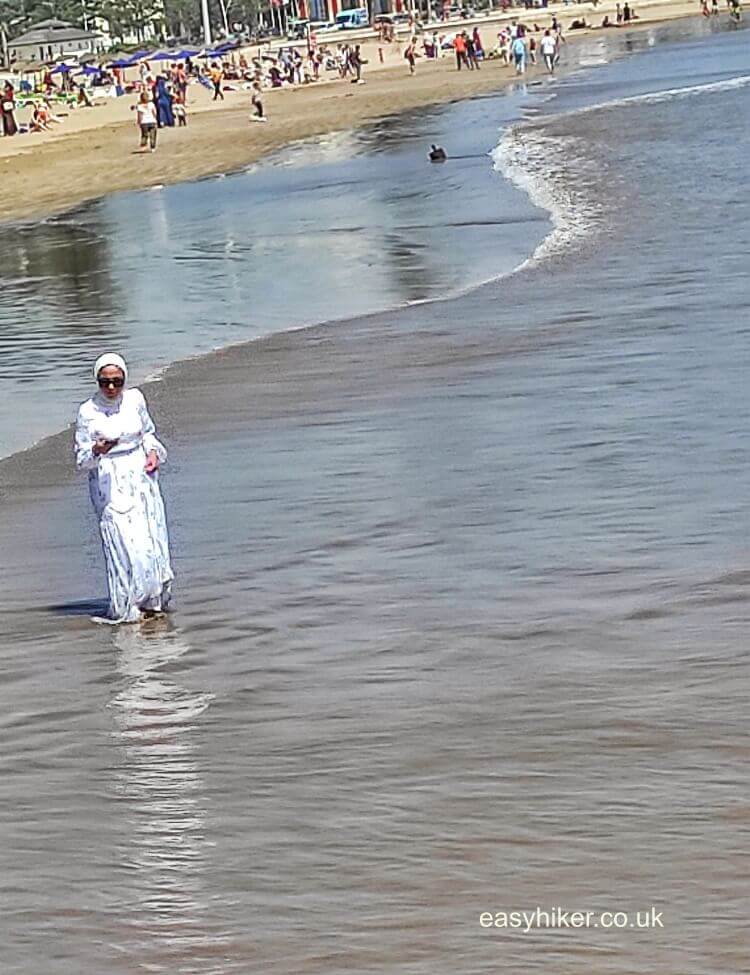
… you have seen pretty much everything there is to see. And after you have completed your sightseeing round, it is time to relax, preferably with an ice cream or a coffee in the shade. Essaouira is the perfect place for that as well.
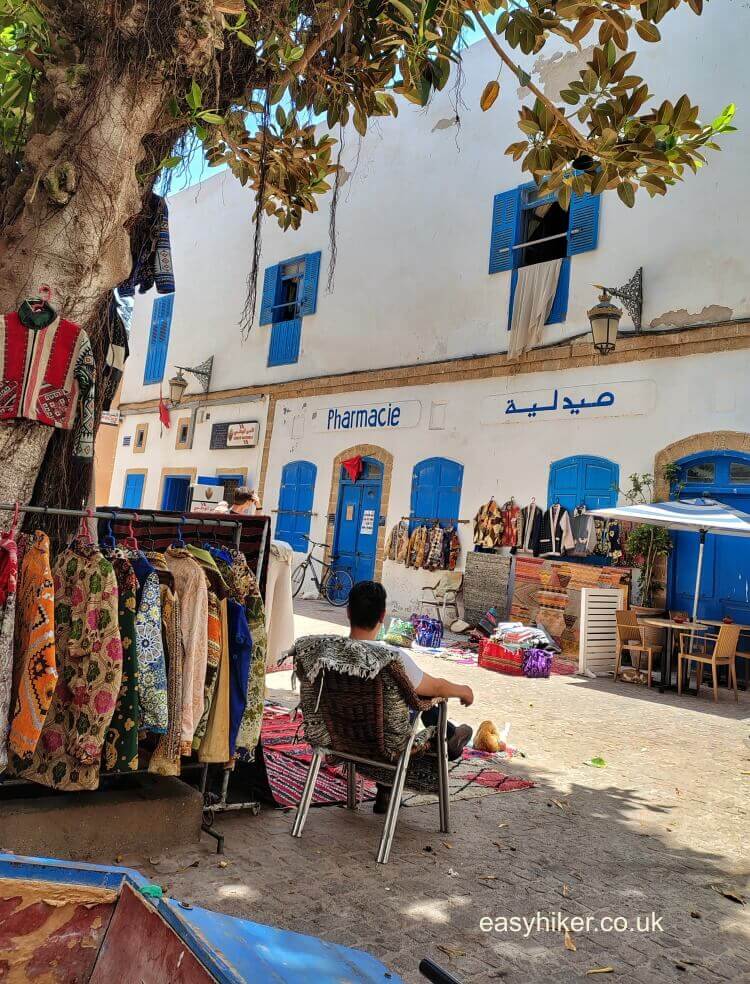
The Journey Is Its Own Reward
The bus trip from Marrakesh to Essaouira – a standard in every local travel agent’s programme – takes three hours plus another three hours back, and you will generally have about four hours in town on your own. Which means that you will spend most of your day on the bus – and therefore should make the trip itself a key part of the away-day experience. Fortunately, this is easy because there are many interesting things to see along the way …
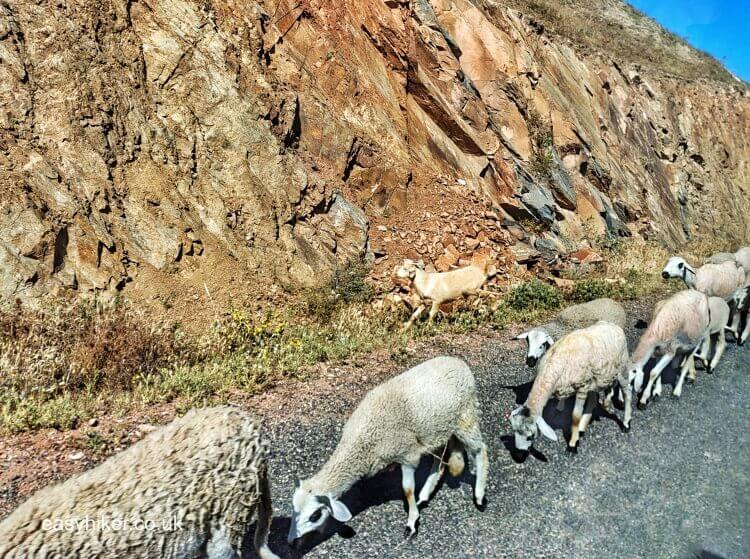
… not least because you are not just passing through empty countryside but also through small country towns where nobody has bothered to dress things up so that they comply with tourists’ expectations. From the window of your bus, for example, you will get opportunities of finding out what a Moroccan street market actually looks like outside the tourism brochures …
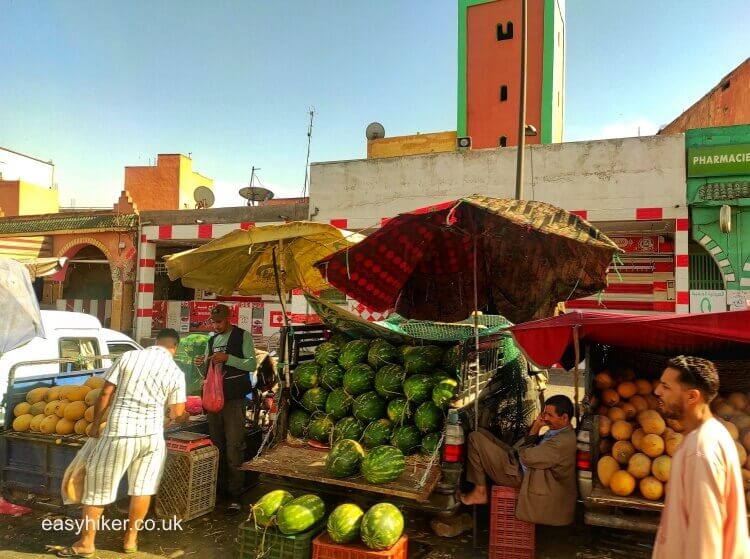
… and you will spot other things that make you ask what else these brochures may be hiding from you. You may, to give you an idea, wonder whether it is really normal that so many rivers seem to be completely dry when it is not summer yet (we visited in late May) …
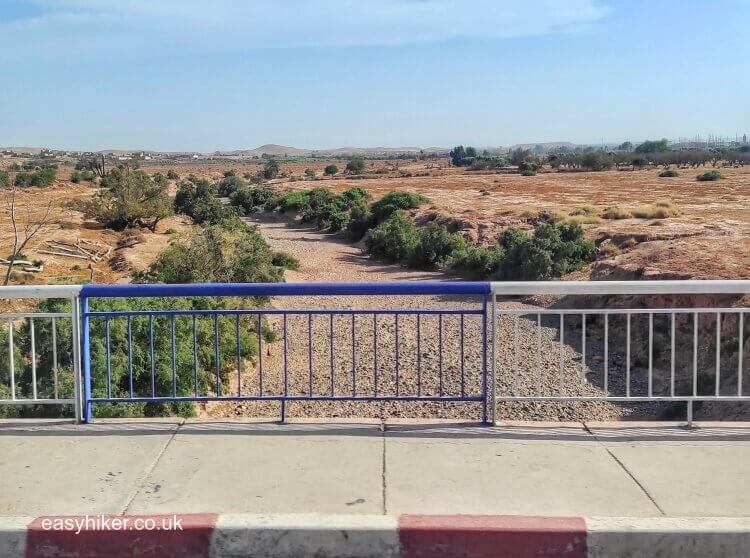
… and how much of the Marrakesh region’s trademark burnt-clay colour scheme is actually the product of traditional construction techniques. You will pass by many often quite massive new building projects …
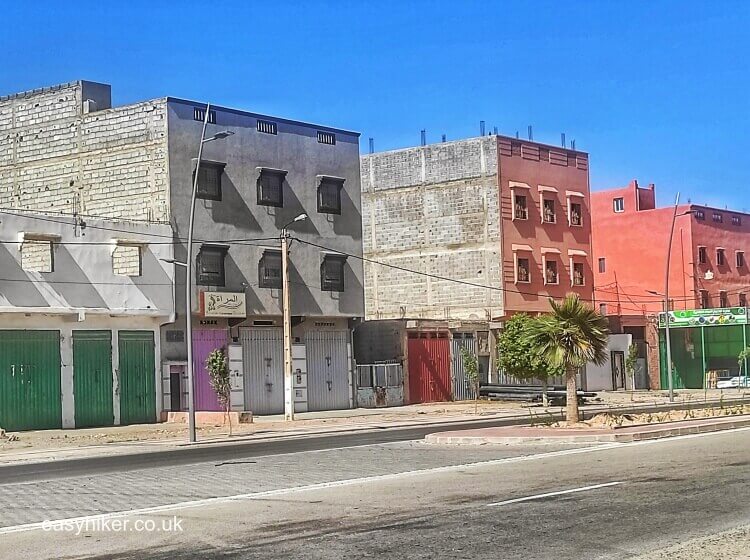
… and the images of houses that have been made from concrete bricks and have been – or are being – painted in the familiar shades of ochre and terracotta are difficult to get out of one’s head. They will certainly make you wonder what else in the country may not quite be what it seems.