Most people who visit Naples for the first time put a day trip to Pompeii near the top of their agenda.
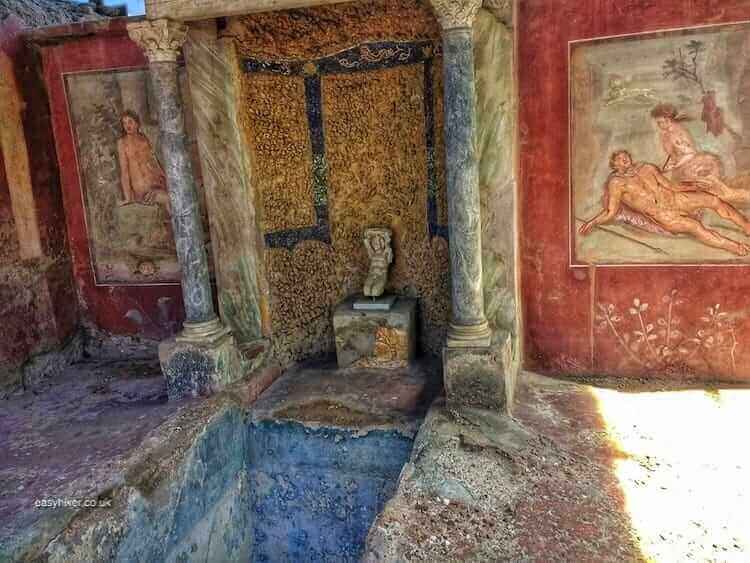
We, however, did not. Our recent trip to Naples was our fourth – we still had not seen the ruins – and I finally surrendered, much in the spirit of a man who hates classical music but buys a couple of tickets for the opera because it’s his wife’s birthday. Even if you had never read one of our posts before, you could now tell that there is something wrong with me.
But ladies and gentlemen of the jury, this is not who I really am! I act like that because I suffer from an illness! Which means: I react adversely to conventional museums or anything similar in direct proportion to the extent to which it resembles a museum in its solemnity and educational zeal.
Take ruins, for example: I quite like the Wordsworthian pathos of collapsed castles and abandoned farmhouses and do not mind the odd Roman excavation site in a Mediterranean city. But when such ruins are neatly arrayed, labelled and accompanied by info panels about How The Ancient Romans Made Their Bread, I break out in welts. You can call me a museum-o-phobe but a ruins-o-skeptic.
A Short Guide to Pompeii for the Ruins-o-Skeptic
But please bear in mind that I am not trying to persuade you not to go. All I am saying is that, if and when you do, you may benefit from knowing some things in advance. This is a small selection.
1. Pompeii is a marvel and a wonder – but there is a catch
All we have from most ancient cities – Troy, Alexandria, Carthage – are mere fragments: lines from an ancient tragedy whose plot has been lost. Pompeii is different: over there, everything has been preserved – everything! – which means that on top of the ancient prestige buildings in the town centre …
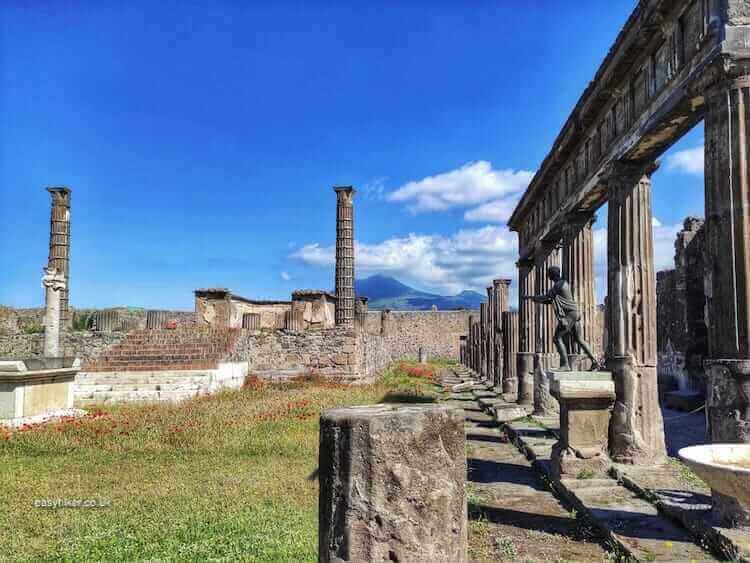
… there are also residential homes, shops, taverns.
Much of this lies in ruins – grass and scattered amphorae between broken walls – but much has kept amazingly well, down to the (often charming) decorative detail.
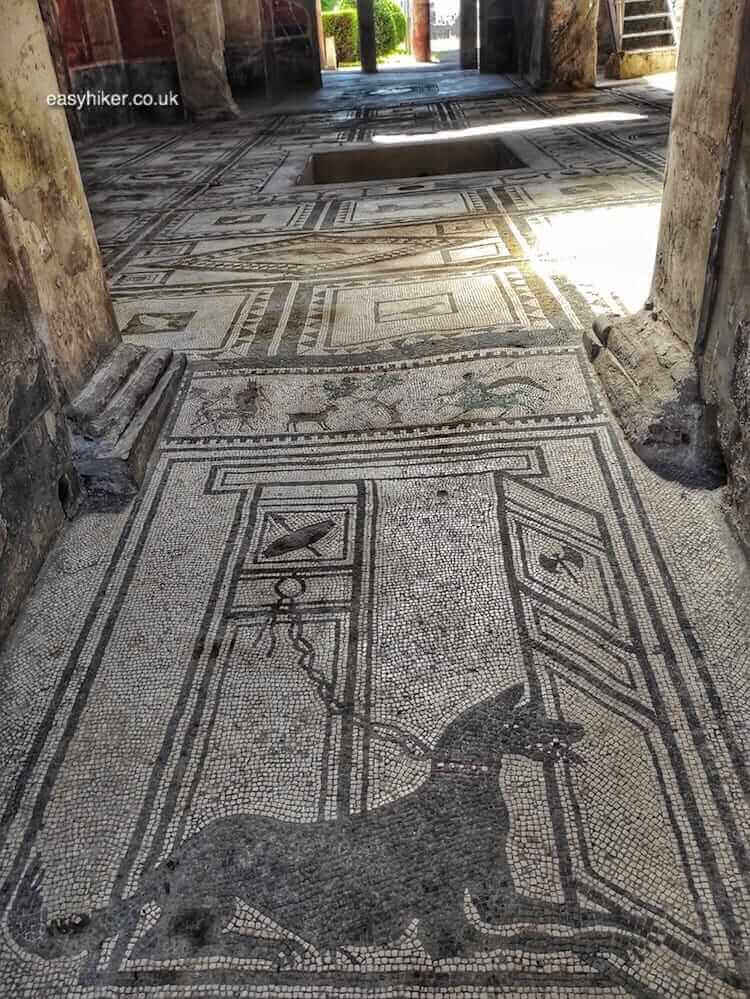
Pompeii provides a unique glimpse into the world of antiquity. Unfortunately, however, it was one of this world’s most boring cities.
Imagine: 2000 years from now, all the marvels of modernity have disappeared off the face of the earth – all we have left of New York and Paris are the head of the Statue of Liberty and one chapel in Notre Dame Cathedral. The only place fully preserved is Naples – the one in Florida.
So do not expect much of a glimpse into the workings of the Roman Empire. What you can get a feel of, however, is how sweet the life must have been for those citizens who were prosperous enough to own a summer residence a brief journey away from the noisy Imperial city.
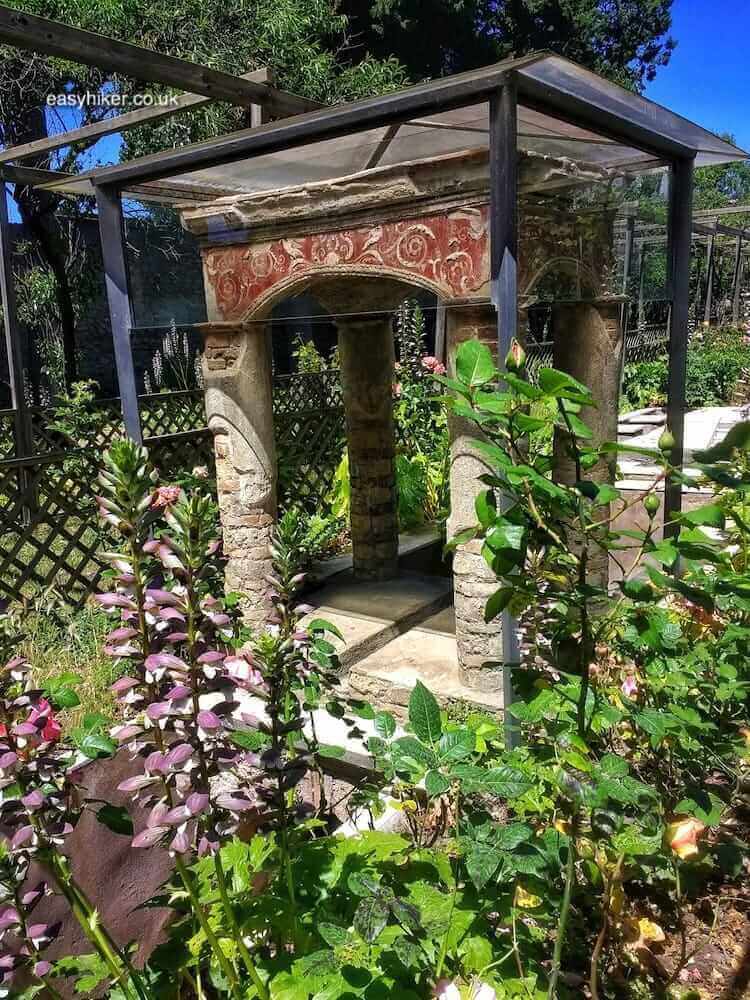
2. Wear walking boots
Pompeii is enormous.
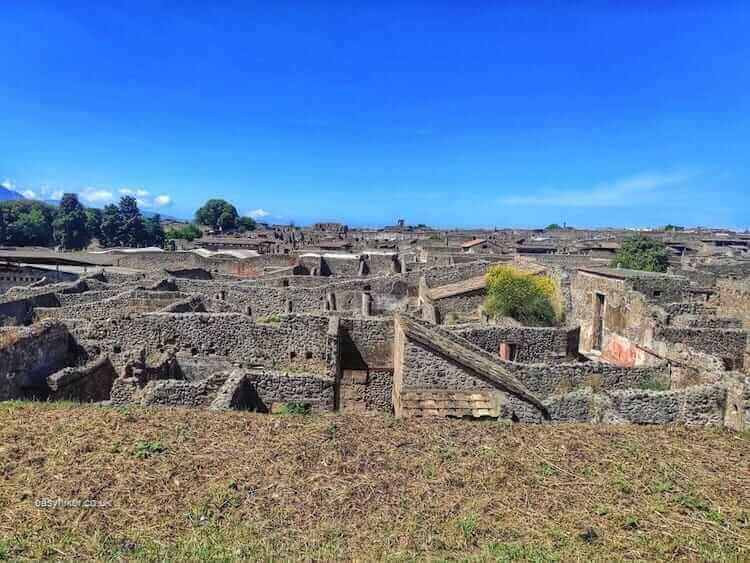
We had been warned in advance by friends with knowledge of the place but still underestimated how big the excavation site is. It is impossible to see everything in a day, and you should not try.
Instead, visit Pompeii like you would any charming resort town from contemporary times. Go to the town centre first and then pick one or two neighbourhoods for a closer look.
Pompeii’s residential quarters are mostly made up of simple one-storey bungalows. They might have looked fairly similar 2000 years ago, but in today’s state – stripped of their roofs, ornamental features and furniture – they are virtually identical.
Walking down these streets can be a hypnotic experience: ruined bungalows to the left of you, ruins to your right, and there you are – stuck in the middle with the sheer repetitiveness of it all.
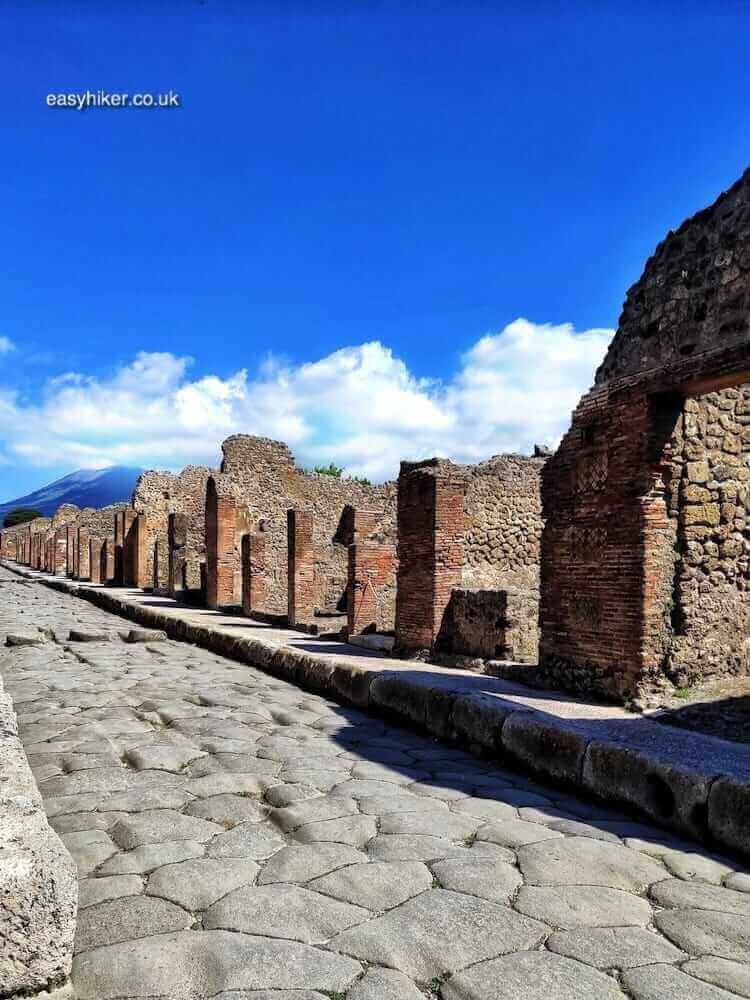
Because of its size, Pompeii can also be exhausting to explore. Its low skyline (no roofs, no shadows) offers little protection from the blazing sun and the heat. It was hot enough in May (when we visited), but how will this feel in July and August?
Pompeii’s size, however, also has positive effects. Our train from Naples, just one of 10 throughout the morning and the early afternoon, was packed, with standing room only. But at the site itself, it felt throughout that there was still room for more.
You will meet other visitors, of course, but never so many that they seem to get in the way. (Important qualification: at the height of the tourist season, this may be a different story.)
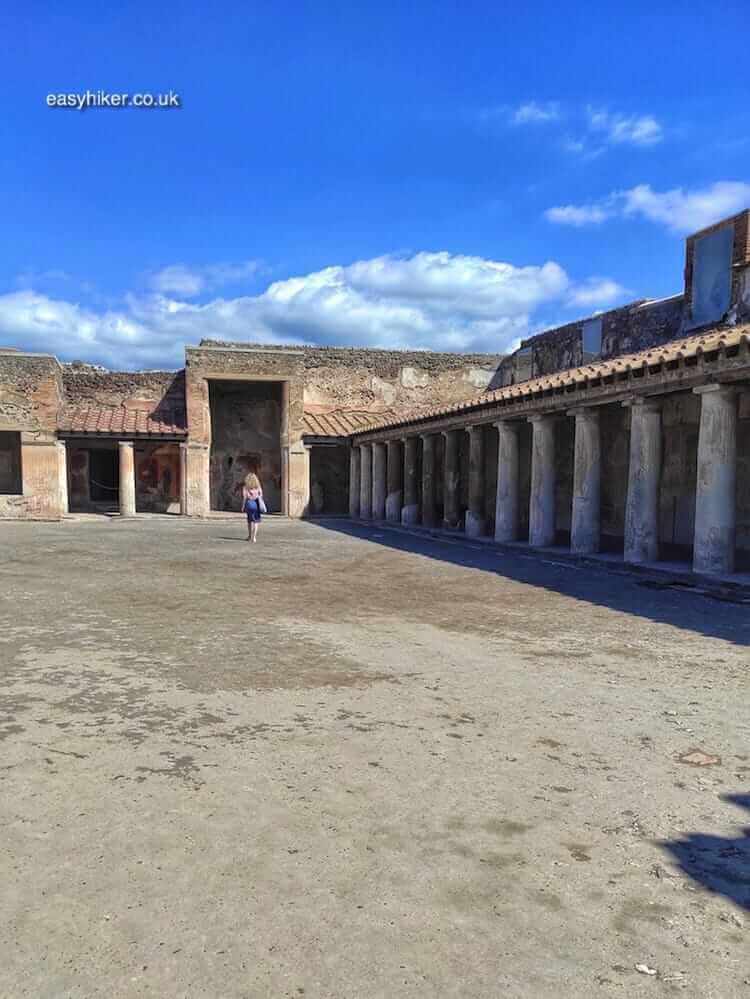
3. And bring your own provisions
Old Pompeii had 600 restaurants that served hot food, …
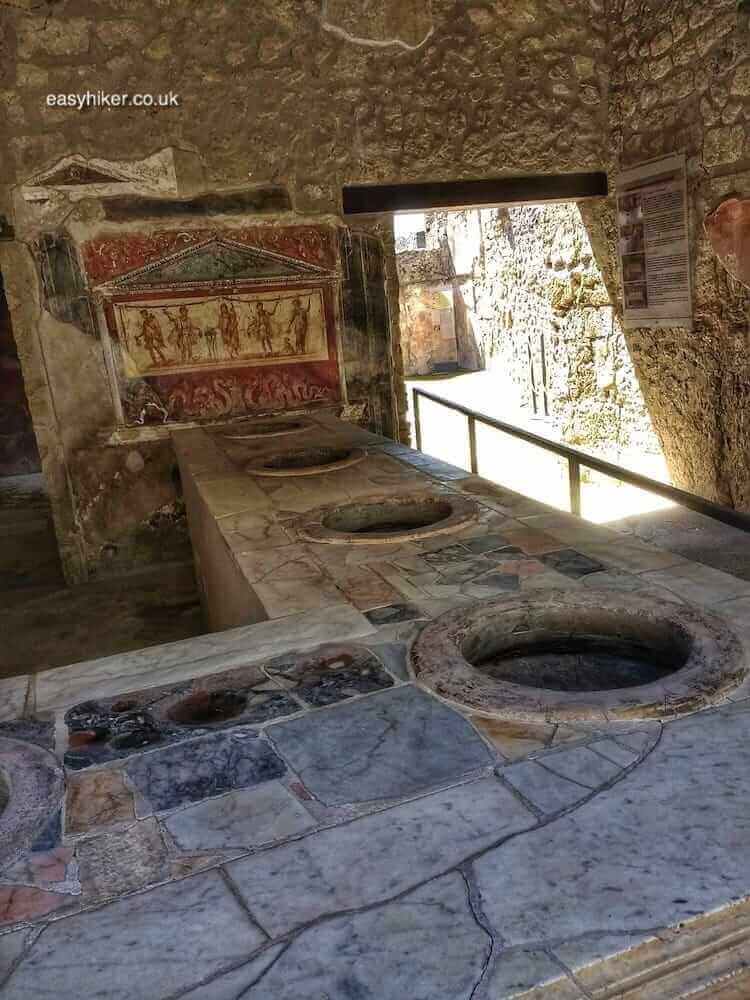
… while “modern” Pompeii has just one – and only if you stretch the term “hot food” a little.
The all-white Villa Aquila on a hill near the old commercial centre has the monopoly for feeding thousands of visitors every day, and you can imagine how quickly it fills up at lunchtime.
But walk up the stairs anyway, even if you do not want to eat there (or use their toilet facilities), because this is the best place to take a close look at the culprit whose eruptions buried the place nearly 2000 years ago.
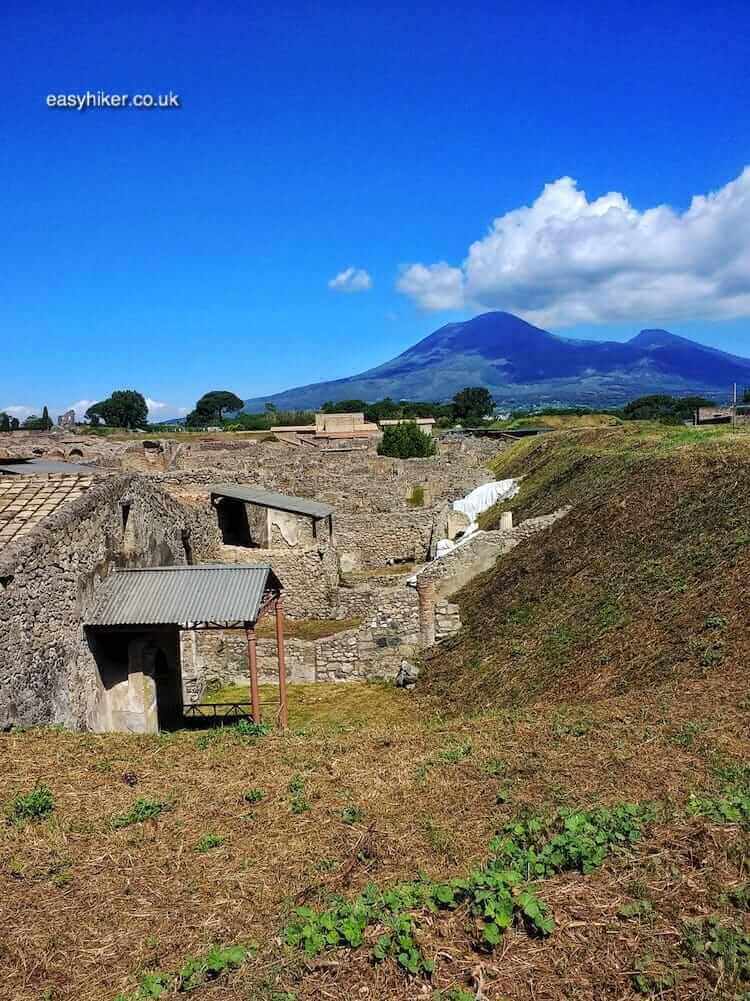
Vesuvius actually looks quite far away. This may puzzle some: how come so many people died, and how come so many of the victims seem to have been caught by surprise (such as: in the act of making love)?
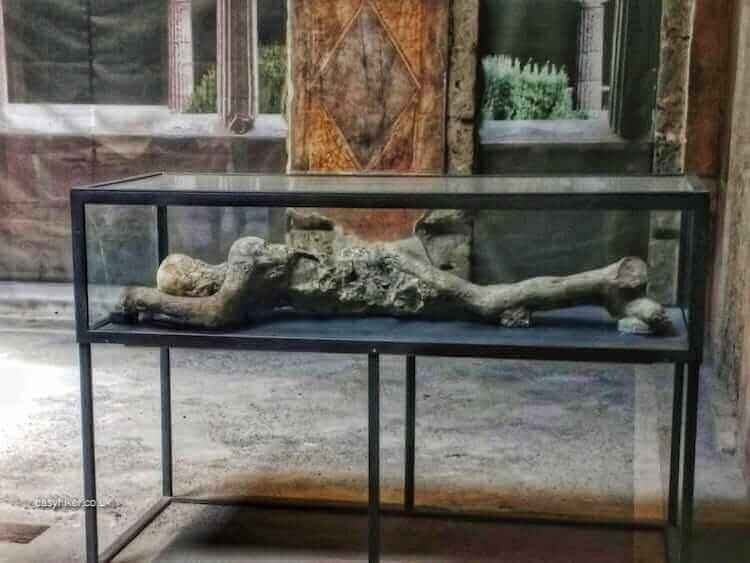
The answer is simple: most victims were already dead when ashes and molten lava came to encase their bodies, having been killed by collapsing buildings or the heat shock of the violent explosion.
But bringing your own provisions is only half the solution. Part two of the picnic mission is to find a place where you can sit down for an al fresco lunch. There are no benches in Pompeii, in line with the official policy of not plunking anything into the streets – street furniture or info panels – that was not there in 79 AD.
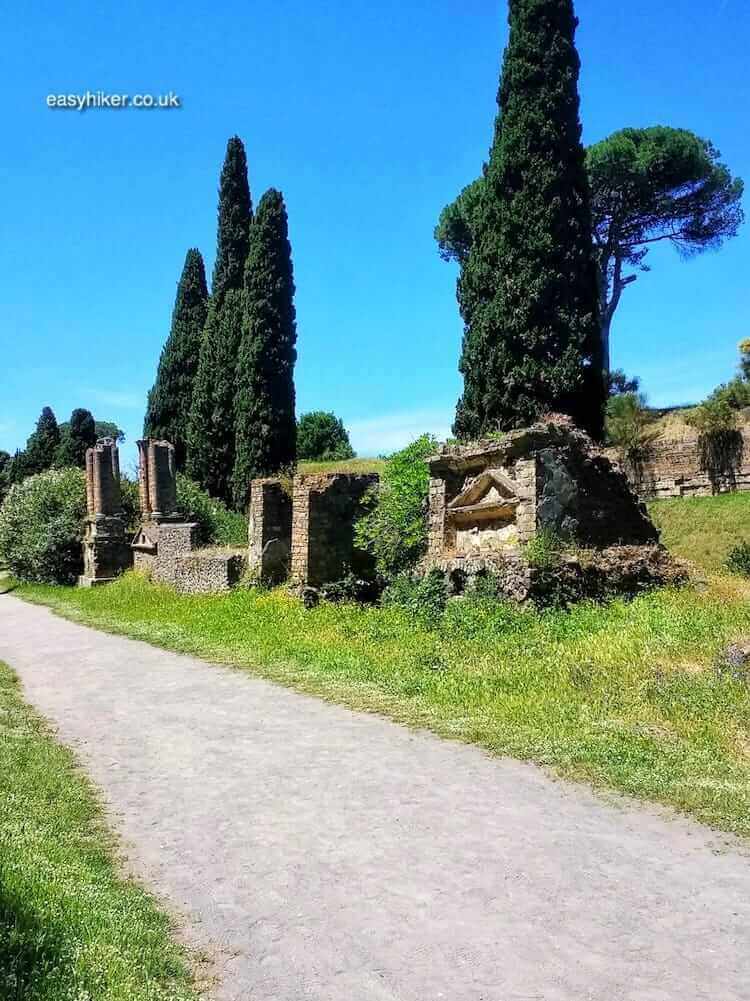
As a consequence, you are most likely to find a quiet place – in the shadow of a tree, to boot – in the bucolic fringes of Pompeii near its outer walls. It is a bit of a walk there but well worth it: just looking at something other than semi-collapsed buildings will refresh and energize you for the second half of your day!
4. Lost in Pompeii? Here is what to do
Another consequence of the only-authentic-bits-in-the-streets-policy is a problem of navigation. The map you will get at the entrance identifies Pompeii’s streets by name, but the signs on walls and street corners use a different system (one of grid register references). So how can you match the two systems to establish where you are?
Here is a tip: in your street, look for a “house with a name” and a number …
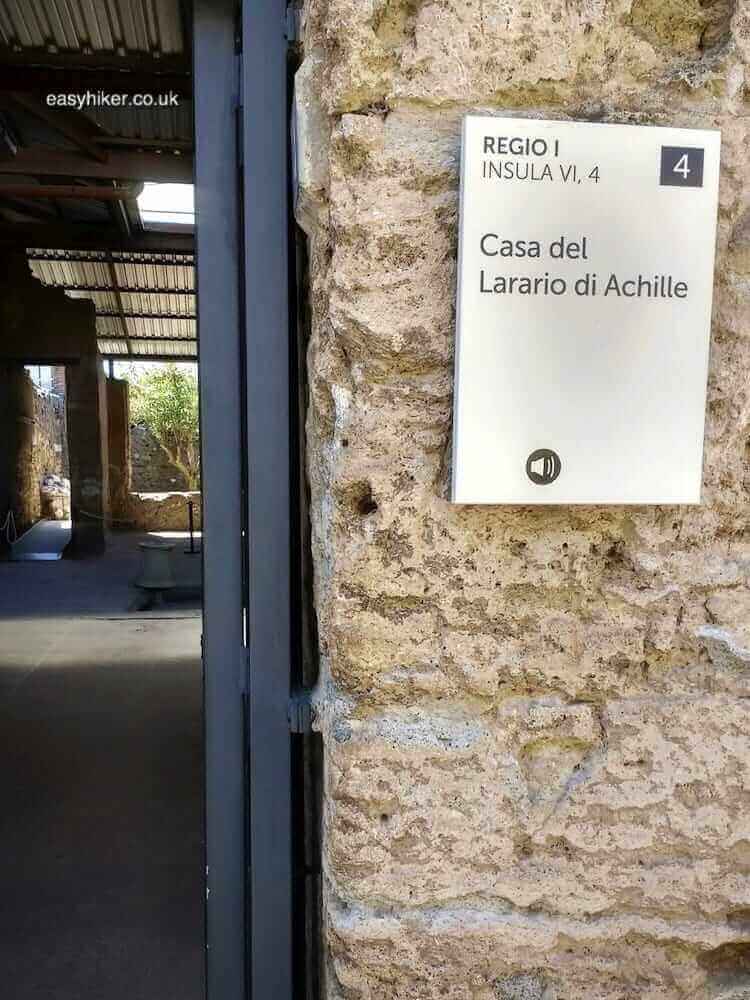
… because these houses are located on the official map and then listed in numerical order, Regio by Regio, on its margins. “Named houses” – often well-restored and luxurious – are clustered in the town centre, but most streets anywhere have at least one. In Pompeii, like in Rome itself, people from different origins and social classes appear to have lived next door to each other.
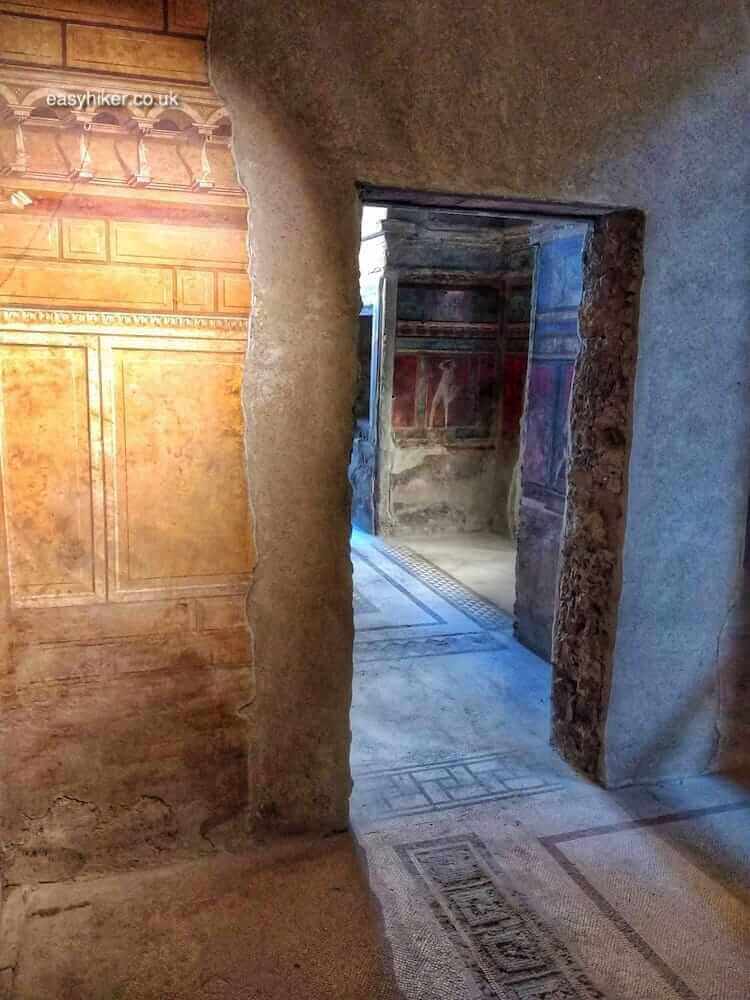
Some of these “named houses” have truly astonishing interiors and certainly put modern holiday homes, their owners as well as their architects, to shame.
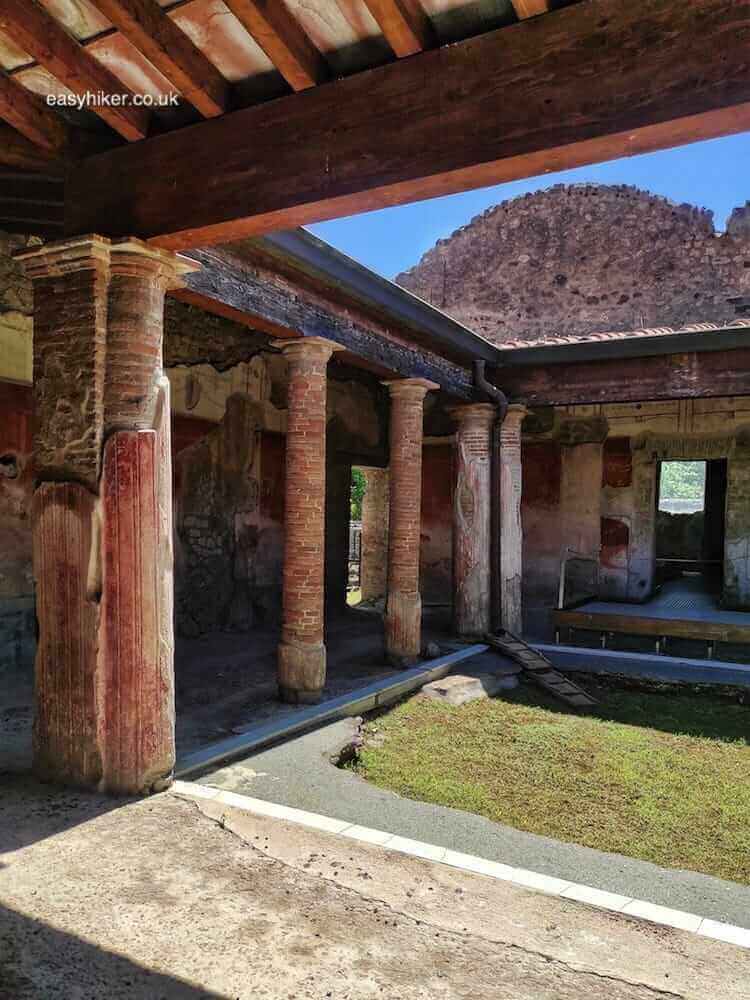
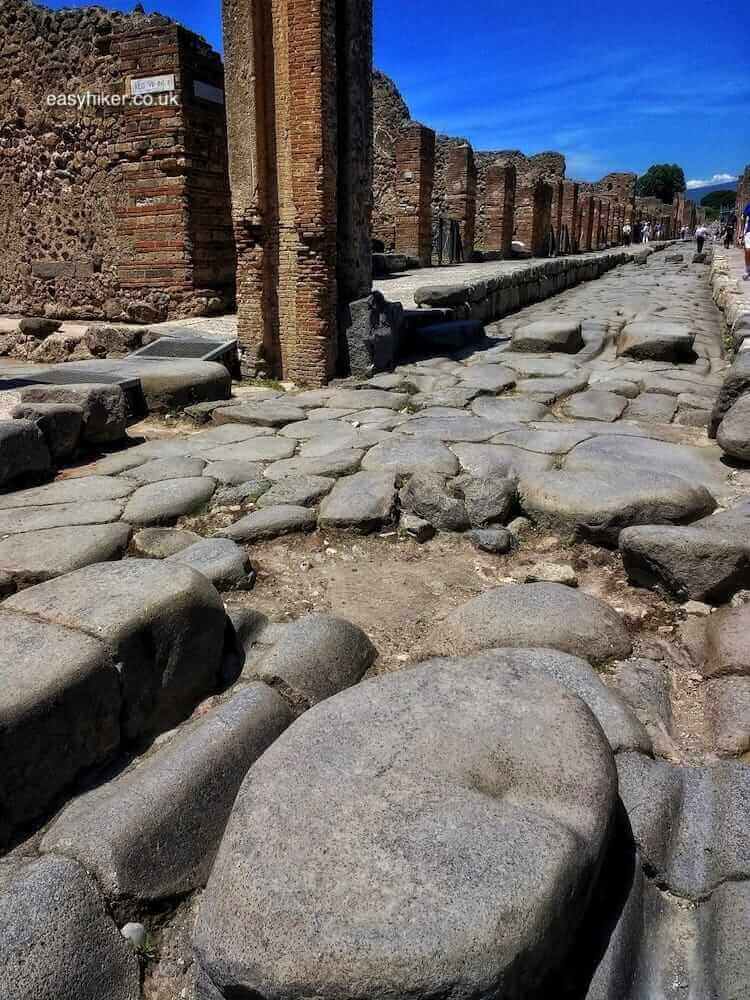
But whether or not you feel like taking a closer look: once you have found the name of the house on the map, you know where you are and can plan your next move. What you cannot – or should not – do is walk on the cobbled streets and consult your map at the same time.
In Pompeii, always mind the gap!
5. Suburban villas
It may be tempting to skip the Suburban Villas in the northwest of the complex (“seen enough! it’s getting late! it costs extra!”), but here is why you should think twice.
First of all, the visit begins with a pleasant walk behind a gate that you are only allowed to pass if you have bought the additional ticket.
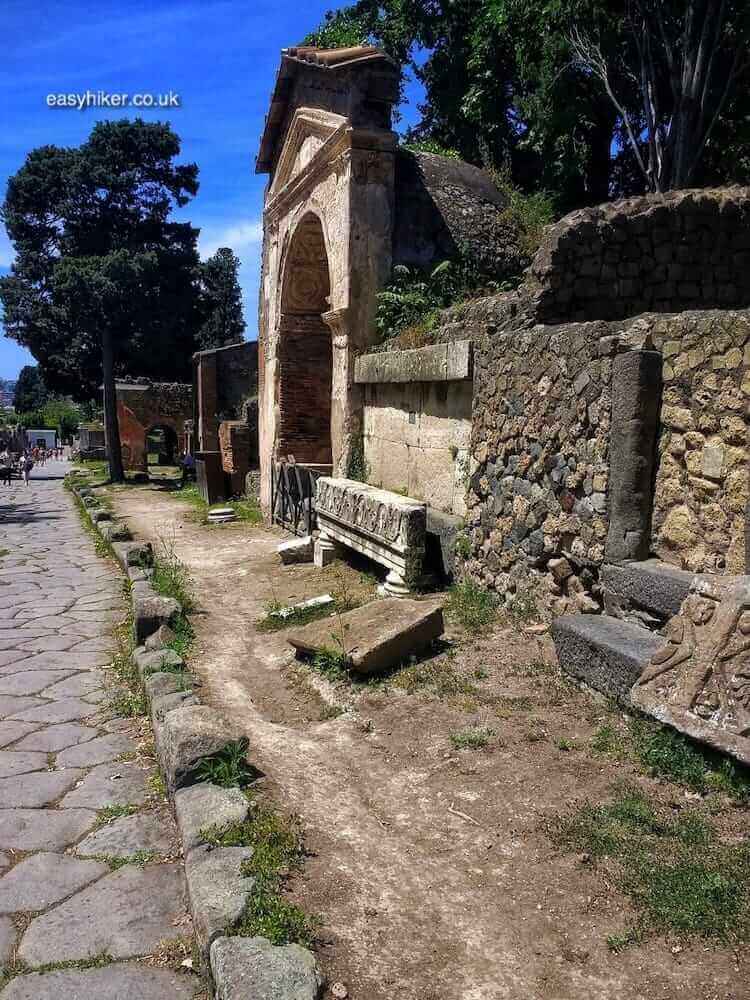
The villas you can visit here resemble the houses in town but have been conceived on a different scale. They have also been embedded into a different context of larger gardens, more space and more air around them – and it is the context that creates meaning as well as experiences.
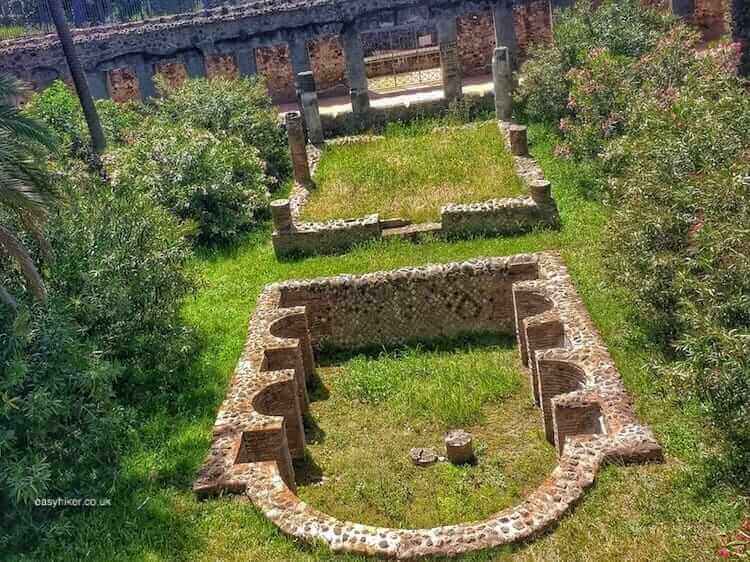
You also have a better chance of having their interiors to yourself, because – due to the extra charge – there are fewer visitors.
Leave the suburban villas for last to finish your visit on a happy note. There was no happy end for many of Pompeii’s townspeople, but you have the benefit of the choice of how and when to walk away.