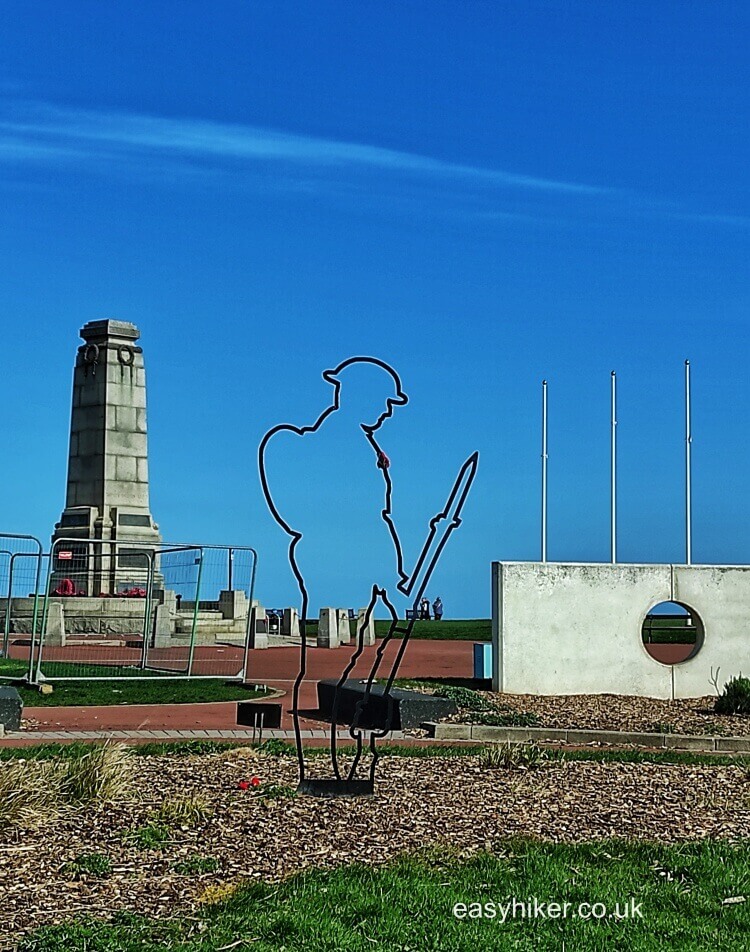
No visit of Newcastle would be complete without a trip to the famously dark rocks of the Northumberland coast …
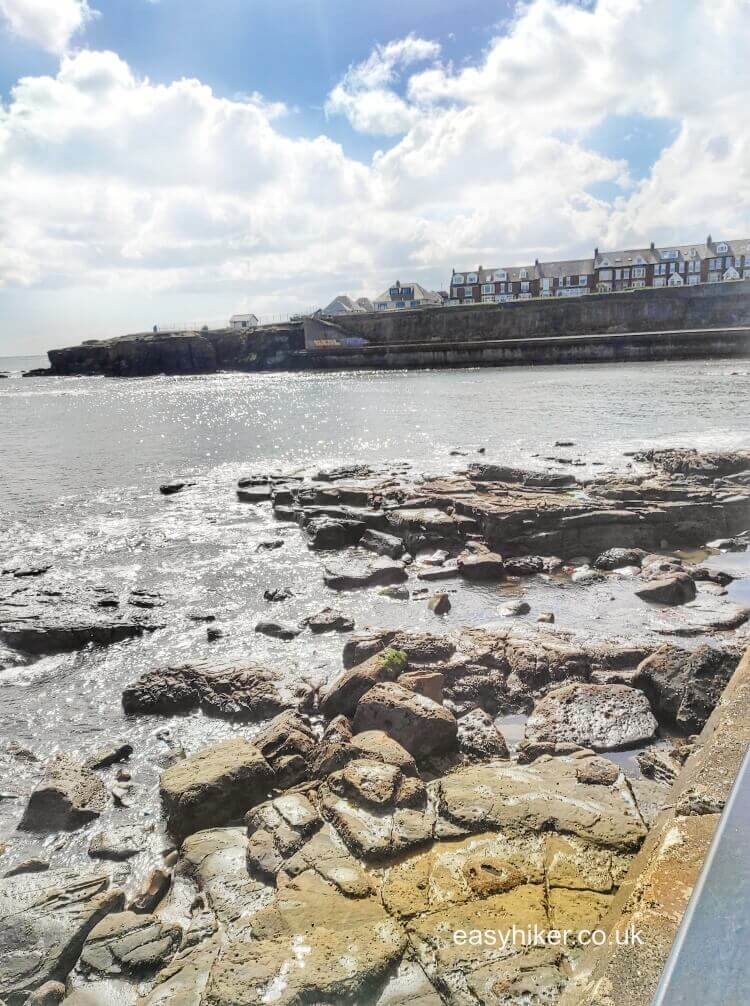
… and the historic castles that proudly stand at the North Sea’s edge – as well as the ice cream vans that are parked underneath their walls.
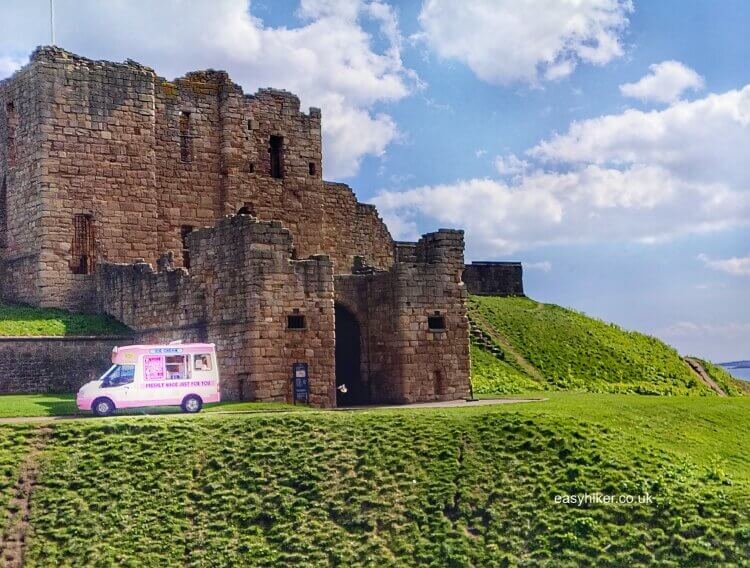
Rocks, castles and ice cream vans are all firm fixtures of Northumberland, at least of those parts of the coast that are nearest to Newcastle. In theory, this threesome makes for an uneasy coexistence, but in practice, they complement each other rather well – as we shall see today on our visit of Whitley Bay.
The more remote parts of the Northumberland coast – around Bamburgh and Alnwick where the Hogwarts exteriors of the Harry Potter films were shot – are difficult to reach by public transport, but getting to Whitley Bay could hardly be easier.
Whitley Bay Beach
Just take the Tyne and Wear Metro (the yellow line) from Newcastle to Monkseaton, turn left out of the station and then right at the near-by intersection into Marine Avenue. Walk straight for 15 to 20 minutes (a little less than one kilometre), and you are on Whitley Bay beach.
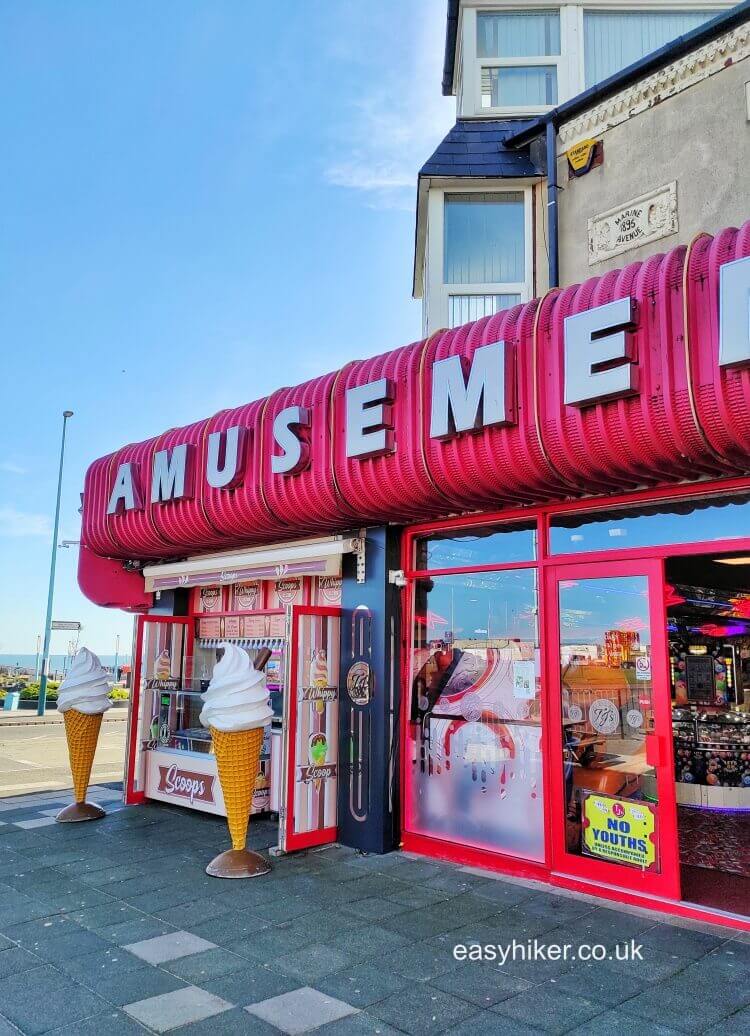
You arrive at the most popular – the most “ice-cream-van-ish” – stretch of Whitley Bay. But at the same time this area – called the Spanish City – is as classy as English seaside resorts get.
Back in 1910, it was considered one of the most lavish leisure centres in the entire country and still breathes the air of England’s Long Edwardian Summer: the era of peace and prosperity, of decadence and silent foreboding that died in the trenches of WWI.
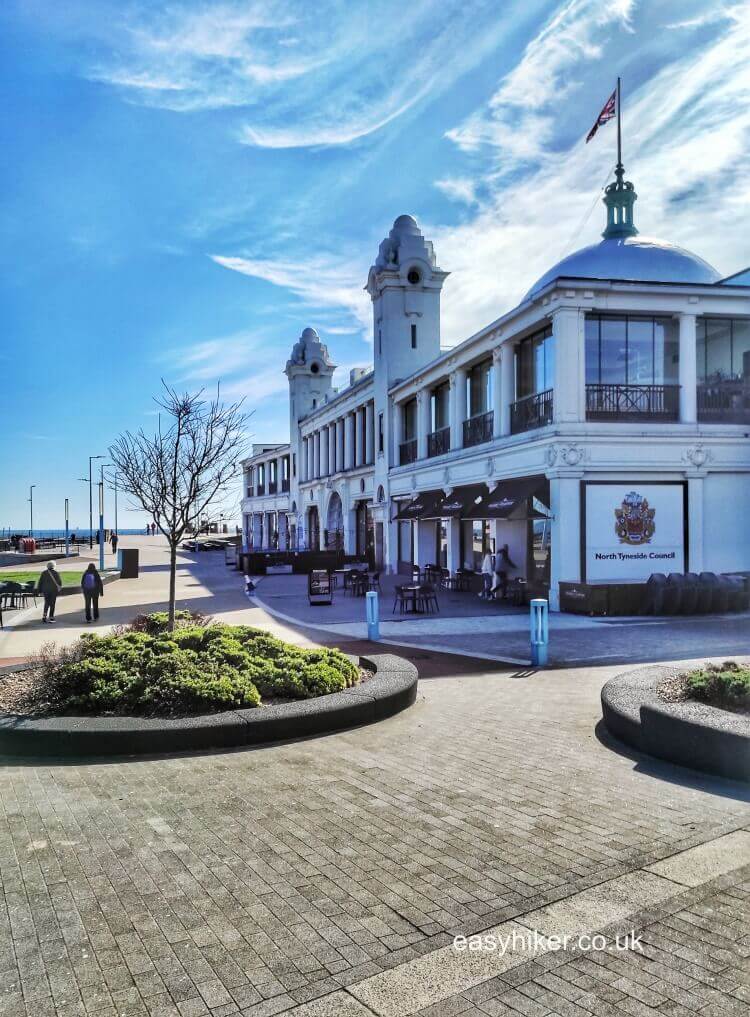
The Dome, listed Grade II* as a national monument, has been carefully restored inside and out to an elegance it may never have had.
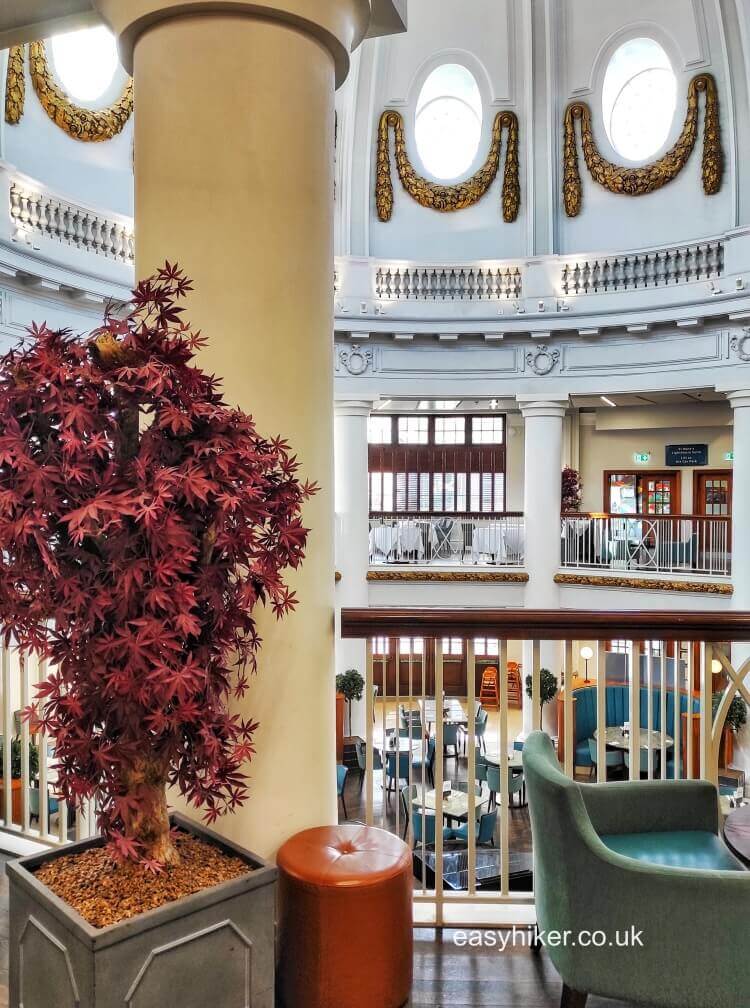
Everything else, meanwhile, including later additions such as amusement arcades and a fully-fledged funfair, has disappeared.
The Spanish City has led many different lives in its 120-year-long history. Sting and Mark Knopfler, who both grew up in the area, are on record for remembering its incarnation as a popular music venue.
Mark Knopfler says it was the first place where he ever heard “rock’n roll played really loud” – but he also appears to remember the Spanish City’s funfair days, giving it a name check in the Dire Straits’ 1981 single Tunnel Of Love where the fairground “looks so pretty to me / like the Spanish City / when we were kids”.
From the Spanish City, you can hike northwards to St Mary’s Lighthouse, one of the coast’s iconic landmarks, but be aware that this may be more of a destination in its own right than a detour. You should not underestimate the distance: where you stand, you are roughly 4 km away. (There are, however, buses from the lighthouse to Newcastle and/or Whitley Bay that leave approx. every 15 minutes.)
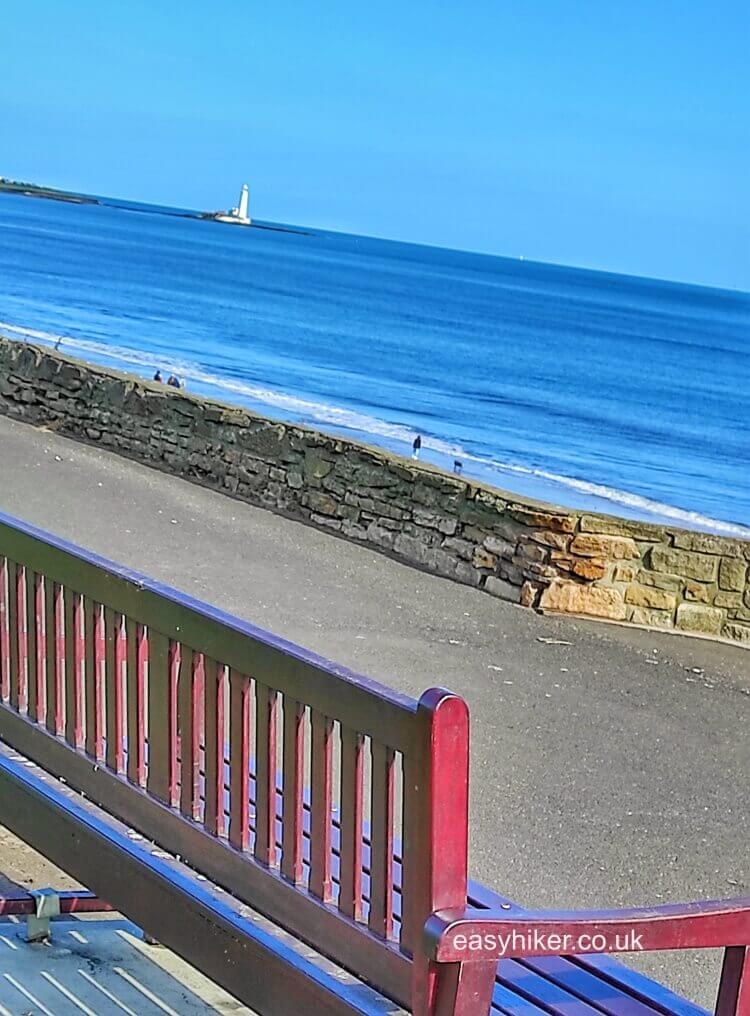
We decided to turn the other way, heading south down a coast that is occasionally rugged, …
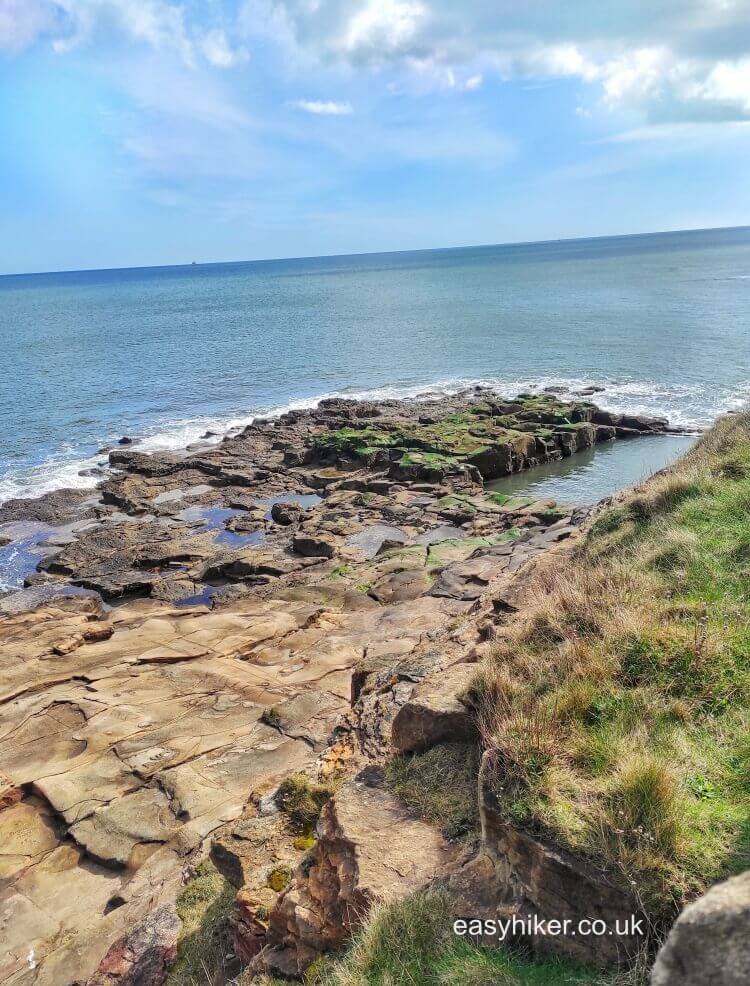
… while the trail allows you sometimes to explore it by walking on the beach …
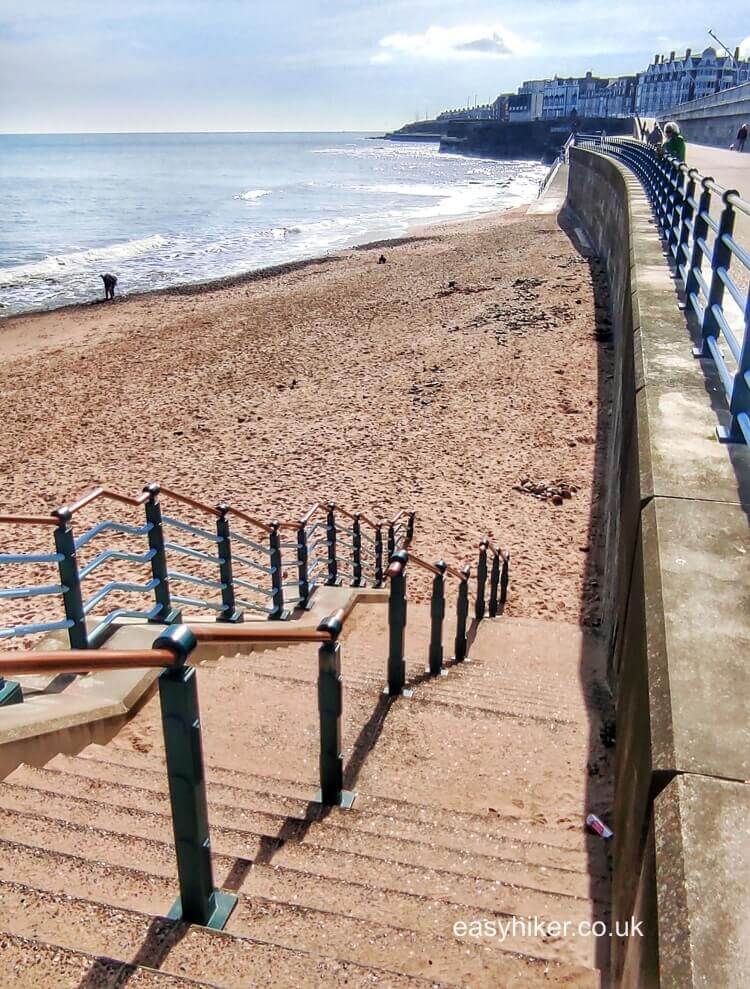
… sometimes on the asphalted walkway only.
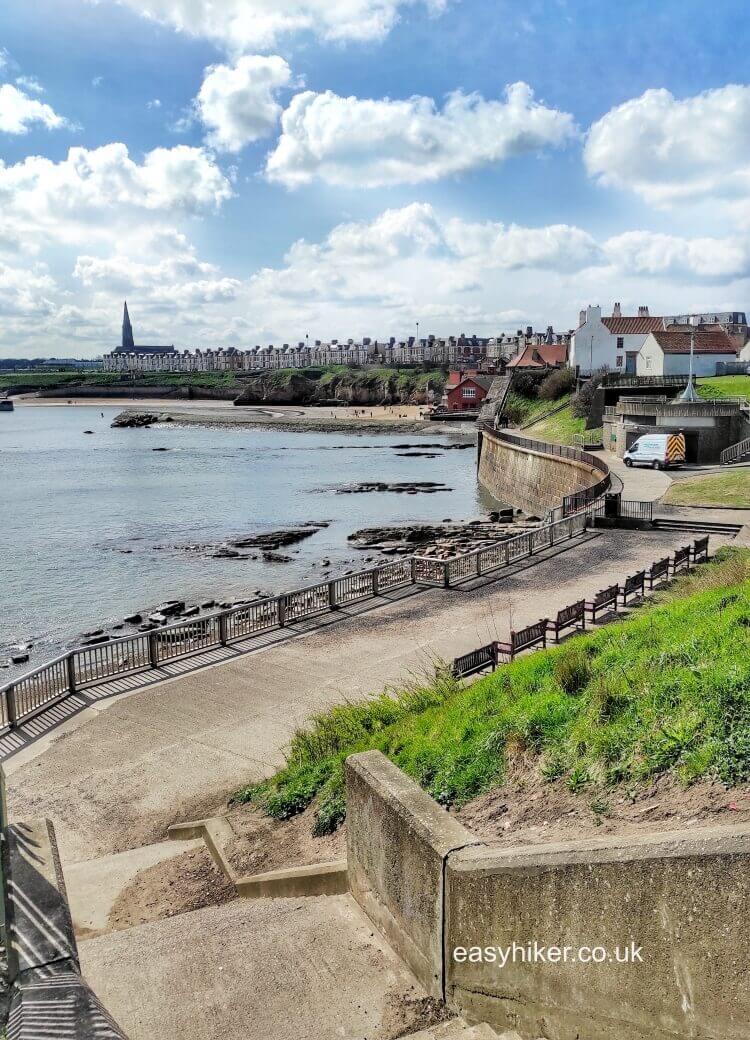
Either way, civilisation is never far away.
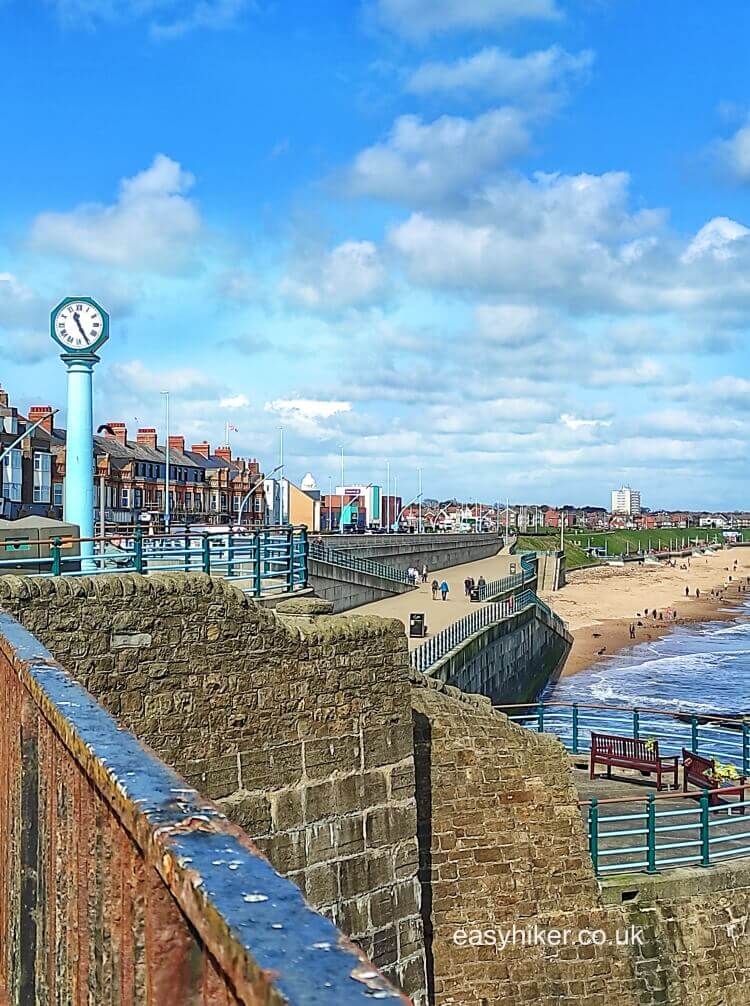
After one hour, you will reach Cullercoats Beach …
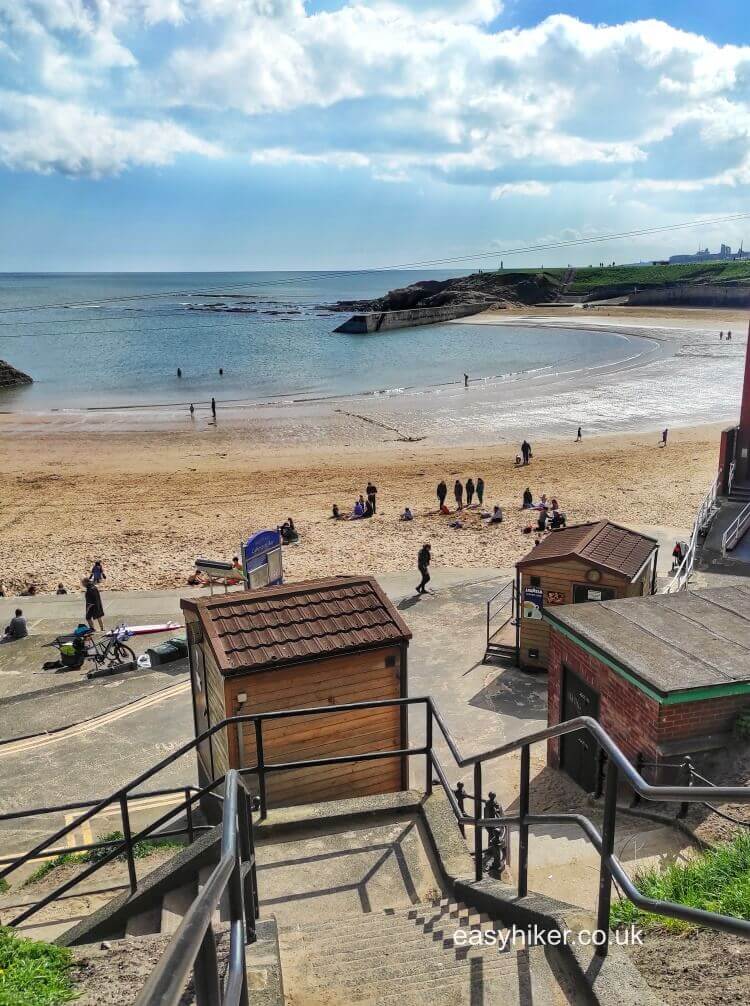
… which also receives a name check from Mark Knopfler in Tunnel Of Love.
“From Cullercoats and Whitley Bay to Rockaway”, he summarises his own journey from provincial Newcastle to a beach on the far side of the Atlantic Ocean that may be familiar territory to New Yorkers but is probably best-known to everybody else from another song by another rock band. (Joey Ramone is “chewing out a rhythm on my bubblegum” while waiting to hitch a ride: “it’s not hard, not far to reach”).
Here you have a choice: you can follow the coastal trail for another hour or continue your journey by taking the train from Cullercoats station (turn right into John Street and left into Station Road).
This may be a good time to introduce you to another “hiking theory” of mine. I have always believed that every walk in a place you have not visited before is good entertainment for one hour. The mere excitement of being in an unfamiliar place quickens the pulse, and you will notice things that are new or semi-new, unfamiliar or vaguely reminiscent of motifs you know from home or from another trip.
Novelty alone, however, does not have a long shelf life. After an hour or so, you will need something else to keep your interest up. (Spoiler alert: you are not guaranteed to find this “something else” on the next 2 km down the coast.)
But no matter how you opt to continue your day trip: you should stop over in Tynemouth before returning to Newcastle. Tynemouth is exactly what it says on the tin: the place where the river Tyne flows into the sea. As a consequence, it has been a strategically important place for more than a thousand years.
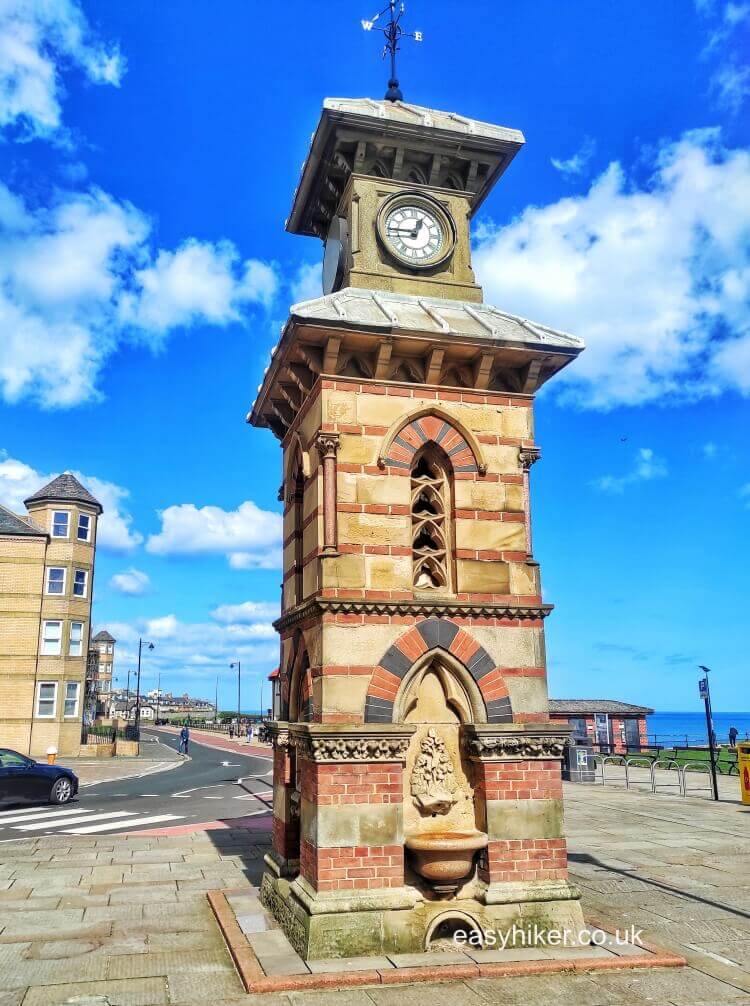
For most of this period, the county of Northumberland was (it still is) the fief of the Percy family, the Earls (in modern times the Dukes) of Northumberland. The land between Newcastle and the Scottish border is still dotted with their (by now, mainly ruined) castles.
In theory, the Percys were charged with defending England’s northernmost provinces against hostile foreign powers that came from the north. In practice, however, Northumberland was so far away from the centre of government that the Earls were free to do as they pleased, and more than one king lost his crown when he lost the Northumberland’s loyalty. (Brush up your Shakespeare, if you don’t want to take my word for it.)
The most famous scion of the clan, Harry Hotspur, may never have made it further than Heir Apparent but gained immortality as the quick-witted rebel leader in Shakespeare’s Henry IV Part One – for many years, one of the most coveted roles in the English repertoire, and the long list of famous Hotspurs includes Sean Connery who played the part for the BBC before he became forever associated for embodying another English icon.
Hotspur, of course, is also the only Shakespeare character after whom a famous football team has been named. The connection is largely psychological – “To Do Is To Dare” is the club’s motto – but it is said that the Percy family also owned some land around the club’s stadium in North London.
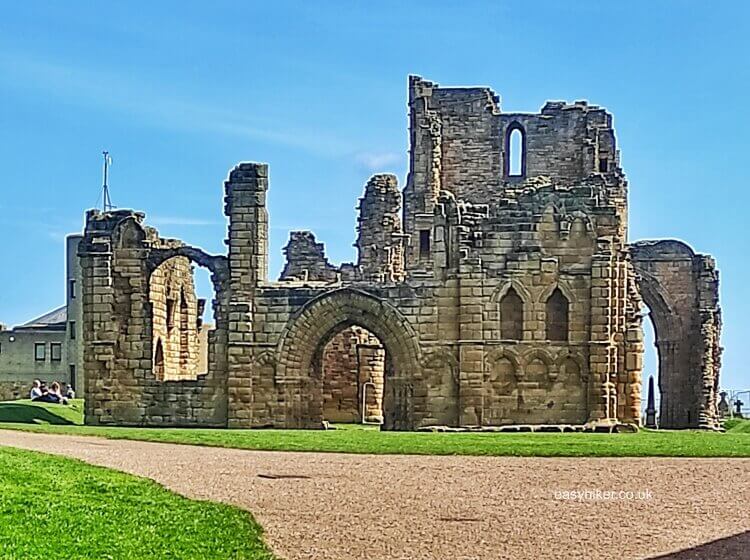
The Percys may have built castles in Northumberland for nearly one thousand years, but Tynemouth Castle – raised on a promontory at the very mouth of the river – is not one of theirs. It was originally built to fortify an older priory and later extended into a royal castle. Ultimately, the defense of the river was deemed too important to leave it in the hands of an aristocratic family with uncertain loyalties.
So when you are in Newcastle, provided the sun is out and you want some: hitch a ride to Whitley Bay Beach where, between parasols and ice cream vans, there is a lot to discover – as well as to quietly contemplate.