In many ways, Marrakesh appears to be caught between the demands of its ancient soul and the modernity that the professional middle classes aspire to.
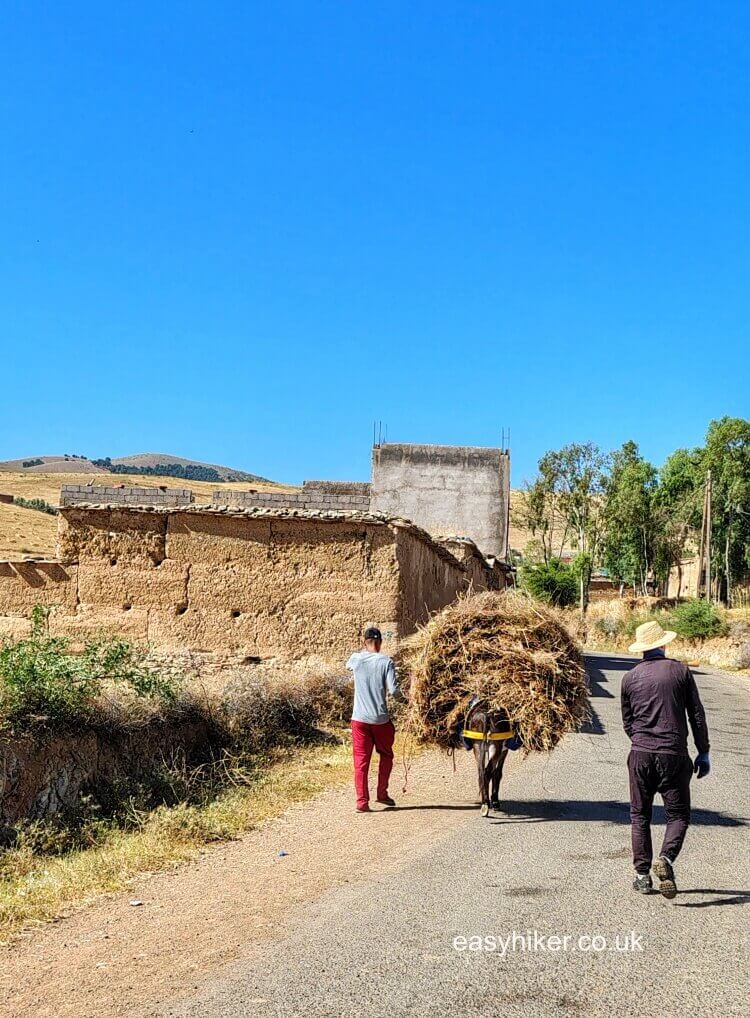
While parts of Marrakesh and, even more so, the countryside around it look as though little had changed over the past 100 years, …
… the modernisers seem to be in the ascendancy, helped very much by a forward-looking monarch who seems to be determined to drag his country into the 21st century.
The Gardens of Marrakesh
The city’s parks and green spaces reflect this struggle in their own way. The modern public gardens of Marrakesh, the ones that have been laid out in the last few decades (like the downtown Park Lalla Hassana), mainly follow the rules of landscaping’s equivalent to the International Style …
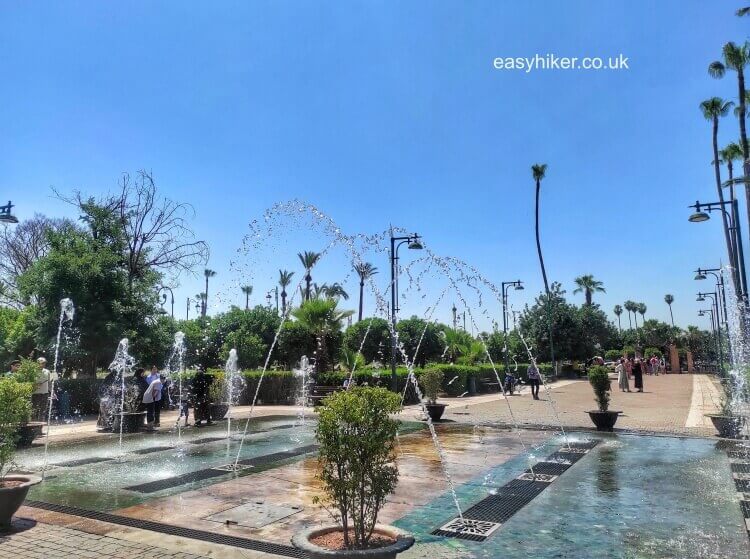
… which sometimes assumes a rather French flavour: an odd combination of cubist design and Louis XIV’s Versailles (as in the Cyber Parc Arsat Moulay Abdesalam).
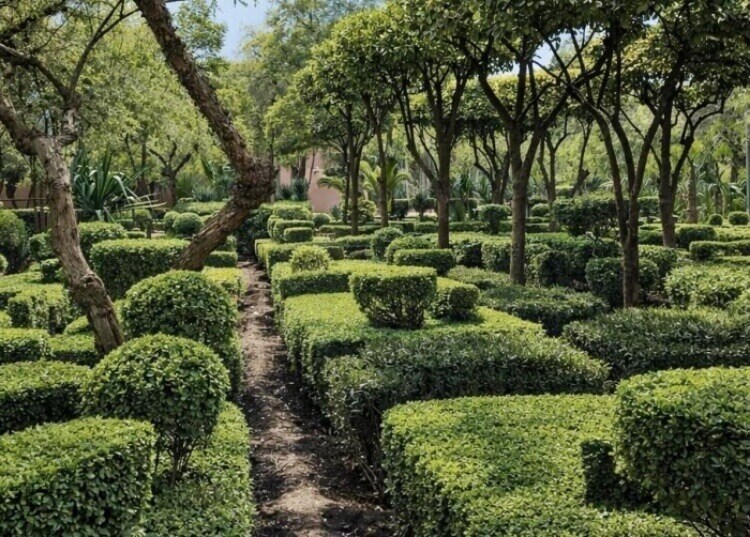
In the gardens of Marrakesh, there are occasional nods to older traditions – for example, to the symbolic significance of the right angle in Islamic gardens – …
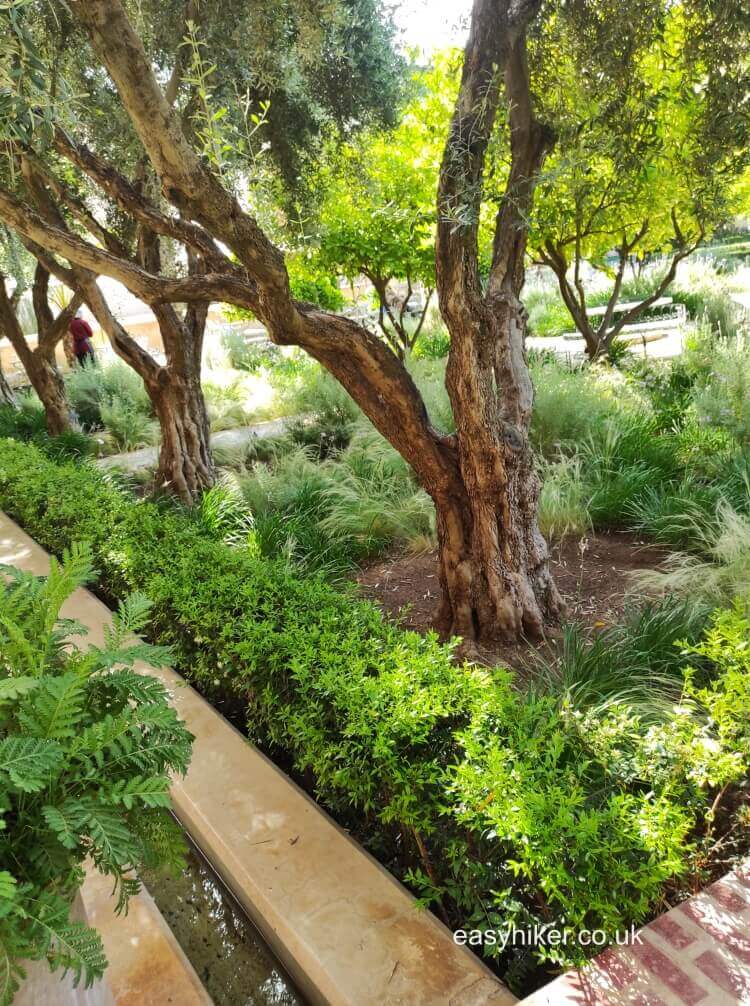
… but such older traditions increasingly survive only in museal spaces. One such space is the Secret Garden on Rue Mouassine in the walled old town.
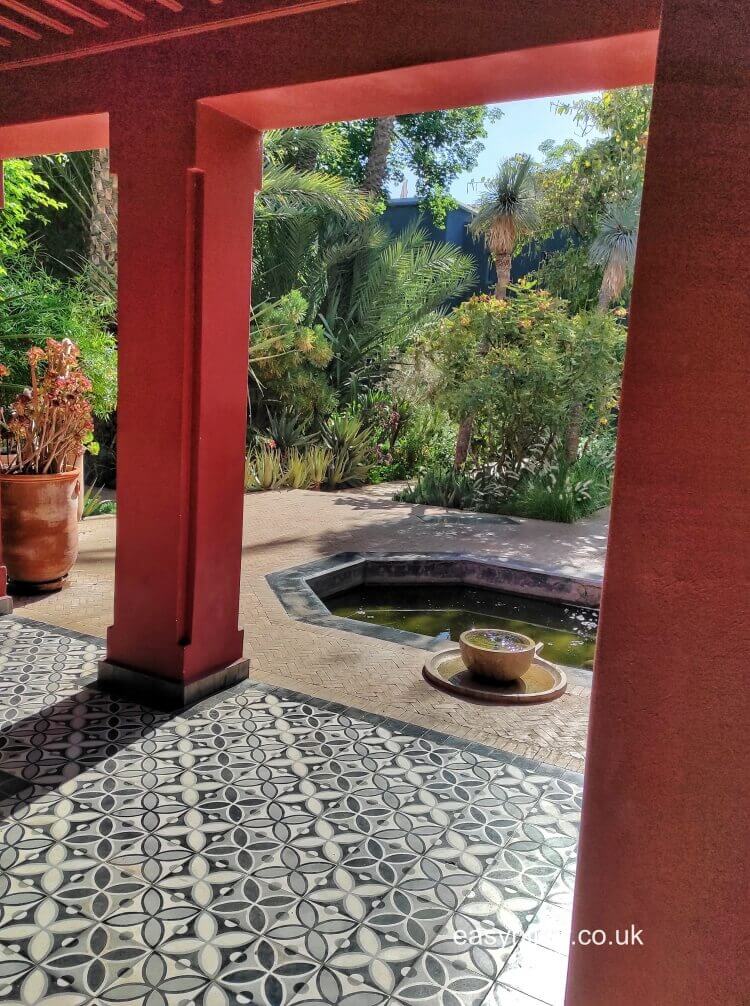
Gardens have always been of high significance in Islamic culture. All of Marrakesh’s riads, the sometimes comfortable, sometimes luxurious ancient homes inside the Medina, were built around such an “earthly reflection of paradise”, a holy place where divine order is imposed on the anarchy of wild nature.
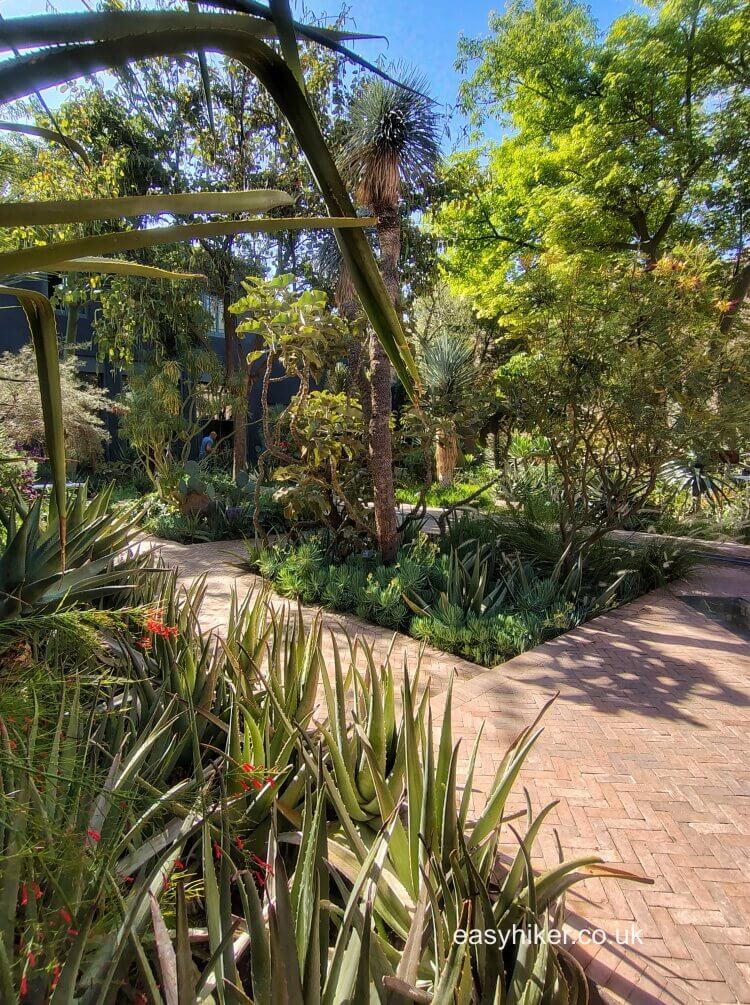
As much as the garden was the centre of the property, the fountain was the centre of the garden. Water is considered the fundamental element of an Islamic courtyard. It plays a big part in the religion’s rituals (such as ablutions), while springs and rivers are considered as signs of divine grace.
According to Islamic folk belief, who dares to urinate in a stream “has condemned himself to perpetual ruin”. (You may want to bear that in mind for your next hike.)
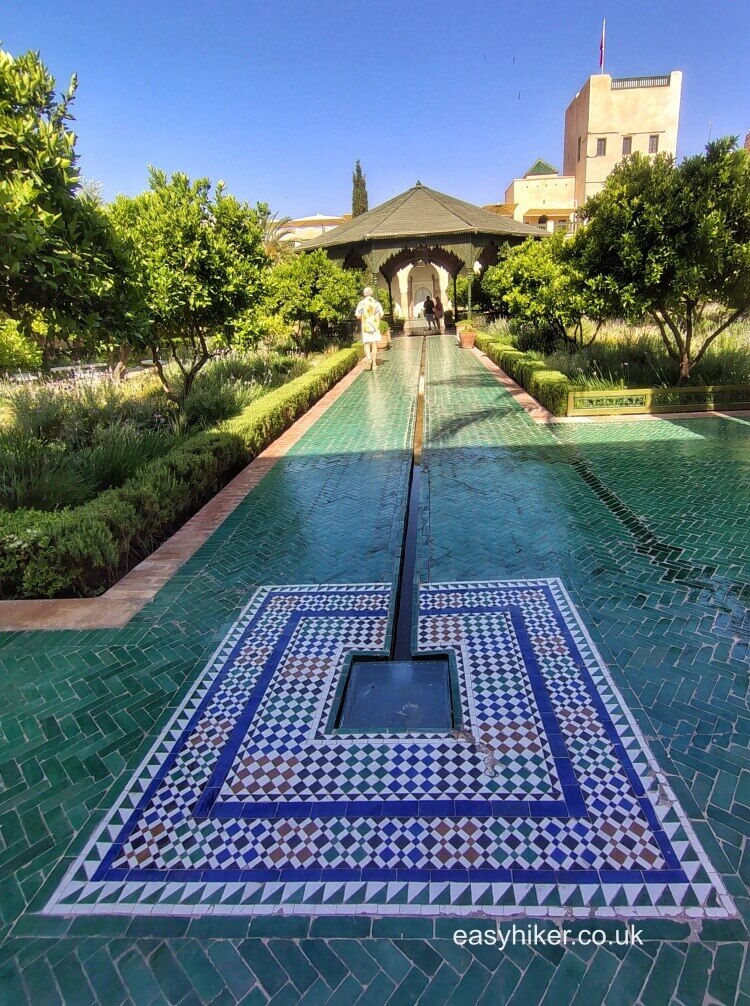
Water is often channeled to divide the garden into four sections. This tradition reaches back (at least) to the Persia of Cyrus the Great, predating Islamic culture by 1000 years. There are, after all, good practical reasons for developing a system that makes it easy to irrigate the land evenly.
But there are also theological reasons for such a subdivision – according to the Koran, four rivers divide paradise into four quarters – as well as reasons that are rooted in local history.
The entire city of Marrakech, after all, was – as the legend has it – founded around a spring whose waters were then conveyed to the four gates in the ancient wall.
Each riad therefore represented the image of the city en miniature.
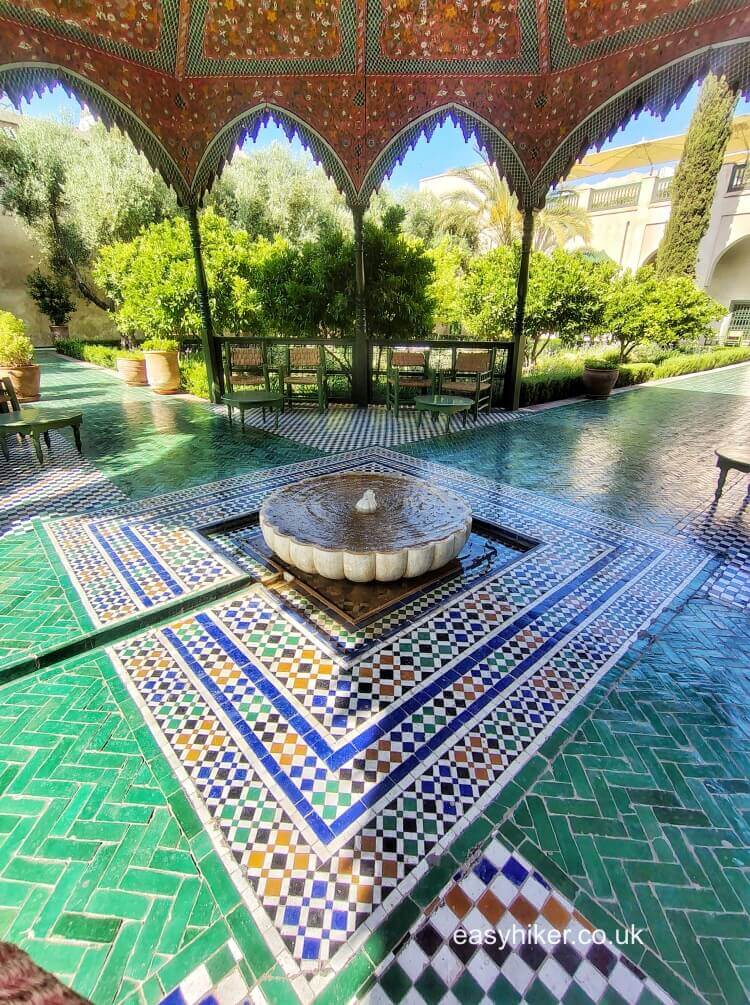
At the top of the Secret Garden stands a qubba – a long but narrow building that has evolved from Bedouin tents – with an adjacent tower.
Such towers are reminders that the gardens may have served as reflections of paradise but also of their proprietors’ earthly status. People who owned big houses knew the importance of demonstrating their determination and ability to defend their properties against hostile forces from both inside and outside the city walls.
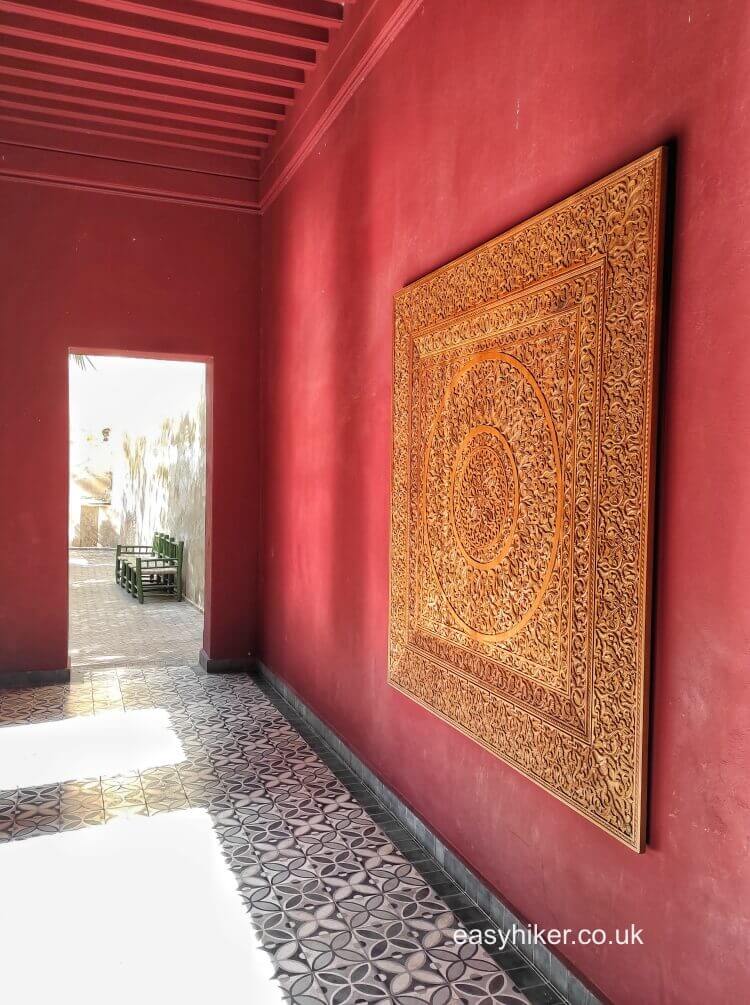
The sides of the garden are lined by places to rest, to bathe (this riad even had its own hammam), and spaces for quiet contemplation. While the riad was an oasis from the hubbub of the city, these spaces served as a refuge from the hubbub of domestic life.
The palace of the garden’s original owners – of which little is left – was constructed during the period of the Saadian rulers (in the late 16th century), Marrakech’s last great dynasty. The garden as you see it today is the product of a complex restoration effort that began in the 19th century and was only completed in 2016.
We must remember that, in medieval times, Marrakesh looked much different from what it is today: it was a garden city, an oasis in the desert – Al Bahka, a place of peace and the open air.
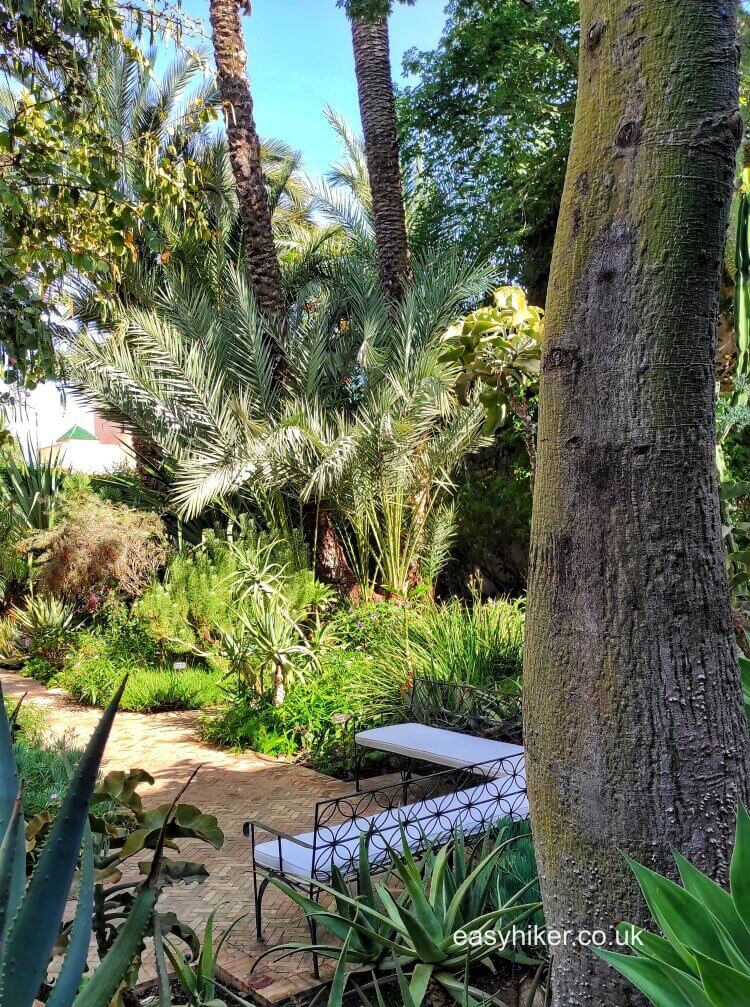
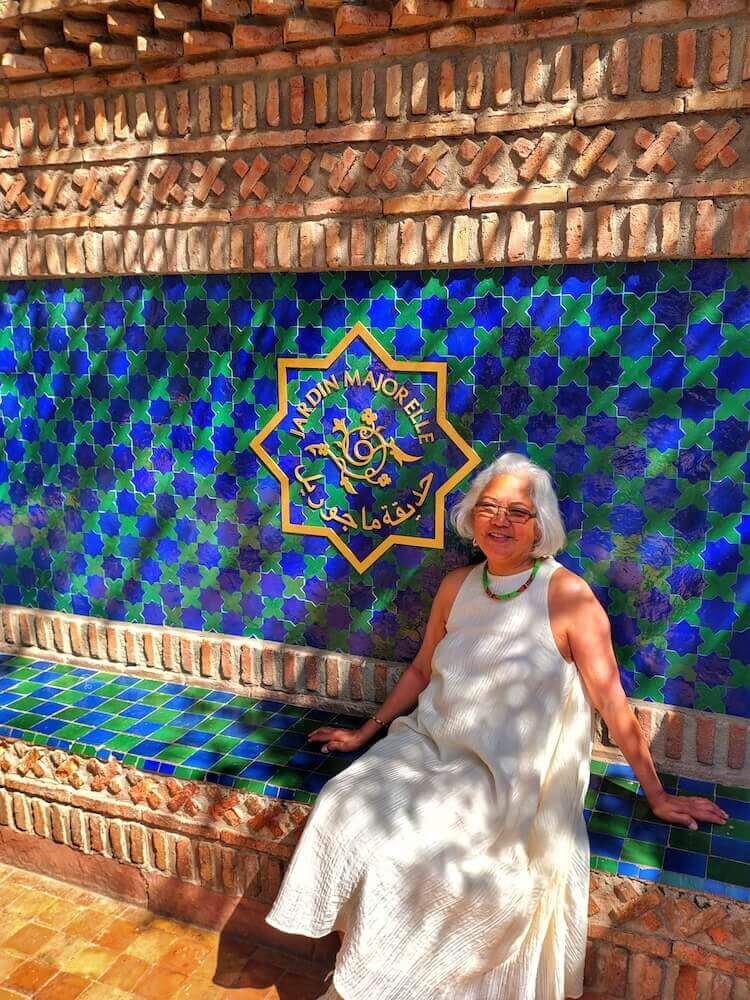
The Jardin Secret may be the most interesting among the gardens of Marrakesh, but it is not the city’s most famous or most popular. That honour goes to the Jardin Majorelle near the Boulevard Yacoub El Mansour in the New Town.
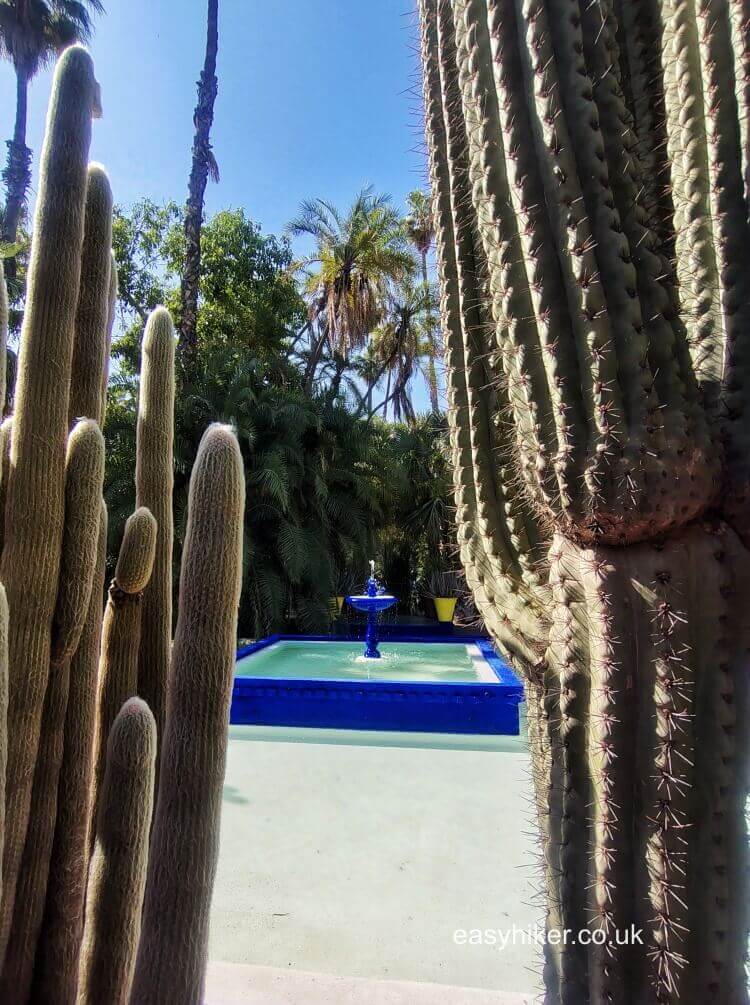
First, a few – perhaps uncomfortable – facts about the Jardin Majorelle. It is not a Moroccan or Islamic garden but the highly idiosyncratic work of a French artist (Jacques Majorelle, the son of the great Art Nouveau designer) that happens to stand on African soil.
It is also relatively small, expensive to visit, and overcrowded: by visitors and by staff who guard every intersection of footpaths and insist on sending you back to where you have just come from because you have not followed the prescribed route.
Unlike the other gardens of Marrakesh, you will also need to book a time slot for your visit online (at least one day ahead), and when you miss your slot, you will – at least in theory – forfeit both your time slot and your money.
Having said all of that, the Jardin Majorelle is also very beautiful.
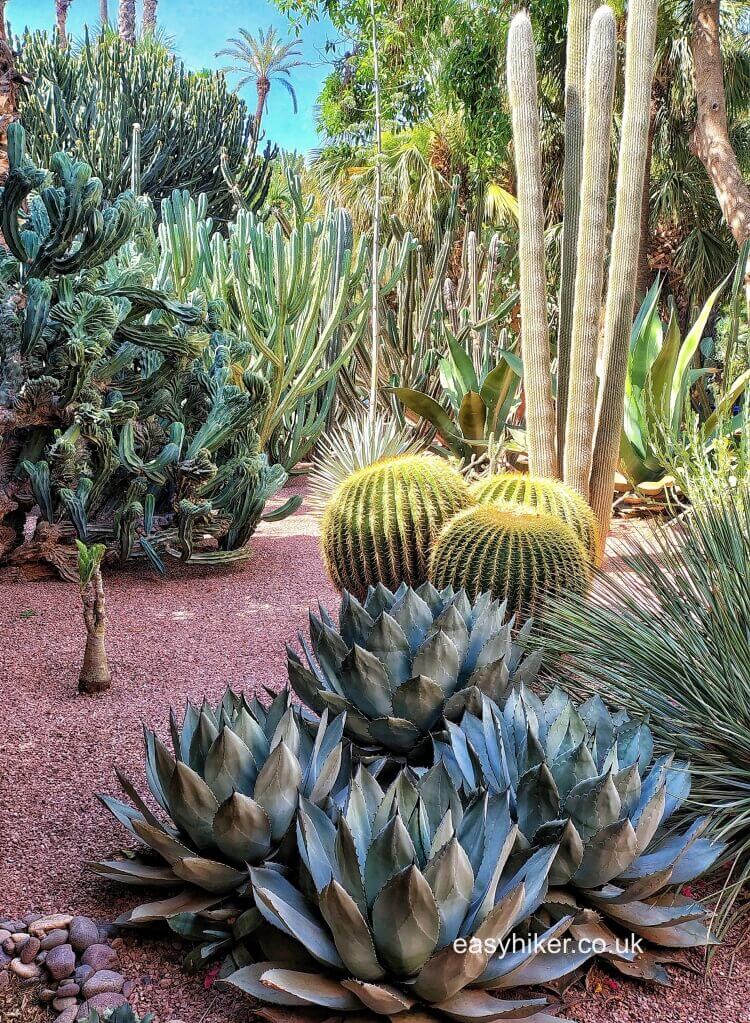
For Jacques Majorelle, it was a lifelong labour of love, and although he was a successful painter, the garden is considered his masterpiece. In fact, it is the only work he is remembered for today.
Majorelle’s paintings of Oriental motifs are tame and conventional, whereas the garden is bold like all great works of art. Its various elements – tropical flowers, cacti, garden statues, the villa where the artist lived with his family – are held together and unified into an integrated composition by the force of one single colour: the supernaturally intense blue that Majorelle invented and that has been named after him. (It has its own Wikipedia entry.)
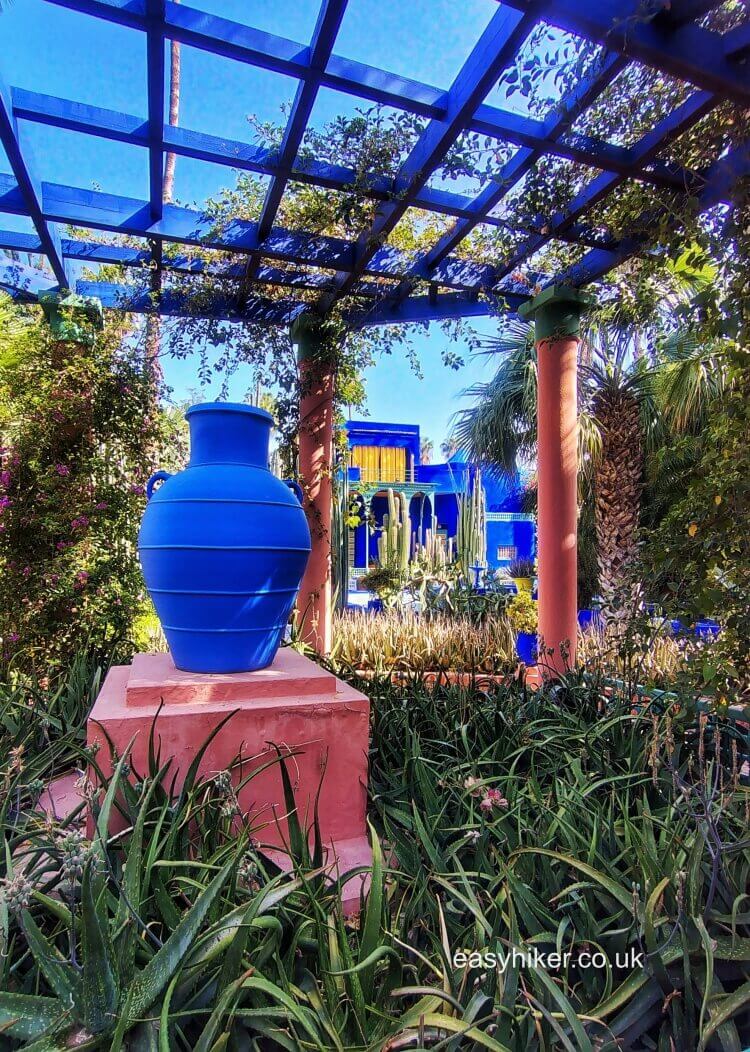
The fashion designer Yves Saint Laurent fell so much in love with the Jardin that he not only bought the estate (in 1980) – and invested heavily into the garden’s restoration – he even determined in his last will that his ashes be scattered over its grounds. (Majorelle, conversely, was buried in Nancy, next to his father. Having lived in Marrakesh for more than 40 years, he had to return to the country of his birth in 1962 because he could no longer afford to maintain his property.)
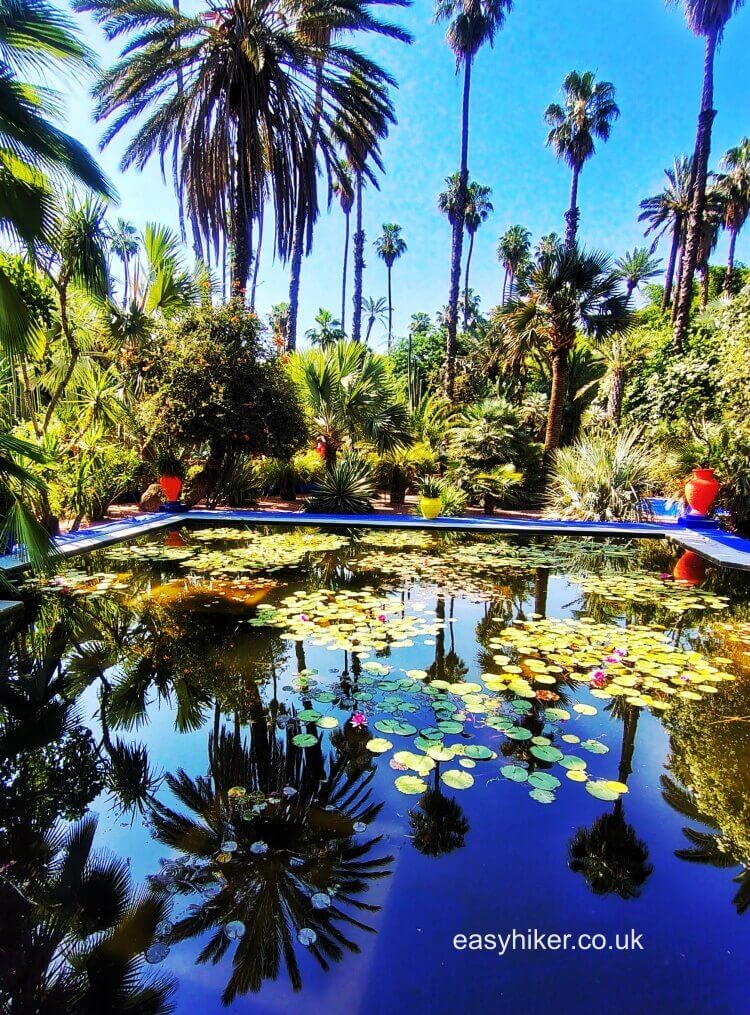
Today, the Secret Garden serves mainly as a haven for Instagrammers who may or may not care greatly about the Jardin’s chequered history.
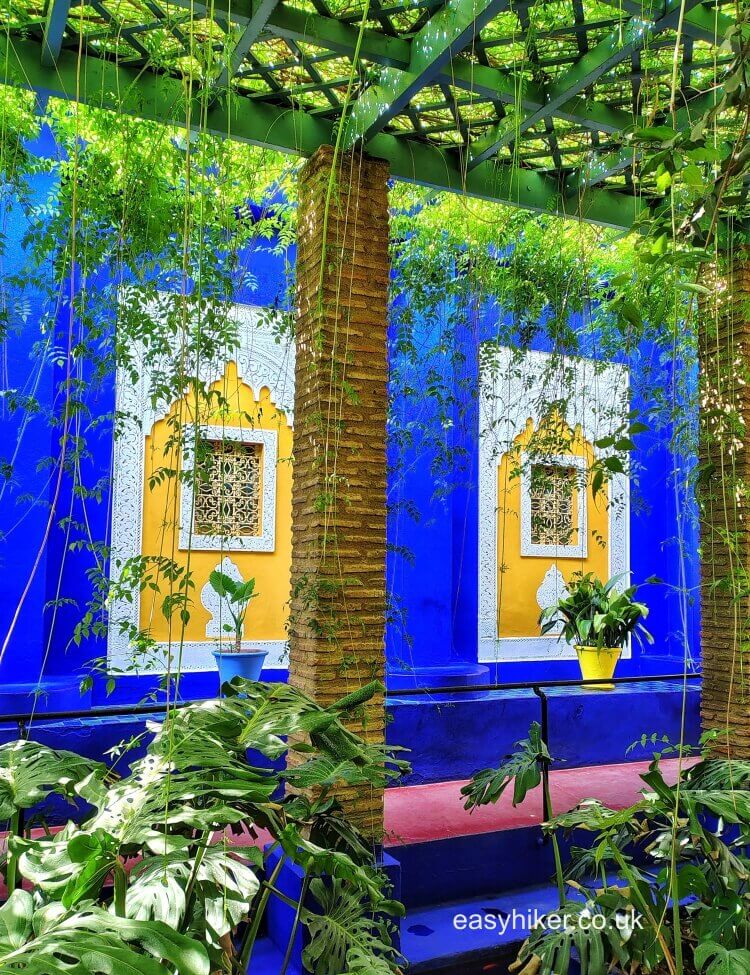
Jacques Majorelle’s work of a lifetime has become a giant Vanity Fair, a place for people to photograph themselves or each other! It’s sad, we know. But let it be a comfort to you that the Easy Hikers, of course, could never sink so low.