Malaga has one of the busiest airports in Spain – outclassed only by Madrid and Barcelona – but Malaga airport was not primarily built to serve visitors of the city. In fact, most people who get off the plane are heading straight for the resorts on the near-by Costa del Sol, and the airport will be the only thing they will ever see of Malaga itself.
Today, we will tell you what they are missing.
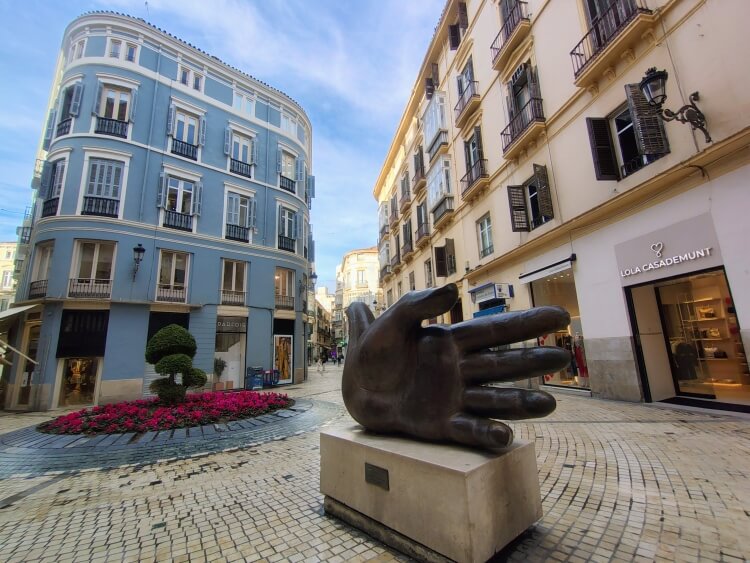
To get the best out of Spain’s southernmost big city, we recommend three short walks: one up, one out and one right into the middle of the action. So put on your walking shoes – because today, we will show you where to go to experience Malaga at its best.
The Up of Malaga
Malaga may indeed be “the oldest continuously inhabited” city in Spain, as the official brochures put it, but is short of the kind of stuff that you would expect to find in a place that advertises itself in these terms.
The town may have been established almost 3000 years ago by the Phoenicians, but nothing is left from this period and not much from the centuries of Roman rule either (the small amphitheatre at the foot of Mount Gibralfaro was only discovered in 1951).
Agriculture that was efficient enough to feed a city of more than a few hundred inhabitants only developed with the help of irrigation techniques that were introduced by the Moors during the Middle Ages, and the fortified city built by the Muslim rulers during the same period is today Malaga’s prime ancient site.
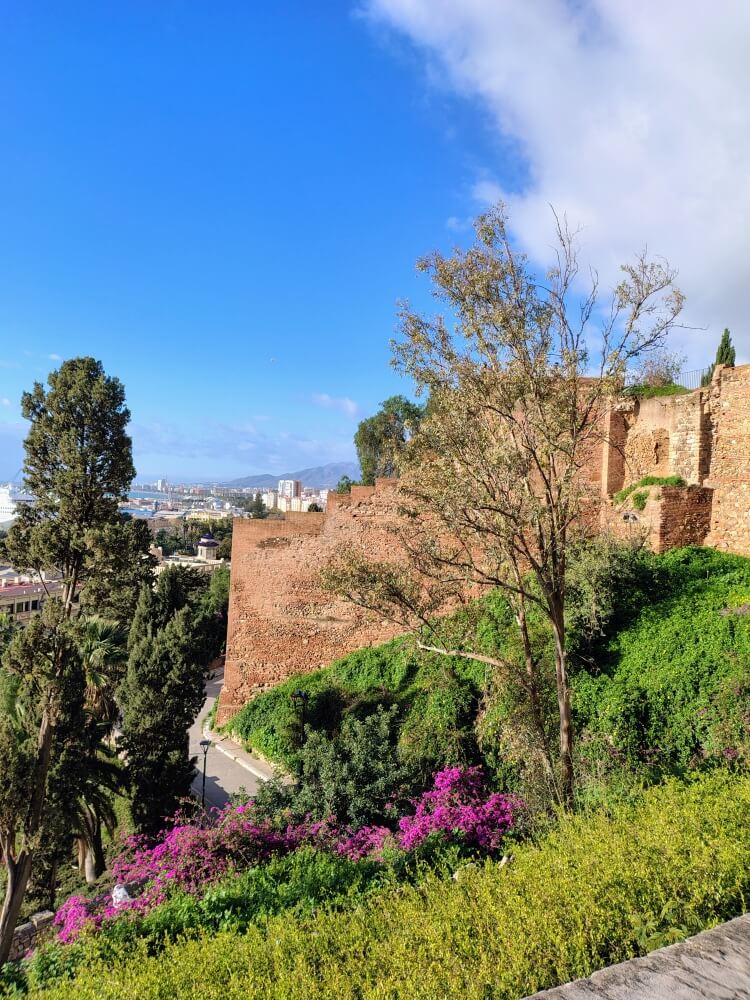
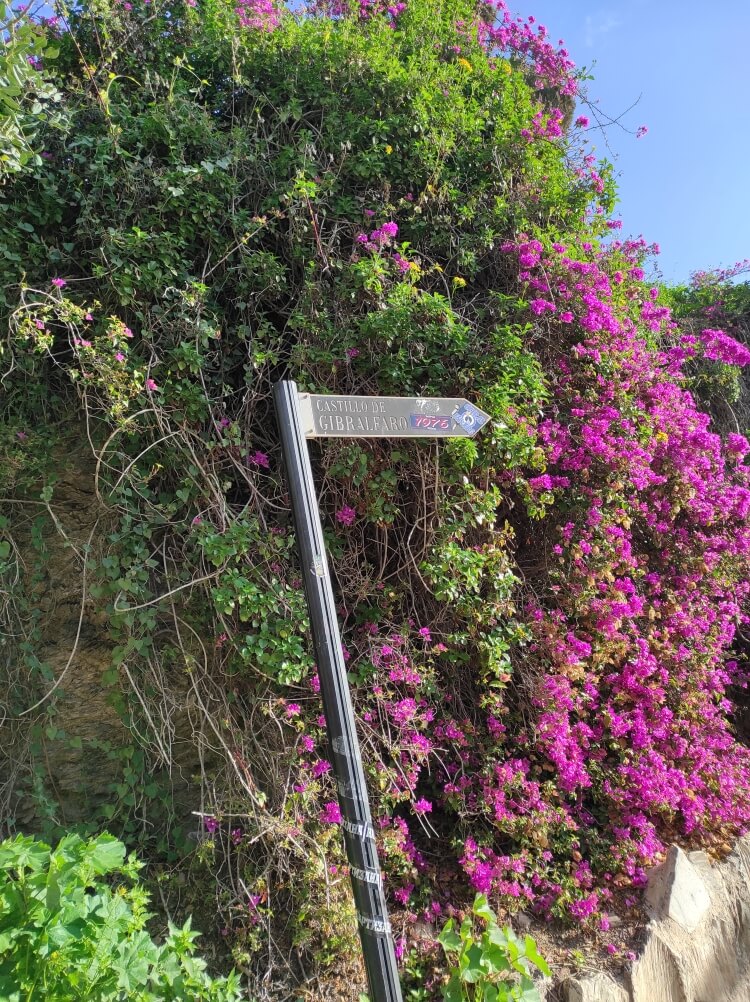
Muslim Malaga consists of two parts that were constructed back-to-back on Mount Gibralfaro which overlooks the modern town centre. Higher up, you will find the 10th century fortress, and we recommend making this the first place you go to in the morning when your legs are still fresh, because it is quite a climb.
The Gibralfaro fortress is best approached from Malaga town centre via the ramp off the Plaza de la Merced (on the eastern side of Calle Victoria). At the top of this ramp, turn left into the Sendero la Coracha which winds up for a good half hour.
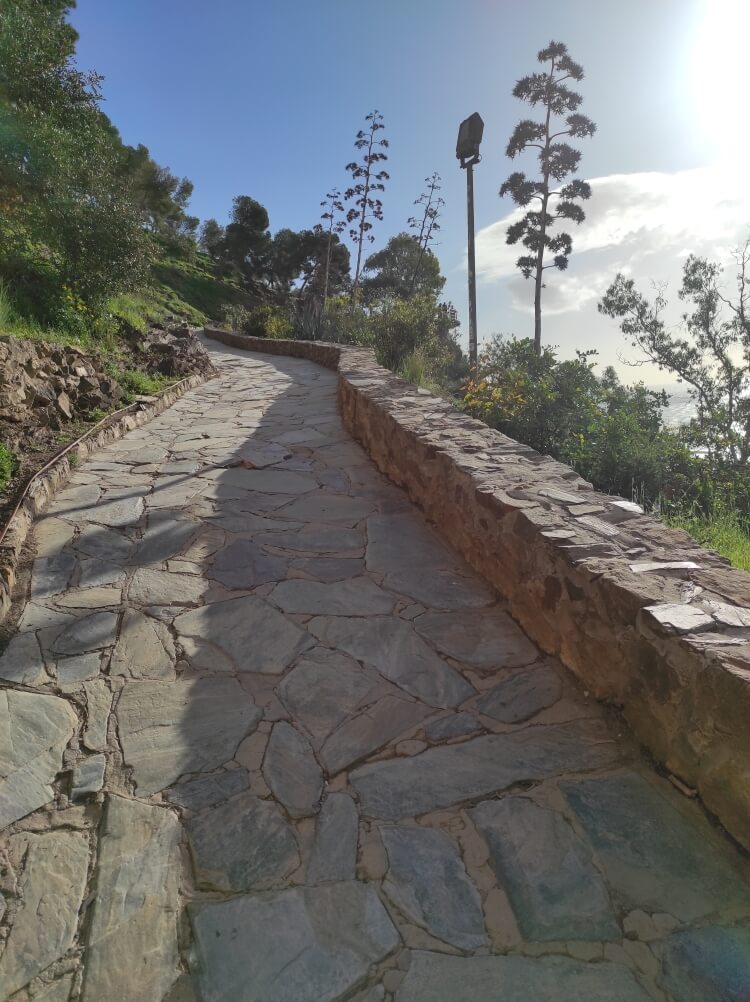
What you find at the fortress today largely dates back to the Taifa period of the Muslim rule in Spain, a time (from the 11th century onward) when the Christian reconquistadores celebrated their first successes in central Spain while the infighting between various Islamic warlords in the south intensified. The fortifications around the settlement…
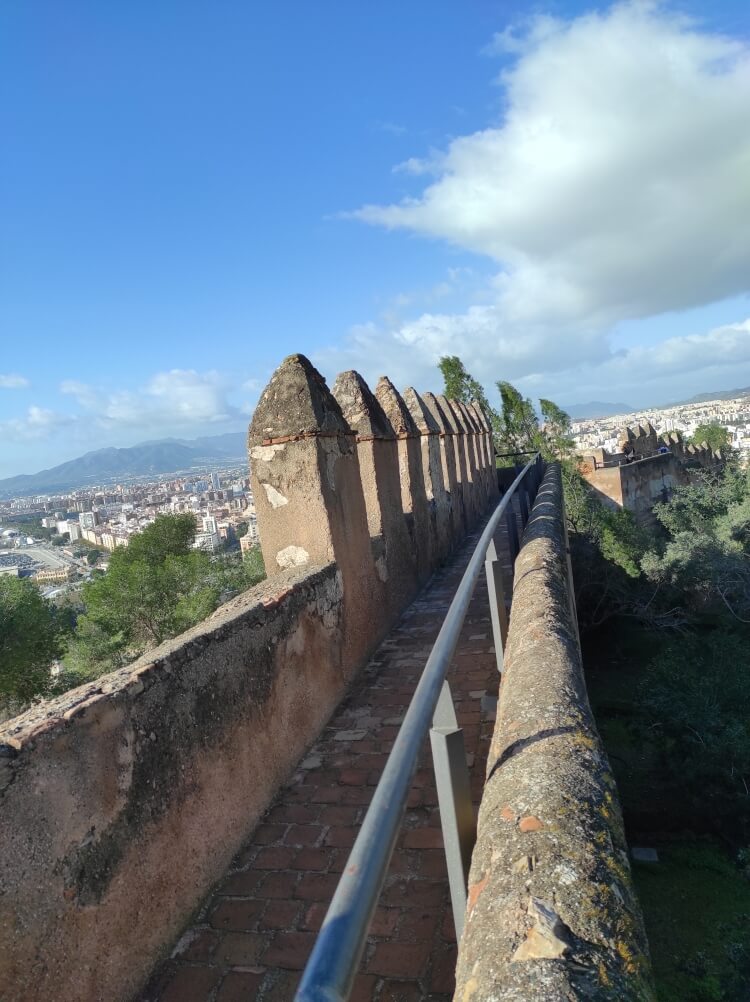
… give you some great views over town and country (on a clear day, they say, you can see Africa from here) but also document the Muslim rulers’ need to protect the growing settlement further down from growing military threats.
To visit the traces of ancient Malaga’s well-preserved Muslim settlement, you have to climb down the Sendero la Coracha all the way back to the downtown iron gates on Calle Alcazabilla before turning right for another, albeit less steep and much shorter climb up to the Alcazaba.
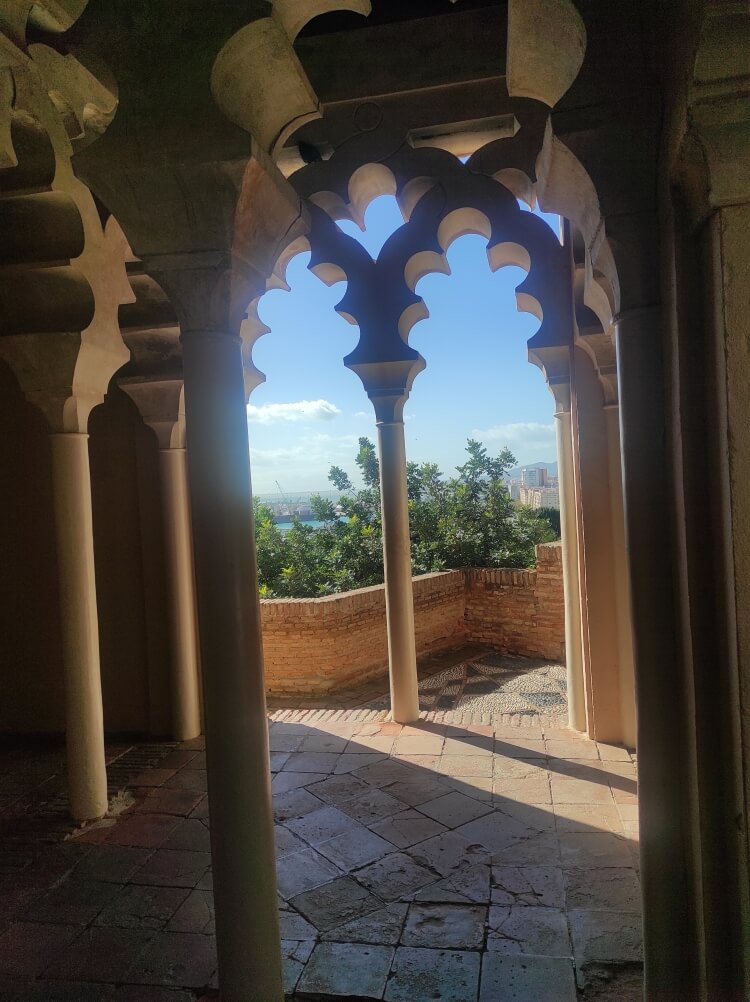
This is the more interesting half of old Islamic Malaga, and if the palaces of the Alcazaba remind you of the Alhambra in Granada, you are right in two ways: firstly, the buildings that you see today were commissioned by rulers of the same dynasty (the Nasrid) at roughly the same time (the 14th century).
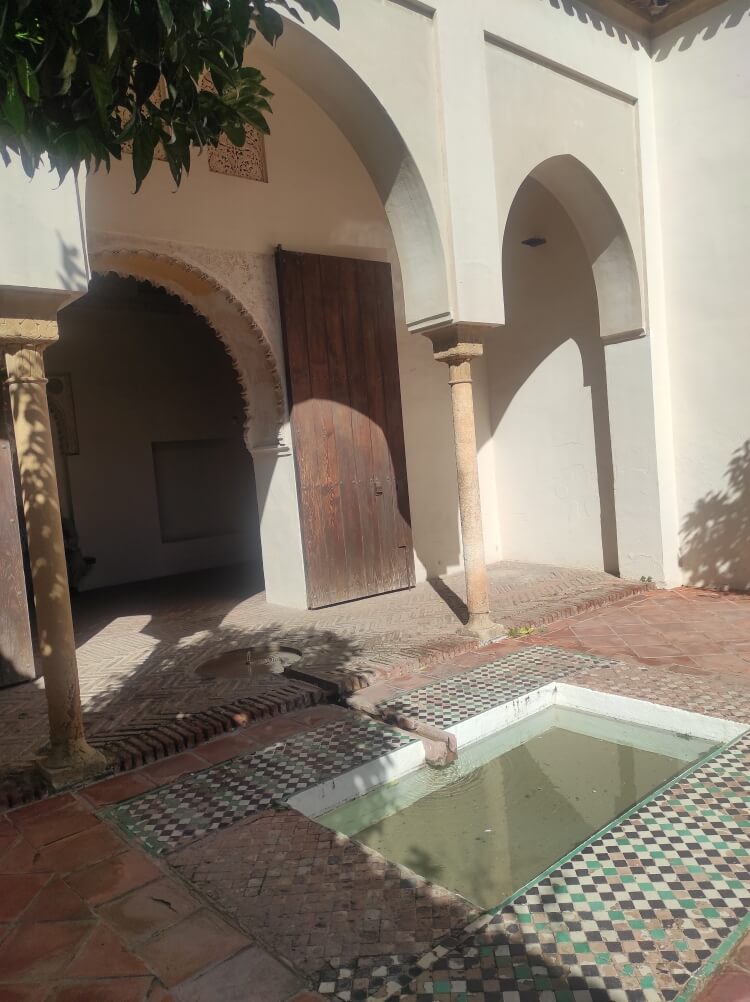
And secondly, the palaces were restored by the same team of dedicated archaeologists under the leadership of Leopoldo Torres Balbas. Until the early 20th century, the Alcazaba of Malaga was a residential district of decaying housing stock, and evacuations followed by the thorough restoration of the ancient building fabric only started in 1933.
The Out of Malaga
For the second of our walks, we turn east in the direction of the Malagueta Beach …
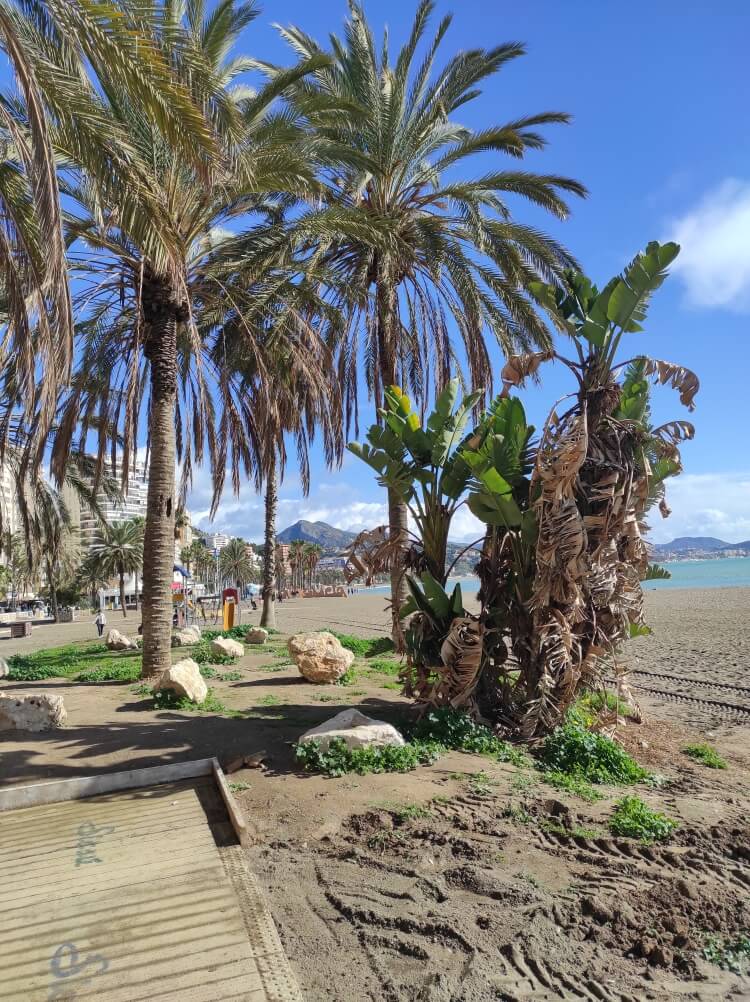
…. and then continue down the seaside promenade for a scenic and relaxing stroll between the Mediterranean and residential buildings of various styles from the past 100 years, including some interesting period architecture .
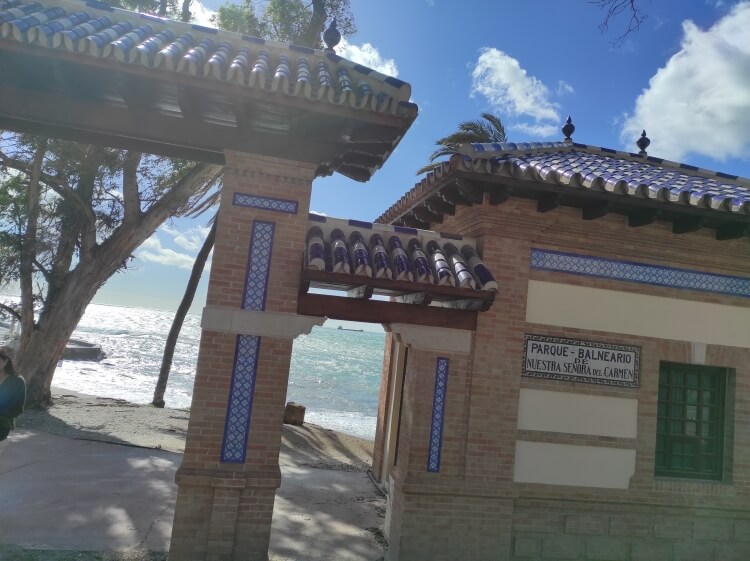
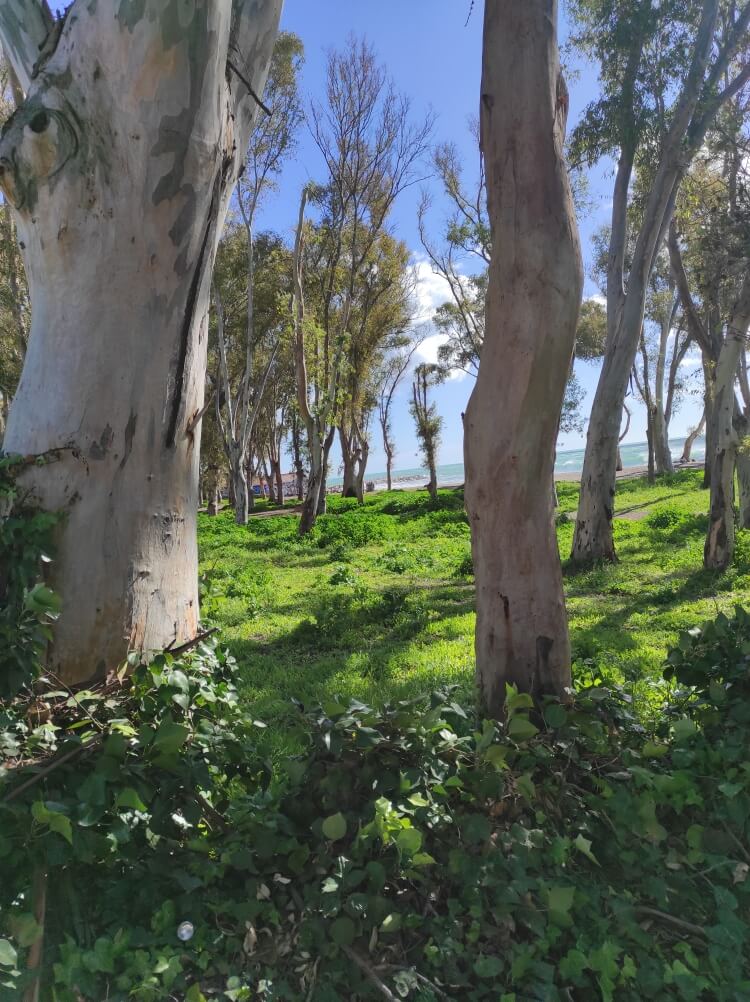
Which does not mean, of course, that you are discouraged from exploring the patches of more natural – wild or feral – landscapes that pop up occasionally along the way.
One attraction of this seaside promenade is that it is lined by restaurants from all categories, elegant ones (mainly near the town centre) …
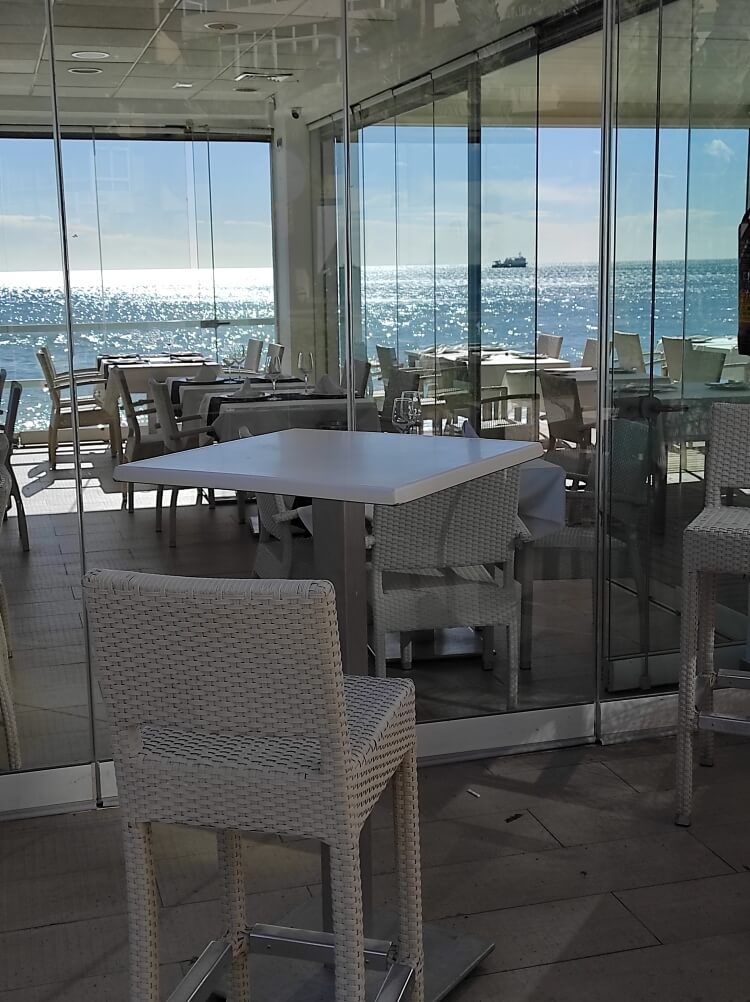
… as well as the co-called chiringuitos that offer simpler fare, usually fish and other seafood, in a no-frills environment. The largest concentration of these chiringuitos can be found on the beach front of Pedrogalejo, …
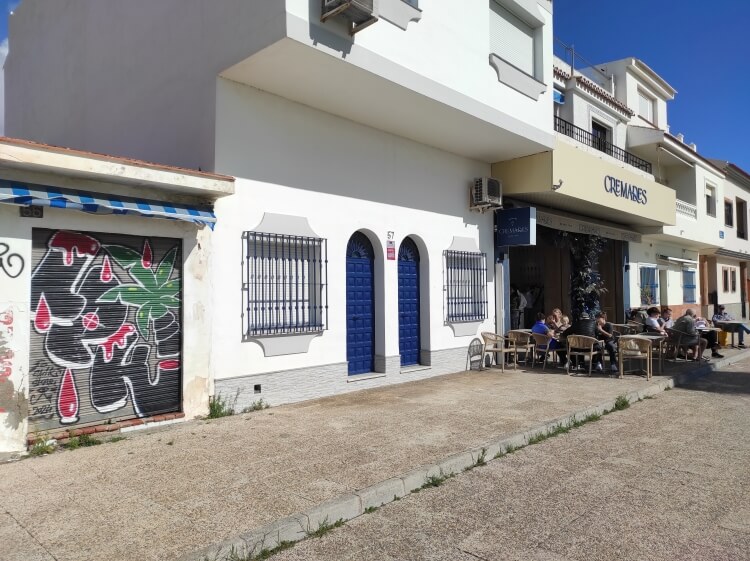
… a small fishing village that is two blocks deep and invites you to take a short walk before taking the bus back to Malaga.
The Inns of Malaga
We kept for last what may very well be the most unmissable bit of Malaga. Do visit the town centre after dark: which is when the sober, bourgeois and seemingly sedate city puts on its glamour gown and goes to party.
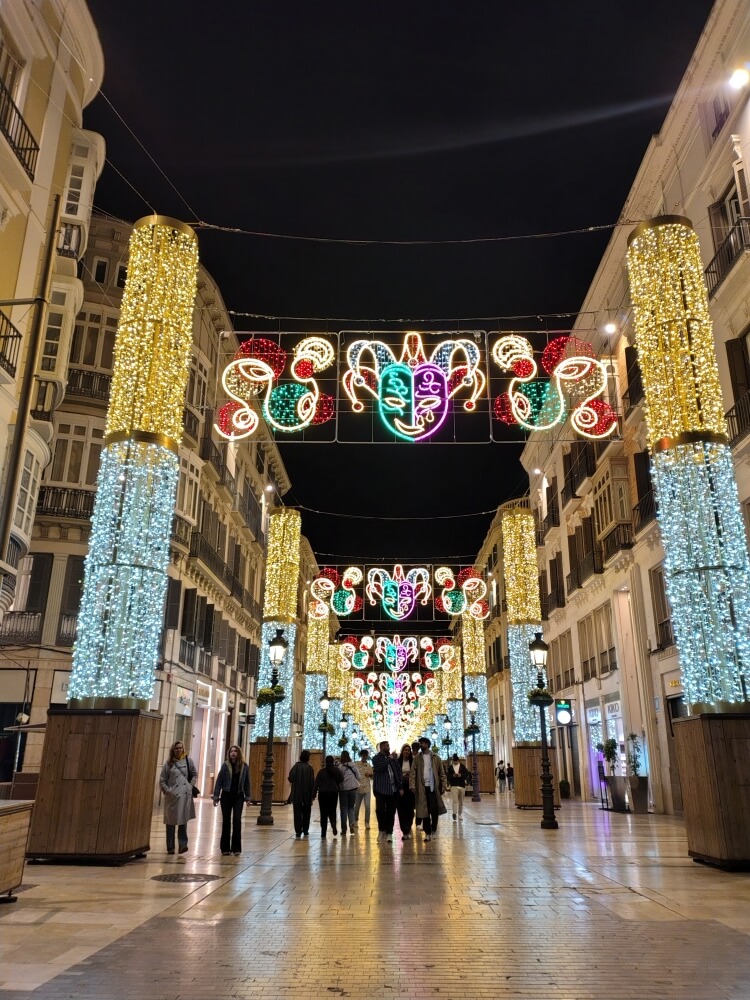
At night, a different, more exciting type of life starts in the street of Malaga: this is when the city discovers its wild and bohemian side. How deep you want to take that experience is up to you, but even the most timid of visitors should pluck up the courage to enter one of the city’s many bustling and buoyant restaurants for an evening meal.
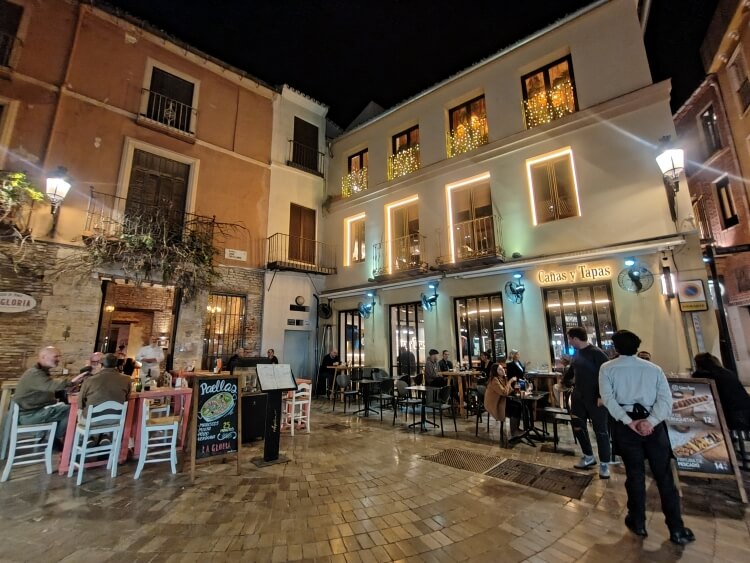
Top of the list for many visitors is the Bodega El Pimpi …
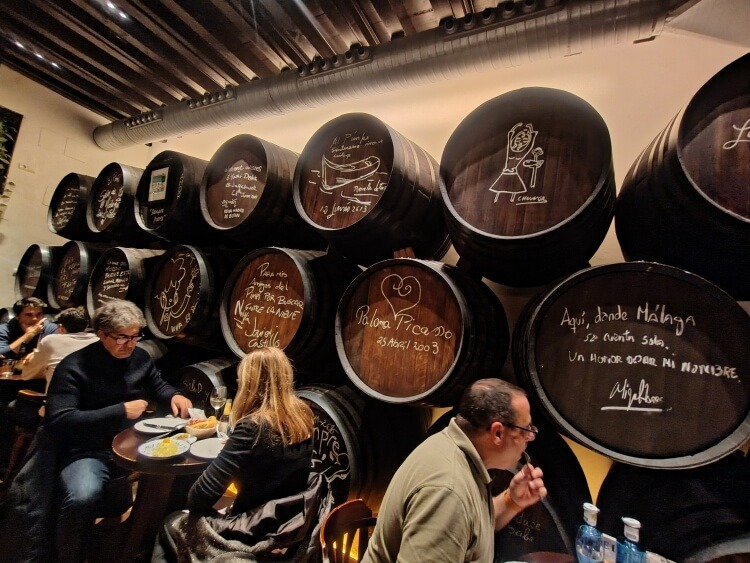
… now part-owned by Antonio Banderas, the second most famous son of the city (beaten only by the man we told you about in last week’s post.)
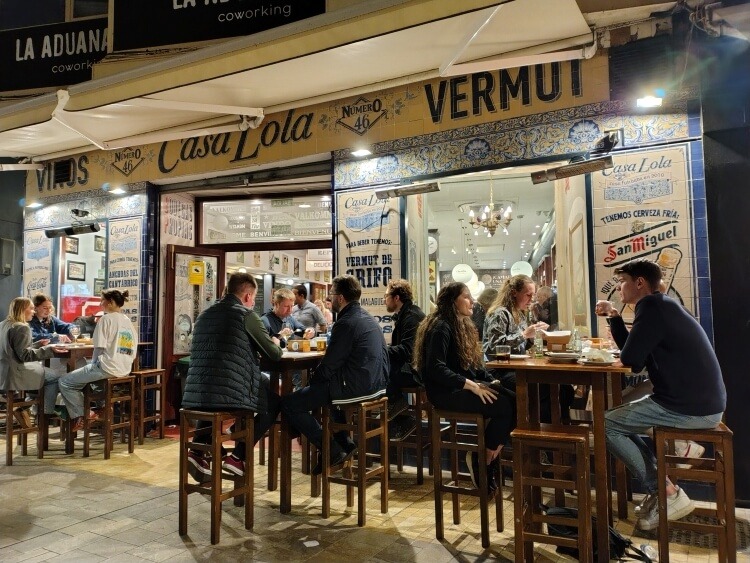
Alternatively, you could stroll a few metres further into the same street (Calle Granada) for a tapas dinner at Casa Lola. We enjoyed the place so much there that we did something we have never done before on any of our trips: which is to eat in the same restaurant twice, on consecutive evenings even. But at Casa Lola, the menu is so large that you can easily do that without repeating any part of your order.
In some articles that we found online, Casa Lola is listed as a tourist trap. This is only true inasmuch as you will find tourists eating there – it would be strange, bearing in mind the location, if you did not.
As for the “trap” part: we ordered five or six small portions of tapas and pinchos plus a bottle of red and paid less than 50 bucks both evenings. If that’s a tourist trap, I wish there were more of those. Buen Provecho!