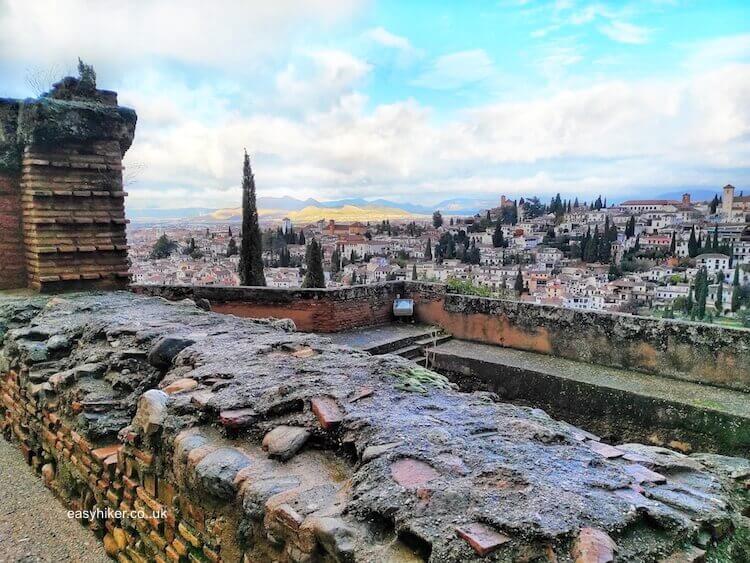
The Alhambra in Granada, the palace built for the last Islamic rulers of southern Spain, is truly one of the wonders of the world.
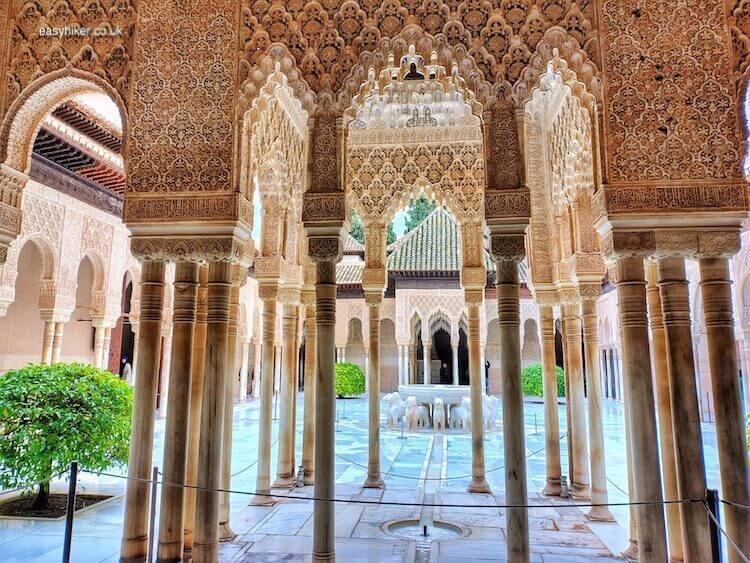
The most gifted poet on earth would struggle to describe the experience of standing inside a place where walls, ceilings and pillars all appear to dissolve into ornament.
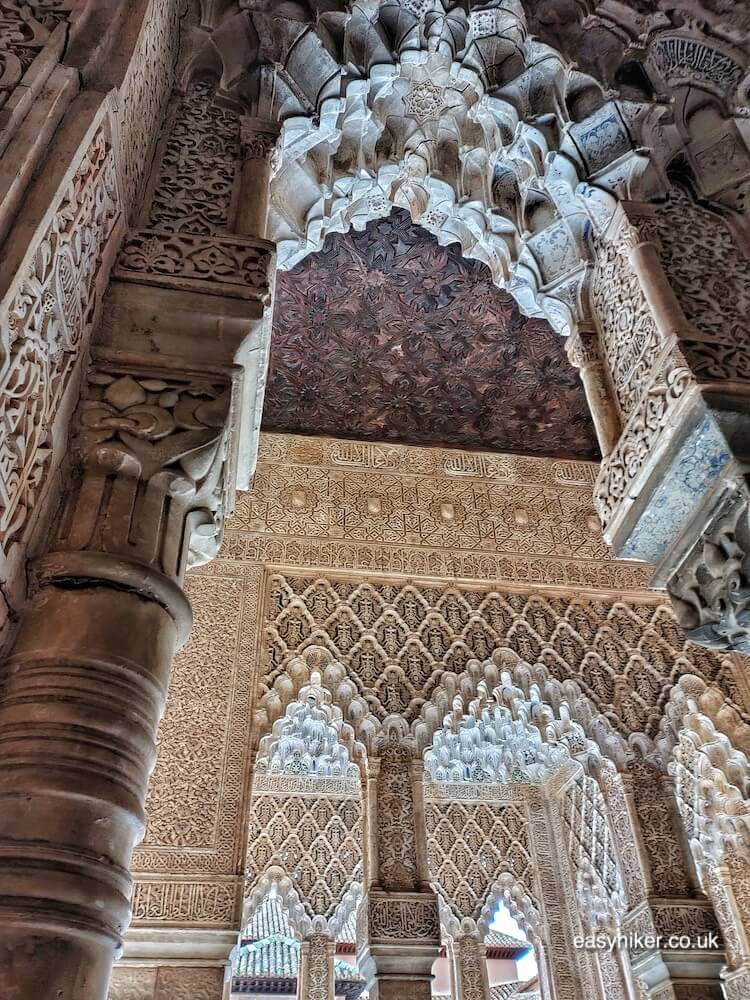
More is not nearly enough: that seems to have been the motto of the builders and decorators. Ornamental features everywhere are embedded in other ornamental features, layer upon layer.
It is a maze, seemingly without beginning or end, spreading across dozens of rooms, hundreds of walls, and also across time: across the thousands of hours of toil for artists and architects, workers and craftsmen.
This was not a rich man’s folly but the collective enterprise of an entire civilization. In its own way, the Alhambra in Granada is as monumental as the pyramids.
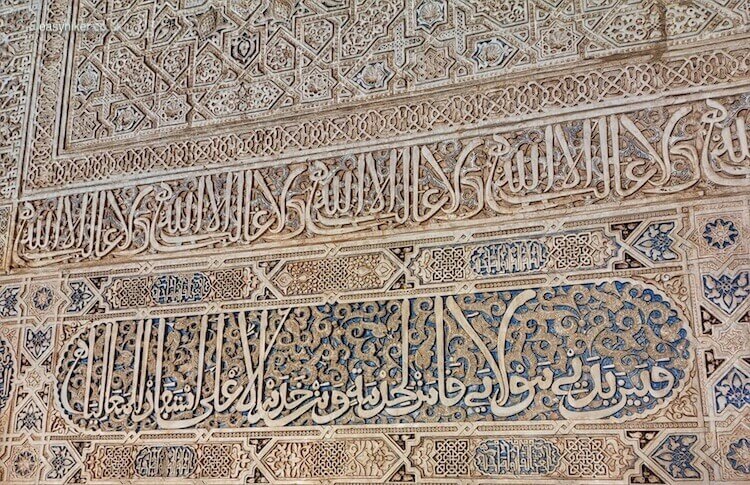
If it is an overwhelming experience to merely walk through those palaces for a couple of hours, what would it have been like to live there? You would have been surrounded on all sides by a labyrinth of intertwining branches and serpentines – and constantly reminded that “God is the only victor”: a phrase that appears an estimated 9000 times on walls, pillars and doorways (it was the motto of the ruling dynasty).
Inside the rooms of the four Nasrid temples that stand in the heart of the Alhambra, there is nothing but ornament to look at – except for one thing.
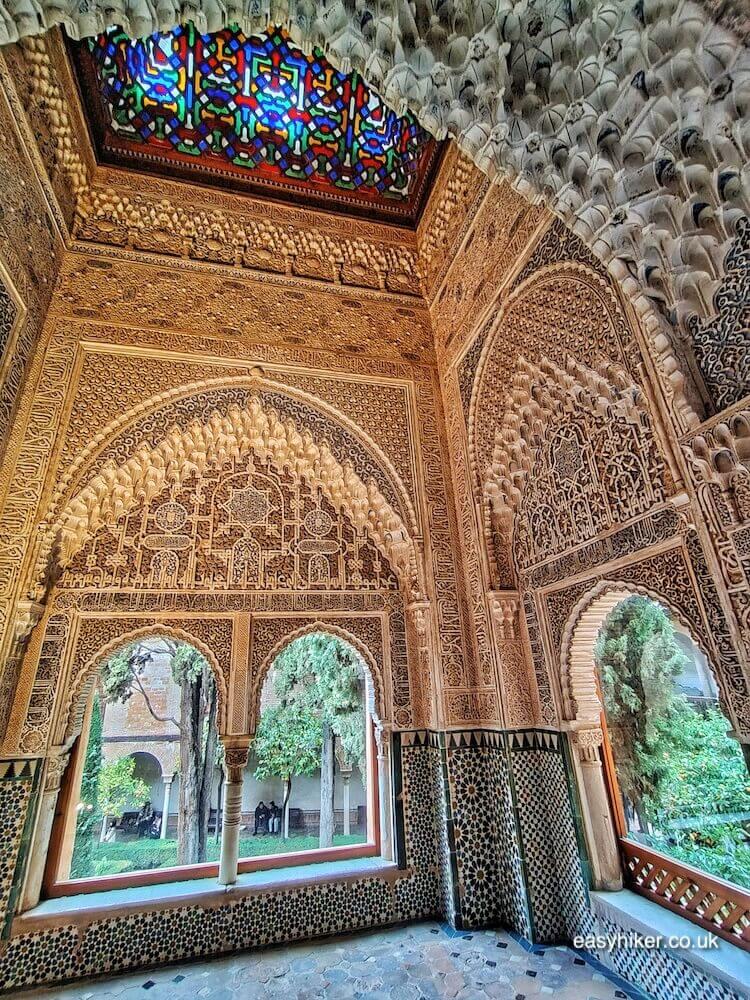
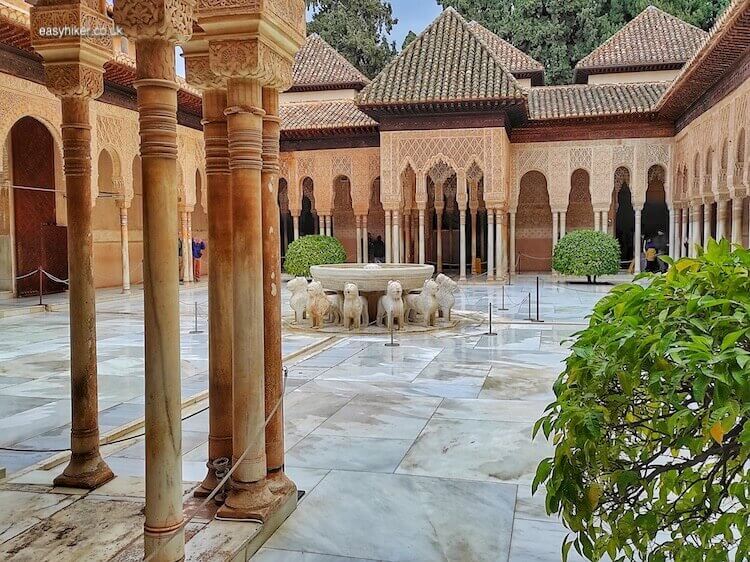
The exterior courtyards fulfil two different functions, delivering on their own what windows and paintings separately provide inside the royal residences of the West: they bring in light as well as images of the outside world.
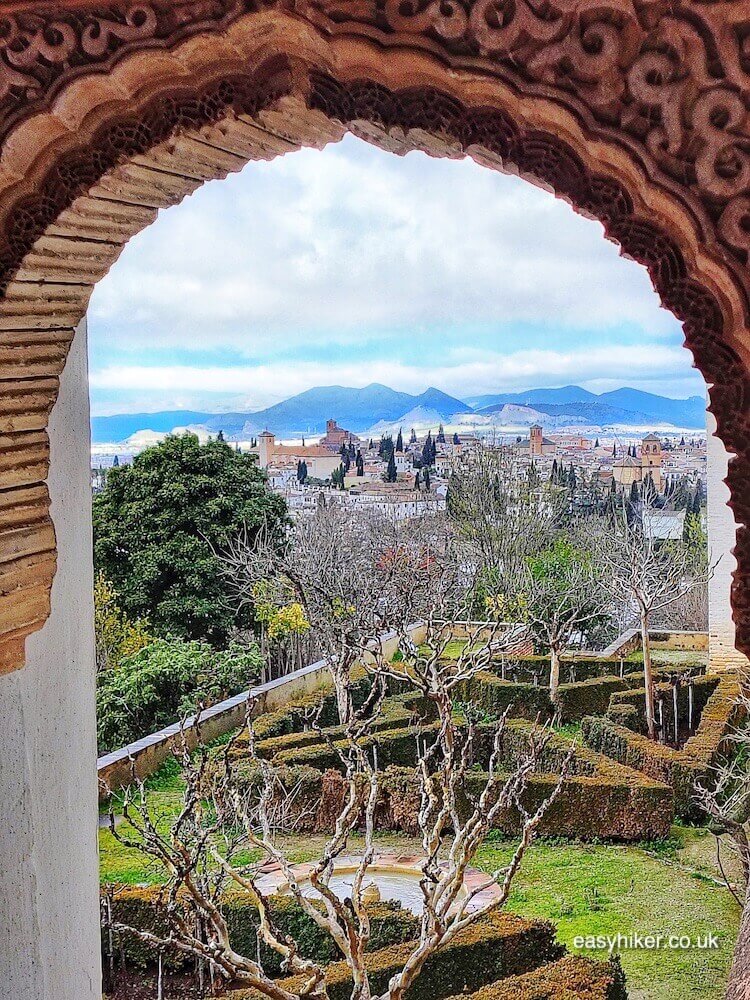
And judging on the evidence of these courtyards, it seems that the rulers inside the Alhambra in Granada liked their outside world calm, orderly and symmetrical. No artfully interwoven, meandering curves here: with the austere simplicity of their geometric patterns, the courtyards of the palaces provide a stark contrast to the torrents that rage on the interior walls.
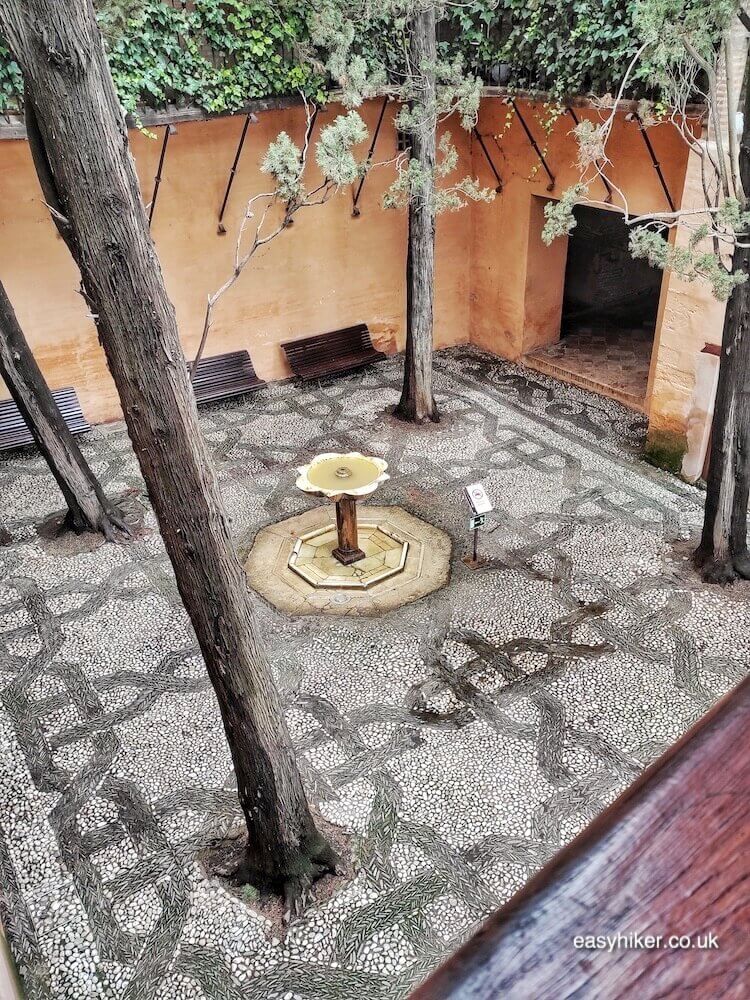
It feels safe to bet that this contrast is no coincidence. Imagine you are stepping out of the intricately sculptured interiors – into something like this.
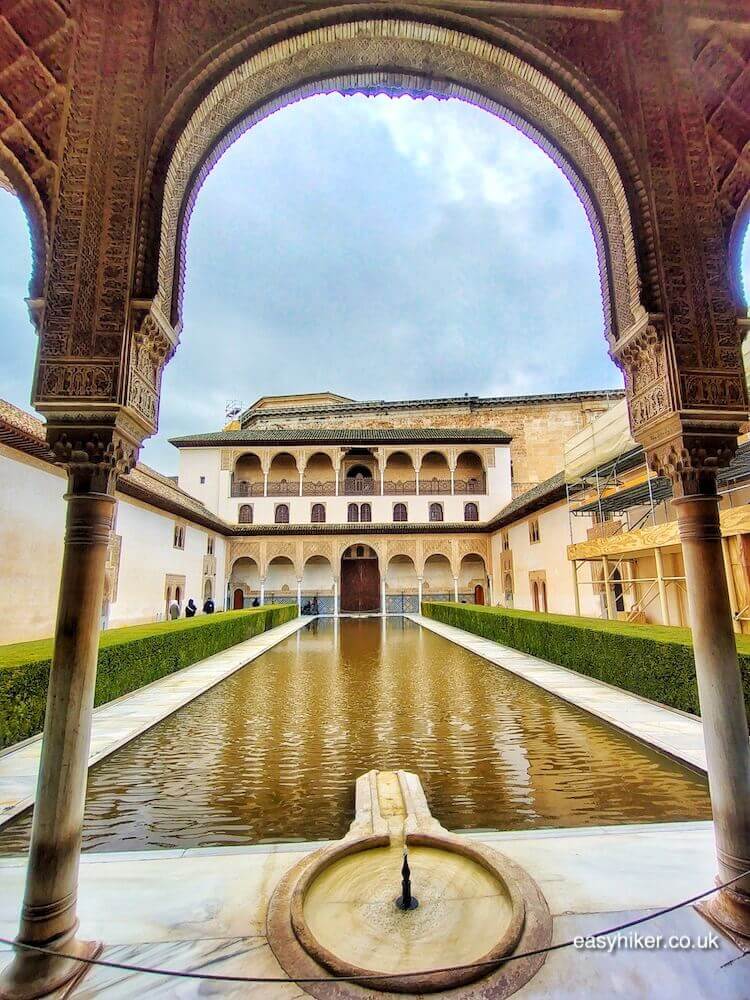
Think for a moment about the aristocratic residences in contemporaneous northern Europe (the Alhambra was built in the 13th century.) These medieval castles had no place for grace, beauty or carefully calibrated counterpoint. Even their living quarters were not built to provide comfort and generally contain little but the bare necessities of life: the people who had to defend the castle, after all, simple soldiers as well as the members of the High Command, needed somewhere to eat and sleep.
The Nasrid palaces are not like that.
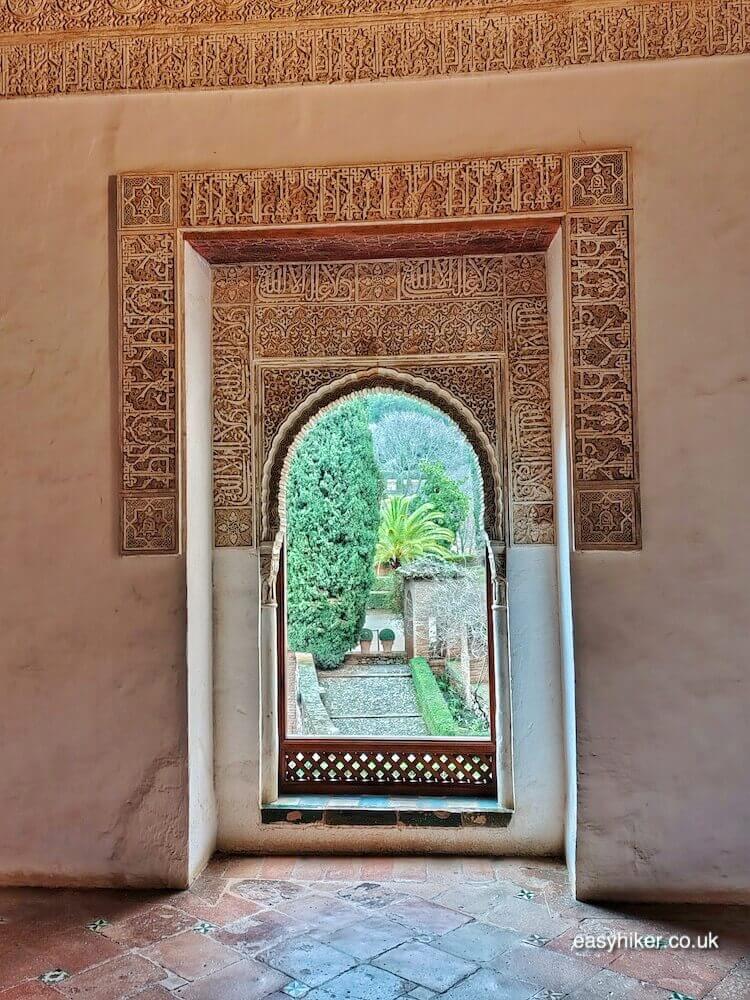
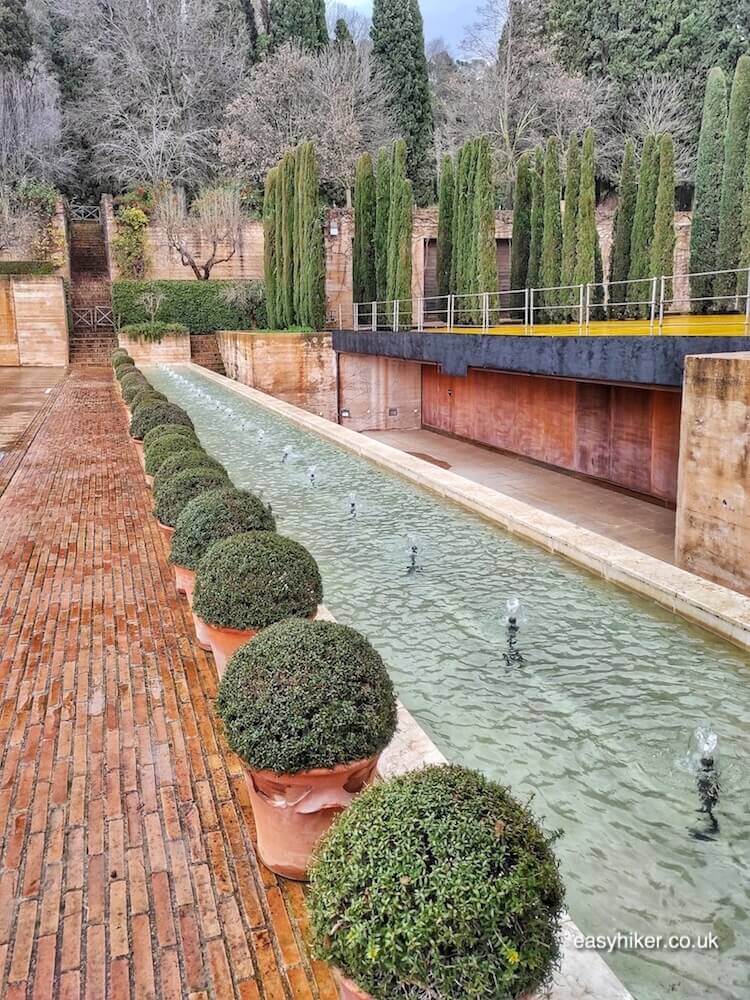
Wider nature also had its place in the world of the Nasrid dynasty. This becomes more evident in their summer palace. At the Generalife, which is located at the northern fringe of the Alhambra complex, the wide open spaces of nature take over the functions of the courtyards.

The actual gardens of the Generalife and elsewhere are inevitably pastiche reconstructions. You can lock a house in the safe knowledge that, when you come back after months or even years, you will find it pretty much unchanged, give or take the occasional cobweb.
Gardens, conversely, are beginning to rewild themselves into feral landscapes the moment you turn your back on them. Much of what you see once you have passed the Torre del Agua outside the inner core of the Alhambra therefore reflects modern ideas of landscaping, even if they have been inspired by ancient Islamic practices and beliefs.
But in addition to landscape and ornament, there is a third presence at the Alhambra in Granada. A spectre is haunting the place: the spectre of memory.
Like every building anywhere in the world, the Alhambra is a product of its time and circumstances, and times and circumstances of the 13th century were grim for the Islamic rulers of southern Spain.
The fall of Cordoba in 1236 had clearly opened a new and almost inevitably final chapter in the history of Islamic rule on the Iberian peninsula. The glory years of the Caliphate of Cordoba – a period of military triumphs and of supreme cultural confidence – had been followed by a gradual if slow retreat, but the loss of their ancient capital made it clear to the Nasrid rulers that, from now on, they would be living on borrowed time.
The gung-ho, “the-best-is-yet-to-come” optimism of the first 300 years of Muslim rule had long ago dissipated. Eyes were no longer looking forward but back. The Alhambra in Granada is a reminder of what was best about the Islamic rule and its achievements: the sum of an entire civilization.
This is the Wisdom of Old Age: let us enjoy today because we do not know what tomorrow will bring – a wisdom from which, in art, decadence springs. Decadence has a bad press, but it is worth remembering that some of the greatest works of art – in the West, too – are rooted in a similar mind-set.
The post-Islamic history of the Alhambra is a tale of decline and redemption. Initially, it looked as if the royal palaces would seamlessly pass into the administrative structures of the new government: there must have been people on the side of the Spanish reconquistadores who saw this Muslim palace as the devil’s work and were itching to raze it to the ground, but they were never part of the cultural mainstream. (Ironically, the greatest damage to the Alhambra was done by the non-denominational army of Napoleon which came close to destroying it all.).
Ferdinand and Isabella, the Reyes Catolicos, held court here (it was at the Alhambra in Granada where they gave Columbus the assignment to sail the ocean blue). King Charles, their successor on the Spanish throne, added a palace of his own, a muscular and somewhat bullring-like structure …
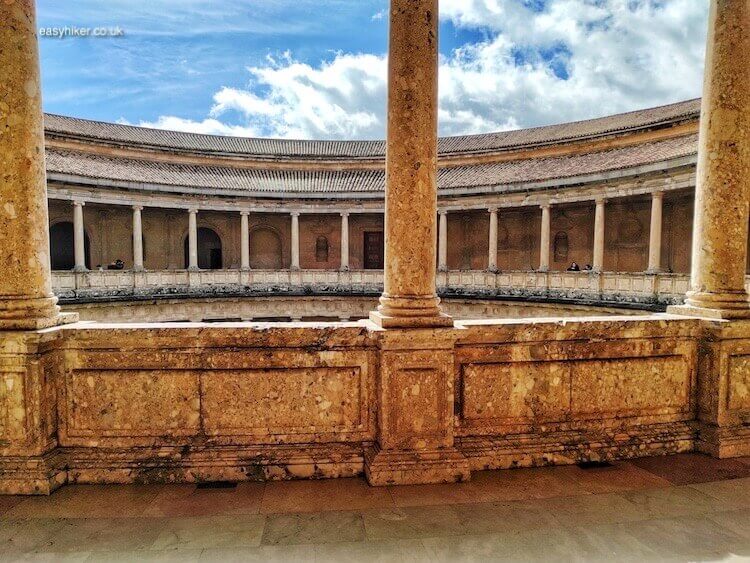
… but later generations of Spanish rulers lost interest and the Alhambra fell into disrepair – until it was rediscovered and eventually reconstructed by builders and architects who followed in the footsteps of the 19th century Romantics.
The reconstruction of the courtyards and interiors has generally been accepted as authentic, …
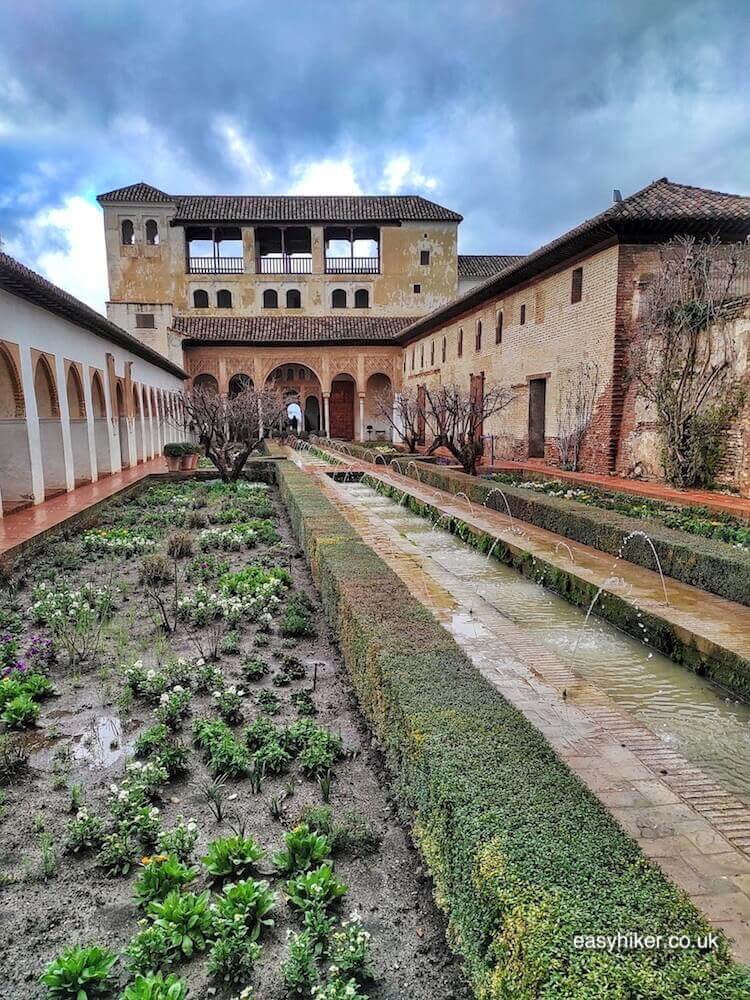
… and some of the exterior features have found the experts’ favour, too, …
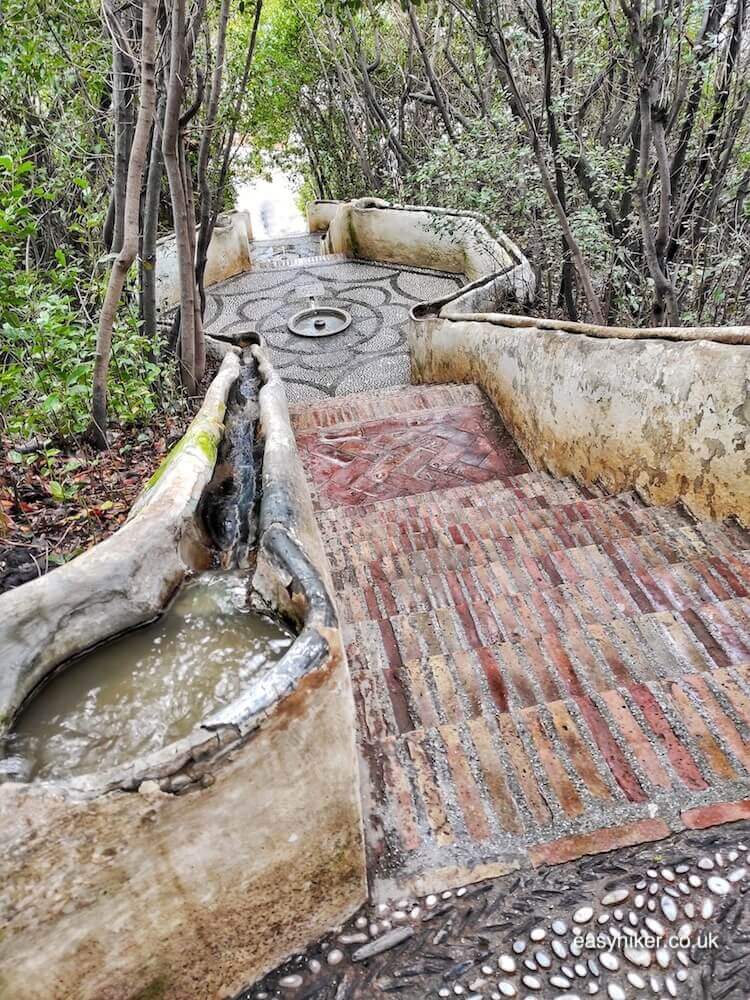
… while it seems far less certain on whose memory some of the landscaping is based: on the lessons 13th century Islamic architects had learned about balance and symmetry – or on what modern designers thought they remembered about Islamic gardening?
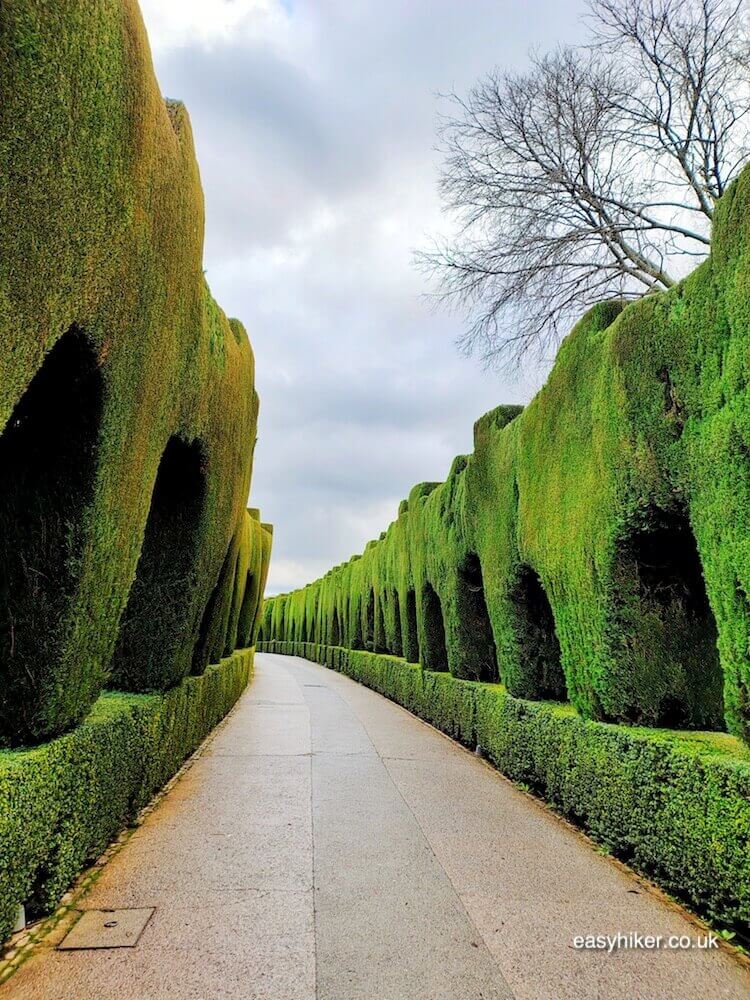
But that is what the Alhambra ultimately is: a memorial of human memory. The palace complex is a unique document of Islamic Spain and what its rulers after 700 years of their reign opted to remember about it, but also of the 19th and 20th centuries’ ideas of this period.
Architectural structures and landscapes, after all, are “built up as much from strata of memory as from layers of rock”, Simon Schama writes in his book Landscape and Memory. The Alhambra in Granada contains as many layers of memory as there are layers of ornament.