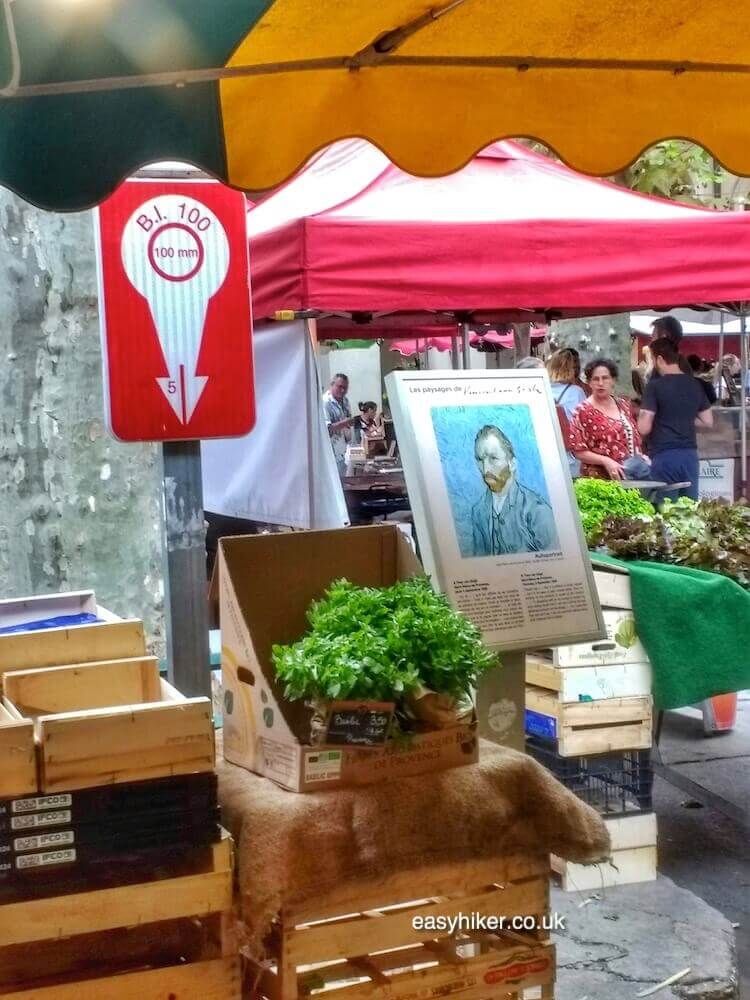
If we have whetted your appetite with our last two posts, you may be wondering: what is the best way for yourself to explore the villages of Provence?
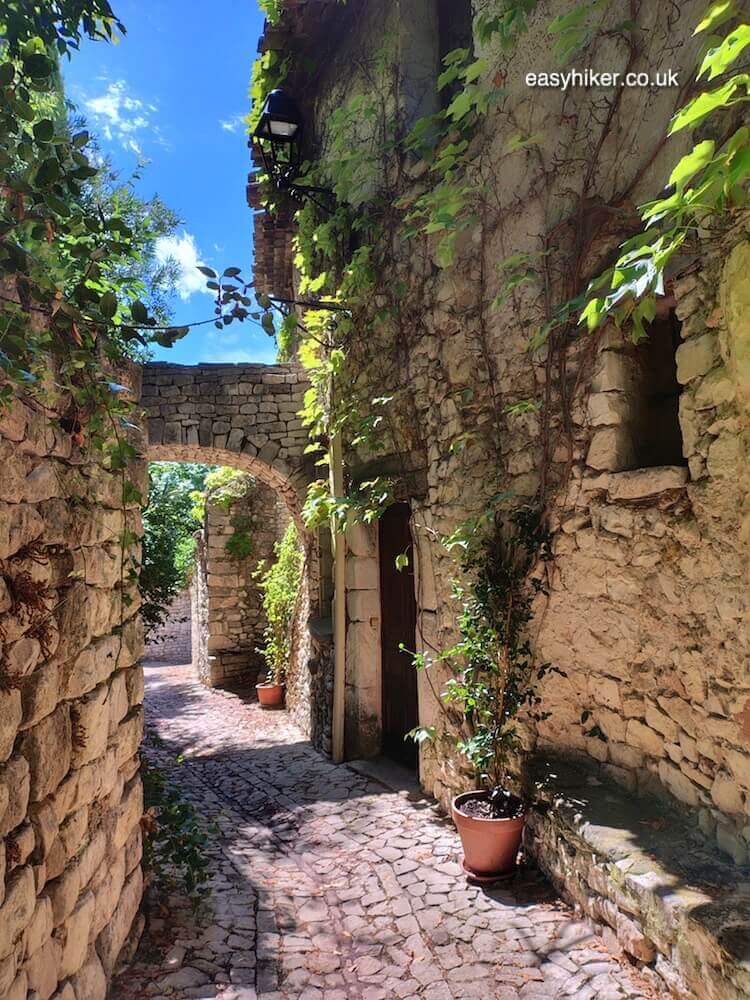
When you are looking for answers on the Internet, you can easily get the impression that the public transport infrastructure of the area will not be very helpful. But the truth is that you can see rather a lot travelling on trains and overland buses.
Unfortunately, it is between these two where many foreign visitors draw the line: they are comfortable enough boarding a train but are afraid to rely on buses, believing them to be plagued by delays, complicated routes and impenetrable schedules.
Our own experience, however, is that wherever locals are forced to rely on them, buses are every bit as useful as trains.
We suggest you base yourself in either Avignon or Orange – the two largest towns in the area, both easy-to-reach from Marseille by train – and fan out for day trips on, yes, buses.
Avignon has a large and user-friendly multi-storey coach terminal next to the train station. Destinations include L’Isle-sur-la-Sorgue, St-Remy-de-Provence, and Les-Baux-de-Provence.
The bus station at Orange is smaller but equally easy-to-navigate with five platforms (one for each main line) that are neatly arrayed outside the train station – itself a 30-minute walk from the town centre – for destinations such as Vaison-la-Romaine and Valreas.
You can always buy your tickets from the bus driver.
Tour the Villages of Provence at Leisure
There is no need to choose between one and the other: you can easily do daytrips from both Avignon and Orange during the same holiday because the two towns are separated by a mere 15-minute train ride. You can even add a few days in Montelimar, 30 minutes by train from Orange, because some villages can be more easily reached from there – including Nyons, one of the highlights of any journey to the Provence.
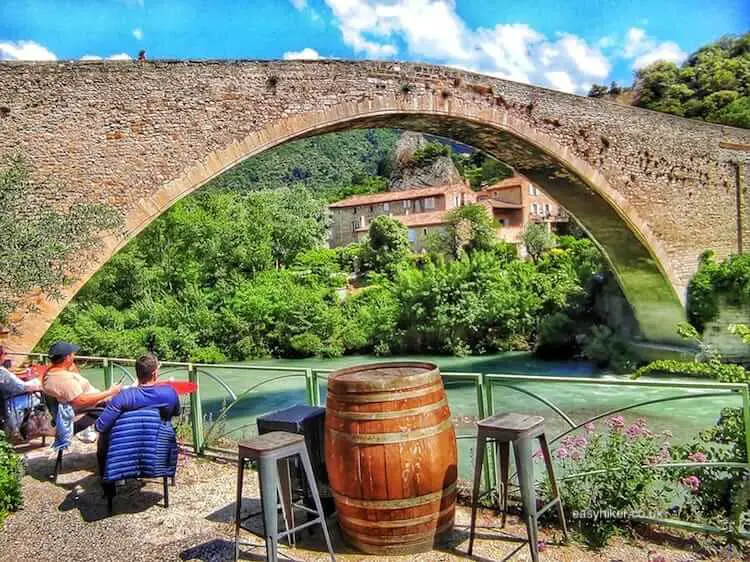
Alternatively, you are of course free to rent a car. Or look for friends in the area who own one and like you enough to chauffeur you around a little. Friends like Marion and Jochen (a friendship that goes back much further than either of our moves to the south of France) who introduced us to another pair of lovelies on our most recent trip to their region.
The first Provence village we visited this time was quirky little Séguret, 20 km to the northeast of Orange, …
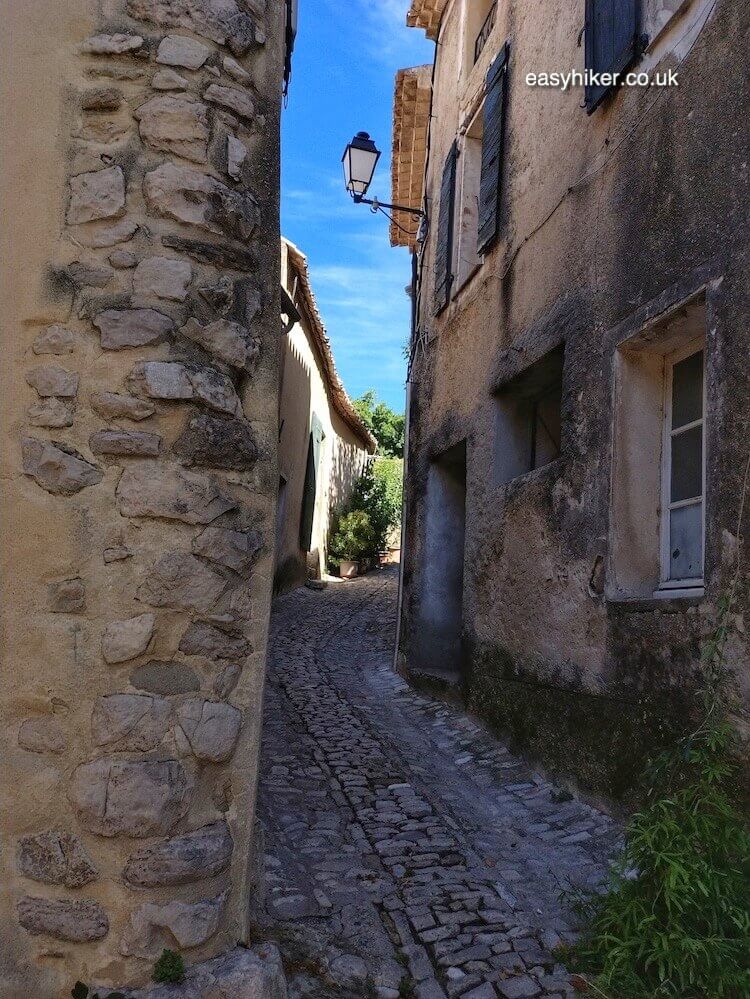
… that blends the serenity of its ancient streets …
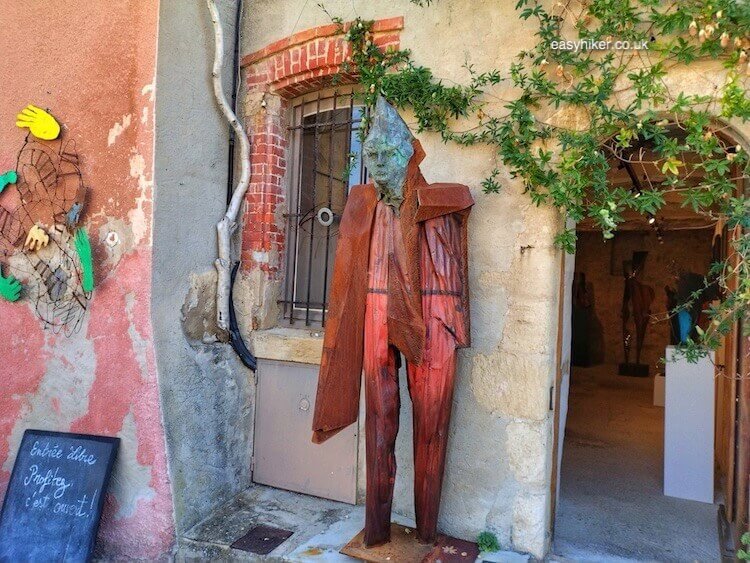
… with colourful offerings from its shops into a flavour all of its own.
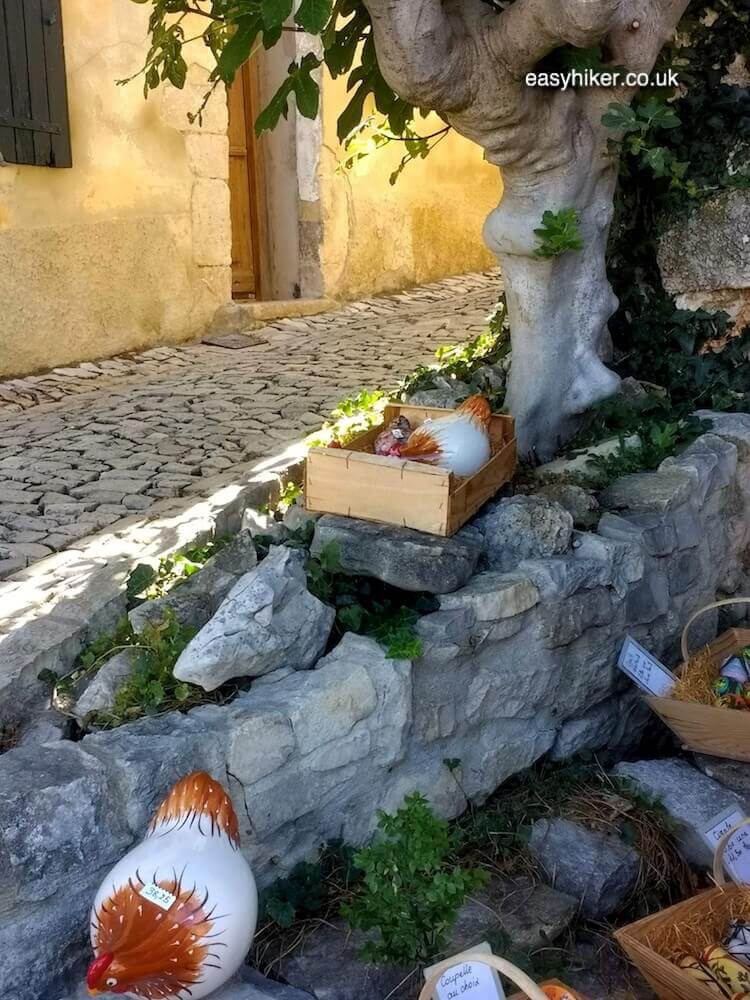
Séguret’s long if not particularly distinguished history reaches back to the early Middle Ages when the village was built to serve first an abbey and later a castle, which lies today in ruins on top of the hill.
All traces of this ancient village have disappeared, but the oldest features of the modern townscape still go back to the 17th century.
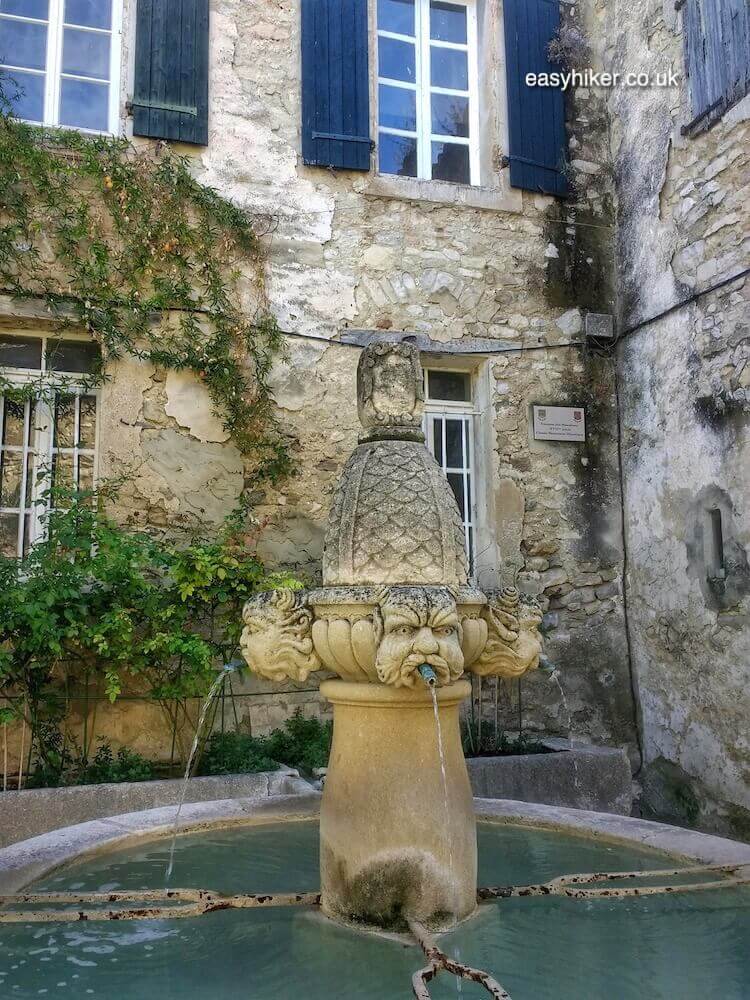
The biggest event in the village’s 1500-year-long history, however, occurred far more recently: when, 70 years ago, the course of one day changed Séguret forever.
Until the winter of the year 1956, olive oil had been the town’s main breadwinner for centuries. But two thirds of the entire region’s olive trees – some of them more than 1,000 years old – died in a single night. In a few hours during the late evening of 10 February, the temperatures plummeted by 38 degrees, from a prematurely balmy 21° to minus 17° centigrade, an all-time record low for the region.
The sap that had crept up the trees during an exceptionally mild late winter was frozen in its tracks – and the next morning, in the thaw of the sunshine, the vascular tissues of the trees expanded and burst the trees wide open. It is said that, on that morning, “the sound of olive trees crying pervaded the orchards as the sap exploded and cracked their skins”.
So what could the farmers do: replace the dead trees? Olive orchards need about 30 summers before they can produce a full harvest. Wine, conversely, can earn the growers some money after a few short years, and the vines – which is equally important – are less sensitive to February frosts because they are still in their dormant period when olive trees are already preparing for the spring.
So wine it was that most farmers around Séguret decided to concentrate on, a decision that turned out to be a blessing because it also created the perfect conditions for the development of a second pillar for the local economy.
Wine, it turned out, was an almost perfect fit for the nascent tourism industry – because, after all, most holiday makers like to drink wine much more than olive oil (and consume it in larger quantities, too).
Séguret grew, prospered and invested the incoming money wisely. Today, it is a proud member of that distinguished club, the Most Beautiful Villages in France.
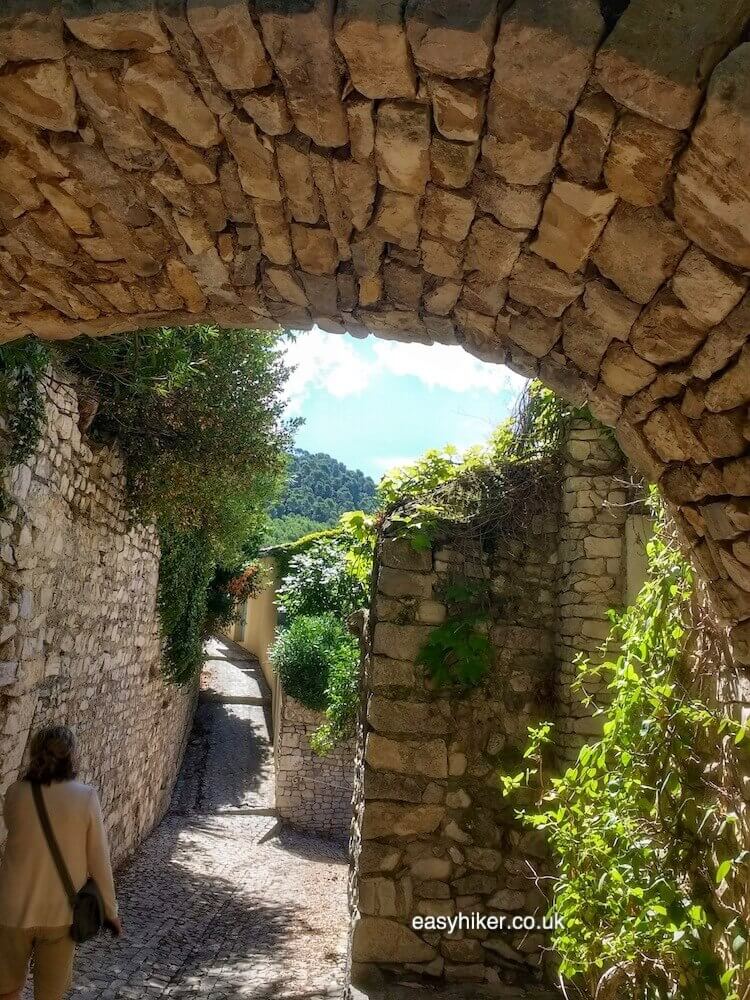
If you think wine is big thing in Séguret, however, you ain’t seen nothing yet until you have visited neighbouring Gigondas.
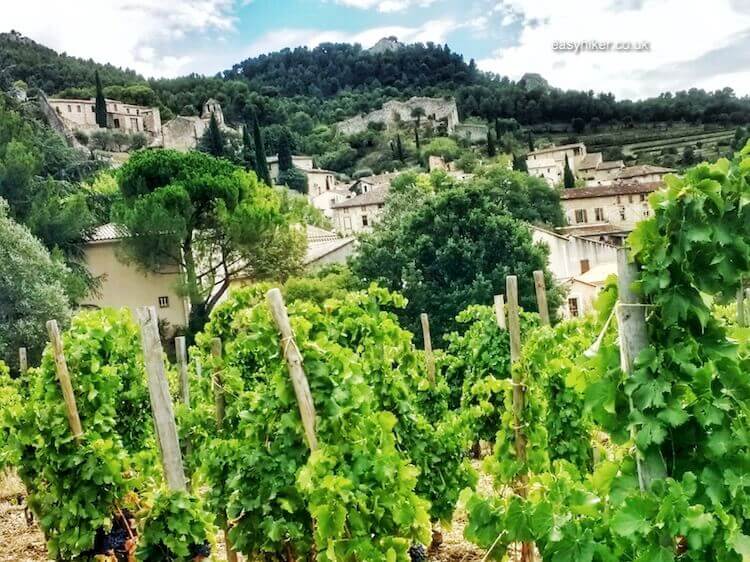
Of the two villages, Gigondas is the busier (although it is smaller with only half of Séguret’s population) and the more business-like. Of businesses, there is only one in town: wine. The streets of other villages may be lined with tea rooms and sidewalk cafés.
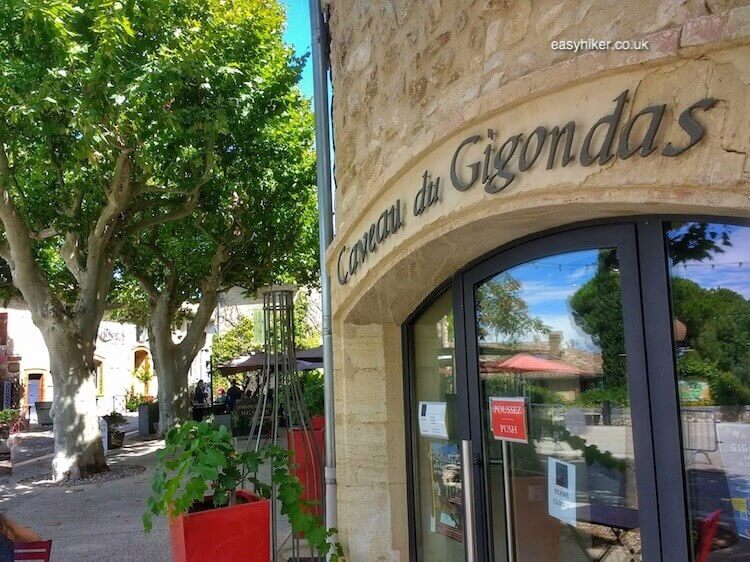
The high street of Gigondas is packed with wine bars where you can consume the local produce on the spot.
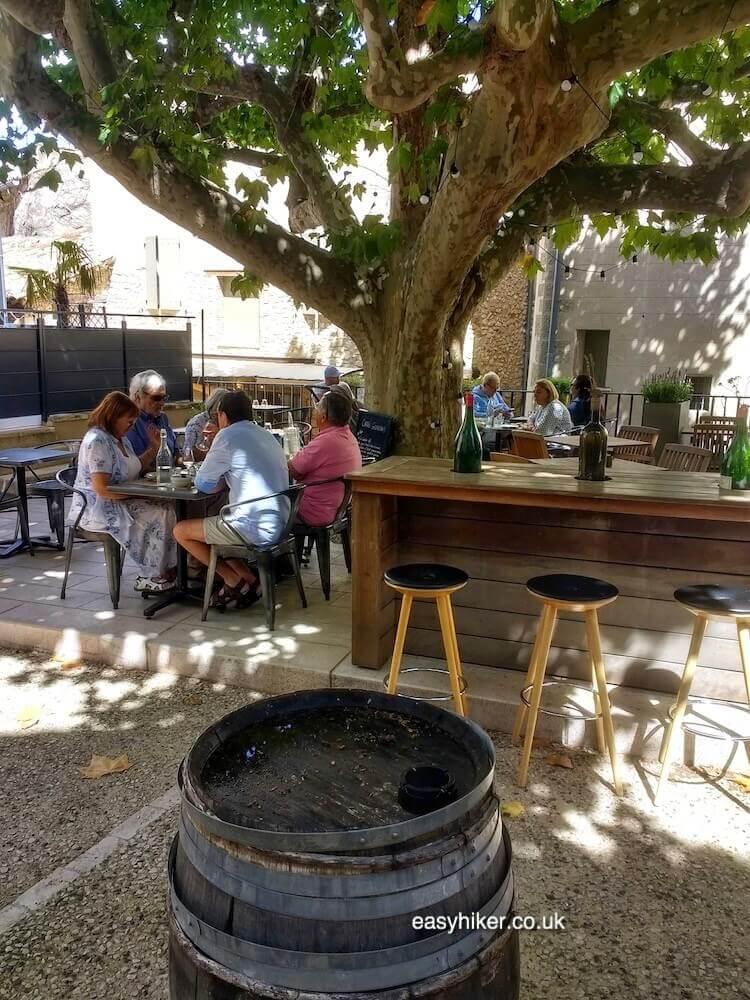
Wine in Gigondas has a longer tradition than in neighbouring communities, reaching back to Roman times in which the small town’s name is rooted (what the local dialect made out of the Latin word jocunditas). Gigondas first applied for an appellation of its own in 1924 when everybody around was still growing olives.
Today, the town owns one of the few separate appellations in the Cotes du Rhone area: wines from the region are commonly distributed as Cotes du Rhone or Cotes du Rhone Villages, the working class and the lower middle class of French wines respectively.
While the local aristocrats are clearly the reds from the Chateauneuf-du-Pape region north of Avignon, Gigondas plays the role of the aspiring gentry, occupying the upper medium price range in supermarket shelves all over the country.
The village itself, meanwhile, is full of rather fancier, upscale wine merchants.
To escape the hustle-and-bustle of downtown Gigondas, we recommend to climb uphill towards the 14th century church of Sainte Catherine …
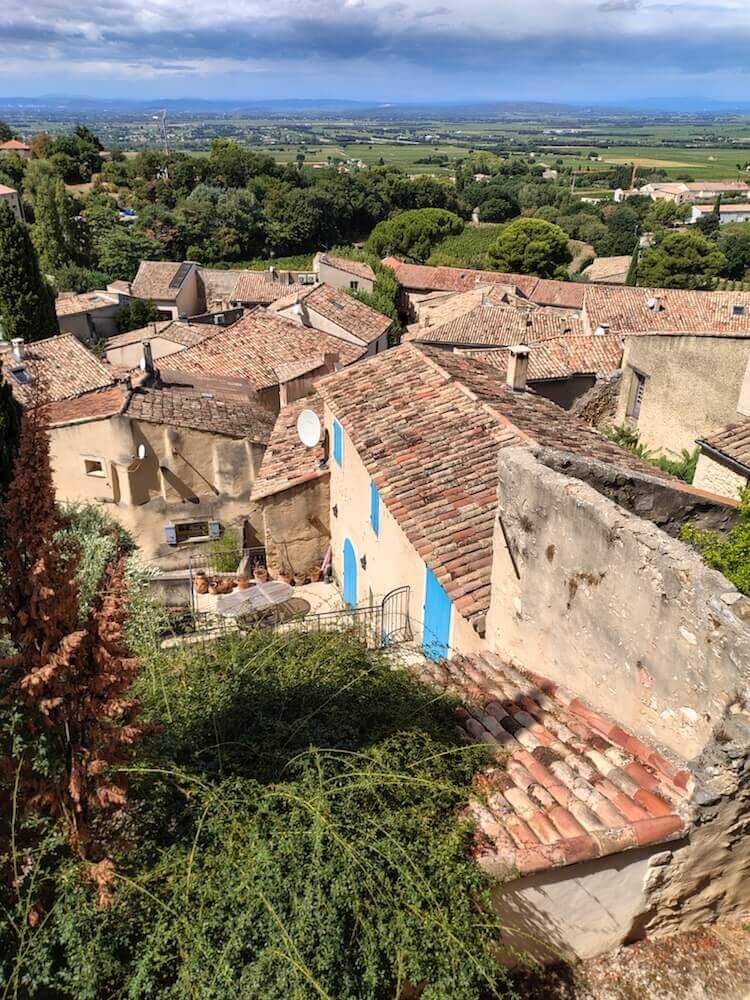
… and the surrounding Hospice, an ancient hospital that was founded by a religious brotherhood in 1678. Following its closure after the French Revolution, it lay abandoned for 200 years before the area was revived by the “Gigondas Yesterday and Today” association of volunteers.
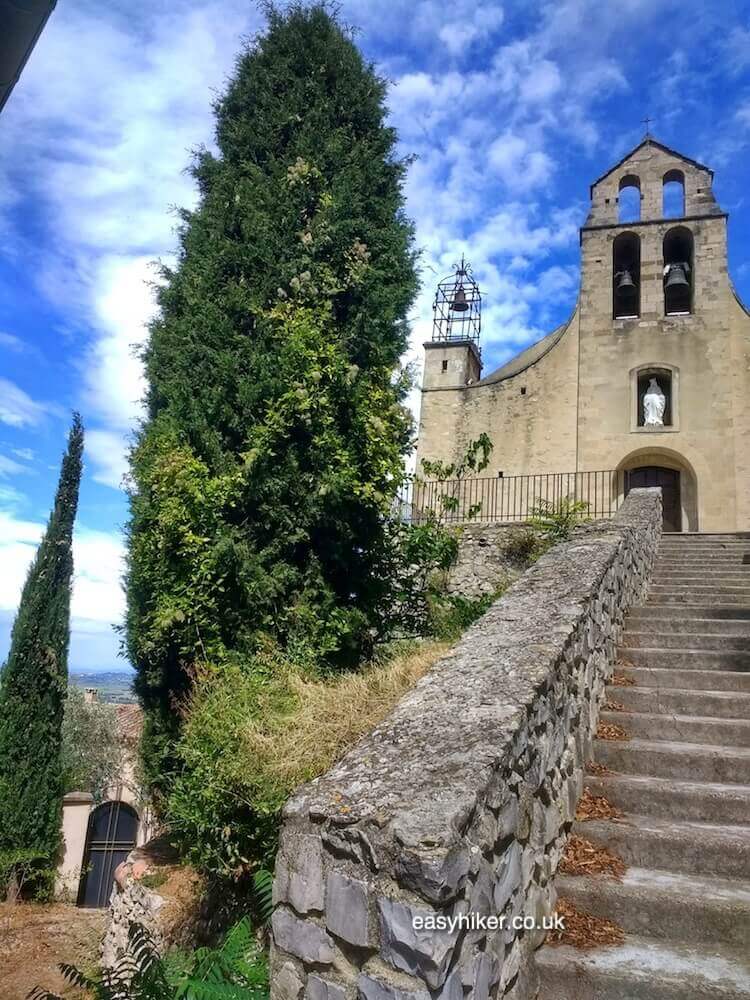
Discoveries like that wait for you everywhere in the villages of Provence – which is the reason why it pays to visit and revisit, finding new experiences all the time.
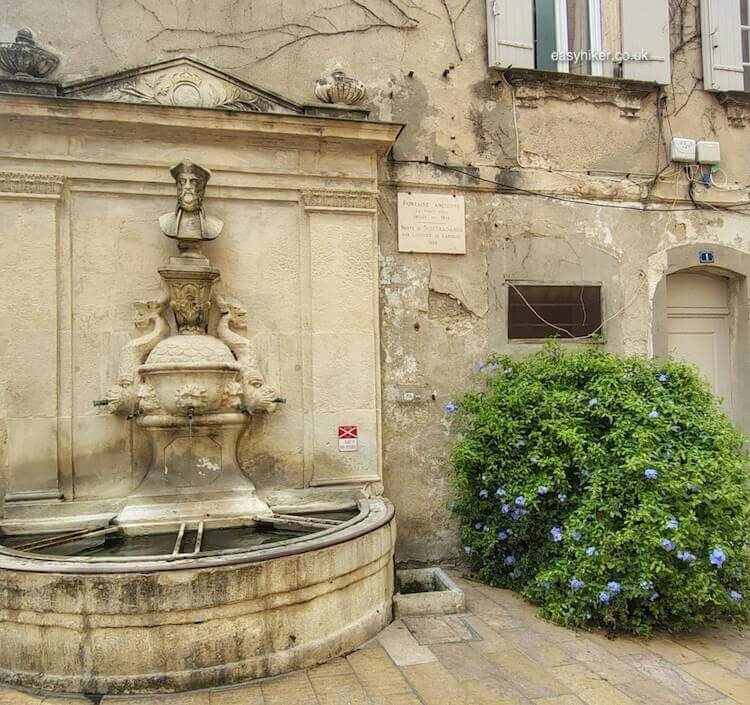
Provence is the gift that keeps on giving. All you need to bring in exchange is the courage to leave your comfort zone of trips where you can plan all the details of your itinerary for months in advance, the willingness to go the distance, and an openness for the telling detail that connects the past with the present and the everyday with the sublime.