Over the years, we have travelled extensively on the various van Gogh trails in France, driven purely by the power of circumstance. When we lived in Paris, the artist was practically our neighbour, separated from us by no more than a couple of blocks and 120 years.
Way back then, we also followed van Gogh’s traces at Auvers-sur-Oise in the exploration of our hometown’s Further Afield, and later, after we had moved to the south, did the same in Arles.
Finally, on our most recent trip to Provence, we completed our Vincent Grand Slam in St-Remy-de-Provence where the artist spent a full year near the end of his life in the asylum of St-Paul-de-Mausole.
The van Gogh trail in France features different towns with different attitudes and different ways of managing their artistic heritage. On the unenthusiastic end of the spectrum stands Paris – which has other things on her mind, apparently.
Besides, Paris might argue, the artist spent most of his two years there in search of himself and a personal style, while producing fairly conventional paintings of Montmartre’s side streets, windmills and rural surroundings.
Arles and Auvers stand somewhere in the middle. They celebrate their most famous ever resident in similar ways, having erected picture panels outside the places that Vincent chose as the urban motifs for his paintings: restaurants, churches, river banks.
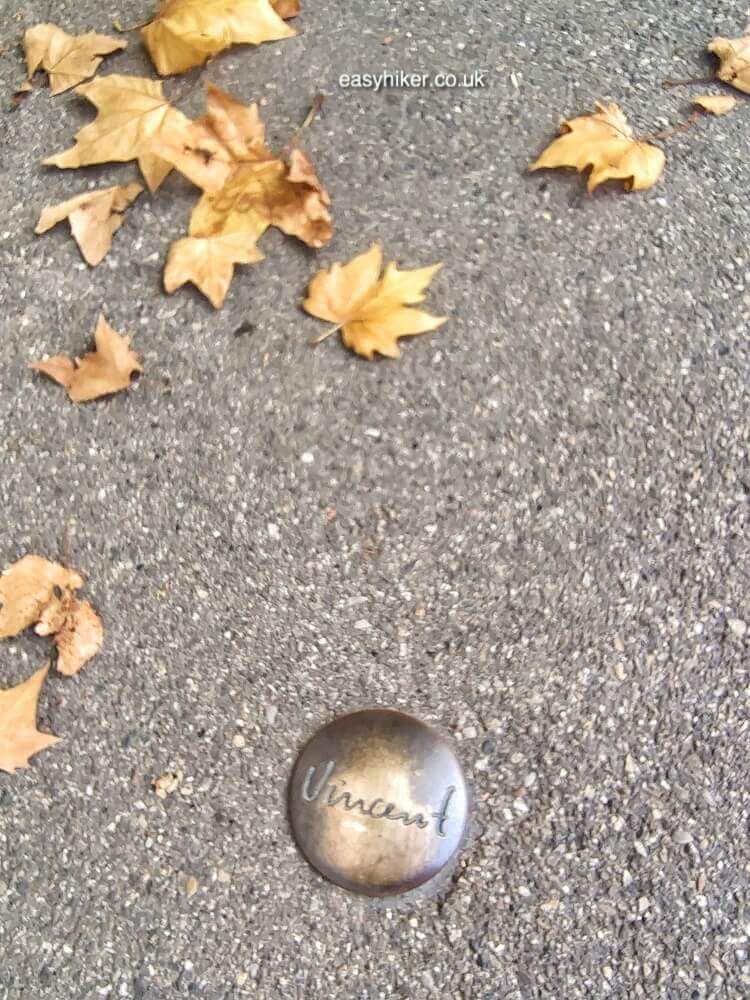
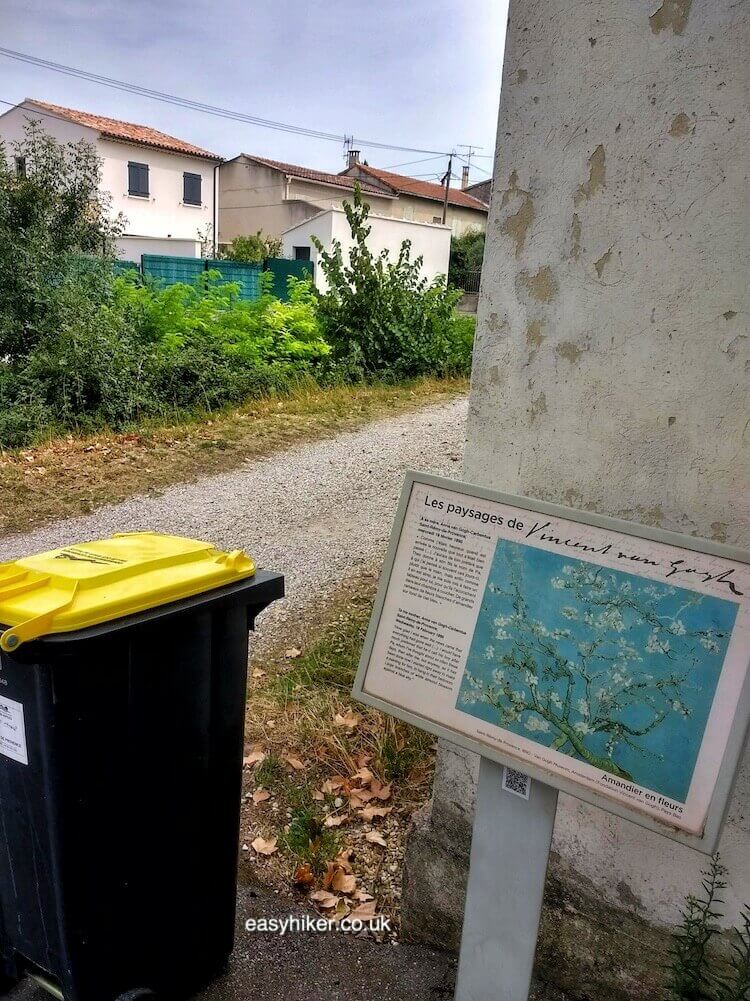
St-Remy-de-Provence has gone one step further. Its Paysages de van Gogh walk, which leads from the Musee Estrine in the town centre to St-Paul-de-Mausole, aims – through reproductions of the paintings and accompanying notes – to embed the artistic visions into the landscapes that inspired them. It is an ambitious project – and a qualified success.
The main problem is that the landscapes around Saint Remy, while not quite sharing the fate of rural Montmartre which was long ago swallowed up by modernity’s asphalt jungle, have not been impervious to change, either.
Many of the paysages whose distinct crops and flowers inspired Vincent have gone. On the 1-km-plus-long trail, your imagination has to do more heavy lifting than your legs.
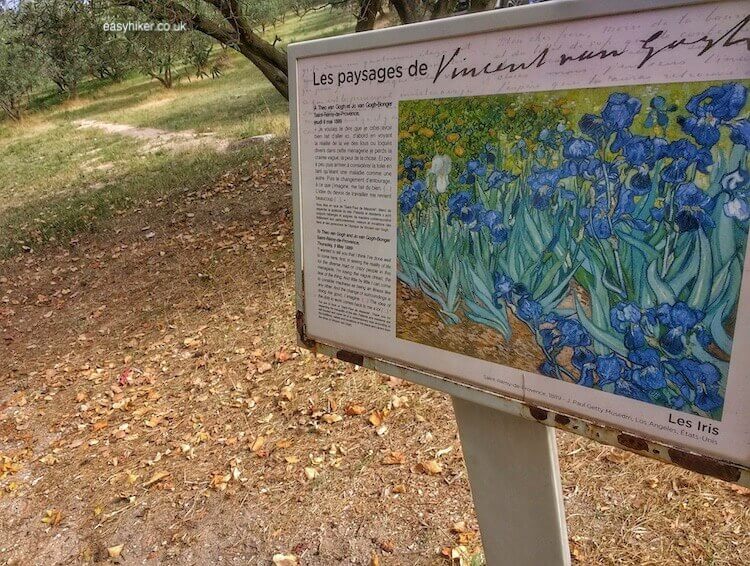
Much of the once rural countryside has given way to suburbia, but even where there is open landscape (on the second half of the trail), this works better for some van Gogh motives …
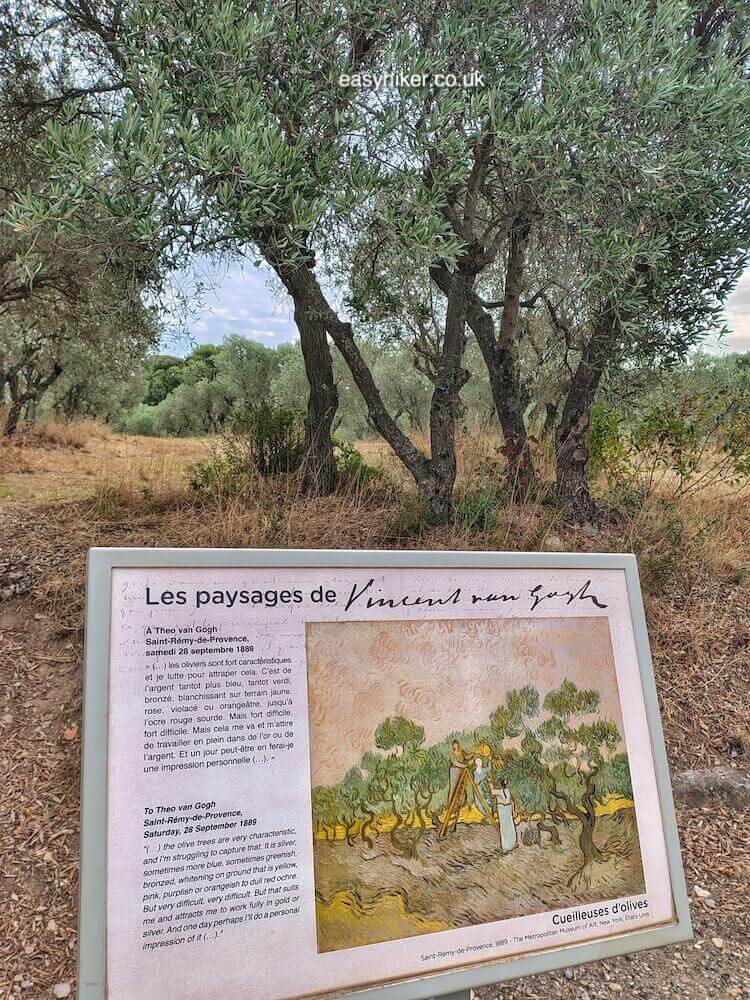
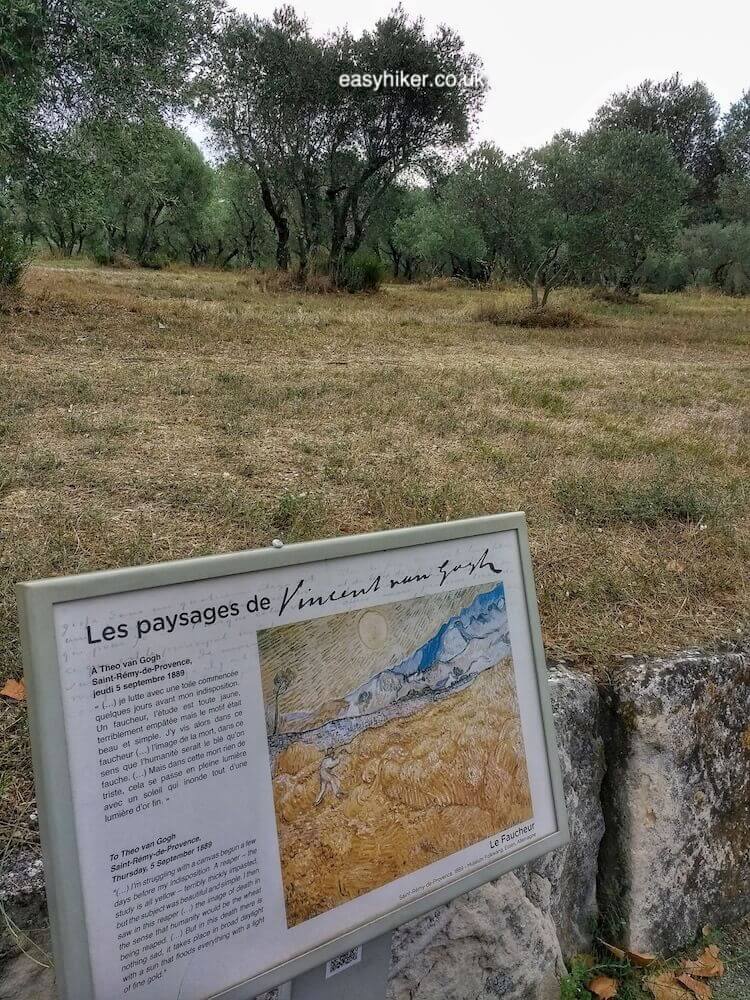
… than for others. Olives are still a-plenty, but wheat fields are no longer in sight. Local agriculture itself appears to have undergone a conversion, too.
Cypress trees were important for van Gogh. They served as “lightning conductors”, in the words of Robert Hughes, “connecting the energies of the sky with those of the earth”. No paysages de van Gogh would be complete without them, but the only one Saint-Remy could recruit for this trail had (or certainly has now) its view obstructed.
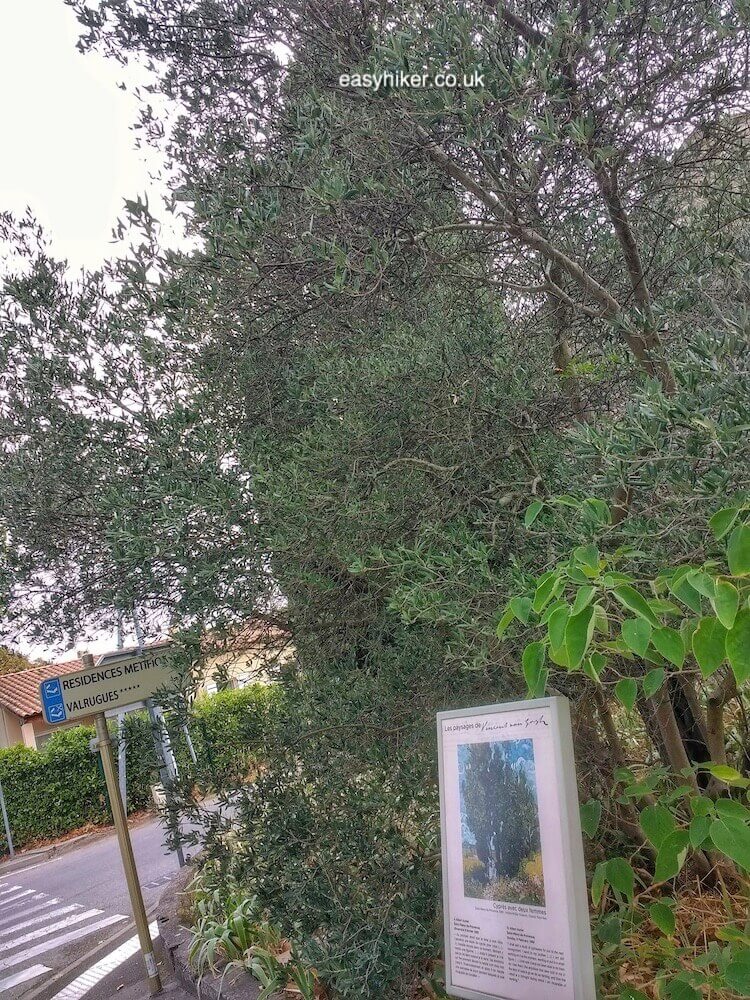
It is equally unfortunate that city planners and modern dwellers do not always cooperate.
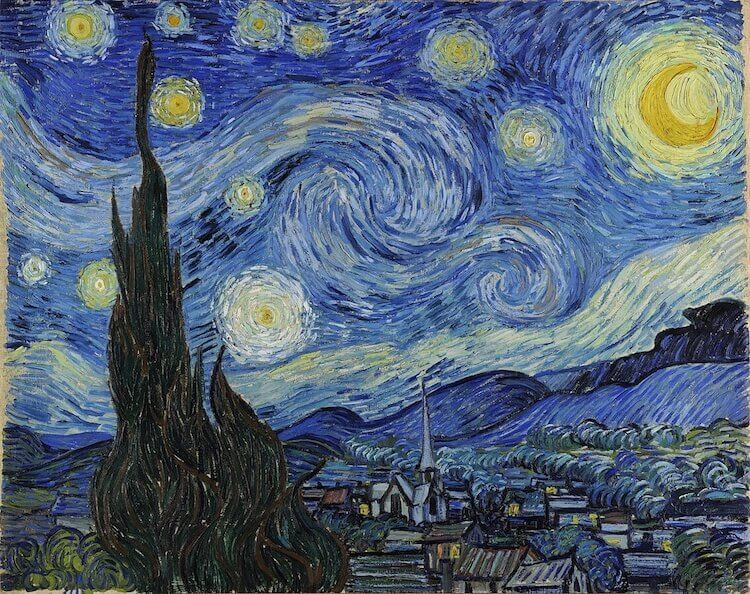
And here is something else I found unfortunate: of the 19 paintings whose copies line the trail to the asylum, the only one we could not find was Starry Night, the sole work of the 150 made by van Gogh in the asylum (at a rate of one every two days) that includes a visual reference to the near-by village.
Or so I thought – until I found out that this was one of the few van-Gogh-paintings which were created not from nature but purely from the artist’s imagination: an image of the mind, not of Saint-Remy. (Maybe that’s why they removed it?)
Overall, however, we were quite happy with the trail and found it thoughtful and well-conceived. It was also a great idea to accompany the paintings with snippets of Vincent’s letters (mainly to his brother Theo) rather than musings of some art historian.
These guys never really got him, anyway, and even today stand a little fazed in front of his universal popularity. Van Gogh was a one-off, there are no boxes and –isms that fit him, he was no follower of a school and had no followers himself.
His works may well constitute the world’s greatest oeuvre of Outsider Art. Vincent certainly appeared to share many traits of character with all those cranky postmen and lay preachers who ploughed their lonely furrow, refusing to follow the drumbeat of academia or artistic fashion.
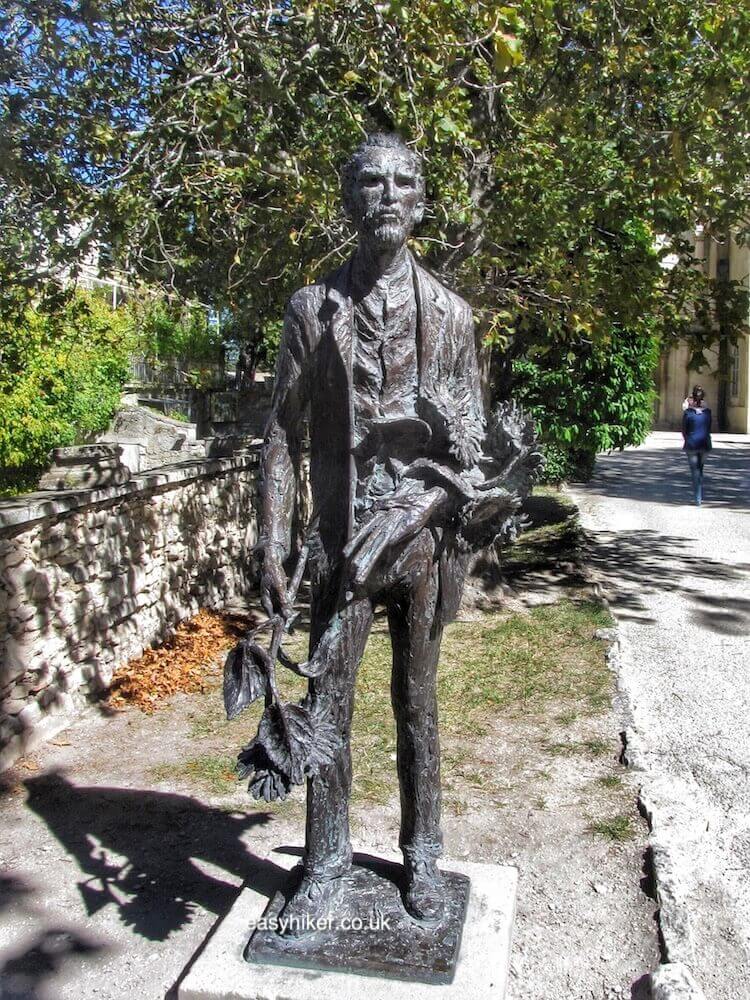
The idea of the paysages works best near the asylum itself. The views of the Alpilles mountains that you get from Saint-Paul have changed little – sometimes, a traffic sign or a barbed-wire fence may get in the way, but sometimes not. In moments like that, you will be free to experience a moment of this-is-where-he-must-have-stood epiphany.
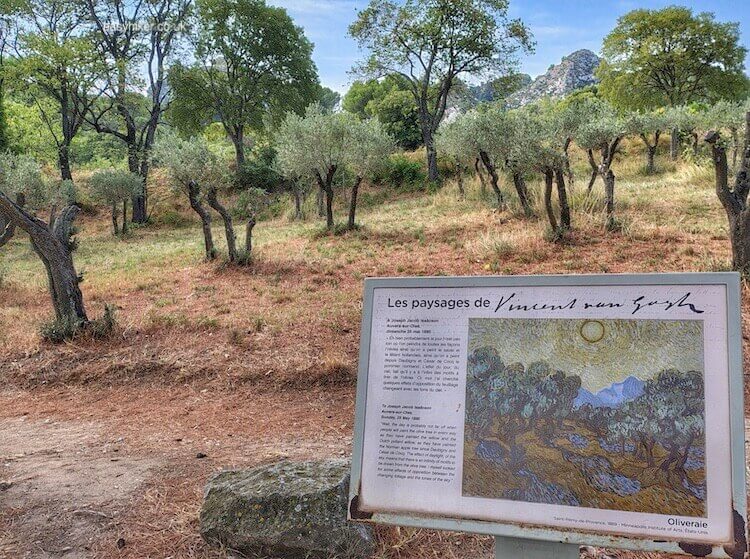
Which is only one reason why the asylum of Saint-Paul-de-Mausole is the highlight of the walk. You can hear the echoes of ancient times inside its walls, echoes from the 19th century and much further back.
For nearly 1,000 years, Saint-Paul – a monastery long before it became a hospital – has preserved the sacred stillness of a religious institution.
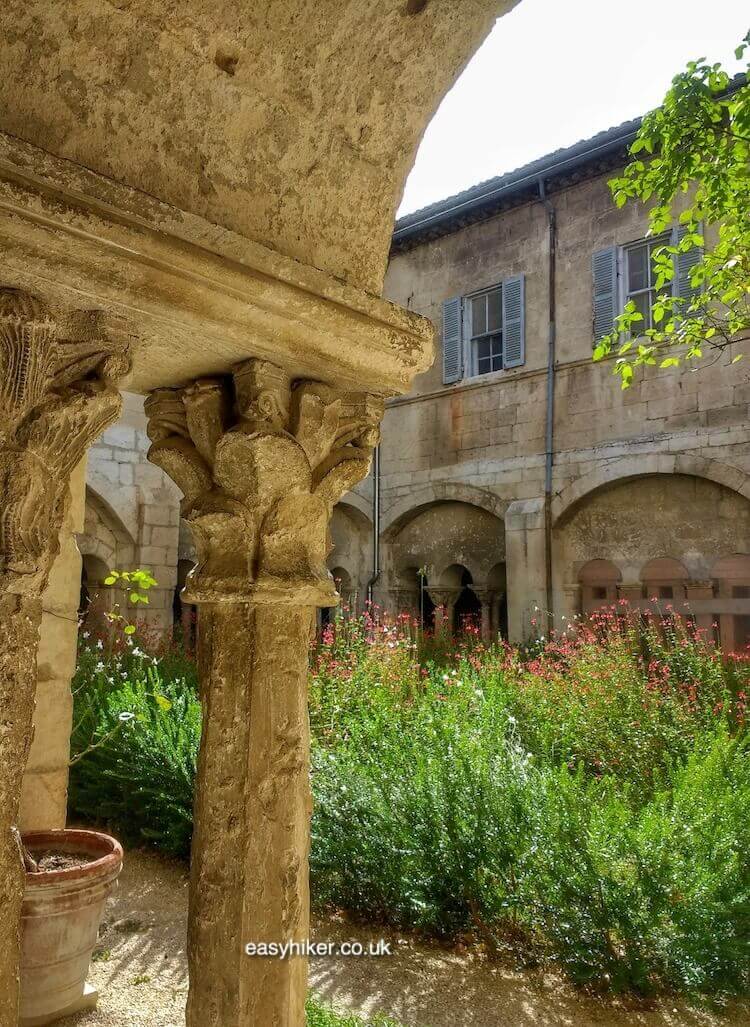
The former asylum – no a museum – is also the final stop of the walk, so you can relax and enjoy the atmosphere, as Vincent most have done (on his better days).
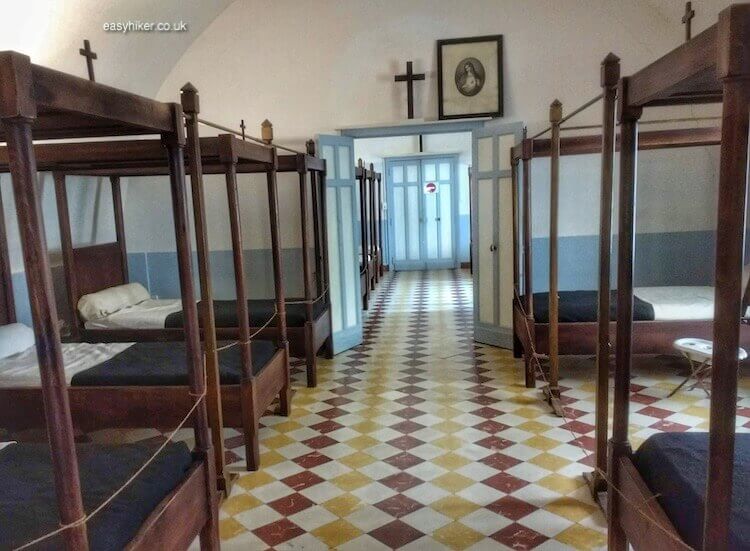
The artist spent most of his time inside – he was a self-admitted patient but needed permission to leave the compound – which is reflected by the numerous Saint-Paul motives of his paintings, and you will recognize many of van Gogh’s works in the museum’s well-preserved interiors.
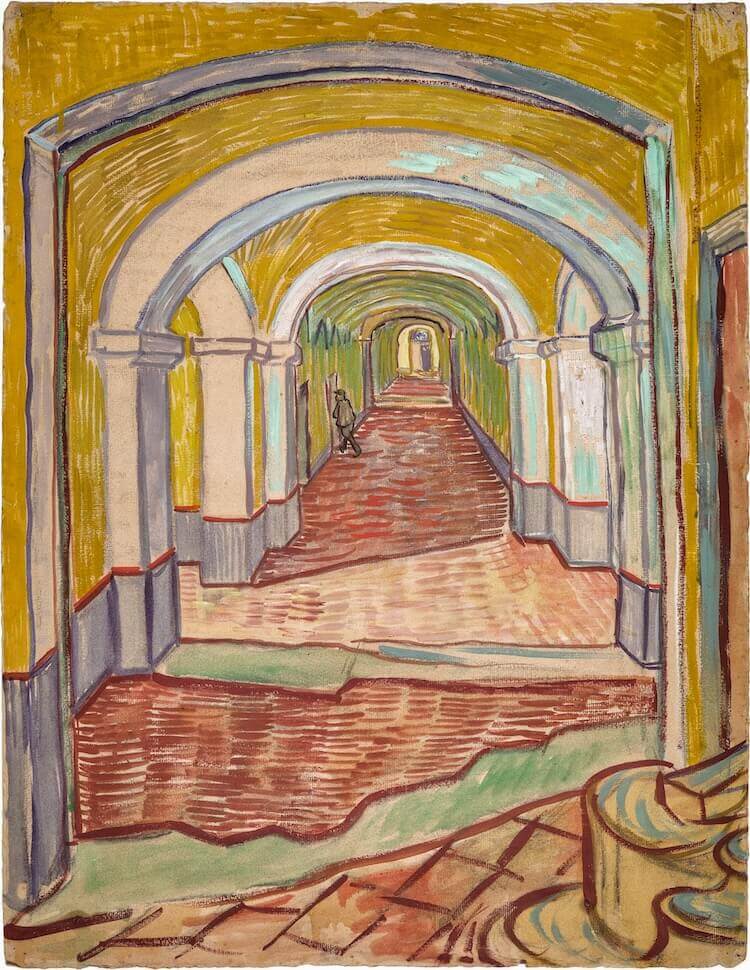
Saint-Paul was a private but not luxurious sanatorium for patients from the middle and lower ranks of the bourgeoisie. (Vincent’s stay was financed by his brother Theo, one of art history’s great unsung heroes.) Vincent had his own suite with a bedroom …
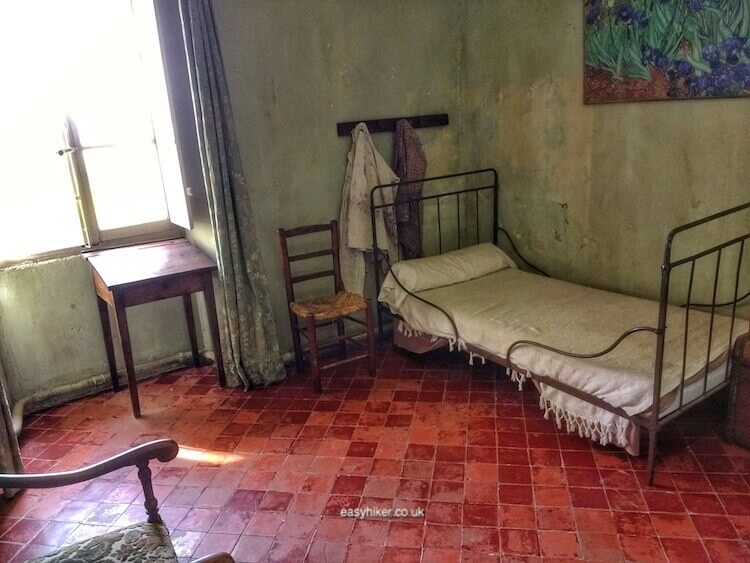
… and two extra rooms, one to paint in and one to store his finished paintings.
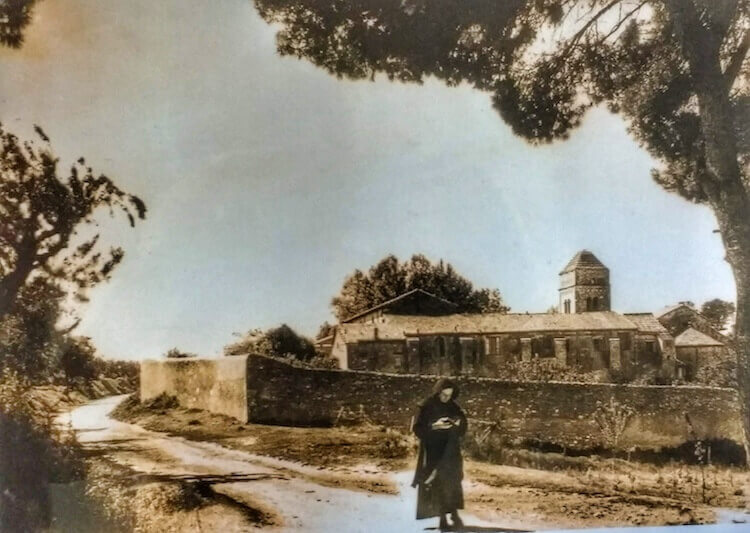
Historic photos in the museum help to develop a feel for the context of the time. Neither Saint-Remy nor rural Provence were the lively tourist destinations they are today, and Saint-Paul must have been a remote and isolated place, short of distractions for a mind intent on destroying itself.
For your walk back to St Remy, we suggest to take a different route, one that introduces you to the rich history of the town.
Just outside the museum, you will find the ruins of Glanum, an important town in antiquity, …
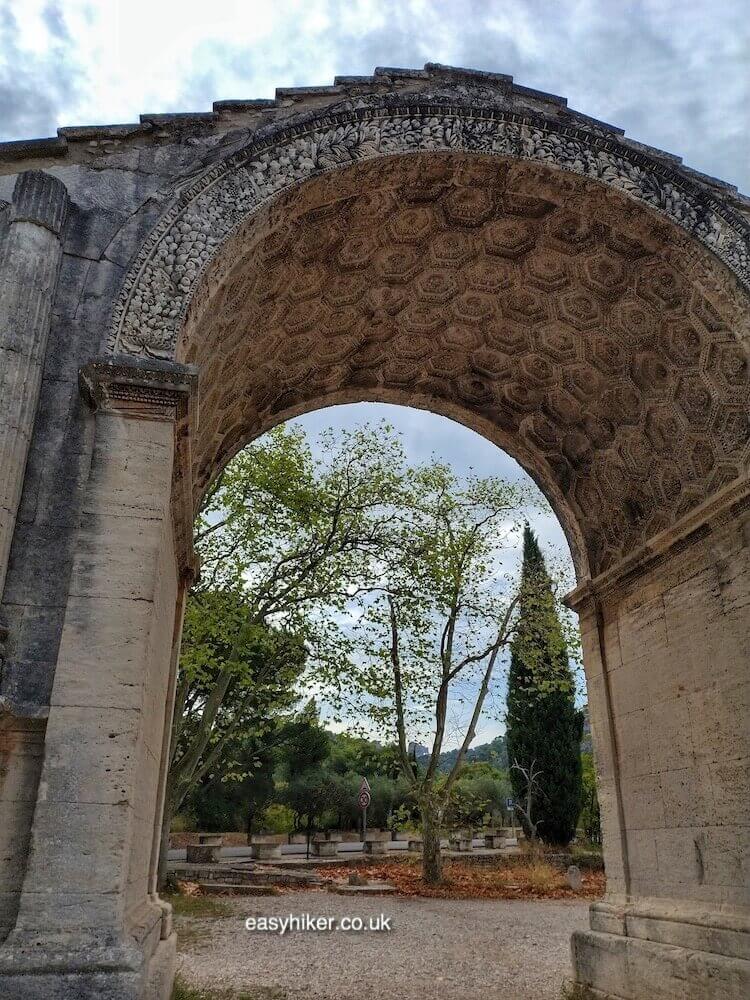
… important enough for the Romans to build a dedicated access road to connect Glanum to their pan-European road network.
Walk back towards town on the Avenue de van Gogh (the road of the trail) but then turn left into Avenue Antoine de la Salle.
After about 500 metres, at a junction where several streets meet, turn right into VC Romaine – this was Glanum’s dedicated access road – and, after another 500 metres or so, right into the Chemin de Bellile.
Then take another right turn into what is now called the Chemin Gaulois. In ancient times, this was the Via Domitia, the major highway that cut through the province of Gallia Narbonensis (today’s Provence) from east to west and which is the oldest road in France. It will take you back to the Avenue de van Gogh where you turn left to return to town.
We recommend this little detour on the strength of its historical background rather than its good looks. The recurring name of many houses indicates what used to be St Remy’s and the region’s primary business (“mas” means farmhouse in Provencal), but it is equally clear that agriculture has since made way for a new number one industry.
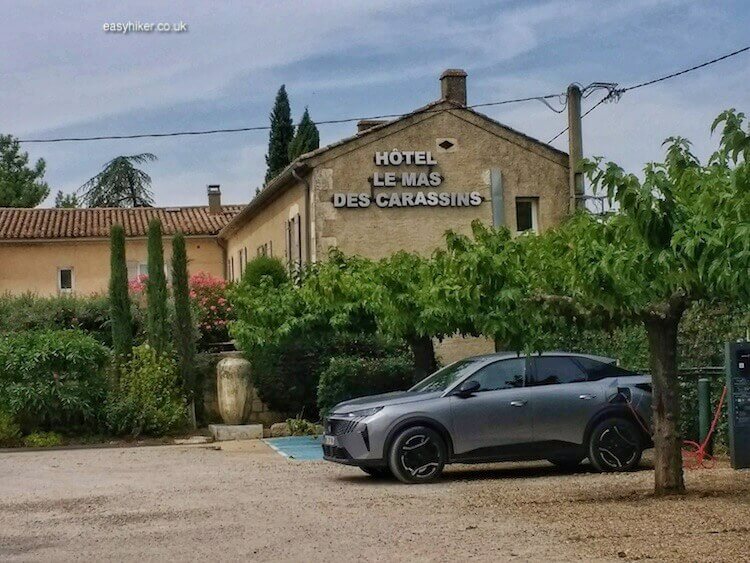
Provence is truly a bag full of wonders, not only a place where villages are pretty and landscapes spectacularly beautiful but also a place where even seemingly nondescript streets have interesting stories to tell.
Join us for more wonders next week.