I have always held that every town, no matter how frumpy and dull it may appear, can give you one day of good entertainment. After that, the metropolitan wheat is divided from the Palookaville chaff, but for a single day, day trippers should not struggle too hard to find what they are looking for: a few interesting buildings, some sort of a beauty spot (ideally a lake or a river but a park/public garden will do), something unique (or at least uncommon), something beautiful.
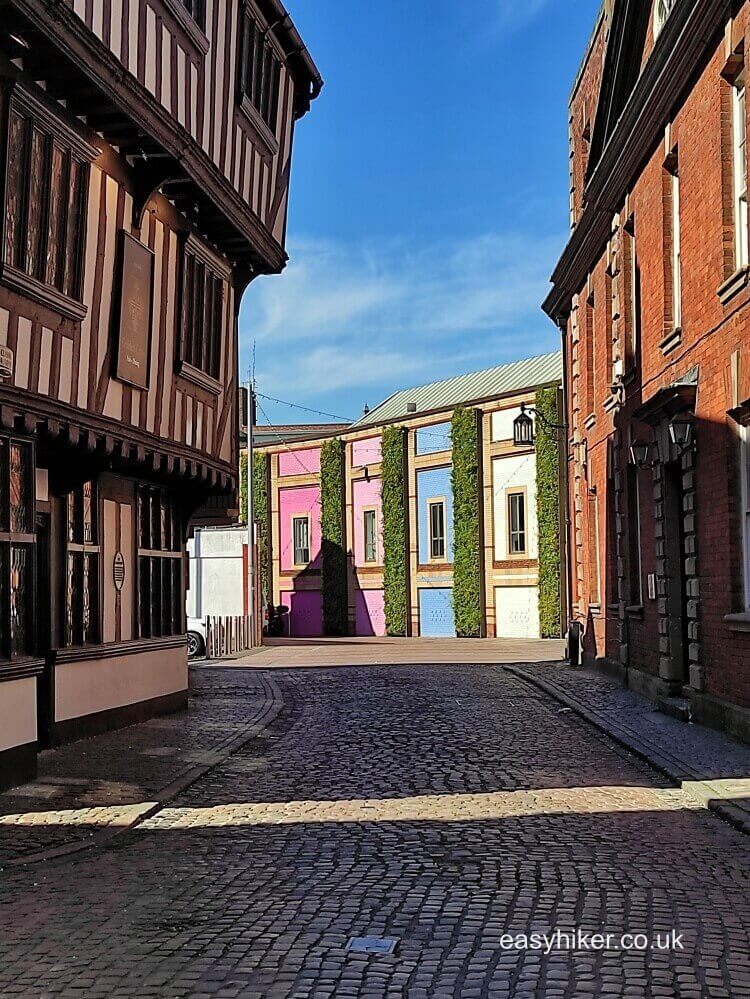
A Visit to Coventry and Wolverhampton
To stress test this theory, we undertook a brief journey into one of Europe’s tourism deserts, possibly the continent’s least promising region for a fun-filled day trip: the (formerly) industrial West Midlands in the UK.
Well, we did not go there just for stress testing, but since we were already in Birmingham and had a day to kill, we thought we might as well sample a couple of smaller local towns rather than searching out a botanical garden and an obscure museum of glove puppets or some such.
But first, a thing or two about the West Midlands that may help you to put things into their proper context.
Once upon a time – not all that long ago: this “time” only ended in the 1970s – Britain was a very different country from what it is today. It operated very much like an “economy orchestra” where every region had its own contribution to make to the national wealth: London was the centre of administration and finance, Liverpool and Bristol handled the transatlantic trade (the exchange of goods with the colonies), the West Midlands had manufacturing, the Northwest the textile industries, the Northeast coal.
Most of these sources of national prosperity have since disappeared: Britain has no more colonies, the collieries have closed, and manufacturing as well as textile factories failed to survive European and later East Asian competition.
Only administration and finance have remained, partly as a result of political decisions made by the Thatcher governments in the 1980s that promoted financial services as the sole “industry of the future”.
This served some people well, but others not so much. “Three million pounds for the state funeral of Margaret Thatcher?” the Glaswegian comedian Frankie Boyle protested after the death of the former Prime Minister. “For three million you could give everyone in Scotland a shovel to dig a hole so deep that we could hand her over to Satan in person.”
The West Midlands are another region where not all wounds of the 1980s have healed. Birmingham had the critical mass to regenerate itself from within, but many smaller towns have struggled.
On our trip to the region, we visited two of these smaller towns, Coventry and Wolverhampton, not because we had an idea of what to expect and wanted to make a point but because they were the two biggest neighbours of Birmingham that were covered by the discounted one-day rail ticket, the highly recommended West Midlands Network Daytripper (unlimited use of all public transport in the area for under a tenner).
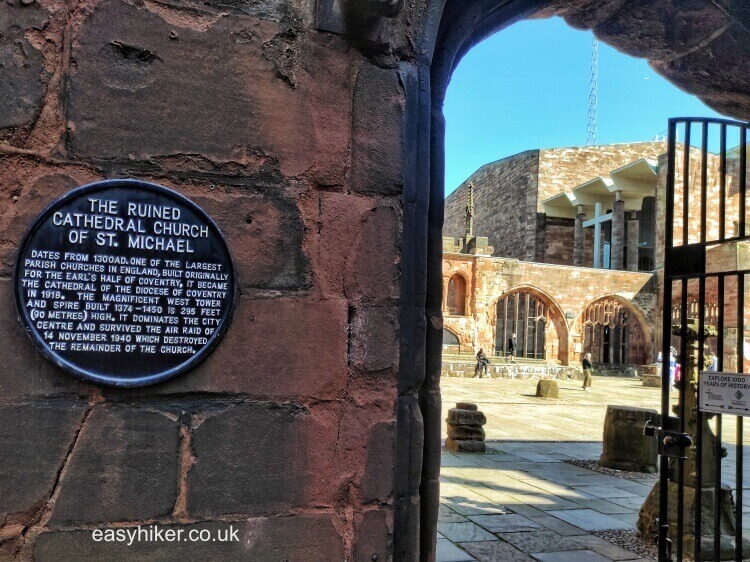
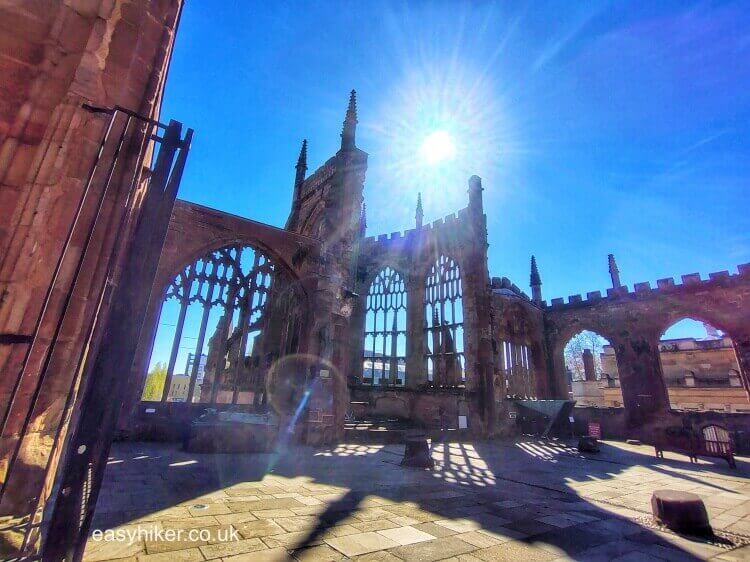
Before we went to Coventry, we only knew what most people know: that the city’s medieval Cathedral had been reduced to rubble by a German air attack in WWII, and that, rather than restoring the building to its ancient glory, the city fathers decided to leave it in its derelict state as a monument to the folly of war …
… while building the new Cathedral right next to it.
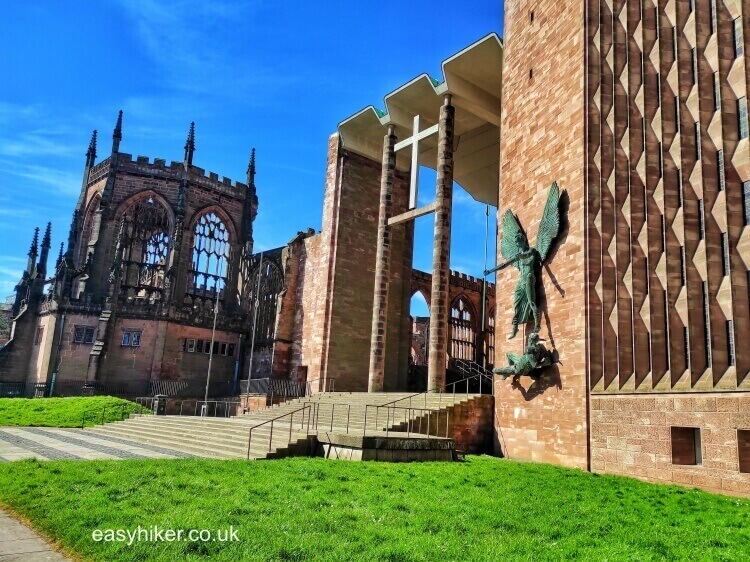
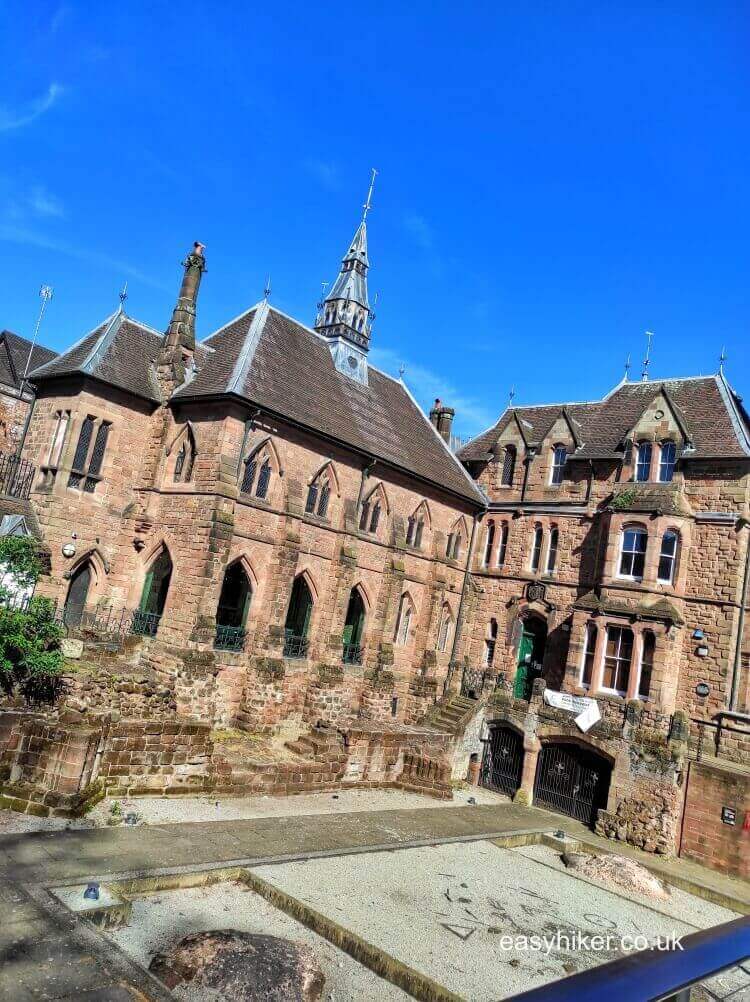
What we did not know is that these cathedrals are surrounded by an entire ancient precinct, a handsome medieval core for the modern city.
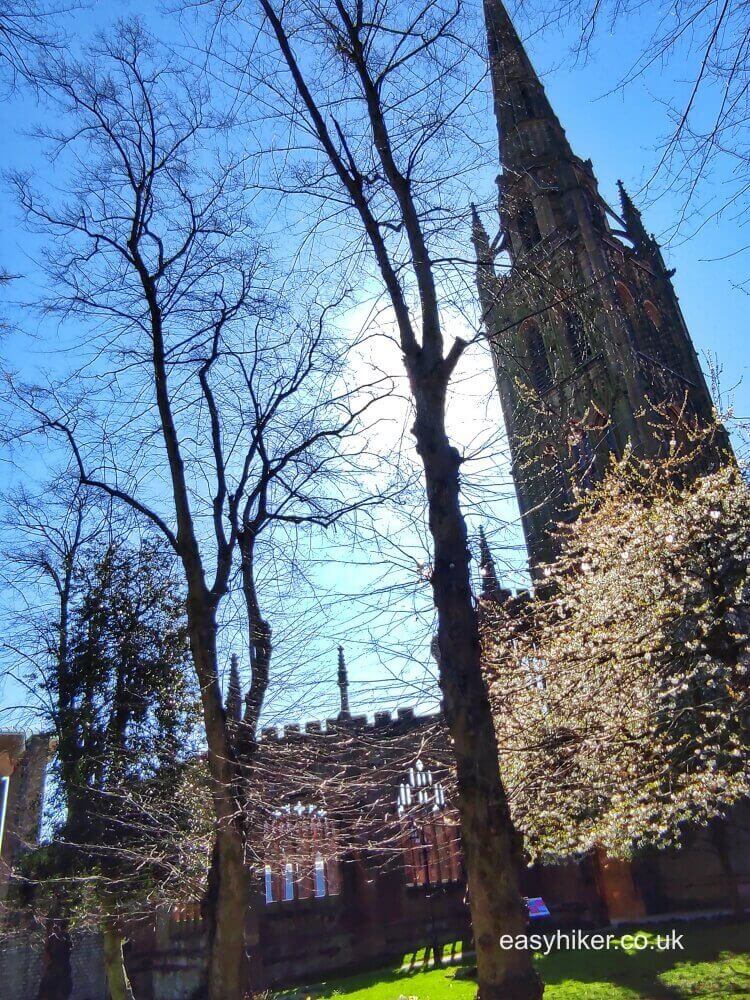
Neither did we know that there were ruins of another Cathedral in the same precinct, although you have to look very closely to spot them.
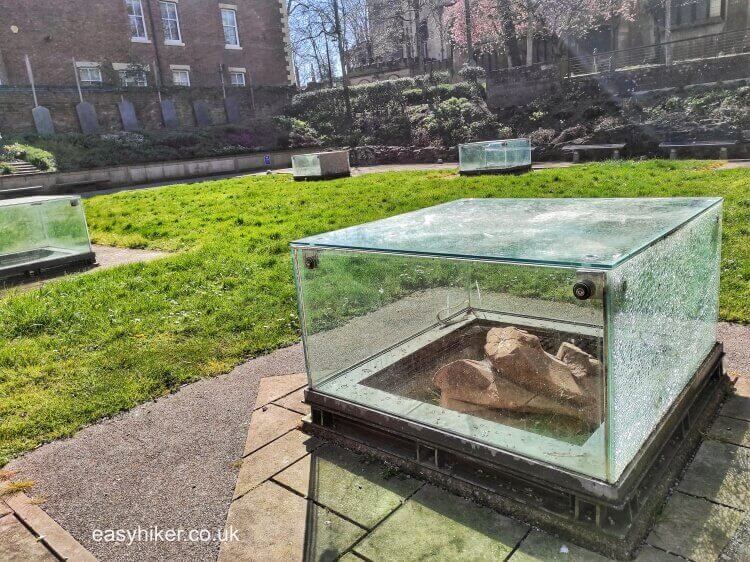
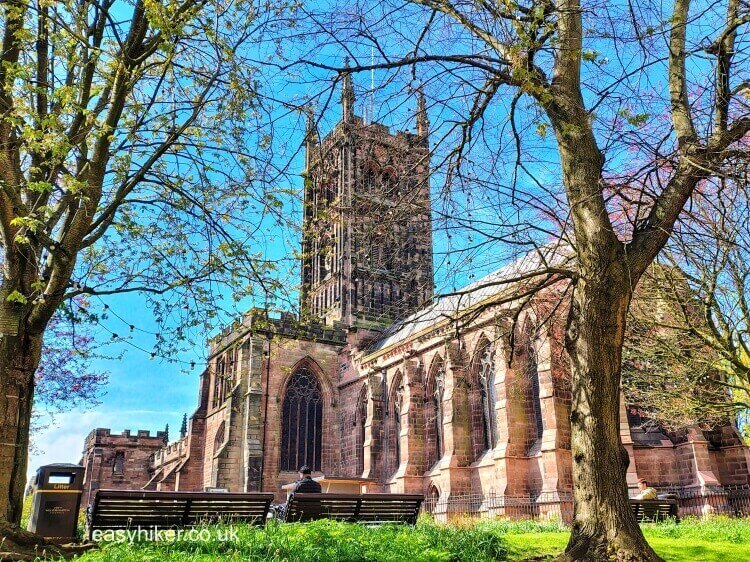
Actually, ruins may not even be the right word: nothing has been left of Catholic St Mary’s Priory Church, razed during the English Reformation, other than just a few remains that lie scattered around an adjacent garden.
Whatever you may think about the people who destroy churches: those who went to work in Coventry certainly knew what they were doing.
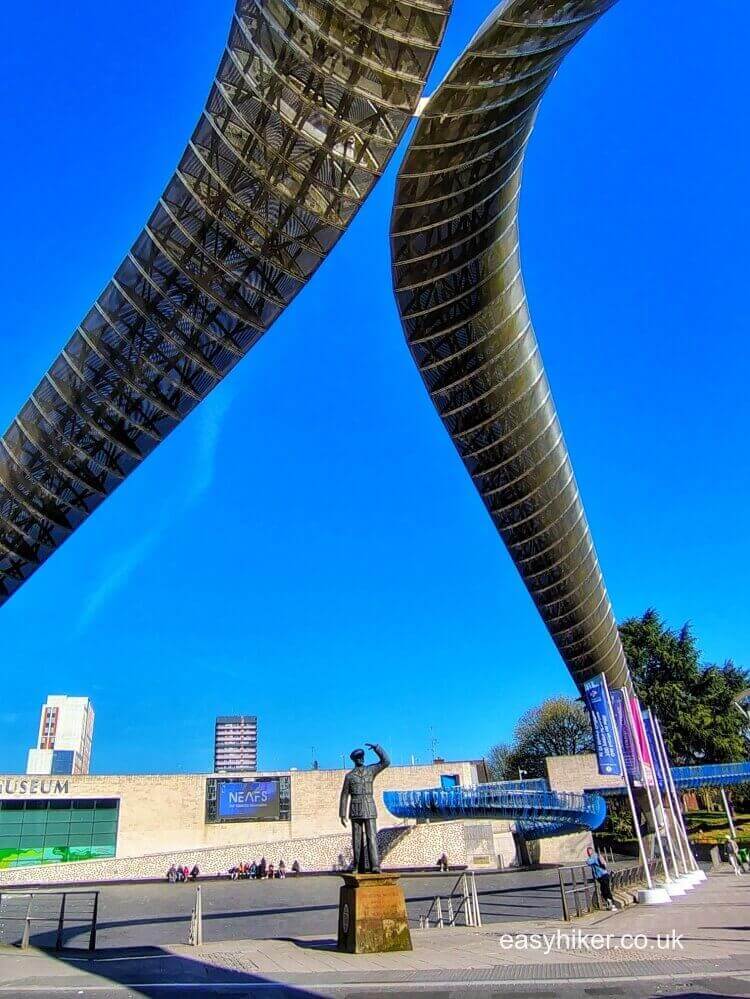
The wider town centre outside of Coventry’s medieval core also has some interesting spots, specifically in the area around the Transport Museum …
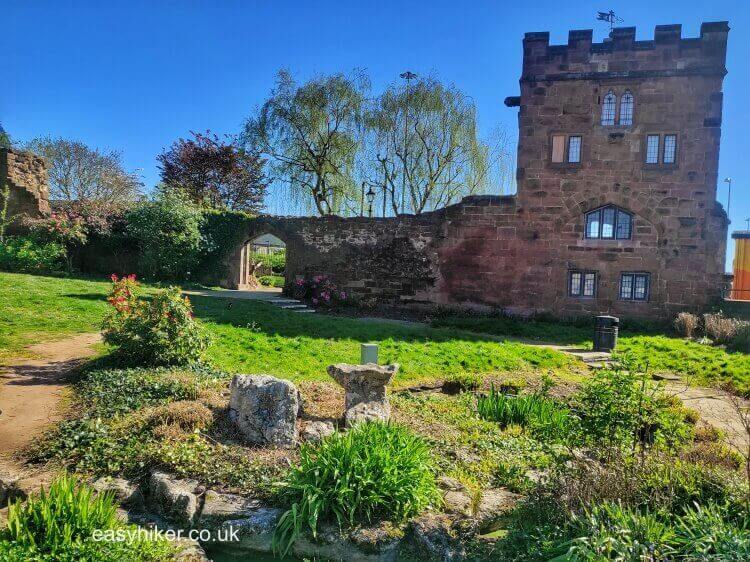
… where you will also find the last remnants of Coventry’s medieval town wall, surrounded by a small public park.
Mind you: Coventry also has some rough spots (its central square is lined by three slot machine parlours, a Chinese take away and a sausage roll bakery).
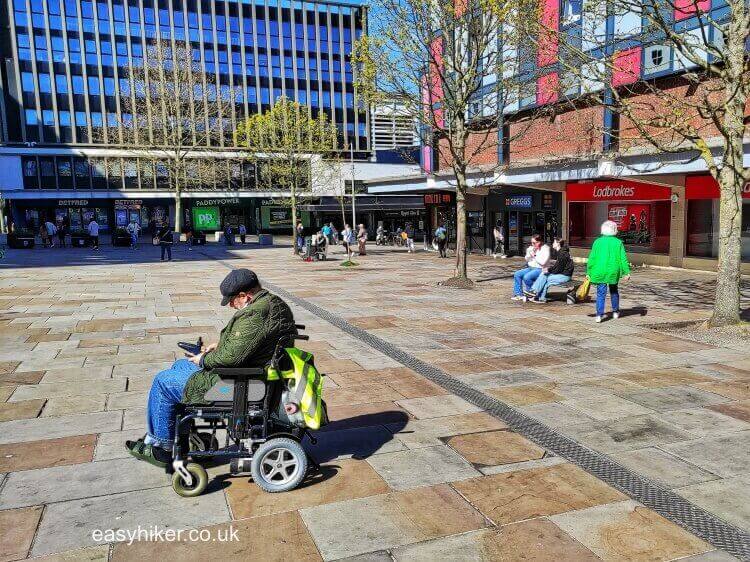
But bear in mind that day trips are the exact opposite of the “curate’s egg” from the old joke. A day trip destination cannot be spoiled by rotten bits. Rather, it is the absence of any “excellent parts” that is deadly.
Off to Wolverhampton then where visitors are greeted – immediately out of the train station – by the sight of the Chubb building, formerly the HQ of the company that supplied locks to the British prison system and produced burglary-proof safes such as the one they made for the Koh-i-Noor diamond at the 1851 Great Exhibition.
But alas, this monumentally austere building – now providing office space for the “digital and creative industries” – has lost its purpose as well as its proud soul.
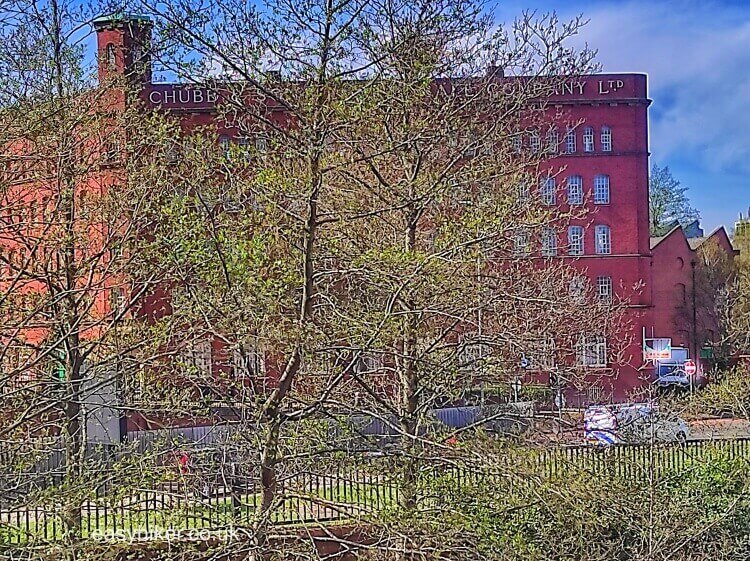
Unfortunately, this is a metaphor for what has happened to the entire city around it. Wolverhampton once had 100 blast furnaces, extensive facilities for car and motorcycle manufacturing (Sunbeam) and a large tyre factory (Goodyear’s first in Europe). But they all went away and left behind the hollow shell of an industrial town.
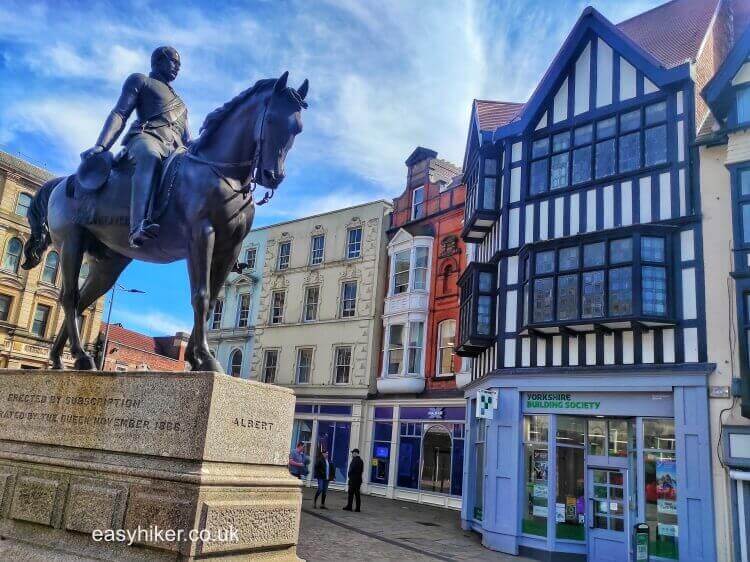
So let us bring out the check list of our Daytrip Destination Stress Test and see what we can find in Wolverhampton. A town square with a few, hm, interesting buildings …
… a (tiny) public garden …
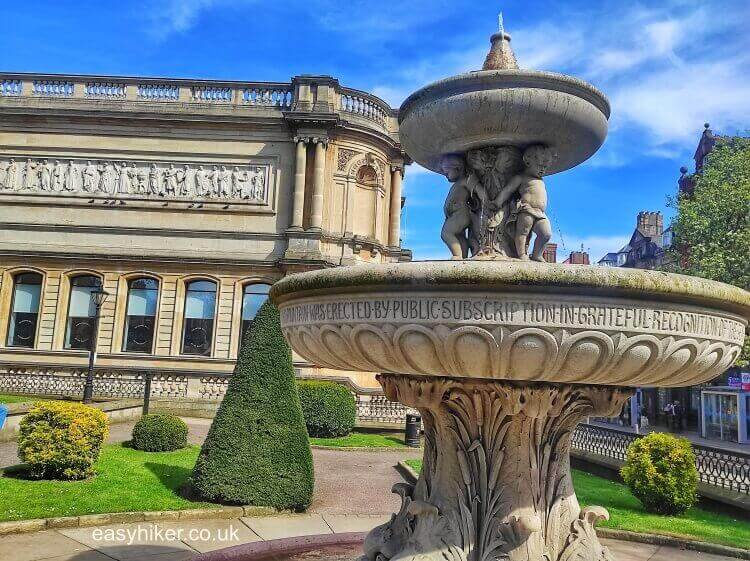
… something beautiful …
… and something unique (or at least uncommon): a monument for a controversial war hero, funded and erected by the enraged citizens of Wolverhampton after one of their own – Douglas Morris Harris had been killed while serving as a wireless operator on a British ship in the WWI Battle of Otranto – was denied a bravery award by the military high brass back in London. (“Insufficiently heroic resistance”, they said.)
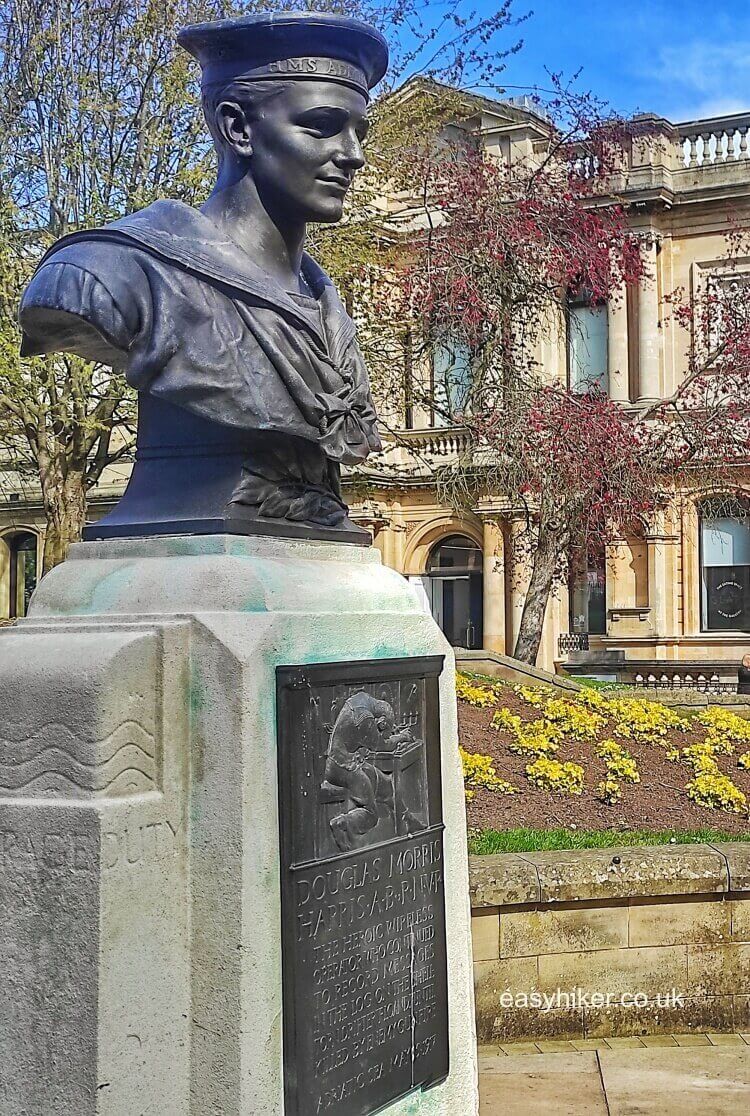
So how many checkmarks does Wolverhampton get for its performance? Before you decide, consider this: all these sites are located within 100 metres of each other. Which means that even someone who moves very, very slowly, will struggle to get a full hour of entertainment out of that, never mind a full day.
One tried and tested method of passing one’s time in a town with a somewhat narrow range of entertainment options is to go for a leisurely lunch.
In Wolverhampton, however, this is a problem. Most of the UK’s familiar providers of reliably middle-of-the-road eatery chains (do not even think of looking for an independent restaurant) do seem to have a branch in town, but, as we found out when we looked for them (physically and, having failed to find any, digitally), they all appear to be stashed away in the suburbs.
In the end, we skipped lunch altogether and returned to Birmingham for an early dinner. In truth, we felt relieved to have a reason for leaving Wolverhampton’s town centre, which, overall, felt lifeless and deserted.
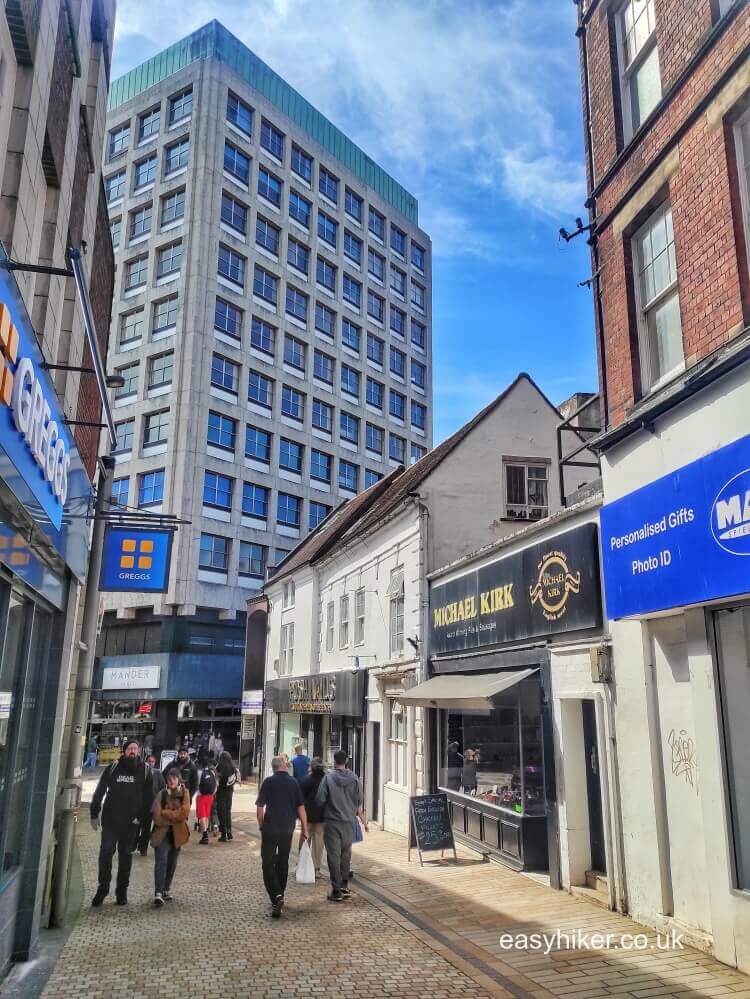
We leave you to draw your own conclusions about this, but here is ours.
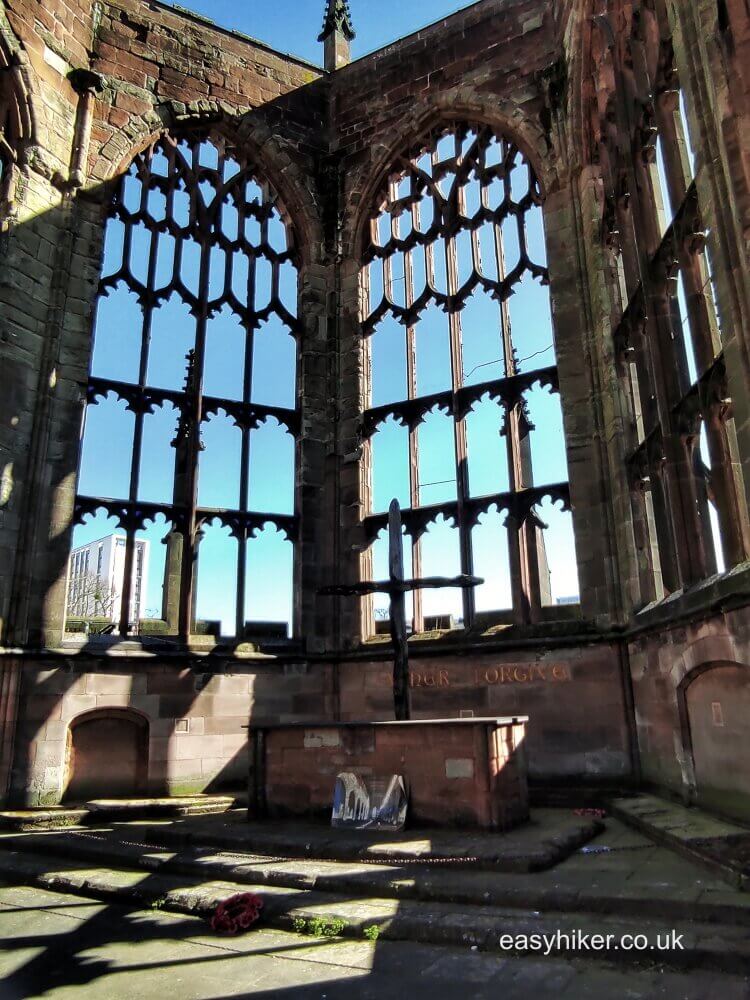
The Coventry Cathedral ruins showed us that there were two methods of ripping the heart out of a town: systematic demolition and a frenzied attack. Wolverhampton demonstrated a third method: a slow draining of blood while the body, cruelly, is being left standing. Ultimately, however, the destruction of Wolverhampton has been as devastating as the work of the German Luftwaffe.