La Spezia is that rare kind of thing: a tourist town without tourist attractions.
The town is full of visitors who have travelled there halfway across Europe – some of them halfway across the world – not to visit and experience La Spezia but to use the town as a base for explorations of the eastern Riviera: the sights of Portofino, the Gulf of Poets, and above all the Cinque Terre.
You can spot these people particularly at night in La Spezia: having returned from a day of outdoor activities, they are seemingly unsure of what to do with a place that resolutely defies all conventional ideas of what an Italian town should look like.
Because La Spezia, you see, has a second claim to the status of a Rare Beast: in a country where most places have developed for 1000 years around the medieval trinity of City Hall, Cathedral and Battisterio, La Spezia is a modern town.
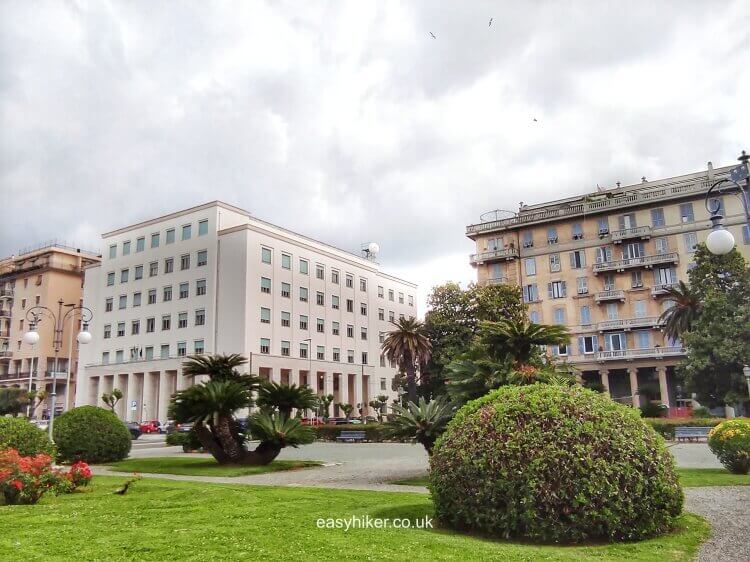
La Spezia only began to prosper in the middle of the 19th century when it was decided to establish a large naval base in the port. Just a few buildings speak about the centuries before this period when the town was a small and provincial backwater, …
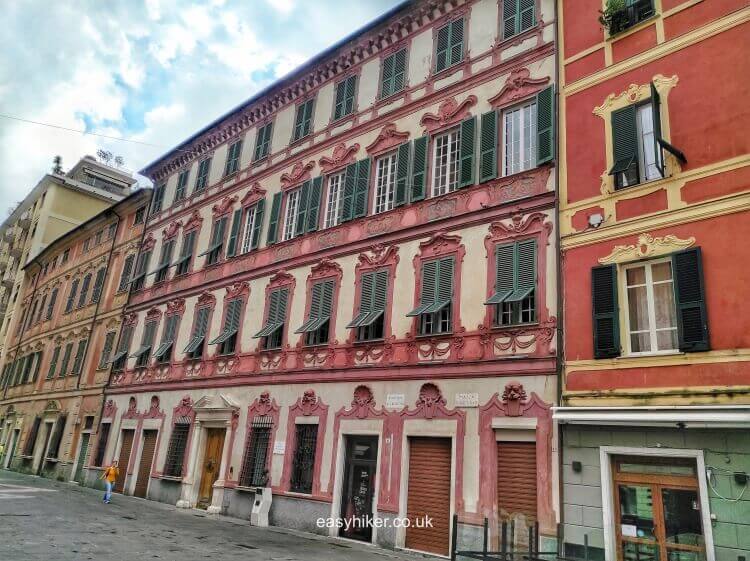
… and La Spezia’s historic architecture is no match in either quantity or quality for what you can find in the neighbouring cities of Genoa or Pisa.
The allied air attacks of WWII did not help either, and nor did the hurried post-war reconstruction: aesthetic considerations (such as the authentic reconstruction of the historic core) took a back seat when the top priority was to get the city and its naval base up and running again for the requirements of the Cold War.
So you should not come to La Spezia looking for ancient buildings or a town straight out of a spaghetti sauce commercial. But take it for what it is, and you will find plenty of interesting things to see – and even some real beauty.
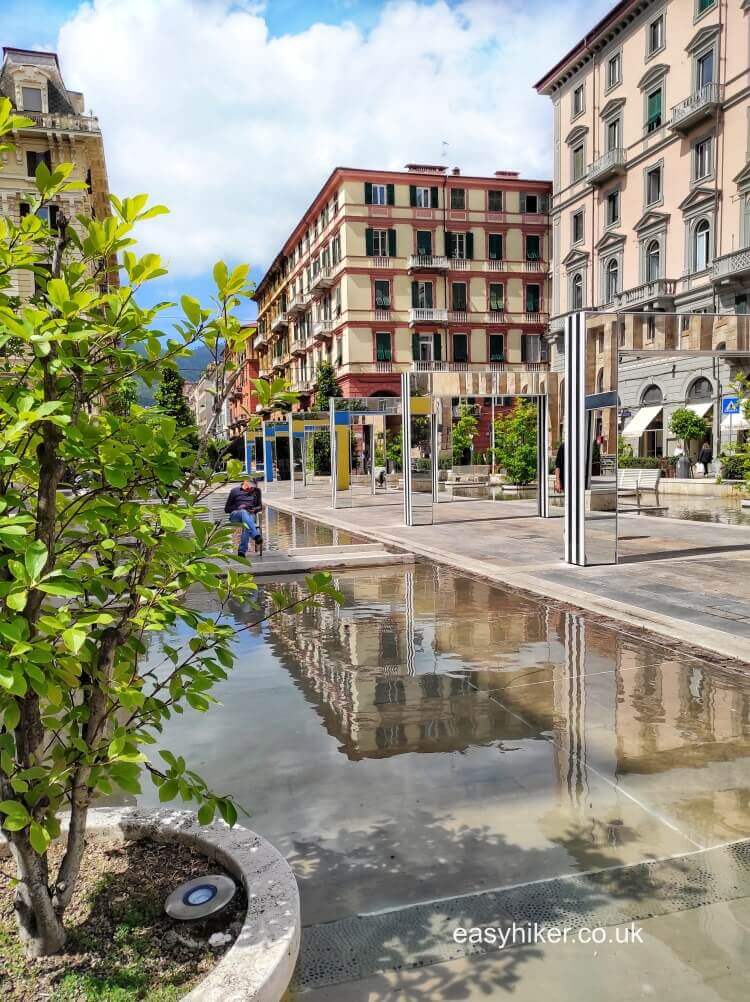
After all: La Spezia, modern as it might be, is also an Italian town. It does, in its own way, what Italian cities have done for the last 2000 years: which is to take visual motives from antiquity and recreate them in contemporary guise.
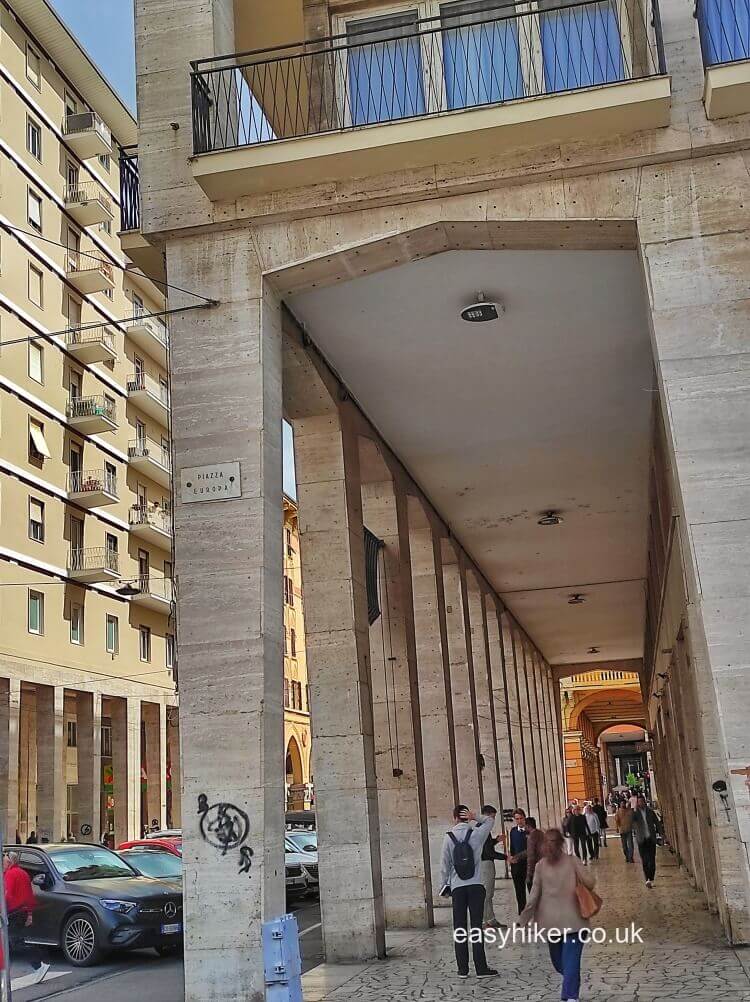
Motives like columns, …
… statues of madonnas and angels (you can identify them by their chaste outfits) …
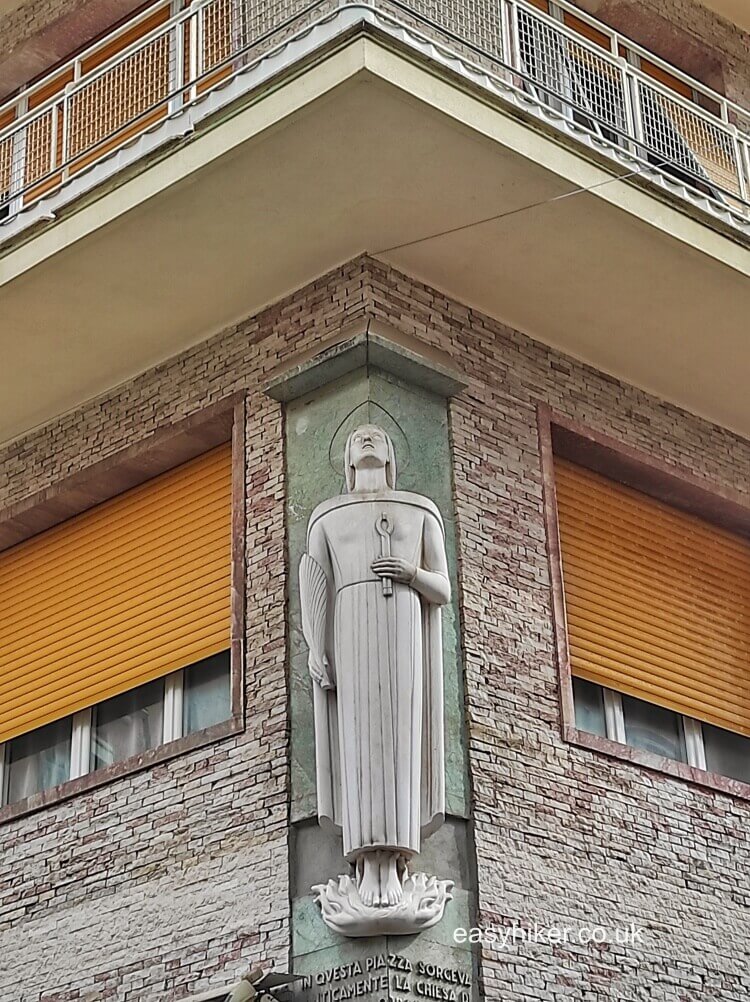
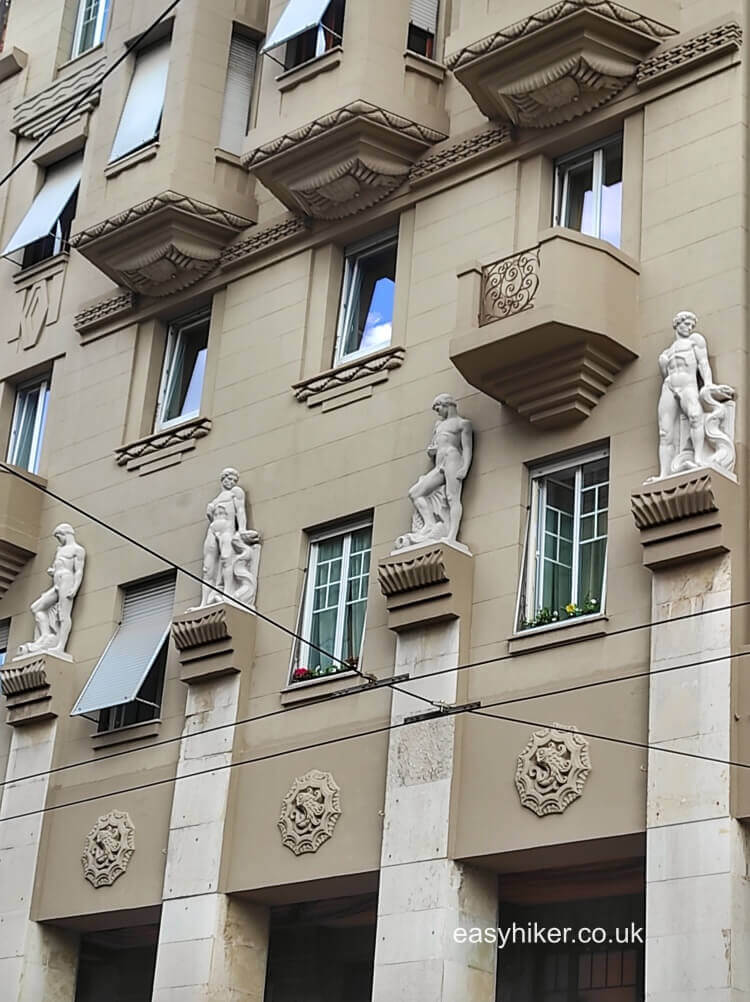
… but preferably featuring lot of naked flesh (there is always a pagan myth at hand to justify nudity).
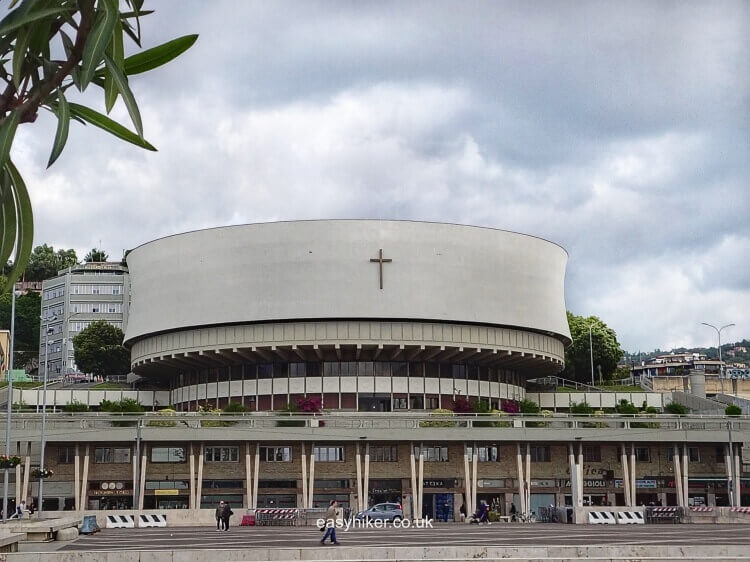
Look closely, and you will even recognise entire themes from the timeworn catalogues of Italian architecture: houses of worship, …
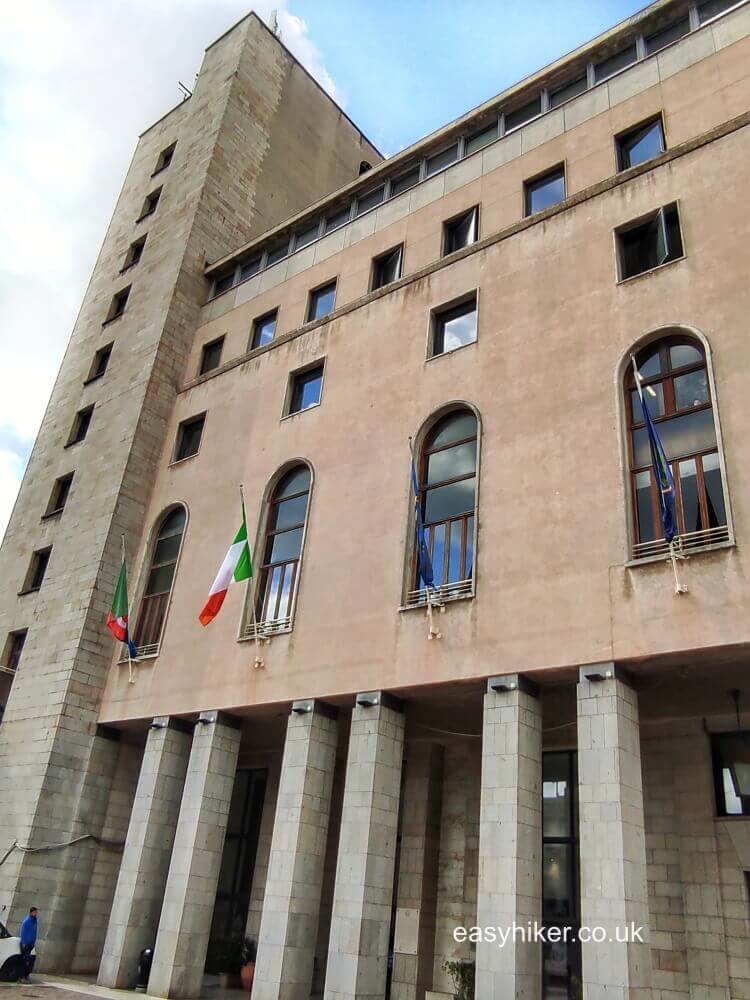
… public buildings, …
… fountains, …
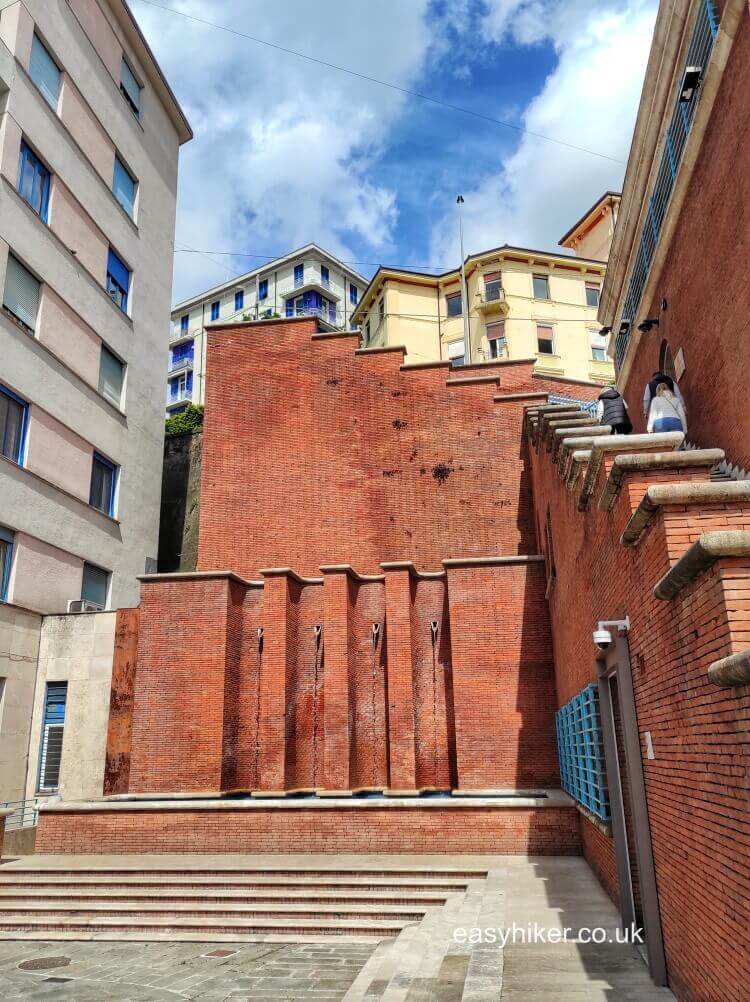
… water features.
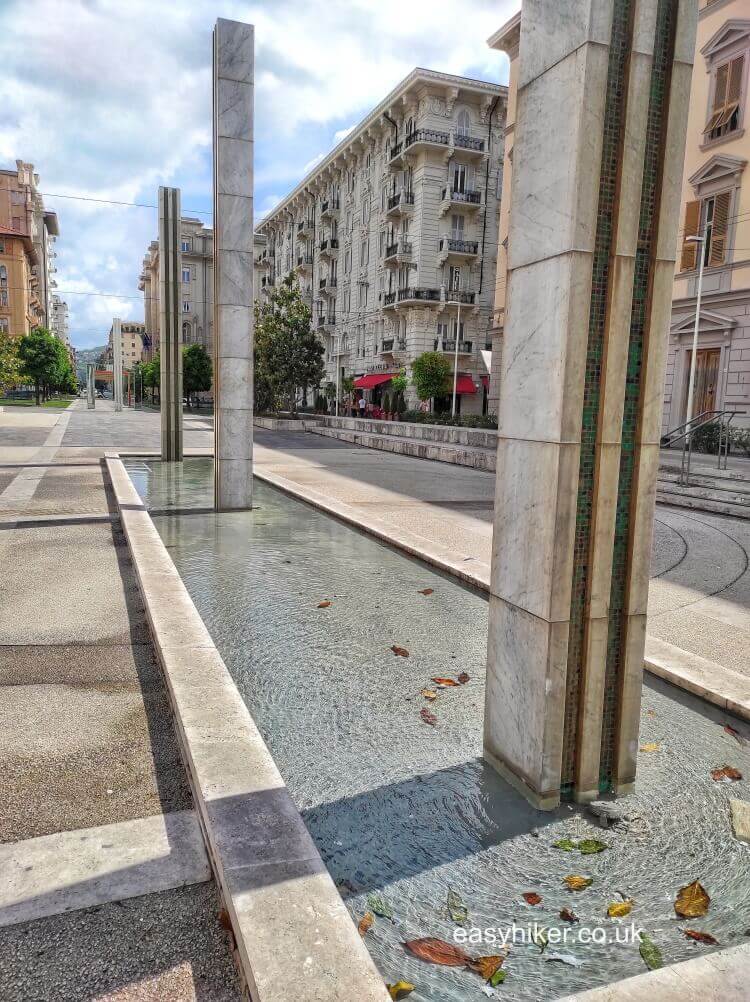
There is no appetite in Italy for fake Renaissance or 18th century buildings, no local equivalent for the Anglo-Saxon love of colonial or Tudor architecture. Italy does not copy its own past but renews its traditions through constant adaptation of cherished principles: balance, proportion, structural transparency. Ancient Rome, in other words, has never gone away: it only changed labels from the Romanesque and Renaissance to Baroque and Benito Mussolini.
Look at La Spezia to see what the entire country of Italy would look like today if it had been similarly bombed to bits. For the most interesting discoveries, concentrate on the area around Piazza Europa approx. 1 km east of the Centro Storico.
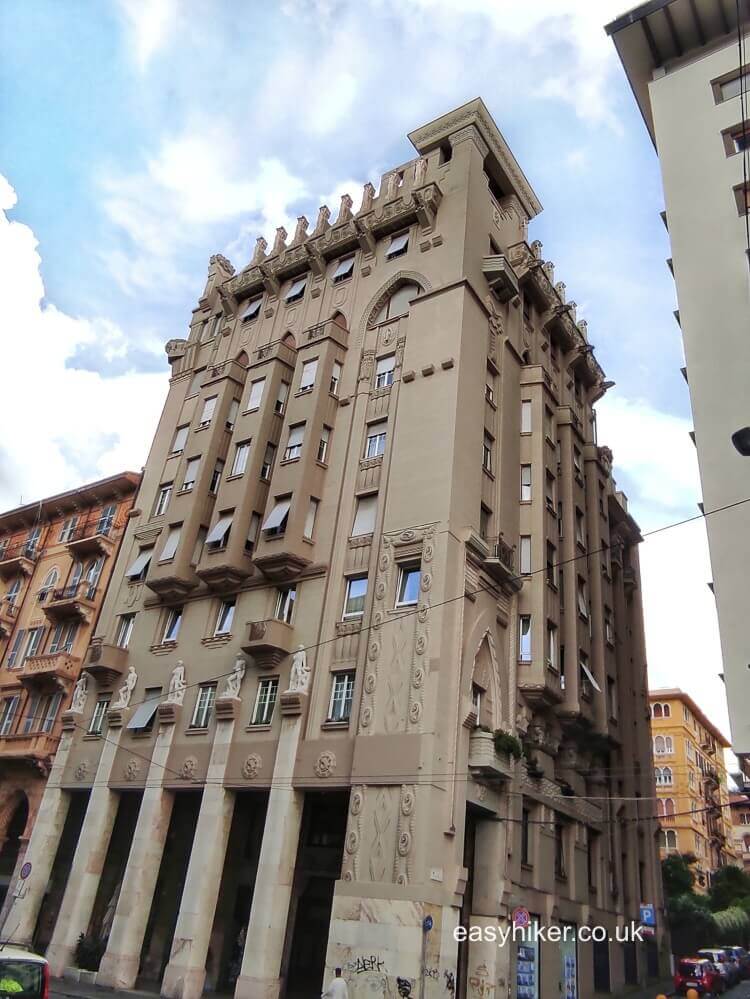
This quarter became the core of the modern city in the 1960s, but you can also find some slightly older buildings such as the pre-WWII Gratteciele (the “skyscraper”), which would not have looked out of place in 1930s New York, …
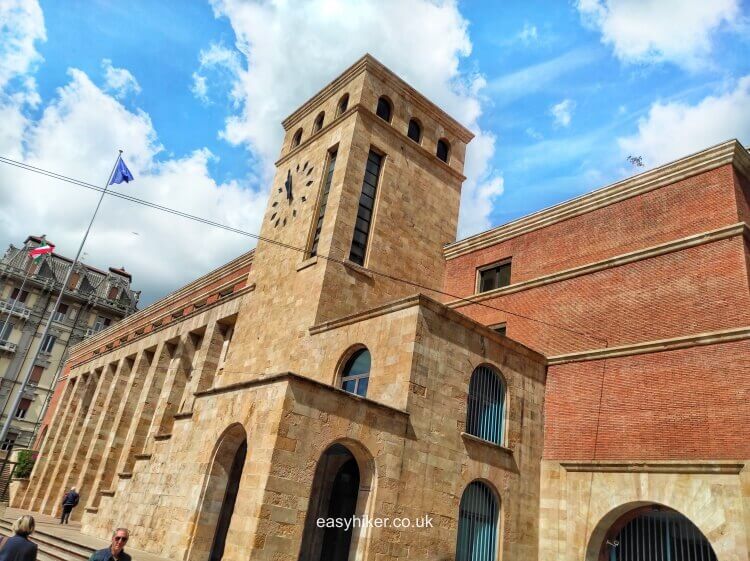
… and the Post Office.
There is yet another way in which La Spezia allows you to see familiar Italian motives in a modern and also, sometimes, sharper light. Features of Italian life when stripped of any romanticising background are thrown into stark relief.
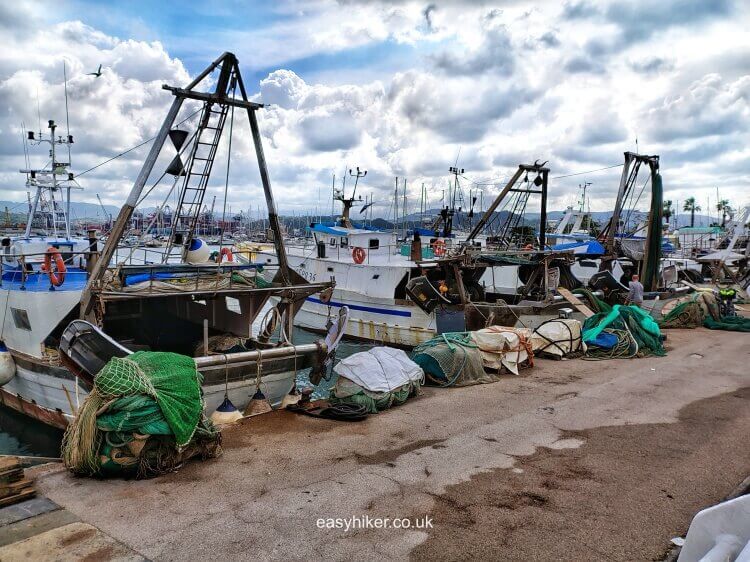
Take a stroll down the harbour piers, for example, to get a glimpse into the realities of one of Italy’s most iconic trades.
Unlike its neighbouring cities of Genoa and Pisa, La Spezia does not have a subsoil of past artistic and military glory. It has, however, played one important role in the history of the arts – when it inspired one of music’s most groundbreaking works.
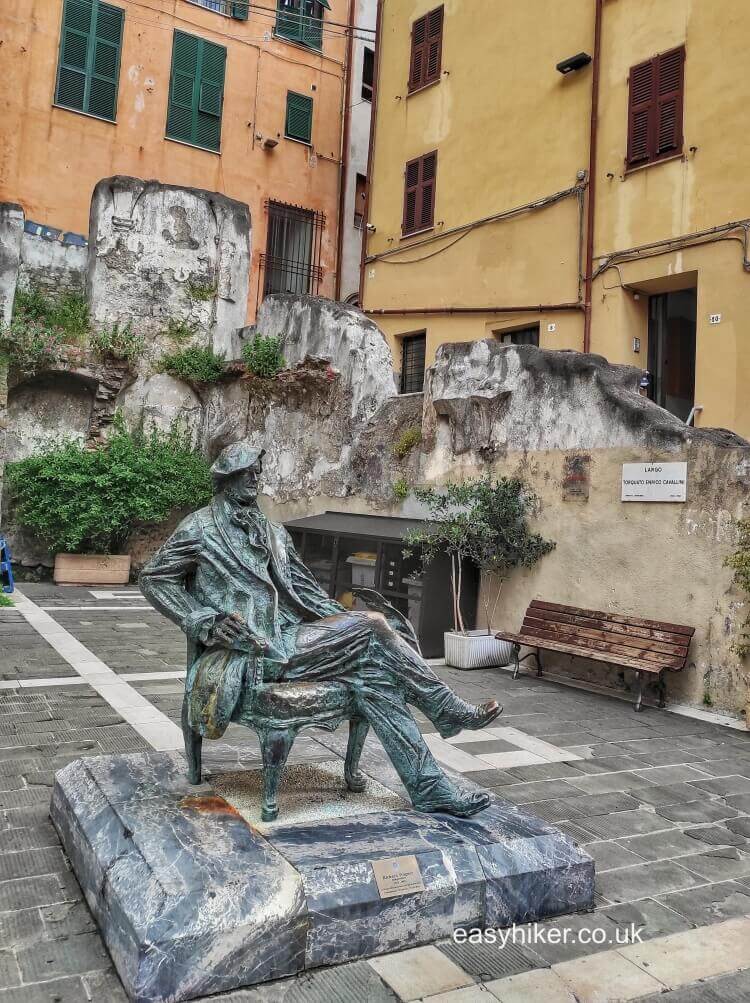
In September 1853, the German composer Richard Wagner – in search of a place where he could rest and recover from recent stresses and turbulences in his private life and career – visited the Gulf of La Spezia. During a fever-plagued night at his quarters in La Spezia’s Via del Prione (the former Palazzo Doria) …
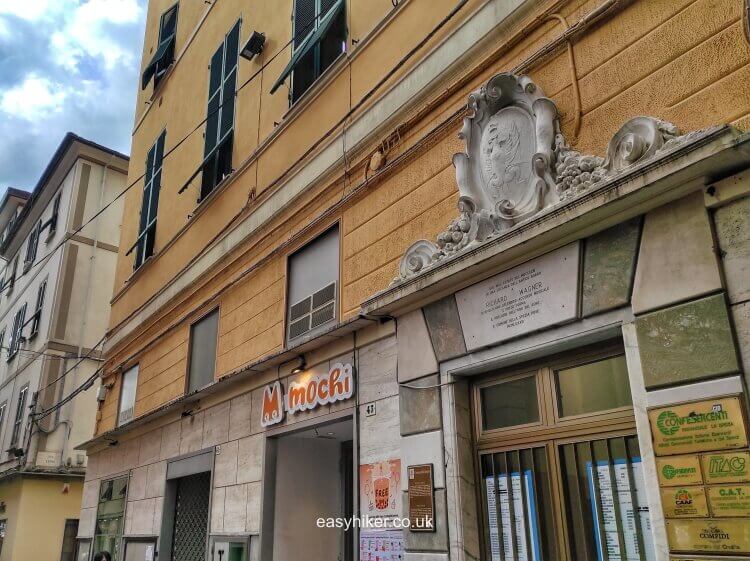
… Wagner began to feel that the various sounds coming from the street below appeared to merge into something like a rhythmic and melodic current. In his autobiography Mein Leben, the composer would later write:
The sound of the current soon took on a musical character: it was the E-flat major chord, resonant and undulating in uninterrupted arpeggios. (…) I immediately recognised that the motif of the prelude to “Das Rheingold” had suddenly revealed itself to me, as it had long been in my mind, without, however, having until then, managed to give it form.
Wagner had travelled to La Spezia to explore the Gulf and the picturesque coastal towns in its wider area – only to make a key discovery in the town itself. Nearly 200 years later, La Spezia is still showing form.


