There are many reasons to visit Italy, but here is the most important one: it is the one destination in Europe that is reliably beautiful.
Other countries have beauty spots on what is otherwise a coat of many colours, some of which may be rather grey and unbecoming, but in Italy, no matter where you go, you can count on finding something absolutely striking – stunning mountains, scenic lakes or rivers, fascinating architecture – if not right in front of your door, then a short ride or sometimes just a walk away.
Preparing a trip – otherwise a fairly tedious and treacherous task – is easy, and if you go to a place which is as famously beautiful as Lake Como, you will in fact need no preparation at all, because you can safely assume that you will be richly rewarded for the time and effort of getting there.
Before our recent trip to the northern end of Italy’s most scenic lake, we therefore did virtually no research at all. Not even to study the local public transport connections – which is another thing about Italy: wherever you go, there is usually something to move you on, at least a bus service every two hours or so.
On this trip, we found something even better: a busy train line on the eastern side of the lake (which is where we were based), sometimes served as frequently as twice an hour. On this route up the lake, there are five major stations where every train stops, and you can visit them all in one day.
Five Villages of Lake Como
This is what we are setting out to do today, starting at the northernmost station of the lakeside stretch in Colico where we were based.
Doing no research to prepare your trip has its drawbacks, as we found out, because it turned out that we had picked the least visually attractive of the five major villages.
Still, the square where the boats and ferries land is airy as well as spacious and not without its charms, …
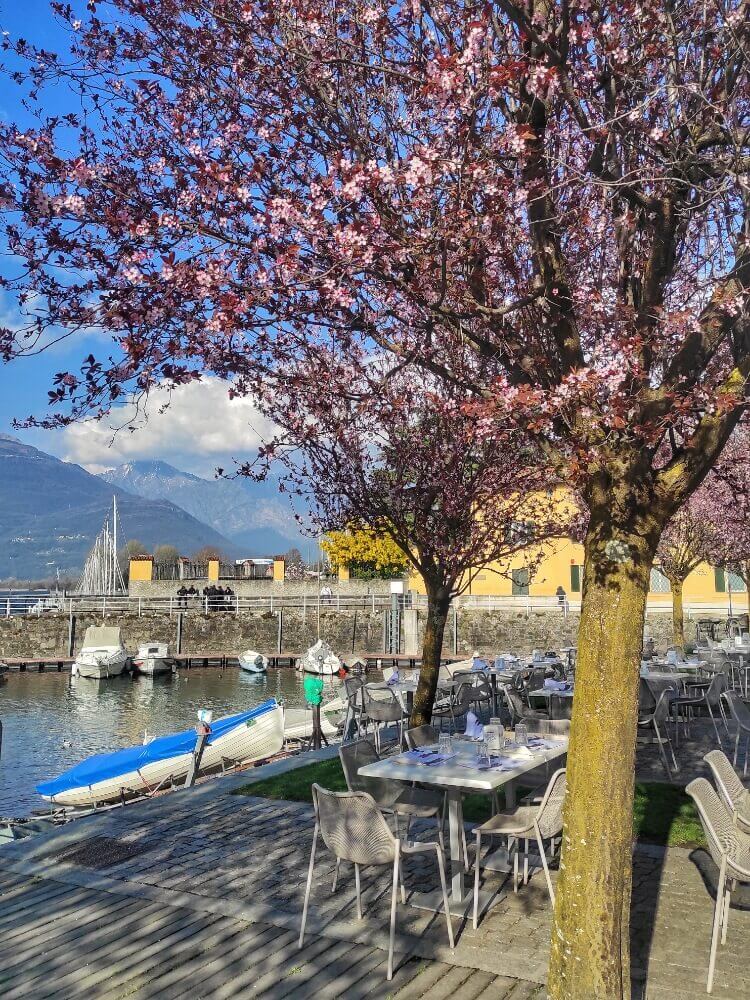
… and if you take a right turn into the lakeside promenade, you will walk into some nice panoramic views of the near-by mountains.
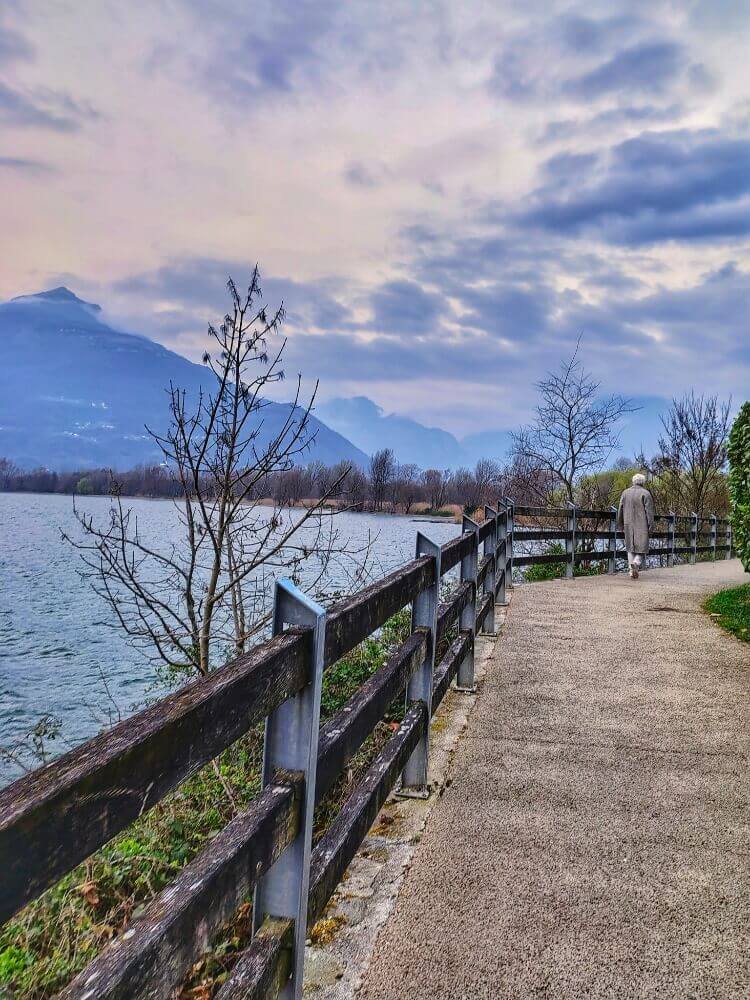
Colico’s main attraction appears to be its large number of beaches, and one can easily imagine that in the summer it becomes a rather busy holiday town (although Italians generally do not like swimming in lakes because they find the water too cold). Perhaps we should return there in August, but at the cusp of spring, most of the lakeside bars and restaurants were closed, and the town seemed a little lifeless.
Bellano one stop to the south is a proud member of the Borghi più belli, Italy’s most beautiful villages, and was a finalist in the 2023 national contest. It has everything that you would expect to find in an award-winning Italian village such as a maze of narrow lanes that are framed by archways and surrounded by well-kept oases of greenery …
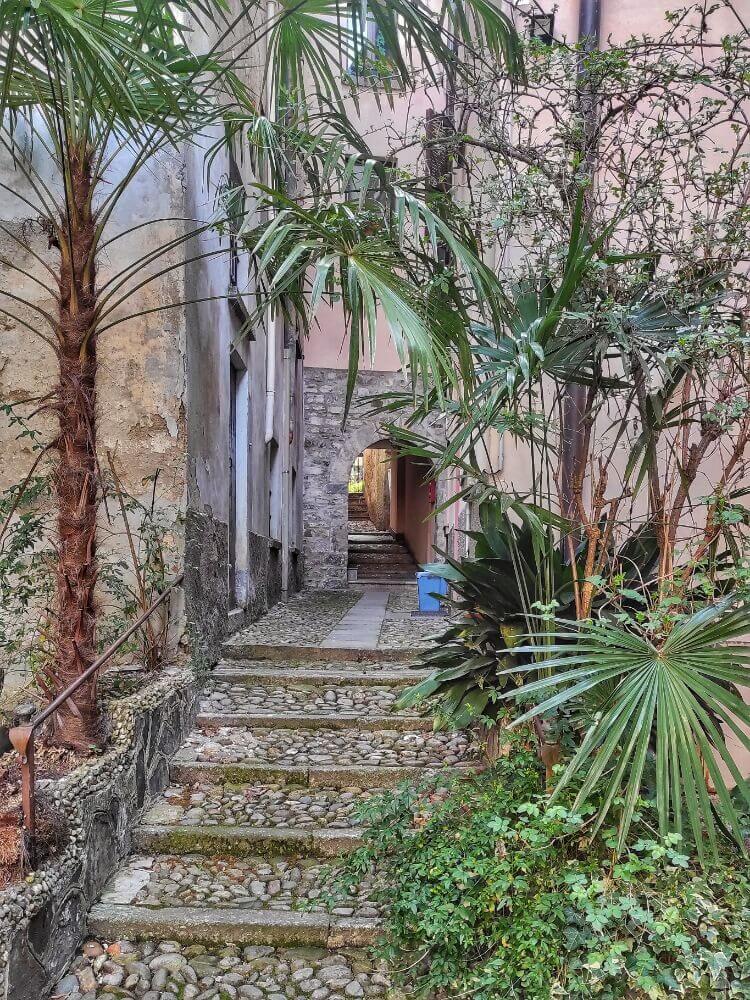
… but also something that you would not: there is a proper waterfall at the edge of town, although the closest look of the Orrido we got was from our coffee table.
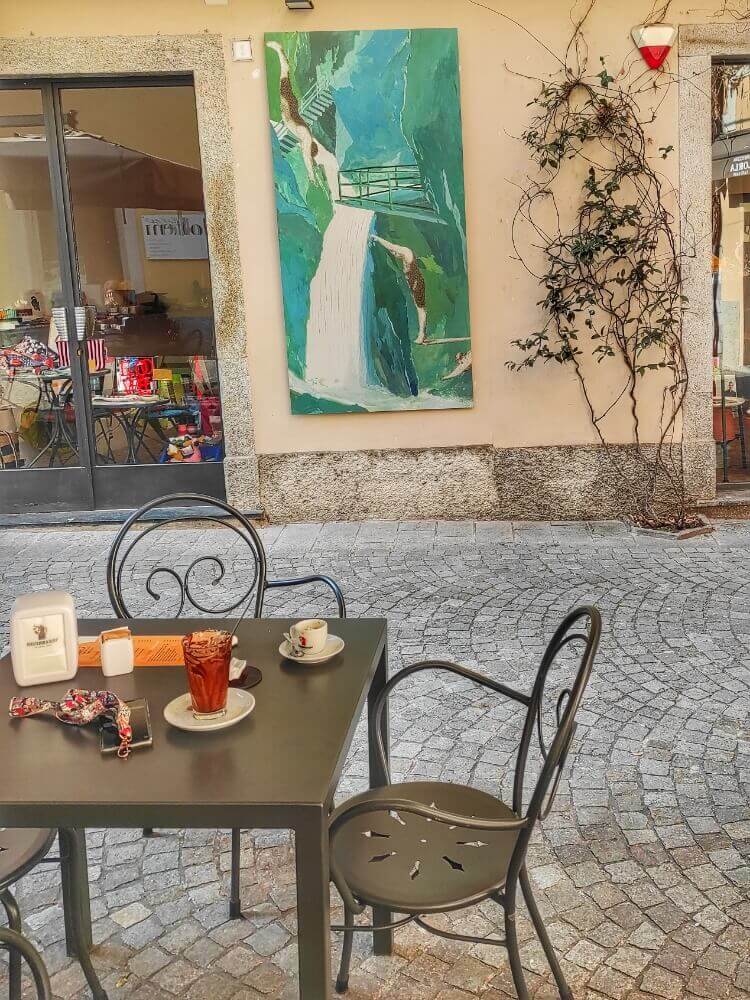
Not that we were intimidated by its ’orrid reputation. We would even have been willing to pay the 8 Euros p.p. admission fee (bear in mind that the waterfall was free to visit for 14,999,990 of its reputed 15 million years of existence), a charge as steep as the path leading up to the entrance gates …
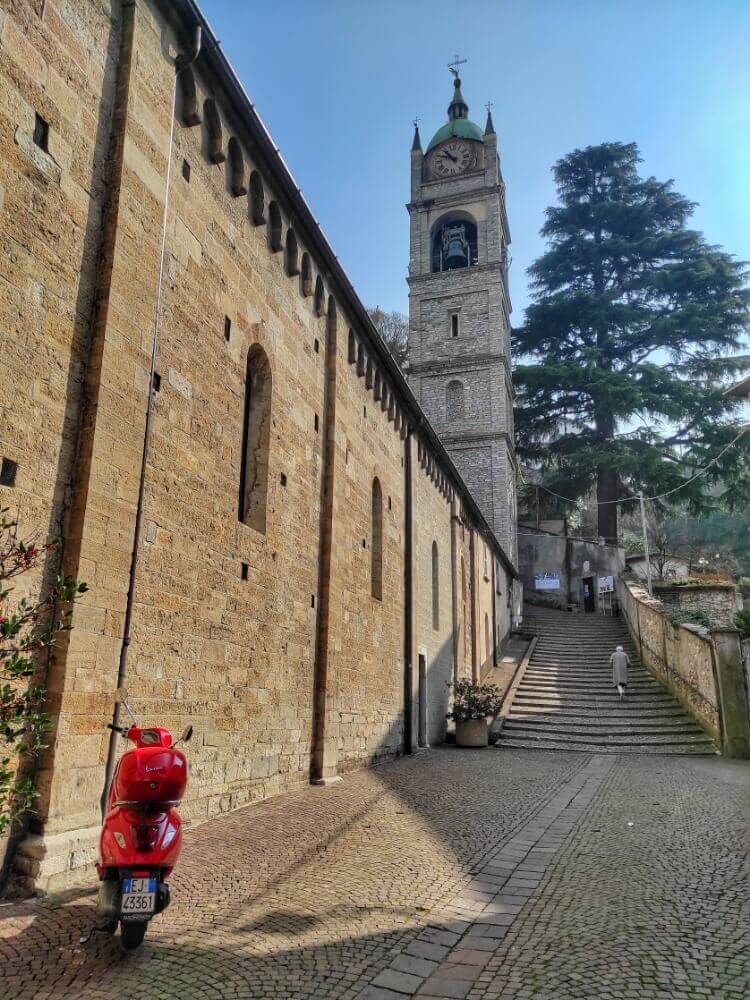
… but we found it was closed in the morning and only opened at 2 p.m. “Beautiful” is what Bellano may be, but as a visitor, one would be grateful for a less village-y attitude to the management of its tourist flow.
Varenna is the main visitor attraction on the eastern leg of Lake Como and generally considered the closest rival to Bellagio, the ruling beauty queen across the pond.
Varenna stretches across several levels on a descending slope, featuring a lively central square – Piazza San Giorgio – on top …
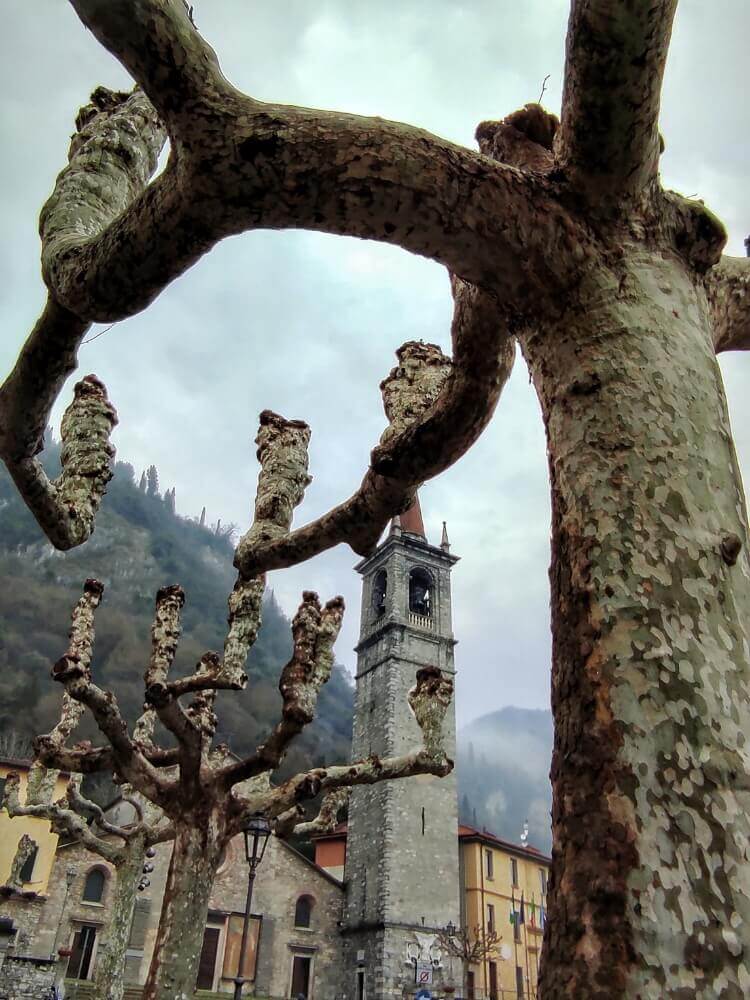
… and further down (on the ground floor) a scenic if tiny lakeside port.
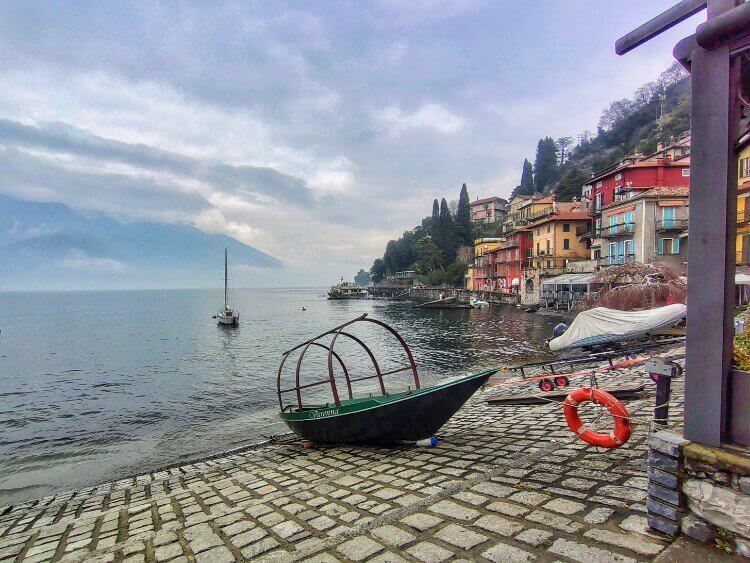
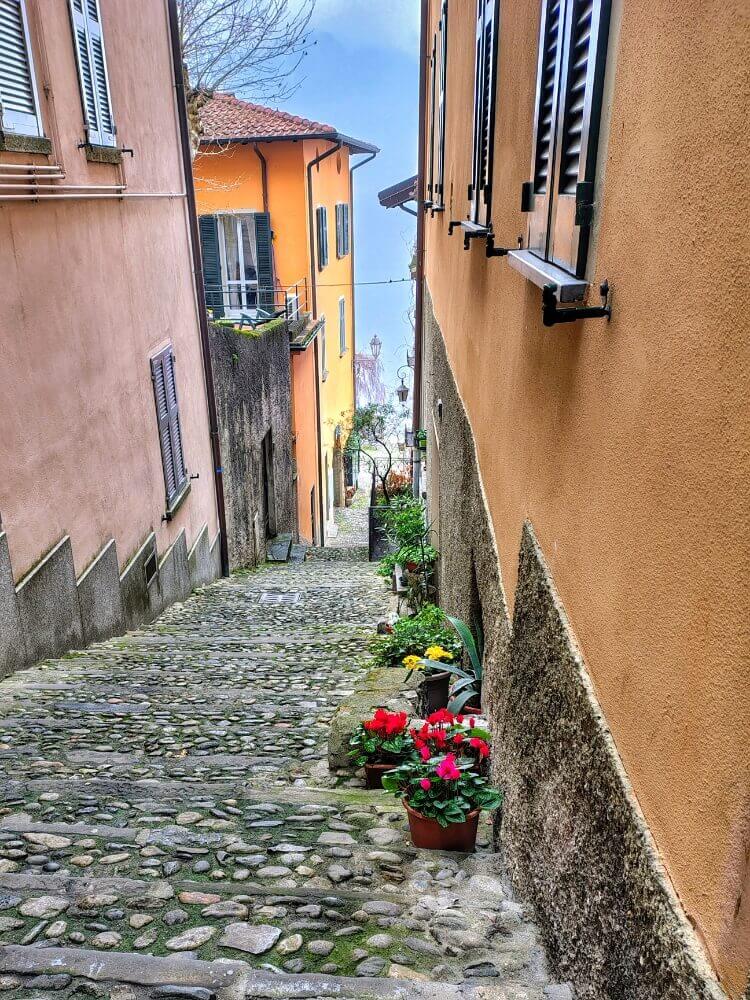
But what makes Varenna special is the web of narrow lanes that connects the different levels. Each of these lanes has its own special character, and you can walk up and down for an hour or more without making the same climb twice.
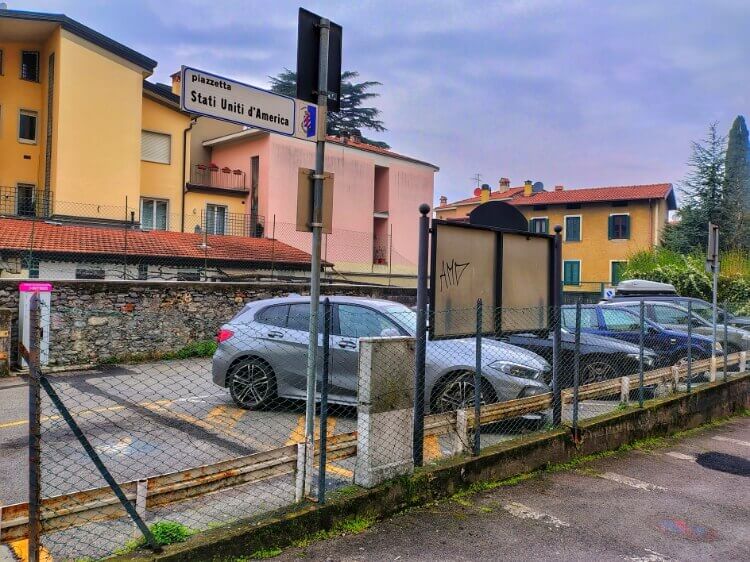
Special find: to demonstrate its loyalty to a somewhat larger political entity across a pond that is also somewhat larger than the lake Varenna overlooks, the town dedicated its most obviously scenic square to the USA. Long live American-Italian friendship!
Lake Como may be famous across Europe for its beauty, but it is one of its lesser known towns that has carried its name all over the world – well, at least the world of motorbike enthusiasts: Mandello is the home of Moto Guzzi, the coolest two-wheel vehicle on the planet.
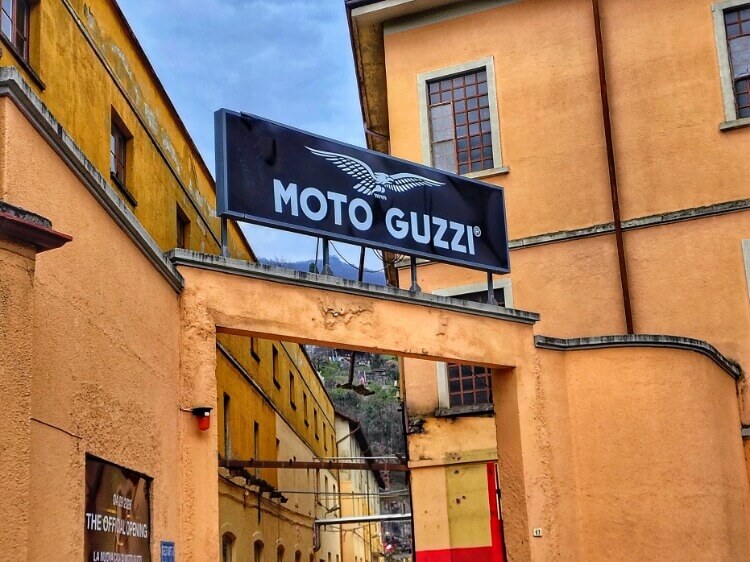
This is the bike ridden by Clint Eastwood in Magnum Force, by Ewan MacGregor in private life (he is known to own around a dozen different vintage and modern models) and by anybody who ever rides a motorbike in a Fellini movie.
And then there is this chap.
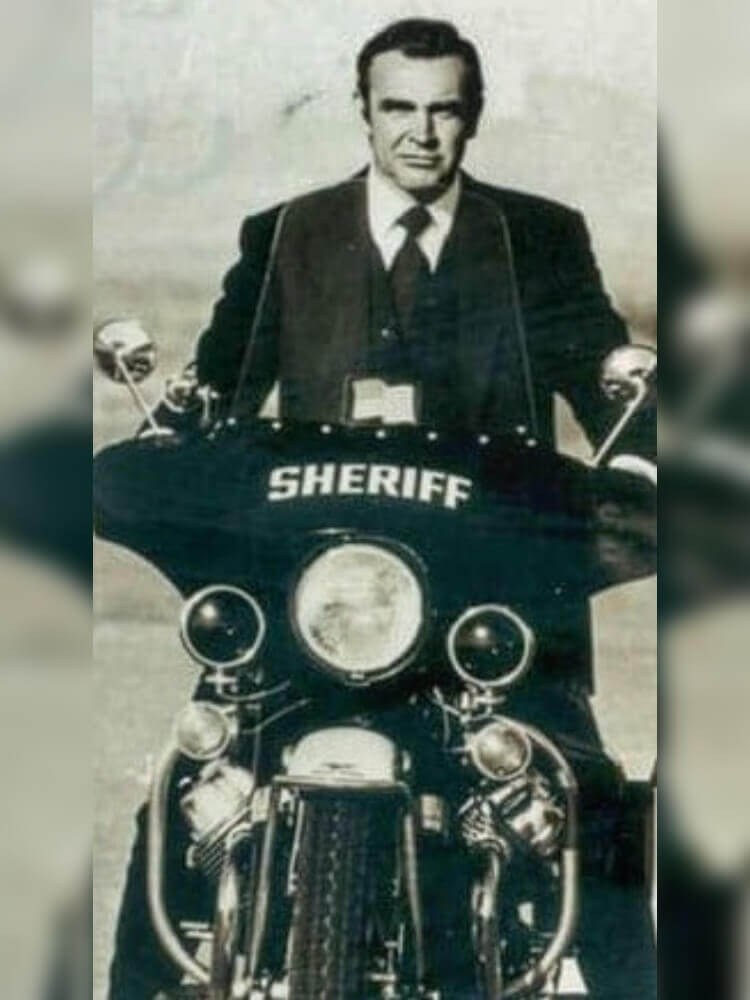
Other than that, we found Mandello remarkable for being the lakeside town where we met the fewest people in the streets – hardly anybody, in fact.
Mandello was almost surreally quiet, in stark contrast to all of the neighbouring villages. Maybe all Mandellonians are busy making motorcycles. (The entire production of Moto Guzzi, around 10,000 bikes a year, is still manufactured here.)
The locals are certainly not crowding the lakeside, which is a place of melancholy as pure as any you can find.
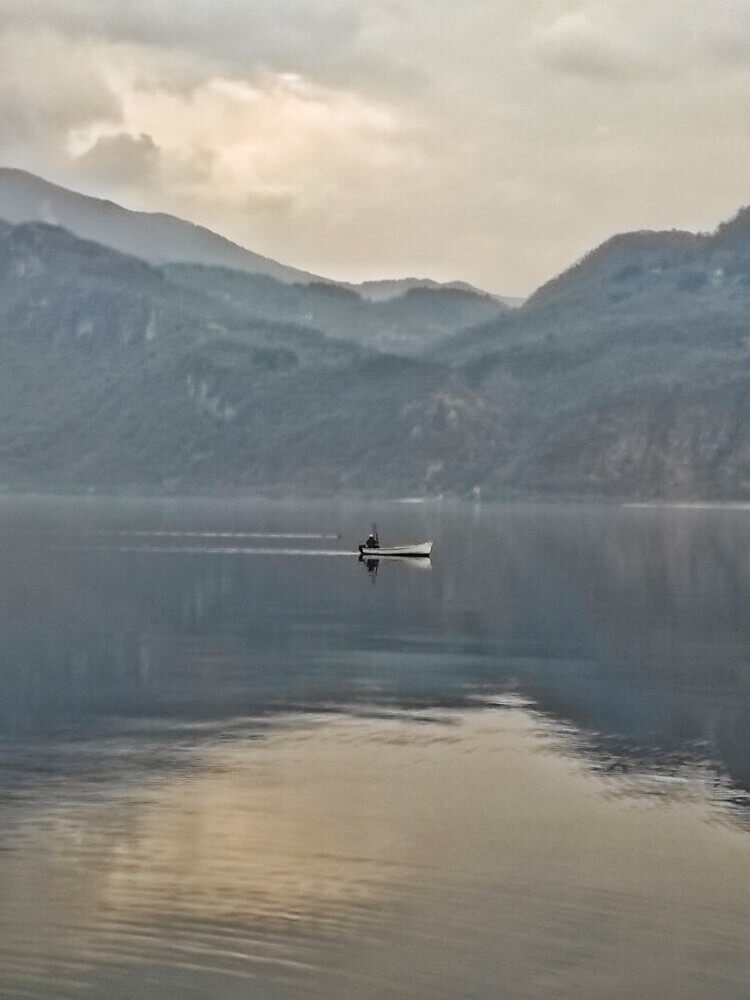
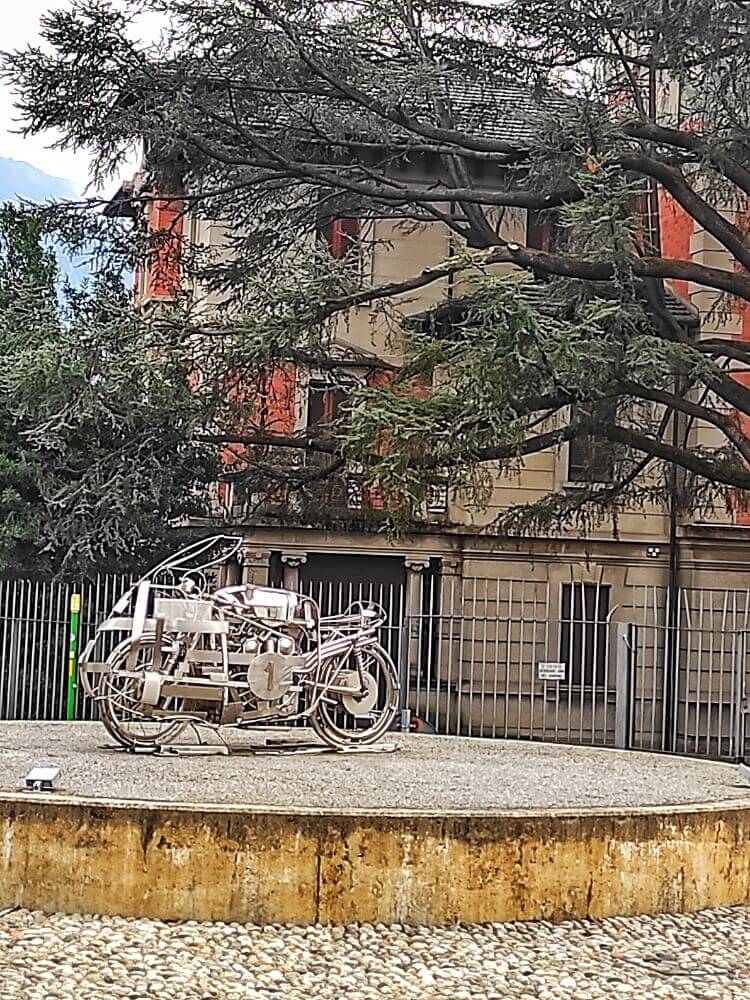
Still, there is something that Mandello has in common with Varenna: another special find. In a place where other municipalities would put a work of modern art or the statue of an otherwise-long-forgotten local poet, the city fathers over here went for a representation of what’s made Mandello famous. Vroom!
Our last stop on the tour is Lecco, the biggest and liveliest town on this leg of the lake and a proud provincial capital …
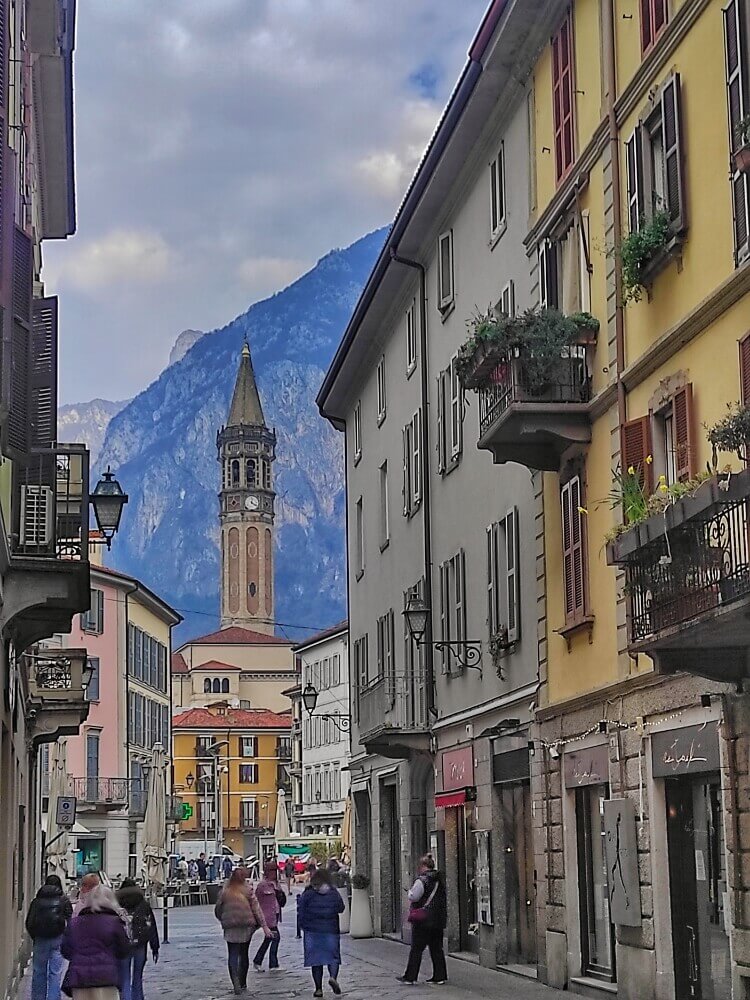
… which appears forever miffed that the world has come to know the lake on its doorstep as Lake Como.
On the entire right leg of the lake, in fact, you are more likely to find references to Lake Lario, which is what the Romans and seemingly everybody else called it until 19th century travel operators found that the destination was easier to market by giving people a clue of where to look for it on a map.
But Lecco has something that Como does not have: literary fame. Lecco is famous in Italy as the setting for Alessandro Manzoni’s novel The Betrothed, considered by Italians as one the world’s greatest prose works of the 19th century (it is considered the second pillar of national literature alongside Dante’s Divine Comedy), while most people outside of Italy have barely heard of it at all.
The novel’s most famous passage, written in a staccato prose of romantic ecstasy, describes the moment when its heroine is forced to leave her hometown in a boat, seemingly forever. Lucia bids farewell to her former life of quiet bliss, condensing her feelings into a visual metaphor: Farewell to the Mountains!
And all of that happens right here in Lecco, where the town centre meets the lake.
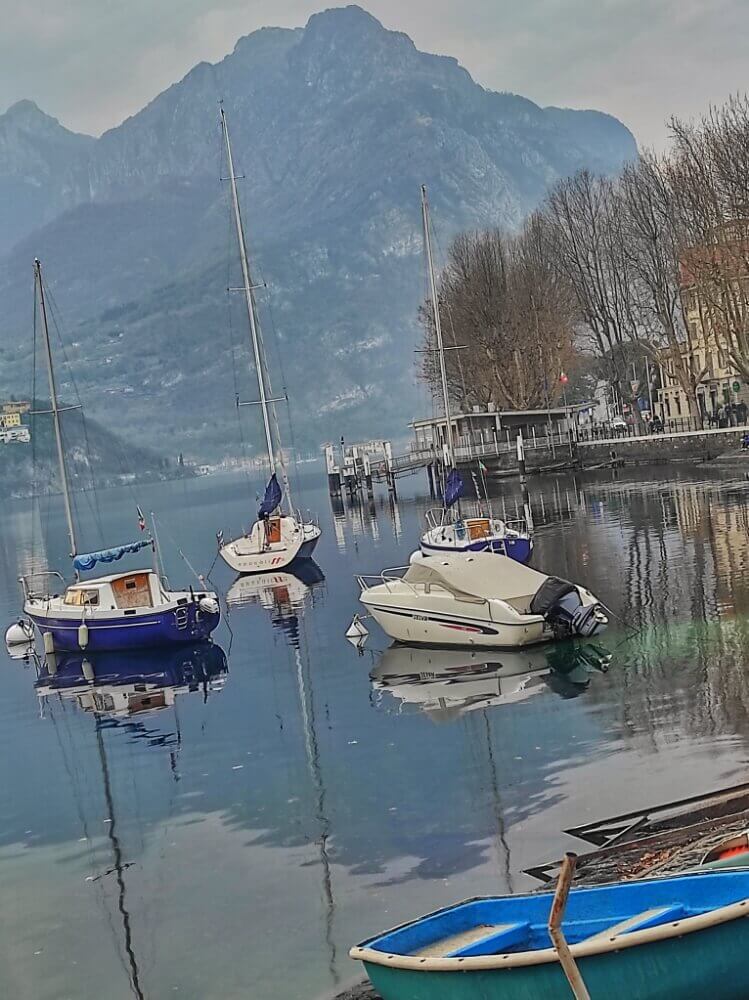
Which is why this is the right – no: the only place to end our journey for the day.
Farewell, ye mountains rising from the waters, and pointing to the heavens! How mournful is the step of him who is compelled to leave you!
But do not mourn too much: we will be back on Lake Como – sorry: Lake Lario next week when we will ask you to put on your walking shoes. See you then!