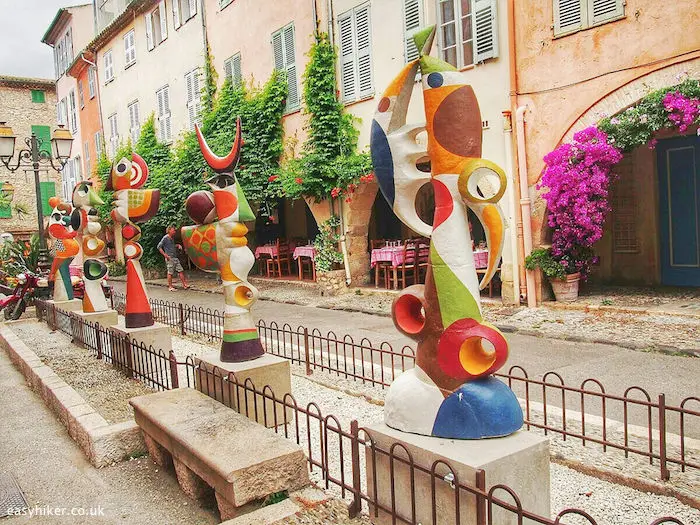
If Rome is the heart of Italy and Naples the country’s soul, then Turin is its head. The capital of Italian coffee, cars and cocktails (the home of Lavazza, FIAT and Martini) is also the most rational and most transparently structured city in the land, a place so square that it is not only the street grid that is rectangular, even the festive street decorations are.
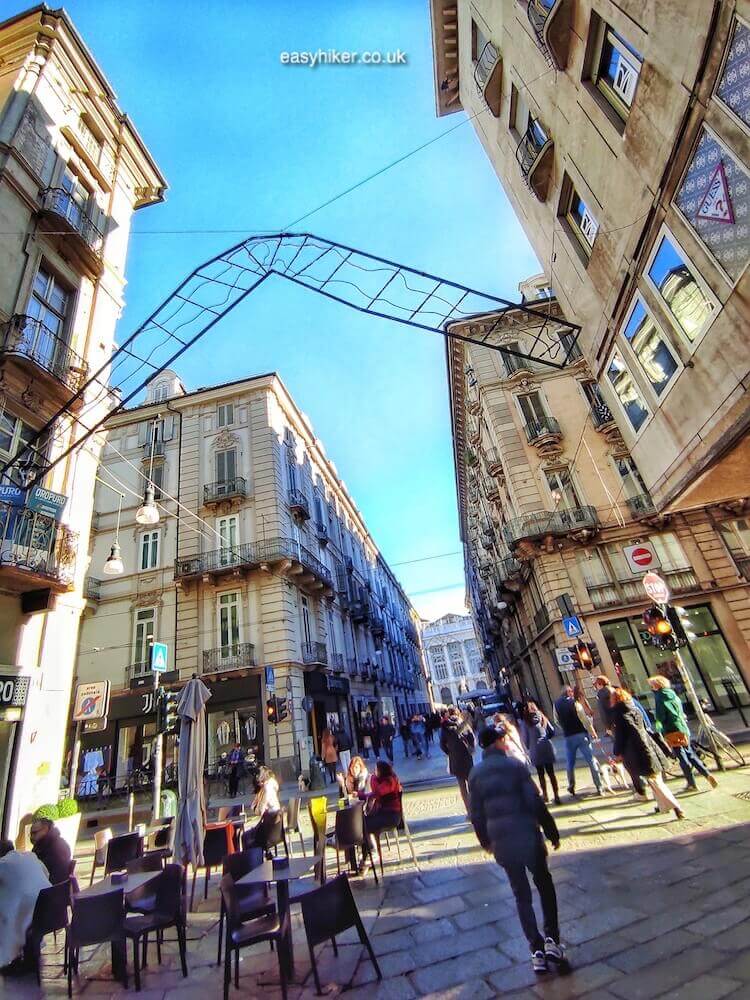
But Turin has a second face, visible only to people who care to look more closely. For centuries, alchemists, devil worshippers and prophets of the occult have scattered clues about their dark secrets around town.
Turin is the city of the sun but also the city of long and deep shadows – of lingering fogs, of undecipherable sculptures and of mysterious hints that appear to flag the way to entrances into the underworld.
Together with London and San Francisco, Turin forms the triangle of Black Magic – but it also features in the triangle of opposite “White” forces (alongside Lyon and Paris). And where these two triangles meet, the scene is set for the final showdown of Good and Evil.
Nostradamus thought that Turin was where “Paradise, Hell and Purgatory” collided, and Pope John Paul II called it “an enigma”, adding: “Where there are saints, there are also devils.” On today’s walk, we will meet both.
Black Magic Turin
Our first stop – a few blocks north of the Porta Nuova train station – is the Piazza CLN, the setting for most of the key scenes in Rosso Profondo, …
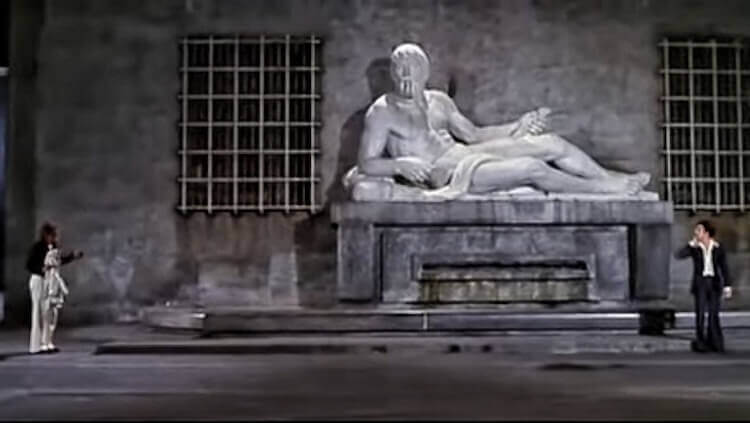
… the goriest and most famous of the notorious gialli, Italy’s genre of schlock horror movies from the 1970s.

The director of Deep Red, Dario Argento, grew up in Rome but set nearly all of his films in Turin. He was, he says, “captivated by the spirit and the atmosphere of the place” on his first visit as a child – but Wikipedia states matter-of-factly that the true reason why Argento chose Turin was his belief in the large number of practising Satanists in the city.
He would not have been alone: in 1986, the well-respected German news magazine Der Spiegel ran a four-page story on “Turin’s true religion”, and a Japanese news magazine followed this up a few years later with an even more detailed report about the city’s “Passion for Satan”. Ever since, the number of 40,000 active Satanists in Turin has been swirling around.
The devil, meanwhile, has certainly left his traces in the streets of Turin.
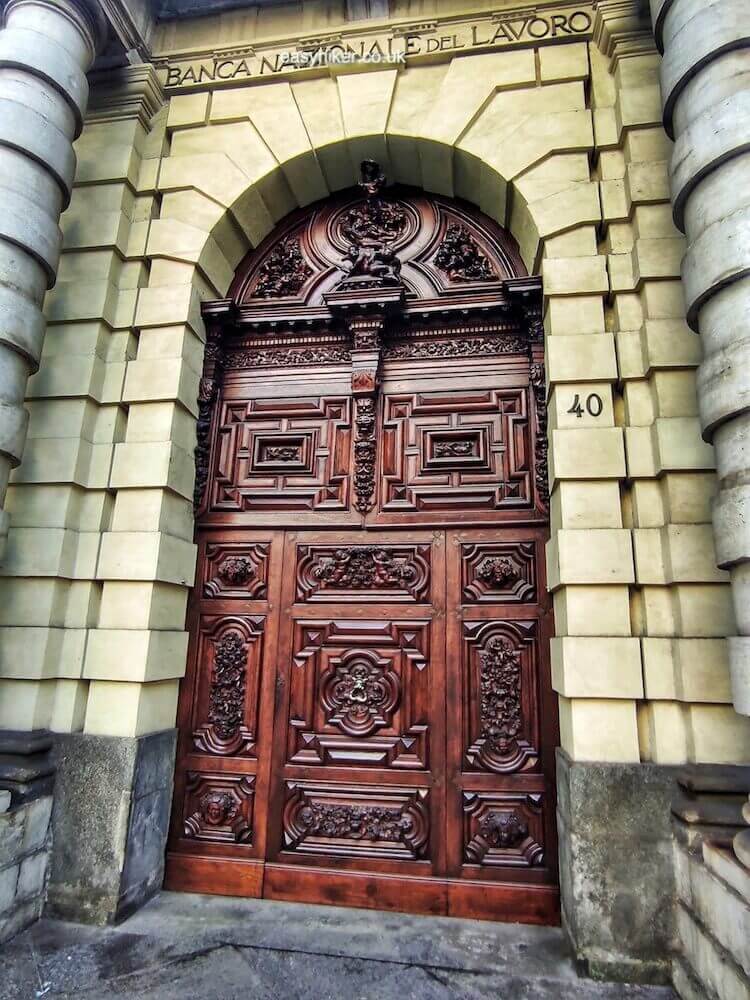
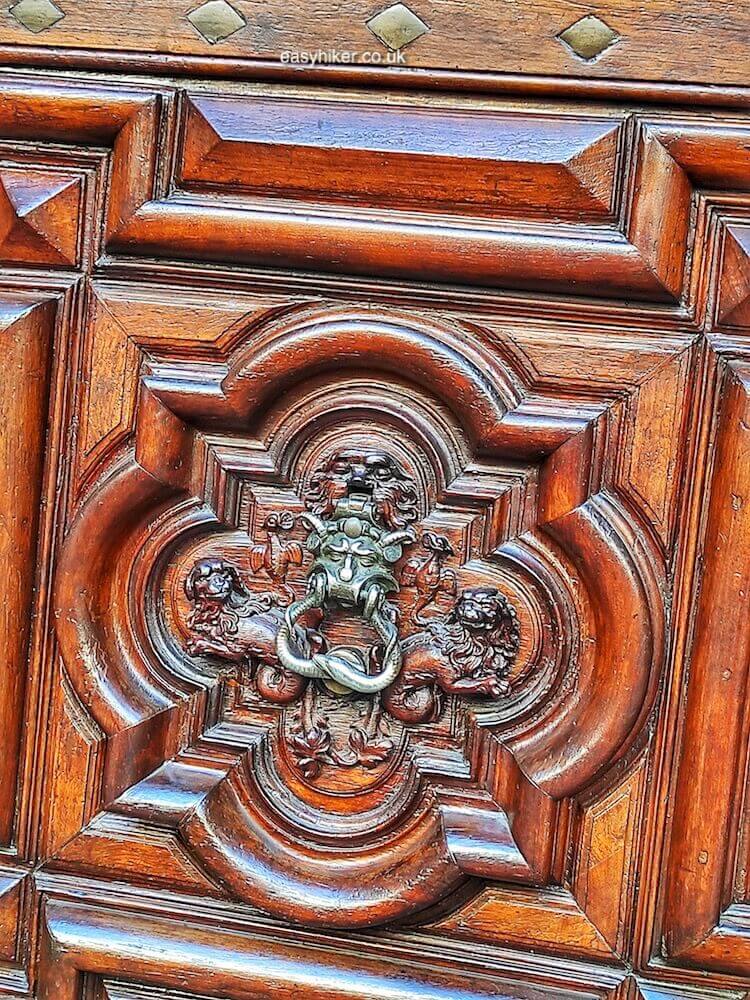
Many years ago, on a stormy night inside the Palazzo Trucchi de Levaldigi (near the CLN on 40 Via XX Settembre), a sorcerer’s apprentice is said to have summoned the devil. An annoyed Satan appeared (“what is it now again? I was about to take a shower!”) and punished the apprentice by imprisoning him inside the palace – before leaving his signature on the building’s entrance door.
A little further to the west on Via Lascaris, the devil shows his face again – albeit this time, only in part.
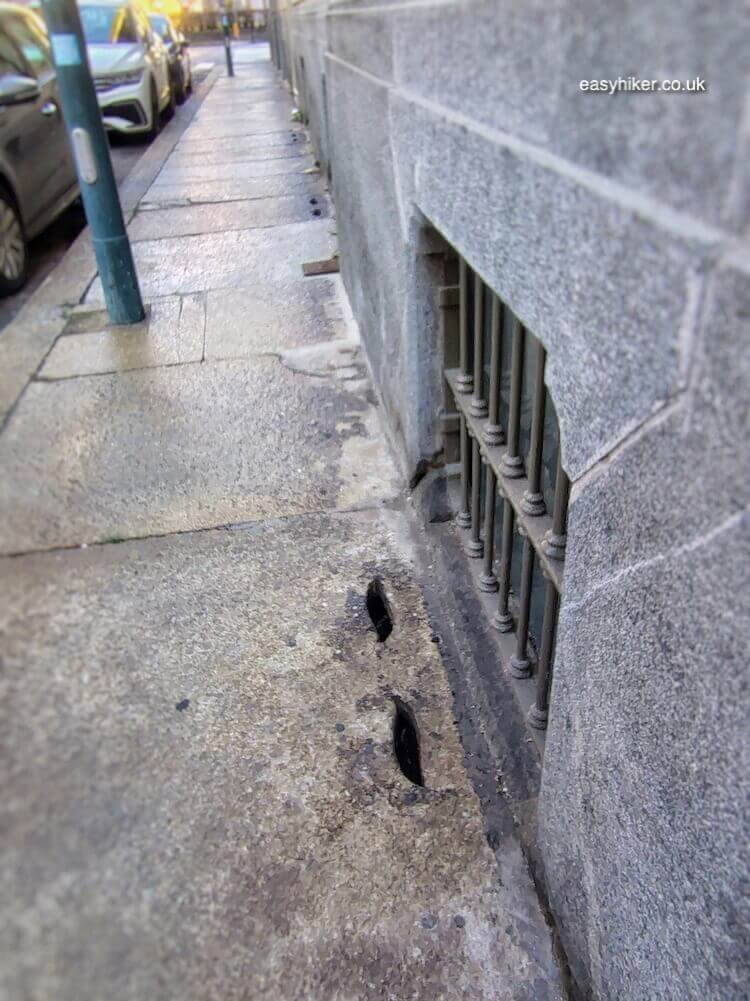
The Eyes of Satan! The building behind the eyes once served as a Masonic lodge – which may explain why people found the pavement slits so upsetting.
We are now in the west of Turin, which is important because the clash of Black Magic and White Magic is largely the story of a struggle between the city’s two halves. The west – steeped in a history of bloodshed and depravity – is thought to belong to the world of Satan, while the east, ruled by the Royal Palace and the Cathedral, is governed by positive forces.
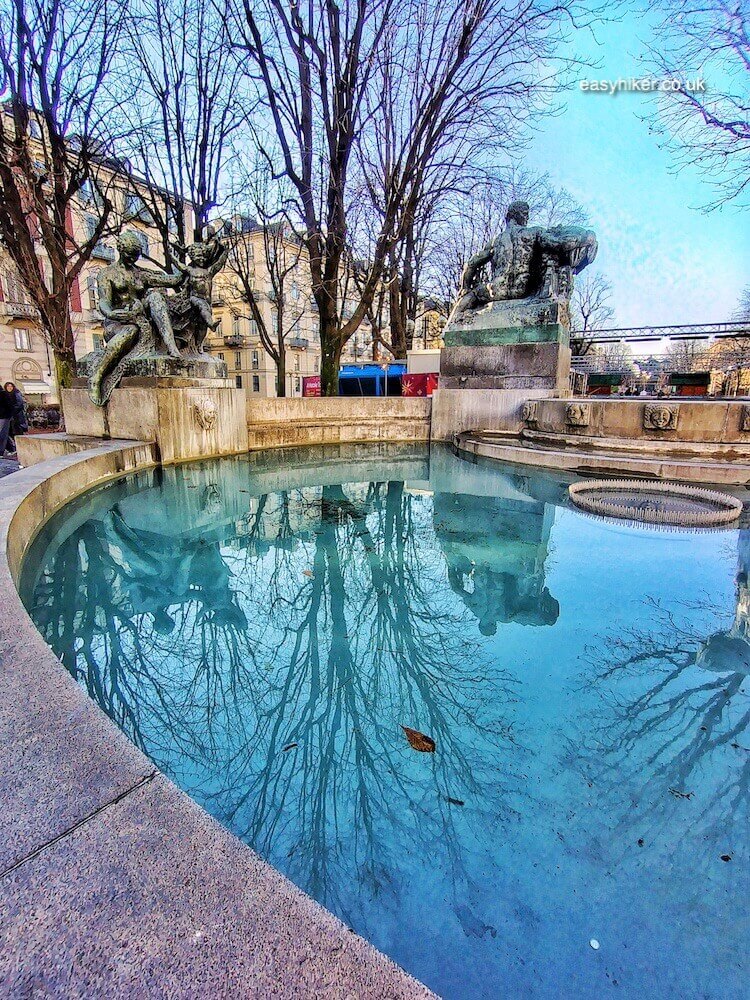
One exception to this geography is the Piazza Solferino, an oasis of White Magic in a quarter that otherwise is said to be ruled by the devil. The piazza’s power to resist the evil forces that are all around it mainly resides in the Fontana Angelica at its northern end. It is generally accepted that the sculpture represents an allegory of the inner transformation that a seeker of true knowledge must undergo to understand the mystery of the divine.
Leaving Piazza Solferino towards the west, we enter Satanic territory again and bravely soldier on straight into the Heart of Darkness. Piazza Statuto, behind its elegant facades, …
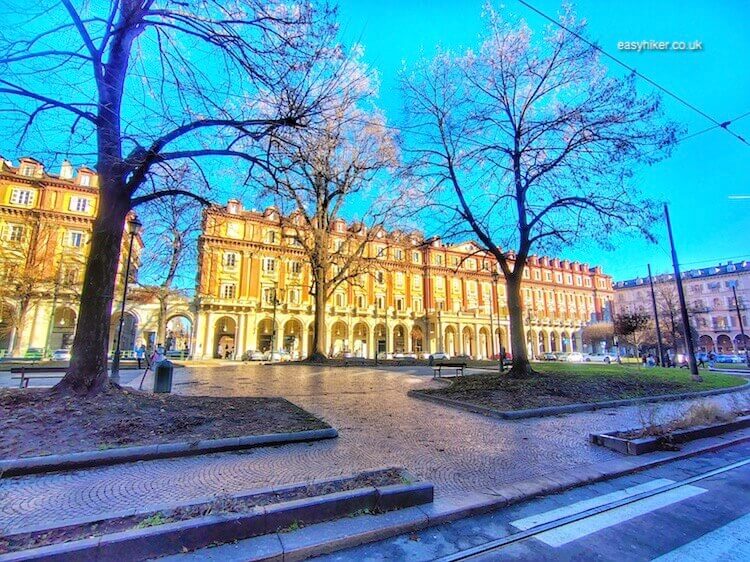
… hides a dark history – in Roman times, the site served as a cemetery for condemned souls – and even darker secrets of a more recent vintage.
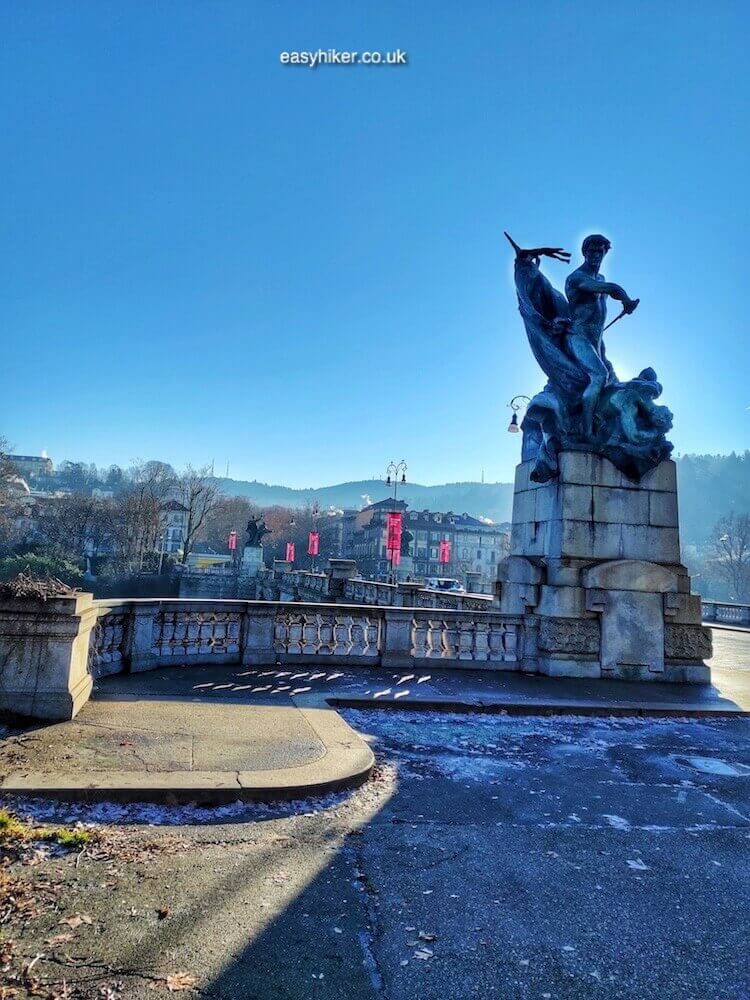
In 1879, the sculptor Luigi Belli received a commission for a monument to the workers of the Frejus railway tunnel, but what he delivered for Piazza Statuto was – according to some – a paean to Lucifer who, from his lofty throne raised on a pile of writhing bodies, points to the entrance of Turin’s legendary alchemical caves, subterranean portals into a different dimension.
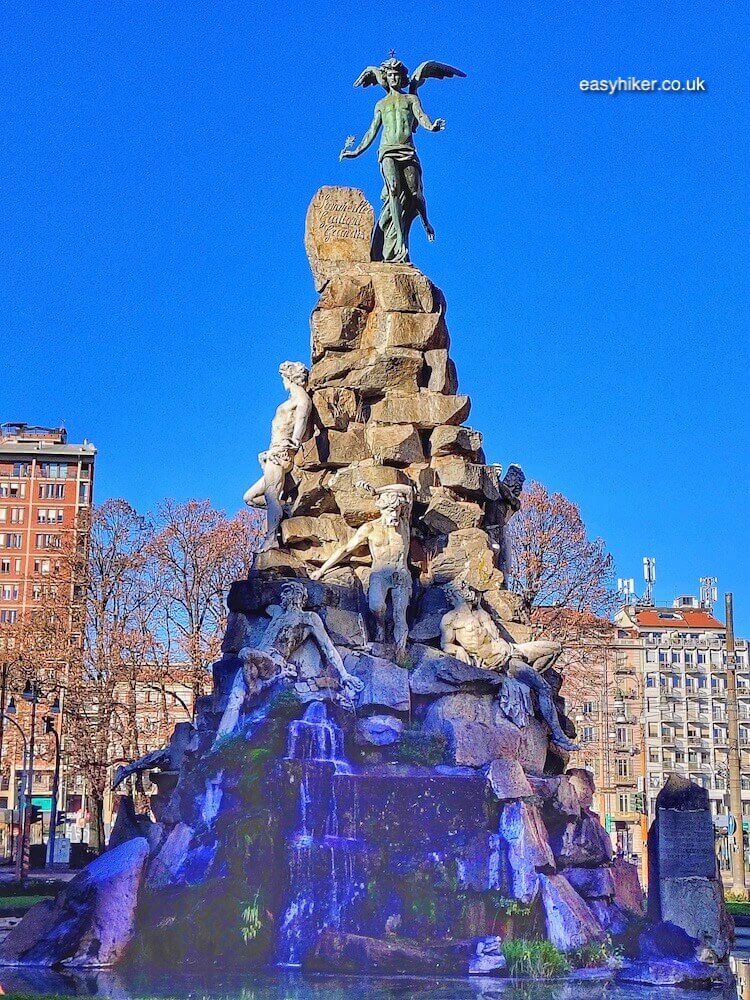
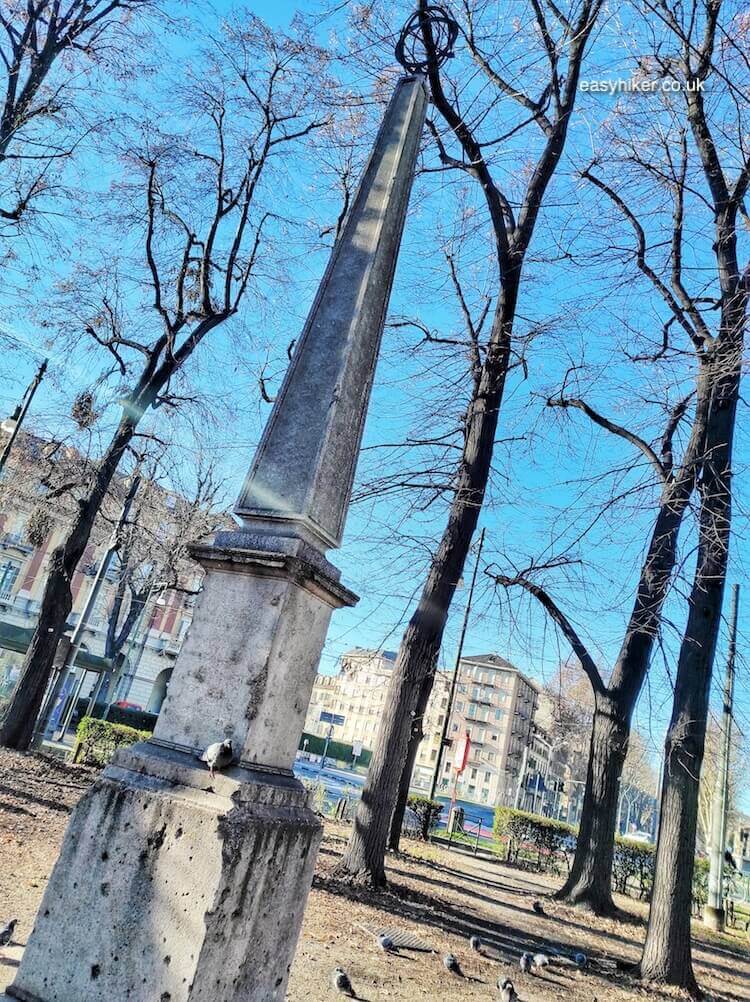
It is said that Belli himself may have created his statue under the influence of all-powerful occult forces, because right underneath Piazza Statuto, the Black Magic and the White Magic Triangles intersect. Even the exact spot has been identified: energies converge where the small obelisk in Lucifer’s back has been erected. Can you feel their power?
Fact is that the entire west of Turin shares a rather gloomy history of death and misery: of executions, torture chambers, bloody popular uprisings. Just one example: Via Bonelli – which we enter as we turn back towards the east – is where (in the house on no. 2 at the very end), for centuries, the municipal hangmen lived.
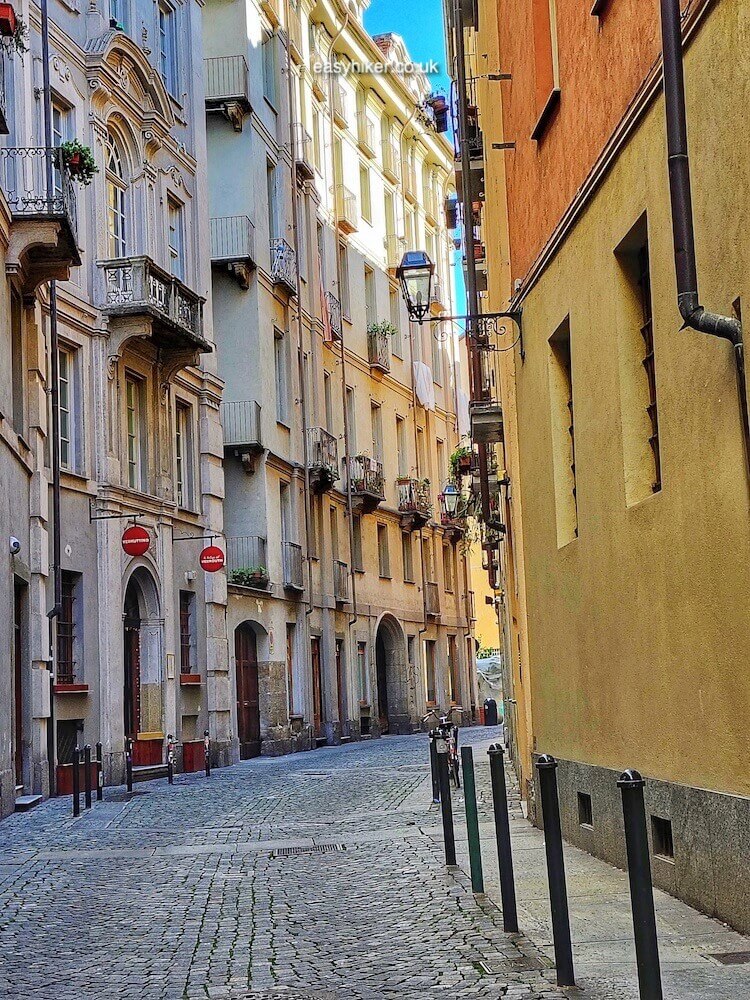
(Coincidentally, Via Bonelli is also the only crooked street in Turin’s rectilinear street grid. But what, you may ask, is coincidental?)
White Magic Turin
From Via Bonelli, it is only a short walk to the outer border of Black Magic Turin, and we enter its White Magic counterpart by walking through the main gate of the Royal Palace …
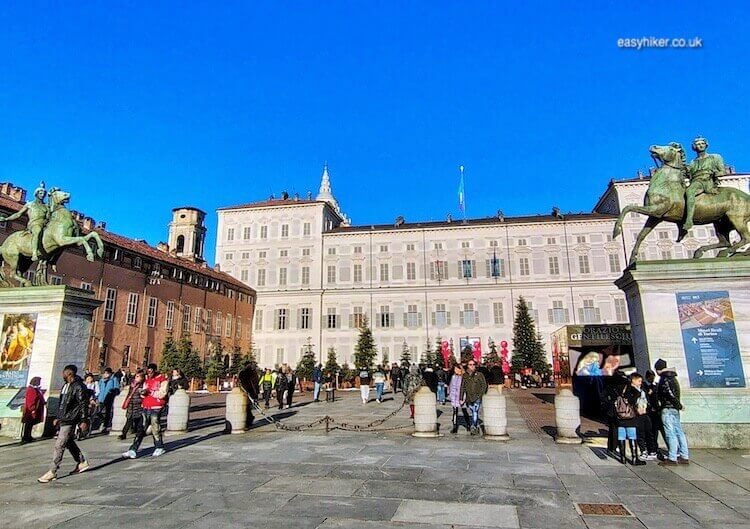
… where the main source of positive energy is the near-by Cathedral, famous all over the world as the home of the Turin Shroud.

The Shroud is kept in a freely accessible chapel of the Cathedral, but what you see is its coffin-like container and a reproduction of the face on top. The actual Shroud (all 4.5 metres of it) goes on display only briefly every 10 or 20 years.
If standing in front of the (invisible) relic fails to fill you with positive energy, we recommend you get your dose in the Palace Gardens, particularly in front of the Fontana dei Tritoni, one of the premier addresses on Turin’s White Magic calendar.
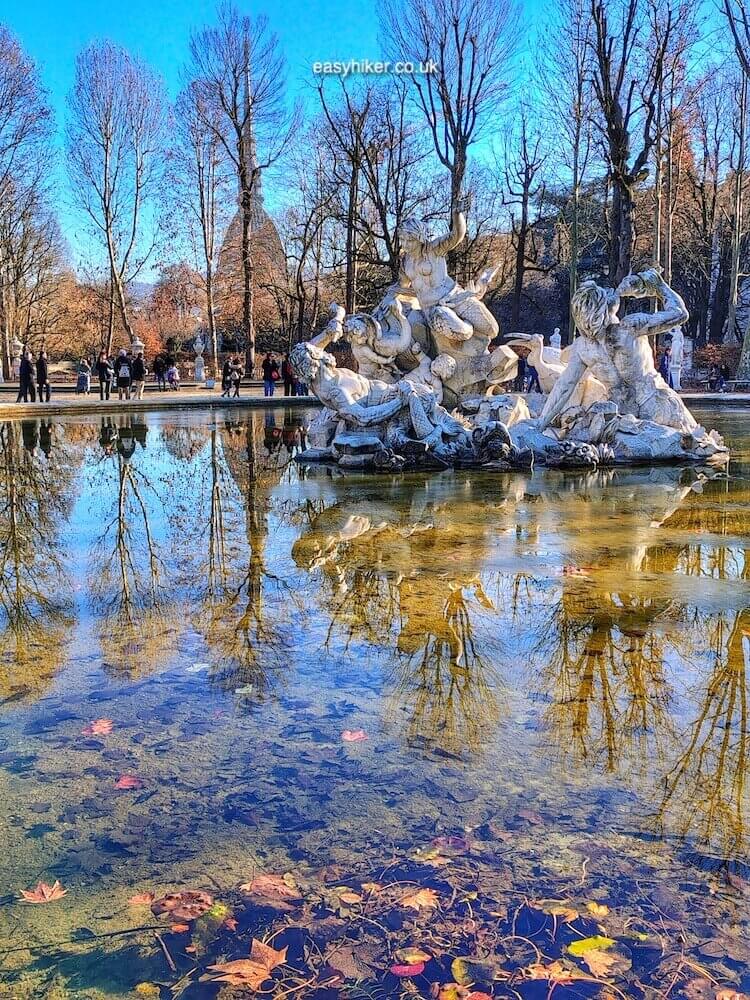
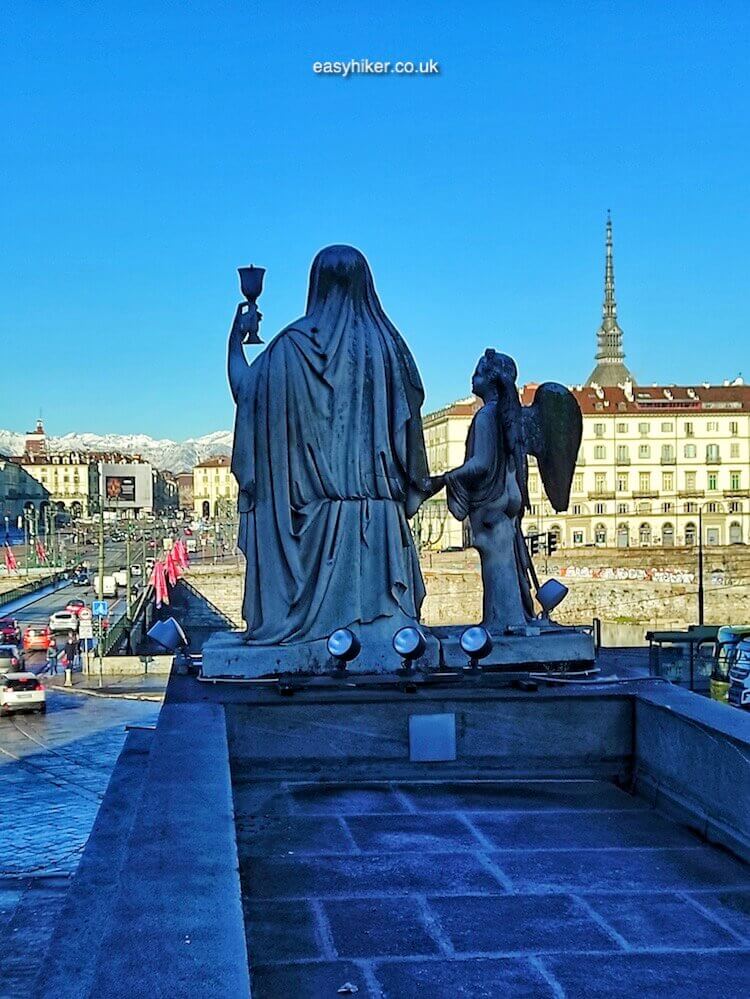
There are a few more White Magic sites outside the immediate area around the Cathedral, above all the Chiesa della Gran Madre on the far side of the Ponte Vittorio Emmanuele.
One side of the church is crowned by a statue of a woman (the Gran Madre herself?) holding a cup (the Holy Grail?) while an angel is not looking at her but into the distance: an indication of where the Grail lies buried? Some people think it is – and that this was what Nostradamus (as well as subsequent generations of alchemists) really came here to look for.
Now, only one question remains …
Finally, the deepest mystery of all: What is the basis of Turin’s reputation as the global capital of Satanism? There are three possible answers.
First of all, politics. In the 19th century, Turin, the capital of the relatively liberal kingdom of Piedmont, attracted all kinds of Waldensians, Latter Day Saints and neo-Pagans who would have been burnt at the stake in other parts of Italy. Turin became a haven for oddballs and flower pot men – of bright as well as darker hues.
Secondly: it all comes down to a hoax. Students in 1970s fed gullible local journalists with stories about an only seemingly boring and bourgeois city that was, in fact, a hotbed of bizarre satanist practices. There are still people around today who claim to have been involved in this elaborate prank.
Thirdly: it is all true and the devil is active in Turin, assisted by thousands of fanatical devotees.
But here is a thought: if there really were 40,000 active satanists in a city of Turin’s size, in any metro train you ride or any restaurant you visit, one in twenty of your fellow travellers or diners would be going home to a relaxed evening of rubber masks, skewered lizards and ritual slaughter.
Do we really believe that? The choice, dear reader, is yours.