When new administrative districts were created by the French revolutionary government in 1790, the names for these départements were nearly always based on rivers and mountains. Traditional names counted for nothing, since the idea was to avoid any references to religion or the culture of the ancien regime. Not even the département of Paris was spared the banality of being named after a natural feature. It was called Seine, after the river that crosses the ancient city.
Very few exceptions were ever made from this rule. Since 1968, the département that includes the metropolitan centre of the Ile-de-France has been once again known as “Paris”, and the Territoire de Belfort was allowed to keep its historical name when it became a proper département in 1922. It had been established as an administrative unit only in 1871, having been separated from those of France’s eastern provinces that were annexed by Imperial Germany. In 1790, it was still part of the Alsace.
The only exception the revolutionaries made in 1790 from their rivers-and-mountains-only-rule was Finisterre – which has ever since, for 240 years, been sitting awkwardly in the list of administrative districts, a line of poetry in a catalogue full of dry surveyors’ prose: Loire, High Alps, Rhone Delta, End Of The World.
Quimper: Not Quite the End of the World
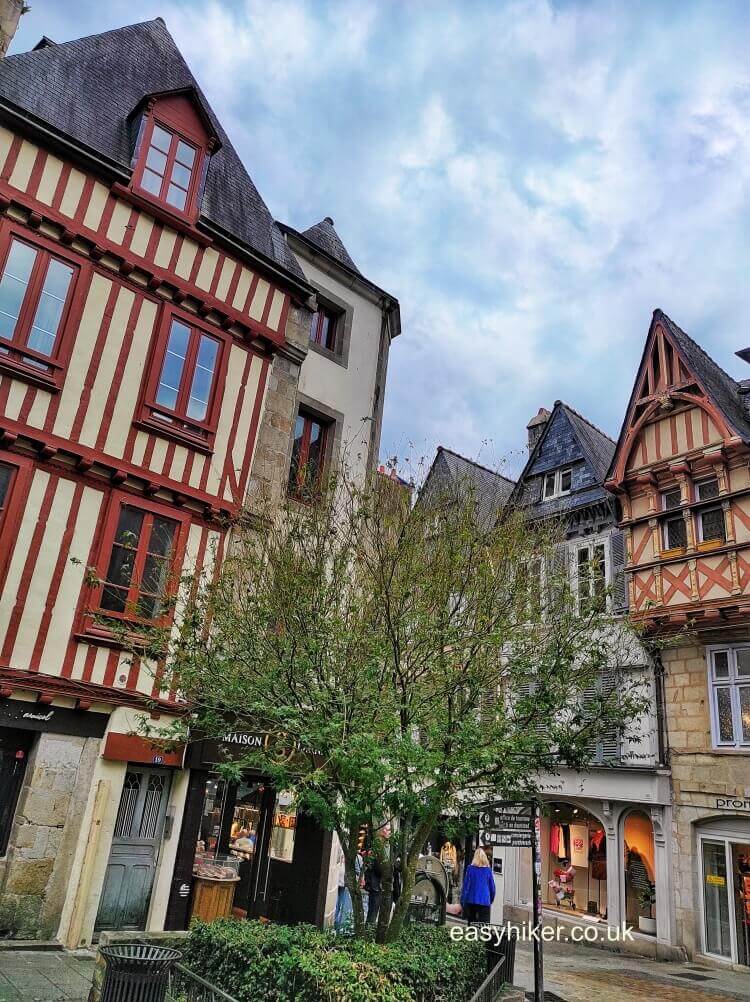
Ironically, the historic capital of this region in the windswept northwestern corner of France has nothing of the rugged-cliffs-and-megaliths-drama for which Finisterre is famous. Cozily bourgeois Quimper …
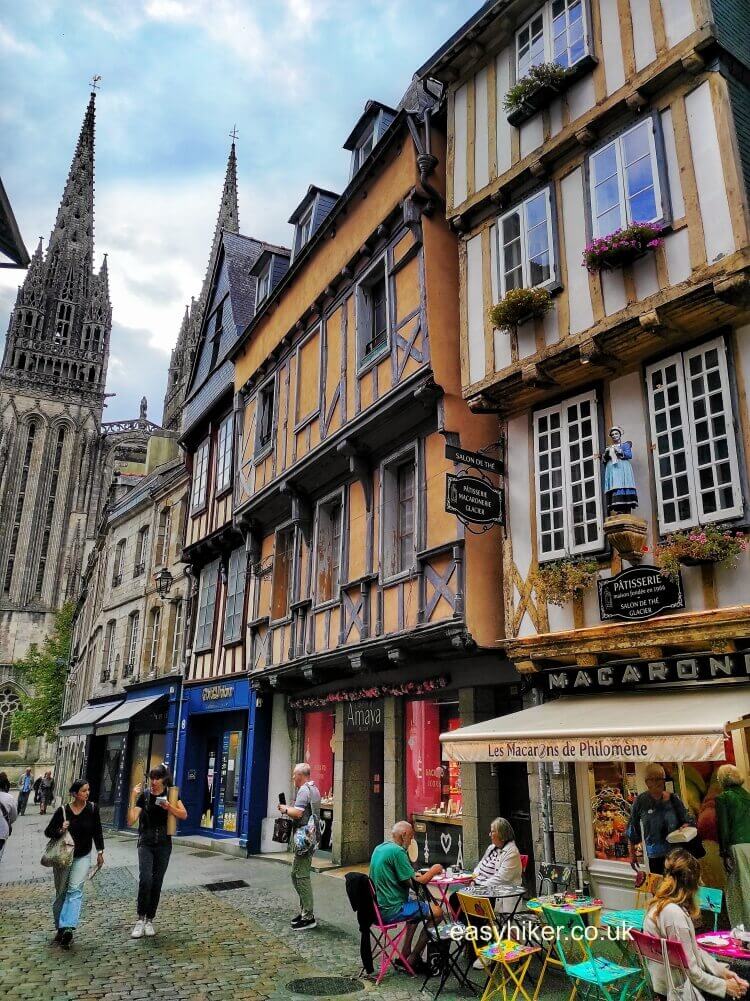
… has historically been a town of clerics and administrators, not of seafarers and fishermen. The coast is only ten miles away, but if somebody told you it was one hundred miles or a thousand, you would find no reason or evidence to disbelieve them.
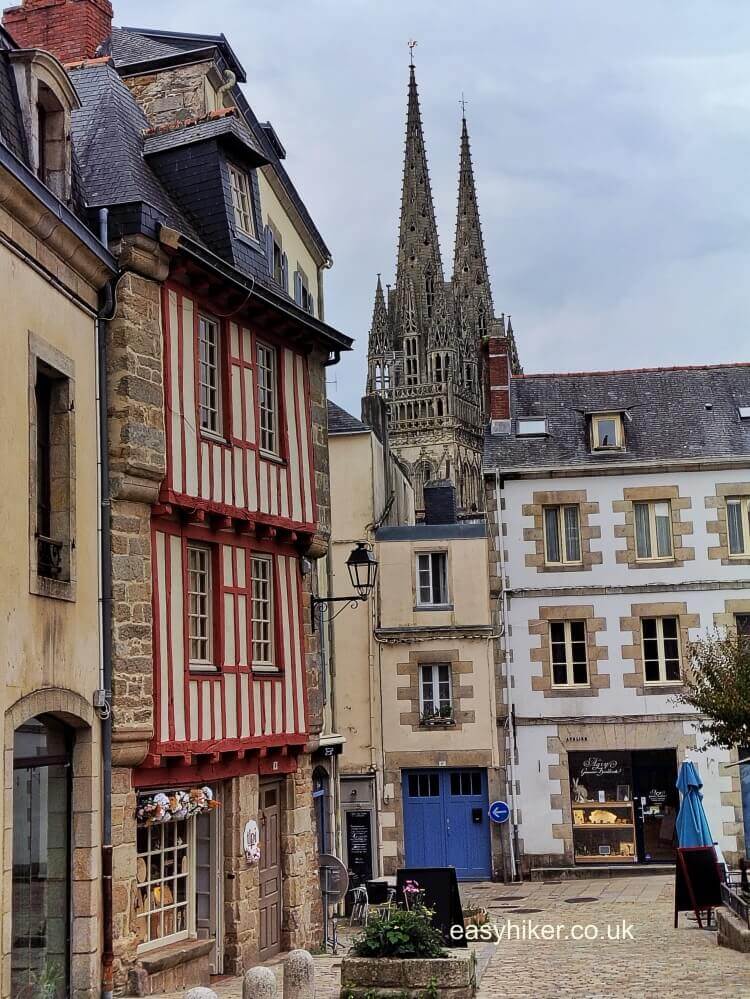
In terms of visual appeal, Old Quimper is more than a match for the historic centre of Rennes, but it has a different feel. It is not as youthful. The old town of Rennes, particularly after dark, feels very much like the playground for the city’s 60,000 students, a number roughly equal to the total size of Quimper’s population.
Quimper, too, is lively. It attracts visitors from all corners of France – but in a different, more sedate way. This is a town where life proceeds at walking pace.
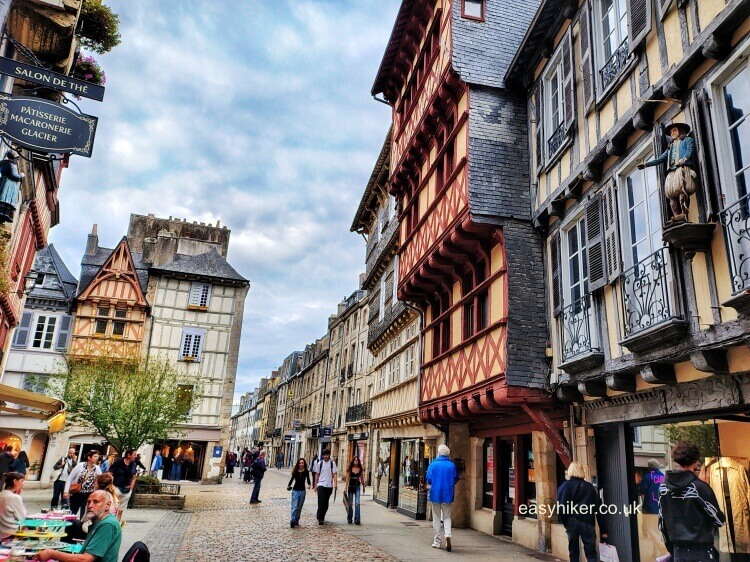
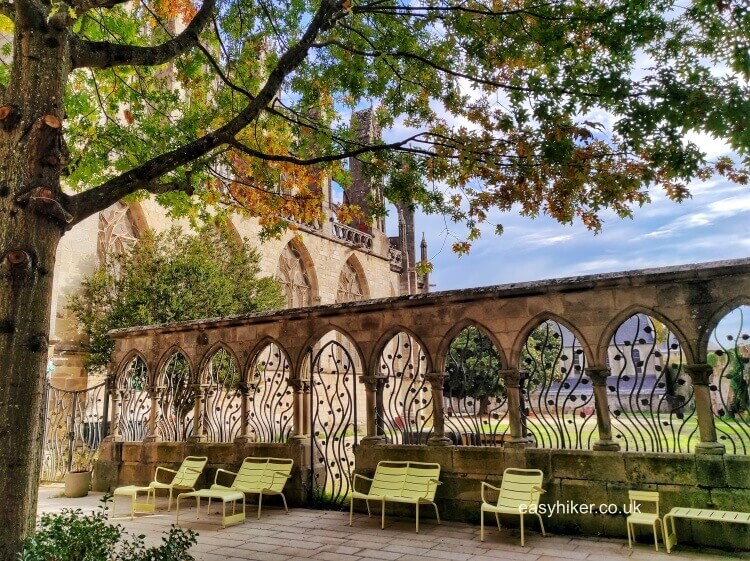
And if such a pace is still too fast for you, there are plenty of places where you can take a quiet breather – the patio of the Episcopal Palace, for example, in the back of the Cathedral …
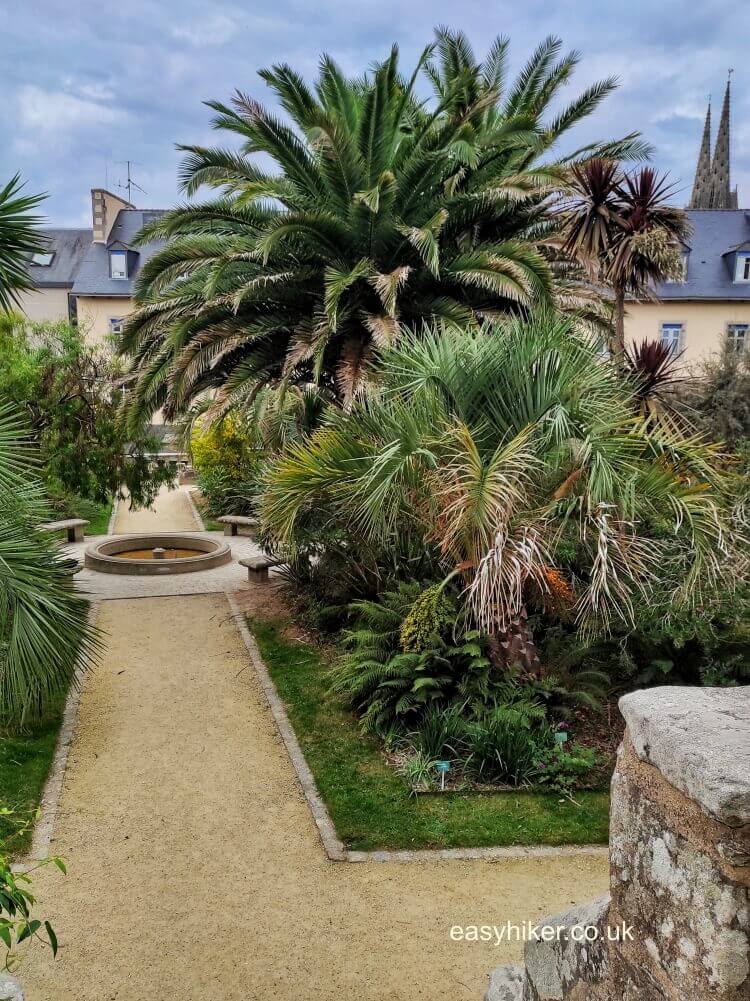
… and several public gardens of which the Jardin de la Retraite with its subtropical flora is the most attractive.
Small is beautiful in Quimper. The old town comes in a modest snack-size format and is therefore perfect for a couple of hours on a day trip. You are guaranteed to leave without the feeling that you probably have missed something.
Old Quimper is also easy to navigate. Use the Cathedrals’ twin towers as your North Star. You will rarely lose sight of them, and they tell you where to find the heart of the old town.
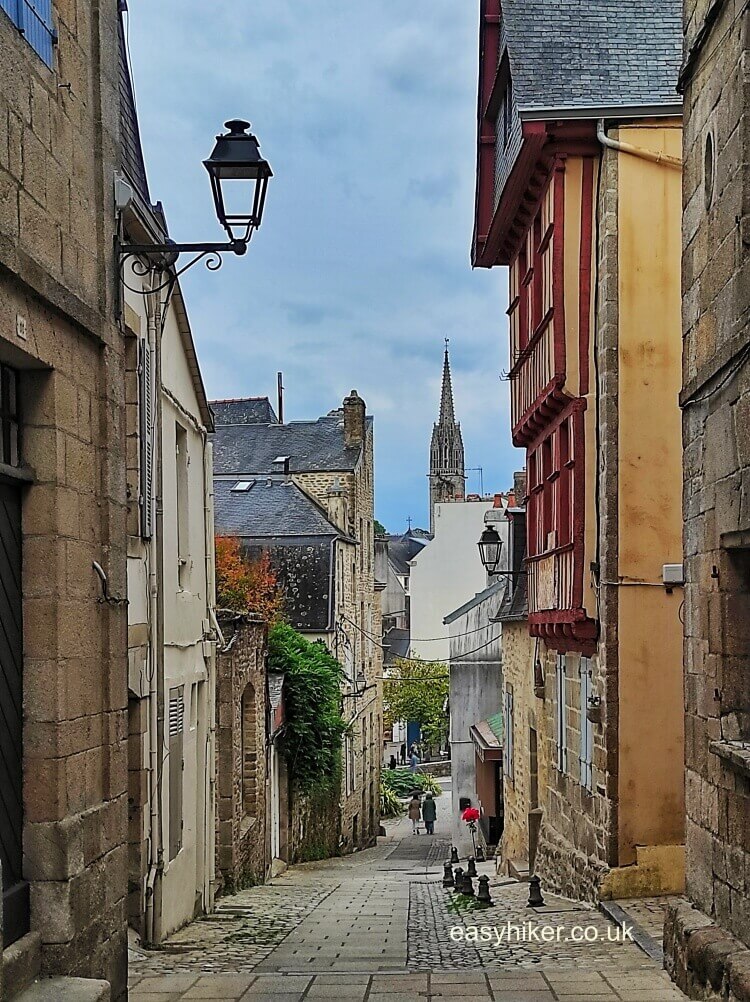
And, most importantly, the relatively small size of Old Quimper gives you the time to explore what distinguishes the city more than anything else: the Odet river.
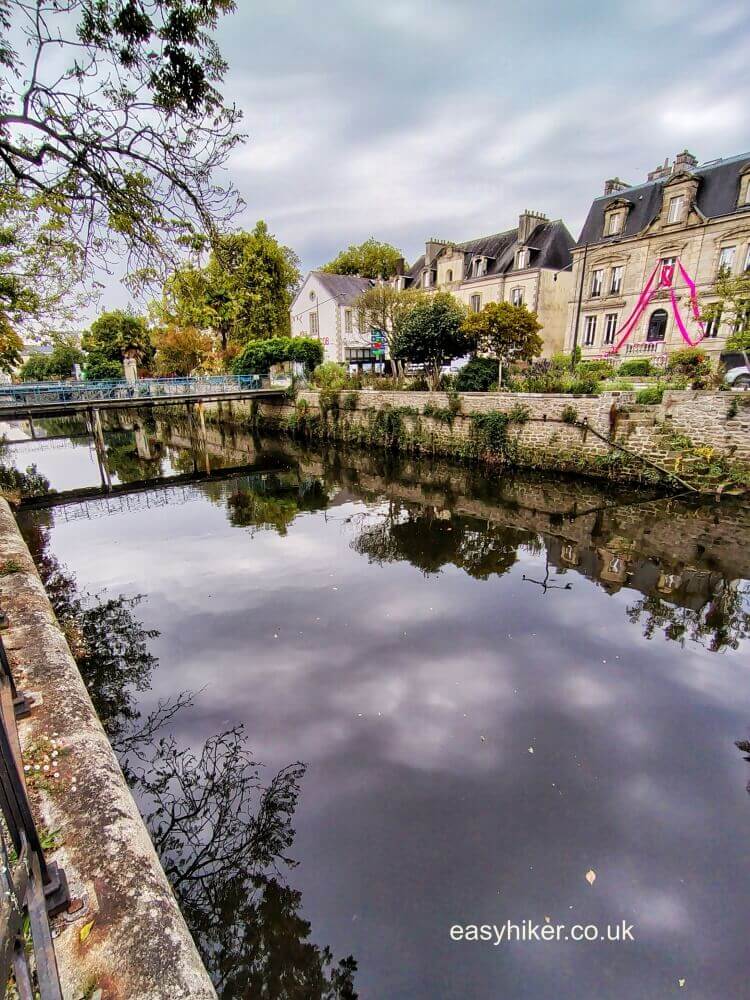
I have no idea whether anybody keeps track of these things, but I suspect that the Odet’s town-centre section may very well be the most bridged riverbank kilometre in the world. Down the stretch from the train station to the Rue du Palais, we counted 18 river crossings, including ten pedestrian footbridges.
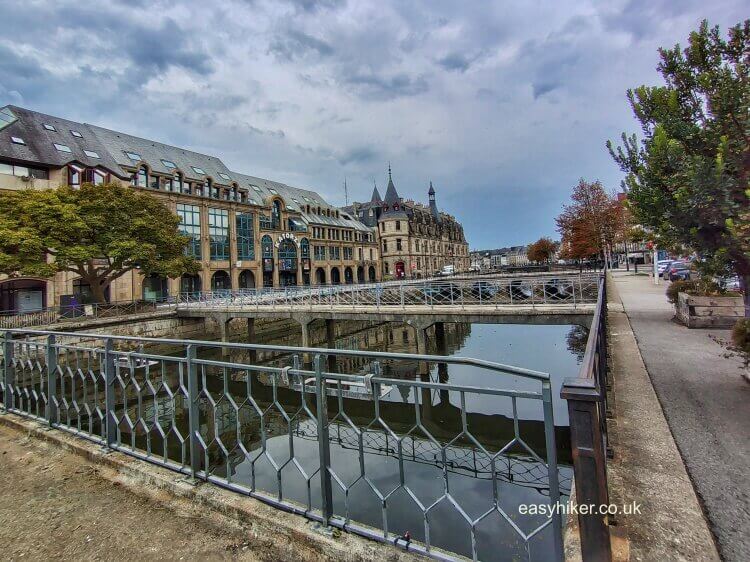
There is a reason for this large number of river crossings. The road in its present form as a two-lane highway with one-way traffic on either bank is relatively new (dating from the 1960s). Before that, the southern bank of the Odet was mainly occupied by private mansions, and each of the passerelles was constructed to lead to one grand entrance gate.
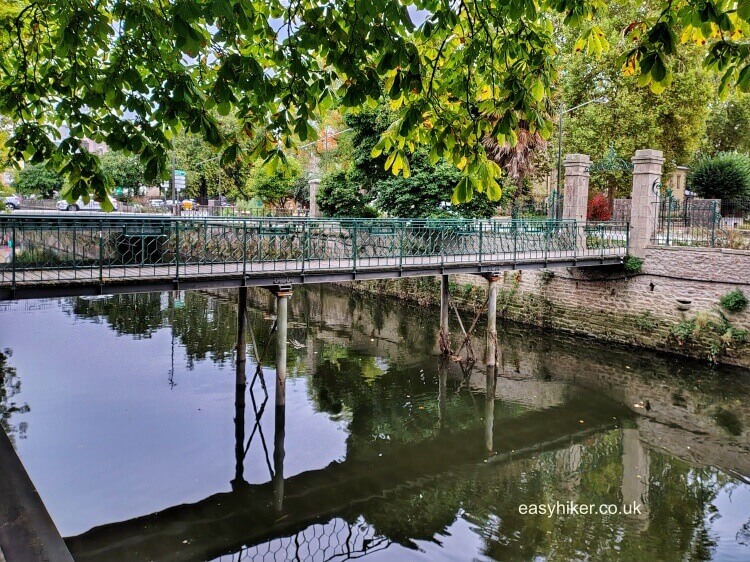
Some of these footbridges are still echoing their glamorous past.
We suggest to start your riverwalk at the train station. Early on, you will find some impressive period architecture such as the theatre from 1904, …
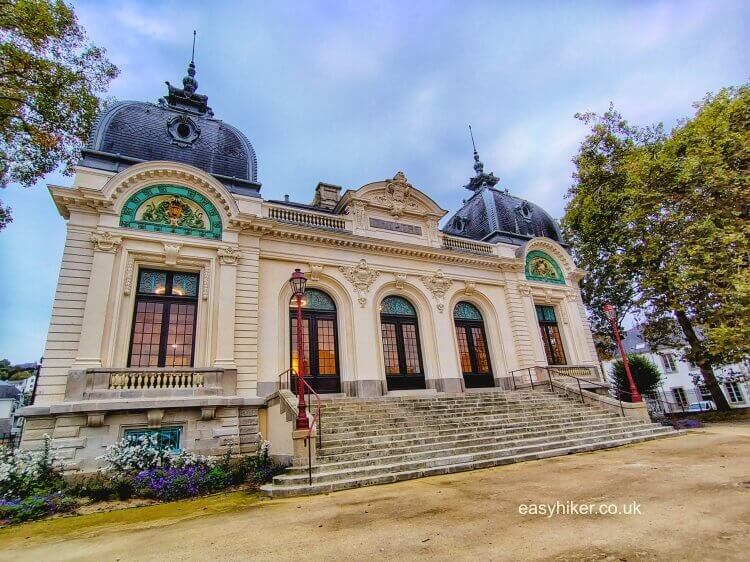
… which was built by the municipal administration on a lot that had been bequeathed to it by a wealthy philanthropist under one condition: that the land be used for the establishment of a hospice for elderly citizens.
When the estate of the deceased proprietor got wind of the city government’s plan to ignore the wishes of the decedent, it opened legal proceedings, and the ensuing lawsuit went all the way to the French Supreme Court. It was only terminated by a decree from the President of the French Republic who sided with the municipal government.
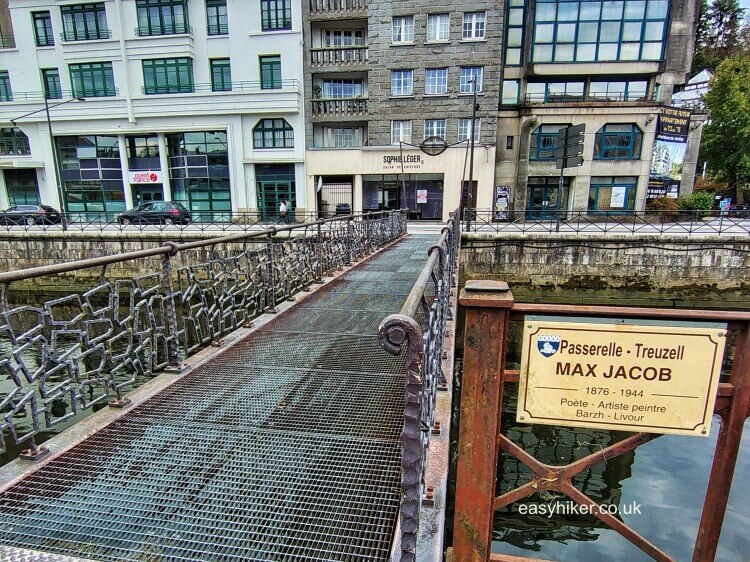
Twenty years later, these events became the focus of a provincial farce written by Max Jacob who was born in Quimper and a leading figure of the intellectual scene in pre-WWI Paris, a personal friend of Picasso and the poet Guillaume Apollinaire.
Eventually, in 1997, the theatre was named after him, the town’s most famous son, and you will meet his name in other places, too.
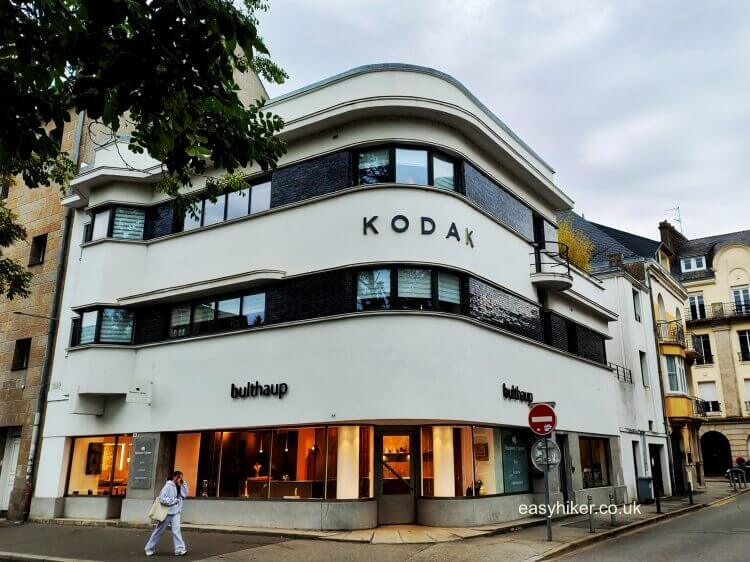
Diagonally across the river stands the Art Déco Maison Ty Kodak from 1933, built a mere 30 years after the colourful and richly ornamented playhouse. Both this office building and the theatre stood at the cutting edge of their period’s architectural fashions, and both of them are historical now, albeit in slightly different ways: we understand today that the theatre was among the last of a dying breed, the new of the old, whereas the Kodak House, the old of the new, anticipated what was to follow.
Modern Quimper may feature a confluence of styles, but long before that, the town was known as a site for a different type of confluence – hence its name: Kemper is the old Breton word for a place where rivers meet.
There are several such places of encounter in and around Quimper, but most of the smaller tributary rivers have been concreted over from the point where they cross the city limits. The exception is the Steir, the biggest of these tributaries, and the point where it meets the Odet is the exact spot where ancient Kemper was founded by a Celtic tribe.
You can still see a bit of the Steir in central Quimper, …
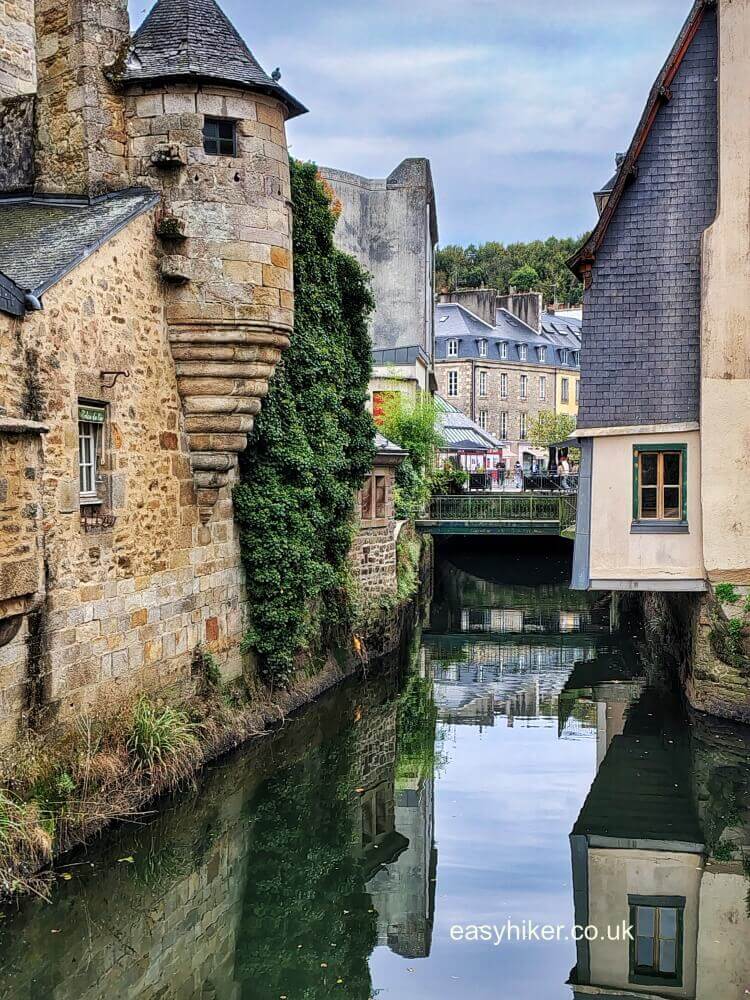
… but the place of confluence – historic relevance or not – has also disappeared under the concrete of the Odet’s riverside Boulevard.
Today, the town’s second river mainly serves as a photo motive for the numerous visitors, …
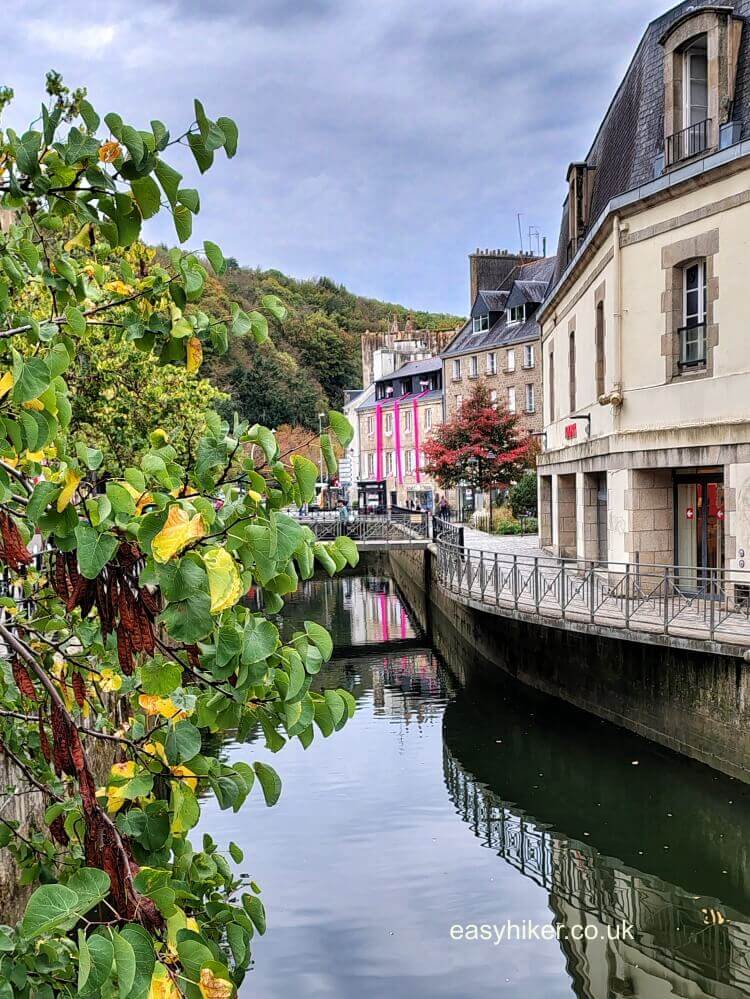
… and the stretches where it winds its way through Old Quimper’s streets may very well be the town’s most popular views. Not, however, to the point where the Steir would be stealing the old town’s show. That, at any rate, would be a difficult undertaking.