Riverwalks are popular for a large number of reasons. They are easy-to-navigate (there are only so many possibilities of heading the wrong way) so you can concentrate on what’s on view, they are lined with towns and public transport connections so you can stop and start your hike almost anywhere you like, and changes in scenery are built-in since rivers twist and turn in a way that coasts, lakeside banks and canals generally do not.
Above all, however, there is their sheer level of variety. All other groups of hikes (seaside as well as lakeside hikes, hikes through forests and walks along tow paths) share a close family resemblance.
Riverwalks, by contrast, just like the rivers that they are following, come in all shapes and sizes.
To give you an example: last week, we strolled down the Thames in Twickenham, this week …
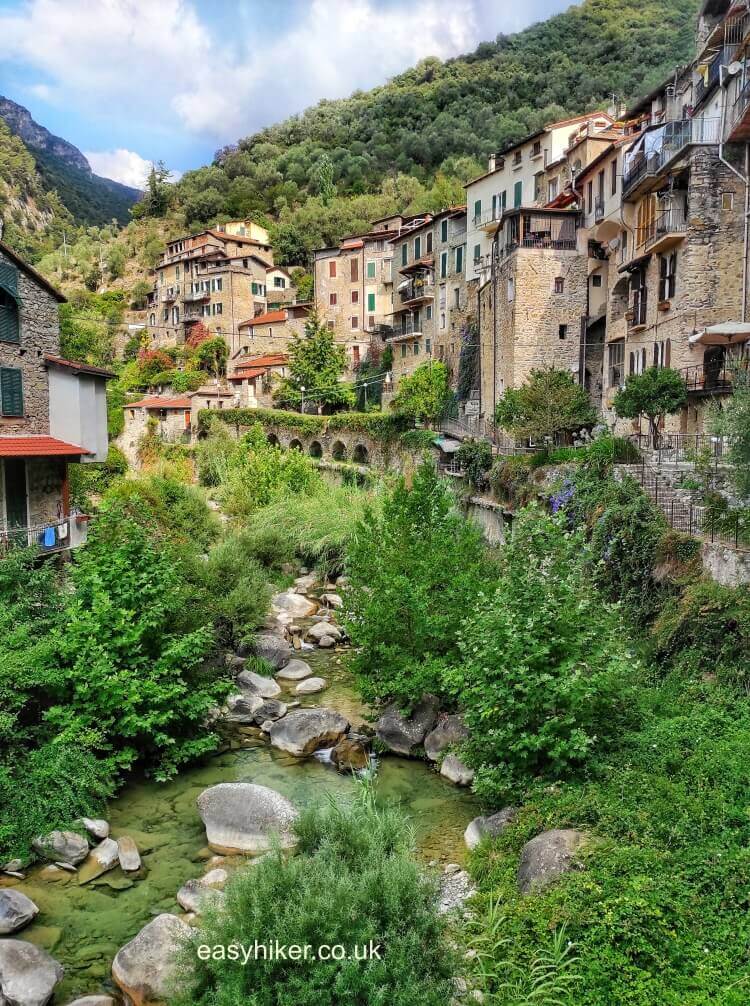
… we are visiting a stream that offers a completely different experience.
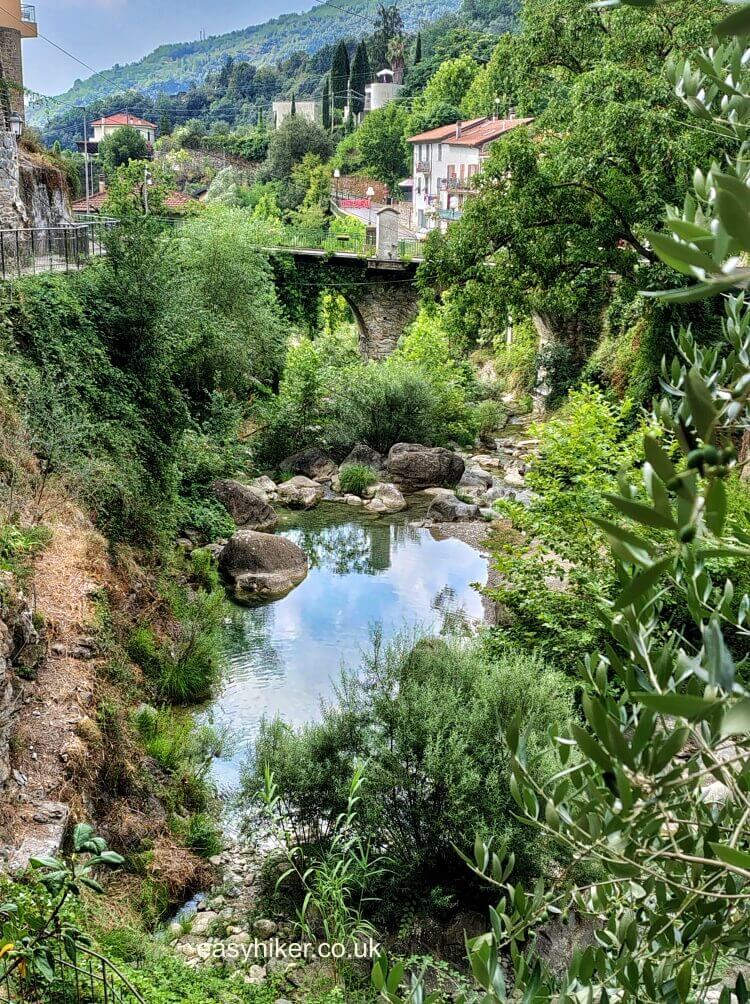
The Barbaira is, of course, much less famous than the Thames, less massive, much shorter (all of 16 km long), and, to top it all, it is not even classified as a proper river but as a mere torrent – but it makes up for all of these shortcomings through its sheer visual impact.
And, no: we are no longer in suburban London either.
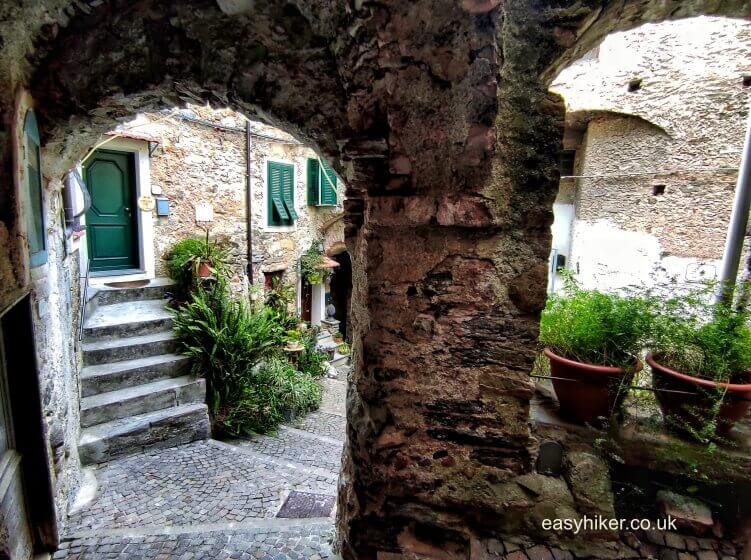
More surprisingly, perhaps, we are not even on the southern slopes of the High Alps, as the scenery would appear to suggest, but in Rocchetta Nervina, a mere 10 km away from the Riviera coast.
Take a Walk Through Rocchetta Nervina
A taste of the Alps on a seaside holiday: have we piqued your interest?
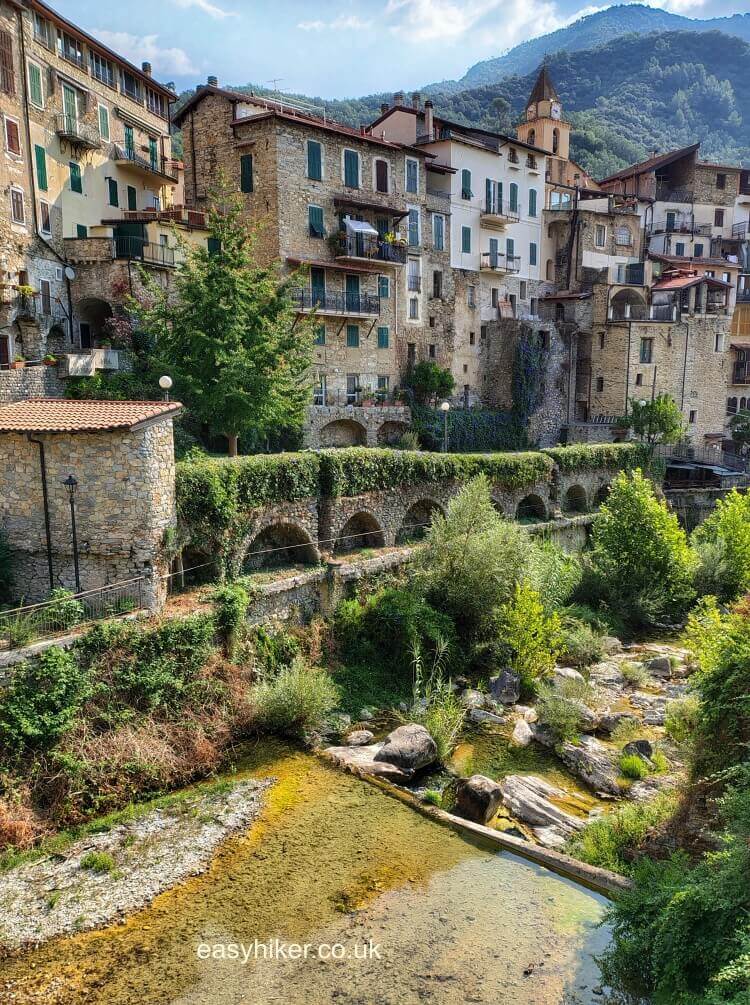
Rocchetta Nervina (take bus line no. 7 from the border town of Ventimiglia) is the place where the Barbaira gathers pace and volume, having met another, smaller torrent called the Oggia just before entering town.
Today’s walk follows the Barbaira downstream from Rocchetta’s medieval bridge to the far end of town before returning to the same bridge on the other bank of the river.
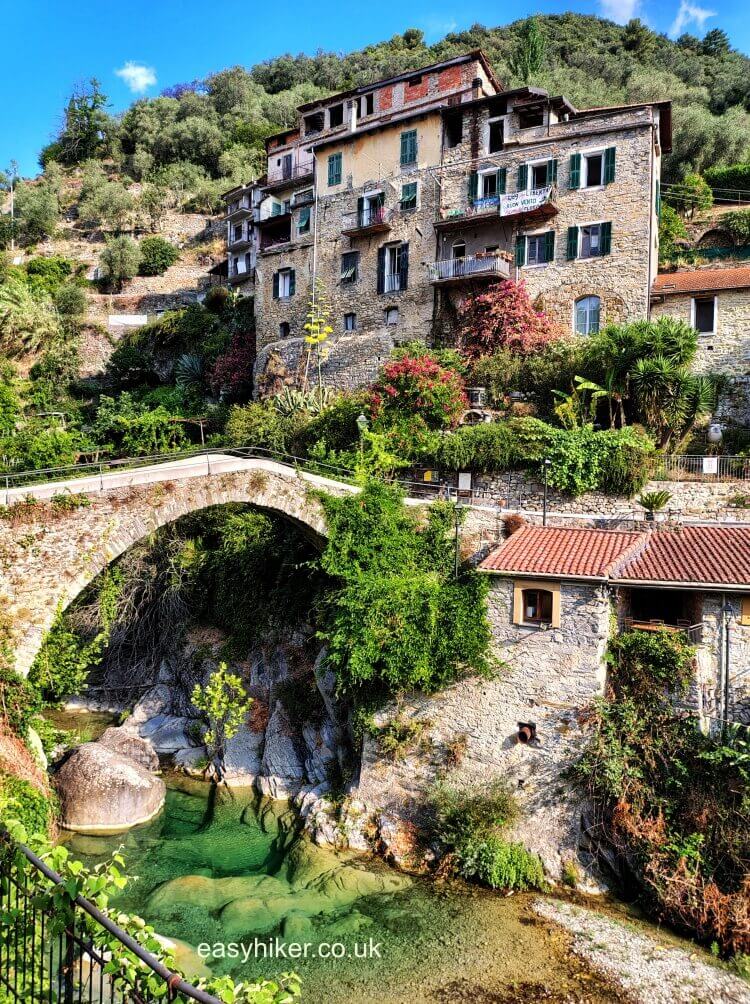
This is a short walk, no more than one hour long. You can do it easily in a single morning and still have time for a coffee before and a long, lazy lunch after. Hey: it’s your holiday. Take it easy!
The trail starts at the far side of the bridge from the bus stop and all the parking lots, leading you straight into town …
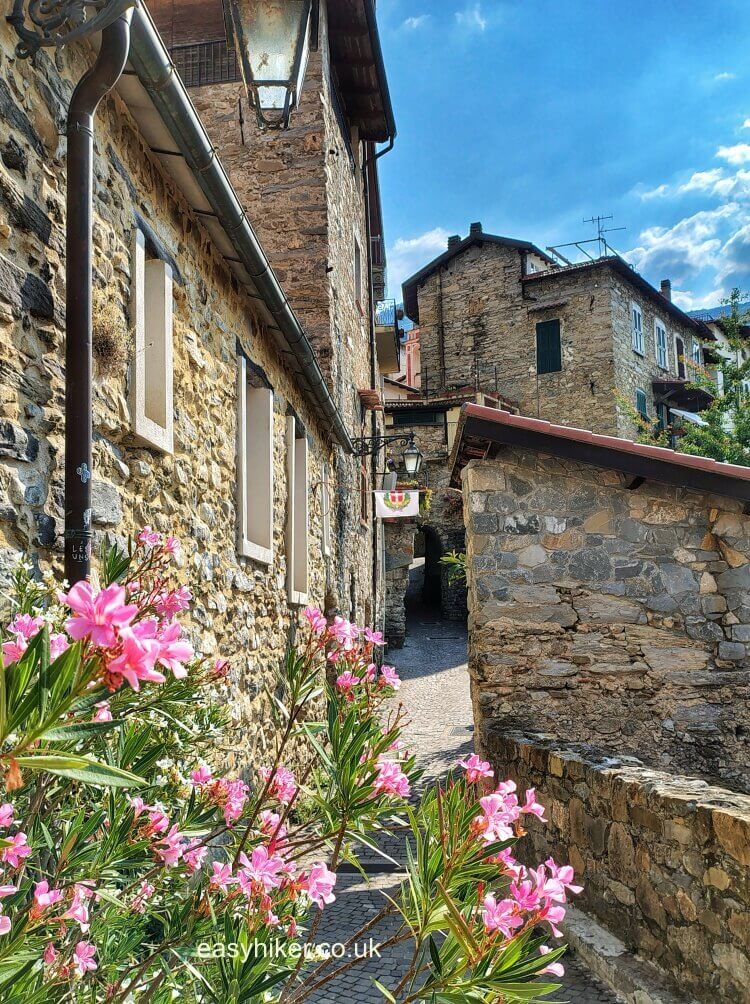
… and then through the narrow village streets, the so-called caruggi.
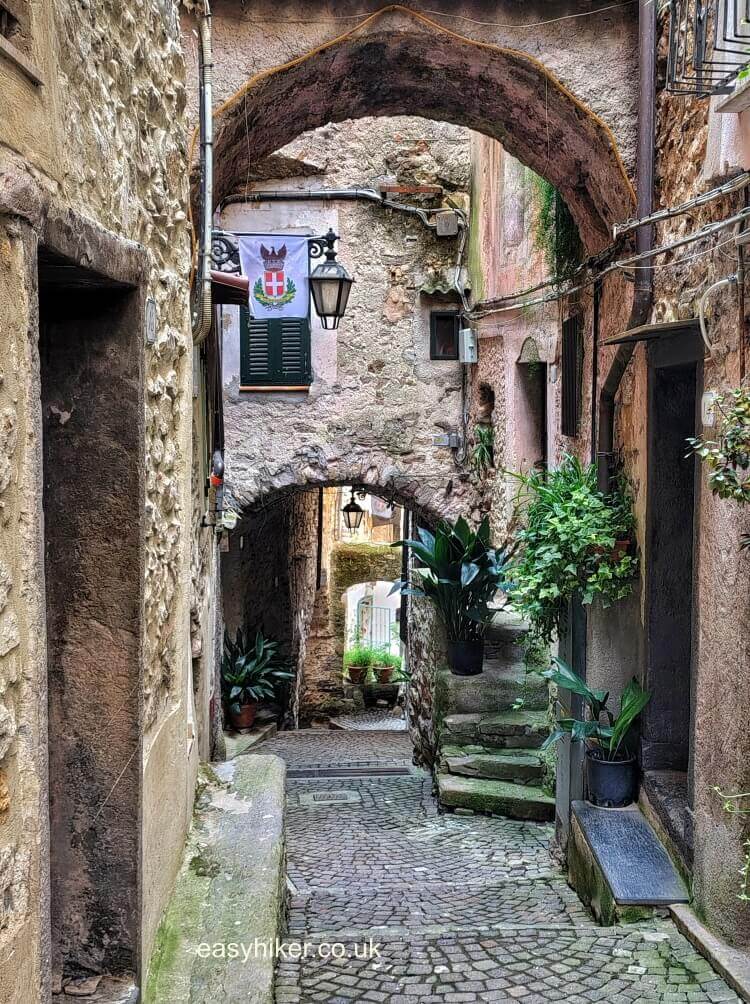
Through all of its many twists and turns, however, the trail always stays close to the course of the Barbaira, and although you may briefly lose sight of the river in the maze of the town centre, the stream has a way of always coming back into view, as if to remind you who is the star of the show.
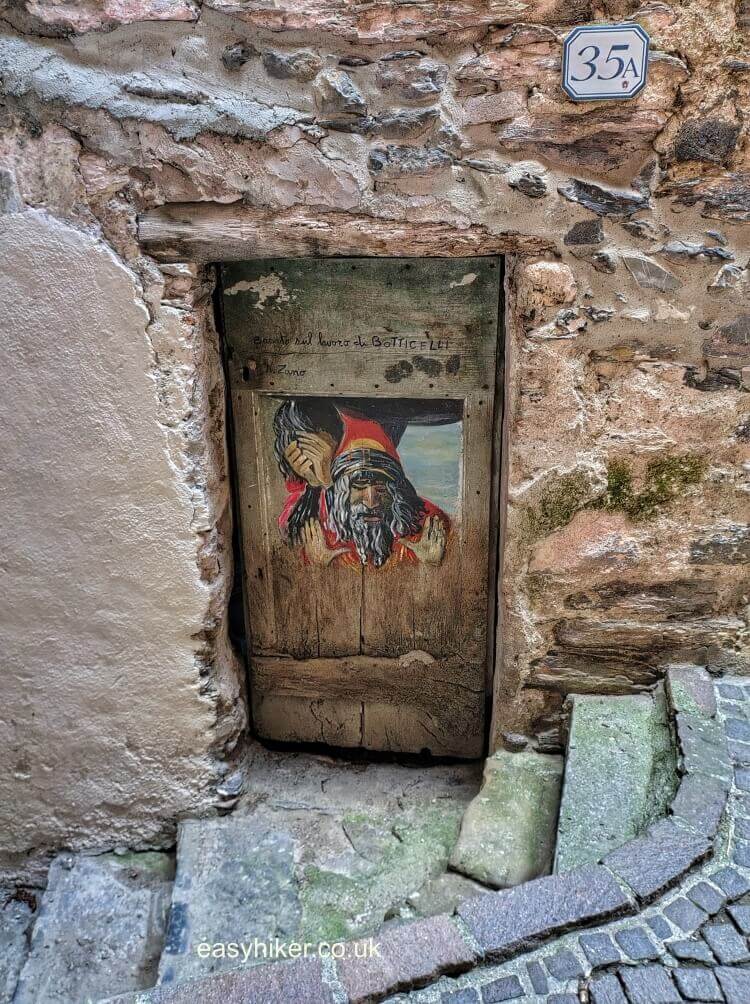
Note the many painted doors that you will encounter along the way. Nothing in this country, it seems, is so beautiful that it could make full-blooded Italians resist the temptation of adding a touch of their own.
Rocchetta Nervina has a long and complicated history. In days gone by, the town was considered strategically important for the control of the Nervia valley and the coast, and, as a consequence, always the objects of disputes between Archbishops of this and Counts of that.
Local bigwigs were often allied with the larger regional powers of Genoa and the Duchy of Savoy (Nice), while these regional powers themselves were, in turn, often the client states of even bigger players – the Pope and the Emperor at first, Spain and France in later years.
Reading about Rocchetta’s history, one gets the impression that there were times when two local noblemen could hardly scuffle over an alehouse bill without conjuring up World War Three or whatever its medieval equivalent may have been.
At any rate: nothing of this matters very much to most visitors since all the history they want to hear about is the one about the shit. This is why the little monument alongside the boardwalk trail …
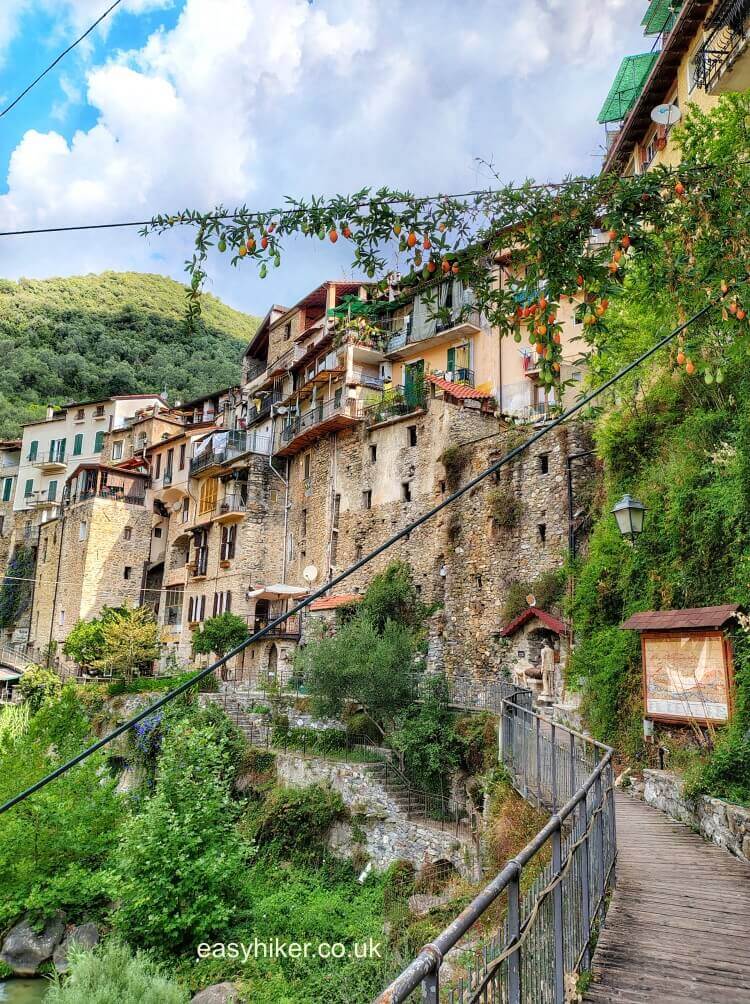
… is one of the most visited attractions in town.
Not only was Rocchetta one of the last larger settlements in Italy that was equipped with a proper canalisation system: until 1948, local families, rather than taking their sewage to a designated spot half-way out of the village (preferably downwind), emptied their buckets all along the Barbaira’s dubarie, the low-lying river areas of sand or rock, …
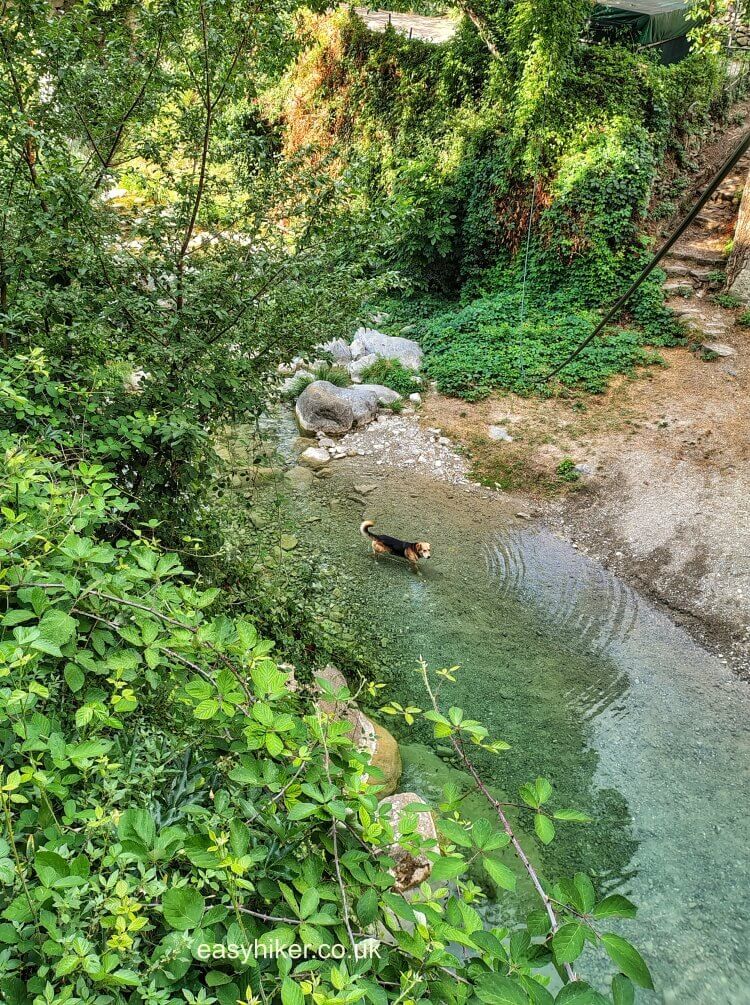
… practically in the town centre where everybody could see – and, presumably, smell what was lying down there.
It would probably go too far to say that Rocchetta is celebrating this part of its history, but it certainly owns up to it.
The small monument on the boardwalk features the figure of a barilaio, in remembrance of the men whose job it was to collect the human waste from the riverbank and take it to local farmers who then used it to fertilise their fields and vegetable gardens.
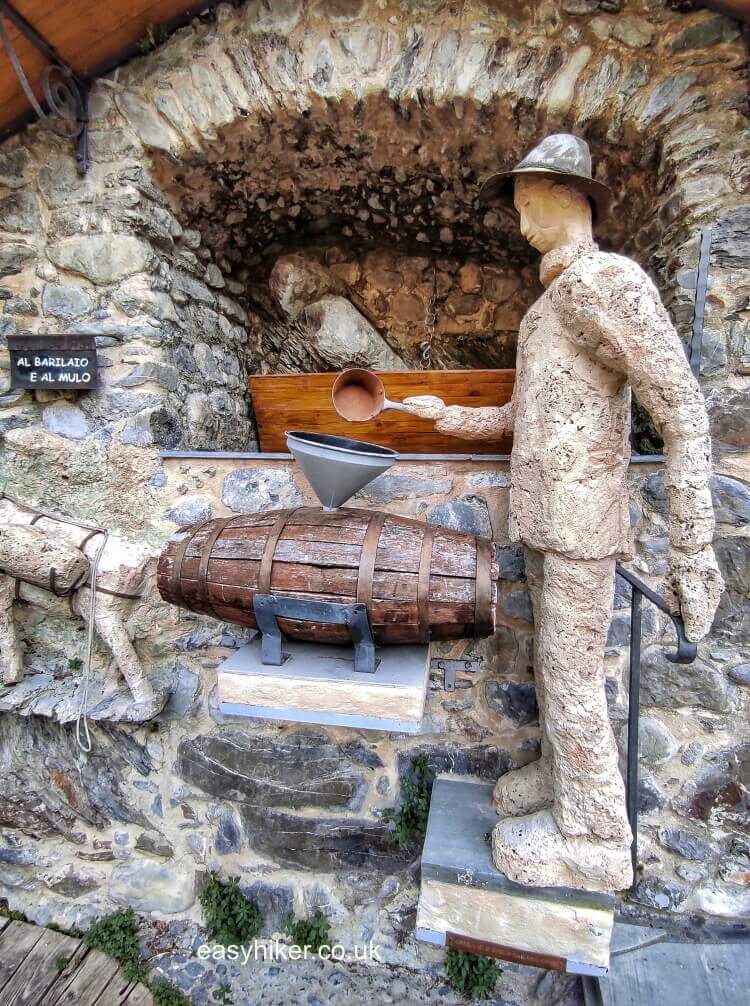
In the same spot, there are also info panels about other features of the old village life, but what chance have tanneries and lavender distillation against the drama of the riverside cesspits? Visitors love a good horror story.
And visitors are important in Rocchetta. They are, as you will discover when walking through the town, the lifeblood of the place: you will hardly meet anybody else in the village streets, and few if any of Rocchetta’s restaurants and coffee shops could survive without the tourists. These days, the town counts fewer than 300 inhabitants – less than one third of its population peak in the late 1900s.
These visitors come here for the riverwalk, but also for the laghetti …
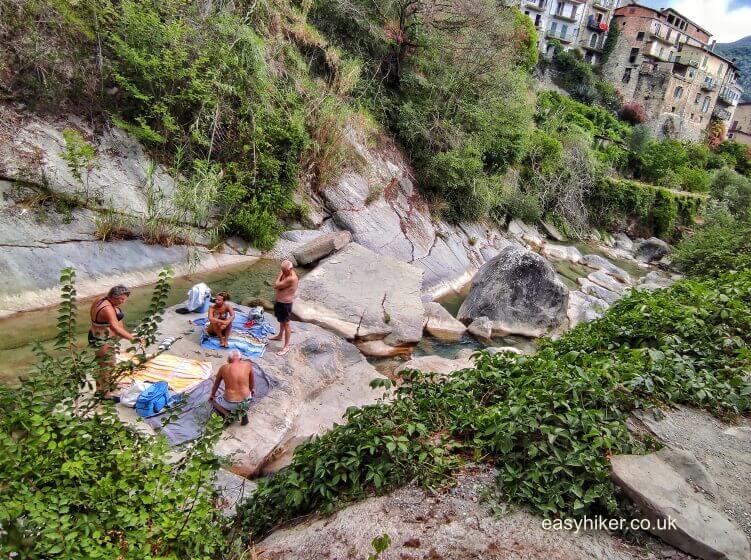
… a series of small natural pools on the slopes above the village centre. Some of these are literally a few metres away from the medieval streets, but if you want more peace and quiet – and possibly a spot all for yourself – you have to take the narrow footpath on the pond’s left and climb a little higher up.
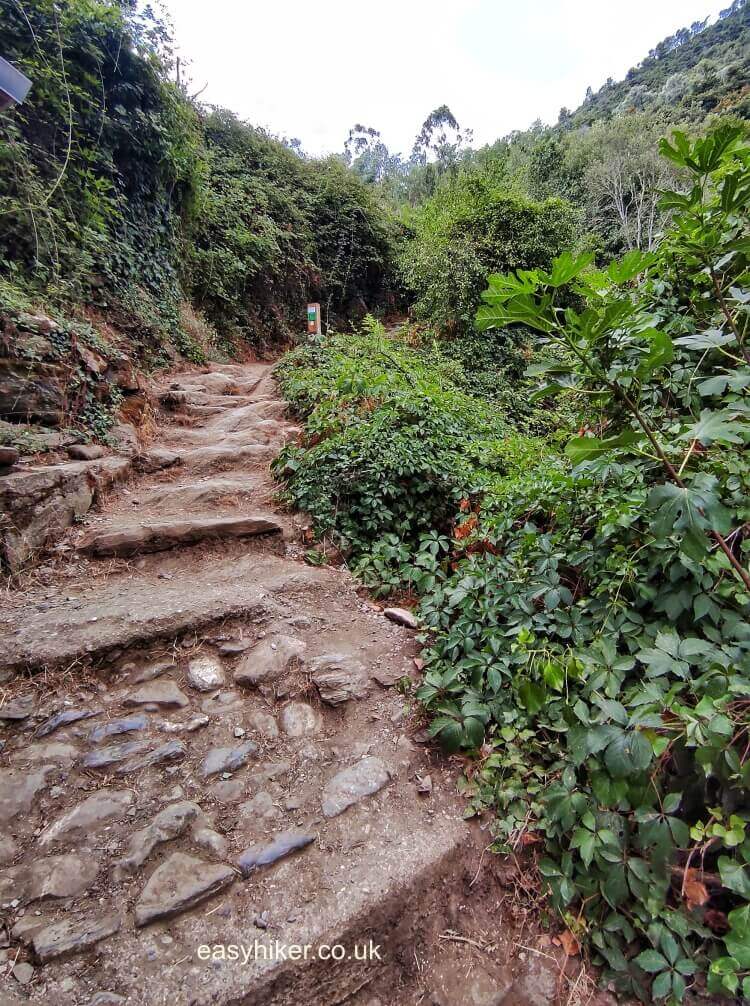
Further upstream, you will also find a small waterfall and after that – about 50 minutes from Rocchetta – the Ponte Cin and the Church of San Bernardo, which mark the entrance to the Barbaira canyon.
For us bunch of happy pensioners, however, …
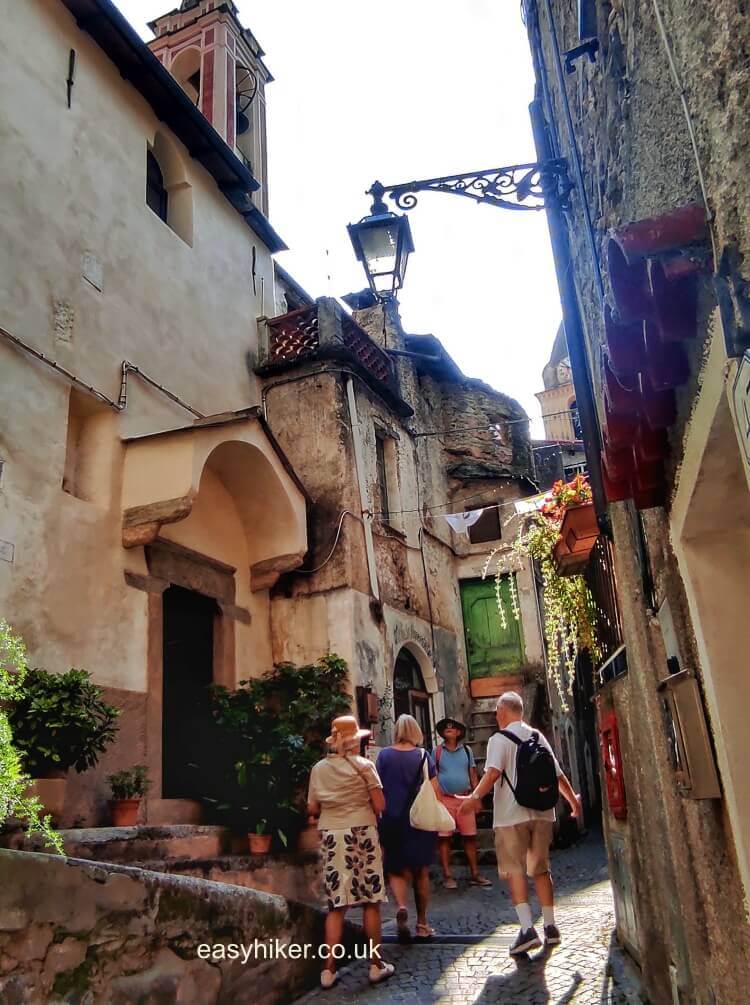
… this was clearly one climb too far, given the circumstances and mid-morning temperatures of nearly 40 degrees. What’s for lunch?
Thanks to Felicia and Vaud Massarsky and David Cohen for introducing us to the charms of Rocchetta and the Nervia valley.


