Close your eyes and think of – no, not of England (for a change) but of Brittany: what do you see?
Let me guess: I suspect that your mental image may very well feature rugged cliffs and rocky coastlines plus, perhaps, a couple of weather-beaten seamen in a small fishing boat, brazing the winds and the angry sea. If you concentrate really hard, you will think that you can almost taste the spray on your lips.
Well, here’s a surprise: most of Brittany is not like that at all. If you fly in to Rennes, the region’s major airport, you will see nothing but yellow-patch farmland on your aerial approach. And two of the province’s major cities – the regional capital as well as the cultural centre of Brittany’s traditional heartland – are located inland, being defined by rivers rather than the sea.
But those rivers are worth your hiking attention just as much as the region’s famously scenic coastline, if for different reasons: they may not quite reach the coast’s level of drama but reward you with their tranquillity and serene composure.
Rennes: Brittany But Not as You Know it
Brittany’s rivers soothe and calm you down rather than agitate your emotions.
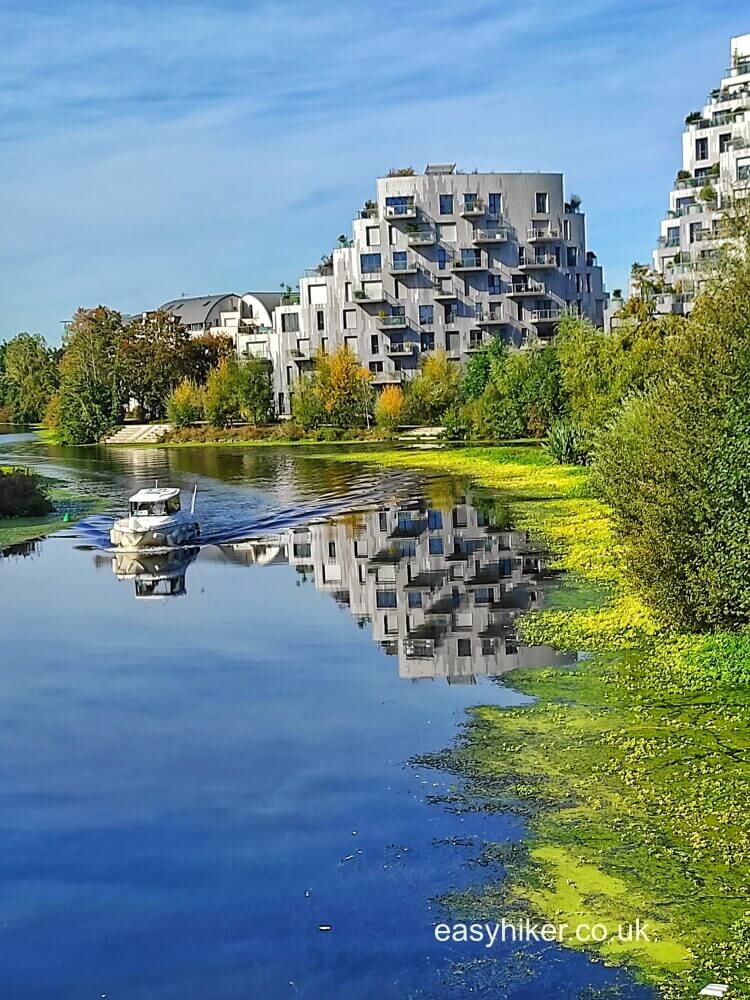
We start our double bill of Breton-flavoured riverwalks with a stroll down the Vilaine in Rennes, the region’s capital. Rennes was established in the 2nd century BC at the exact place where the Vilaine meets the Ille, one of its many tributaries in the region.
The Vilaine is not only the larger of the two rivers but also the one that flows through the modern town centre …
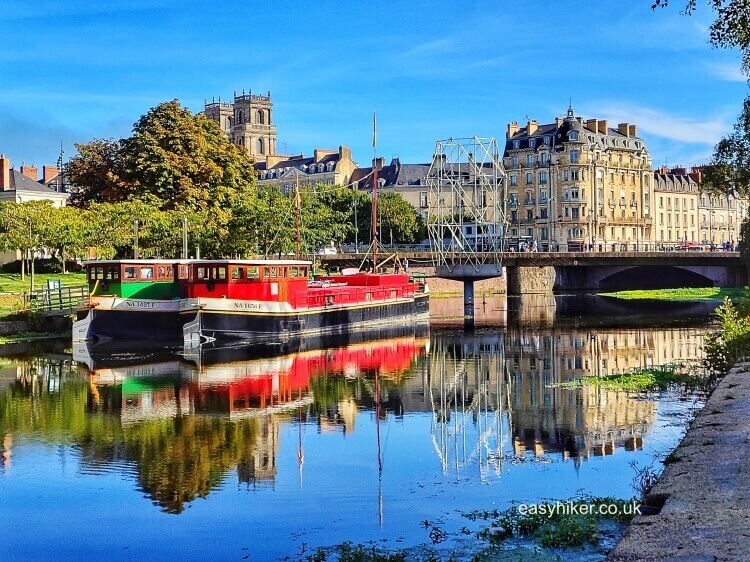
… although the section of the river that runs past the old town has been entirely concreted over.
We will start our walk where the Vilaine re-emerges in the southwestern corner of the historical centre, …
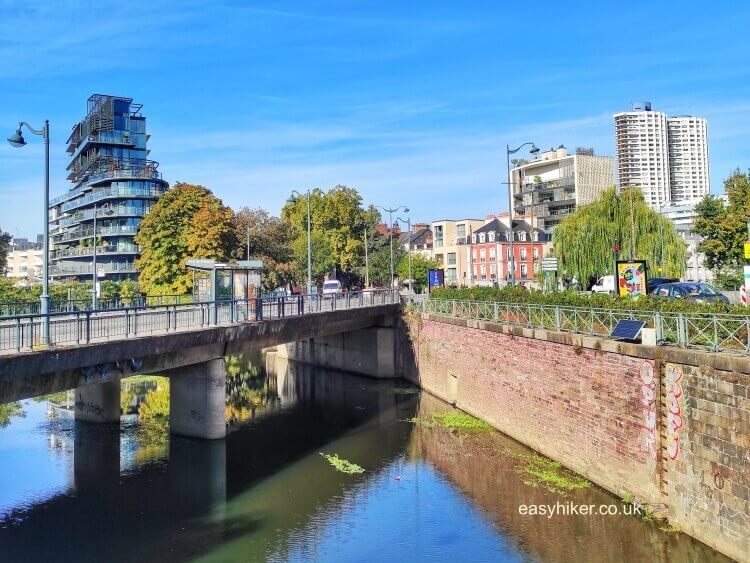
… underneath the 15th century Duchesne Tower, once a key feature of the town’s fortifications.
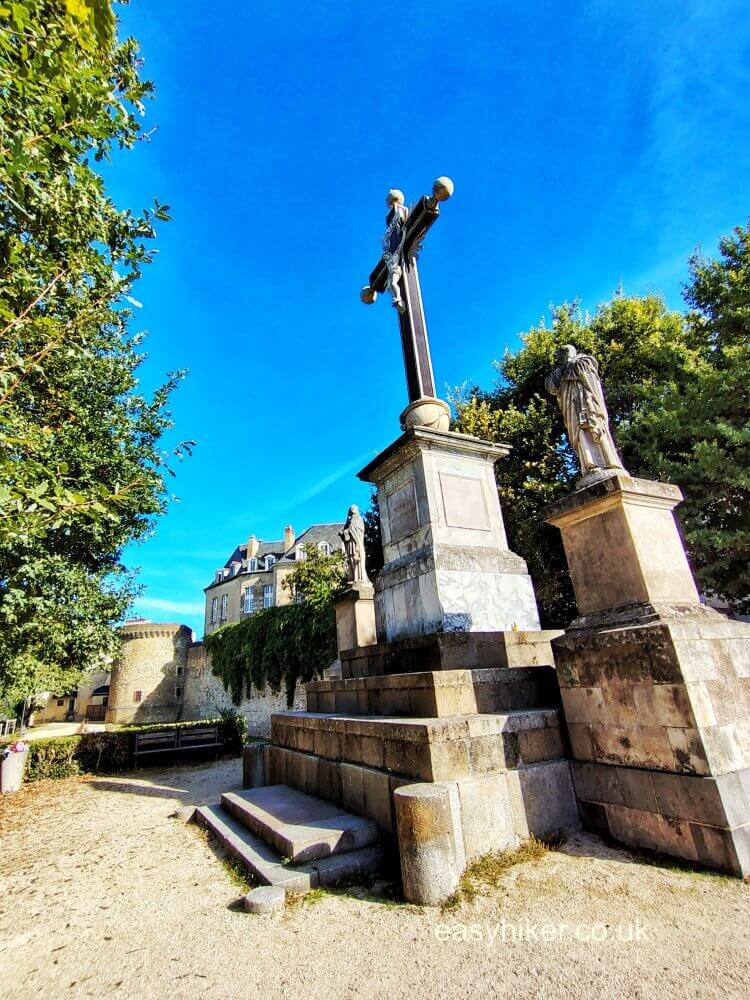
Before you join the river, cast a glance at the town’s third body of water a few steps on your right: this is the Canal d’Ille et Rance, which has been connecting Rennes with the North Atlantic coast (the Saint Malo estuary) since the 1830s.
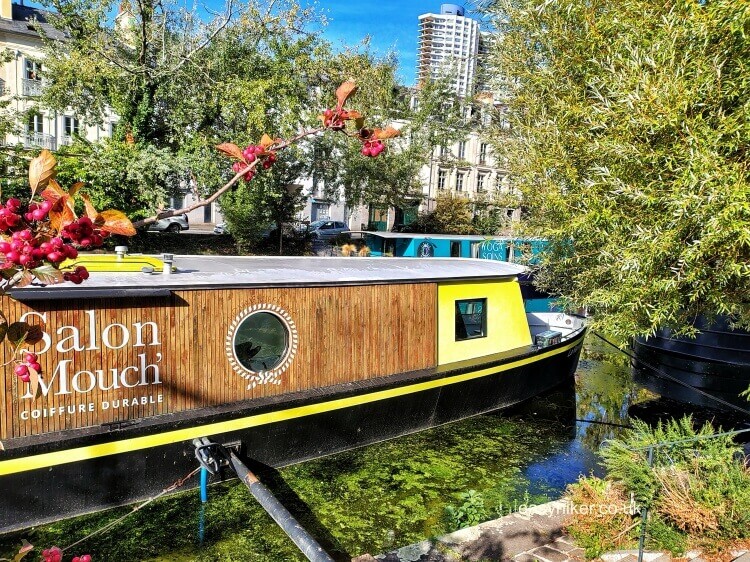
We suggest you follow the course of the Vilaine on the Quai de la Prevalaye (the river on your right hand side). This gives you a better view of the boats that are moored on the right bank and their reflections in the water.
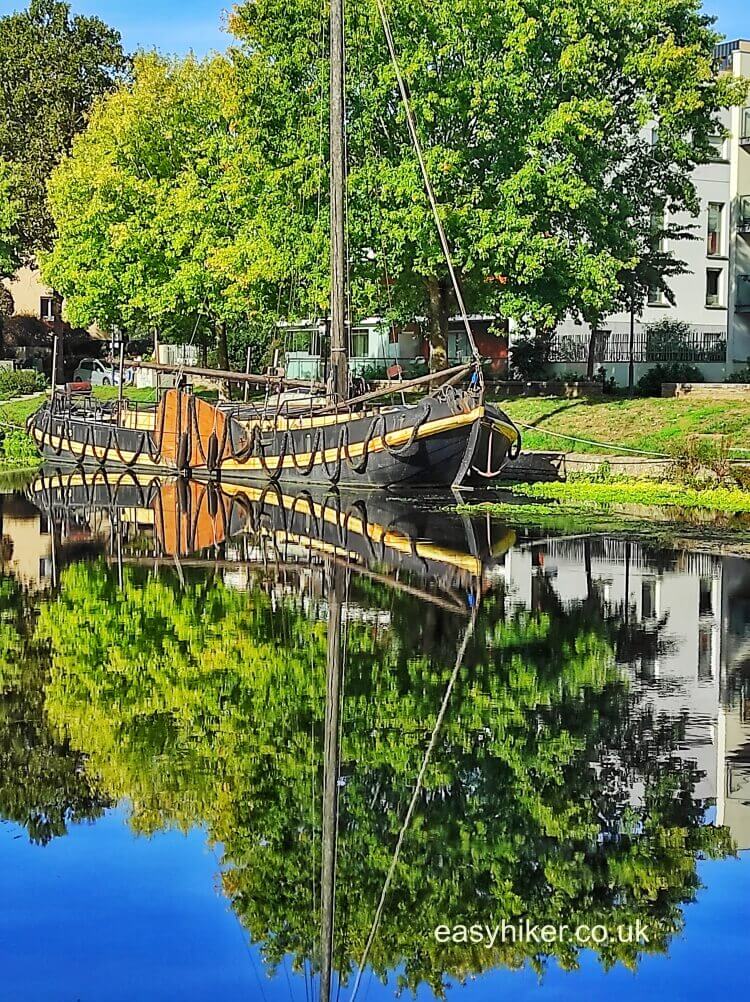
You will notice that the Vilaine flows very slowly (not visibly faster than the canal you have just seen). This is a result of heavy upstream regulation and the general lack of a gradient in this flat part of the country.
Rennes has an elevation of only 30 metres above sea level, and the Vilaine has still about 140 km from here to go to the Atlantic Ocean (near Lorient).
We propose you learn a lesson from the river and take your time. There is no rush. Enjoy the views.
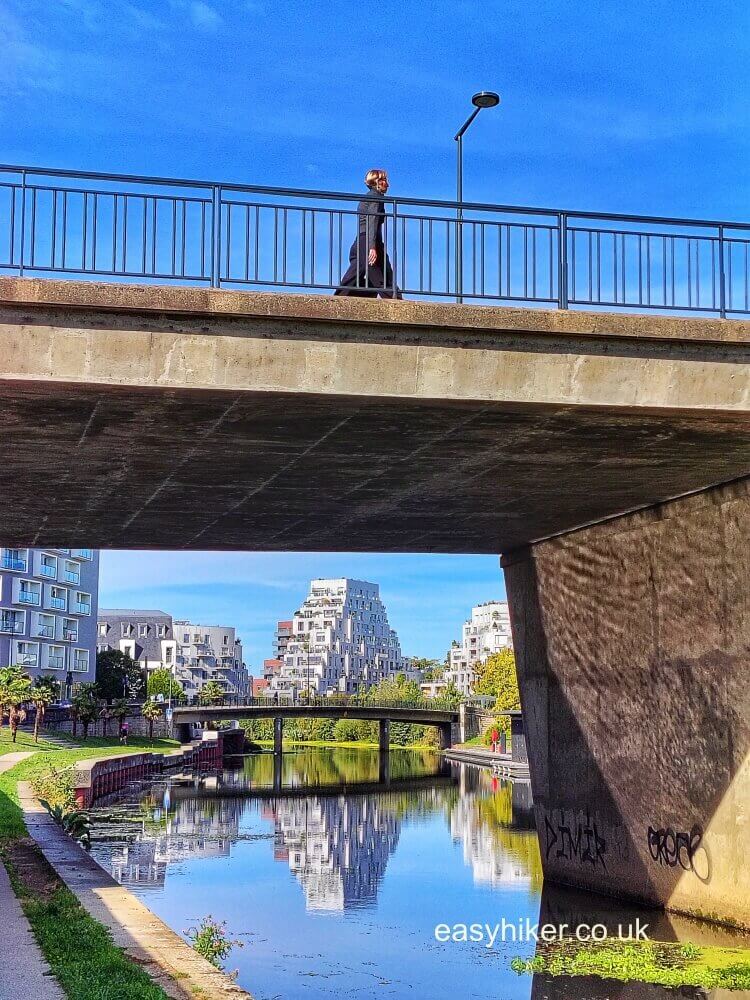
After about 1 km, the path will fork. Take the left lane that leads you up a ramp and across a bridge straight to the entrance of the Jardin de la Confluence.
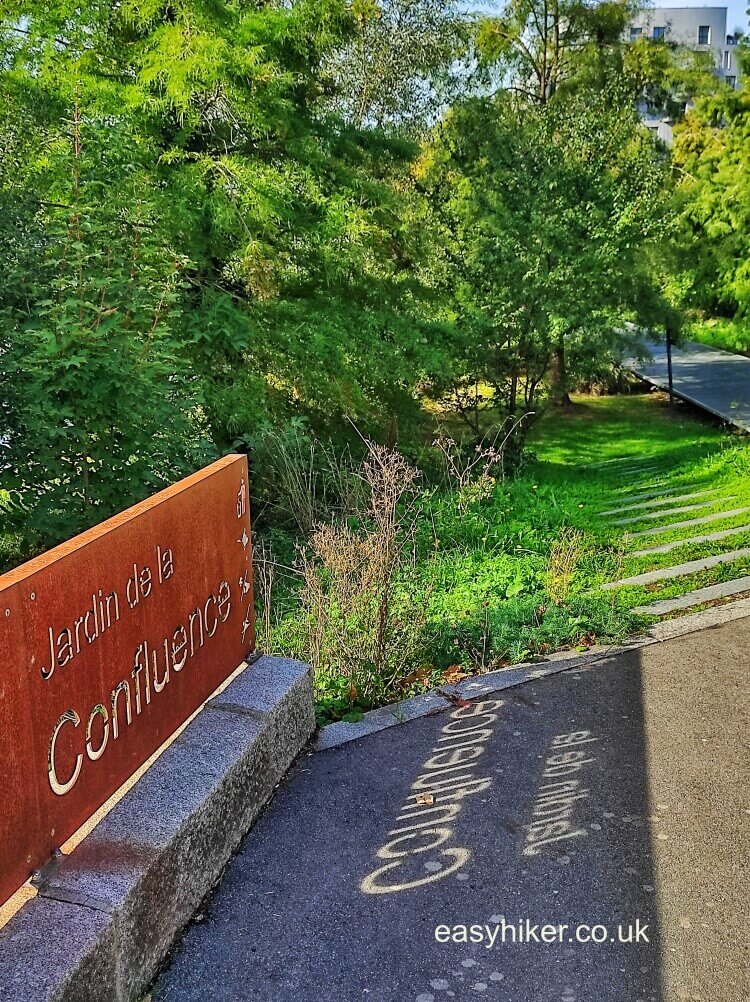
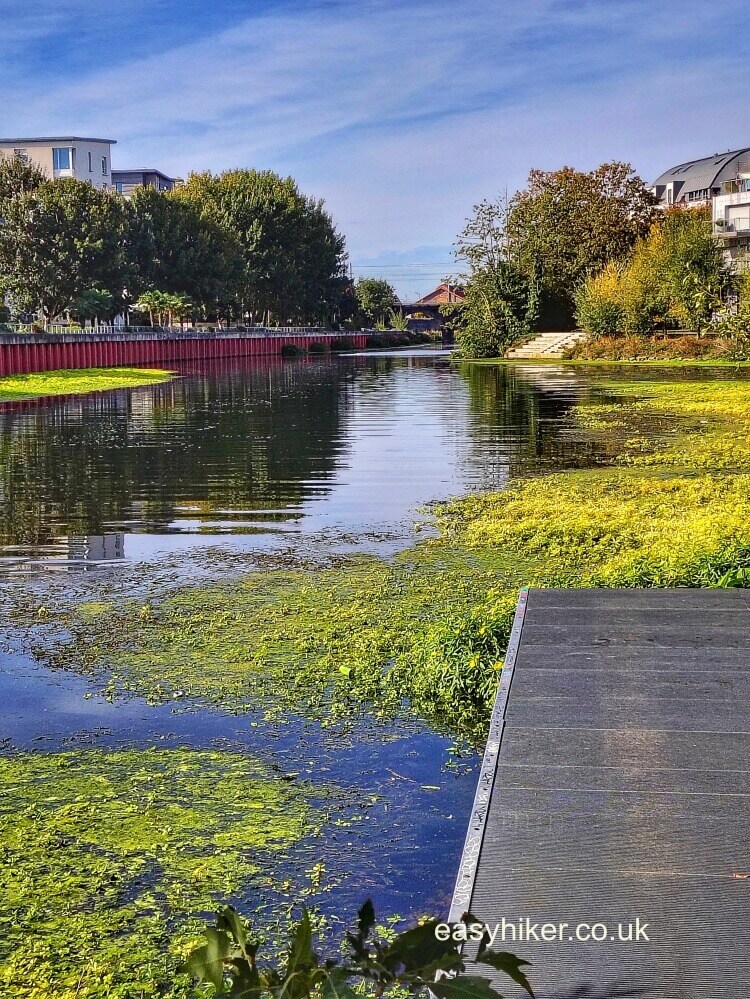
One of the several footpaths that crisscross this garden takes you to the best place from which to observe the actual junction of Ille and Vilaine, but in fact, this is a rather undramatic spectacle of two stagnant ponds merging.
There is not much of a visible flow, and in order to spot the place where exactly the waters of the Ille enter the Vilaine, you need to conduct a little detective work: it is where the algae of the larger river give way a little.
If you want to see more of the Ille, you have to walk back to the street that has led you to the Confluence Garden (called Rue Louis Guilloux) and cross another bridge – the one near the Le Bacchus café theatre – to take a peek …
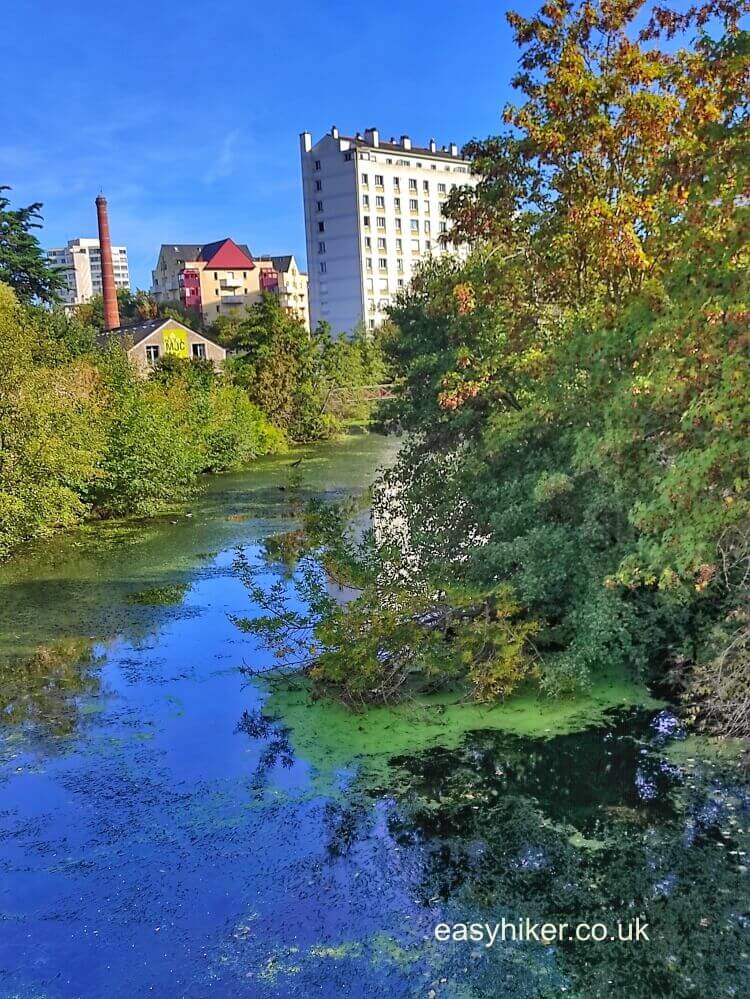
… before returning to the Vilaine for your walk back into town.
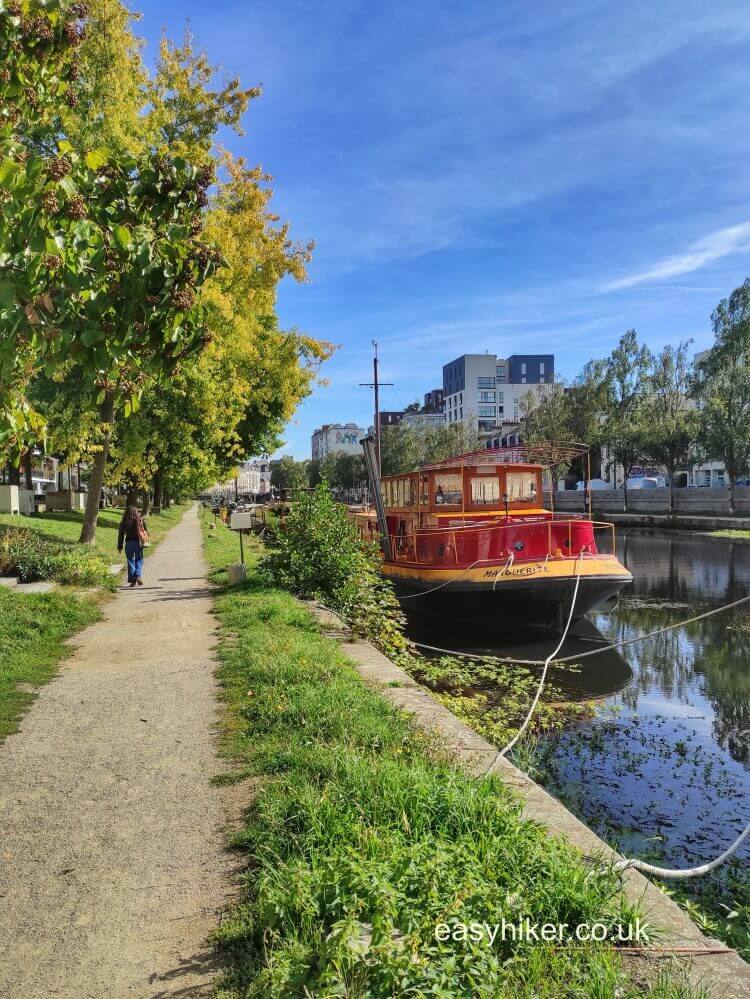
This Vilaine riverwalk is probably best enjoyed as a light hors d’oeuvre before a visit of the Old Town. The historic centre of Rennes between the Canal d’Ille et Rance and Rue Gambetta in the east has many picturesque corners …
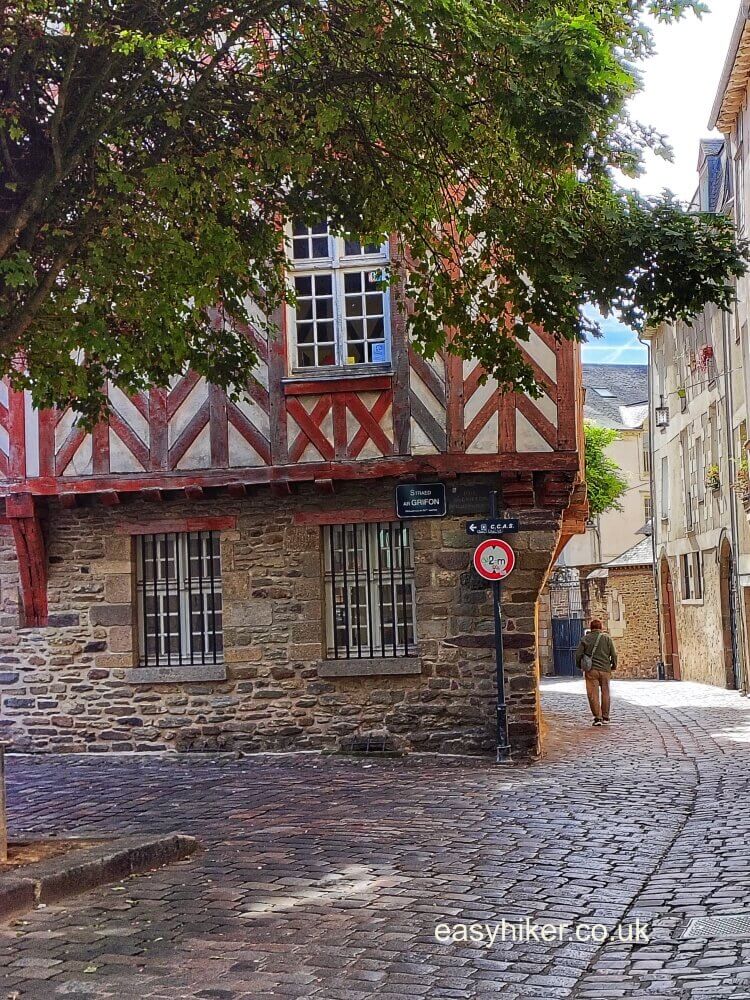
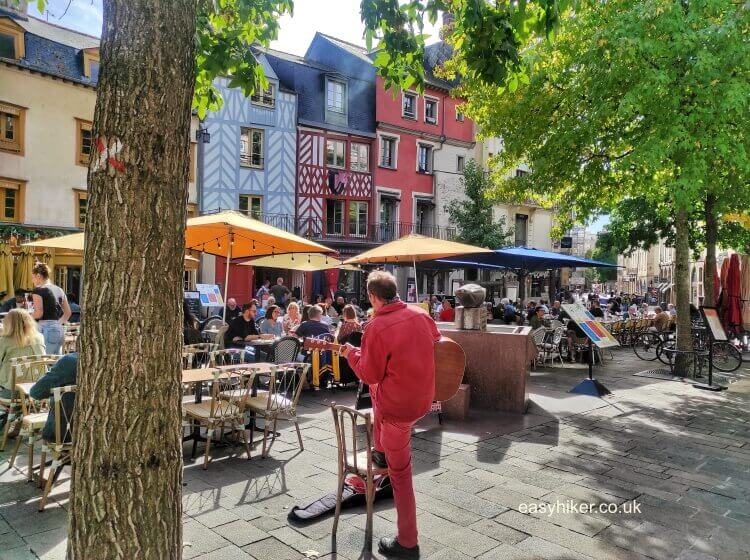
… and is lively throughout, thanks mainly to the nearly 60,000 students in town.
When experiencing Rennes on foot, you will notice the large number of new buildings in most quarters outside of the old town, which range from the imaginative to the banal, often built side-by-side to line the same square.
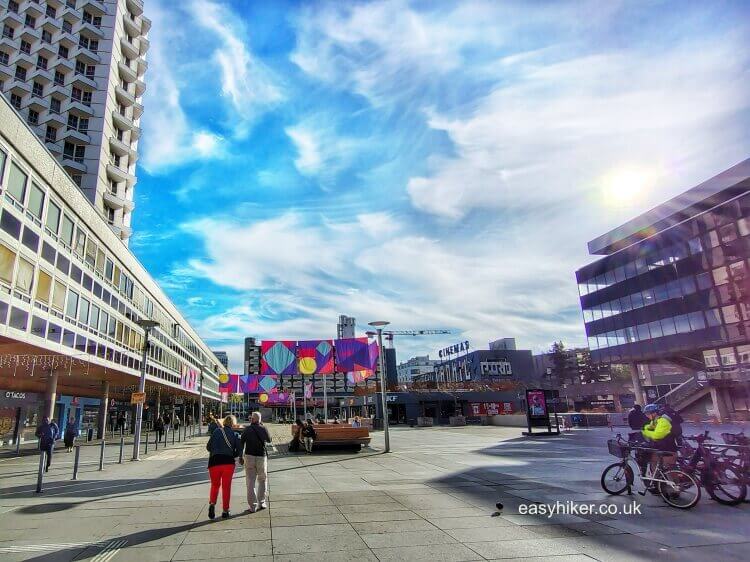
This modern flavour of what is, in fact, a city with a long and distinguished history may come as a surprise and is the product of two factors.
Firstly, the city’s quick and massive increase of population: Rennes is the second fastest growing metropolitan area in France, having gone – within a few post-WWII-decades – from a sleepy provincial backwater to a hub of commerce and industry. In the 1960s, Rennes welcomed one of Peugeot-Citroen’s largest manufacturing sites in France.
Later, it became the home of Orange (France Telecom) and the ubiquitous discount bakery chain La Brioche Dorée. It is still the place where the world’s most read French-language newspaper is published: Ouest-France still prints 600,000 copies a day, which is also more than the figure for any daily in the USA or the UK.
But the large number of modern buildings in town also serves as a reminder of what was lost during heavy WWII bombardments. The entire west of France became a major target for allied bombing campaigns in the later stages of the war.
Brest, St Nazaire and Lorient – all major strongholds of the German navy – were practically flattened, losing between 75 and 95 percent of their urban fabric.
Rennes was targeted due to its importance as a railway and inland shipping hub but suffered only localized damage, and the historic town centre survived almost intact.
Still, you may discover later that the shot you took in Rennes to capture a bit of period atmosphere …
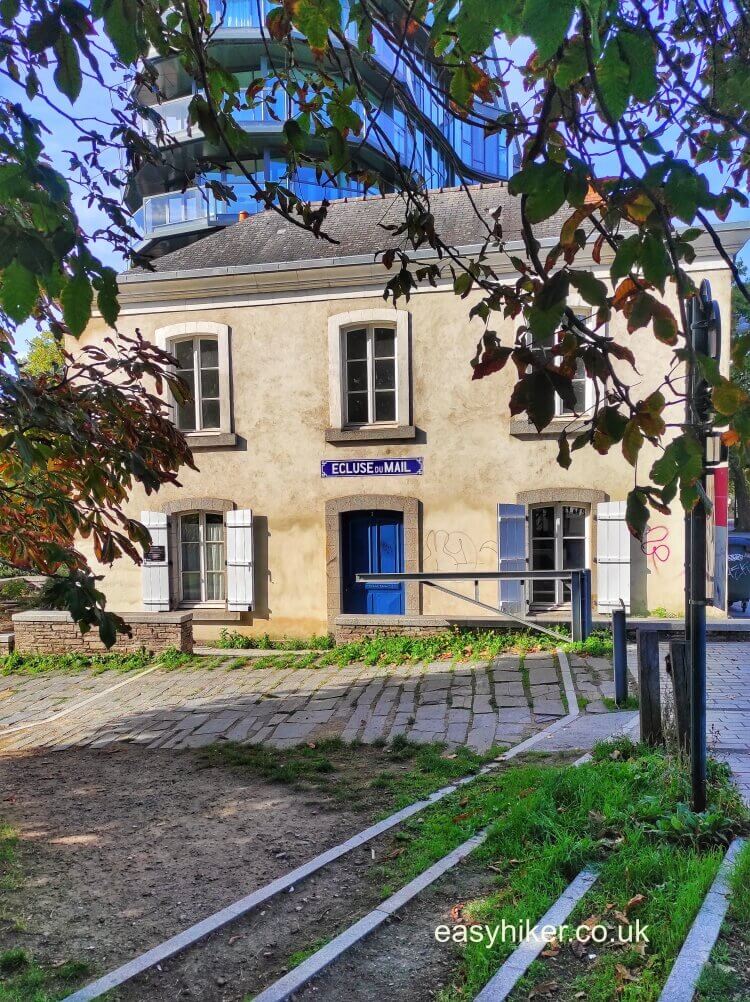
… has, in fact, been photobombed by a modern structure.
That, however, is the essence of the city’s charm – and represents, as one might say, the capital’s take on the region’s leitmotif of revealing a deeper harmony between seemingly opposing notions: the old and the new, farmland and fishermen, swampy wetlands and the open sea. Welcome to Brittany!