Among the Great Italian lakes, we told you last week, Lake Iseo is the odd one out. But do not expect a contrast on a par with, say, Dolomites vs. the rolling hills of Tuscany. After all, these lakes on the foothills of the southern Alps have a great many things in common, in particular their curious mix of O Sole Mio and Wagnerian opera: the sun-drenched idylls – sparkling blue water, lakeside gardens, tropical plants and palm trees – that have been paired with a background of icy bleakness and fogbound peaks.
So if you are looking for something completely different in the Iseo area, today we will show you a local lake that really sticks out.
Discovering Another (Lake-)Side of Iseo
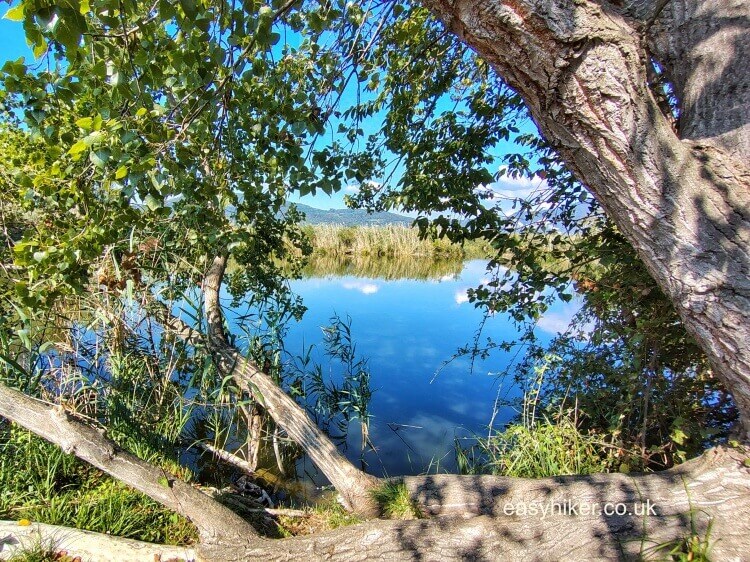
The most obvious distinguishing mark of the other lake-side of Iseo in the heart of the Torbiere del Sebino Nature Reserve is its size. Yes, size matters, particularly if you are planning to complete a hiking loop around a body of water.
The circumference of Lake Iseo is about 60 km, Lake Como and the other Great Lakes clock in around the 150-km mark. Either way, these are projects for a one-week or two-week holiday, and I am not even sure whether you can complete such a loop at all because of the topography (cliffs so steep that there is no room for a trail) and the road traffic (lakeside motorways).
The circumference of the Torbiere lake, by contrast, is a mere 8 km, and you can do that easily in a single day – a single morning if you are in a rush. And yes, you can do it: we checked it ourselves.
Then there is the matter of depth: the northern Italian lakes are all very deep, 150 metres on average but going up (down?) to 500 metres.
By contrast, a majority of adults would be able to stand comfortably in most parts of the Torbiere waters.
This has something to do with the most important difference: the difference between the origins of these lakes. The Great Lakes were formed when giant ice sheets crushed down the mountains and cut valleys into the rock that later filled up with water from melting ice.
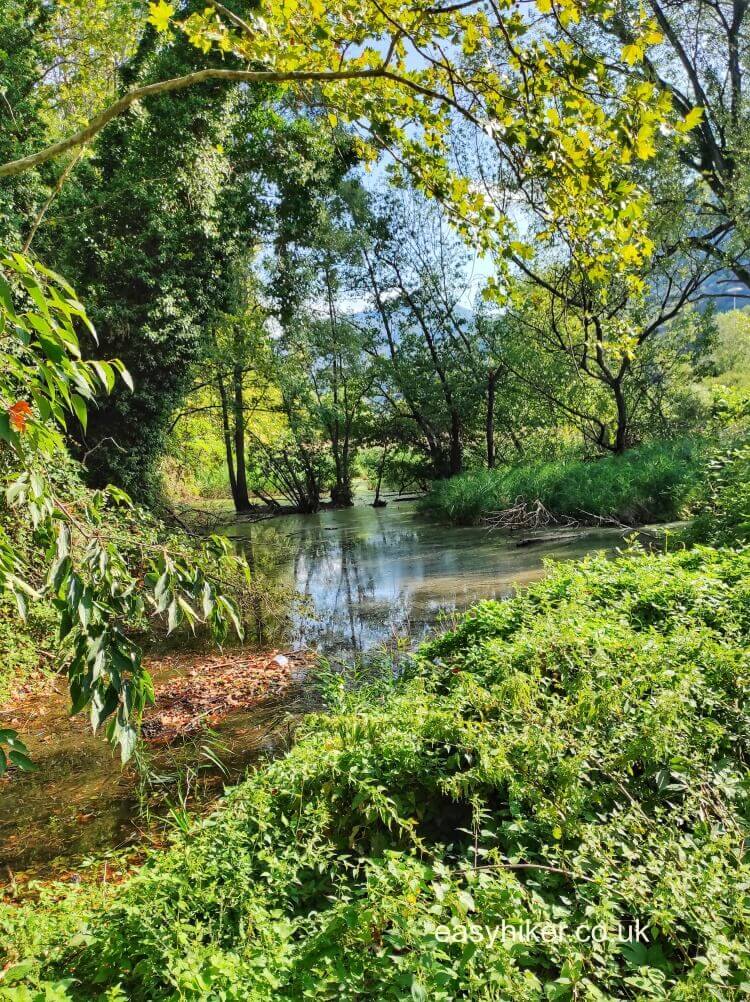
The Torbiere lake was originally a mere bog and only acquired its present-day shape after the systematic excavation of its surface peat, the fuel for all the local industries that only sprung up over the past few centuries.
Essentially, it is a low-lying piece of wetland that had its surface scraped off and was subsequently submerged in water.
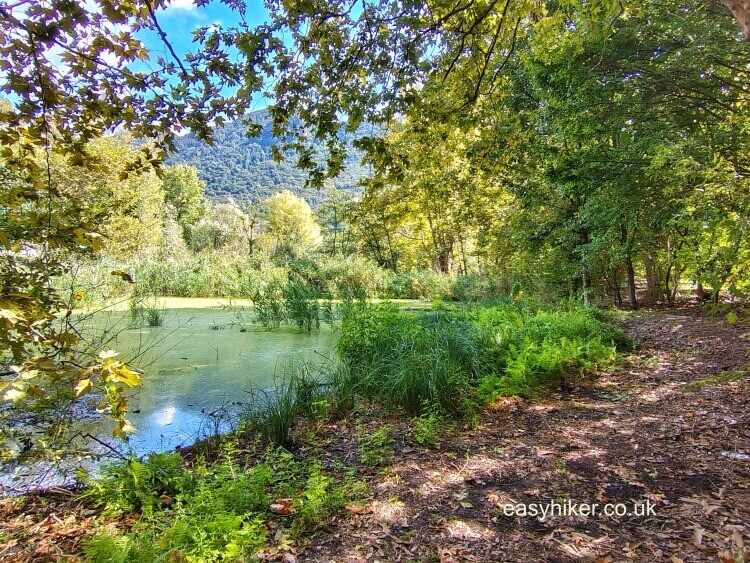
It is, in other words, not a product of the Ice Age but of the Anthropocene, the period when human agency became the major force behind environmental change. And as if to atone for this, the management of the nature reserve has adopted a policy of minimum intervention, like the anti-authoritarian schools of the 60s.
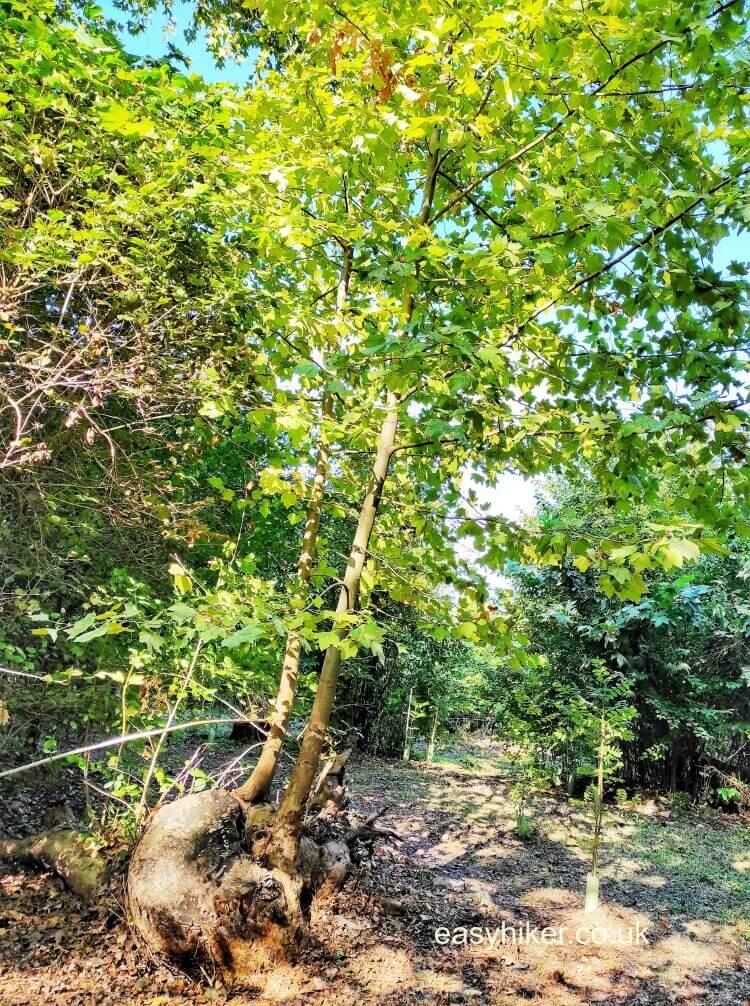
Let nature be unruly: it is not our job to tell it whether it needs to be industrious, bringing back life, …
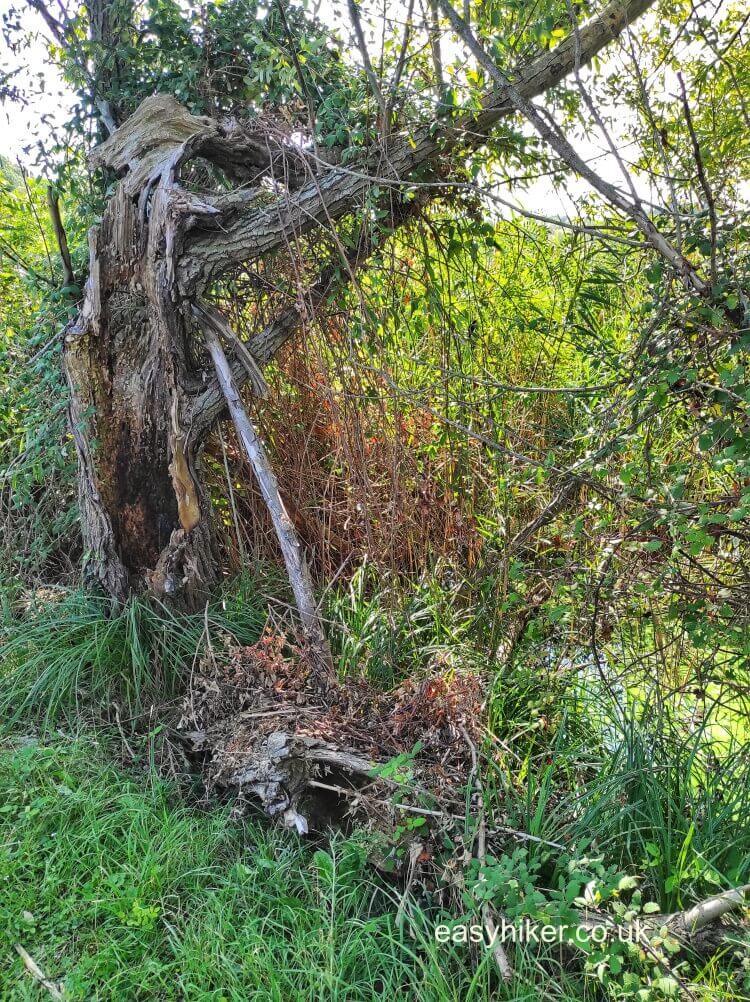
… or to be lazy and let things go to rot.
And if nature opts to be disruptive and to obstruct, so be it. This lakeside bench …
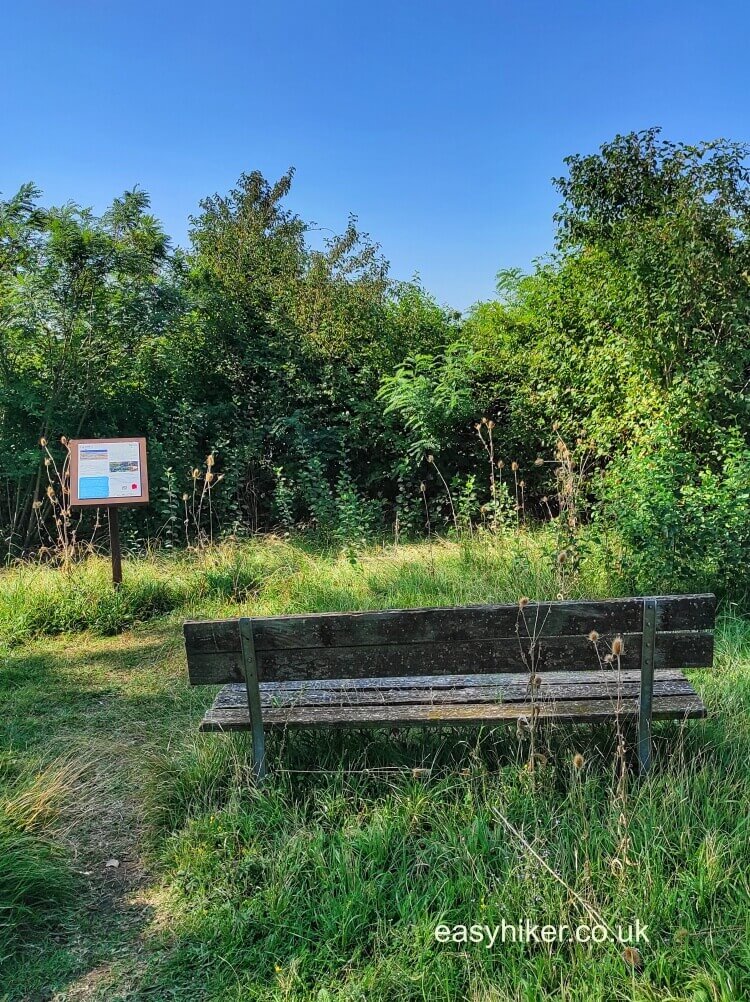
… was clearly intended as a place for a panoramic stopover. But while the lake opposite the bench is still there, the panoramic view is not, and people who have come here to rest will stare at a wall of shrubbery.
More controversially even, one might argue, is the management’s apparent policy to extend this laissez-faire approach to man-made structures inside the reserve.
The boardwalk in the middle of the lake, the nature reserve’s signature feature which is proudly advertised in all Internet presentations, has been “temporarily closed”.
At the point of closure, the management is displaying the following apology, unfortunately written in a language called Circumlocutian, and since I do not know how fluent all of you are in this idiom, I have added a translation into Plain-speak for better understanding.
The closure is necessary to ensure visitor safety due to the structural condition of the path.
We are only doing this for your own good, so don’t complain.
Having been in place for nearly thirty years, it has suffered from wear and tear accumulated over time.
As bridges go, this one is of a fairly recent vintage, but even new bridges need maintenance or, every once in a while, repairs. We, meanwhile, could not and cannot be bothered.
The main structural issues concern the stability of the boardwalks and bank erosion, caused by wave action, the activity of burrowing animal species, and weather events.
Waves – in a lake! Animals doing what animals do! Weather!!! In other words: nothing that could have been foreseen, so don’t blame us.
Rather poignantly, even the fence that has been erected to block the entrance is in need of some maintenance, appearing to indicate that the closure happened some time ago and that its classification as “temporary” is another example for the use of … never mind.
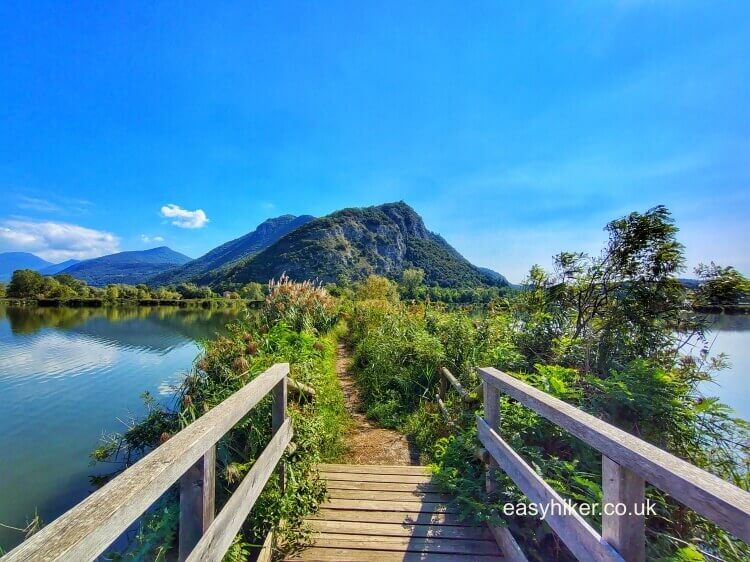
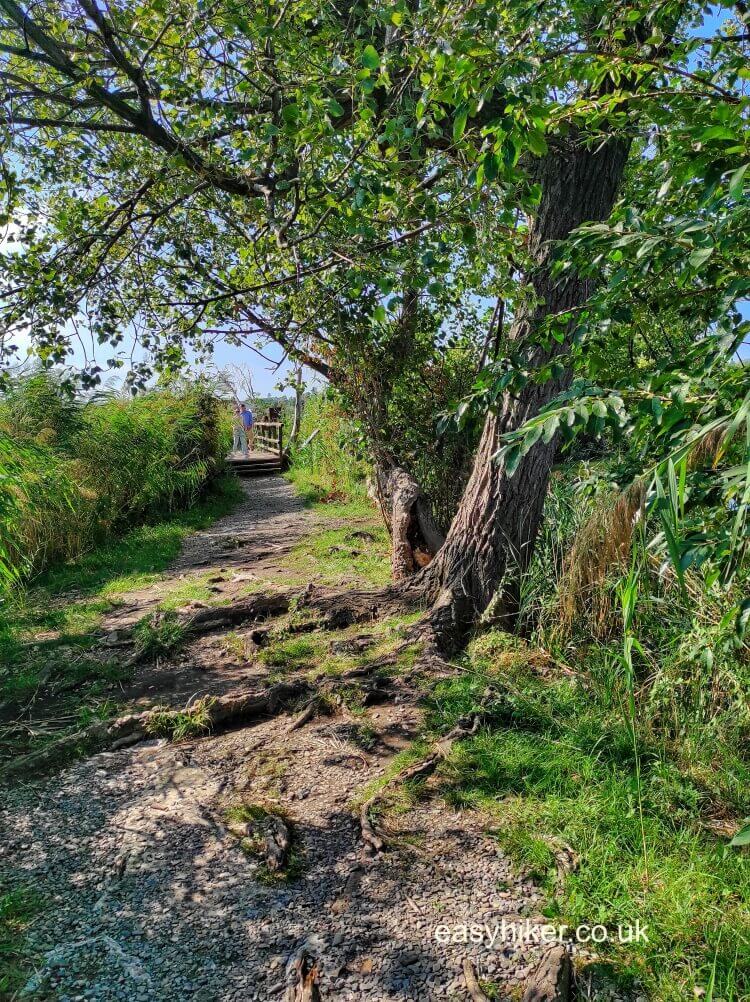
Let us rather follow the advice of the famous philosopher Bing Crosby and Ac-Cent-Tchu-Ate the Positive by pointing out that the causeway which now only half-connects the two shores is still worth a look, defiantly braving the waves, the wind and the burrowing badgers …
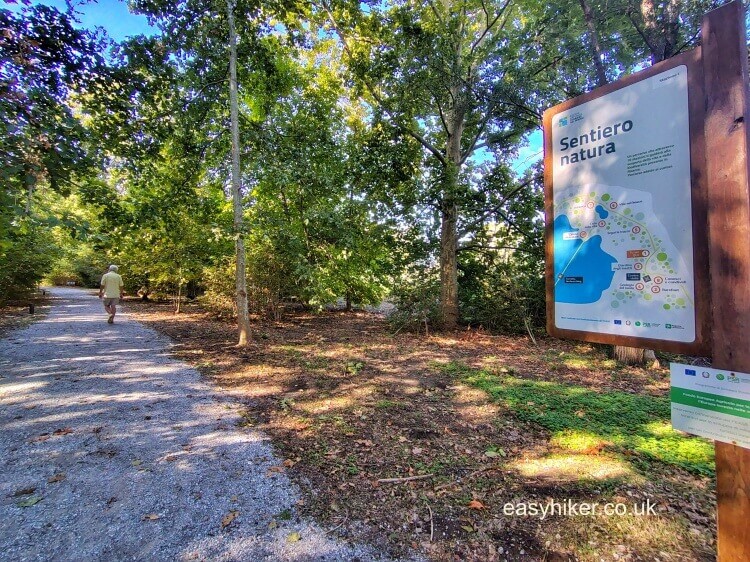
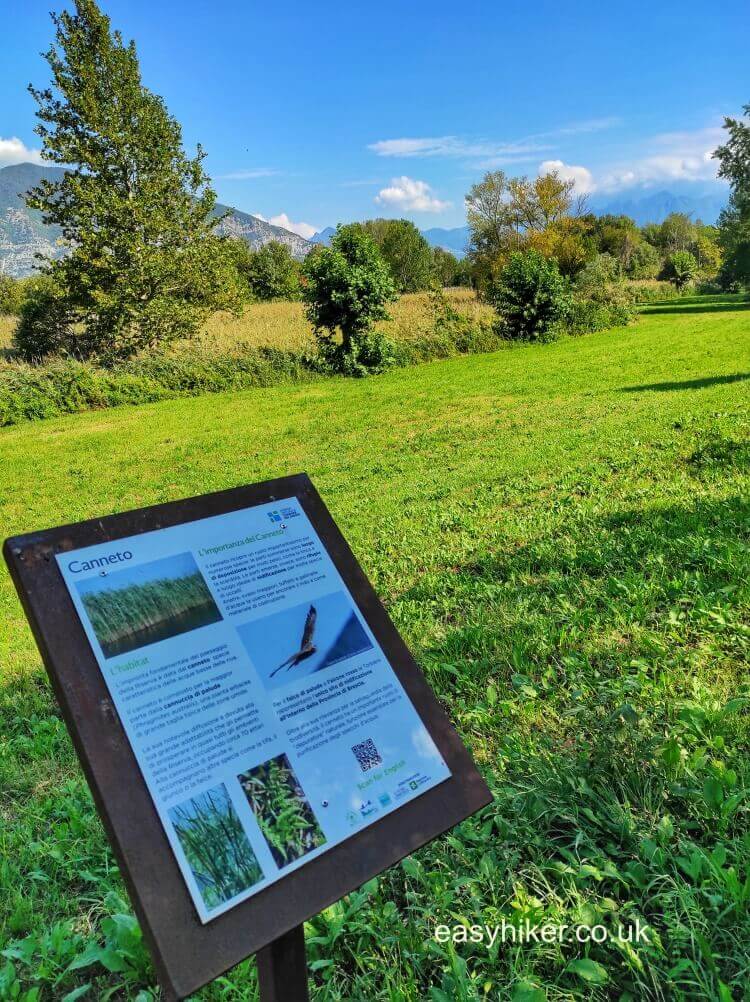
… and that there are still many things to see and to do elsewhere around the reserve. There are information panels that tell you many interesting things about this other lake side of Iseo and its history, …
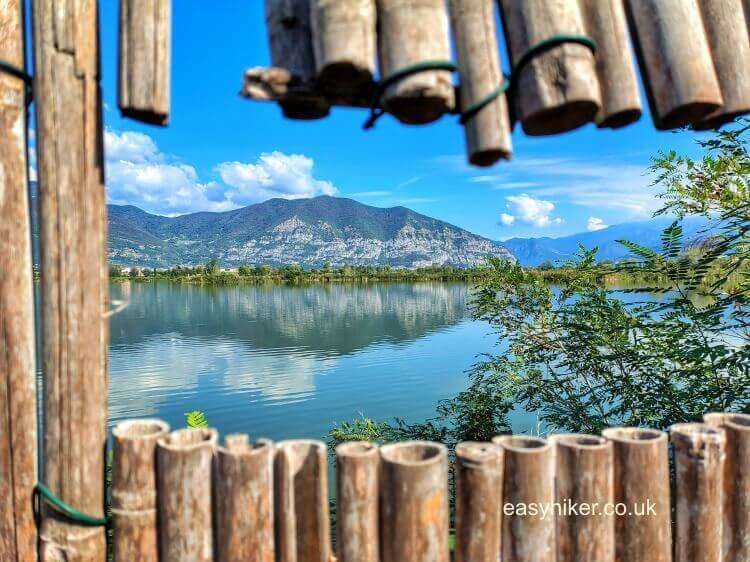
… places for birdwatching, …
… while the statue that you meet not far from the visitors’ centre is not primarily there to delight and to amuse …
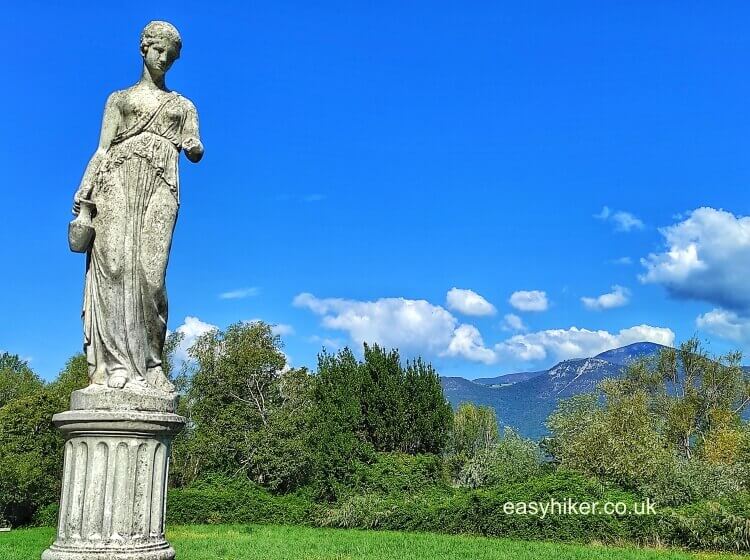
… but to attract attention to a restaurant a few steps away.
This restaurant is the Trattoria Fontani, a place we warmly recommend, having eaten better there than in any of the lakeside restaurants that we sampled (the area is not as non-touristy as much of the literature would make you believe).
On the Sunday we went there, the parking lot was full of cars from the entire area (coming from as far as Brescia) while the senior chef himself was preparing all the meals on a giant outdoors barbecue. Delicious!
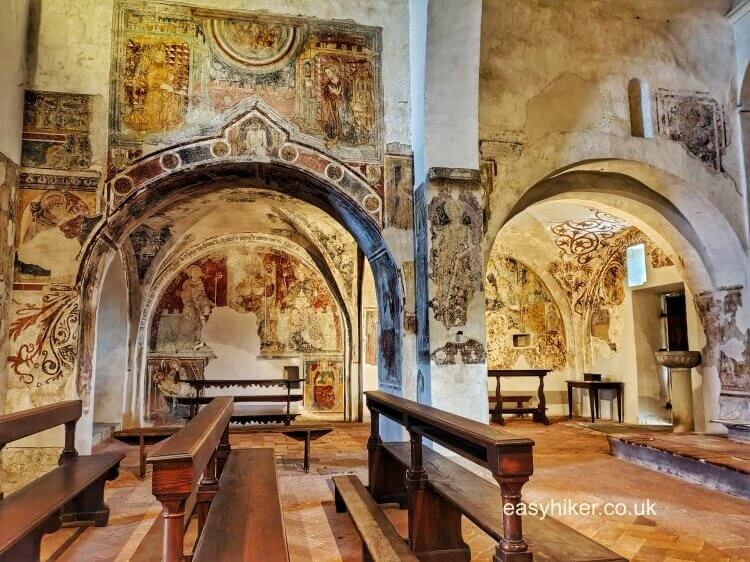
Looking back, even the closure of the nature reserve’s boardwalk turned out to be a good thing, a blessing in disguise. Since we could not complete the northern half-circuit as we had planned, we had to improvise an a la carte hiking menu – without which we would not have seen the monastery on the reserves’ southeastern edge, an absolute highlight of our walk.
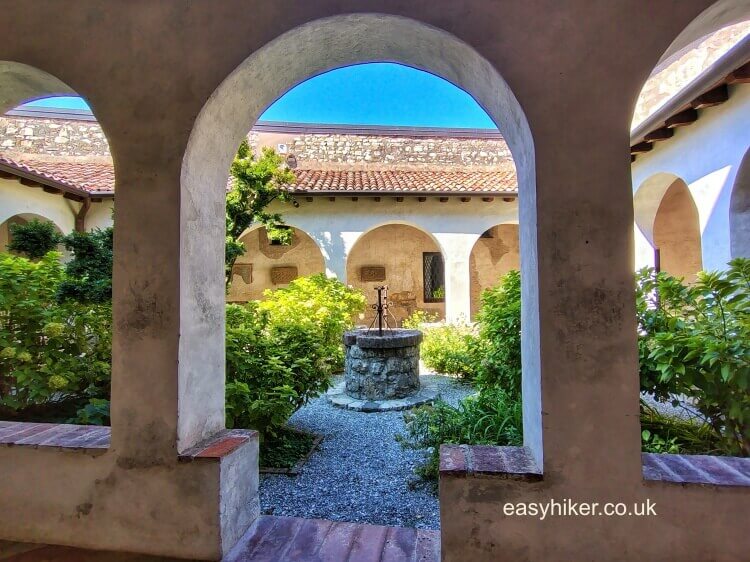
The San Pietro Monastery of Lamosa was established in the late 1100s at the height of the Cluniac movement. Cluniac monks were responsible for the creation of the medieval monastery as we know it: an oasis of learning, civility and charity in a harsh world, the seed from which modern European civilisation would eventually grow. 200 of these monasteries still exist, the majority in France and 12 in Italy of which Lamosa is one of the best preserved.
The Torbiere de Sentino charges visitors an entrance fee of three euros (you can purchase tickets at designated dispensers or at the Visitor Centre), and although there is no fence around a reserve of many unguarded entrances, we advise you to pay your fee as – essentially – a voluntary contribution to the upkeep of the place. Maybe they will even use it to repair the bridge one day. You never know. In the meantime, there is much else to discover and enjoy.
You can easily reach the Visitor Centre – at the main entrance of the Nature Reserve – on foot from Iseo. (Distance from the town centre: approx. 1 km.) Look for Via Gorzoni and follow this street all the way – past the CONAD supermarket – to the local football stadium. Cross the parking lot to reach the busy Via per Rovato and look for the path on the far side of the zebra crossing that leads straight to the Torbiere.


