Do you like to uncover mysteries? To search for hidden truths? To scratch the veneer of appearances to see what has so carefully been concealed from you? f the answer to that is yes, then the Polish city of Wroclaw is the perfect destination for you. Over there, in the German-Polish borderlands, you will find many things that are not what they seem.
First, the issue of Wroclaw’s Old Town, a term that is commonly used as a shorthand expression for the ring of historic buildings around the Old City Hall.
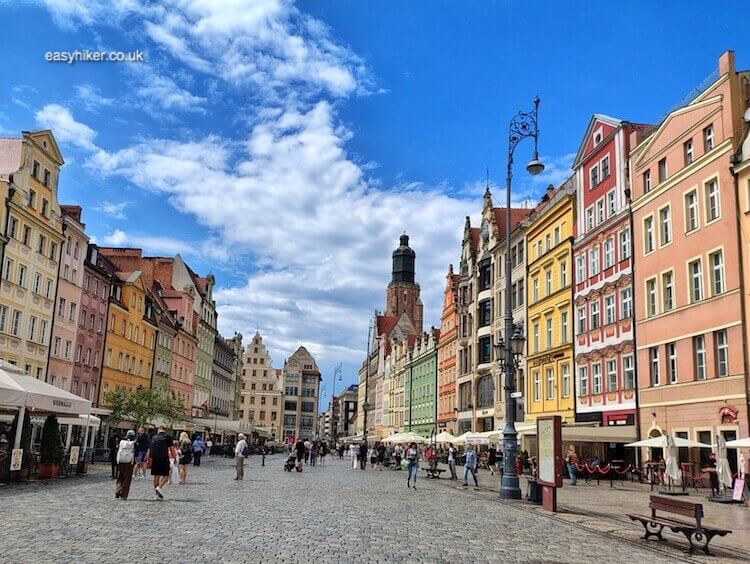
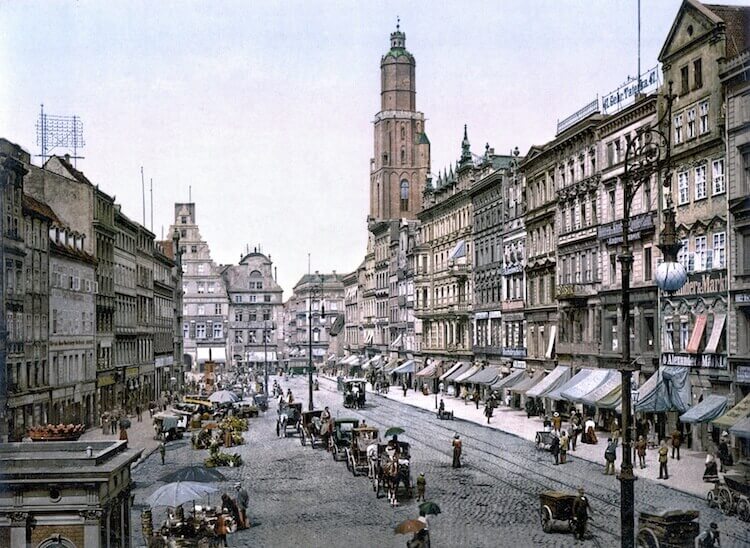
This square at the heart of the Old Town, the Rynek or “Market”, is indeed rather old. It goes back to the 13th century and has preserved its late medieval character, because relatively little of it was irreparably damaged in WWII.
But “old”, of course, is a relative term, and the square must have felt rather modern at the turn of the last century when it still served as the city’s busy traffic hub.
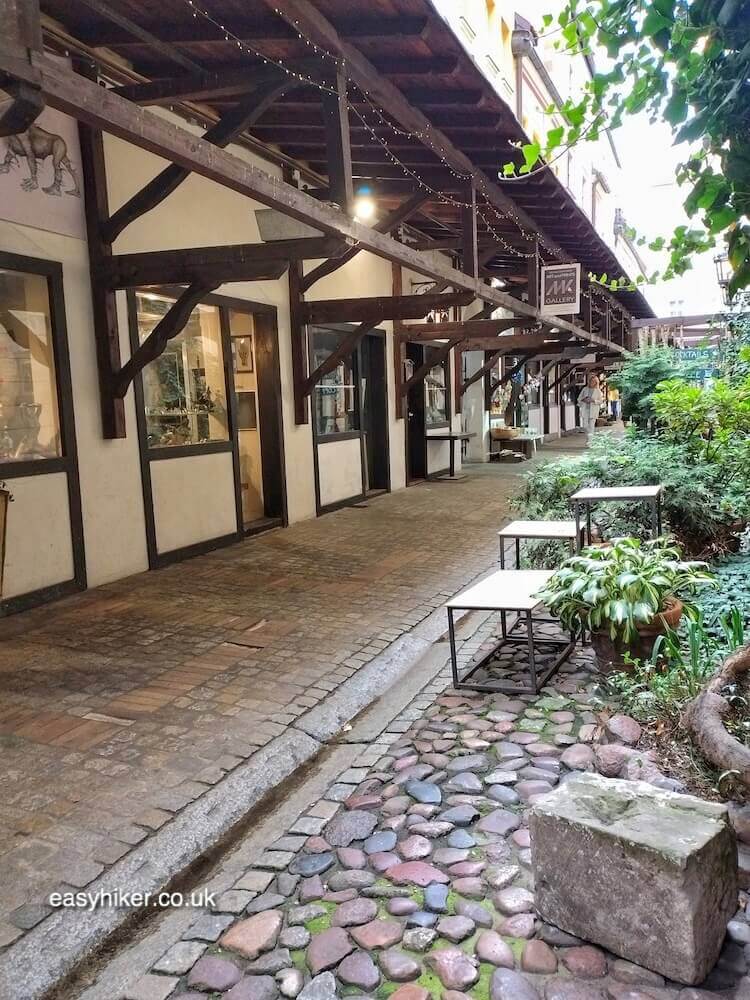
The Rynek is surrounded on all sides by equally old, quaint and scenic little side streets like the Jatki, the city’s old meat market. This narrow lane is today lined by arts and craft shops, providing exactly what visitors would expect a historic old town to deliver.
But this quarter is not what is usually implied by the term “Old Town”: the city’s historic core. To find that, we have to walk half a mile north from the Rynek across the river Odra to a group of islands in the stream.
Cross the Piaskowy Bridge to enter Wyspa Piasek, the busiest and largest of the five islands in this knee bend of the river.
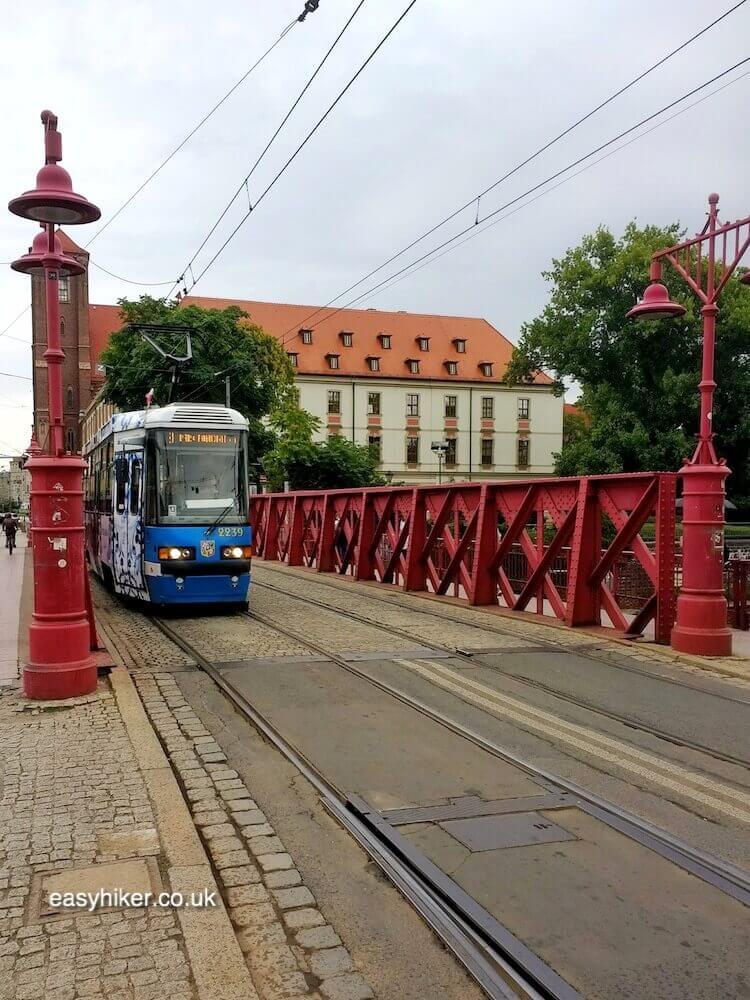
The Sand Island may be the largest in this small river archipelago, but it is certainly not large. You will realize this once you have reached the far side of St Mary on the Sand, the church that overlooks the Piaskowy Bridge, because from the churchyard in the back, you can already see the two bridges that connect the Sand Island with its two neighbouring isles.
You can now continue straight to cross over to the Mill Island (Wyspa Mlinska) via the Mill Bridge and then use the footbridge on your left to enter Malt Island …
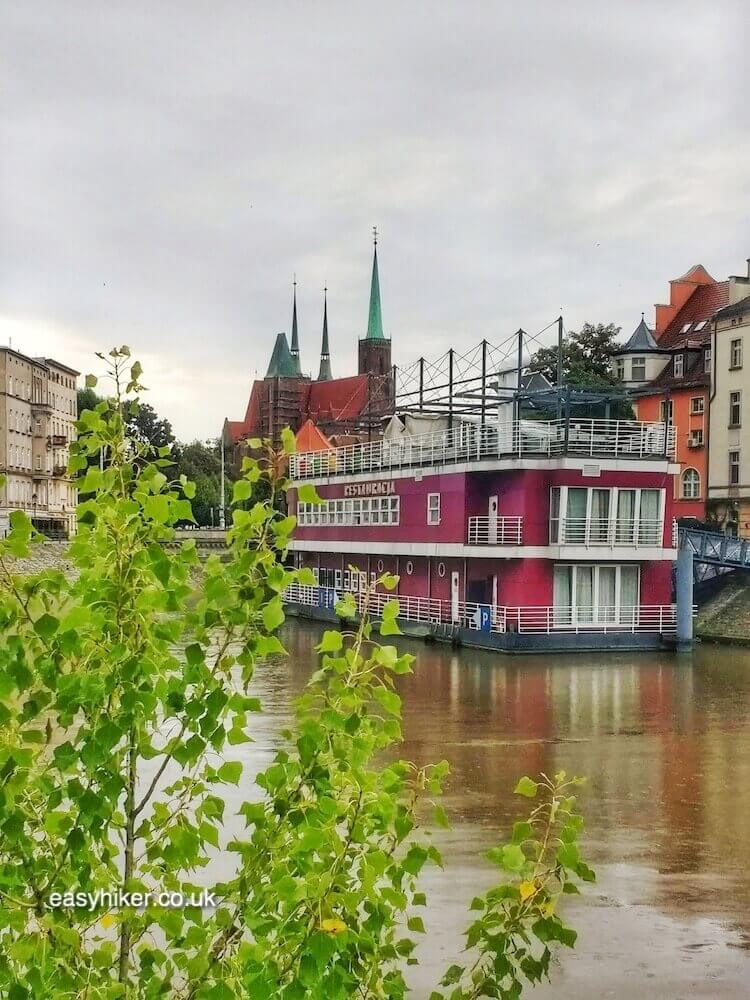
… before crossing another bridge to explore the smallest island in the archipelago, Wyspa Bielarska, once the home of a large booze factory which was destroyed in WWII, since when it has stood largely empty.
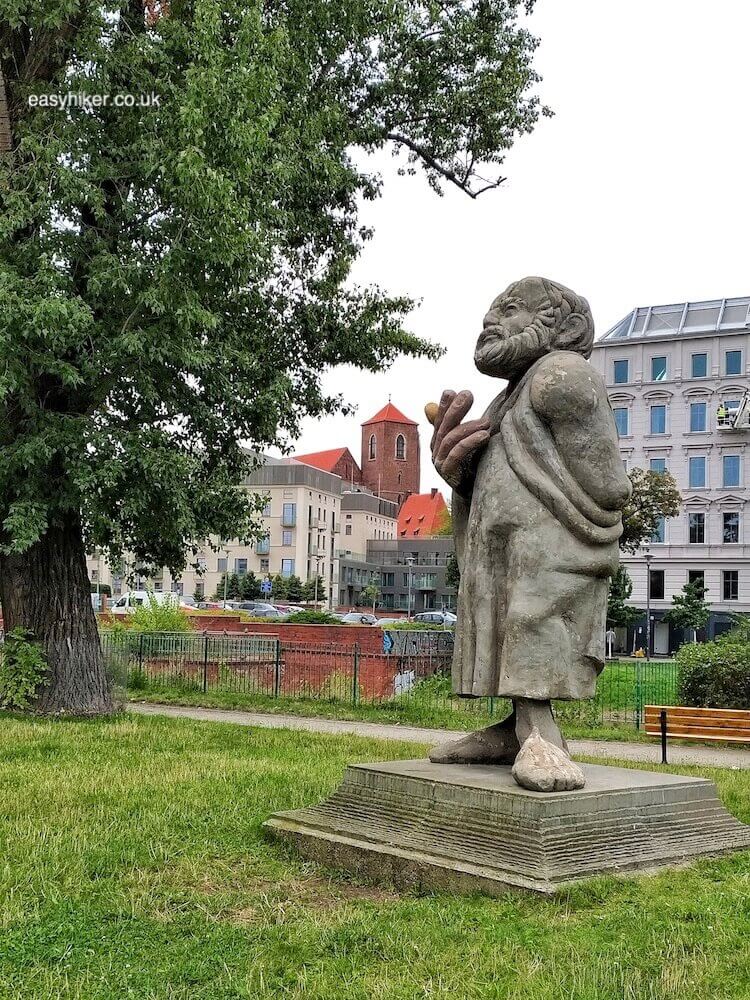
But in fact, it is not really important whether you follow any kind of strategy to navigate the archipelago’s labyrinth of bridges and interconnected walkways or whether you just go where your fancy takes you.
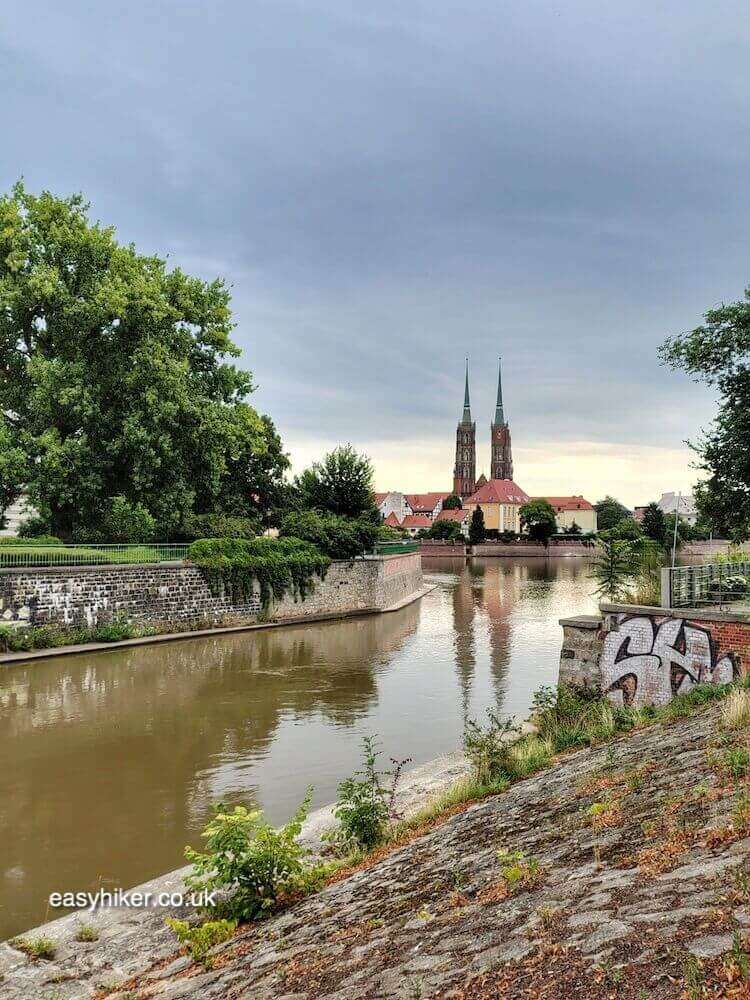
All of this, after all, is no more than a visual prelude and only intended to familiarize you with the aquatic atmosphere of the area. Just make sure you return to Mill Island, no. 2 on the list, and the eastern extension of Mill Bridge so you can cross over to Ostrow Tumski, the 1000-year-old nucleus of the modern city.
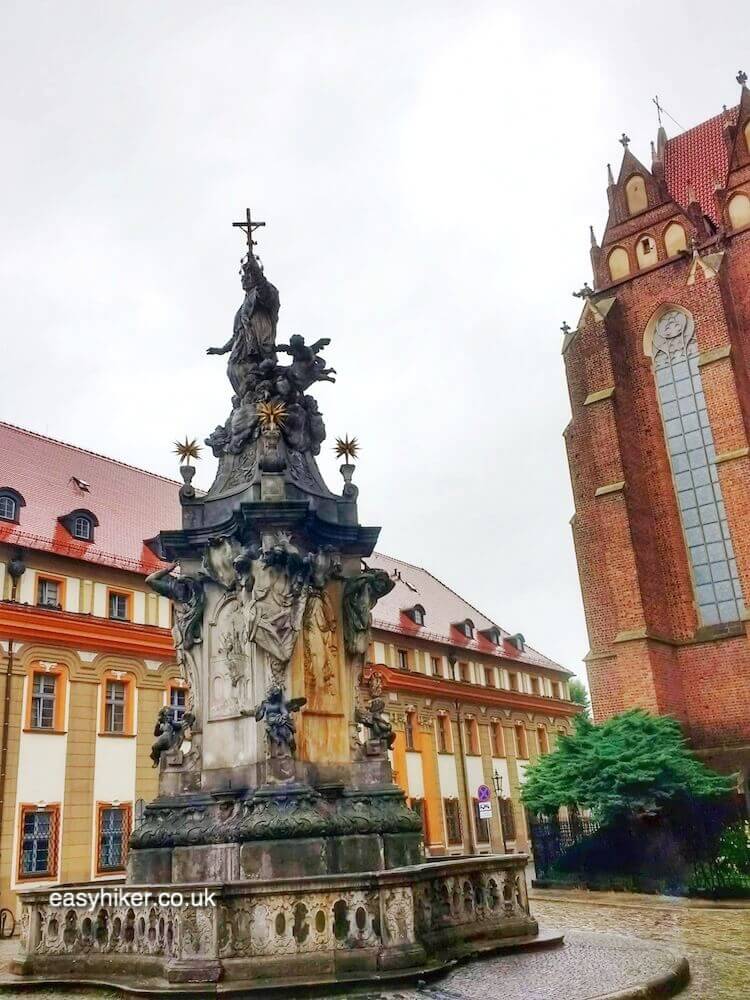
Ostrow Tumski was settled in the 10th century and quickly grew to house more than 1,000 people, which was when the first church of the new town was built – exactly in the place where the 13th century Cathedral stands today, surrounded by the only streets in Europe that are still lit by gaslight.
Every day at dusk, a man in a cape walks around to light up the lanterns by hand. In fact, all of Ostrow Tumski can make you feel as if time had stood still for at least 200 years.
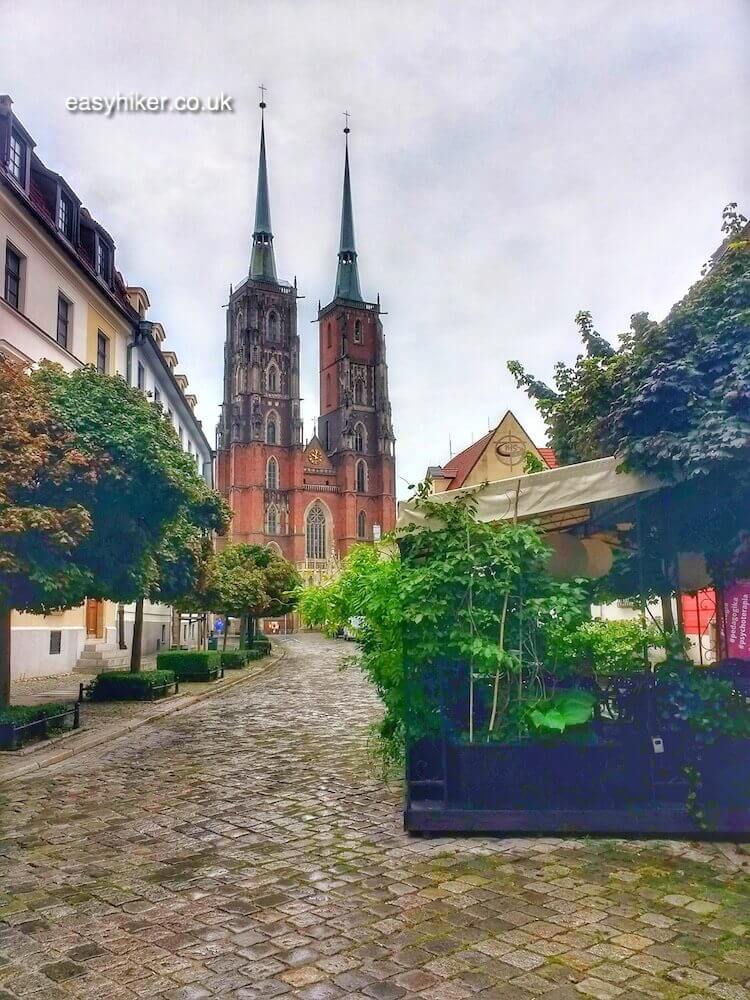
Ostrow Tumski means Cathedral Island, but whether it still qualifies as an island depends on your definition of the term. The Ostrow was once entirely surrounded by various branches of the Odra River, but this ring was broken in the 19th century when an artificial causeway was created to link Cathedral Island with the city centre.
But human intervention went further still, not only stripping the historic core of the city of its undisputed island status but adding another disputable issue when – in the 16th century – several smaller side branches of the Odra and various tributaries were integrated into a complex moat system of left bank (inner city) fortifications.
This is what the town looked like when these works were finished, …
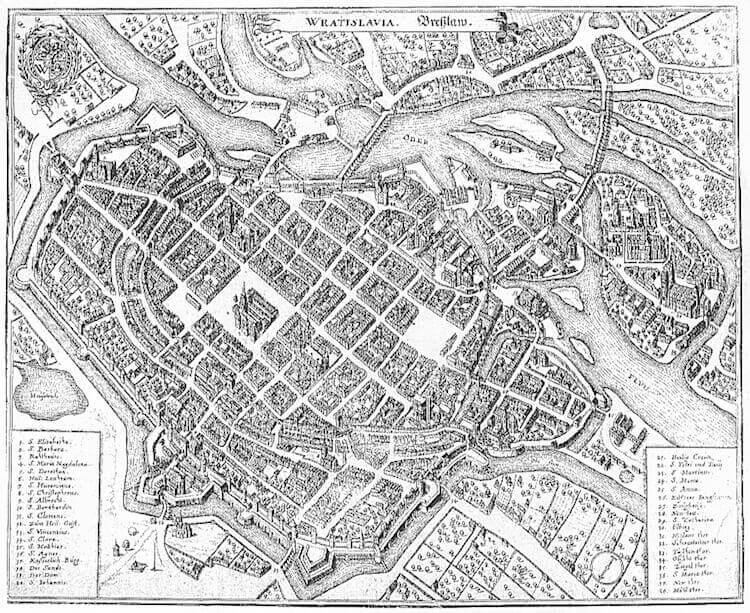
… and for the next 300 years, central Wroclaw practically stood on an island: river to the north and moat to the south. Until, in the 19th century, this moat was partly covered and artfully landscaped.
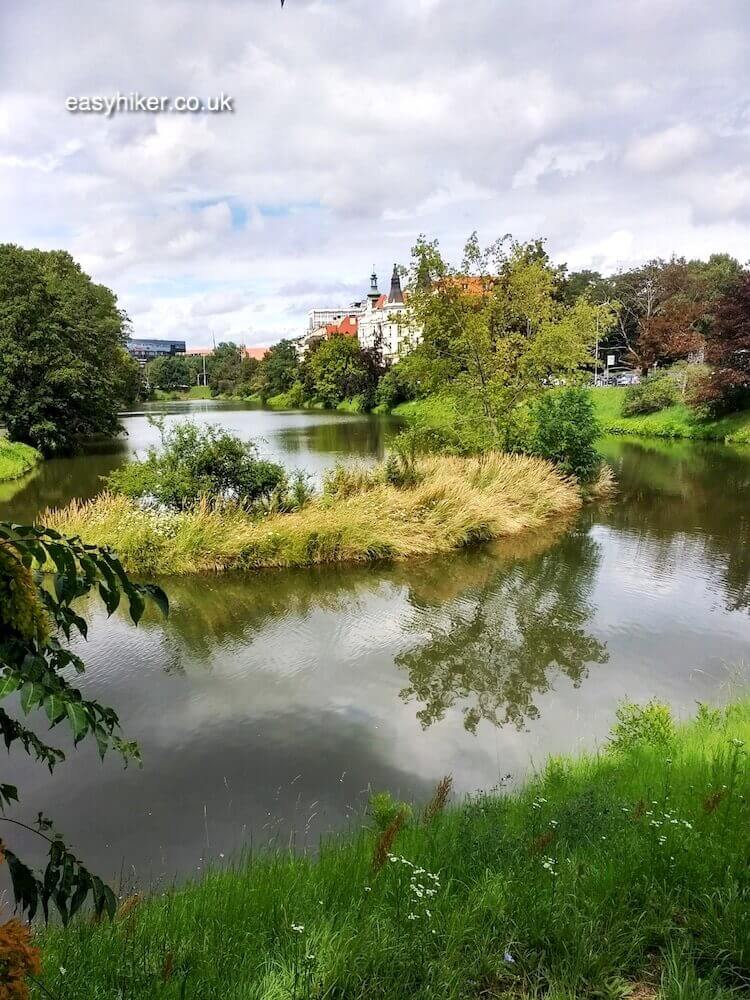
So how many islands have we got today? Wroclaw clearly contains more truths than one.
This insight serves as the perfect preparation for the biggest controversy of all: the one which involves the name of the city itself or, rather, the way in which its renaming has been handled.
For 700 years, what is Wroclaw today was called Breslau and mainly inhabited by Germans, and where, in the last 200 years before WWII, almost everybody’s mother tongue was German.
Today, Wroclaw is part of Poland, but its architecture still speaks with a heavy German accent: there is more than a whiff of the unmistakable Teutonic oomph.
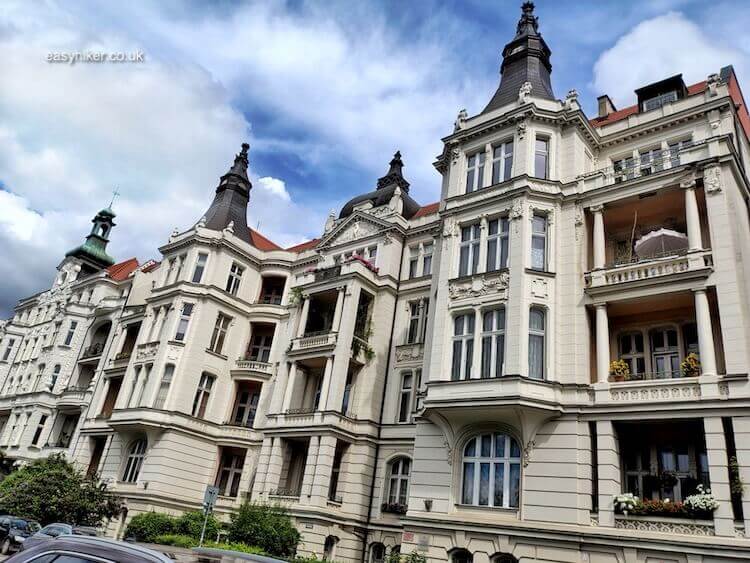
In 1945, practically all surviving inhabitants of Breslau were expelled to make way for Poles who had themselves been expelled from eastern Poland after the Russians had decided to annex the entire region. It is said that these Poles arrived to find the Germans’ beds still warm, and kitchens with food on the table.
In today’s Wroclaw, you have to dig deep to find traces of the city’s German history. Information panels on historic buildings list the artists who constructed or decorated them and some former famous aristocrats or businessmen who once lived there. All of them have German names, but you get no hints why this may be so.
Enlarge the historic photo at the start of the post, and you will not find a single Polish name on any of the businesses around the Rynek – or the Breslauer Ring as it was called then.
Many internationally famous people came from Breslau – including 11 Nobel Prize laureates and Manfred von Richthofen, the Red Baron – but you will not find a single memorial for any of them in the modern town.
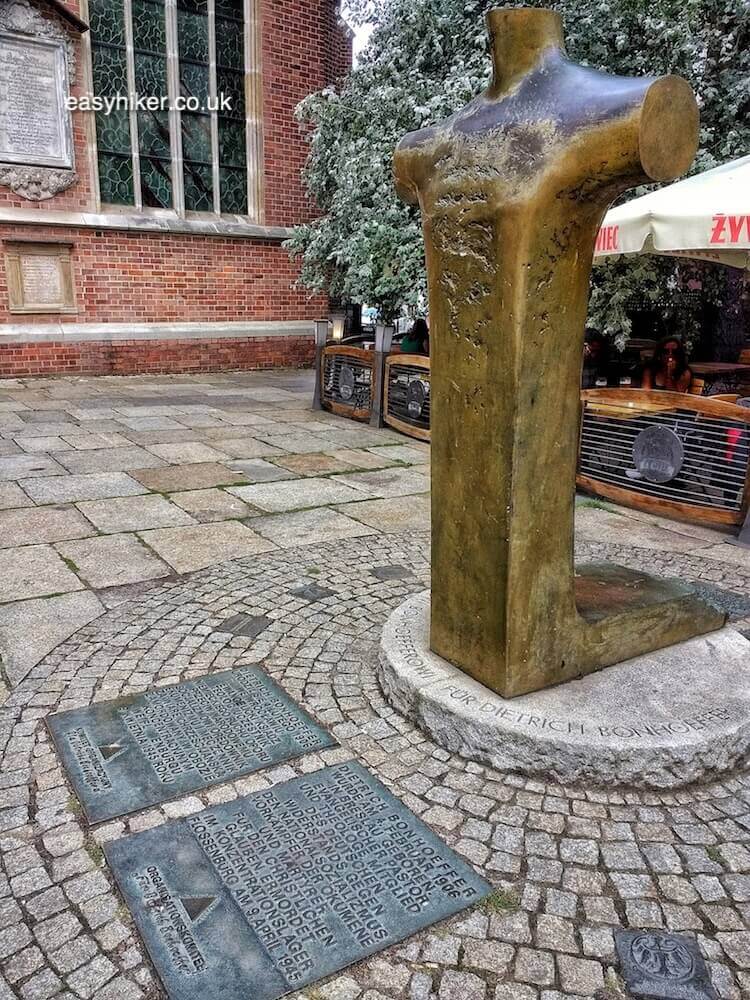
The only German Breslauer who has been honoured with a statue is Dietrich Bonhoeffer, a protestant cleric who was executed by the Nazis for his role in the Christian resistance to their regime.
Having said that, few Germans return from a trip to Wroclaw today with stories about anti-German resentment. Modern Poles are not hostile to their western neighbours . But they remain wary, and understandably so. A wolf who has turned vegetarian is still a wolf, and you cannot blame the herbivores for keeping a nervous eye on developments.
The Breslau expulsion may have been brutal but must be seen in its historic context. Germany had attacked Poland in order to destroy the lives, livelihoods, crops and villages of people in a neighbouring country who had given them no reason for taking offence.
Germany’s war aim, as we now know for certain, was to kill half the Polish population and to keep the rest permanently enslaved as serfs for a ruling class of Germanic settlers. This was an act of ruthless banditry, brutal even by the standards of the region and certainly worse than what the Mongol invaders did in the 13th century.
Much of that only got out after the war, but after 5 years of occupation, the Poles must have had an idea of what the Germans had in store for them. All in all, the residents of Wroclaw – not to speak of their countrymen further to the west – got off lightly.
The point is that fact are facts, but what people call “truth” often depends on their point of view. As much as what you see always depends on the angle you have chosen.
So with that out of the way, there is only one more problem to solve. What is that little guy doing at the foot of the historic Most Tumski Bridge?
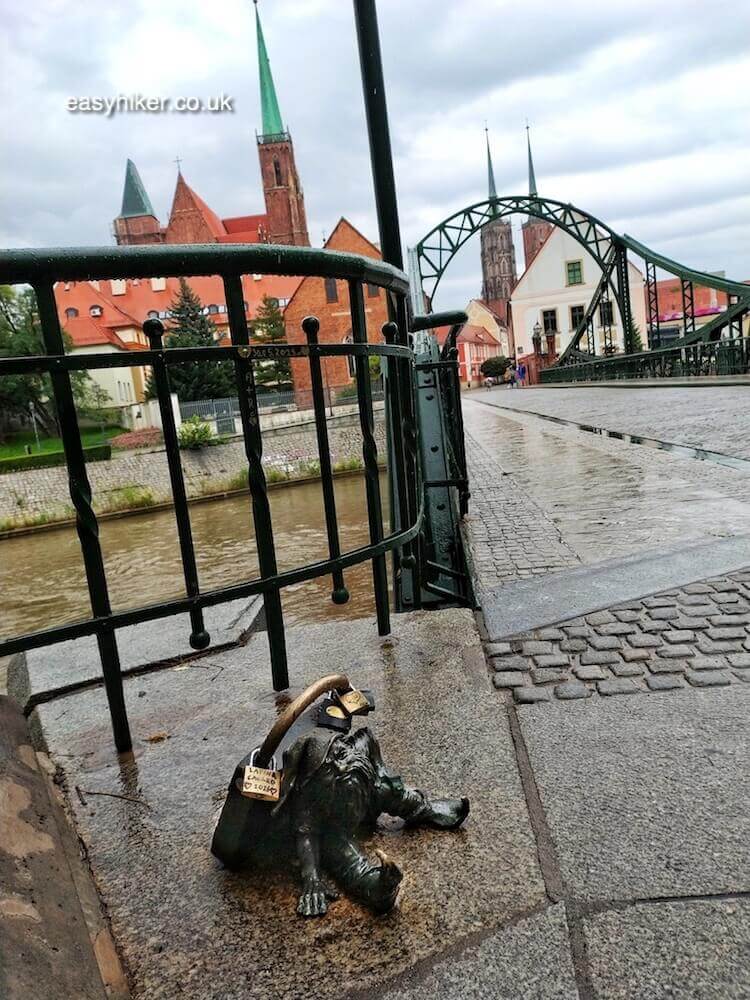
But that is one puzzle of Wroclaw that has to wait until next week.