Monaco is the fastest growing country in the world. Over the past few decades, the size of its surface area has increased by approx. 23 per cent.
In order to hit the same growth rate, Russia, a state similarly keen on territorial expansion, would have to annex not only the Ukraine plus the Baltic States but all of its western neighbours on top of that (Poland, Finland, Belarus, Norway) and would still not be even half way there. (Heaven help us all.)
And here comes the best news of all: Monaco has grown its territory without hurting a fly or endangering the life of a single citizen. (Prick up your ears, Mr Putin!)
What is the secret of this amazing trick? It is land reclamation, the process of creating new territory, which, in Monaco, meant raising the sea bed with the help of hollow concrete boxes that were placed at the bottom of the ocean.
The Larvotto beach front made the start in the 1960s, while the residential district of Fontvieille (completed ten years later) still represents the biggest land reclamation project in Monaco’s history. Together, these two account for roughly two thirds of the total territorial gain (a little more than 400,000 sqm).
Mareterra of Monaco
A group of smaller projects was added over the years, but now, the new Le Portier quarter, also known as Mareterra of Monaco – having been opened a little more than a year ago – has added another large chunk of Newfound Land (60,000 sqm) to the principality.
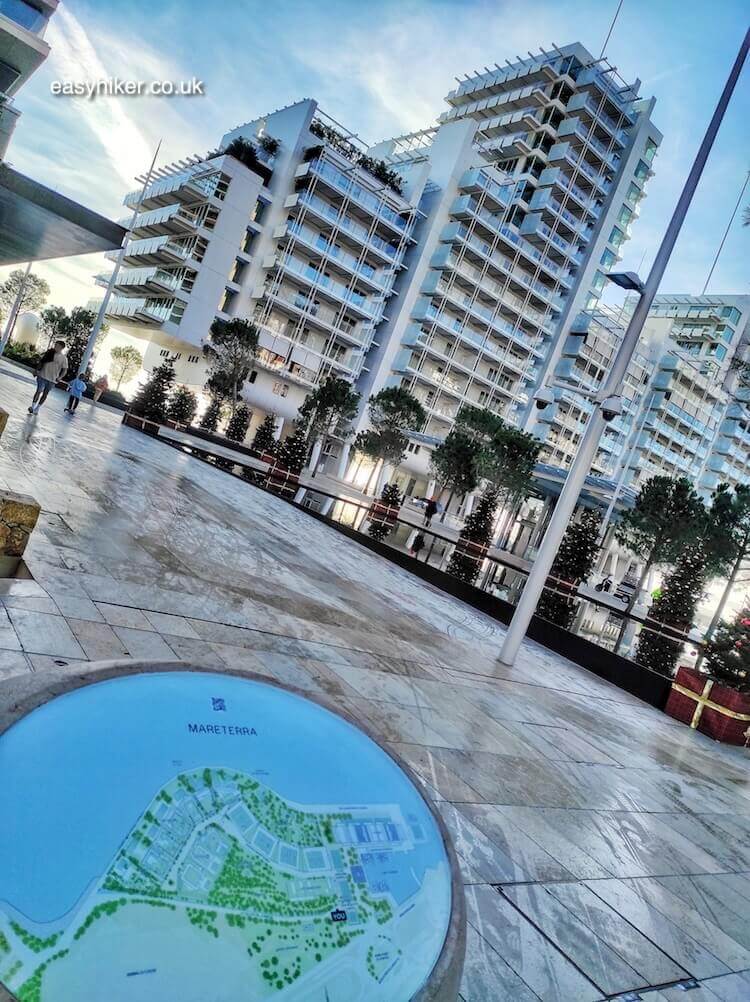
So what does Monaco’s youngest district, the new kid on the Riviera block, look and feel like?
As you would expect of the country with the world’s highest concentration of millionaires (and billionaires ), its youngest offspring is stylish …
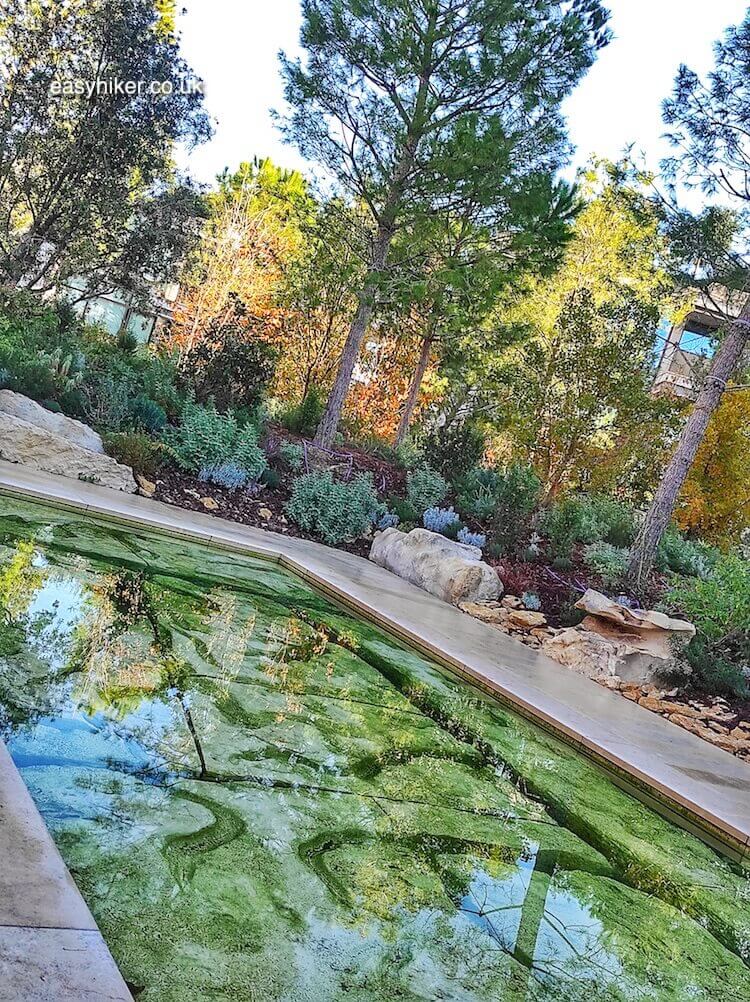
… and elegant …
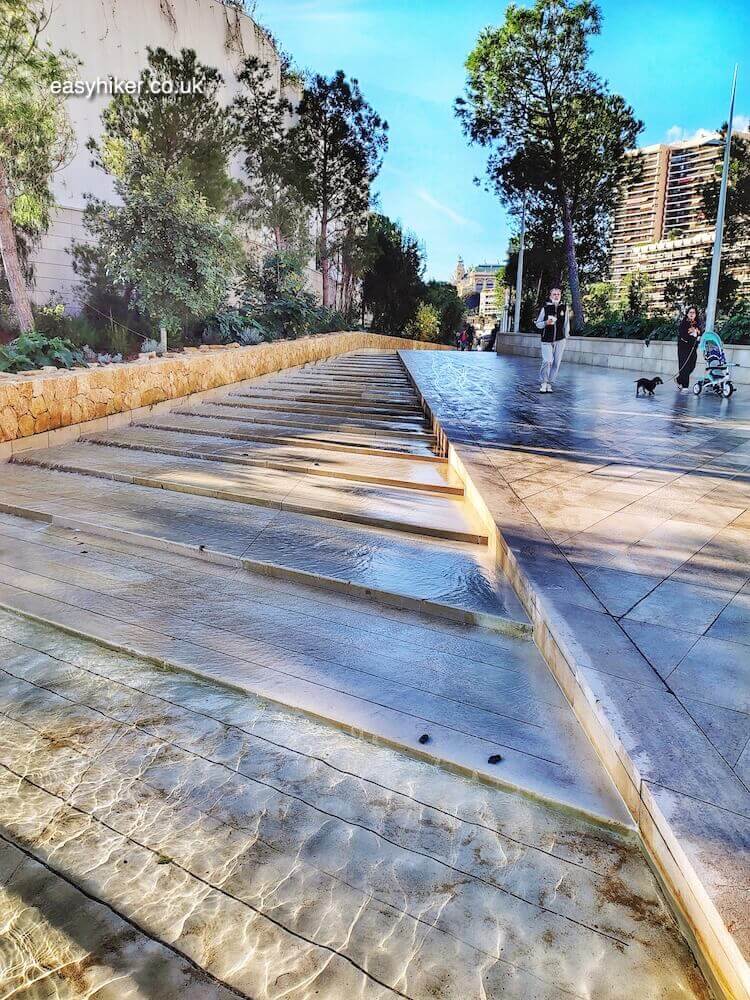
… but also – which may come as more of a surprise – airy and spacy.
The Mareterra – at 480 sqm of territory for every residential unit – is far less densely built-up than Fontvieille (178 sqm) and therefore provides much more space for decorative and ornamental features.
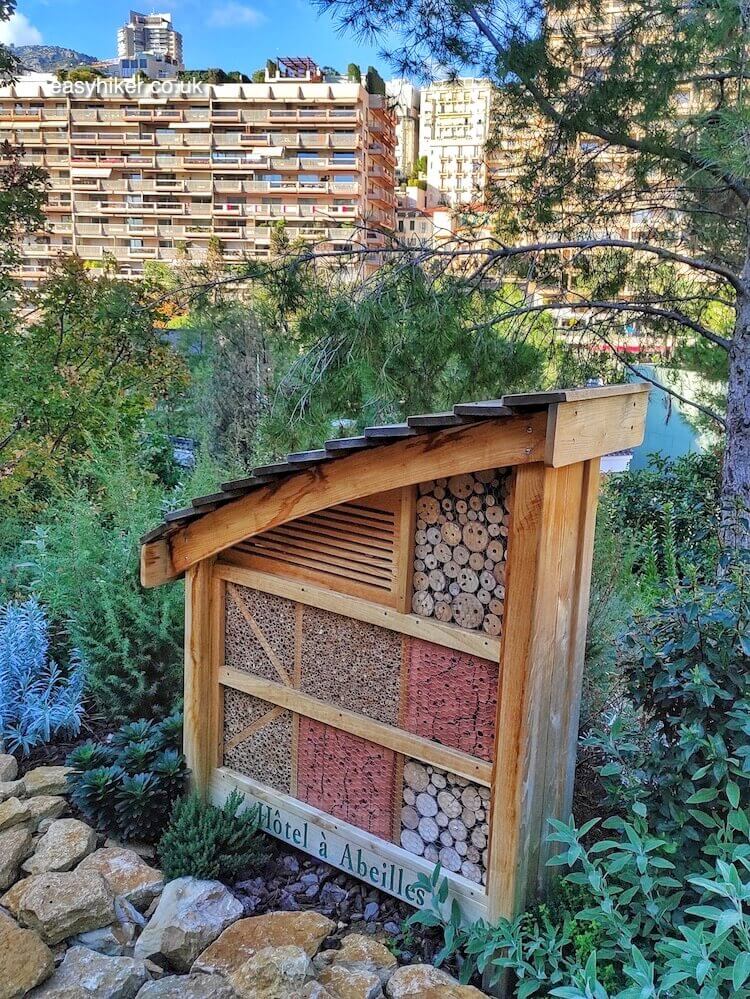
The objective of adding a touch of nature to the concrete surroundings was clearly a high priority for the urban planners. Through a landscaped garden on an artificial hill, a path has been laid out for residents and visitors that slowly winds its way up past local fauna and sub-tropical plants.
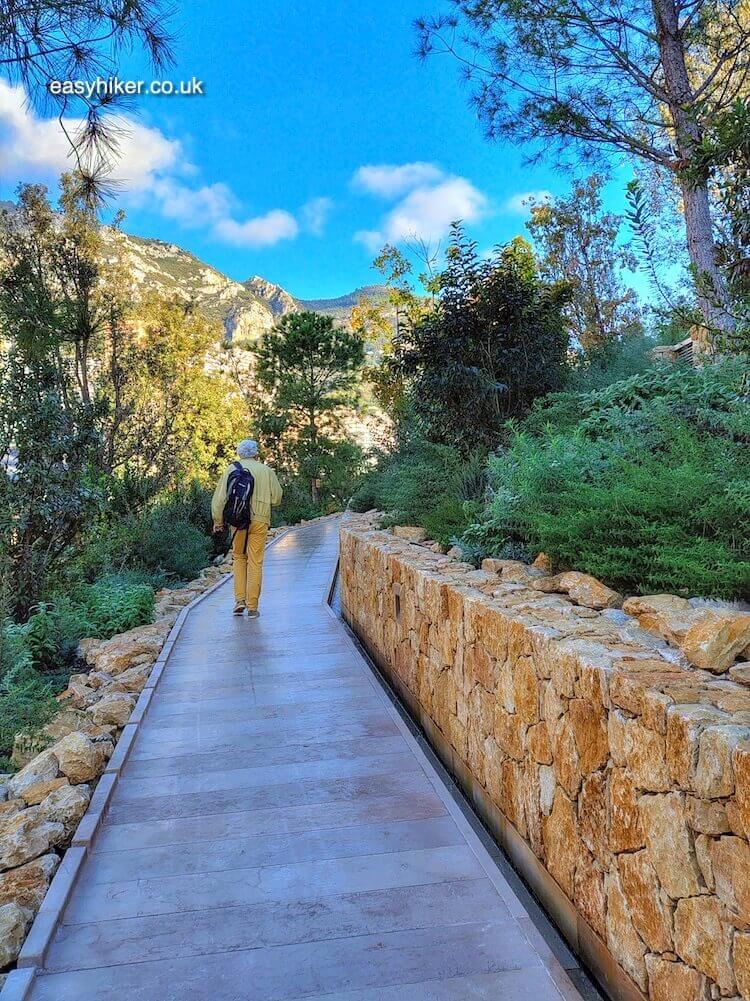
Mareterra is also much smaller than Fontvieille, counting a total of only 125 residential units (Fontvieille has almost 2,000), and more upmarket.
In Fontvieille, about 40 per cent of all flats are state-owned and rented out to low-income Monegasque citizens, while the remaining 60 per cent can be purchased on the open market for prices that start at approx. 40,000 € per sqm.
The Mareterra of Monaco has no state-owned flats, and the prices per square meter easily exceed 100,000 €. The object of the project was clearly to provide quality rather than quantity.
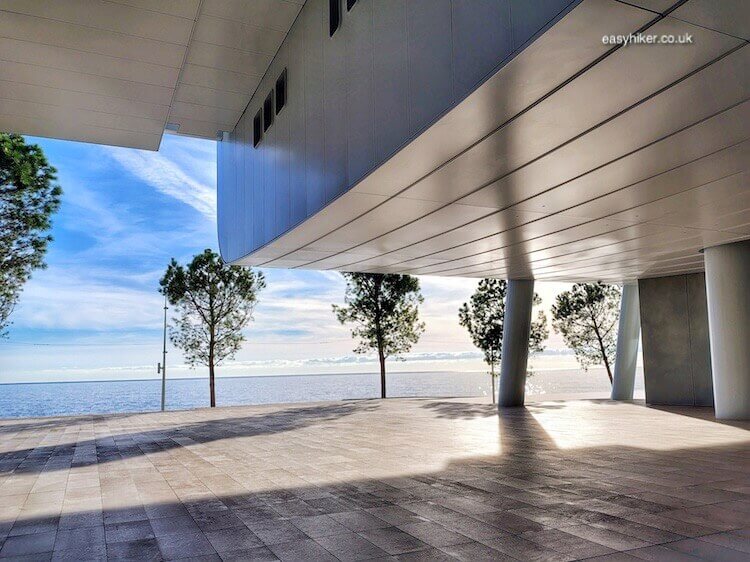
The architectural style of Mareterra is uncompromisingly modernist, following in the tradition of Prince Rainier, the father of modern Monaco who was also called Le Prince Batisseur (“Builder Prince”).
The new quarter’s straight lines and structural transparency perfectly match the rest of the principality’s skyline.
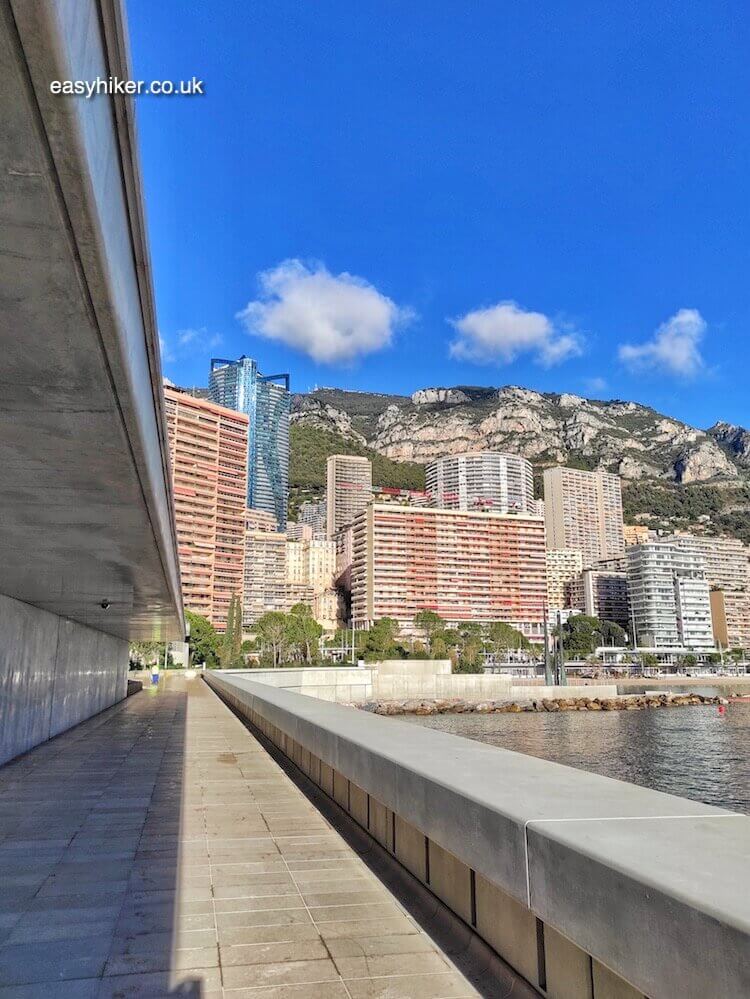
Mareterra’s landmark building was designed by the “starchitect” Renzo Piano, one of the godfathers of late 20th century modernism whose works include the Centre Pompidou and The Shard, London’s highest building.
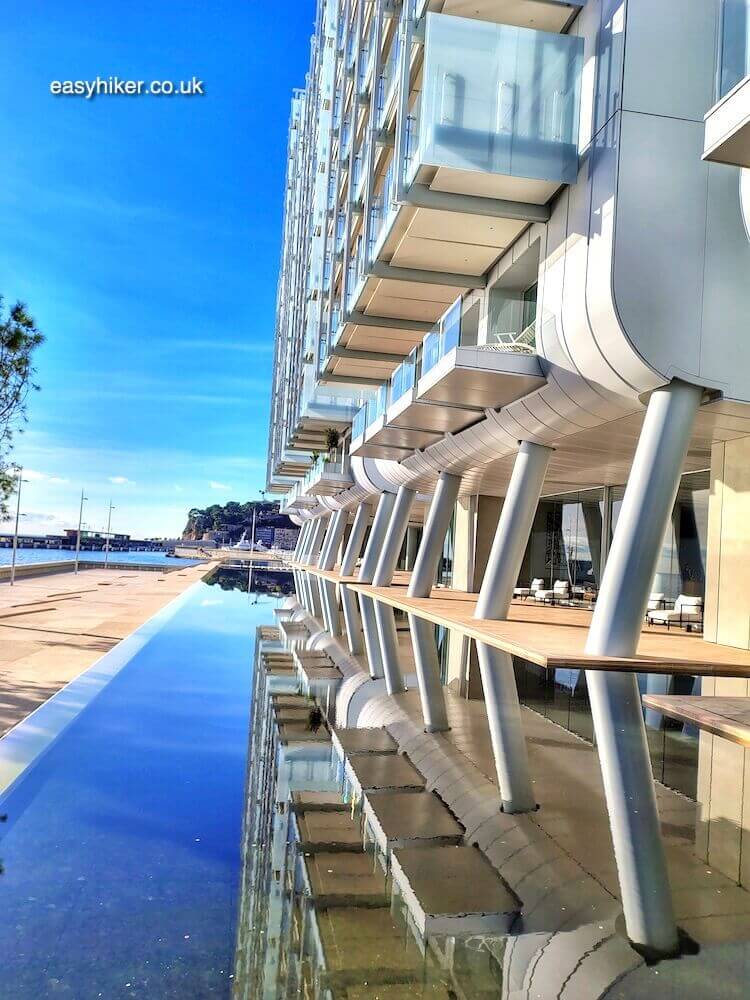
The architects’ and engineers’ pride in the innovative technology they used and developed has been woven into the project’s fabric. If you walk along the Mareterra seaside promenade, you will come across the entrance to a place called the Blue Grotto, but once you step inside …
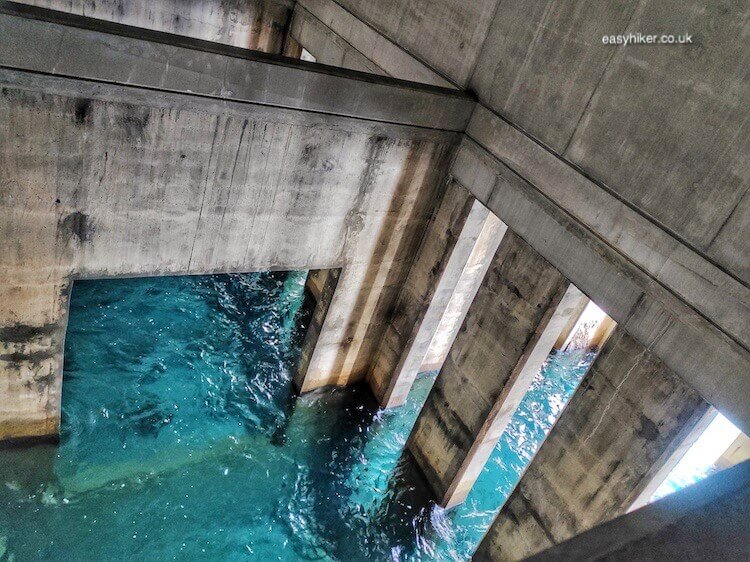
… you will find beauty of a decidedly modernistic flavour, and the allusion to the grotto’s famous namesake in Capri is surely semi-ironic.
A little more than one year after Mareterra’s inauguration in late 2024, the developers are speaking of a “big commercial success”. The word is that “most” of the units have been sold and that footfall has “exceeded expectations” with a “steady stream of visitors”.
While actual numbers, it seems, are hard to come by, the impression is that the people who have pumped a lot of money into the project – roughly € 2 billion in all – seem to be happy.
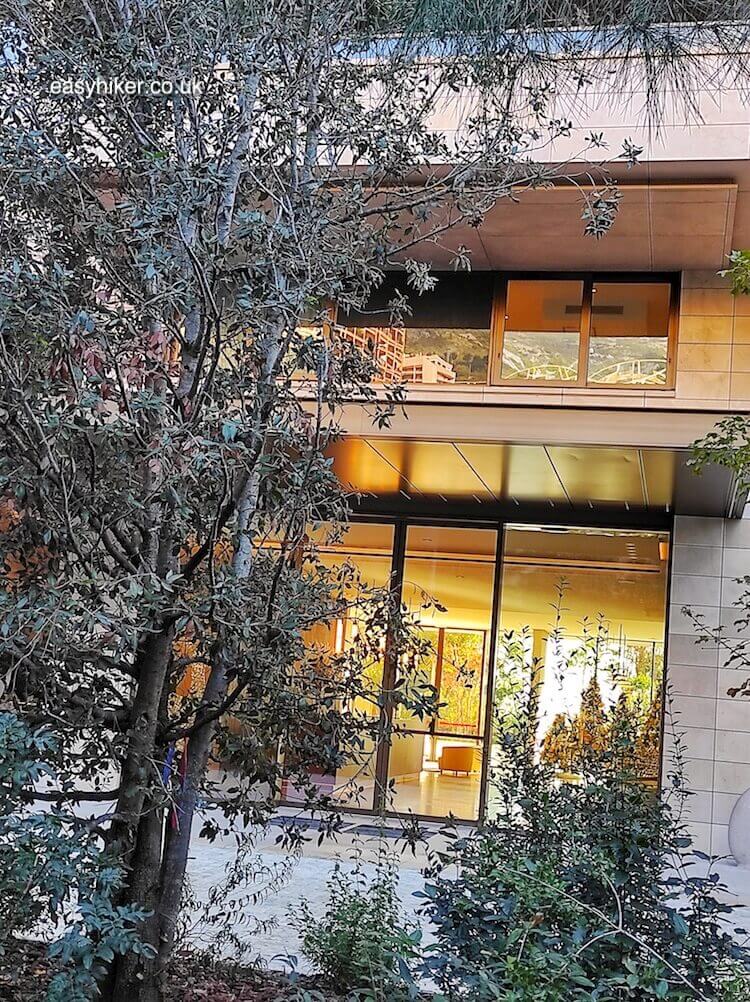
But is the new Le Portier quarter also a “vibrant neighbourhood”? Some people seem to think so, since this is a phrase often used in press articles to describe Mareterra. Hmmm.
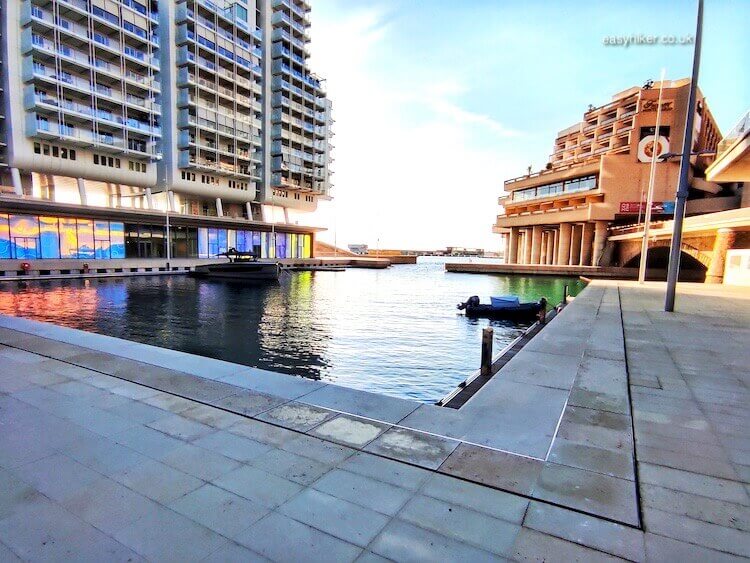
Take the generously spaced and scenic marina, for example: it does not appear to be overwhelmed by an excessively high level of buoyancy and sparkle – or by the number of boats moored on its quays …
… and elsewhere, much of the newly created commercial space has been discreetly cordoned off.
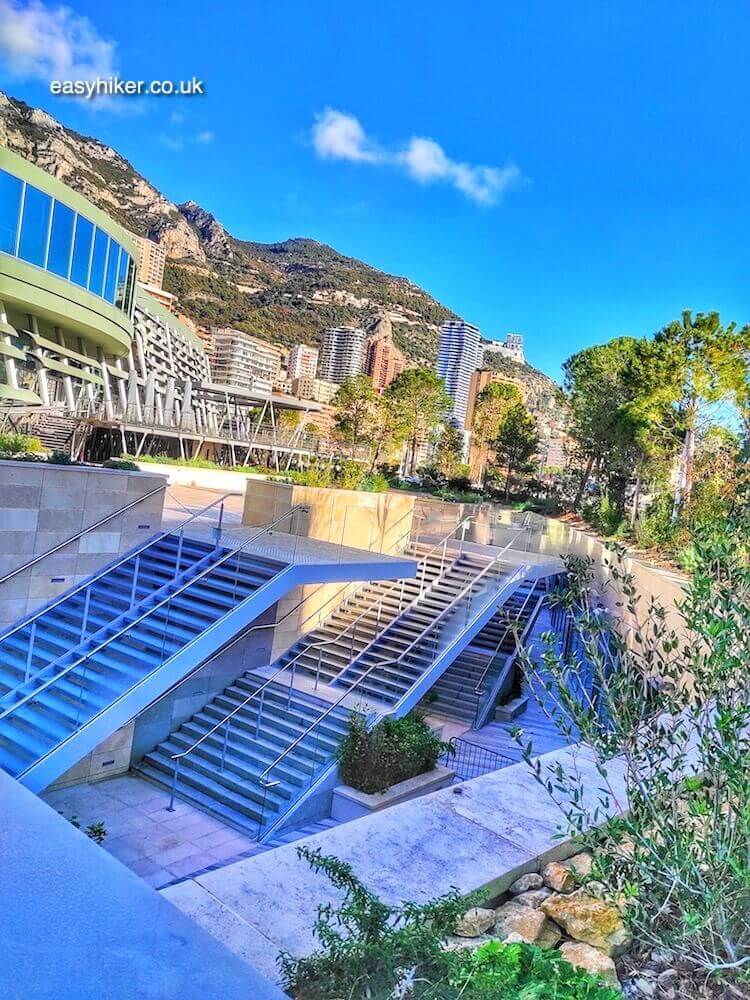
It must have been clear right from the start that any “vibrancy” of the quarter would have to come from outside: the residents alone – bearing in mind the profile of the quarter’s target clientele – were never likely to generate a street life resembling that of Naples or even of near-by Sanremo.
We met a few people on our walk through the streets of Mareterra, but in many places, in front of unoccupied storefronts and a seemingly deserted Harbour Office, …
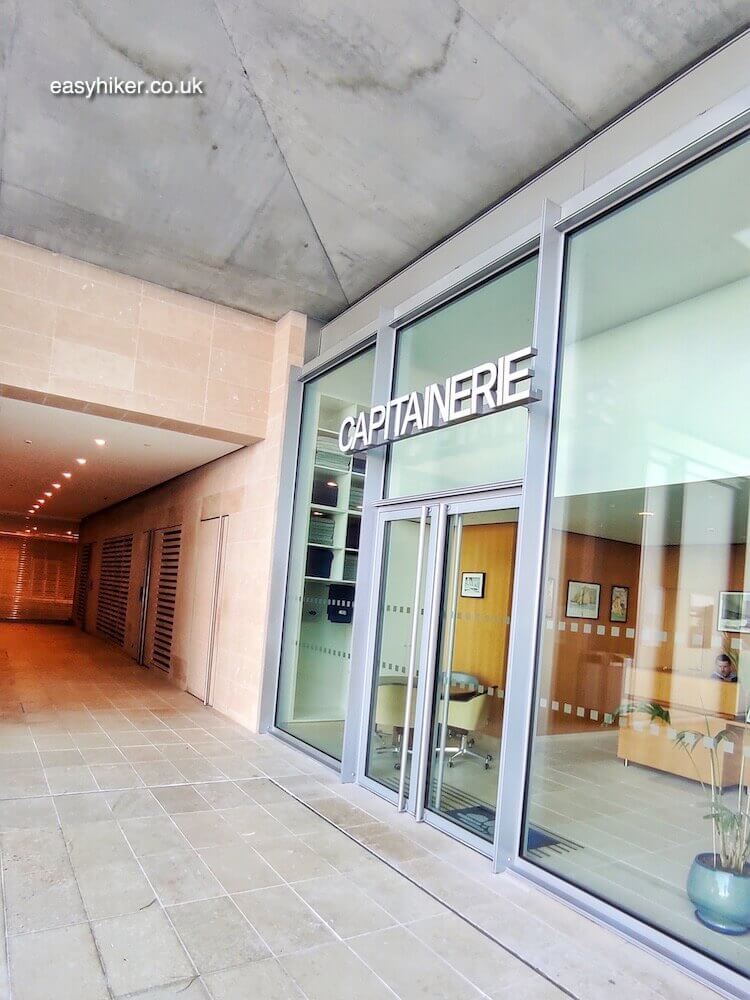
… the entirety of the “steady stream of visitors” shrank to a trickle that consisted of only two people: Mrs Easy Hiker and myself.
In moments like that, the Mareterra of Monaco takes on the mantle of a character we all have met in some classic Hollywood movie: a girl who is very rich, very beautiful, but also more than a little lonely.
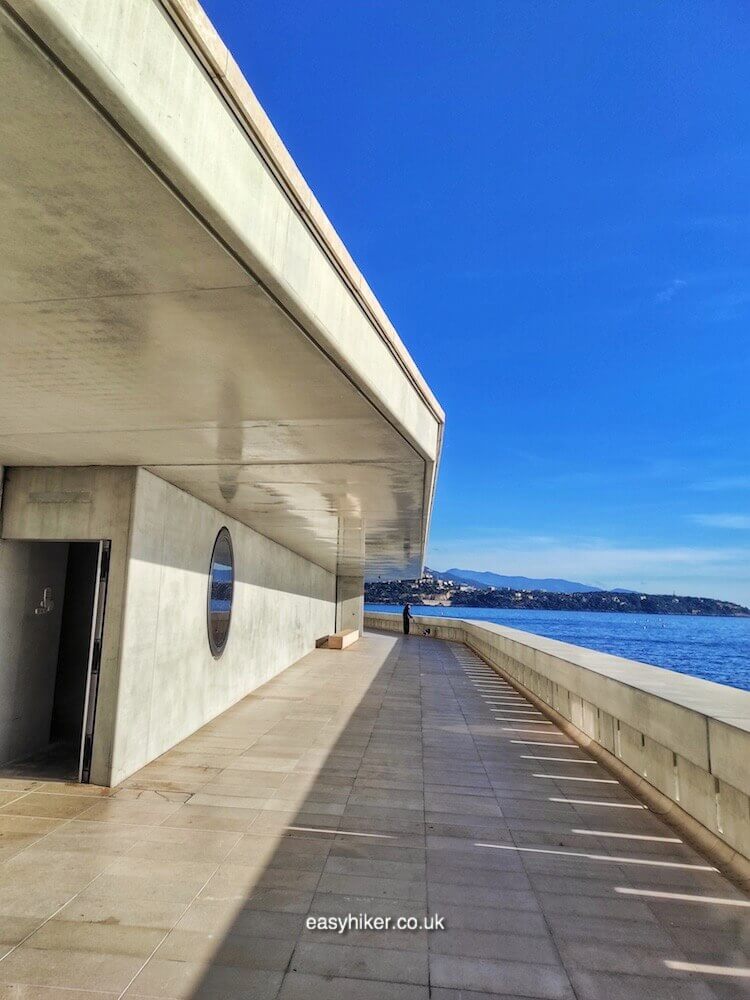
Rather than sneer, however, we should wholeheartedly welcome the new kid to the Riviera. For two reasons alone: firstly, because any new town on the coast is a good thing.
The Riviera – to stay in the context of the movie metaphor – is too often the Norma Desmond of the Mediterranean: an ageing beauty queen who has locked herself up in her palace to relive the glories of her past (Matisse, Scott Fitzgerald, Brigitte Bardot and all that). She clearly needs someone ready to challenge that.
And secondly, because Mareterra is Monaco at its adventurous best. The principality has always defied the defeatist nostalgia of so many places in the region: the most storied of all the small towns that line the Riviera coast is also the one that is the boldest and most youthful, for ever ready to experiment with new things and to plough new paths. For that, she deserves our appreciation, perhaps even a bit of gratitude, but certainly our encouragement.
The Riviera would be a poorer place without Monaco’s vigour and energy. May she stay forever young.