Here is how to explore Naples: if you only have two hours – time to kill between two trains, let’s say – I would suggest you walk up and down Via Tribunale, the main street of the city since Roman times.
If you have one full day, you may want to extend your focus to include the other two decumani – the east-west streets in the ancient street grid – and the Spanish quarter at the western end of the Centro Storico.
But if you can spare two days for a more comprehensive tour of the city, we recommend you do a customized version of what we have done last week and will be continuing today.
Heaven and Hell in Naples and the Metro dell’Arte
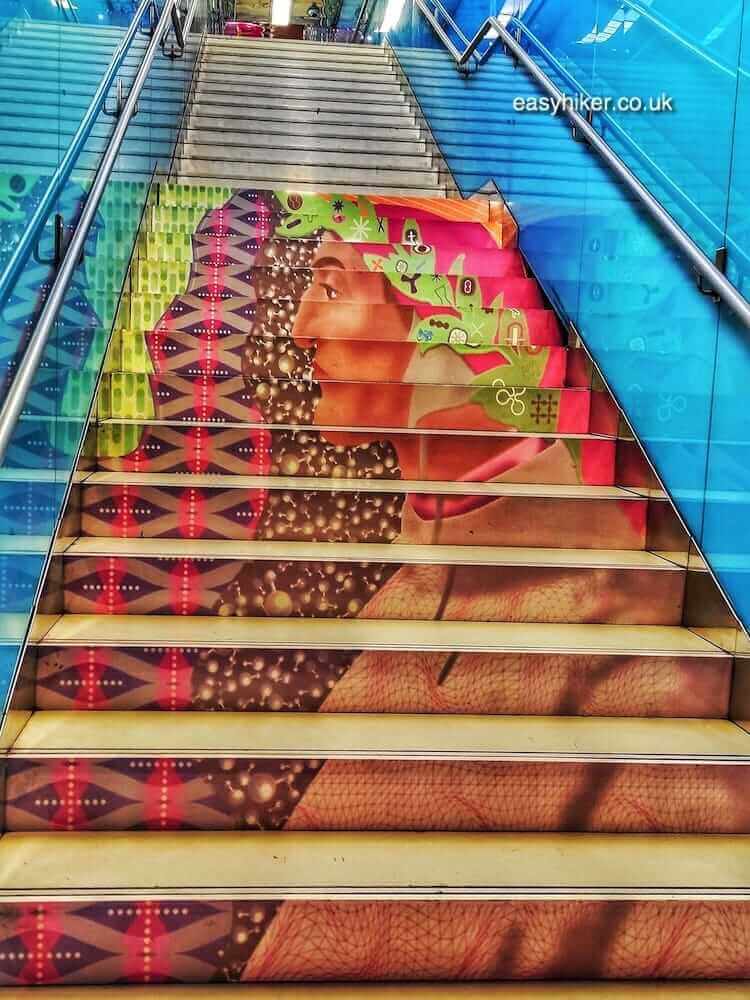
Which is to follow Metro Line 1 on its circumnavigation of the ancient town centre, getting off for a brief walk around all or some of the stations (visitor attractions in their own right) to sample the city’s other major sights: from Duomo, for example, you can walk in five minutes to the Cathedral and, another five minutes after that, enter the chaos of the Spaccanapoli next to Via Tribunali …
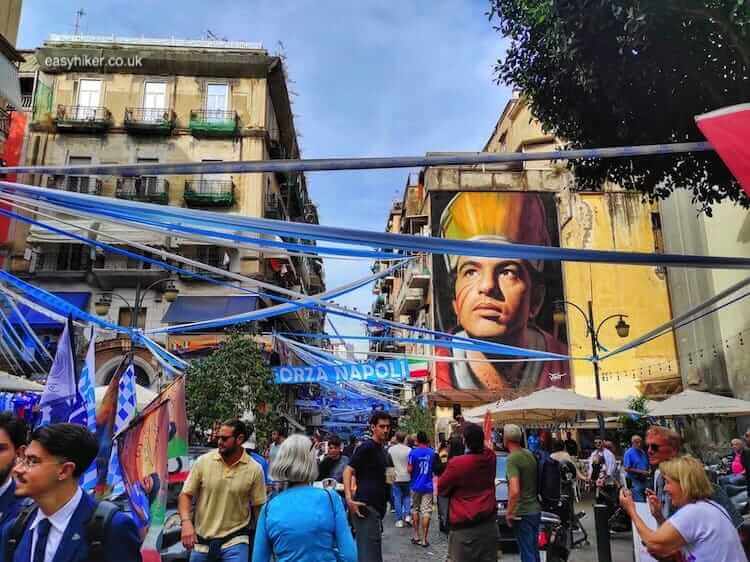
… while Municipio is the stop for the historic Naples of the Bourbon kings, and Toledo the perfect starting point for an exploration of the wonders of the Spagnoli.
Today, we will follow Line 1 into its loop out of the Old Town and familiarize ourselves with parts of the town that are much less on the tourist agenda to experience heaven and hell in Naples.
“Less” does not mean that you will not see any tourists at all (which would be safe indicator that there is nothing interesting to see: if you want to avoid all fellow sightseers, go to visit the municipal waste deposit site), and there will be far, far fewer cruise ship passengers. They, after all, only have one day for Naples and will, by now, be already on their way to Sicily (or was that Spain?) after their half-day guided tour of Pompei-Herculaneum-Paestum.
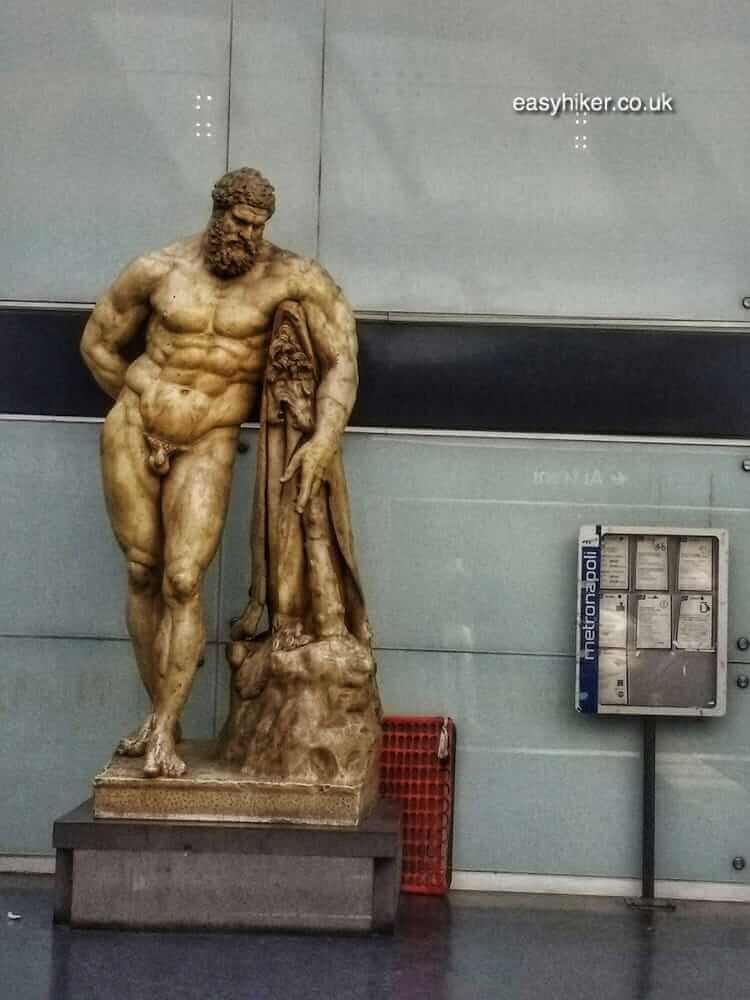
As it happens, we, too, are beginning our day among ruins: at the Museo station (one stop behind Dante where we finished last week’s tour), which was named after the near-by National Museum of Archaeology and has been decorated with artworks from its collection.
For our purposes, however, Museo serves as the ideal starting point for a brief exploration of the Sanità district where, in ancient times, rich folks built their homes to get away from the dust and the noise of the city, in the hope of preserving their health and their sanity (hence the name).
Sanità is also a museum, albeit one of a different kind: a museum for Neapolitan lifestyles.
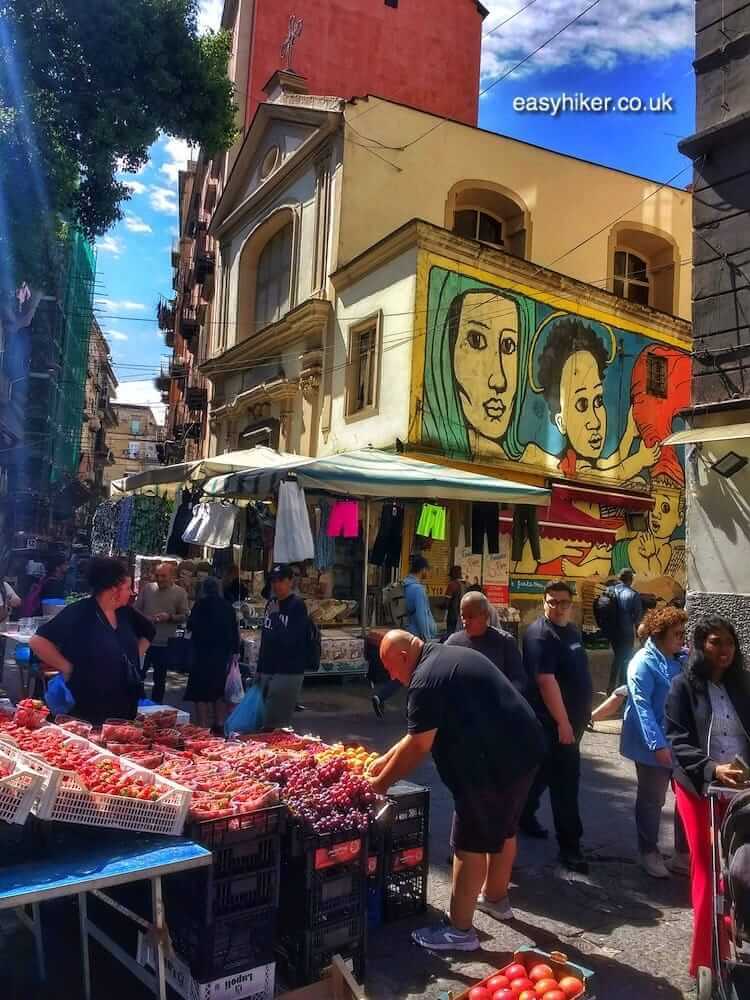
This is how Naples must have felt and looked like before the tourist invasion of the last 20 years. In the wake of this onslaught, the inhabitants of the town centre, I suspect, have perhaps become a little too self-conscious, too eager to play their part in the city’s street theatre. Which would be no more than an unavoidable reaction to an overdose of attention – much in the way that very cute children can be a trifle too self-aware of how very cute they are.
The Sanità, conversely, is still blissfully oblivious of its charms.
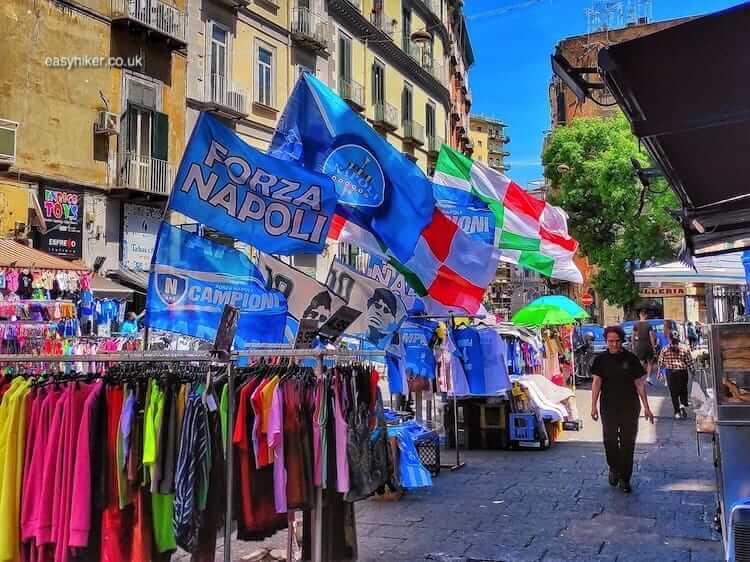
The quarter has a reputation of being crime-ridden, but let me tell you, fearful Americans friends, that you are more likely to run into a gunfight of rival gangs on your local main street. This is not to say that crime in Naples does not exist – it does, but it functions differently. As a visitor, you have something like a non-combatant status, so feel free to enjoy the sounds and the colours of the quarter’s street life.
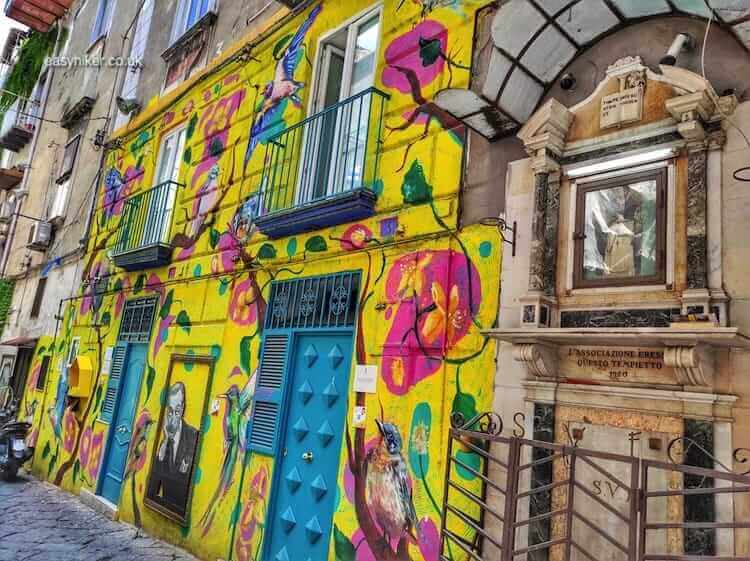
One station further, we enter a different world: the almost suburban, solidly middle-class residential quarter of Materdei.
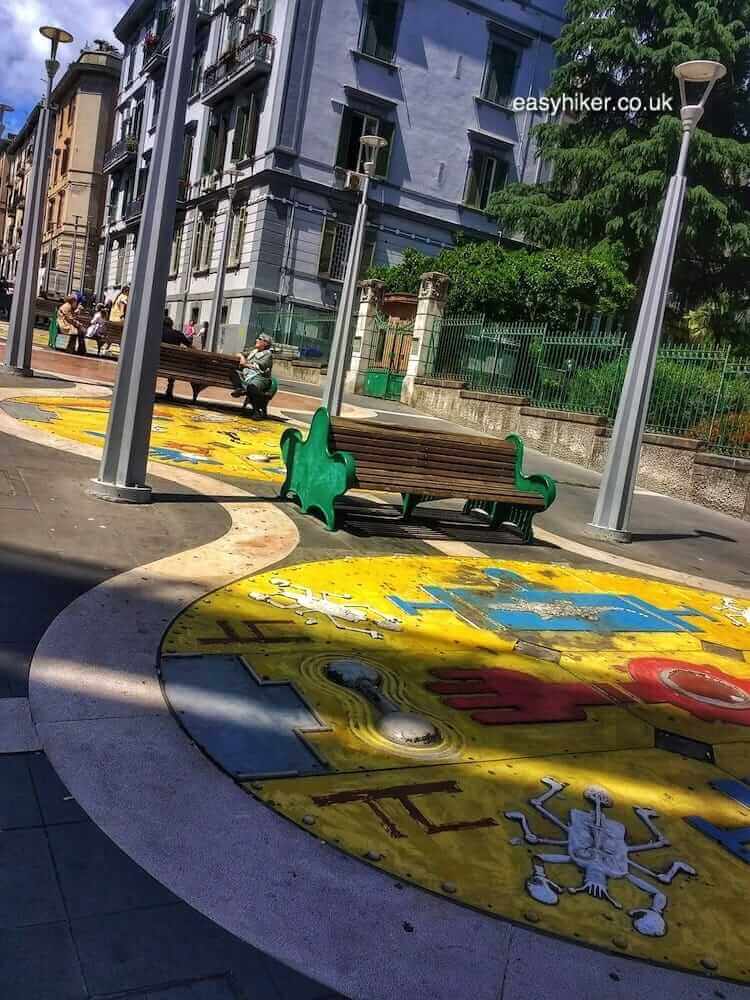
This is also the first station of several on the network that has served the architects as the focus for an ambitious urban regeneration scheme.
When the Metro network was extended to include some of the city’s inner suburbs in the early 2000s, the new Materdei station’s adjacent high street was pedestrianized and extensively redecorated.
The station itself, meanwhile, has since won many awards and was included in the Daily Telegraph’s list of Europe’s Most Beautiful Subway Stations.
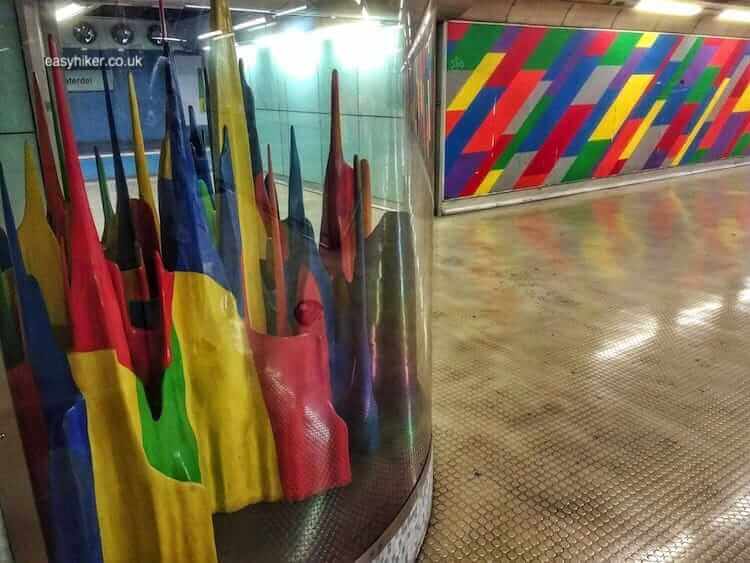
Materdei station is as colourful as Toledo – its chief rival for the unofficial title of the Metro dell’Arte beauty queen – but does not attempt to provide a similarly immersive experience of space and light. In contrast to Toledo, it still feels like a metro station.
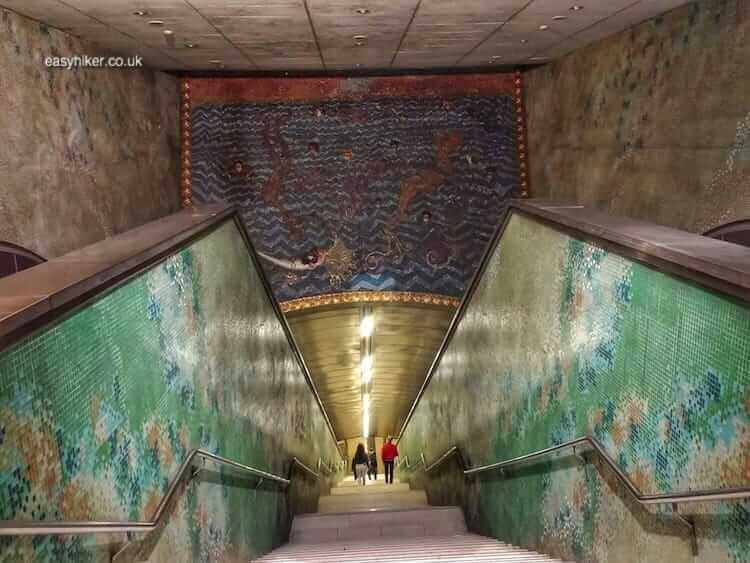
The neighbourhood around the next stop on the line, Salvator Rosa, has a slightly different feel: this is more of a working-class area, but the station was conceived by the same team and with the same philosophy of using the subway project as an instrument of urban renewal.
By the standards of the Metro dell’Arte, the interiors of Salvator Rosa station are more tasteful than spectacular, …
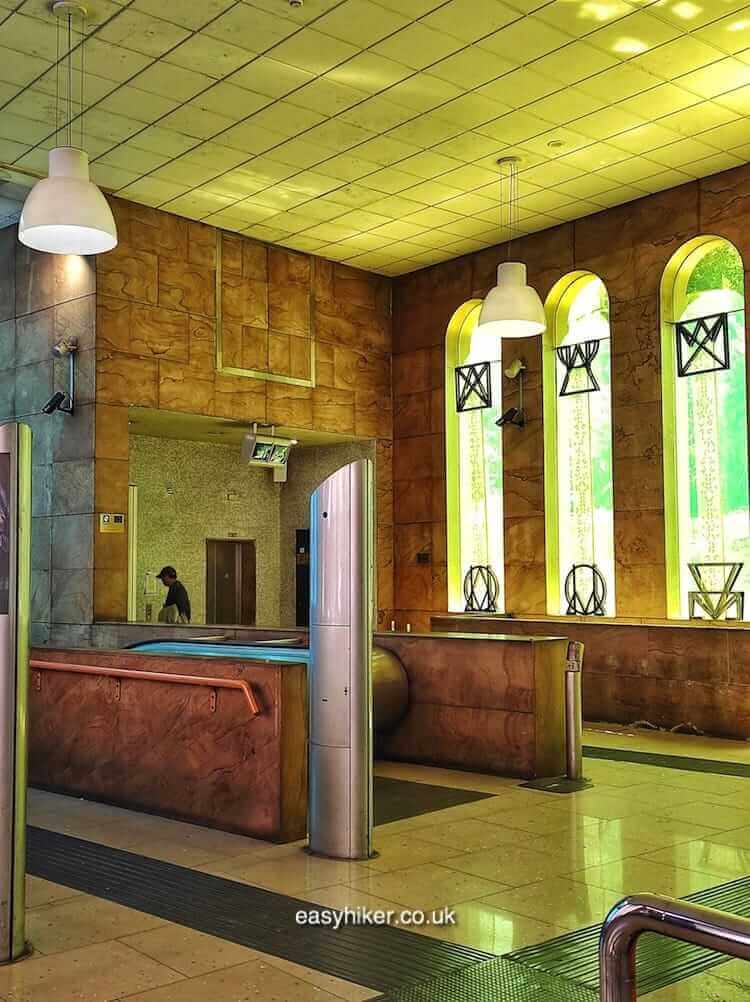
… but the external walkway up to the hilltop housing project is one of the highlights of the entire network.

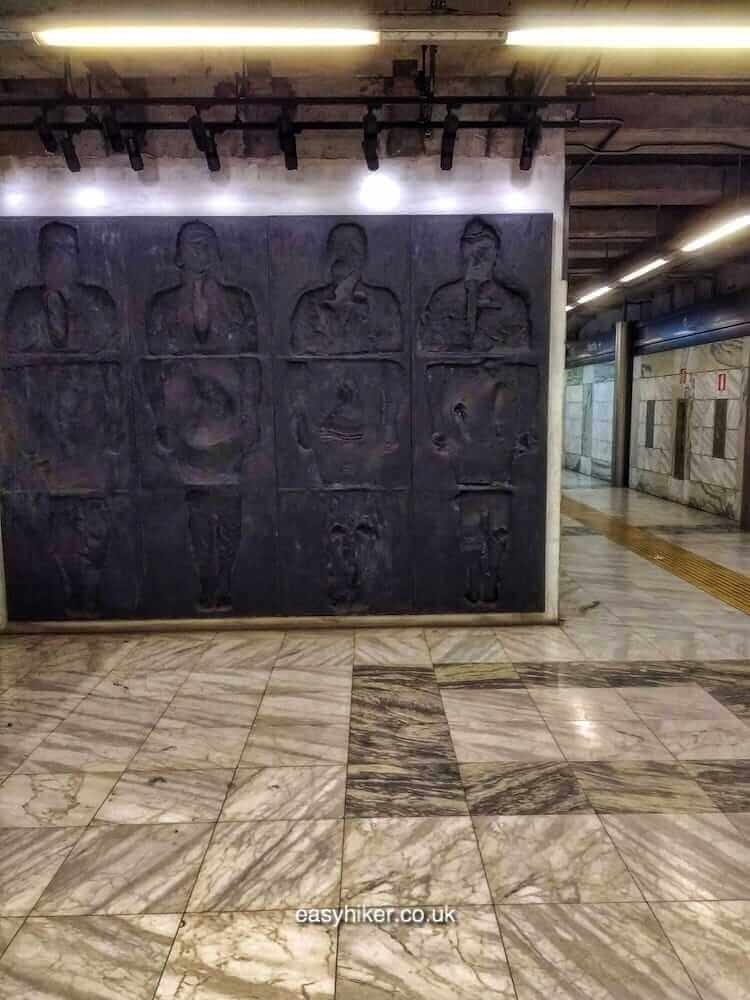
The next station, Quattro Giornate, commemorates the Four Days of Naples, a popular uprising against the German occupation in WWII. Its interiors are virtually monochrome, and the general mood is, befitting the nature of a war memorial, dignified and austere.
Outside the station, you will enter the Vomero quarter where the uprising began. The Vomero is the fanciest district of inner Naples, although you would not necessarily guess so because the Piazza Quattro Giornate is located in its less prosperous western section.
The Arturo Collana stadium at the back of the exit may today mainly serve amateur sports teams and track-and-field clubs, but for 15 years after WWII (until 1959), this was where the professional footballers of Napoli played their home games.
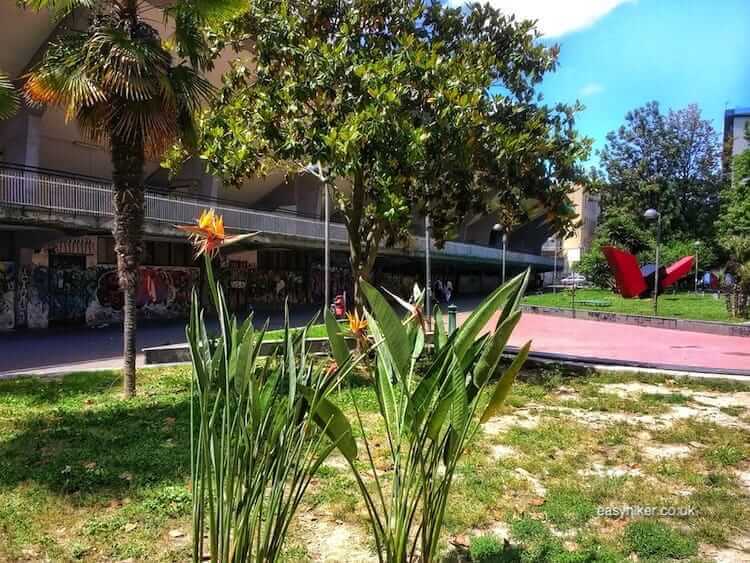
We recommend to experience the Vomero by walking from Quattro Giornate to the next stop on the line, for one because it is interesting to see how the neighbourhood is gradually getting posher, block by block, and for another because – in the east of the quarter – the streets are generously lined with bars and restaurants where you can sit down and have a light meal or a cup of coffee.
Walking down Via Scarlatti, you will soon arrive in the centre of Vomero and the sumptuous Piazza Vanvitelli …
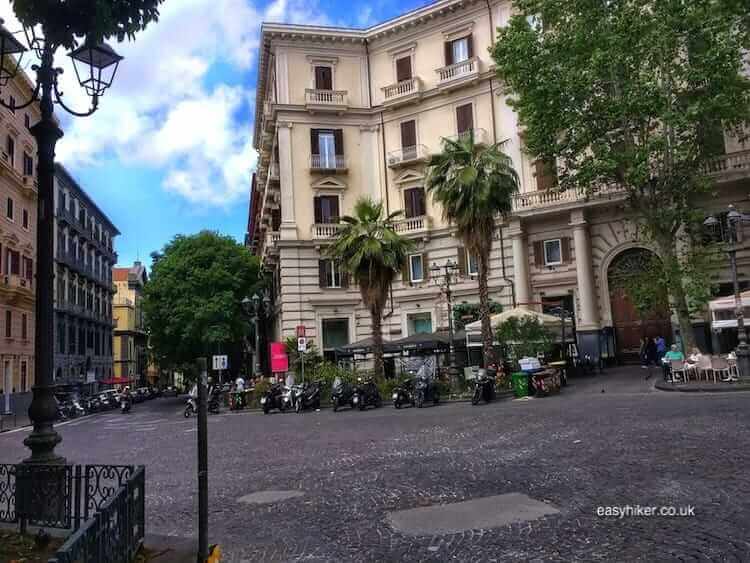
… where the motto seems to be noblesse oblige: this sumptuous square sits over a sumptuously decorated metro station with impressive and original artworks, of which the fibonacci-numbers-neon-sculpture on the ceiling of the foyer is just one among many.
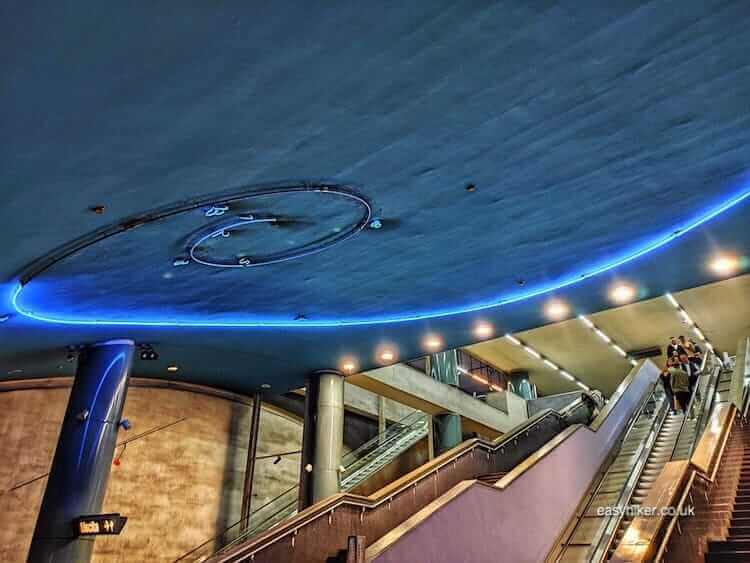
Vanvitelli is where the 2001 extension ends and therefore marks the final station in the core of the Metro dell’Arte project.
Now for some extra time, if you can still spare an hour or so. Take the metro back to Municipio to change to the new Line 6, some of whose stations have been integrated into the Metro dell’Arte project, and descend at Chiaia.
Chiaia is another rather bourgeois quarter, but no two people appear to share a definition of where it starts or ends. To give you just one example: the quarter is famous for its many stairways, you can conduct a Google picture search for Gradini di Chiaia if you don’t believe me, but most of these lie in the Vomero district to the north.
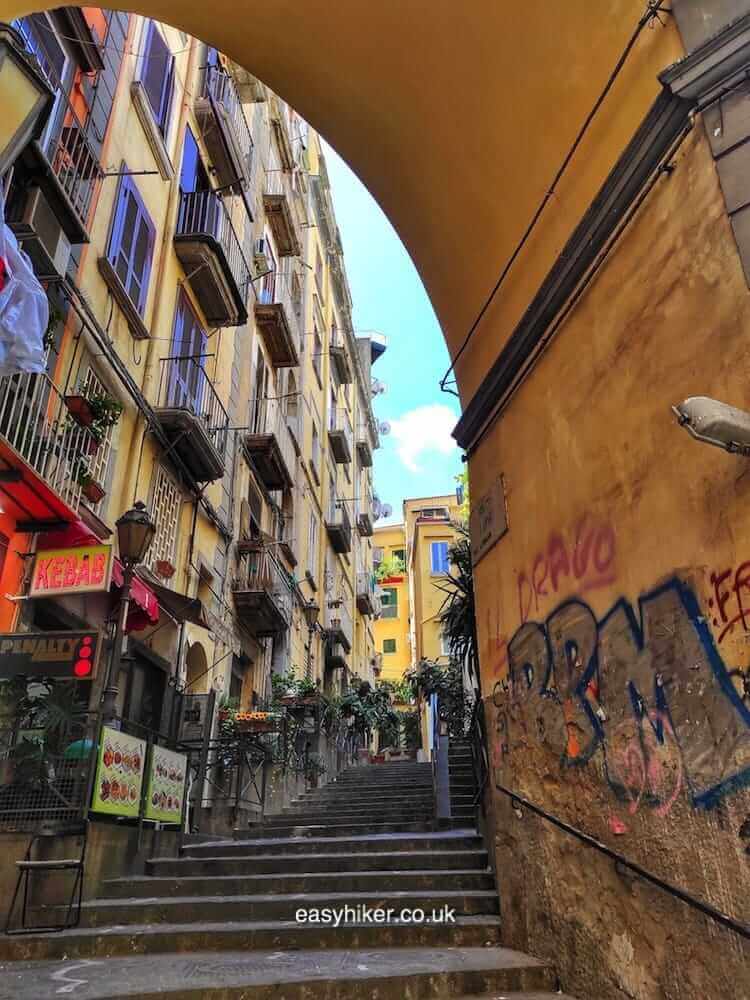
You can, however, find a handsome set of stone steps just one level down from the station, leading up Vicoletto Sant’Arpino from Via Chiaia.
The station – which, by the way, also lies outside Chiaia proper in the Quartiere di San Ferdinando – is one of the network’s highlights. It is certainly the most high-concept one and was co-designed by the eccentric British artist and film director Peter Greenaway.
You are invited to take a journey through a subterranean Home Of The Ancient Gods, from Hades at the very bottom (color-coded in red) …
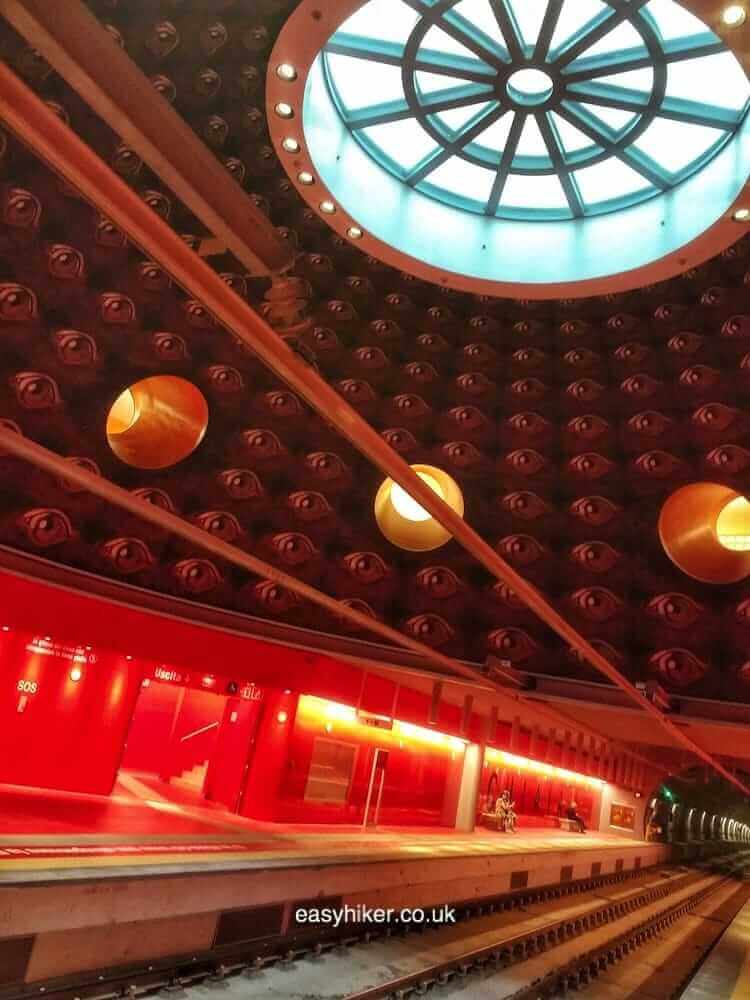
… all the way up to the blue of Neptune on the top floor.
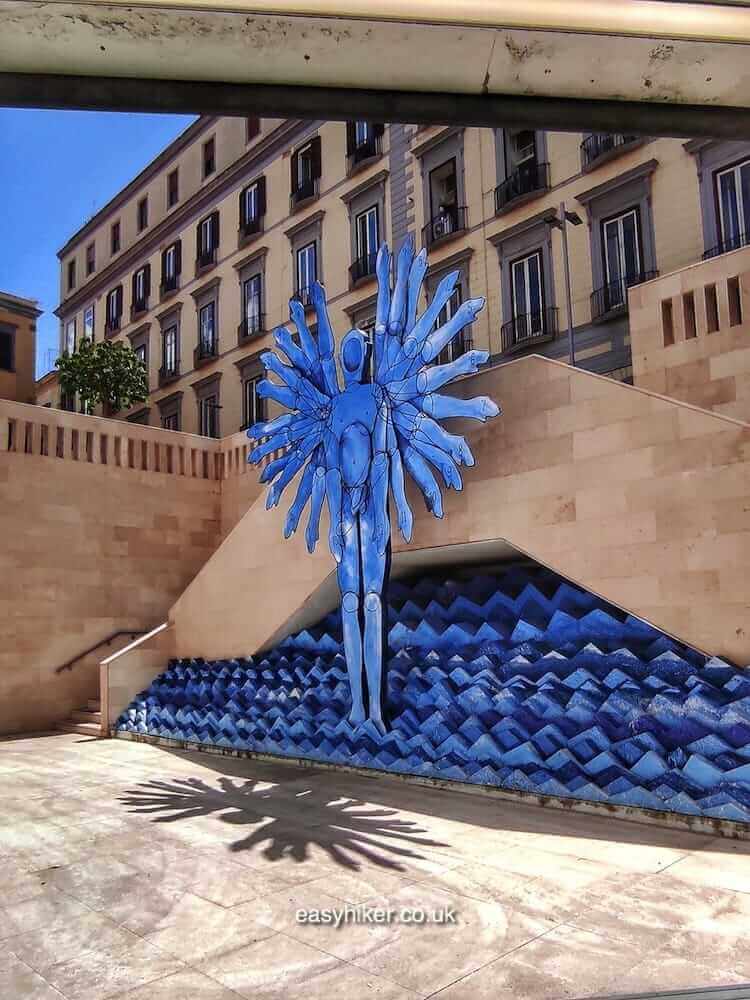
Our final stop is the next station of San Pasquale on the southern rim of the Chiaia district …
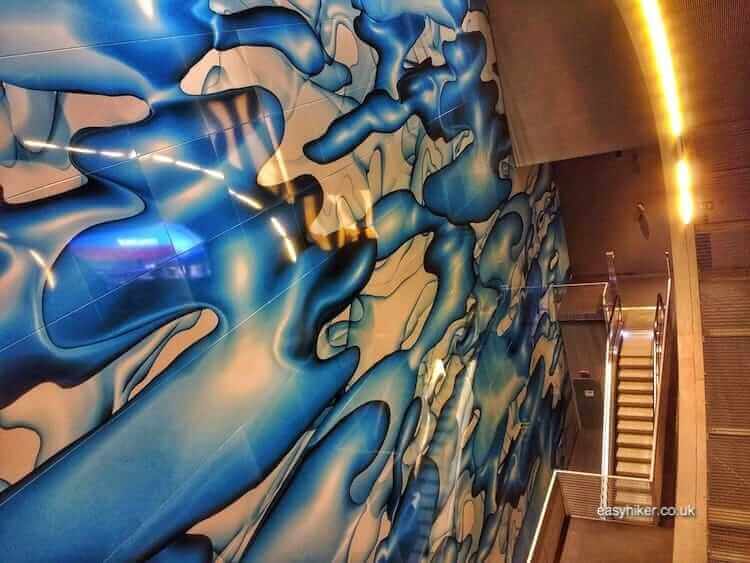
… mainly because we want to give you the chance of finishing the day by taking a relaxing walk in the public garden just outside the station.
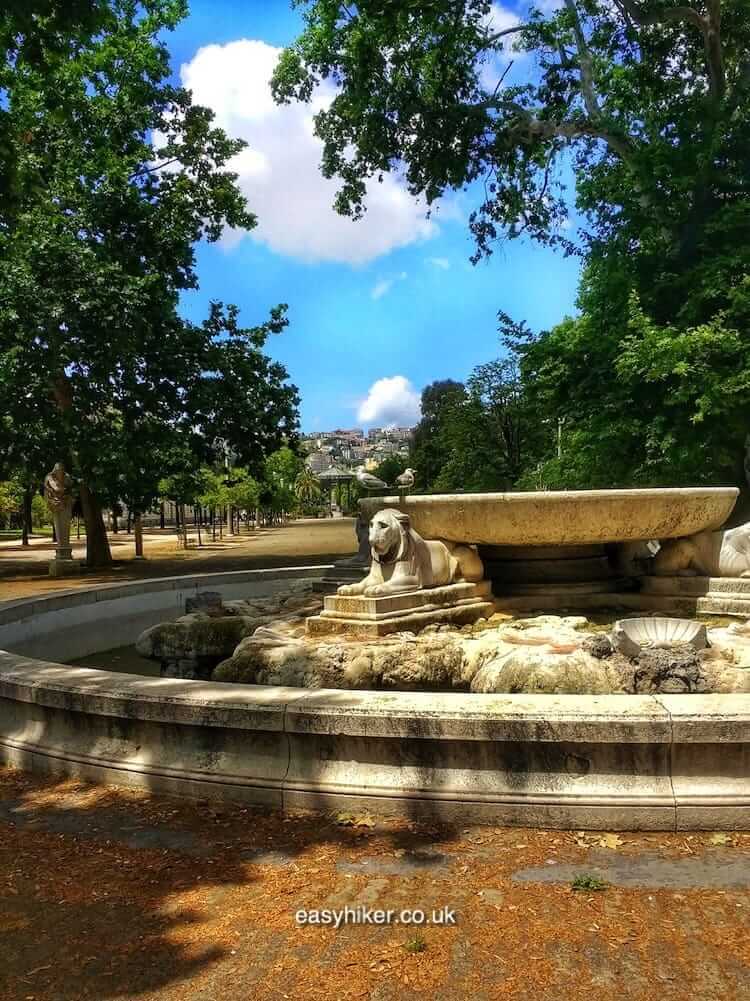
Sit down on a bench for a moment and let it all sink in. We have seen a lot in those past two days: Dante (repeatedly, in different places) and football banners (ditto), handsome villas and urban squalor, remnants of ancient glory and glimpses into the hardscrabble lives of many present-day residents, we journeyed through heaven and hell.
We have not seen everything there is to see – who has? – but we know Naples from “both sides now”, from up and down – in more ways than one.