Just as the Alhambra is more than a mere cluster of palaces, Granada is more than the Alhambra.
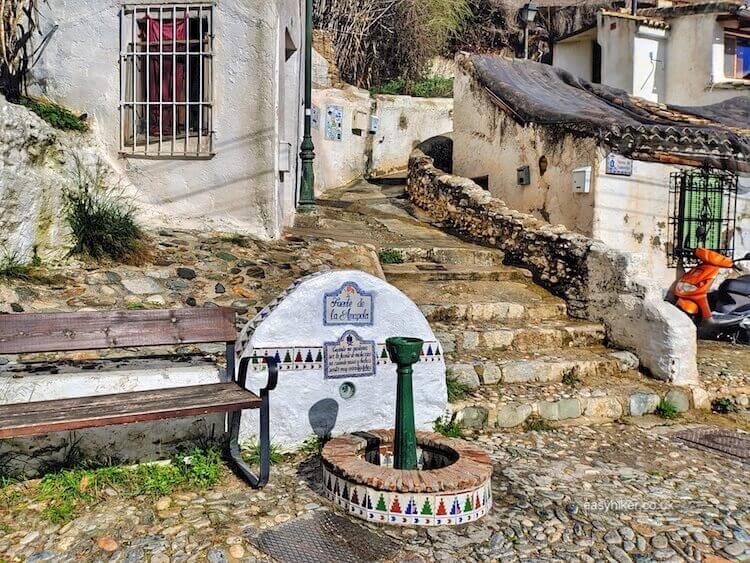
In fact, Granada downright spoils its visitors with a host of attractions: for starters, it has not one but two historic Old Towns, one – called the Albaicin – that was established under Islamic rule …
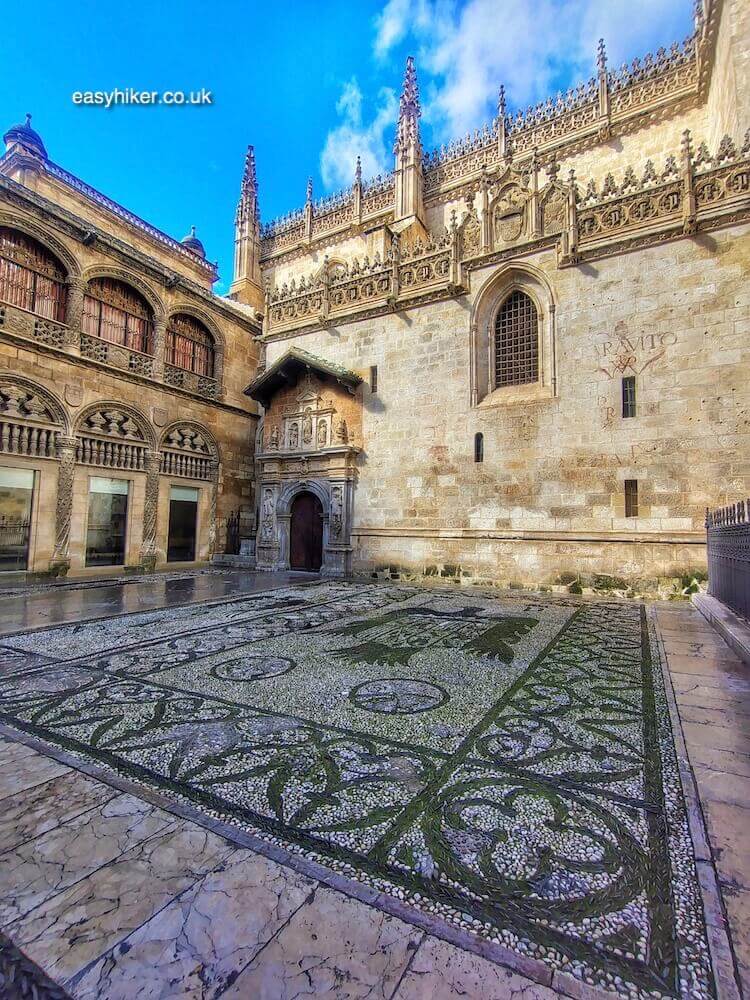
… and one built by the Reyes Catolicos following the conquest of Andalucía by the kingdom of Castile. Ferdinand and Isabella, possibly the greatest rulers in all of Spanish history, loved Granada so much that they reserved a chapel of the newly built Cathedral for their final resting place – and have remained there ever since.
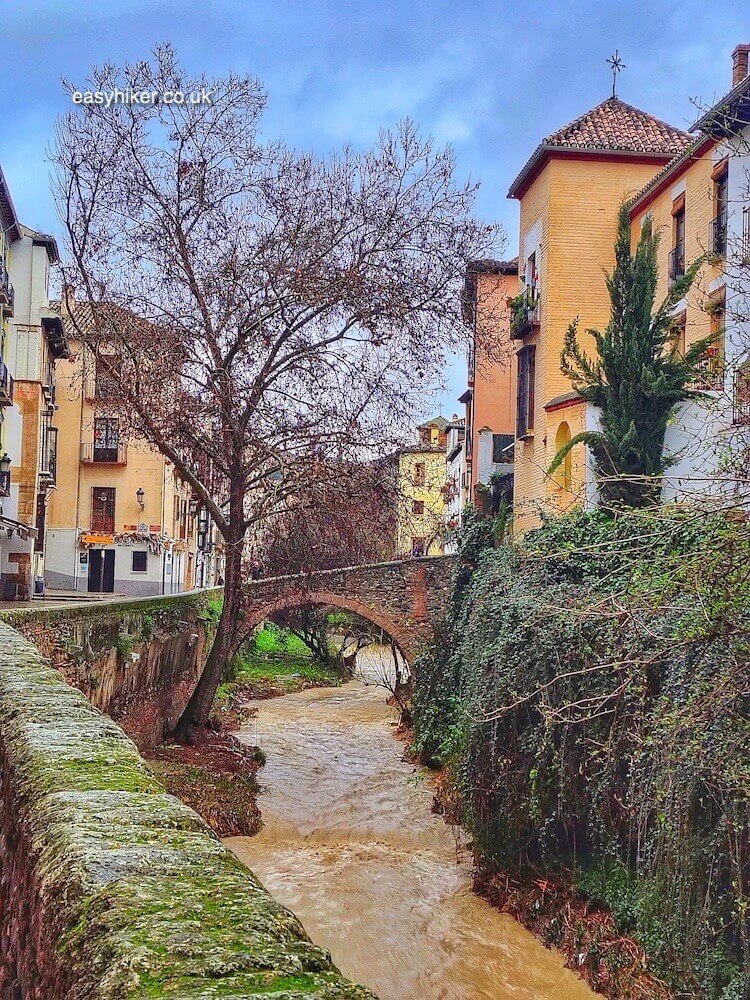
On top of these old towns, Granada boasts a scenic river, …
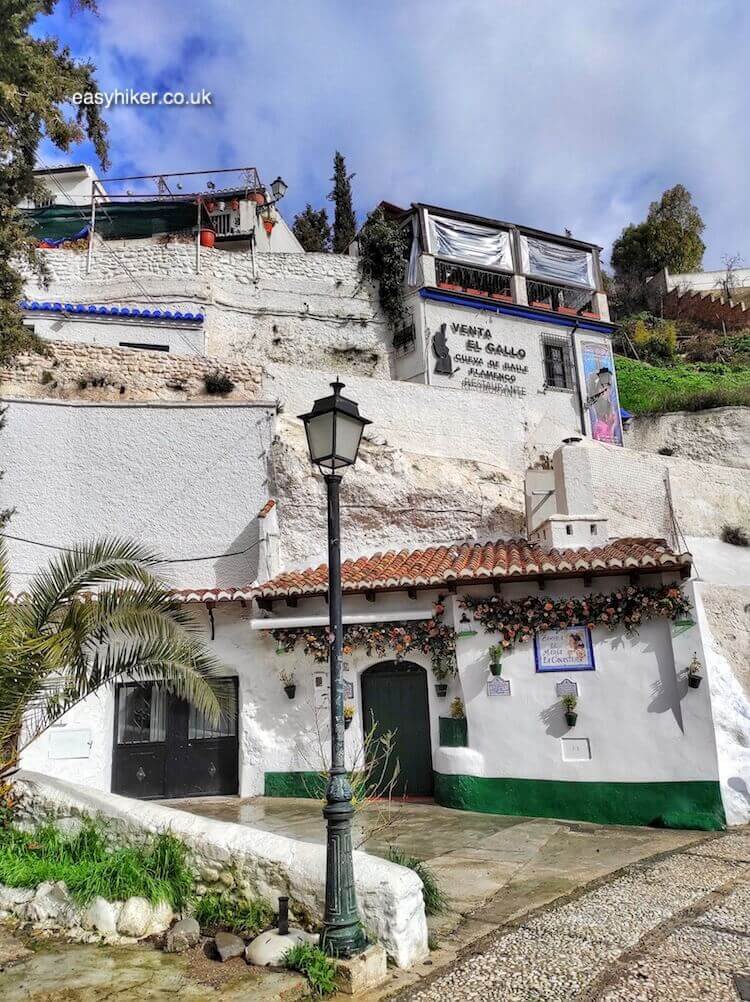
… colours and shapes that are the heritage from centuries of gypsy traditions, …
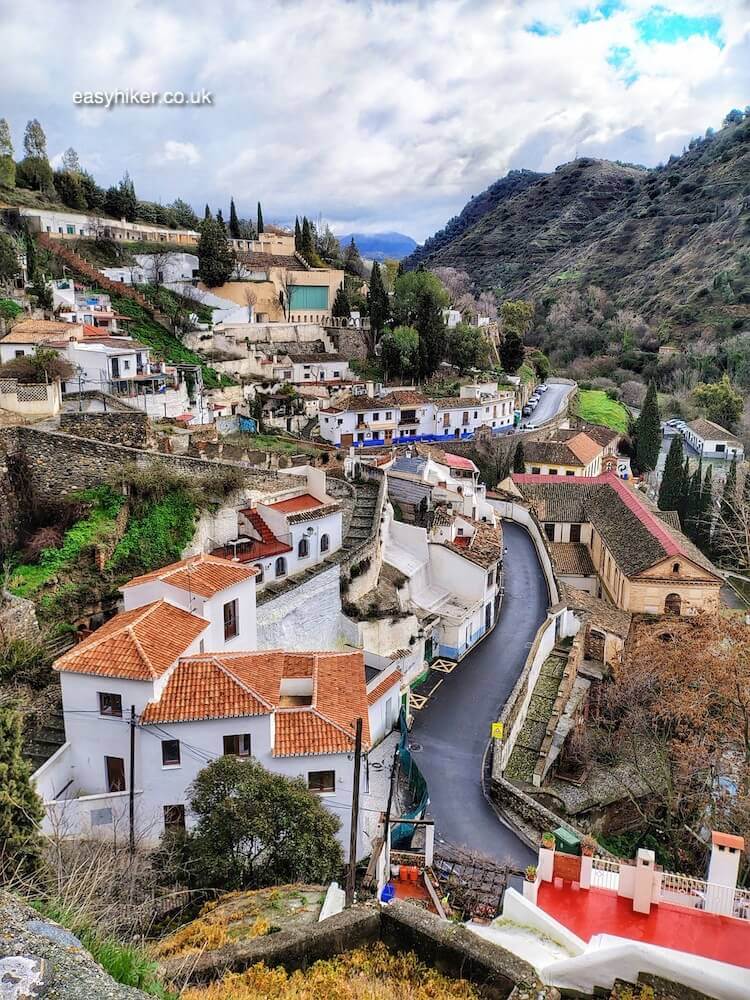
… plus scenic glimpses into the Andalusian countryside.
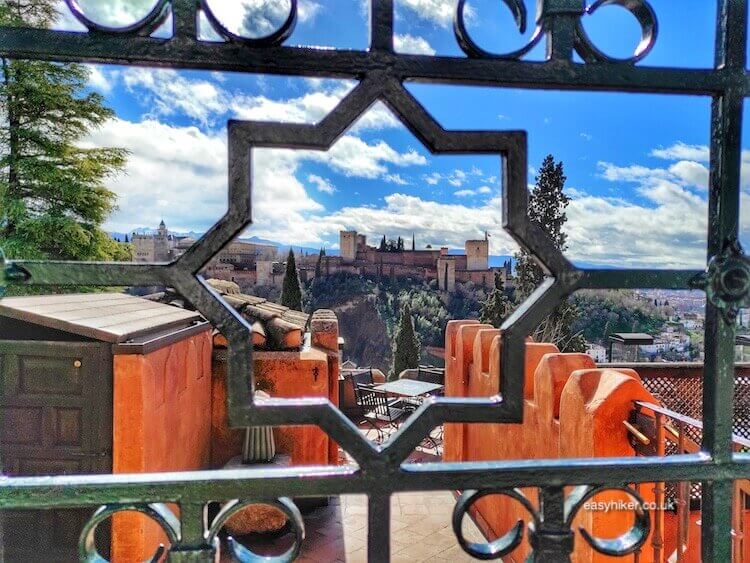
And wherever you go in Granada, you will also get views of the omnipresent Alhambra: when the maze of old town streets opens up just wide enough for a quick peek …
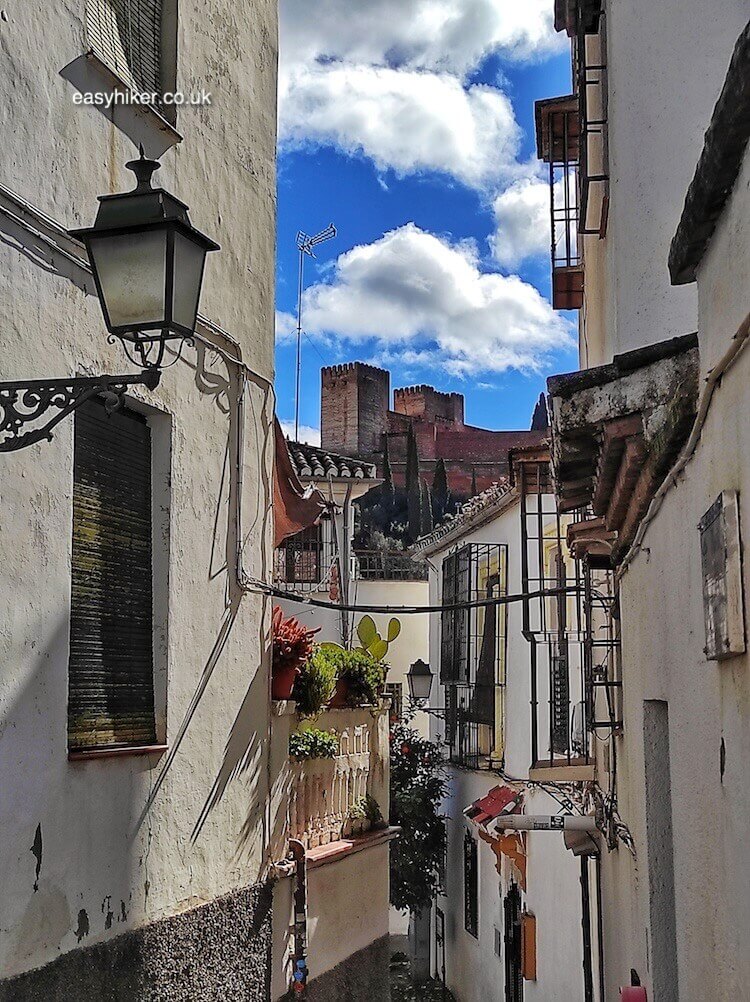
… or when one of the town’s many viewing platforms provides a 180-degree panorama.
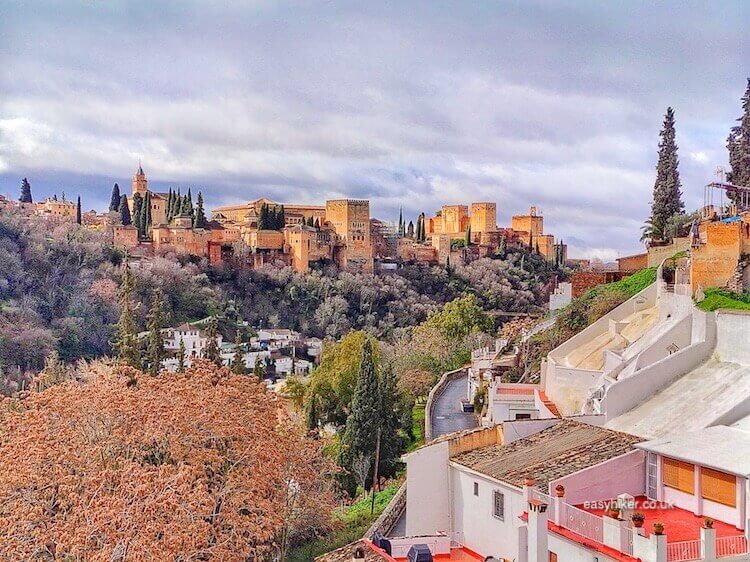
That may be a lot to see for one day, but – believe it or not – you can squeeze all of that into a single two-hour walk, book-ended by a classic Andalusian mid-morning snack and a lunch in a tapas bar.
Does that sound good to you? If so, you are welcome to read on.
We start our walk (ideally between 9 and 10 a.m.) with a climb into the Albaicin, heading off somewhere to the east of the Plaza Nueva near the Darro river. It matters less where exactly you begin your climb and far more to have a specific target – because this helps to avoid getting distracted and lost in the maze of the Albaicin streets.
We suggest to aim for the churreria Las Quatro Esquinas on Calle Pagès, which may not offer the elegant interiors of the glitzier outfits downtown, but the quality of their freshly-made churros is as high if not higher. Churros and their longer, thicker cousins, the so-called porras, are deep-fried sticks of seasoned dough that are meant to be dipped into a hot drink and best enjoyed as a mid-morning snack between a light breakfast and a late lunch. (We suggest to order five porras to share between two persons alongside one cup of hot chocolate and one cup of milk coffee.)
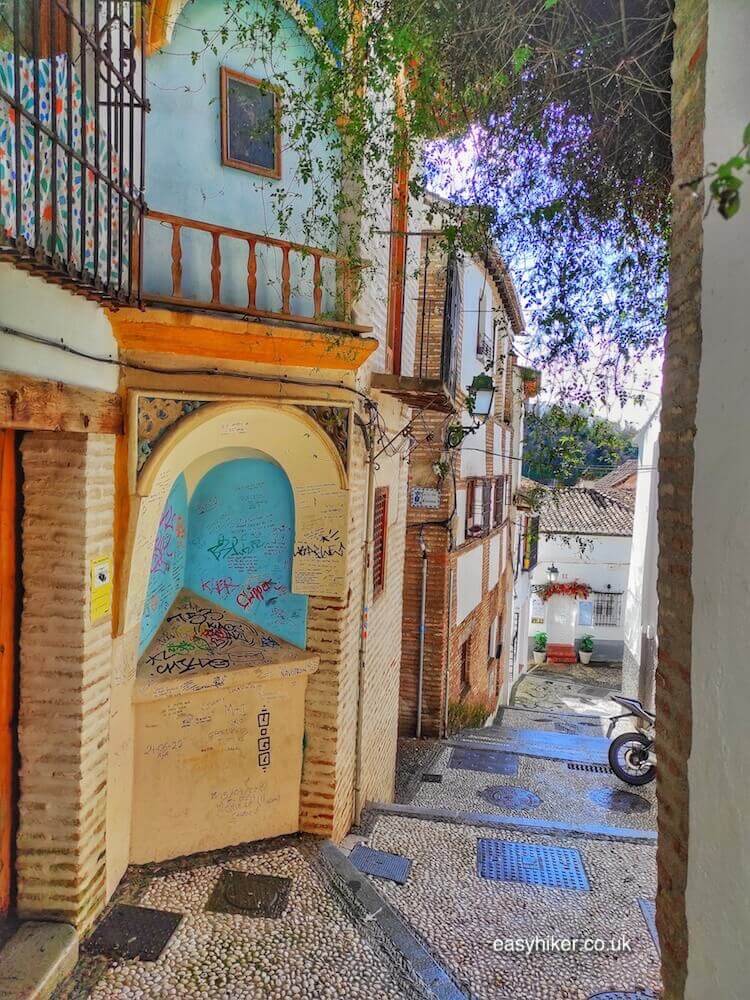
The Albaicin, the older of Granada’s two old towns, is scenic and full of photo opportunities …
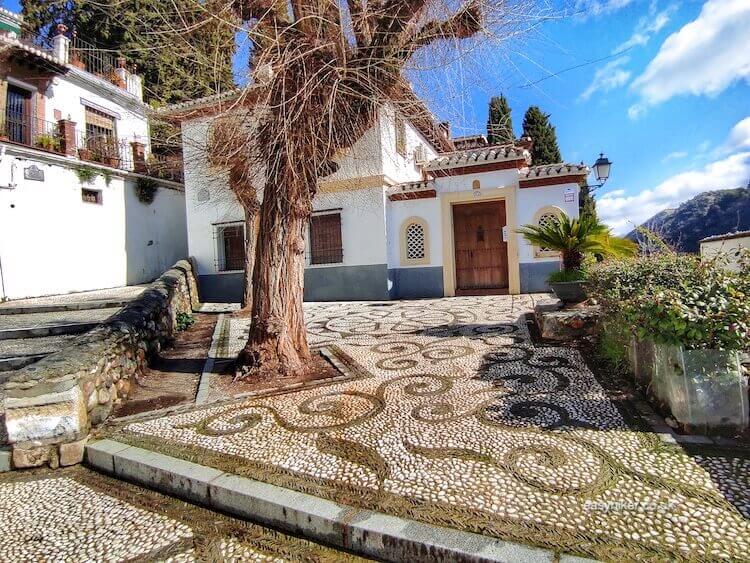
… but it is also true that, towards the north in the area of Calle Pagès, it feels a little “lived-in”, more Andalusian village than shiny tourist town. Which, of course, has charms of its own.
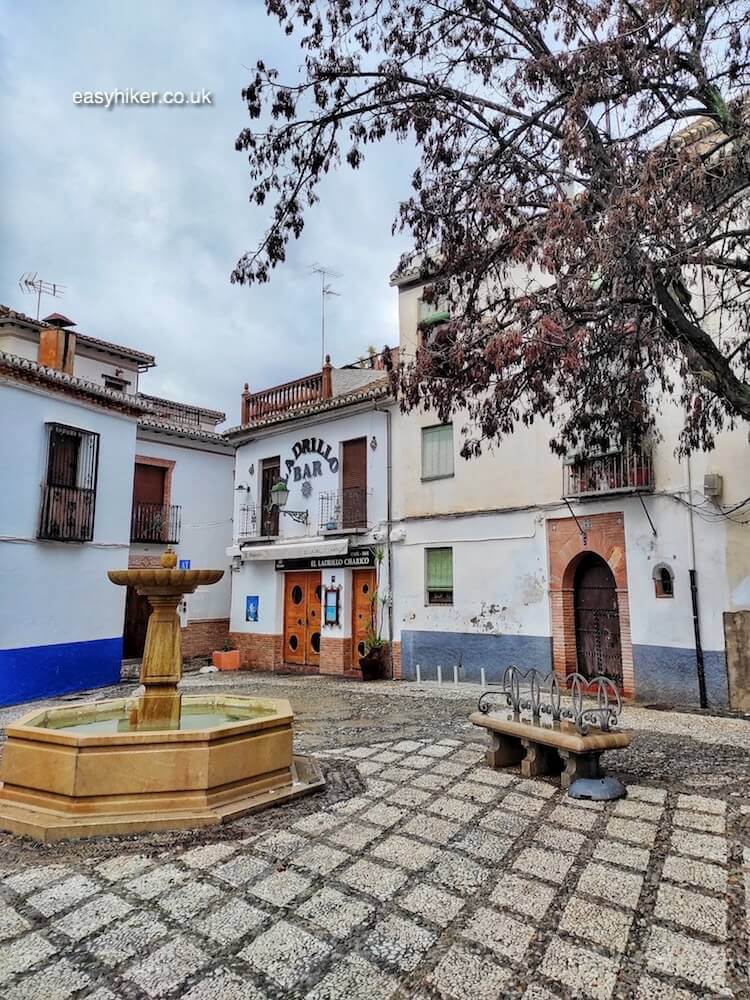
From the churreria, turn back to the Plaza del Salvador and walk down the Cuesta del Chapiz until you reach the crossing with the Camino del Sacromonte. This is where you should turn left …
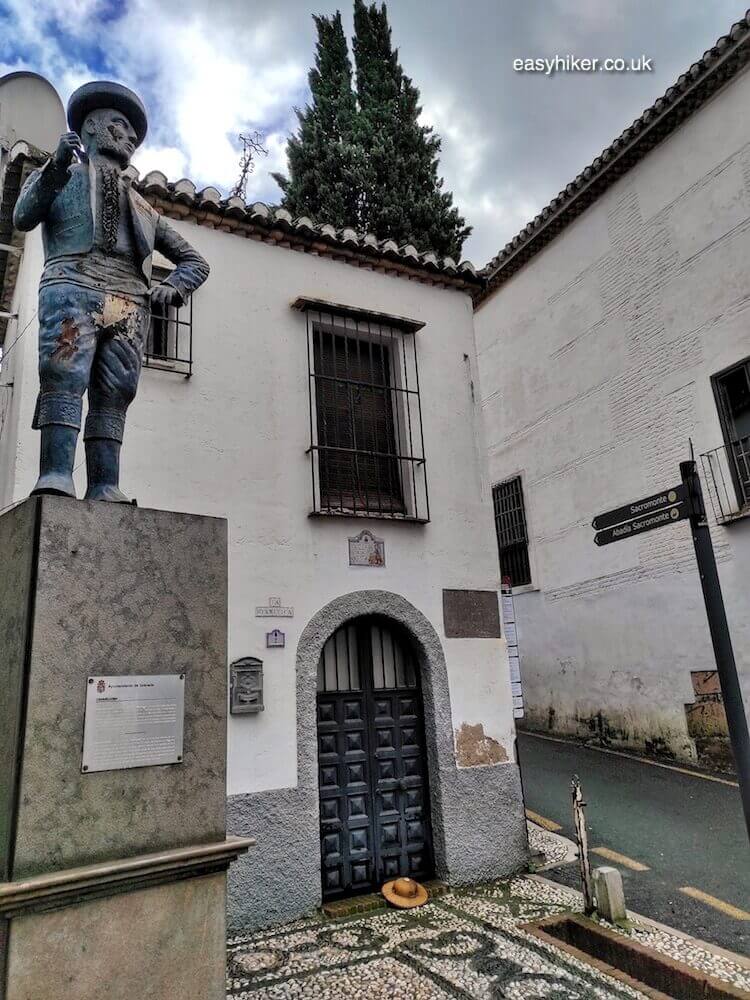
… to enter a country road that is lined by flamenco schools and restaurants which host regular flamenco performances.
Granada is still one of the main centres of the gitano population in Spain: the town has a 50,000-strong Roma community, most of whom live in the Sacromonte area.
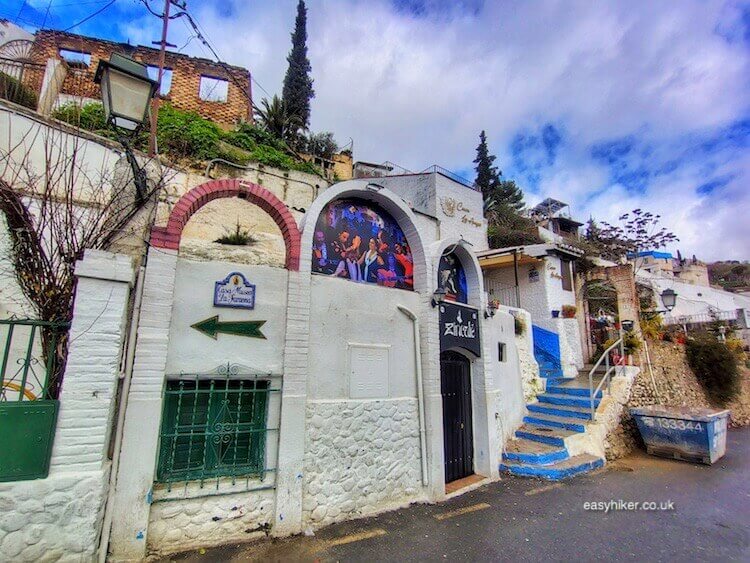
Look for the Camino Verea de Emedio on your left hand side (just behind, you will also find the Museo de Cuevas de Sacromonte).
If you continue straight on the Camino del Sacromonte, you will reach Sacromonte Abbey in less than 30 minutes (approx. 1 km down the road).
We took a left turn to climb the scenic Camino de Emedio on the ridge of the Sacromonte hill …
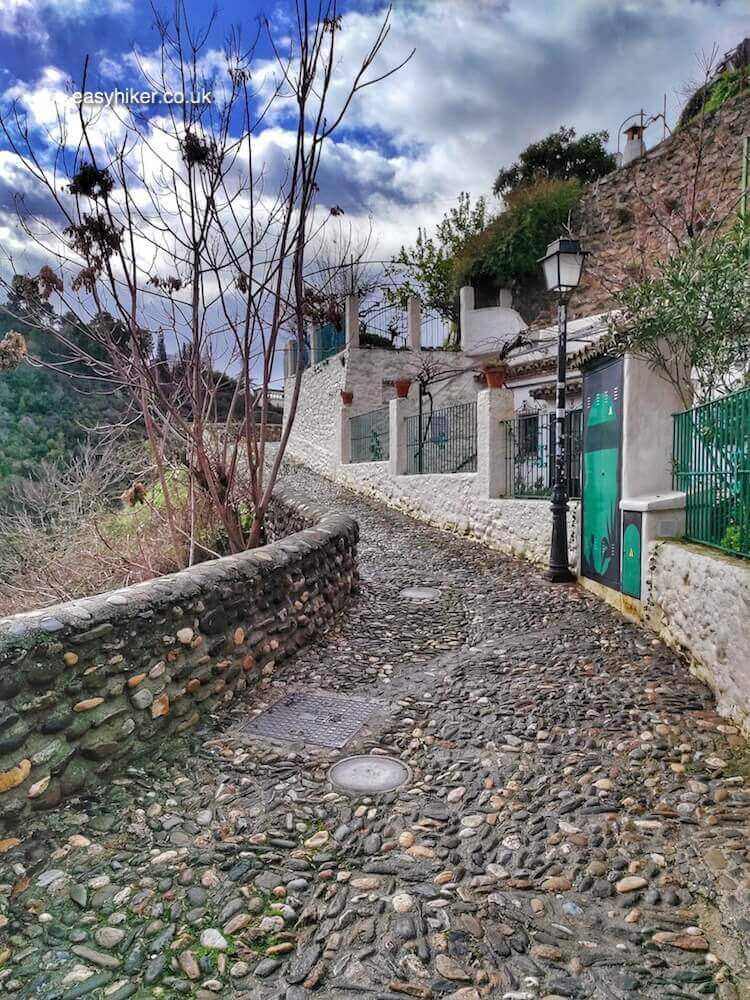
… from where you have the town at your feet.
Eventually, you will reach the Mirador Mario Maya, the viewing platform that is the high point of the walk in more than one way. Take the opportunity to rest for a while to let it all sink in …
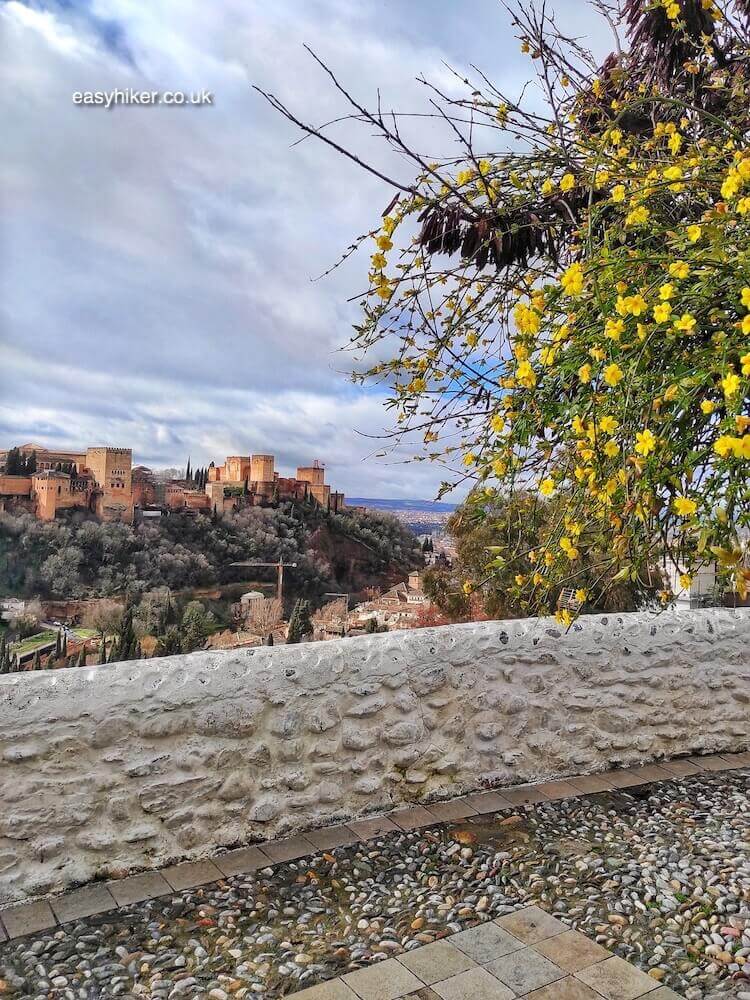
… and then slowly descend in the direction of the San Nicolas Church Plaza which serves as a lively meeting point for visitors.
When the weather is fine, you can sit on the perimeter walls or the church steps to bask in the sunshine and listen to the buskers go through their repertoire of classic pop songs, but even on a cool winter’s day, there are always the stunning views to enjoy.
Return to the river bank and the adjacent Carrera del Darro. This scenic street is lined by tapas bars, which – if you have followed our suggestion and started the walk between 9 and 10 in the morning – should all be open by now. It’s time for lunch! (Restaurants in southern Spain rarely begin to fill up before 1 o’clock.)
Afterwards, if you still have some energy left, you can visit the New Old Town (to the west of the Gran Via de Colon) which is smaller but grander than the Albaicin.
Near the cathedral, you will find a pretty little market …
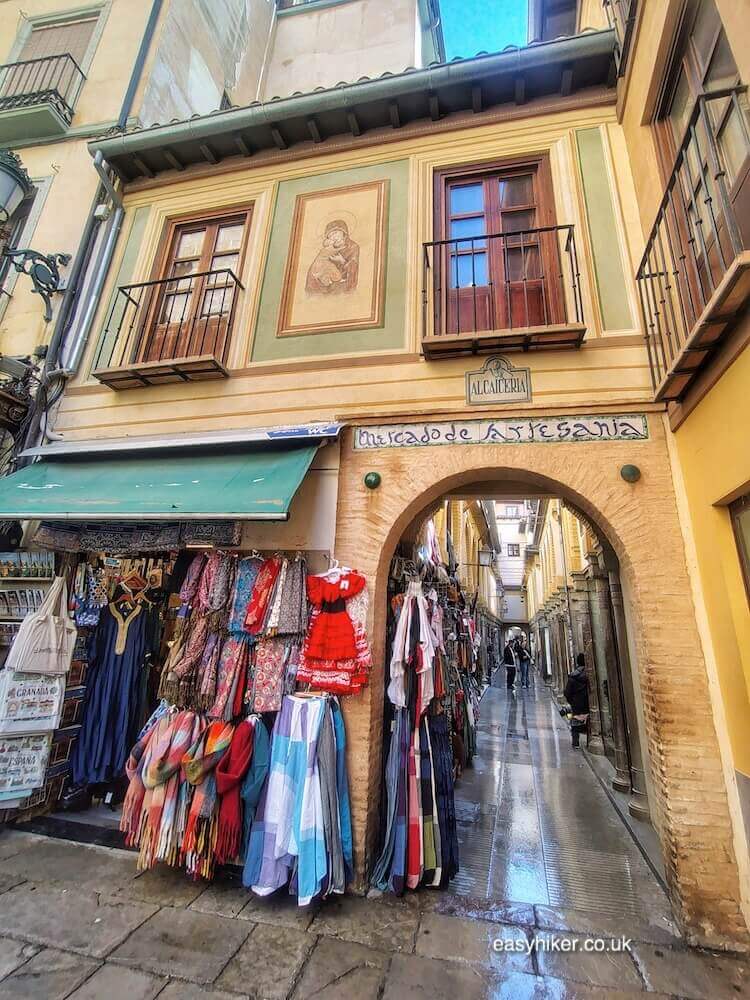
… that feels like an oriental bazaar – because that’s what it was before Granada was “reconquered”: Muslim Granada’s textile and silk merchants sold their wares here.
Surprisingly perhaps, the market was preserved when the area was more densely built up under the supervision of the new overlords from Catholic Castile.
But the two cultures of medieval Spain were not as separate as outsiders might suppose. That’s what 700 years of not always hostile coexistence can do for a country: what is today known as the reconquista, after all, was not a centuries-long struggle between Catholics on one side and Islamic rulers on the other.
In reality, both sides were divided into many different factions that fiercely fought one another for centuries, and coalitions across the religious divide were rather common. In this process of blurring the boundaries between enemies and friends, some form of cultural fusion developed that survived the fall of Muslim Spain as a political entity.
The town of Granada and the surrounding region share a complicated history and equally complicated cultural loyalties. It is impossible to get to the bottom of it all – on a short trip, in fact, the mystery appears to deepen with every new experience.
To the visitor, the story of Granada, Andalusia and – in many ways – the whole of Spain can seem as knotted and impenetrable as the maze of narrow lanes in the Albaicin.
pic16