If you have recently found that very special person in your life, you may think that All You Need Is Love to engineer a successful Saint Valentine’s Day weekend – and you may even be right. The more world-weary among us, meanwhile, are aware that special persons may expect more than Words Of Love and Honey Pie – and that fancy Saint Valentine’s Day gifts may be needed to keep the flame alive, perhaps Something like a Ticket To Ride for two to a romantic destination.
Are you still searching out destinations for a St Valentine’s weekend trip? Then read on, perhaps we can, well, Help!
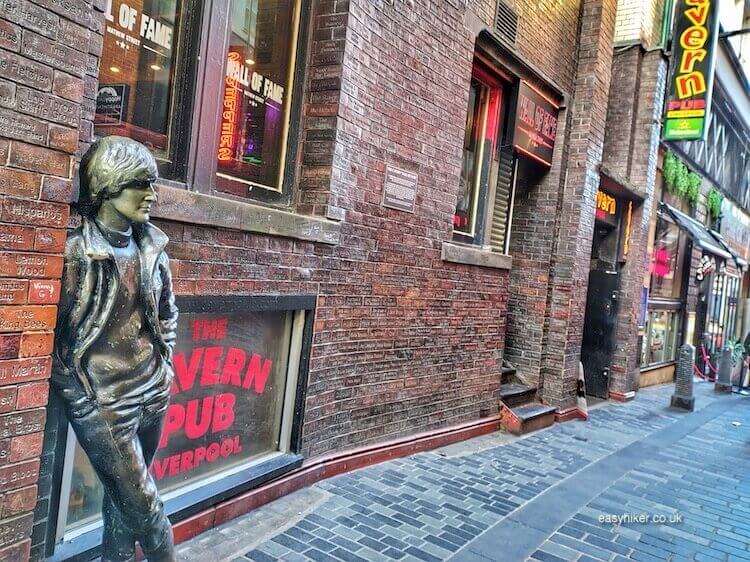
Yes, you guessed right: our romantic destination of choice is Liverpool. A bit quirky, perhaps? Admittedly, Liverpudlians themselves may be surprised to hear that their city is being suggested as a rival to destinations like Venice or Paris.
But romanticism is more than idyllic scenery: take the greatest works of romantic art, and you will find that all of them are characterised by turmoil, sudden twists and changes, climbs to the highest of emotional peaks and falls into the darkest valleys of despair – Liverpool has the lot: grandeur and hybris, a fall from grace, sin and redemption.
And all of that history has been woven into the urban fabric – so densely that it can sometimes be caught in a single view, …
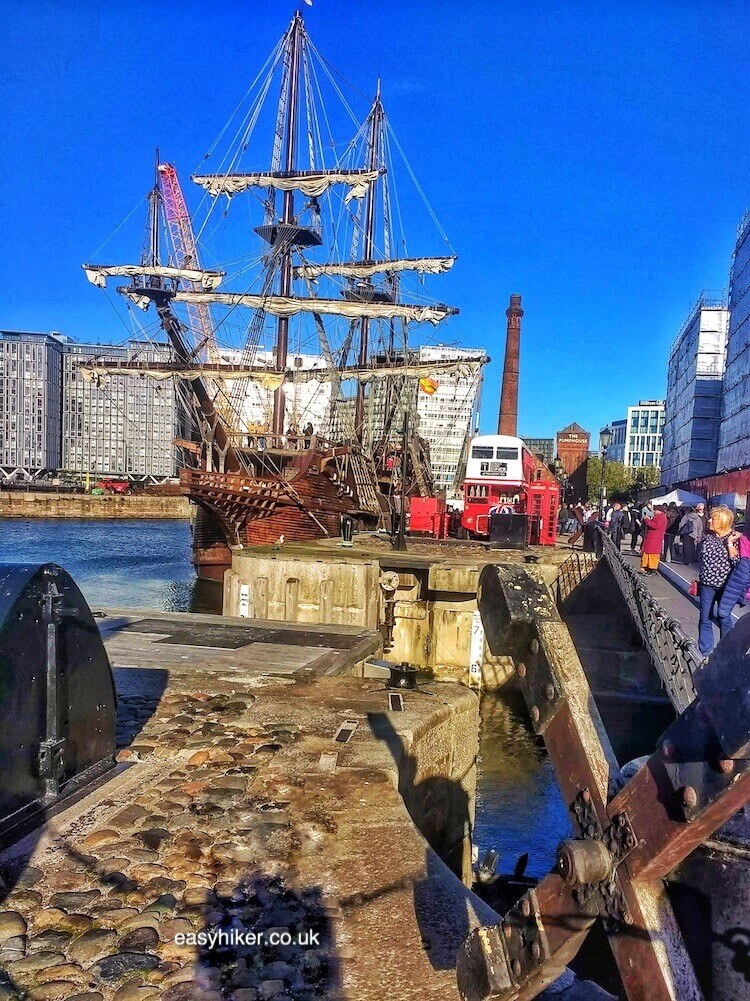
… although for a deeper experience than just a glimpse of the city’s maritime heritage, some nostalgic relics from the golden post-war years and a bit of modern architecture, you may need to open your zoom lens a bit wider to include motifs from more than a single place in the city. Or, to use a musical metaphor: to hear the chord that is produced by the Fab Three of Liverpool.
The Fab Three of Liverpool: Britain’s Old Gateway to the West
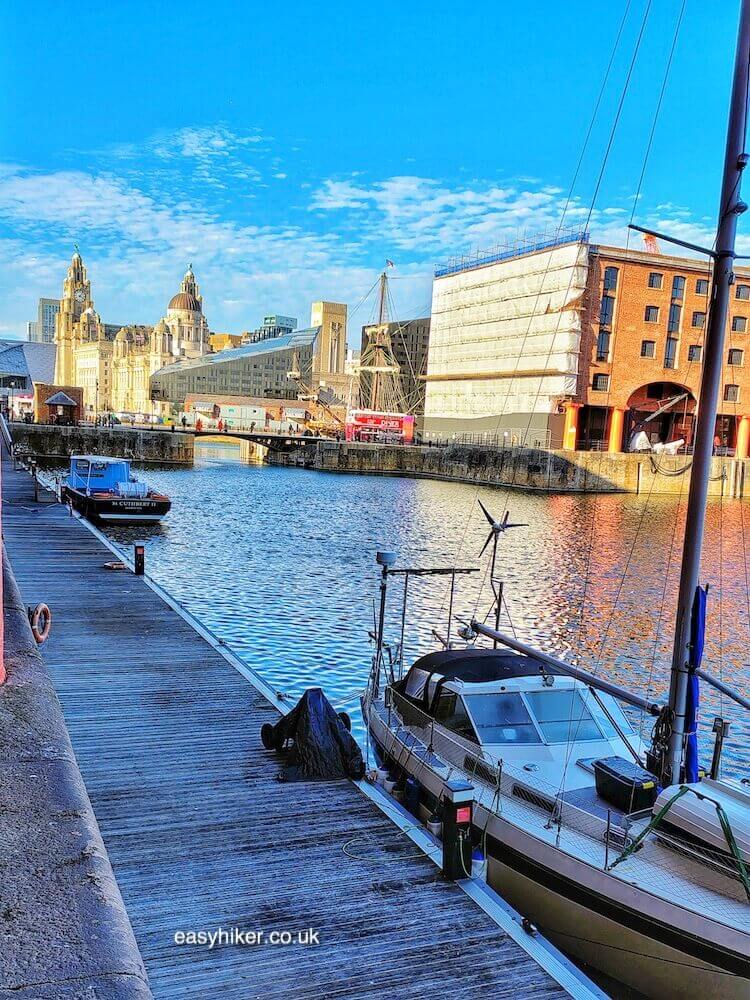
First up, the city’s maritime history which is best experienced in the docks. Liverpool was never much of an industrial town – in stark contrast to Manchester, its nearest northern rival – and rather a hub of trade instead: for a while, this mainly involved the transport of slaves (which is where the sin comes in), but later, the city also served as the gateway for other kinds of business with the colonies and the USA.
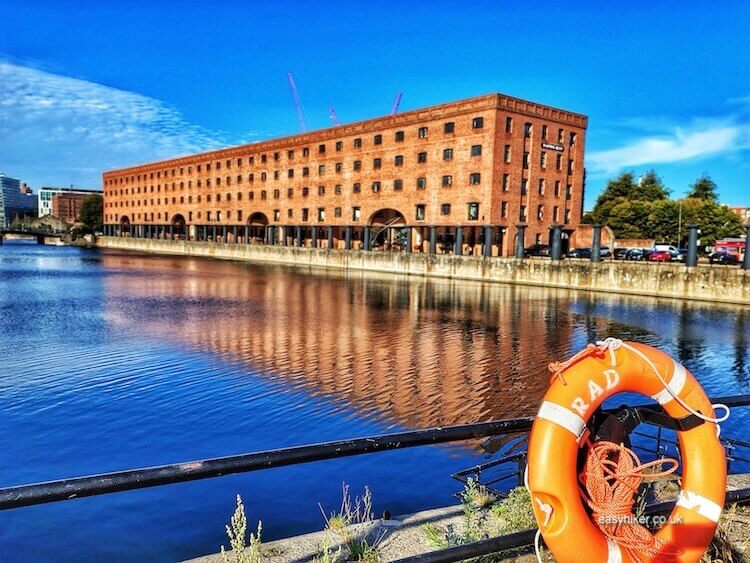
The docks that were built during this period are still standing: in 1846, Liverpool’s warehouses were the first in the world to face the waterfront, shortening the routes for the loading and unloading of the merchandise. They were also constructed around a cast iron structure: that was revolutionary, too.
After WWII, the Albert Docks went into a slow decline and were closed for a decade before being restyled as a leisure-and-entertainment centre in the 1980s, otherwise a dark period for the city during which the renovated docks provided a peek into a sunnier future.
The new Albert Docks were popular from day one and hosted Britain’s most popular TV breakfast show for nearly a decade.
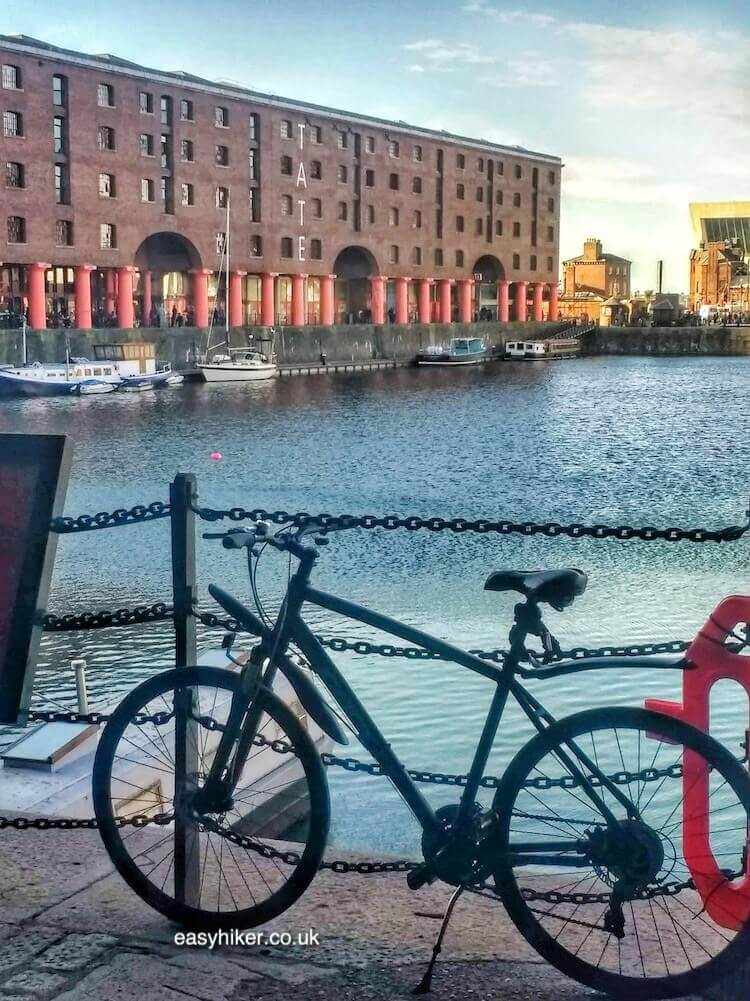
And, not to forget: romantic destinations need scenic spots for intimate strolls à deux. The Liverpool docks are the go-to-place for that as well.
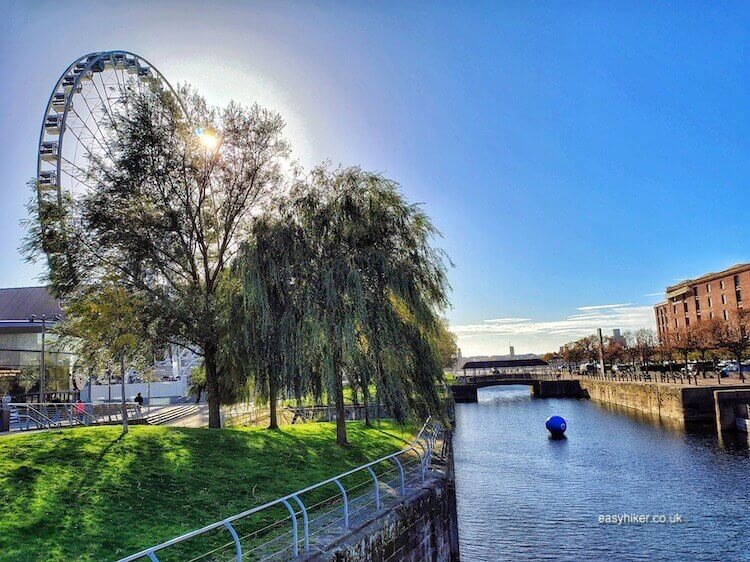
The Fab Three of Liverpool: A Place of Redemption
The redemption of Liverpool started in the 1980s but remains a work in progress. This is nowhere as apparent as in the Baltic Triangle, …
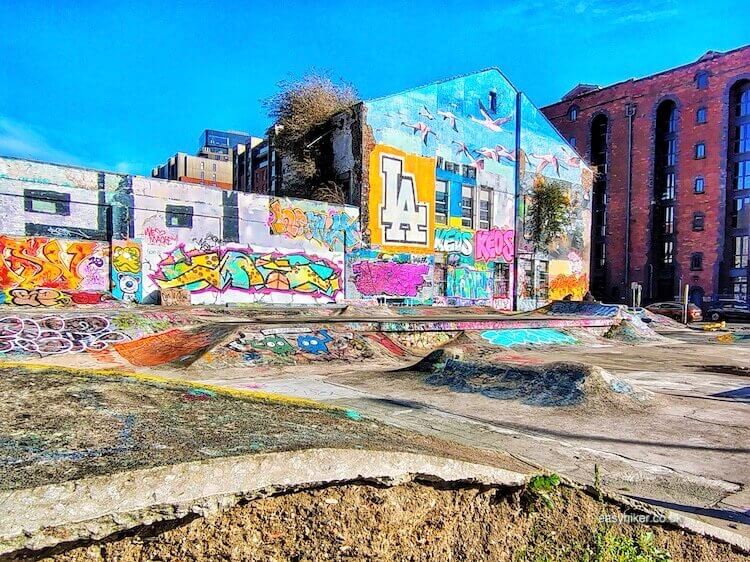
… the area north of the docks that served as the hub for Britain’s trade in timber. Wood was imported mainly from Scandinavia (which is how the Triangle got its name) and then stored by local traders, processed and distributed to shipbuilders as well as the construction industry.
Most of these companies have long gone, but some are still there, having traded in this district for a hundred years or more.
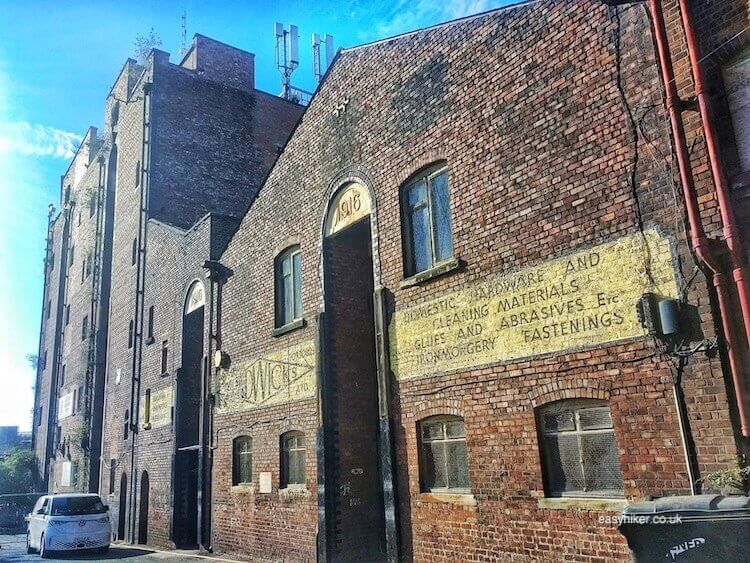
This area, too, fell into neglect after WWII but took a longer time to recover: no breakfast TV show was ever broadcast from here. Instead, it was the companies and the people who produced popular entertainment who moved in – film makers, sound studios, creative agencies – and wherever such people go, the kind of money needed to generate a full-scale urban regeneration soon follows: this is Rule Number One 1 of gentrification, for which the Baltic Triangle is a textbook example.
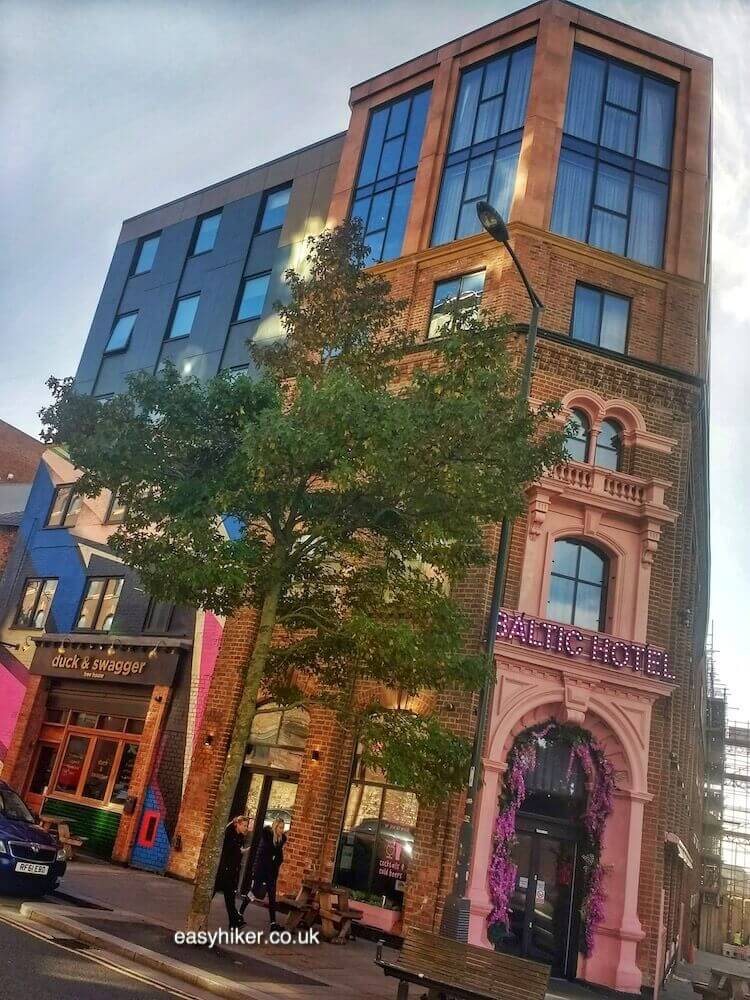
Take a stroll around the area between Jamaica Street and St James Street and then, if you feel peckish, round off this stage of the walk with a meal in neighbouring Chinatown.
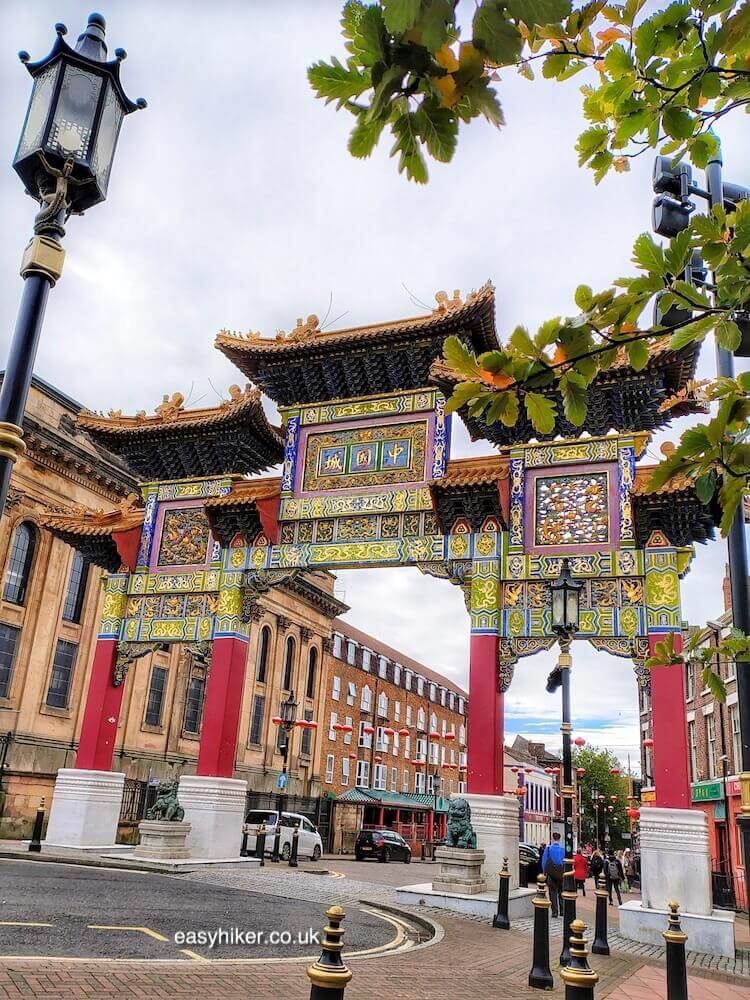
I say “neighbouring”, but the Chinese Arch is one kilometre or so away, and we have still a way to go for the final stage of our journey. Which is why it is best to bring a light pair of outdoor shoes for the day.
The Fab Three of Liverpool: The Fab Four
The regeneration of Liverpool has proceeded not continuously but in waves. The most recent and most powerful of these waves is powered by tourism – which, in turn, is largely about these guys.
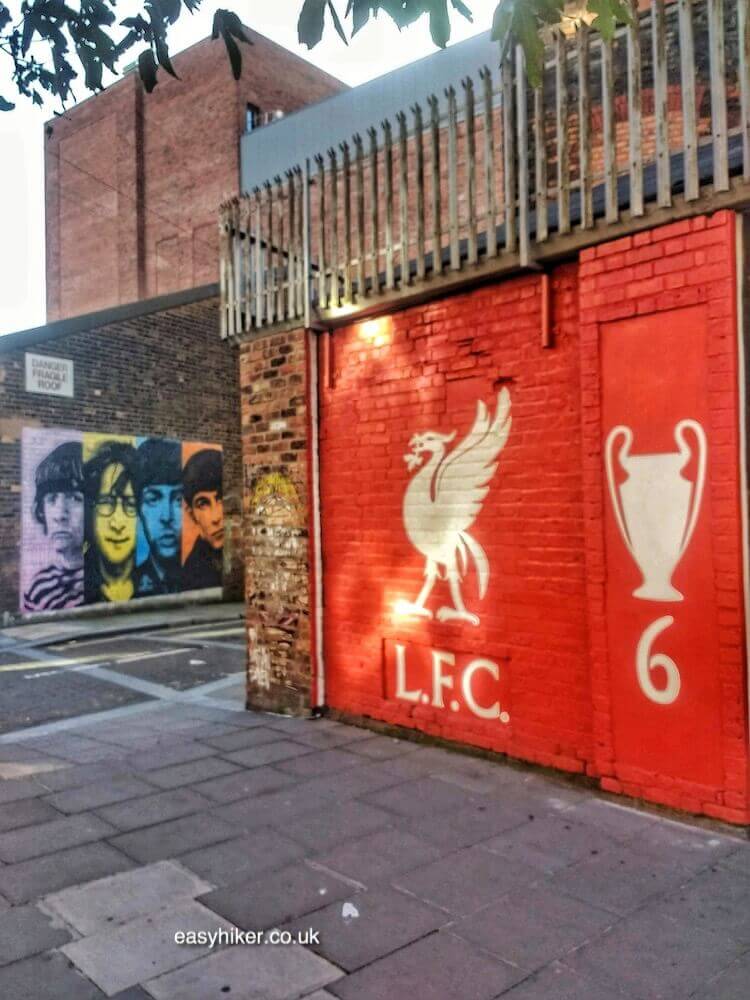
No, not the adidas ambassadors from Anfield Road but the four guys on the left who never won a European Cup but the hearts of millions of people all over the world.
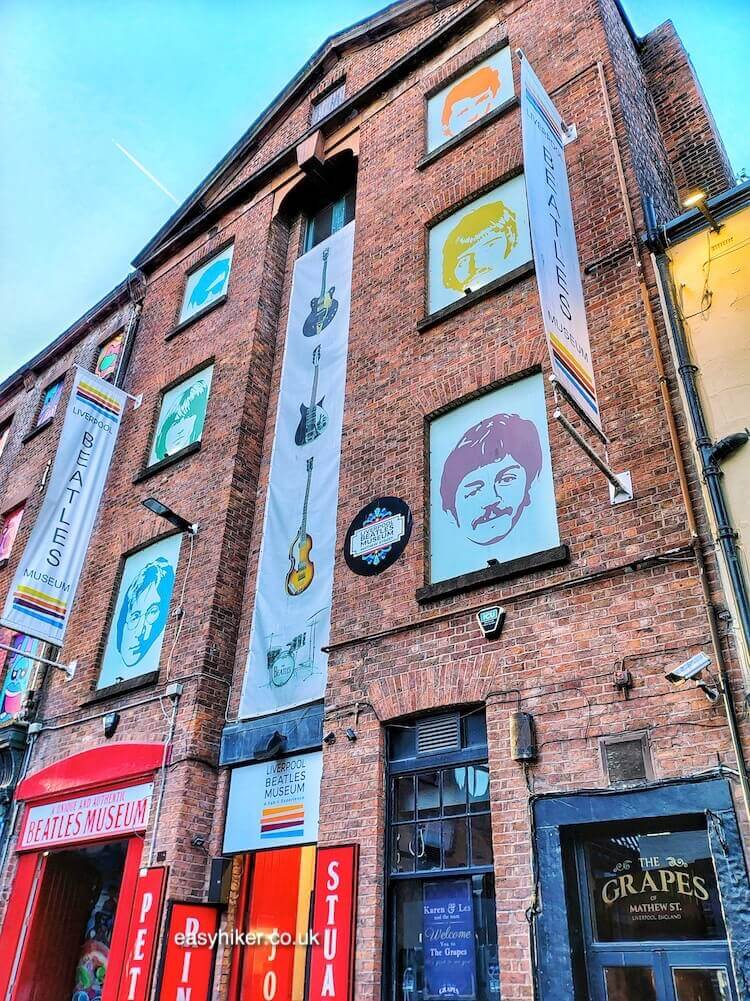
Is there anyone who really dislikes or even hates the Beatles? That is their unique place in the history of popular music. People may have other favourites, but even the greatest contrarians appear reluctant to mount a full-scale attack on the Beatles or their work.
At some level of our souls, each one of us is a Beatles fan. Liverpool, meanwhile, is more than just the place where they came from: it is and has always remained the centre of the Beatles Universe.
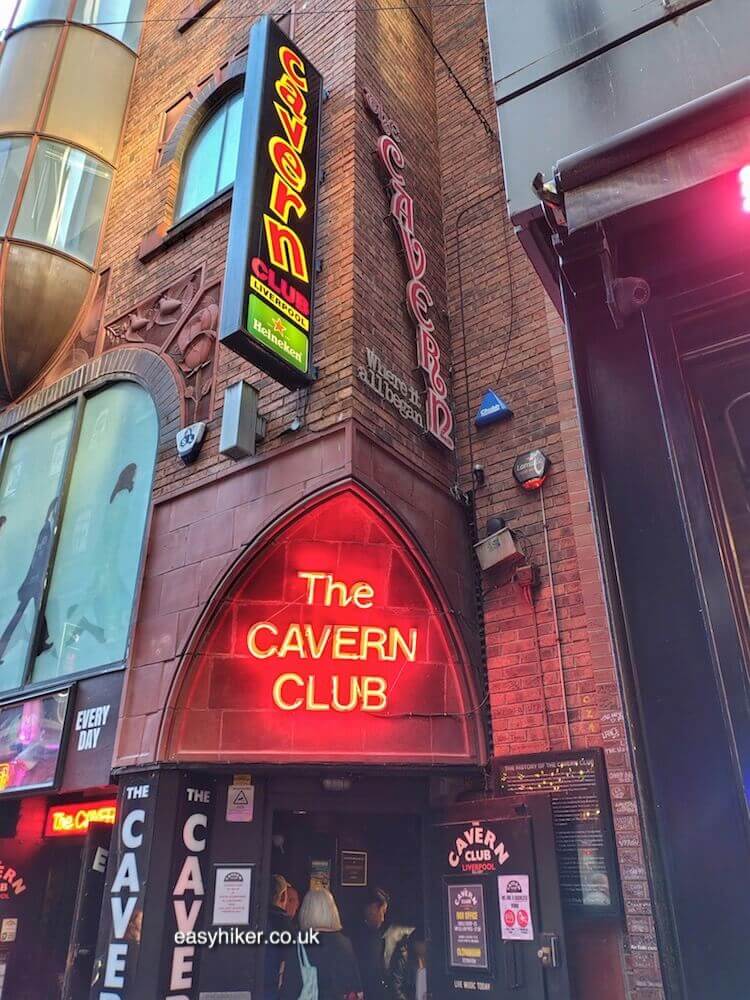
John, Paul, George and Ringo are celebrated in places all over the city, but it is around Matthew Street where Liverpool truly becomes Beatle town.
The original Cavern Club no longer exists (reputedly, the city council is still looking for the guy who authorized its demolition so that they can publicly tar and feather him), but Liverpool won’t let you find out easily that the current Cavern is a mere replica (you have to read the small print in the visitors’ brochures).
Well, that’s Liverpool for you: it has always been a place of survival artists, of tricksters and hustlers, who – when no easy route to a profitable enterprise appears to suggest itself – are not averse to conjuring something up.
Take the Brian Epstein Theater, for example: this is a venue where – when it was called the Neptune – Mr Epstein once acted in a play, as a minor character and under an assumed name. And he was not even a member of the band!
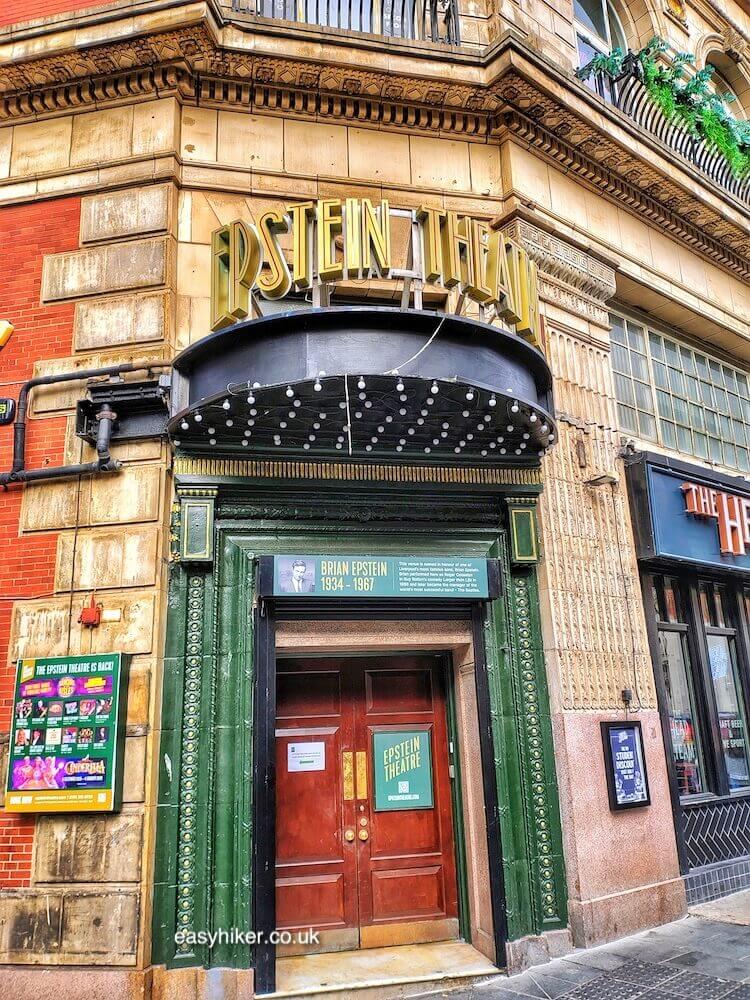
The best way to experience the Liverpool of the Fab Four is to put in an extra day or two on your way to or from other destinations in Northern Britain (John Lennon Airport is the best gateway to Wales for visitors from abroad). That will give you time to venture out further for trips to Penny Lane, Strawberry Fields or the neighbourhoods where the Beatles grew up. Alternatively, you can visit the city as a Day Tripper from a trip to Wales, following which you may then, if you fancy a return visit, Get Back to where they once belonged – and, in a way, still do belong, now and for ever.
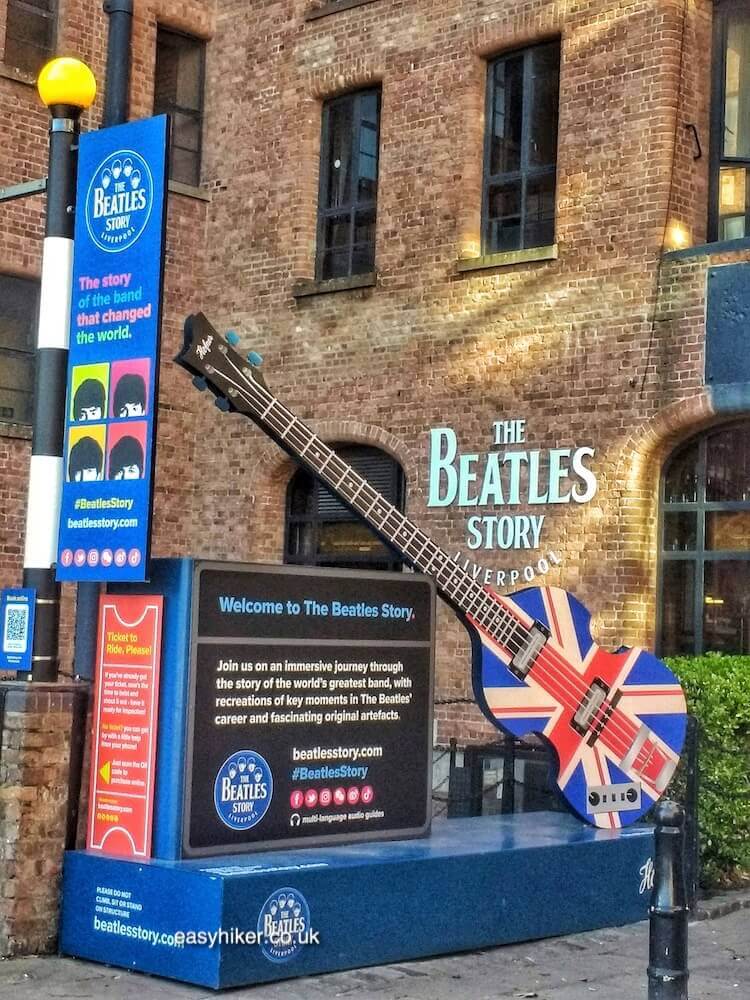
pic15



I appreciate the information you shared.
Really enjoyed this walk guide — it’s great to see Liverpool’s green spaces and city highlights presented in a way that feels easy to follow. I liked how you captured both the scenic parts and the character of the area, making it feel like more than just a list of routes. The photos and descriptions make me want to explore these spots next time I’m in the city. Thanks for sharing such a clear and inviting guide!