In 1838, eight statues were erected around the Place de la Concorde (in the centre of Paris) that were dedicated to eight major cities of France: Bordeaux, Brest, Lille, Lyon, Marseille, Nantes, Rouen, and Strasbourg.
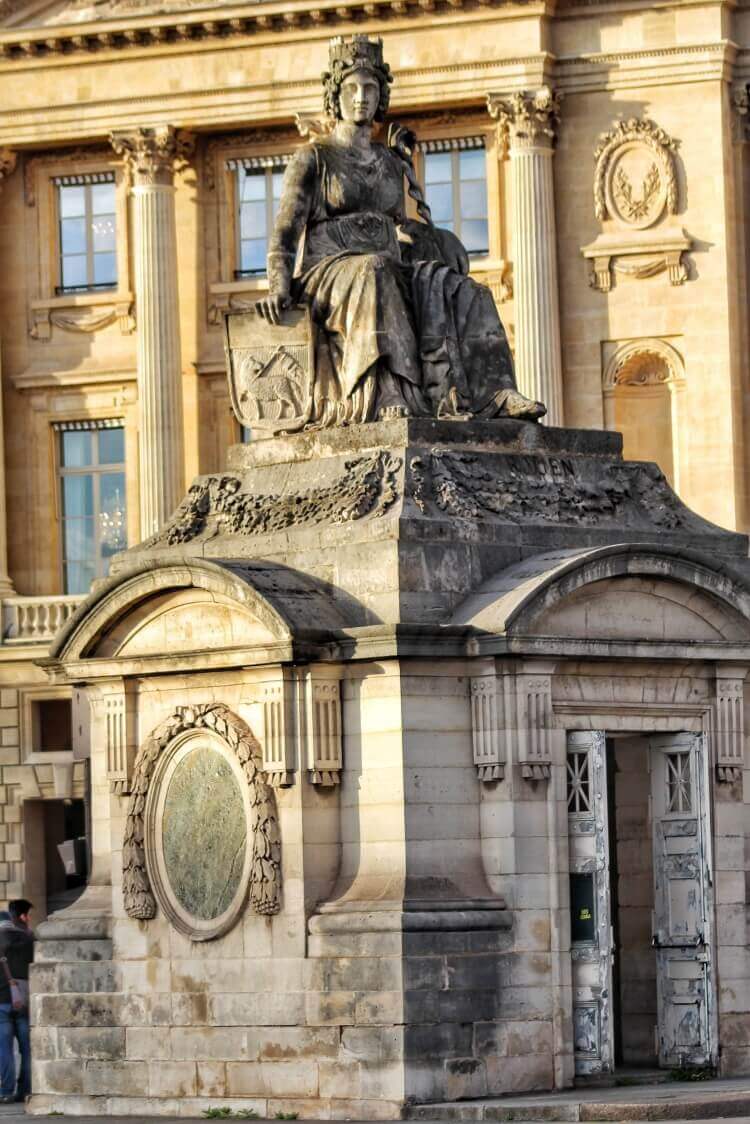
Why these eight cities – and not Toulouse, for example, which was bigger than Strasbourg at the time, while Brest would not even have made it into the top 20?
Well, there was something more important than size that these eight cities had in common. They were all coastal towns or border towns, and the statues represented the corner points in a grossly simplified map of France. Strasbourg in the east, Marseille in the south (Nice at the time still belonged to the Kingdom of Sardinia), Bordeaux in the southwest and so on.
In this image of Fortress France, Brest represented the northwestern tower, the first point of defence against hostile forces from the northern Atlantic (la perfide Albion, first and foremost).
Throughout its history, naval power has been the purpose of Brest, its sole raison d’etre. While nearly all other towns in Europe – agricultural market places, administrative centres for church or crown, hubs of trade and industry – had to adapt to changing circumstances and conditions, Brest never changed: it did not need to and always kept its course.
In the construction and further development of a city like that, aesthetic considerations never counted for much, and never less so than after WWII. Brest had been virtually flattened by allied bombardments and house-to-house combat with the retreating German forces – it had been an important base for the Third Reich’s Navy – and the French state, still a major colonial power, needed the city to resume its former role as the key to the country’s presence on the global seas.
Looking for the Beauty of Brest
Brest was rebuilt in haste, and it shows: today’s Rue de Siam, the city’s main street, is clearly not the Champs-Élysées.
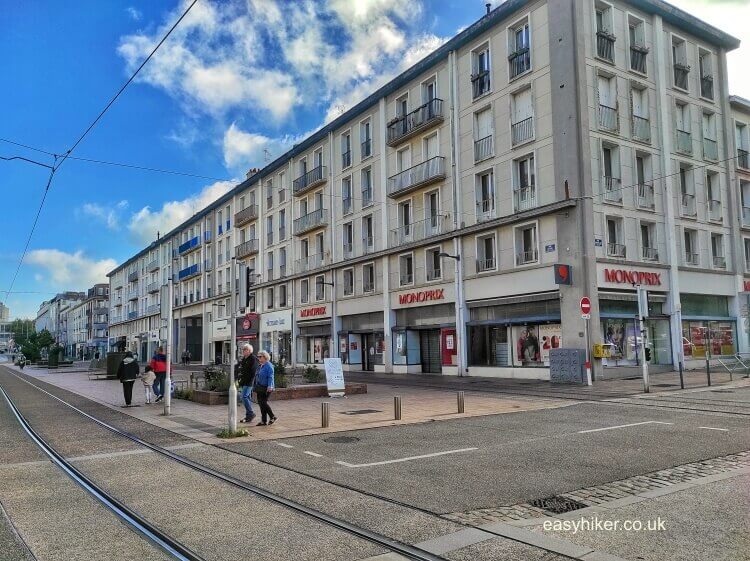
But there is more to Brest than drab architecture. The city is lively, open and – yes – colourful in its own way …
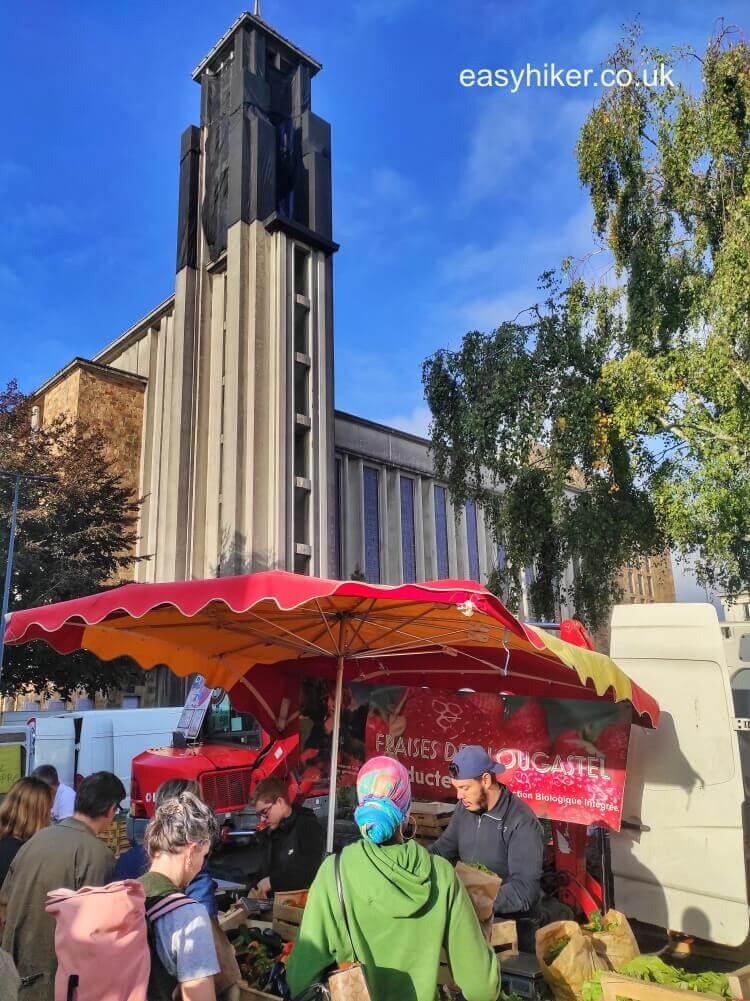
… and feels like a good place to live.
Brest has much to offer to its inhabitants: parks and amenities, a lively cultural scene, near-by beaches and affordable spaces to live, but also a few interesting things to visitors. Such as some of the most beautiful sections of Brittany’s rugged coastline – we will get there in due course, but today, we shall concentrate on the city itself.
Where you must know where to look. The town can be surprisingly beautiful, but the beauty of Brest is well hidden, and we suggest three places where you can find it.
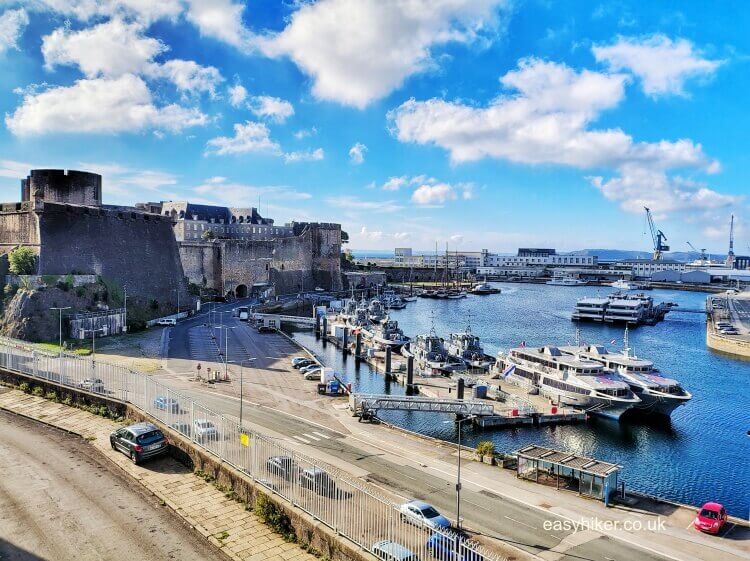
Number one on the list is Brest Castle. Grim and forbidding, it has dominated the town centre around the harbour ever since it was extended from a medieval fortress to a naval stronghold during the rule of Cardinal Richelieu in the 17th century. The chateau still serves as the headquarter of the French naval forces in the Atlantic Ocean, making it the world’s oldest castle that still serves its original purpose.
Grim and forbidding it may be, but if you walk up the hill to the left of the chateau, you will find an entirely different scene in the castle’s back.
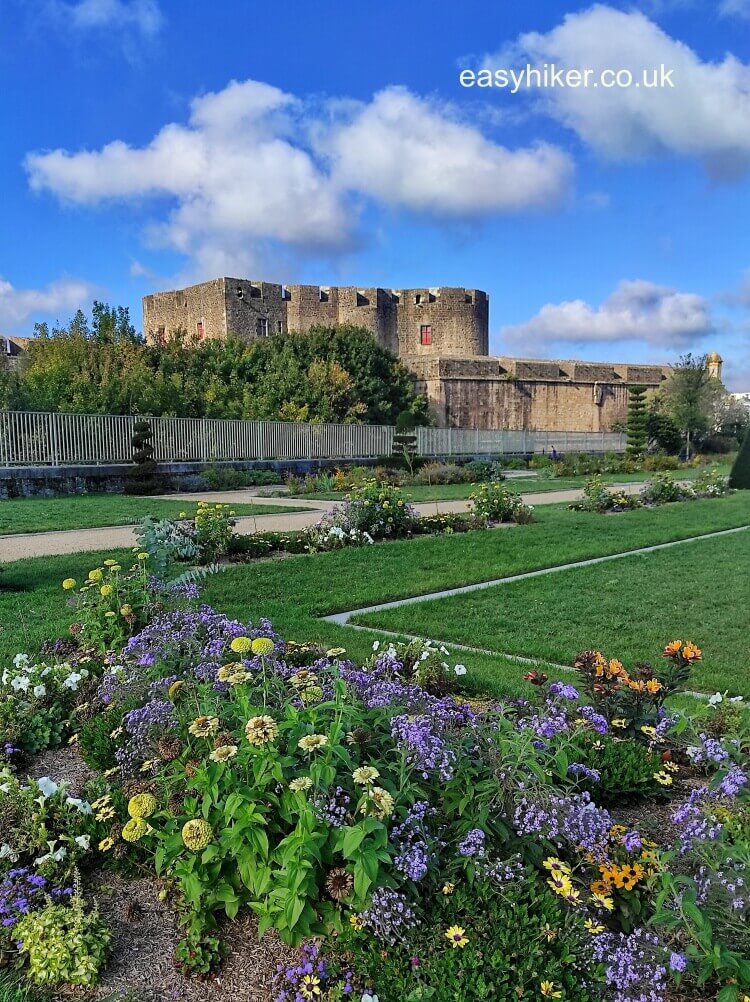
Enter the promenade on the Cours Dajot, the most scenic walk we found in town.
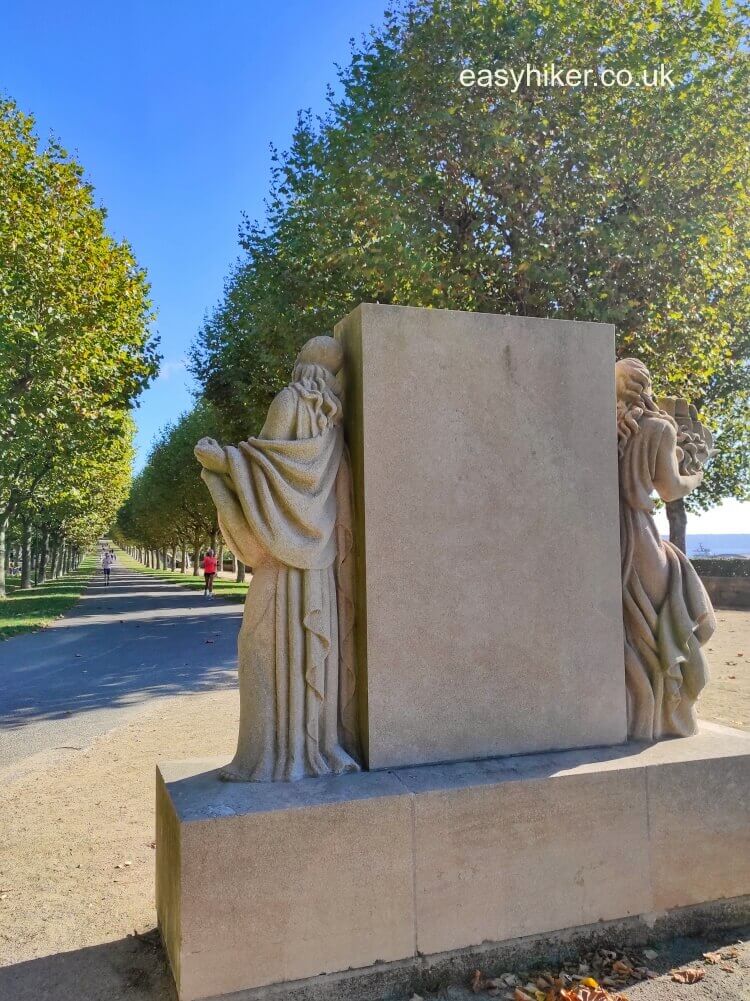
At the end of the footpath, you will find the Naval Monument that was erected in the 1920 to commemorate the role the US Navy in WWI (Brest had served as the US Navy’s port of entry in Europe).
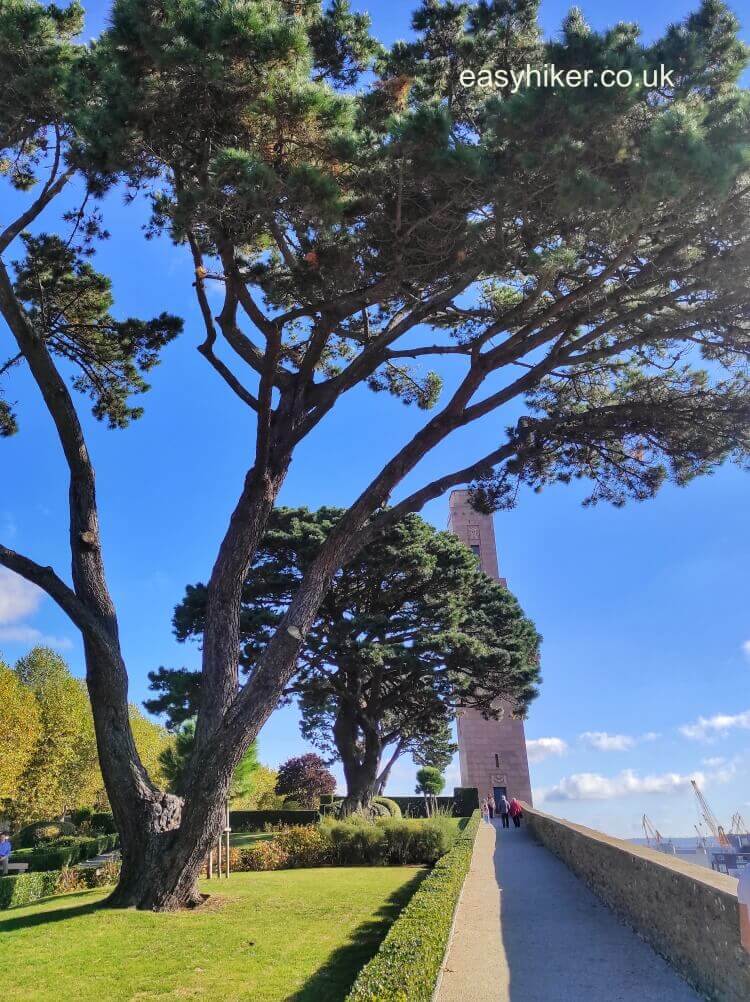
If you finish this short walk in time for lunch (or dinner), you can now descend the stairway on your right hand side for a closer look at Brest Harbour. Because this is also where you can find some of the city’s best seafood restaurants (on the Quai de la Douane), although we also recommend Chez Georges on Avenue Clemenceau (near the train station). Chez Georges is a traditional French bouillon – large and cheerful with hearty meals “for the many not the few” – which has, like so many other places in Brest (and unlike most other bouillons in France), stayed true to its traditions.
No trip to Brest would be complete without a ride on the city’s Téléférique, the cable car service that connects the town centre (the Jean Moulin station near the Rue de Siam where you can also buy tickets) with the Capucins district on the far side of the Penfeld river.
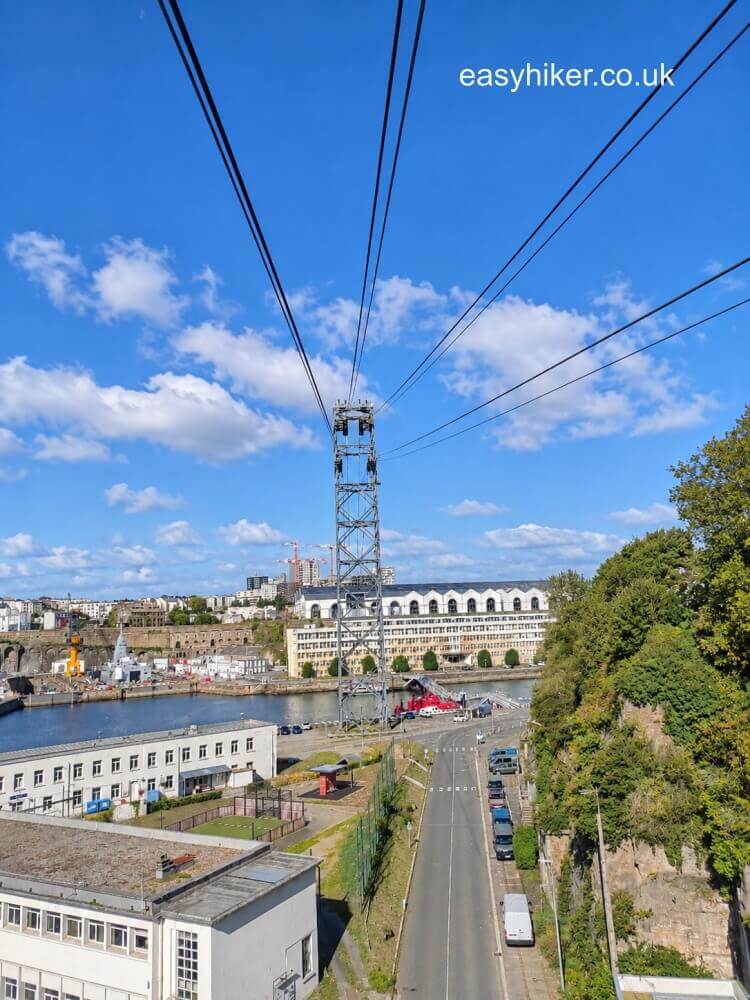
For the locals, the Téléférique merely provides the quickest way from the city centre to the other side of the Penfeld estuary, but for visitors, the views from the cable cars present an unmissable photo opportunity.
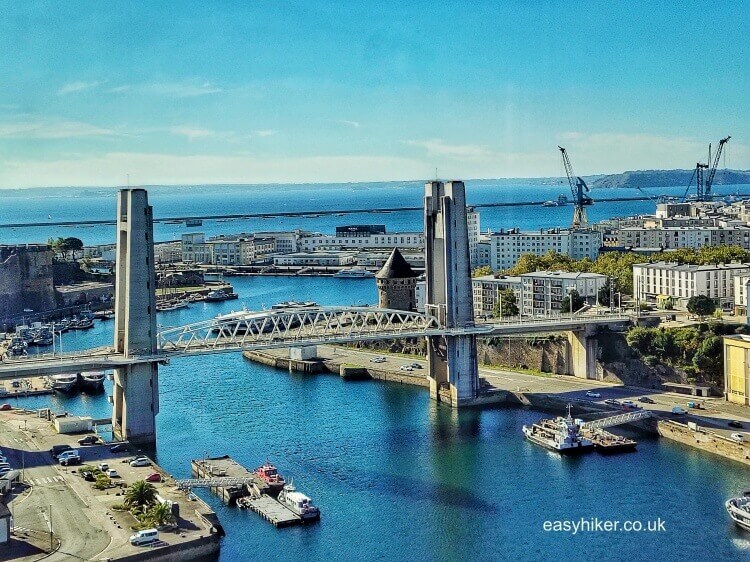
You will disembark at the Ateliers des Capucins, a 19th century shipbuilding factory that was, ten years ago, converted into the city’s new cultural centre. Inside the Ateliers, you will find a permanent exhibition of old manufacturing equipment (free to visit on the Place des Machines) as well as shops and restaurants.
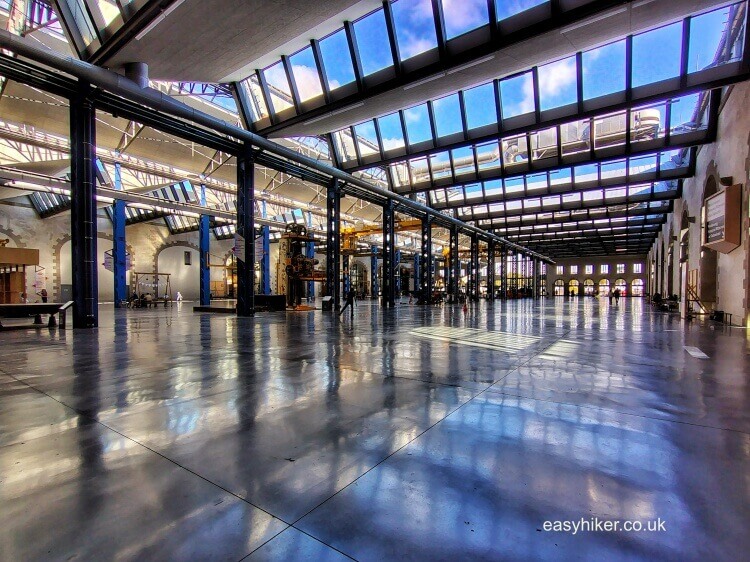
As it happens, the third major visitor attraction that will highlight the beauty of Brest is only a few steps away from the Ateliers. Leave the cultural centre via its “inland” exit on Rue de Pontaniou, cross over into Rue du Carpon and walk down the stairway immediately on your left hand side for the Rue Saint Malo.
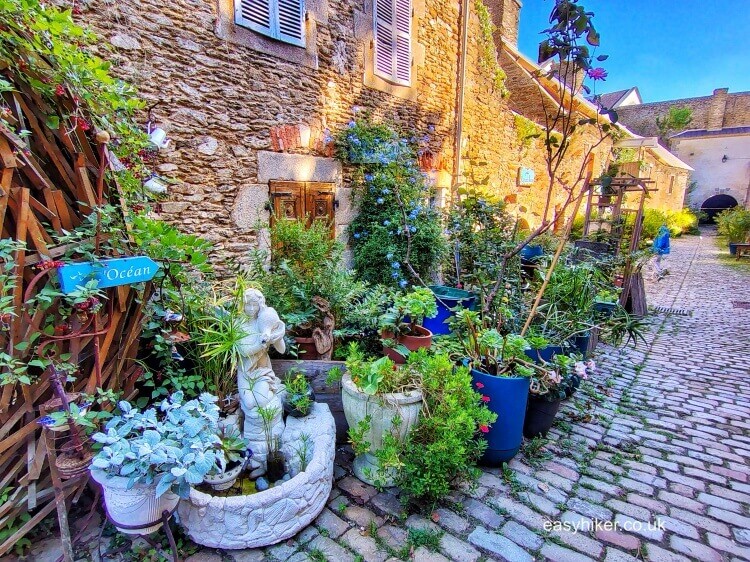
Rue Saint Malo was originally built in the 1690s for the people who worked at the near-by naval base and is the only street in Brest that can give you a feel of the city’s long history. Its cobblestones and granite cottages survived the French Revolution and the bombardments of WWII but came within a whisker of being demolished in the 1980s – until the City of Brest decided to turn the street over to the grassroots association Vivre La Rue which has since revitalized the area as an open-air cultural space.
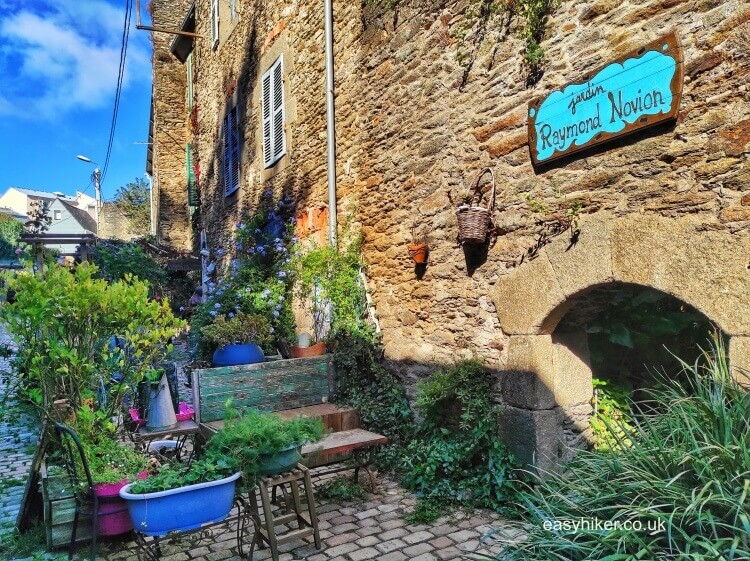
The highlight of the street is the sub tropically lush Raymond Norvion Garden …
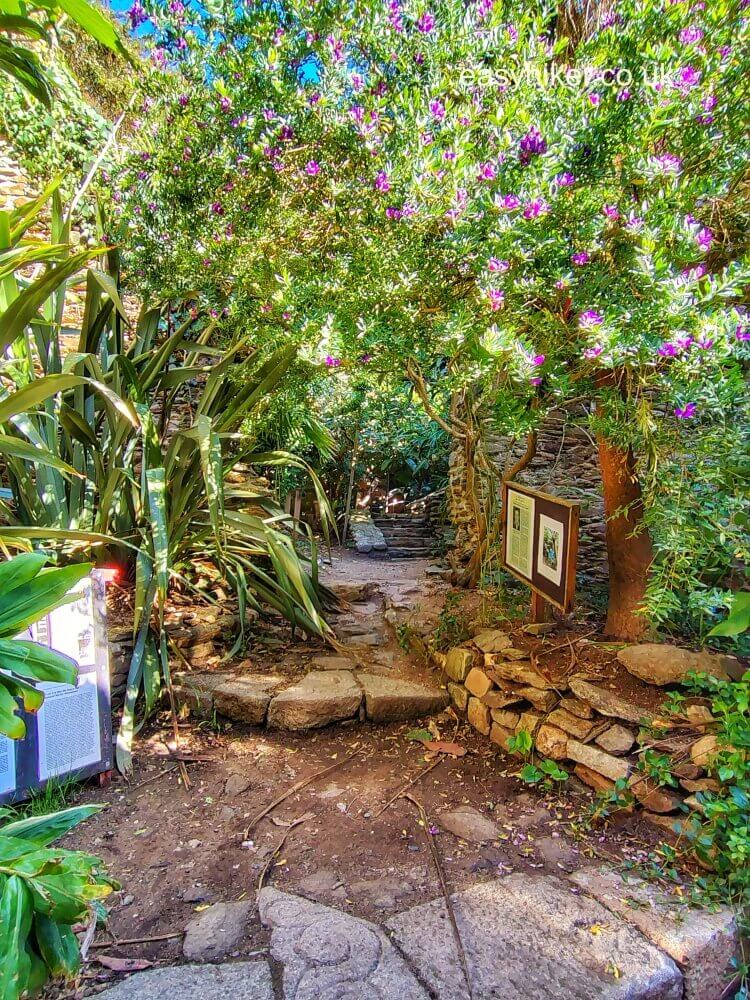
… with a flora that you would not expect to find in the cool maritime climate of northern Brittany. A few years ago, an avocado tree in the garden made headlines in the local and national press having even managed to produce edible fruit.
Yes: Brest can surprise its visitors in more ways than one. At first sight, it may be full of cookie-cutter post-war architecture, …
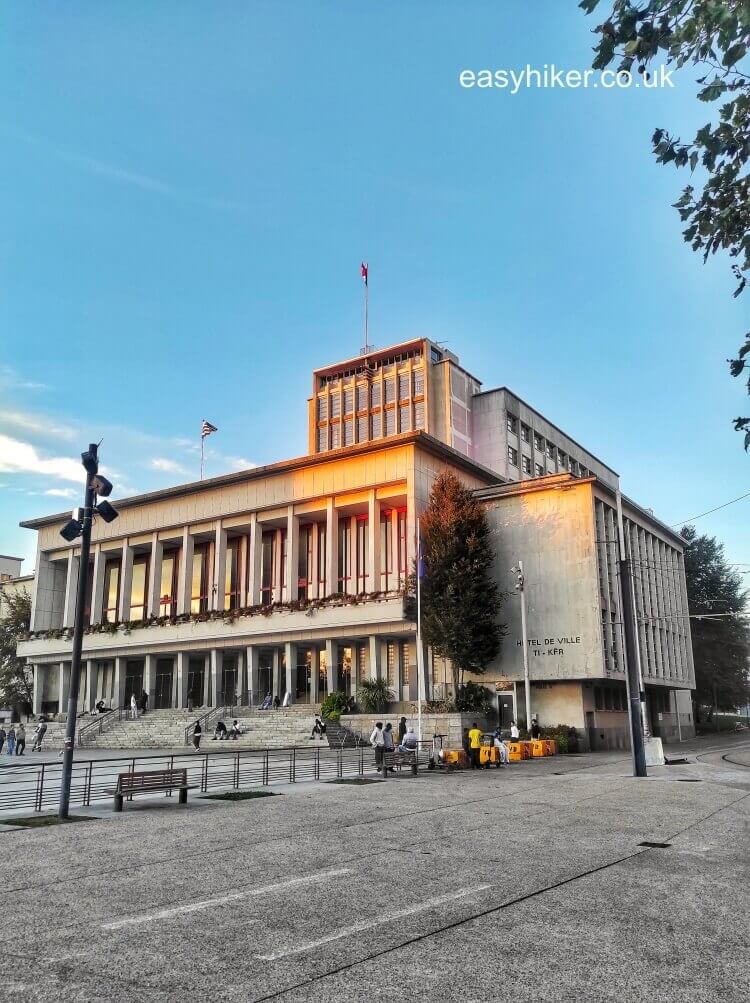
… but if you look in a slightly different direction or take up a slightly different angle …
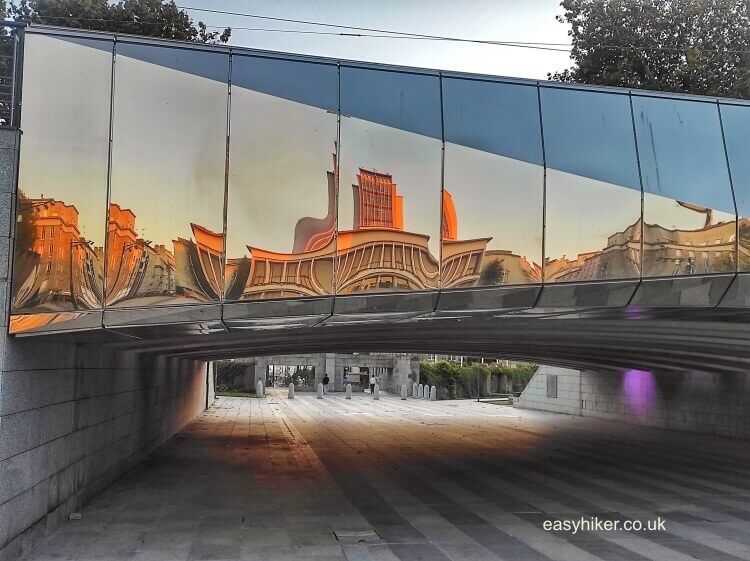
… you can see many interesting things. Brest is a one-off among the cities of France and fully deserves the honour of standing side-by-side with the country’s greatest on the Place de la Concorde.