Cities have a choice: they can look either forward or back. Those with a clear sense of their own identity often opt for the latter, preserving the past and giving way to the new only if this helps them to strengthen what appears to grow naturally from their deep-rooted traditions. While other cities, those that react more flexibly to new challenges and new opportunities, seem to be engaged in a process of forever becoming.
The two foremost European cities, incidentally, belong to opposite camps: while Paris still feels like a 19th century city with some new buildings thrown in, London is a jumble of styles – medieval fortresses alongside Baroque concoctions and City skyscrapers – to which new elements are continuously added. London’s skyline is always full of tall cranes and half-finished projects.
Milan – in contrast to most Italian cities – belongs to the camp of the forward-looking opportunists. Of course, it treasures its storied past – which city with two thousand years of history under its belt would not – but does not let that hold it back from creating the new.
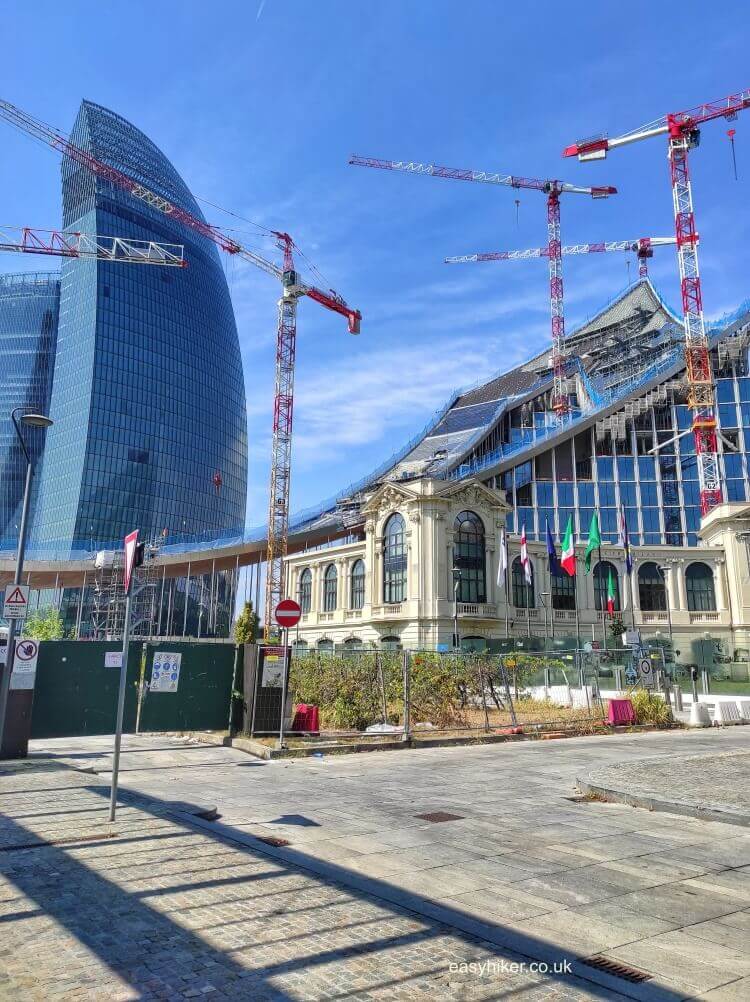
A prime example for Milan’s perspective is the city’s newest quarter, Citylife, that was developed on the site on which Italy’s business capital once hosted its trade fairs and conferences. (The new Rho Fiera Exhibition Centre opened its gates twenty years ago in Milan’s northwestern suburbs.)
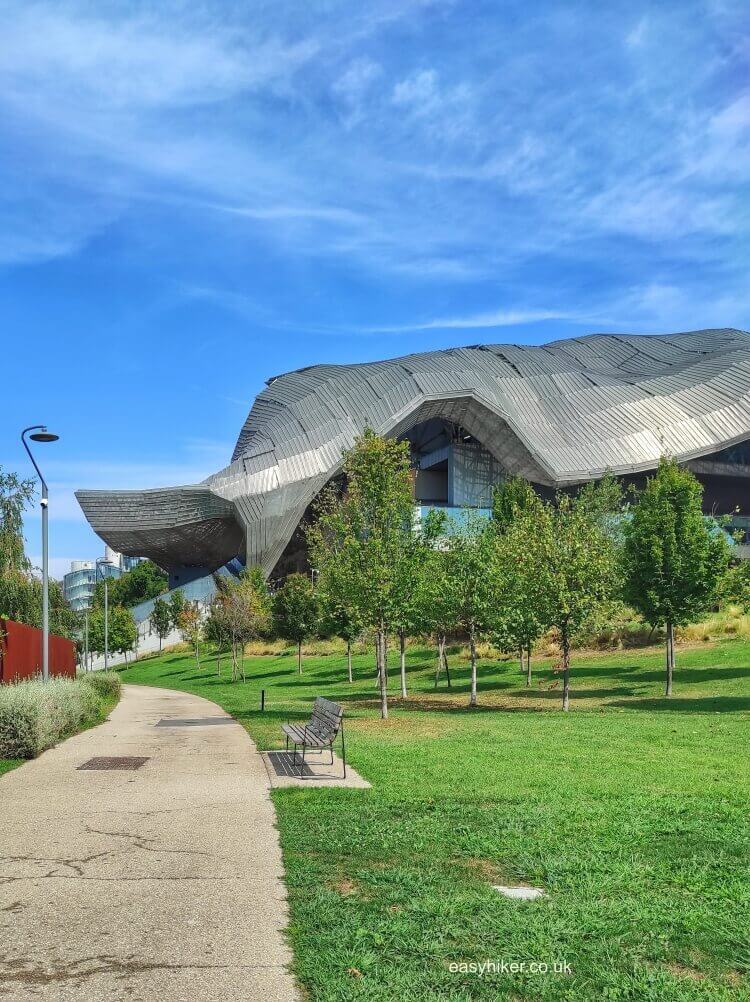
If you browse through what has been written about CityLife in Milan, you could easily get the impression that it is a park. And you would not be wrong: with an area of about 170,000 square meters, half of which are landscaped and criss-crossed by walkways and cycling paths, CityLife is one of the largest car-free zones in Europe.
One thing, however, you will be looking for in vain is a forest of mature trees: all larger plants of the old Fiera Milano were uprooted and transferred to other municipal parks. In their place, 1,500 trees were newly planted.
CityLife in Milan
In a way, the CityLife park, like the quarter that surrounds it, is a plants-and-concrete metaphor for Milan’s underlying philosophy: still becoming.
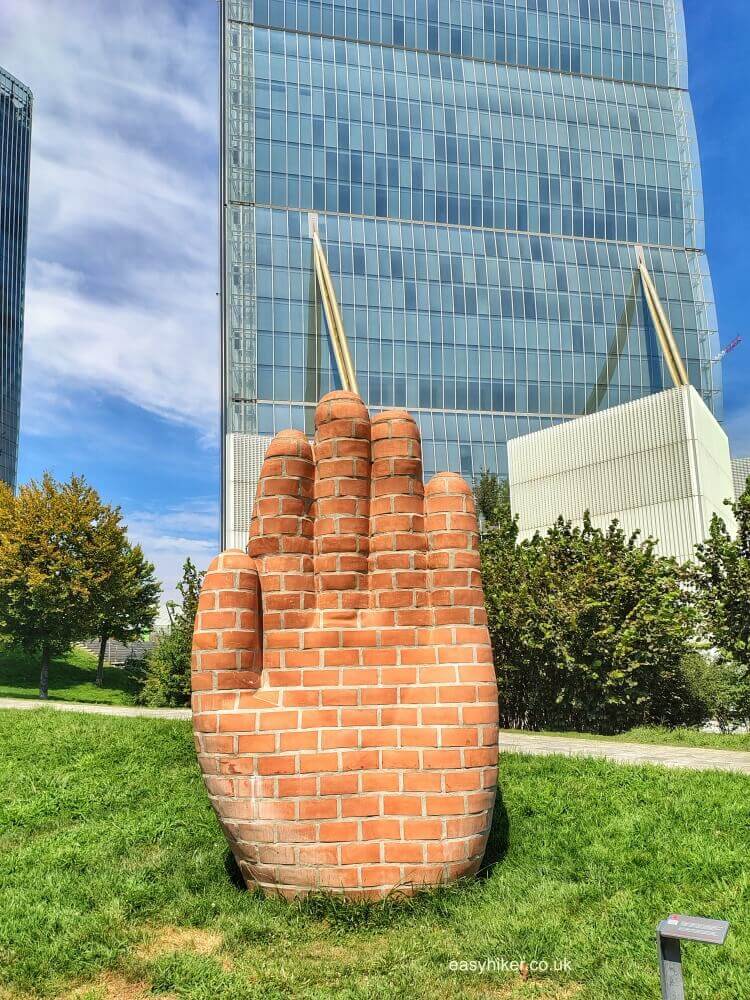
Articles that have been mainly written for Milan’s visitors usually highlight the large number of art works in the park’s vast open spaces: and yes, Citylife in Milan is also a grand open air museum (this is one half of Judith Hopf’s Hand and Foot for Milan – its counterpart stands a few dozen meters away) …
… but what sometimes gets a little lost in between praise for the quarter’s art exhibition and ecological principles is that CityLife also features a large residential development.
In fact, the district provides homes for 5,000 people who are paying some of the city’s highest property prices for starchitect-designed luxury flats such as the Residenze Libeskind.
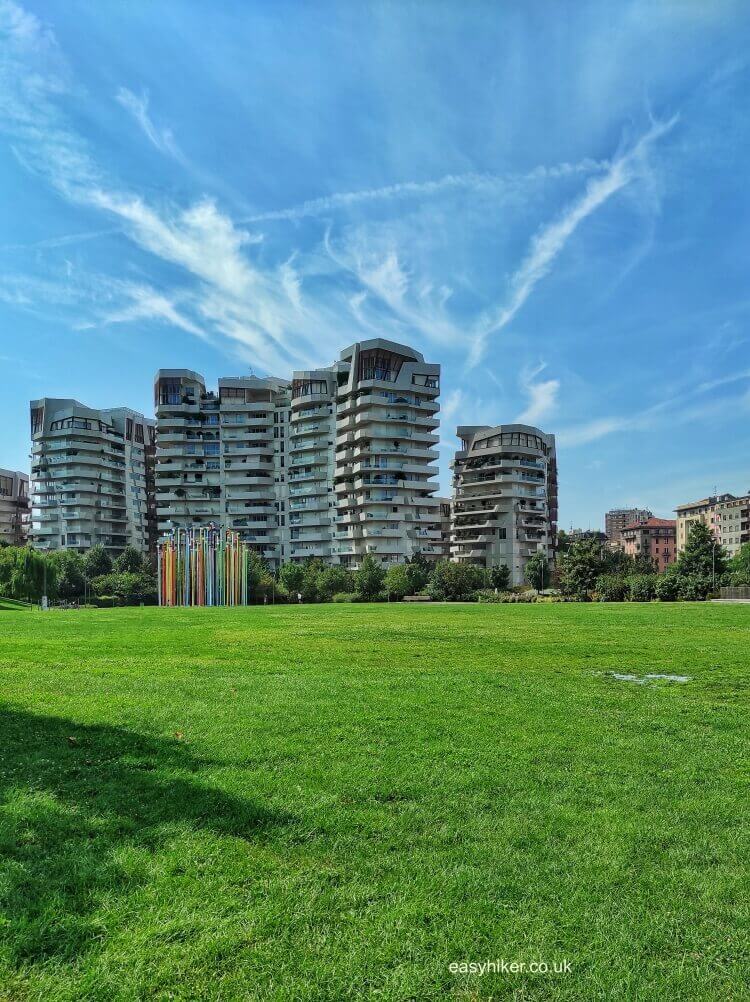
The neighbourhood’s apartment blocks have been designed to complement the attractions of landscaped scenery and modern art. As James S. Russell wrote in the May 2014 issue of Architect Magazine, these residential buildings “deserve to be part of the view”.
He continues: “In contrast to the asphalted surroundings and vinyl-windowed cheapness of even high-end American developments, these assemblages dynamically engage the greenery and kaleidoscopically choreograph sun and shadow through the day.
CityLife courtyards are worthy amenities, not parking-lot leftovers. American residential developers should take note: They could learn a thing or two from CityLife.”
In its best moments, the CityLife in Milan weaves its different identities into a single, very attractive blend: one where park, sculptures and architecture enhance and complete one another.
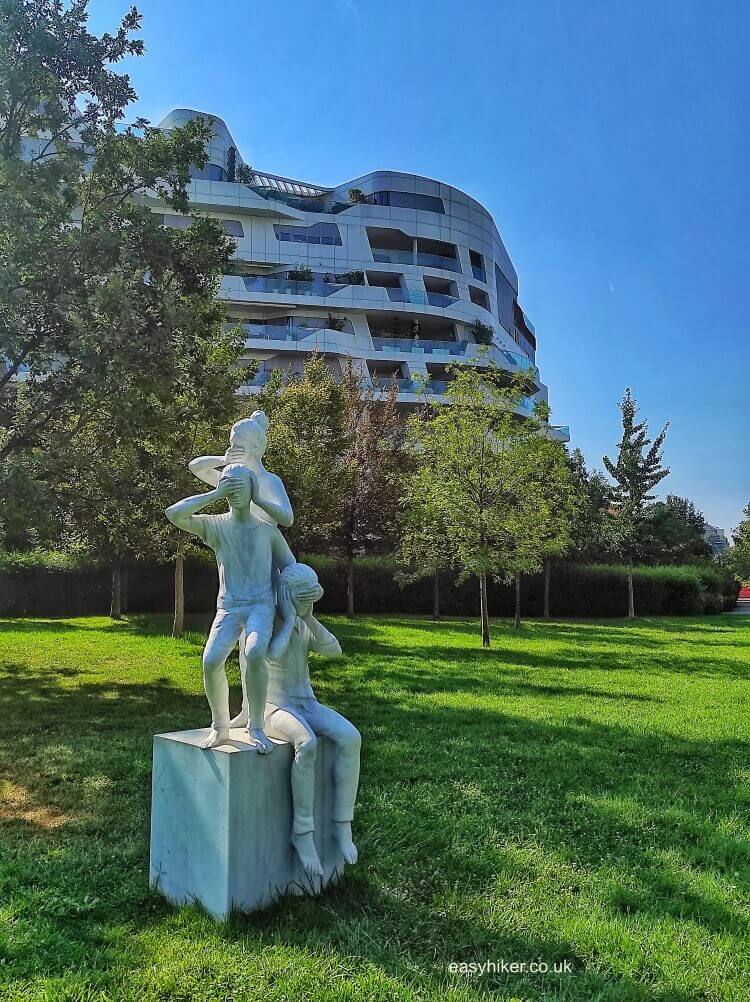
(The statue was made by Shilpa Gupta, the building in the back designed by Zaha Hadid.)
For visitors with an interest in the visual arts, meanwhile, the open-air Art Milano exhibition is without a doubt Citylife’s most intriguing feature.
The sculptures pass comment on their natural environment …
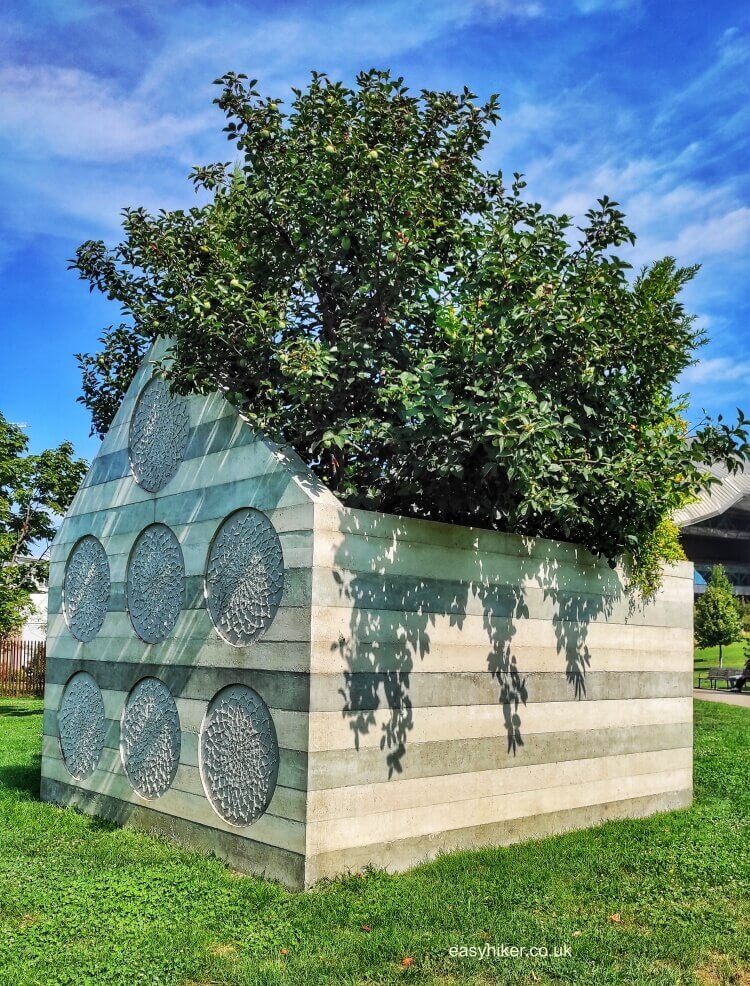
… as well as on that part of their environment that has been shaped by humans: occasionally counterpointing the appearance of the buildings around them (like Rossella Biscotti’s Come fare?) …
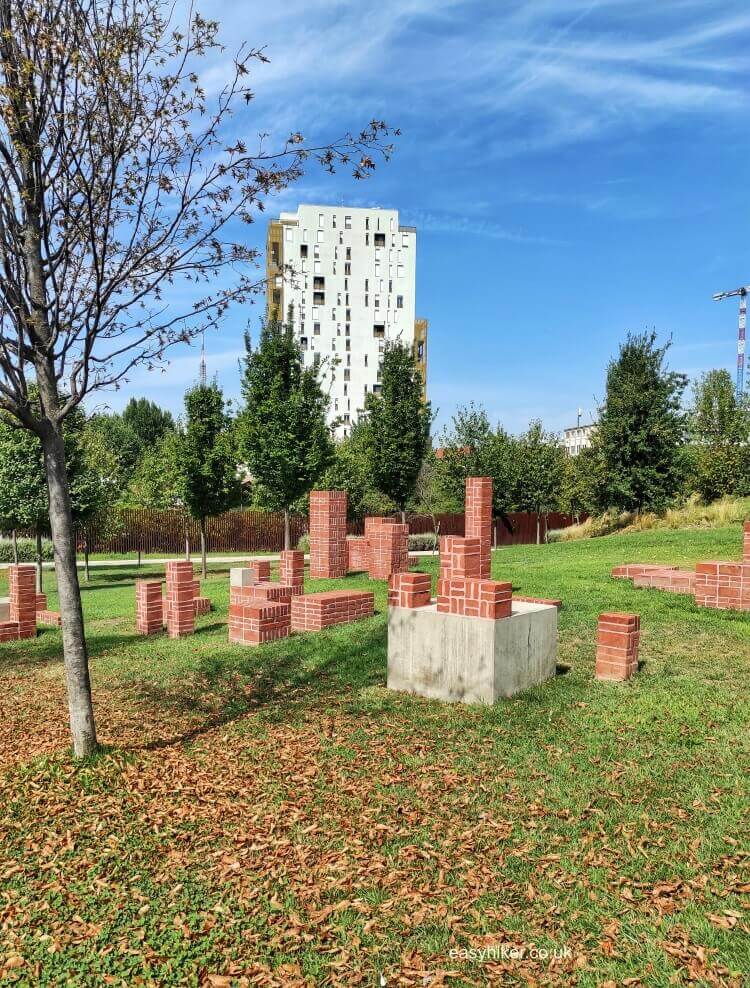
… at other times echoing their shapes. (Artwork: Coloris by Pascale Marthine Tayou.)
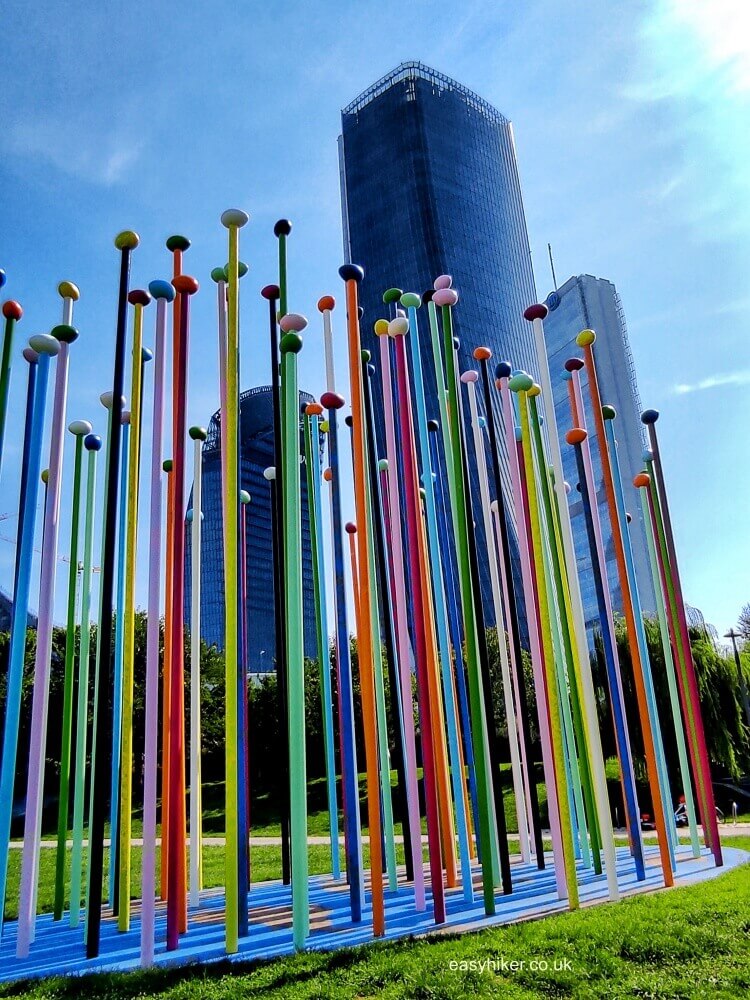
Visitors are invited to arrange their CityLife visit around the sculptures on show, map in hand.
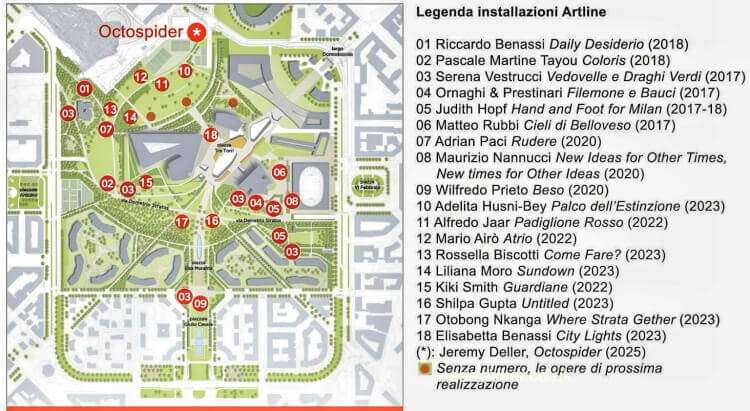
The exhibition features 20 permanent works that were partly commissioned from internationally renowned sculptors and partly created by young artists who had won a dedicated competition. The first exhibits went on show in 2016, while new ones have been – and still are – continuously added.
Alternatively, feel free to just wander around. This way, you can also discover remnants from an older aesthetic …
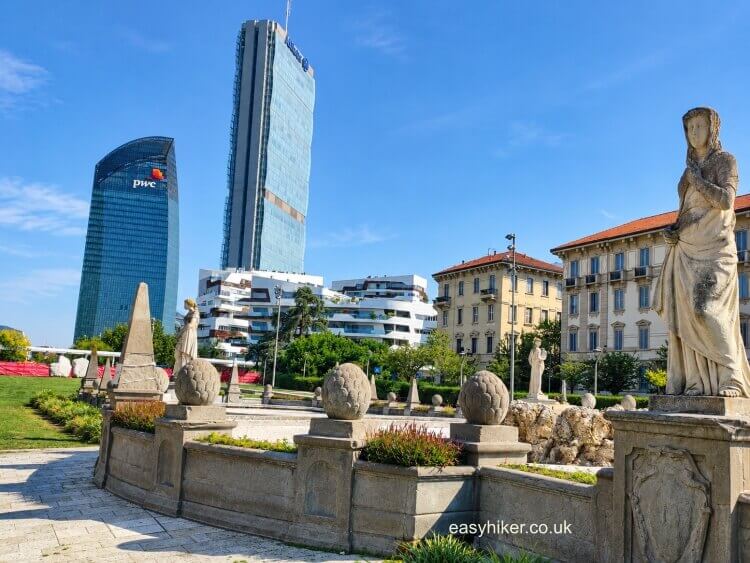
… and how changes of foregrounds and viewing angles can subtly influence the ways in which the Tre Torri dominate the quarter’s skyline.
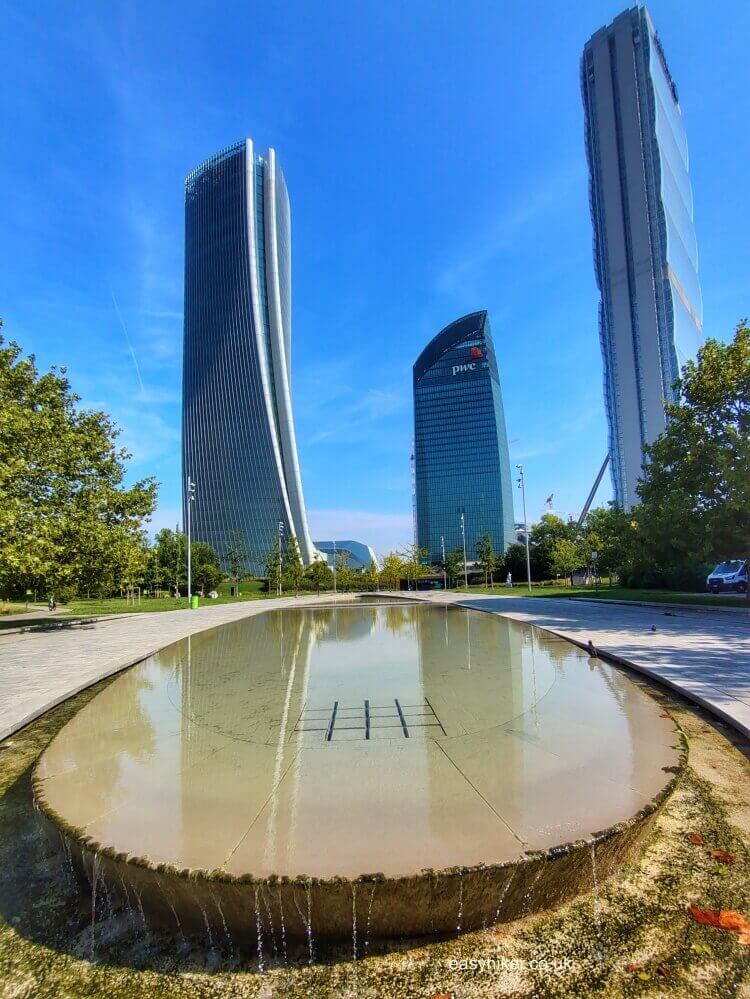
These “Three Towers” are certainly – no offence to the sculptors – CityLife’s landmark structures. All three of them have won awards and were designed by one of the big names in global prestige architecture: the twisted General Tower on the left by Zaha Hadid, the buttressed Allianz Tower on the right by the Pritzker laureate Arata Isozaki, and the one in the middle – called Il Curvo – by Daniel Libeskind.
You do not have to go very far to understand why the district’s metro station is called Tre Torri, but it may take you a little while to understand why the Libeskind tower is called “the curved one”: for that, you have to find the right perspective.
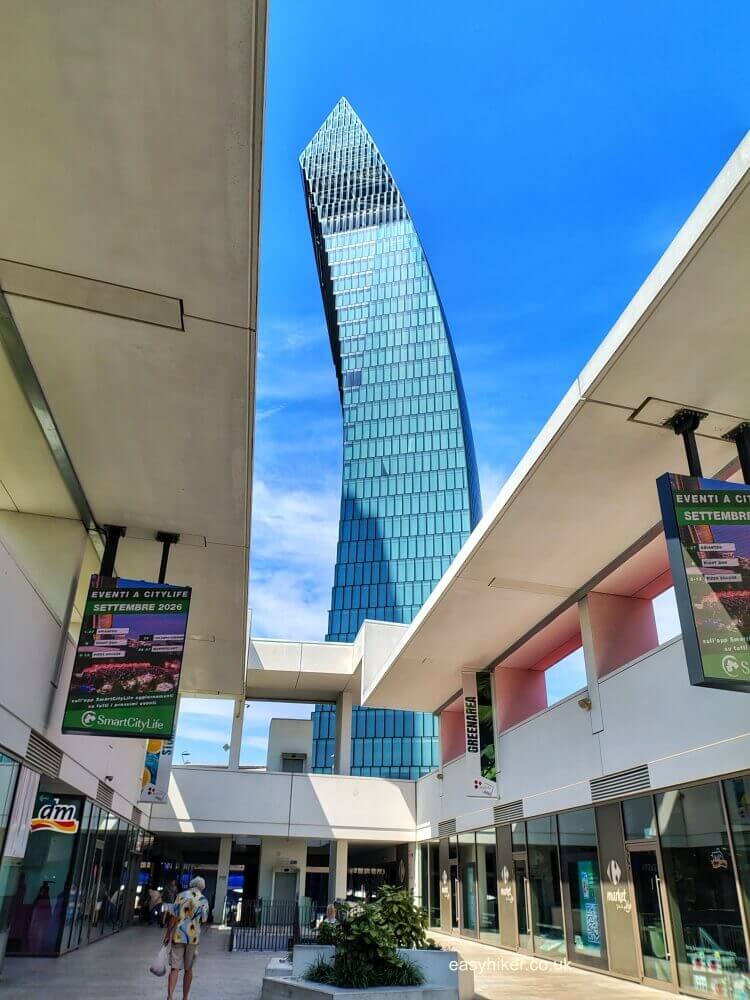
On top of its trinity of functions – park, art exhibition, residential neighbourhood – CityLife is also an important business district: more than 10,000 people come here to work five days a week, making Tre Torri one of Milan’s busiest metro stations during the rush hour.
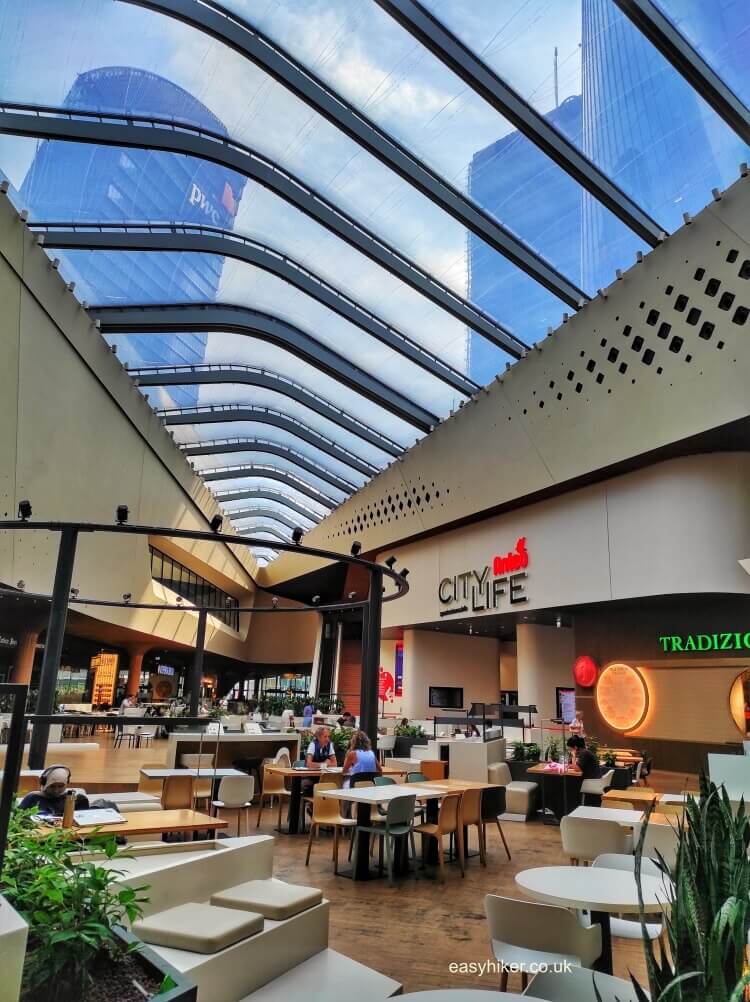
But Tre Torri also serves local visitors from other parts of Milan, because its indoor retail-and-entertainment centre …
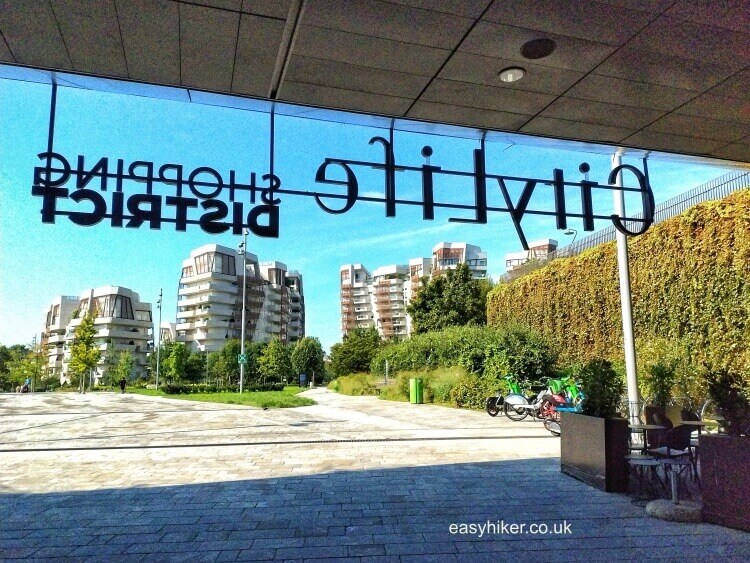
… features a food hall, cafés and shops on a total floor space of 32,000 square metres. It was also designed by Zada Hadid Architects and is a suburban shopping mall like no other.
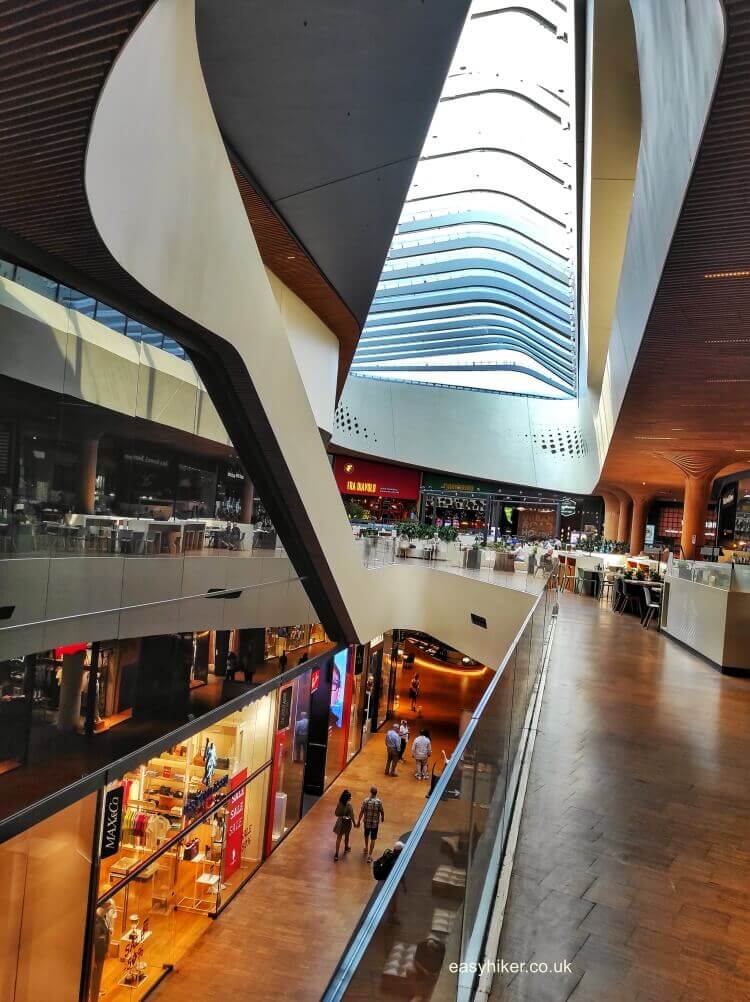
What Architect Magazine wrote about the residential units can also be said about the shopping centre: it imaginatively complements the surrounding scenery with its elegance and sleek sophistication.
But, if you have spent a little time in Milan before your visit of CityLife, this should not come as a total surprise. Through famous sons such as Luchino Visconti and Giorgio Armani as well as internationally famous institutions like the DOMUS magazine, Milan has exercised a formative influence on the world’s visual culture – an influence that ultimately goes back to Leonardo da Vinci, the chief urban planner for the 15th century Dukes of Milan.
Milan has form in presenting itself as a city that knows how to look good.