No matter how many times you have visited London or how much time you have spent in the city – years or even decades: there will always be entire quarters in which you have never set a foot, and in the quarters that you have visited, there will always be things that you missed.
London does not reveal itself easily to strangers. The city’s high streets – every quarter has at least one – and its rows of residential terraces look deceptively similar: so much so that, after a while, you get a little blasé and may think that even if you have not seen all animals in the zoo, you have seen all the species that there are.
This is usually the moment when you stumble upon something that pulls your socks off: something that is so unlike anything you have ever seen in the city that you think you must have wandered far astray, into that part of London that lies on the far side of the moon.
The Naked Ladies of Twickenham
Many of these places are well-guarded secrets, known to the locals but not to outsiders. Often, they lie hidden, at the end of a long path that appears to lead nowhere in particular – until, at the last moment, you see the opening in the bushes … and step into a different world. A sort of Narnia, if you like.
The Twickenham riverside promenade in southwest London is a good example for such a secret place. There is only one way to get there from Twickenham train station: walk towards the Thames and down Church Street as well as Church Lane …
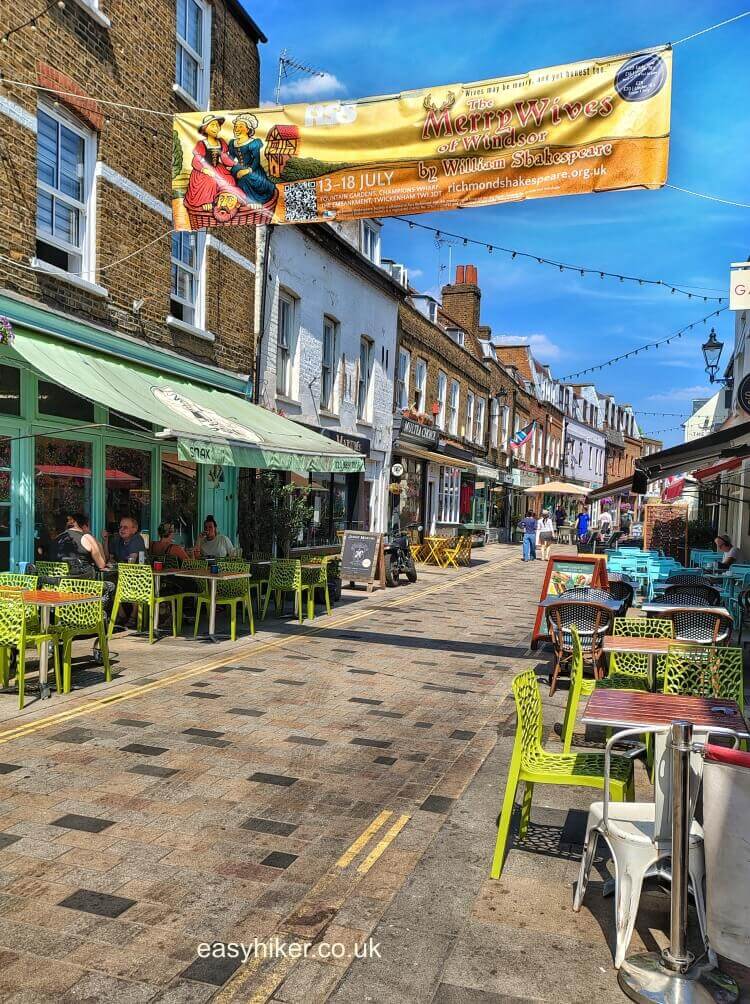
… until you reach the embankment and the scenic views of Eel Pie Island, a thin stretch of sand in the middle of the Thames.
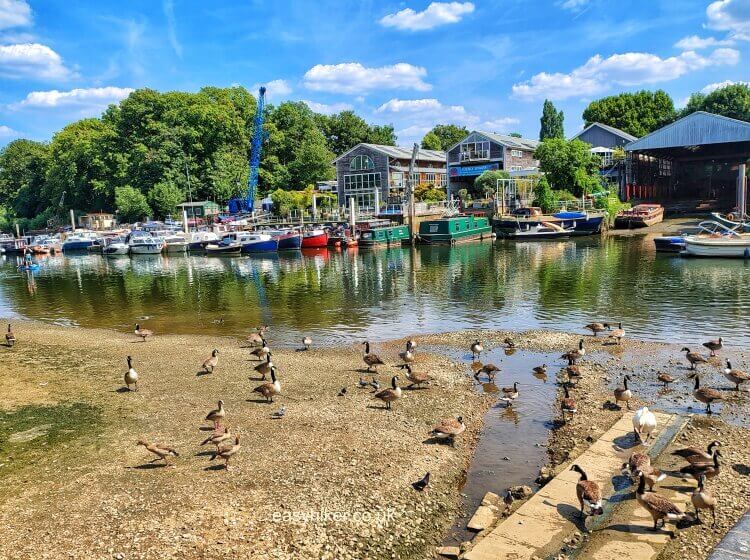
This is a view with a history. The Eel Pie Island Hotel had already been a dance hall for over 100 years (Charles Dickens described it as “a place to dance to the music of the locomotive band”) when it became a centre for London’s R&B scene in the early 1960s.
The Who played here, as did Pink Floyd and a young David Bowie – so young in fact that he was still performing at the Hotel as Davy Jones.
Most visitors cross the bridge on your right to see what is left from this piece of rock history (there is a small museum, but the venue itself burnt down and was razed in the early 1970s) …
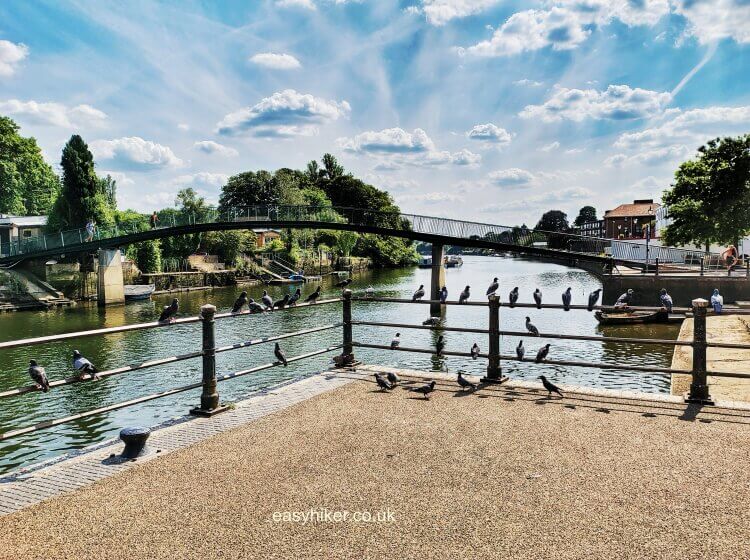
… but you should turn left instead.
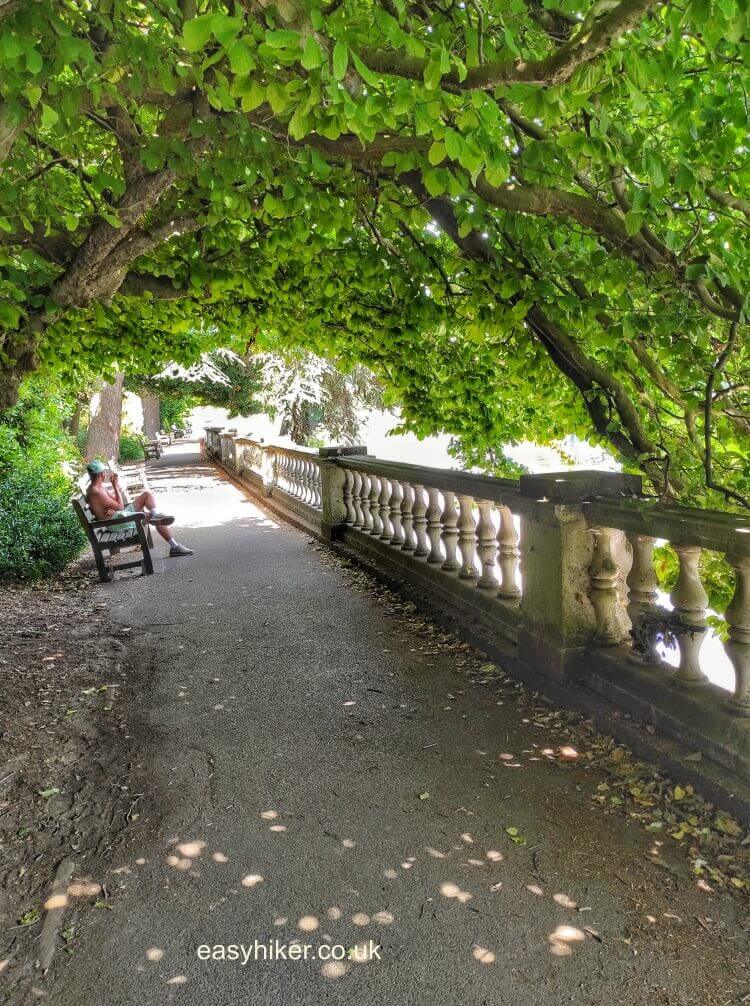
Do not walk down the road (called Riverside) but look instead for the iron gate in the brick wall close to the river: the promenade starts right on the other side and invites you to enjoy the view of the boats and the dense riverside vegetation. This is the only view in the whole of Britain that is protected by an Act of Parliament.
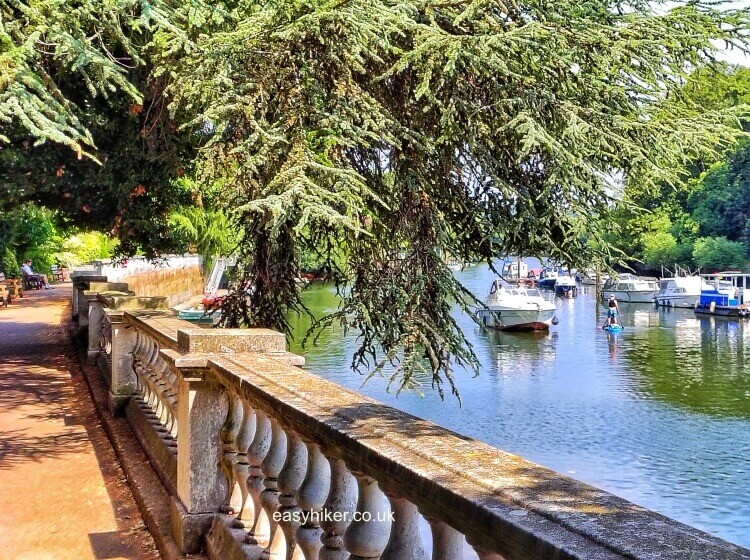
But the Thamesside promenade is just one attraction of this place. An aristocratic residence has stood on this stretch of the riverbank since the 15th century.
The present-day York House …
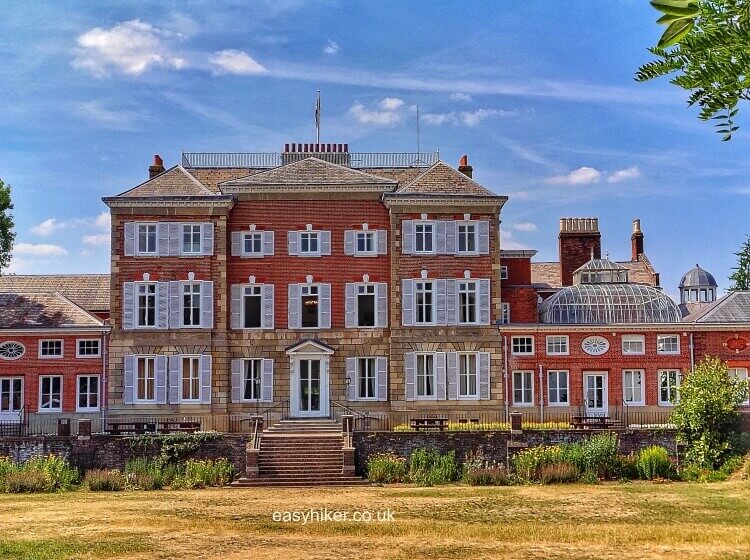
… was originally built in the 1600s for an important courtier (the Groom of the Bedchamber to Charles I, no less) and continuously developed by a series of wealthy owners over the next centuries.
Owners of the property included the 1st Earl of Sandwich (the great-great grandfather of the eponymous snack), the Archbishop of Dublin, and, in the 1860s, the man who would have been King of France but for the Revolution.
York House in Twickenham is surrounded by extensive gardens …
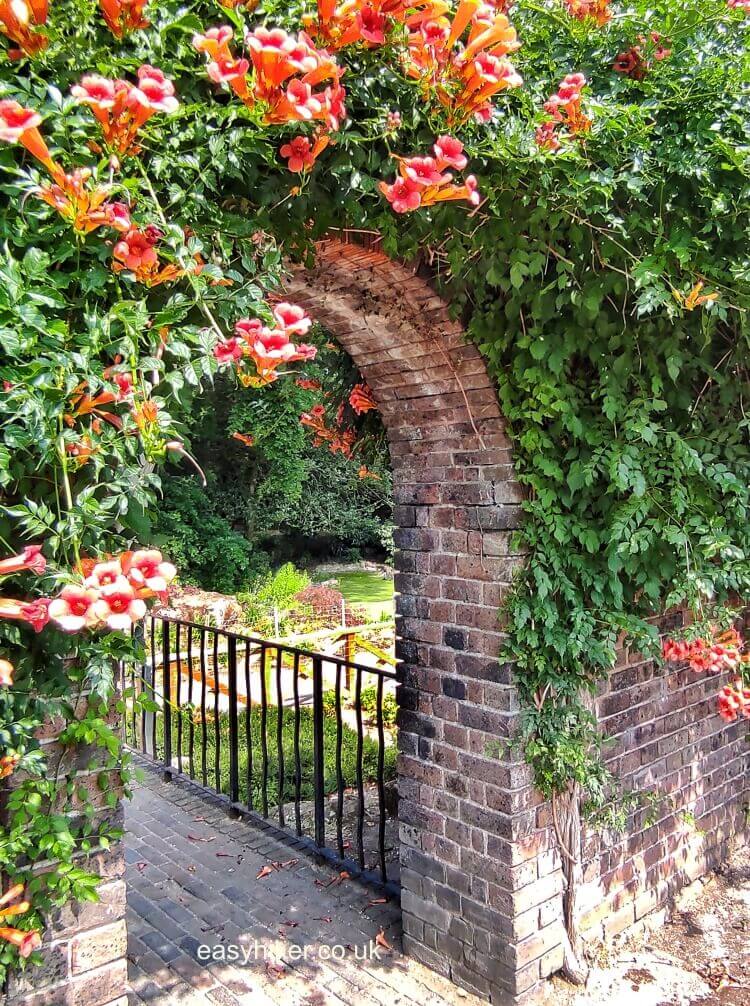
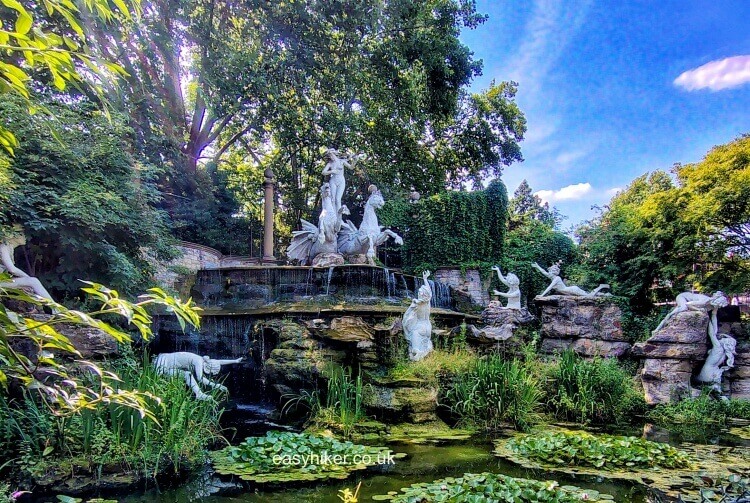
… whose undisputed highlight is a set of statues commonly known as The Naked Ladies.
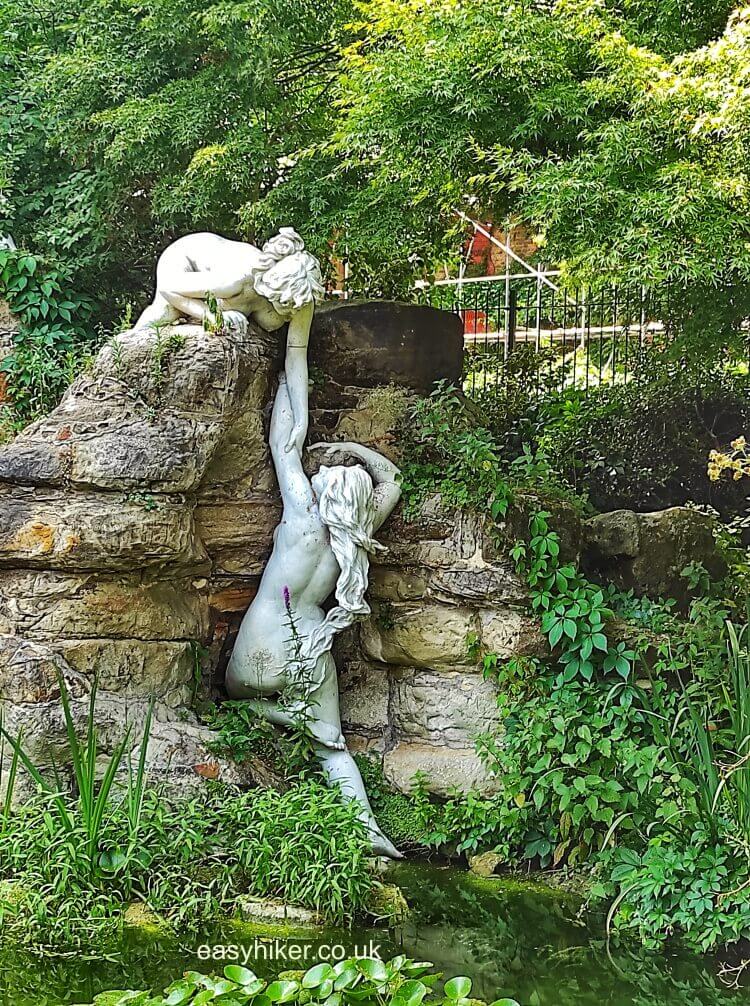
These statues were purchased in the early 20th century by the then owner of York House, Sir Ratanji Tata (one founder of the industrial dynasty), from the receivers of Whitaker Wright, the Bernie Madoff of the 1890s.
Wright sold overpriced shares in unprofitable Australian and Canadian mining companies, using the proceeds from new contracts to pay dividends to existing shareholders, but when the demand for new shares dried up, his business went belly-up.
On the day he was convicted of fraud and sentenced to 7 years in prison, Wright asked if he could have one last drink before being taken to jail, poured cyanide into his whiskey and died in the courthouse.
Only a few weeks before, Wright had purchased a set of Carrara marble statues from an Italian sculptor for his country residence, a Tudor mansion that he had extended into a 32-bedroom villa with a theatre, a velodrome and stables for 50 horses (plus an underwater ballroom at the bottom of a large artificial lake).
There had been no time to put up these statues: they were just lying around the property, and any instructions of how to assemble them into a harmonious ensemble had been lost.
Sir Ratanji and his landscape designers tried their best, but while some of the sculptures could be worked into some sort of a coherent narrative, others remained strangely at odds with each other …
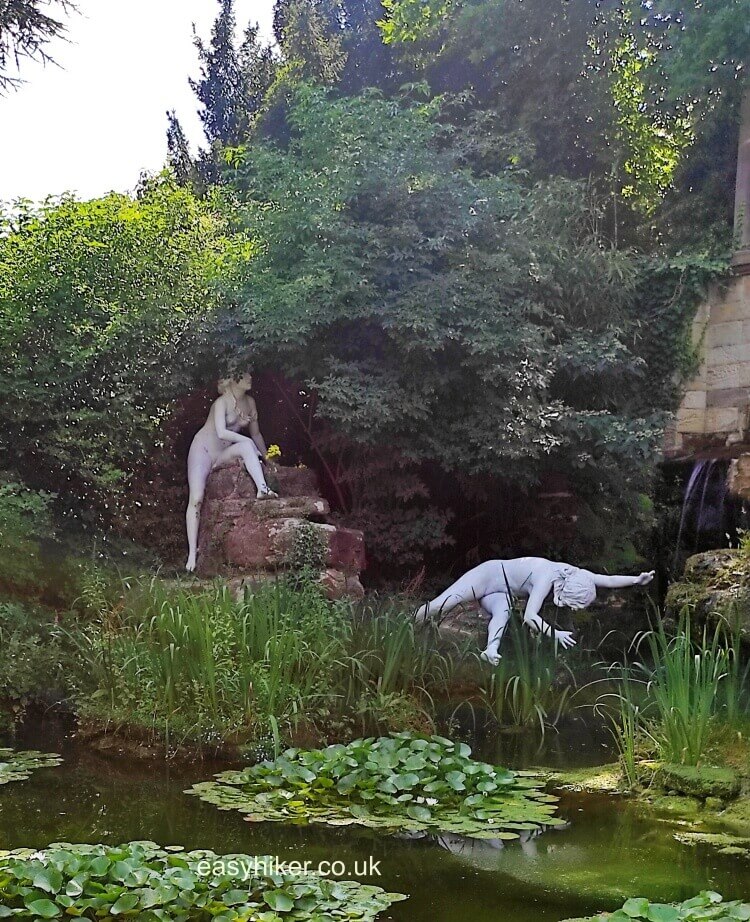
… and it is not entirely clear what these girls are doing on their rockery in the first place.
But that, of course, is the charm of Twickenham’s Naked Ladies and the main reason why they – dreamlike and more than a little surreal – have fascinated visitors for more than 100 years. Which is also (roughly) the time they have been in public ownership.
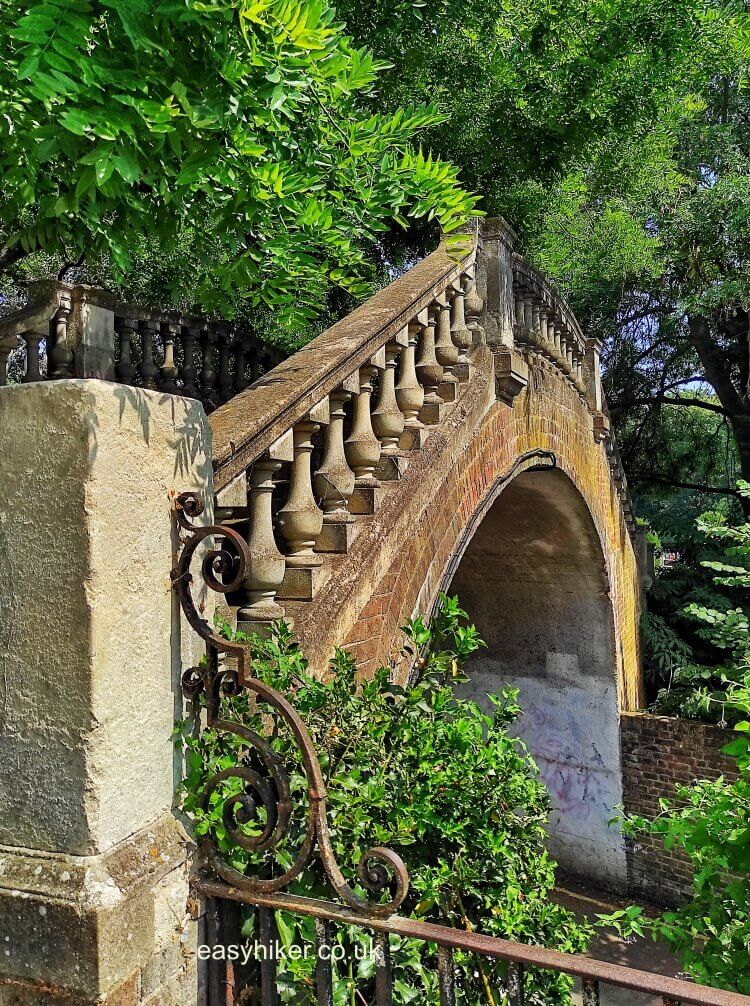
After Sir Ratanji’s death in 1918, his wife returned to India and sold York House to the government. The property was converted into municipal offices and is today mainly used for weddings. The bridge that connects the residence to the riverbank – across the Riverside road underneath – apparently provides a popular background for the photos of freshly married couples.
Now, it is a truth universally acknowledged that every walk in England – even short ones such as today’s – must end with a visit to the pub.
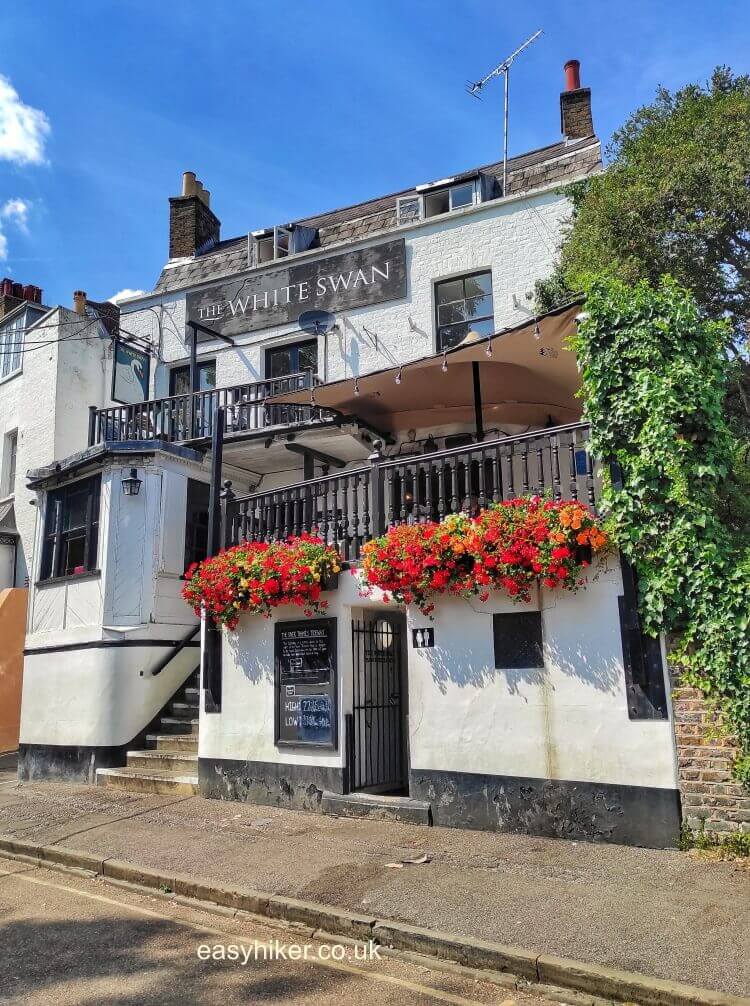
This is one reason why we shall wrap up proceedings at the White Swan. But another reason is that this storied pub not only looks at Eel Pie Island but is also connected to one particular chapter in its history.
In April 1963, an up-and-coming blues band from the Dartford delta called the Rolling Stones took up a five-month residency at the Hotel, playing every Wednesday for the princely sum of 45 pounds a week.
It was during the period of the band’s residency – following the release of Come On, their first Top-Twenty-single – that Stonesmania began to spread. The White Swan is the mainland’s closest spot from the island, …
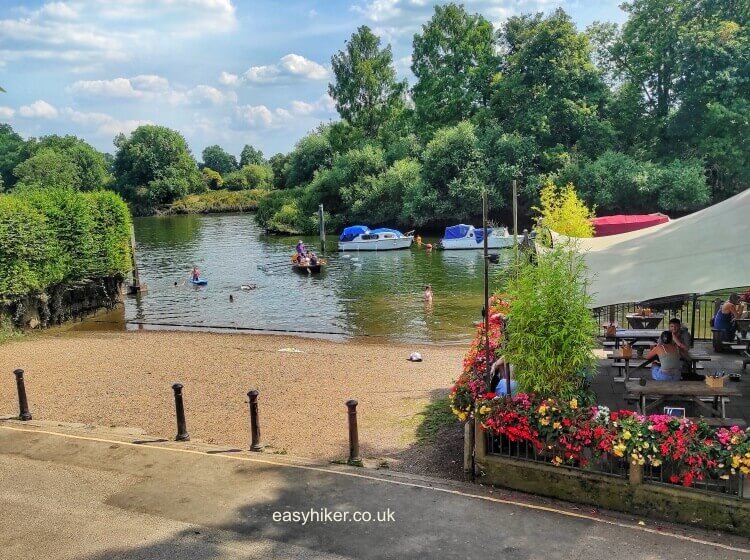
… and stories of teenage fans trying to catch a glimpse of Mick & Co. by swimming through the Thames to the sold-out venue have since entered local folklore.
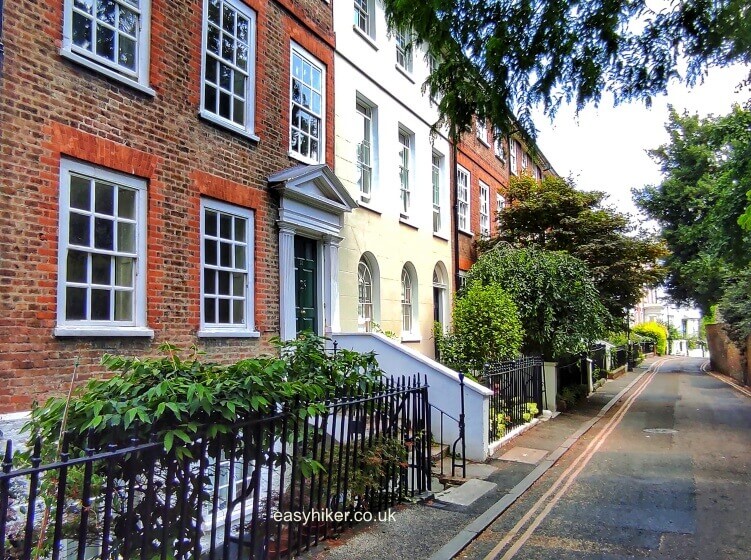
For your return to Twickenham, we suggest to pass through near-by Sion Road, a 18th century residential street that is another well-concealed bit of “Secret London”.
Alternatively, you can also turn left out of the White Swan and continue on the Thames Path in the direction of Richmond, passing the Orleans House Gardens and Marble Hill Park.
This, after all, is the essence of London: there is always some part of the city just waiting for you to discover it.