You will often hear people say that Milan is the “least Italian of Italian cities”, by which they mean: a well-ordered place that lacks the “typically Italian” sense for the joys of anarchy.
On today’s walk, we will do two things: first, confirm that, yes, Milan is rather straight-laced and square (in more than on sense of the word) …
… and second, argue that this is not necessarily a bad thing.
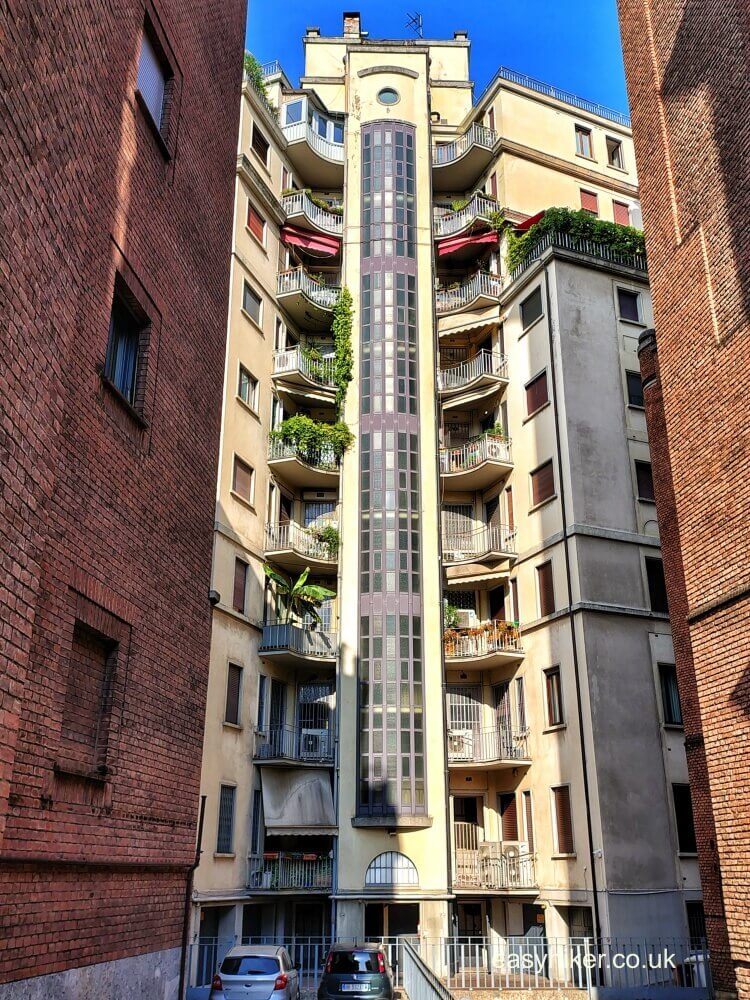
True: the skylines of most Italian cities are dominated by warm colours and round shapes that appear to mirror the gentle summer waves of the Mediterranean, whereas Milan’s skyline is edgy and cold like an Alpine mountain range.
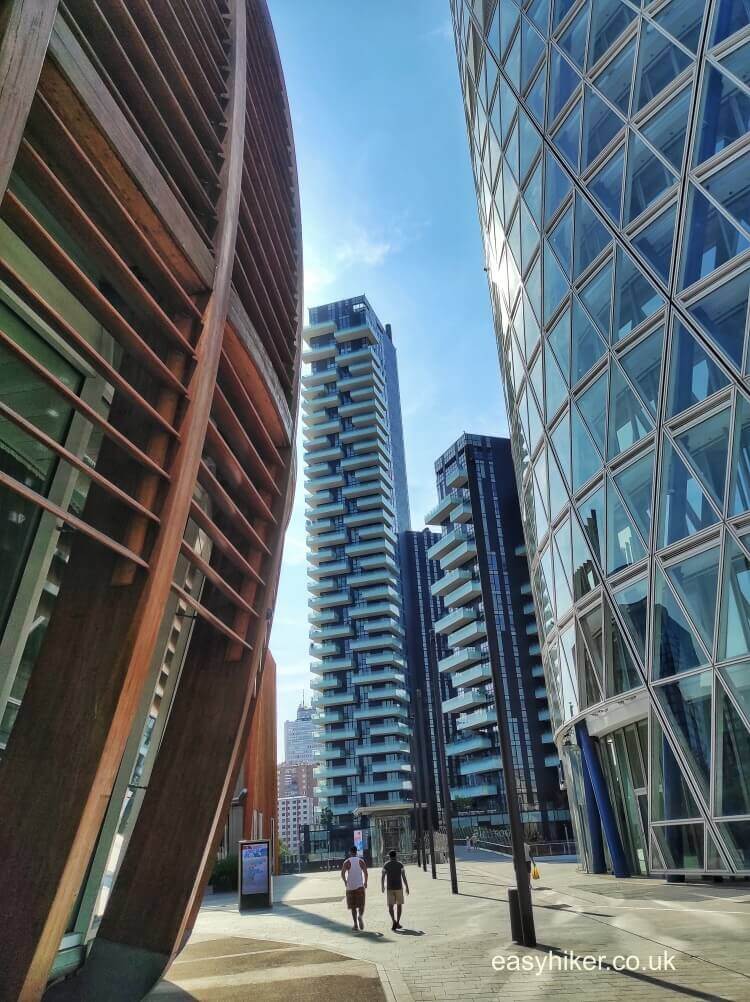
And while the cities in the rest of the country appear earthy, solid and happy to remain grounded in terra firma, Milan’s favourite element is the air.
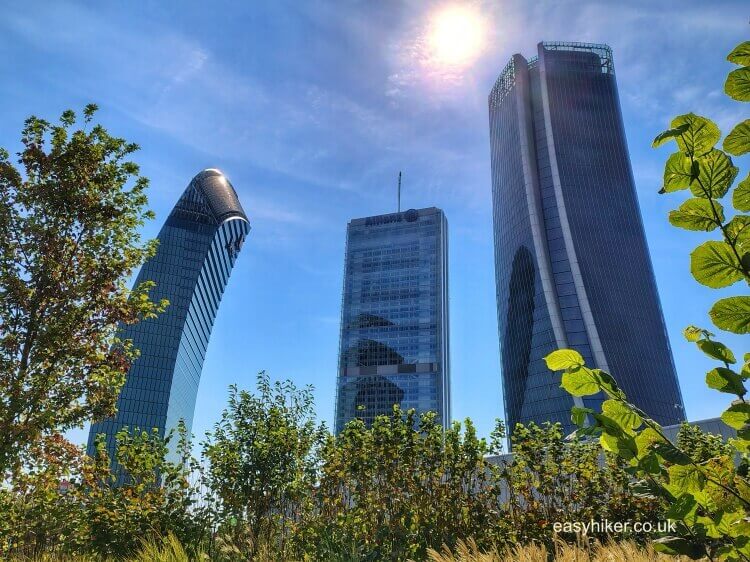
But where does it say that the cities of a country all have to look like each other? Is not variety the spice of life – and particularly of travel? Would life not be so much poorer if it were true that “if you have seen one, you have seen them all”?
Viva la Differenza in Milan
In today’s walk, we will concentrate on the two areas where the contrast between Milan and the rest of the country is most stark: incidentally, these are also the newest and the oldest quarters in the town centre.
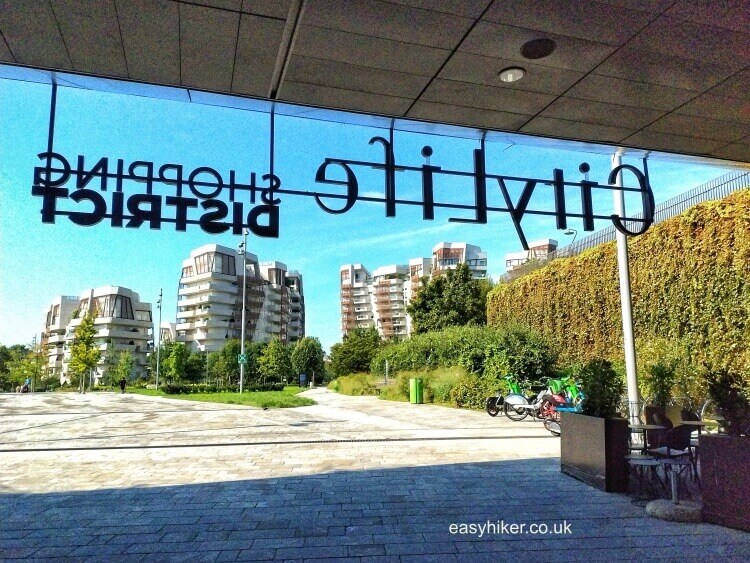
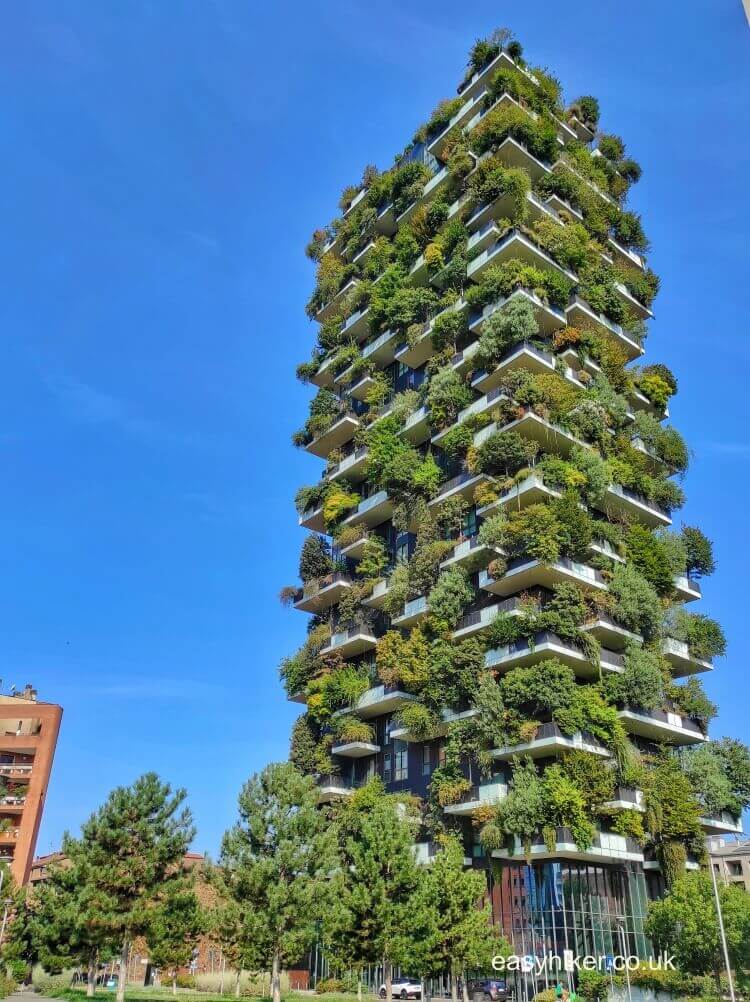
We start our walk at the train station and head straight for the landscaped lawns and fields of the Biblioteca degli Alberi (the “Library of Trees”) and the Bosco Verticale (the “Vertical Forest”: see the picture above) which has 7,000 trees and 20,000 smaller plants pinned to its steel-and-concrete frame: the Hanging Gardens Of Milan.
On the way to the Alberi, you can enjoy the visual contrasts between the working-class flavour of the side streets and the Porta Nuova on the not-so-distant horizon …
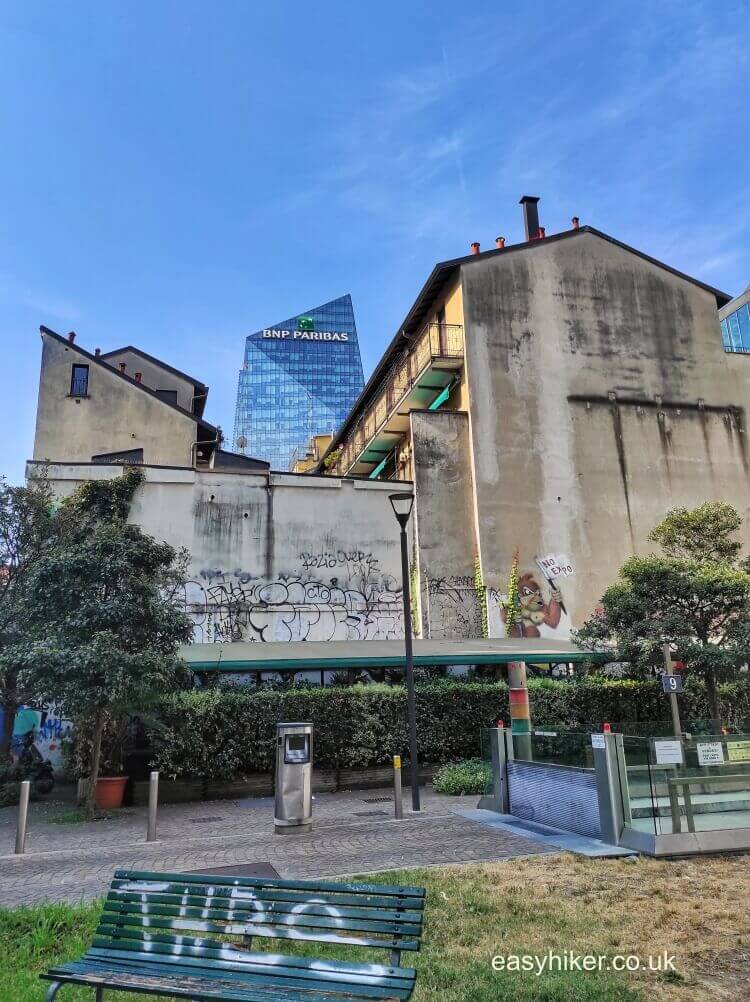
… but once you are inside the garden, you should look for the Passegiata Luigi Veronelli as the most direct way to the heart of the Porta Nuova district.
The Passegiata – a foot-path that becomes a footbridge across a busy four-lane highway – leads you straight into Piazza Gae Aulenti, the most Midtown-Manhattan-esque part of Milan.
The building in the centre of the square is Italy’s tallest skyscraper, César Pelli’s 238-metres-high UniCredit Tower – but only if you count from the top of the spire rather than the highest point of the roof. Otherwise, the UniCredit Tower is beaten by the Allianz Tower (210 metres), which stands (where else?) in a different part of Milan .
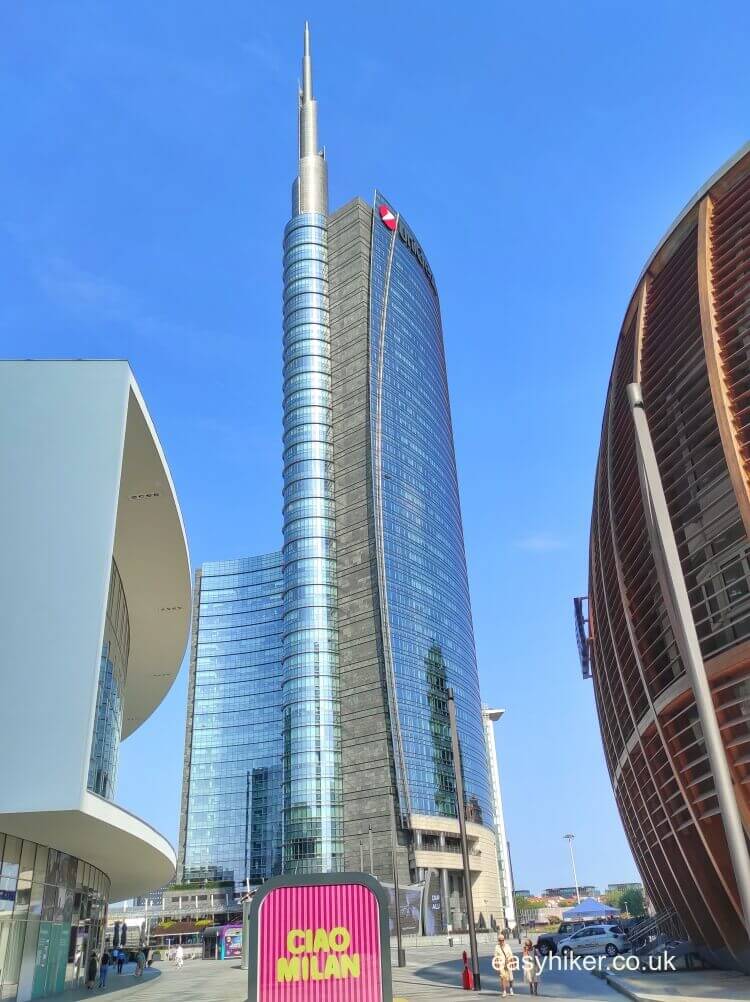
The UniCredit Tower is no more than the primus inter pares of Milan’s business district: the entire quarter is full of a bristling masculine and muscular energy – and full of things that seem to, well, thrust.
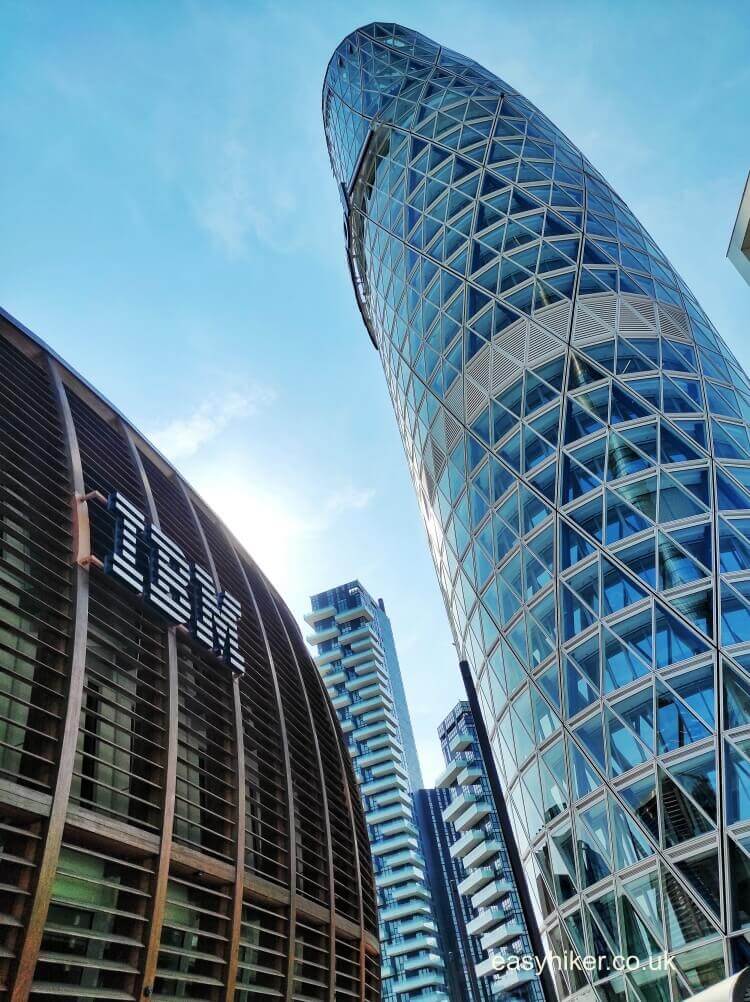
Exit the heart of Business Milan by descending into Via Fratelli Castiglioni and then turn south via Corso Como and Corso Garibaldi.
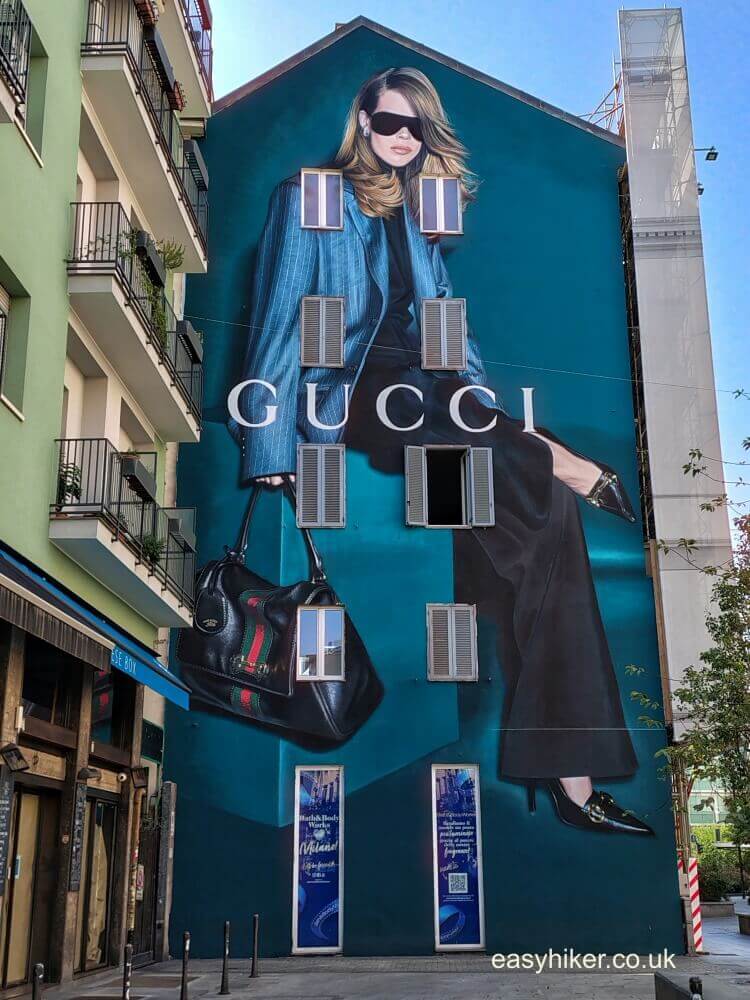
At no. 111 of Corso Garibaldi, you will spot the famous Gucci Wall where advertising meets modern art in ever changing installations.
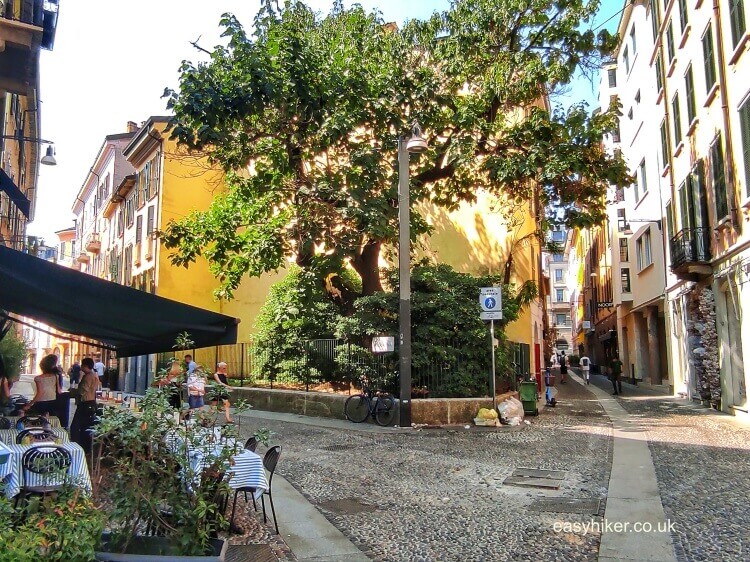
A few blocks further down Corso Garibaldi, cross Via Pontaccio to enter the city’s oldest residential district, the Brera. This quarter was developed in the Middle Ages around a Jesuit college (the current Palazzo di Brera was constructed in the 1600s) …
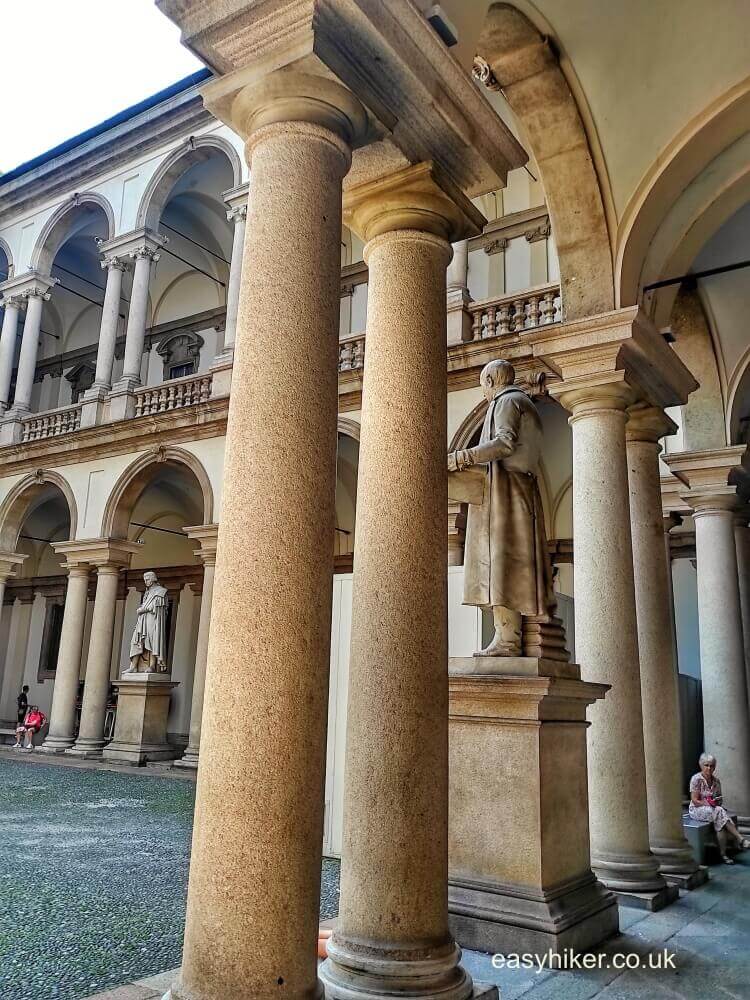
… and today is full of manicured streets, elegant restaurants and expensive shops.
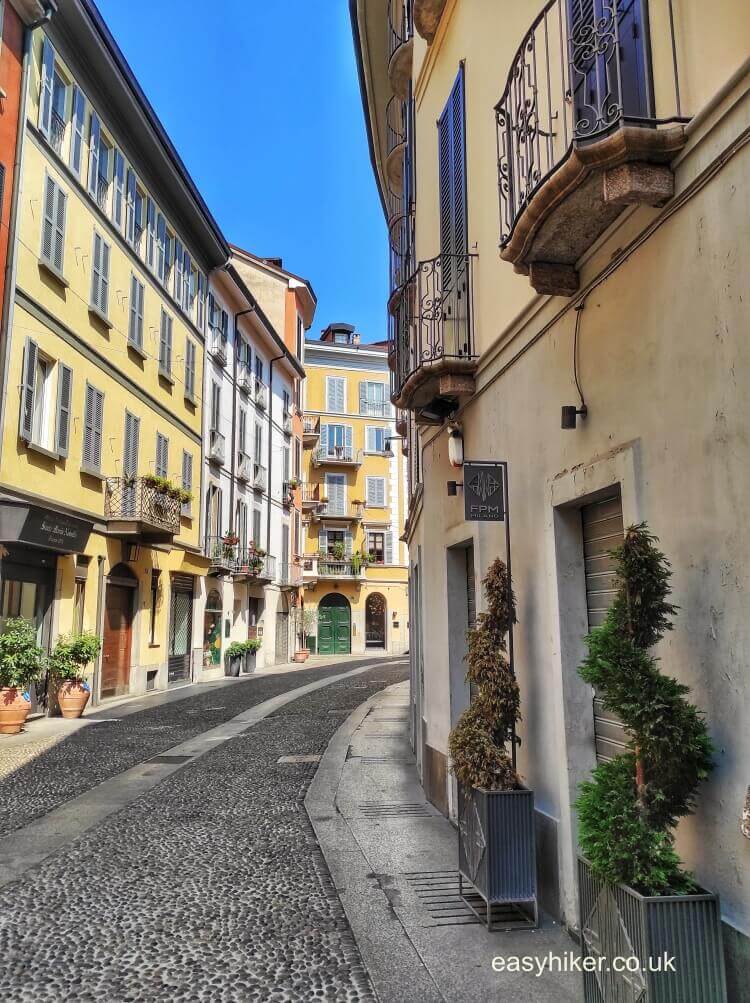
This is Milan’s Centro Storico, but the difference to Rome’s and Genoa’s historic town centres – never mind the one in Naples – could not be starker.
In contrast to the general trend in Northern Europe where historical town centres were turned into bijou living spaces for successful business people and well-heeled bohemians, the oldest quarters of many large Italian cities have been largely neglected (a few showpiece buildings apart) and abandoned by people who can afford to live elsewhere.
In Milan’s Brera, however, the vibes are totally different.
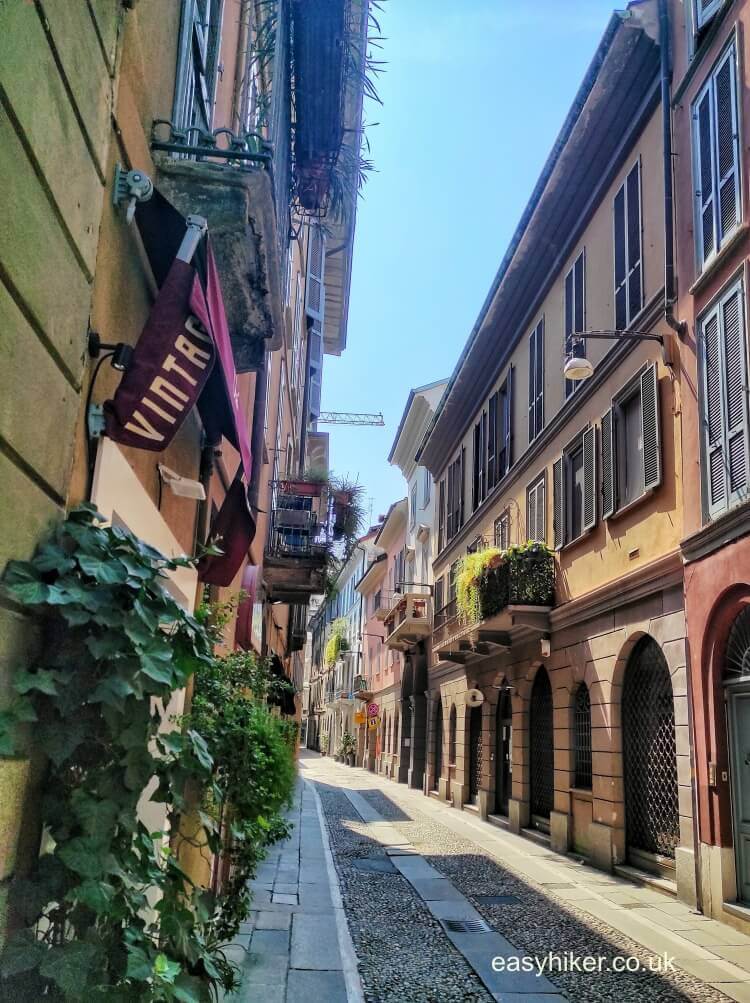
Take a stroll through the main streets of the Brera – Via Brera itself (around the Palazzo), Via Madonnina, …
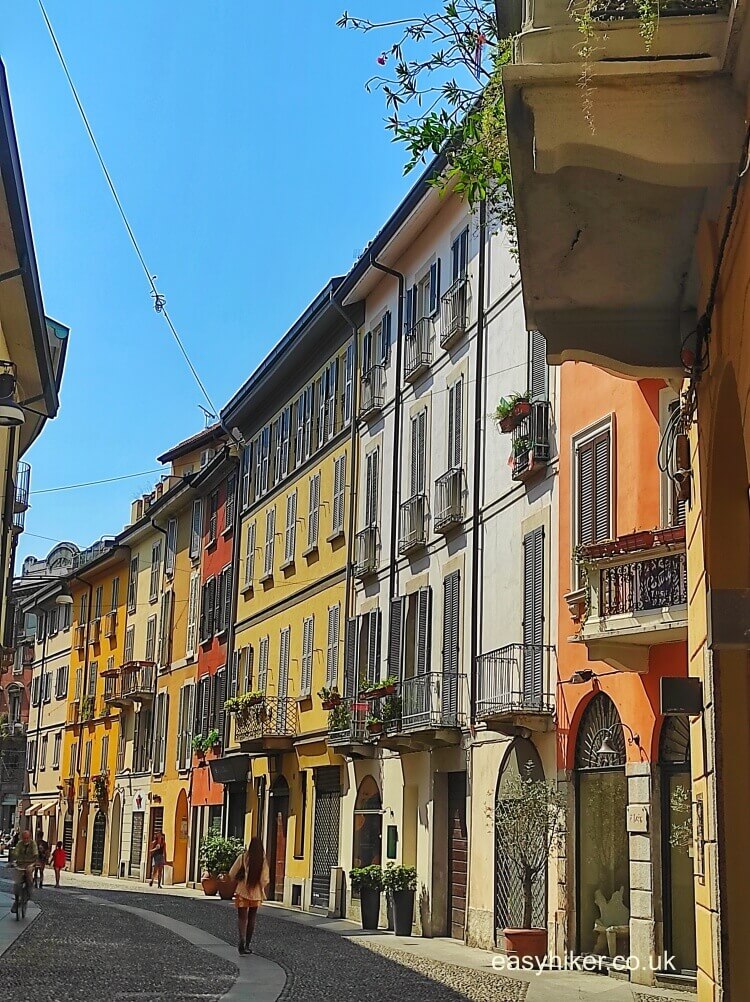
… and Via Fiori Chiari …
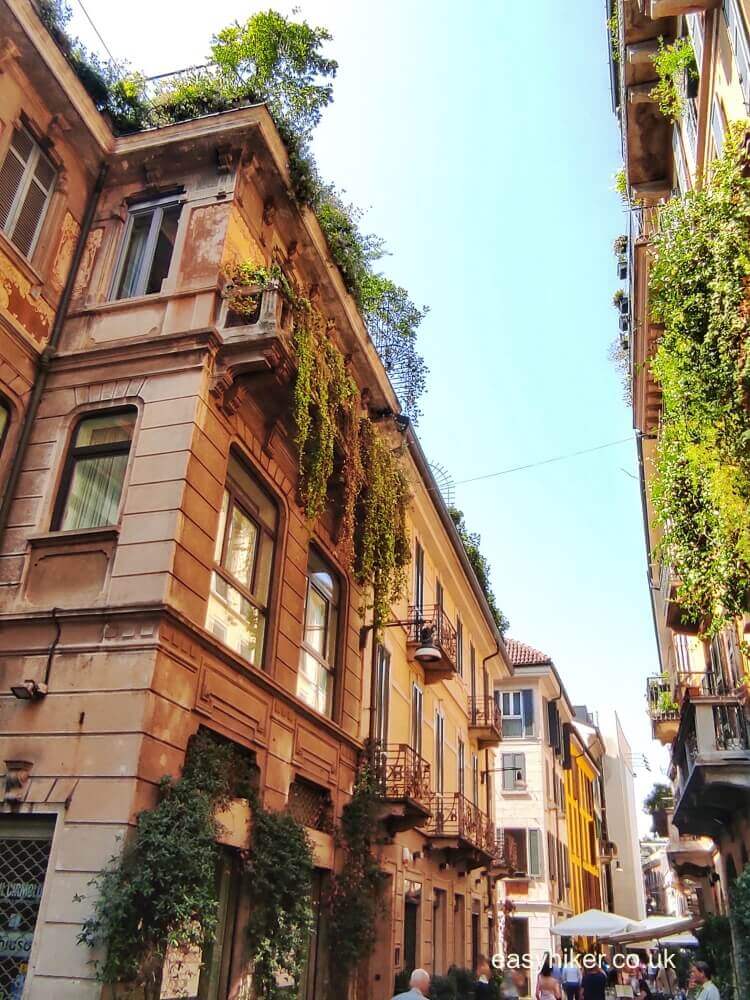
… to taste the serenity of comfortable sophistication: the Discreet Charm Of The Bourgeoisie, as one might say.
This walk will take one morning or afternoon of your time. If you are prepared to reserve one full day for an exploration of Milan beyond the Duomo, the Galleria Vittorio Emmanuelle II and the La Scala opera house, we suggest two options.
Option one: you can extend today’s walk to include a visit of the gentrifying Isola district (in the back of the Library Of Trees), possibly the closest thing that Milan has to a “scene” quarter, and perhaps add a trip to the Milan branch of Eataly on Piazza XXV Aprile near Corso Garibaldi in an early stage of the walk.
This chain is always a great option for people who want to stock up on top-quality Italian foodstuffs (Eataly sells products from all regions of the country) or who are searching gifts for their loved ones at home. (And no: we do NOT get a cut. I wish we did.)
Alternatively, you can tag on a shorter exploration of what is without a doubt the city’s flakiest district. More of that next week.