Having addressed the issue of Milan’s alleged lack of “Italianness” in last week’s post, we will today deal with another stick that is often used to beat the city with: Milan “does not do quirky”, it is said.
This is an accusation that can be refuted rather easily. All it takes is a visit of the Quadrilatero del Silenzio (Milan’s Quarter of Silence) in the southwest of the modern city centre.
True: as the business capital of Italy for (at least) the last 200 years, Milan has generally favoured a spirit of conservative pragmatism to the imaginative or playful.
Historians tell us, for example, that the mid-19th century Milanese were quite happy under the rule of the Habsburgs and rather reluctant to exchange the Austrians’ stable-if-staid bureaucratic regime for the uncertainties of a national union with the crazy Neapolitans and illiterate peasant farmers from the south.
The city’s urban fabric, by and large, reflects this aversion to adventurism and flights of fancy, but there was a period when sobriety and restraint made way for a willingness to throw all conventions to the wind.
To understand the spirit of this period a little better, we must bear in mind that the years on either side of WWI were a time when the future seemed up for grabs: Cubism was born in Paris, the Sezession of Gustav Klimt and others shocked Vienna, and Art everywhere suddenly felt the need to be Nouveau. A new dawn was breaking, so much was obvious – but nobody appeared to know what this new day would bring.
This was an age of uncertainty, and not only artists but also their clients – successful industrialists and business people – began to develop an appetite for aesthetic experiments.
Milan’s Quarter of Silence
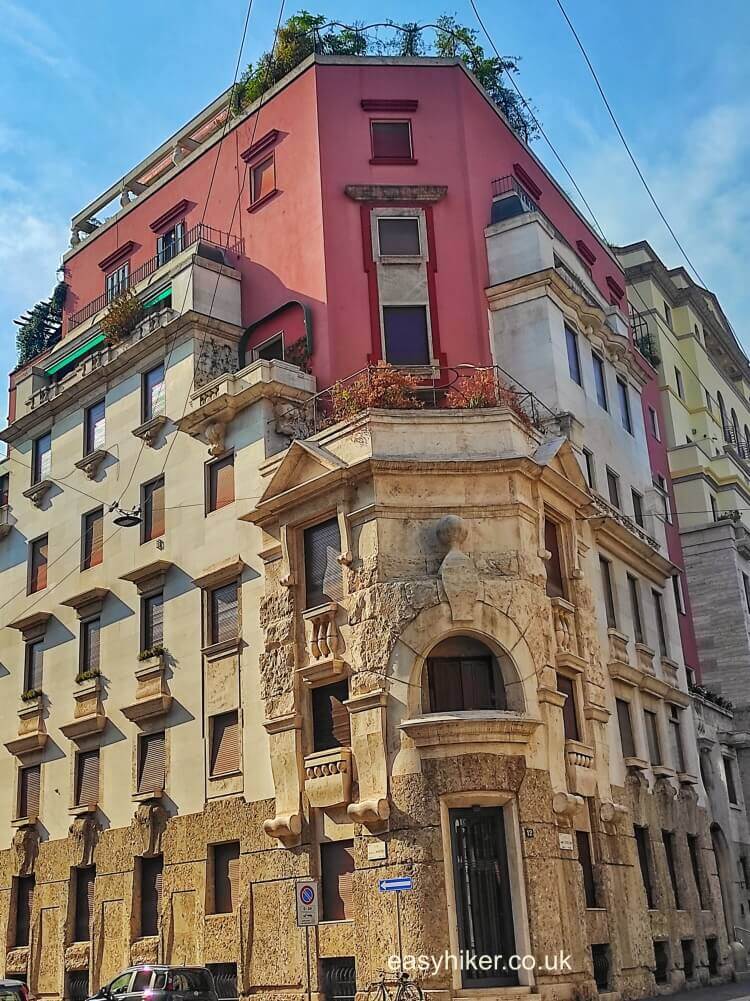
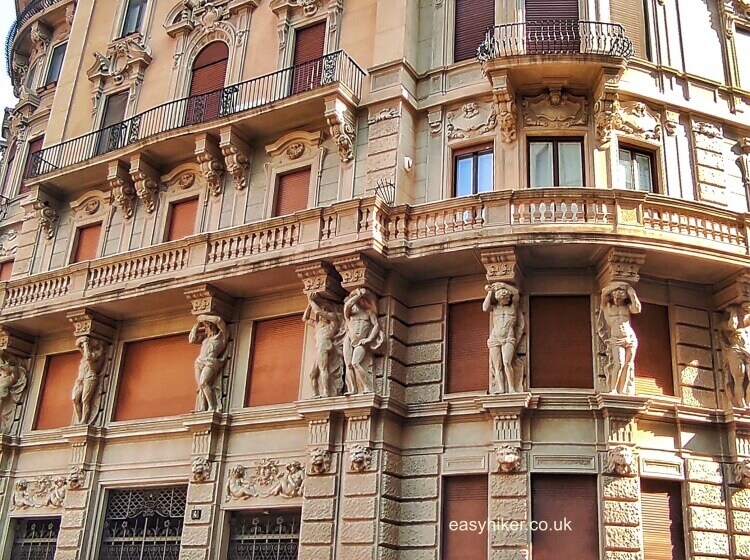
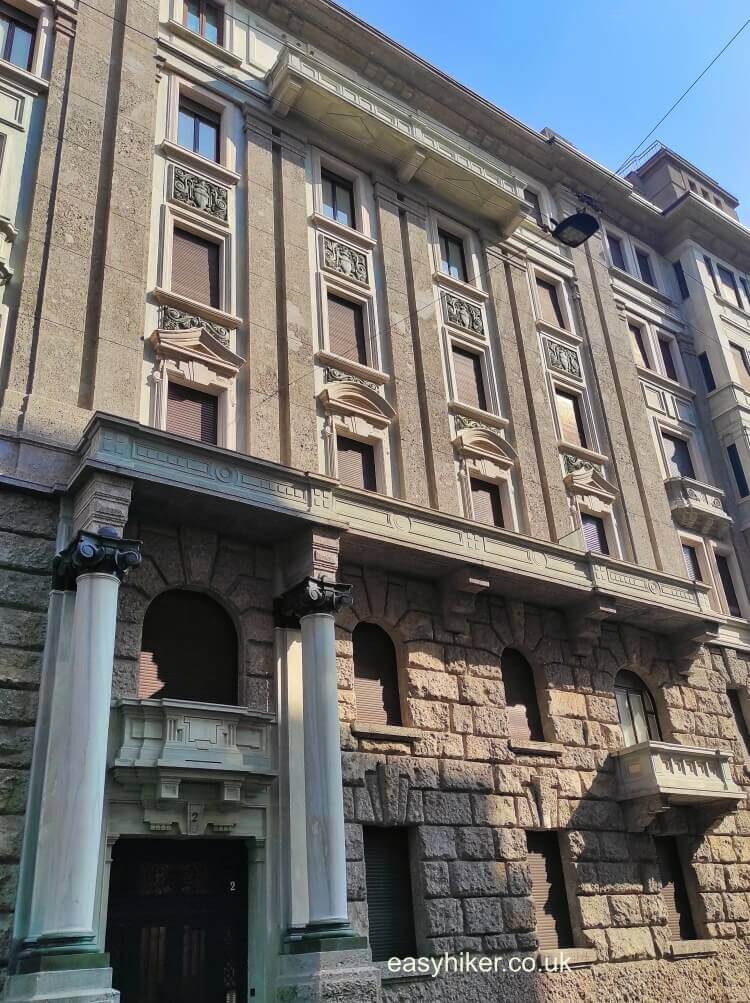
The Quadrilateralo del Silenzio – developed on a previously semi-rural site between 1900 and 1930 – accommodates buildings of a vast variety, ranging from the forbidding …
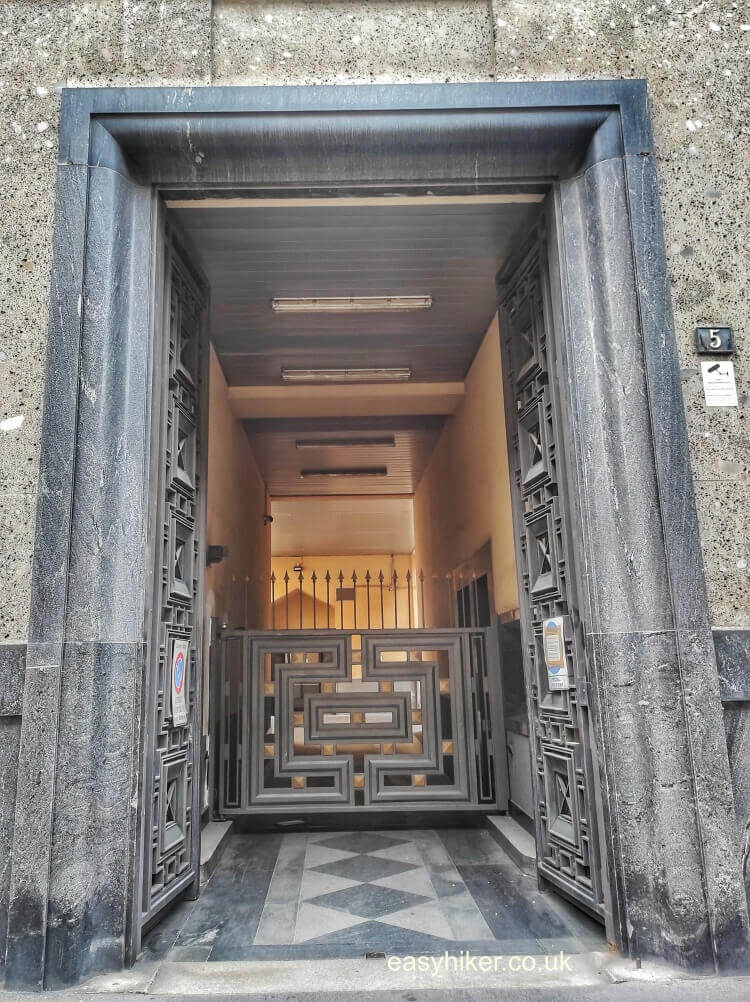
… to the playful …
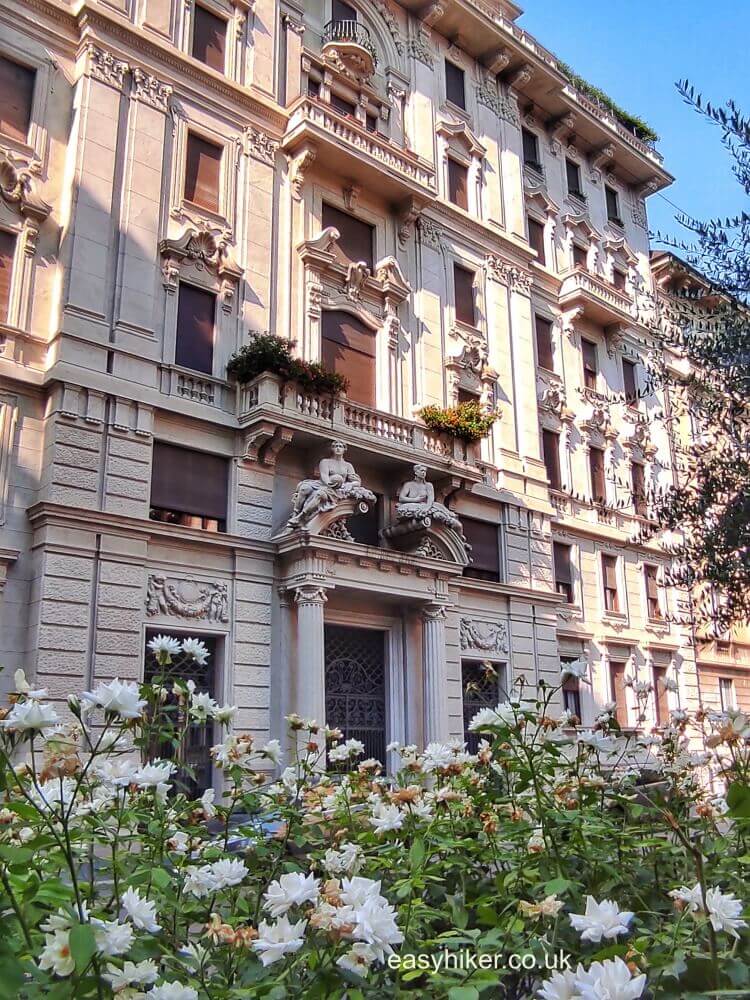
… from the stoic …
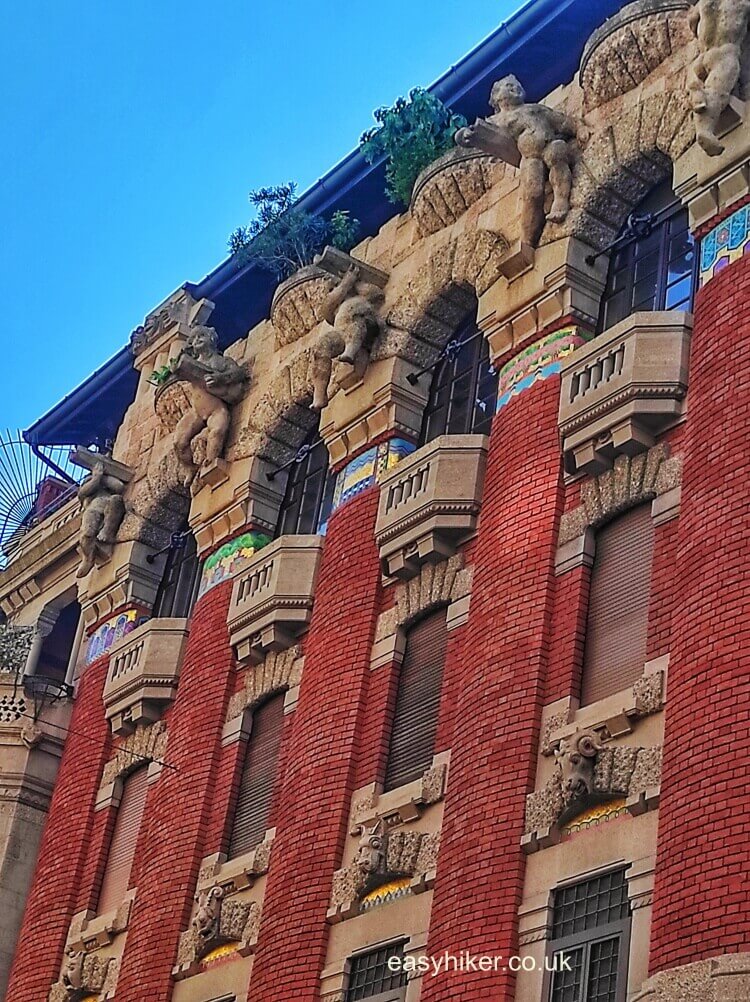
… to the hysterical, …
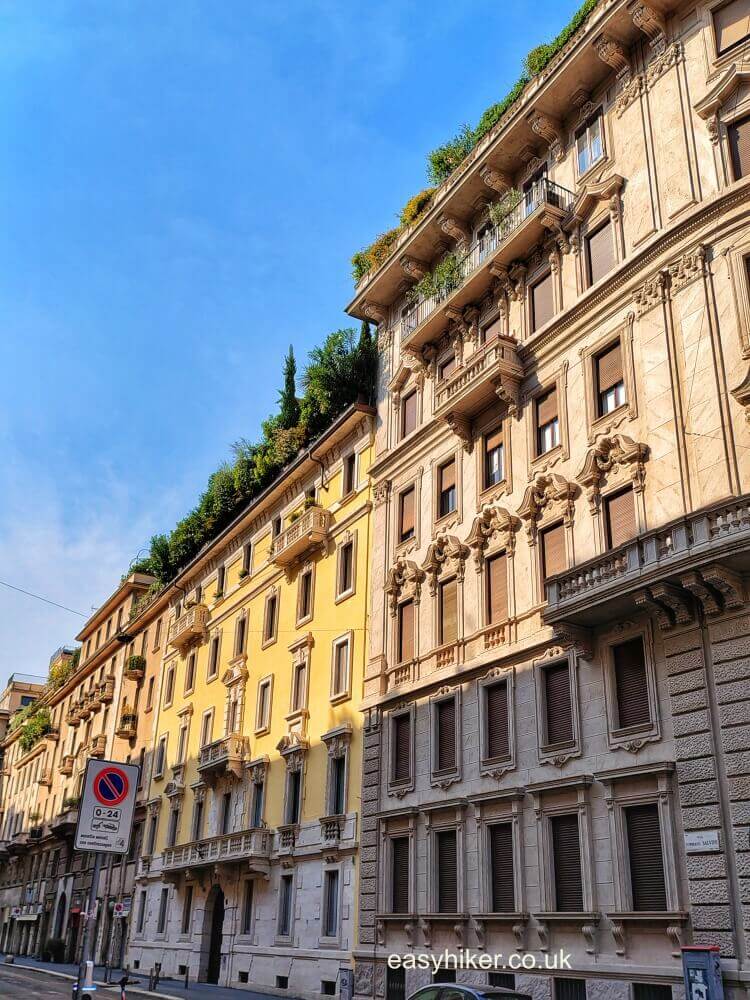
… from homes that are topped by lightly landscaped roof gardens …
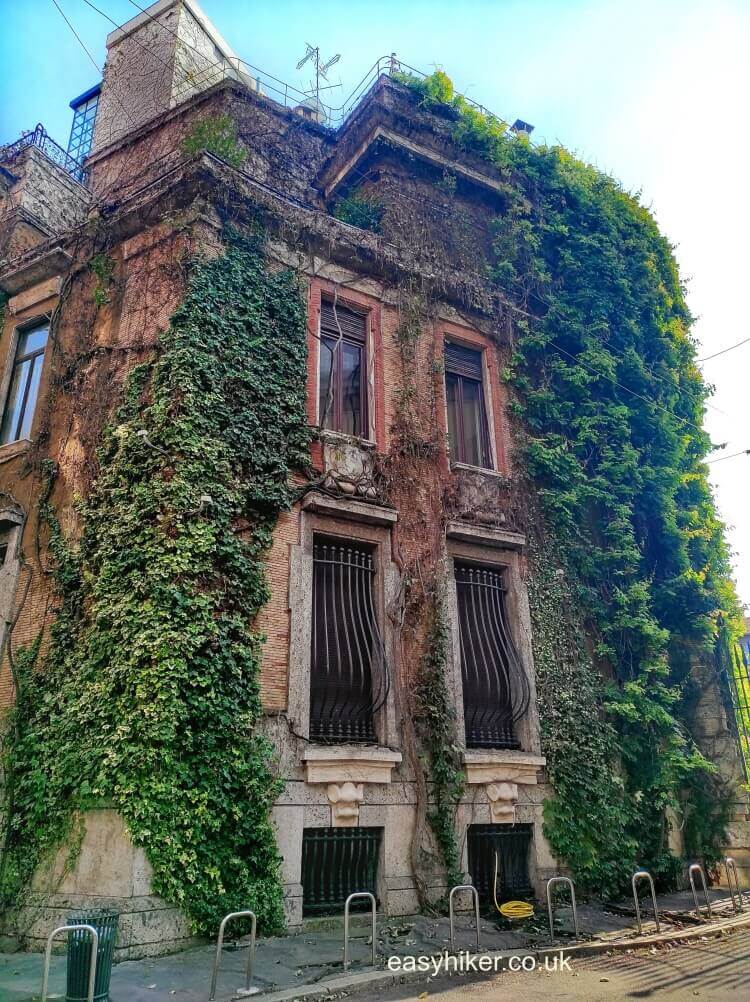
… to villas that have gone the full Jumanji.
To visit the Quadrilatero aka Milan’s Quarter of Silence, take a Metro train to the station called Palestro. From the exit, walk in the direction of the large public garden and look for the archway on the opposite side of Corso Venezia that leads into Via Tommaso Salvini and ultimately to Piazza Eleonora Duse.
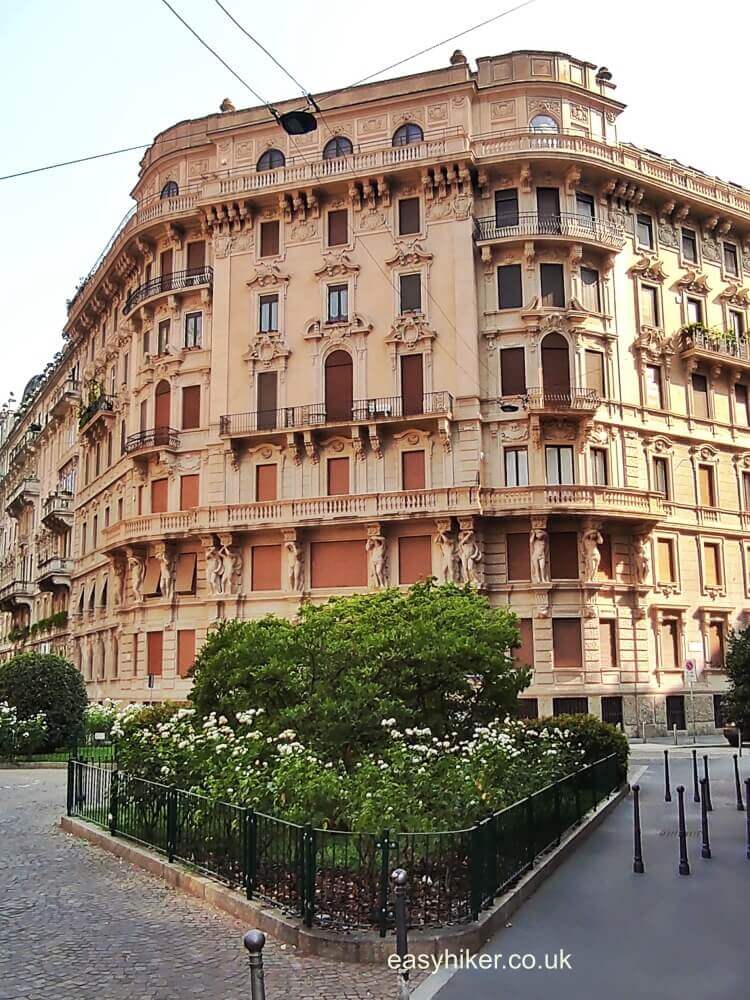
You are now at the northern edge of the Quadrilateralo that is formed by four streets: Via Cappuccini in the north, Via Mozart in the south, Via Serbelloni in the west and Via Vivaio in the east, each of which is only about 150 metres long.
We suggest to just take a stroll through the quarter and see what you can discover on your own. There are, however, three spots to which we would like to draw your attention.
The Quadrilateralo’s flagship building is the Palazzo Berri-Meregalli at the corner of Via Cappuccini and Via Vivaio. It was completed in 1913 and one of three buildings in the quarter commissioned by the partnership of Nebo Berri and Innocente Merigalli, private developers who designed luxury flats in modern apartment buildings for Milan’s industrial elite.
The architectural style of the Palazzo is variously described as Eclecticism, Art Nouveau, or Neo-Romanesque, but I think the label that fits best is Anything Goes.
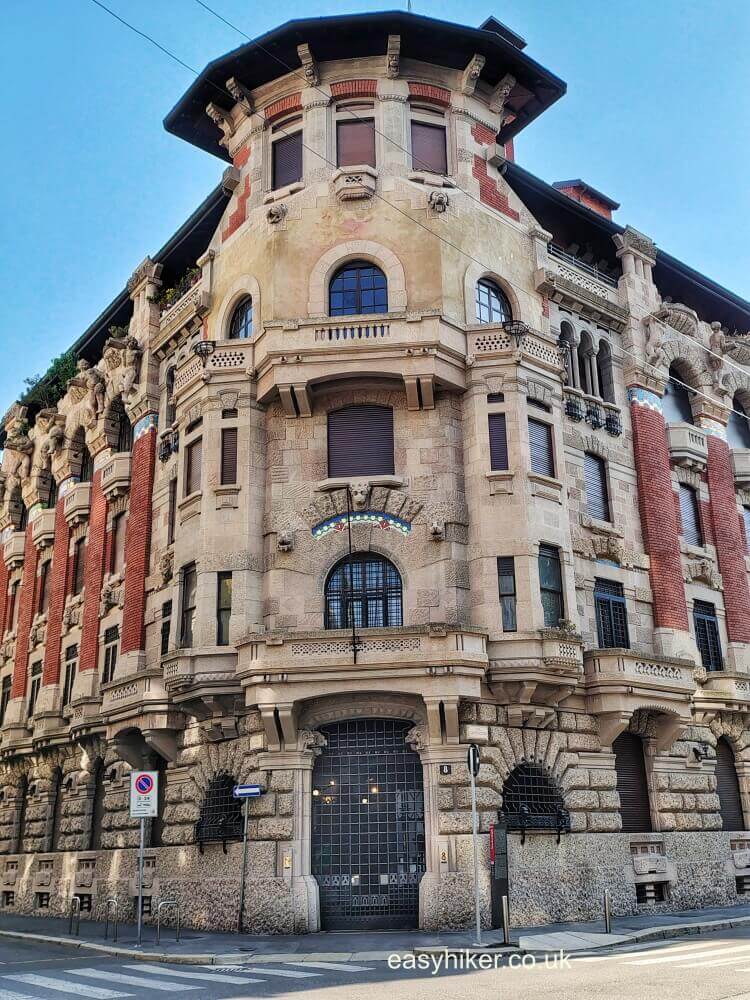
You will wonder what the Palazzo may look from the inside, but there is a way of at least getting a hint. The main door in front of the building is usually closed but you can peek inside.
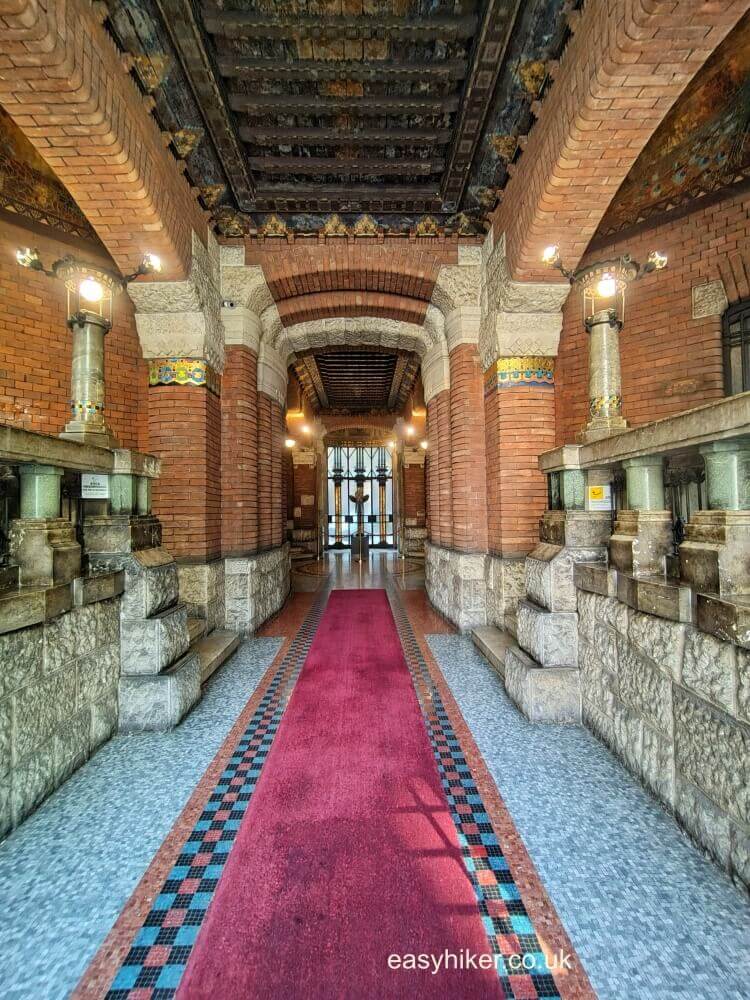
The small statue at the far end of the entrance hall, by the way, is quite famous in its own right as one of the main works of Adolfo Wildt, one of Italy’s foremost modernist sculptors. It is known as the Vittoria Alata, the “Winged Victory”.
You get more peeks into the life of Milan’s rich less than 100 metres away, where Via Cappuccini meets Via Serbelloni. This is where the Villa Invernizzi stands, not an apartment building but a stand-alone villa and the former home of Romeo Invernizzi who ran one of Italy’s largest dairy businesses from 1941 until his death (at the age of 98) in 2004.
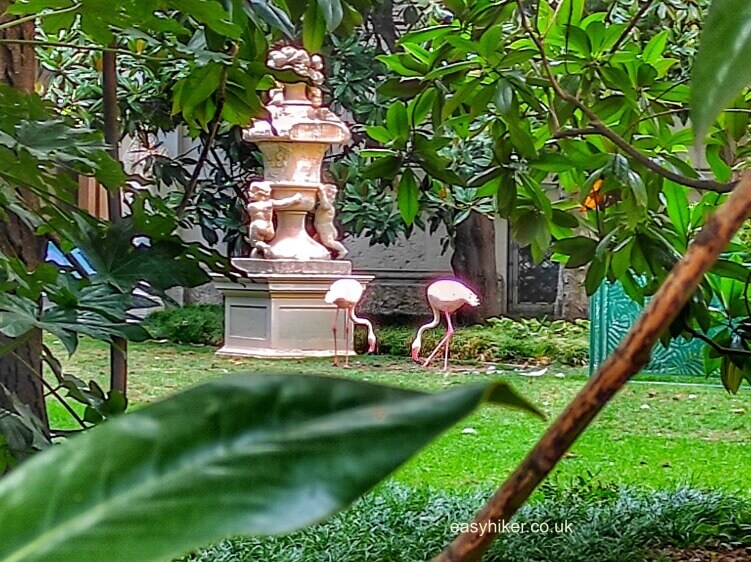
The gardens of the building are more famous than the villa itself, since they are the home of the Quadrilateralo’s famous group of pink flamingos – Romeo Invernizzi had imported them from South America in the 1970s.
The house nowadays belongs to the philanthropic Invernizzi foundation, and although the garden isn’t open to the public, you can see the birds through the iron railings from Via Cappuccini.
On Via Mozart, finally, you find one period house that you can enter: this is the Villa Necchi Campiglio that was built in the 1930 for the Necchi sisters (Nedda and Gigina), heiresses of an industrial empire (sewing machines, since you ask), and Gigina’s husband Angelo Campiglio.
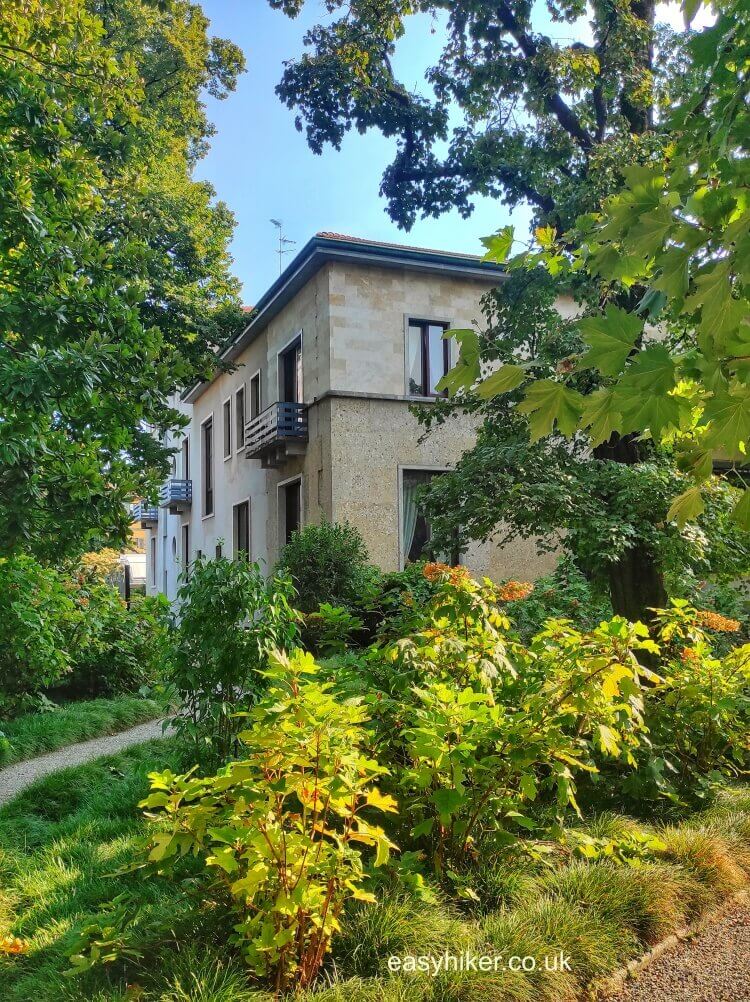
The exteriors of the building are unchanged from the 1930s when the villa represented the essence of modern architecture: austere and decidedly non-ornamental, but equipped with all the latest mod-coms including an elevator, a dumb waiter, intercoms and telephones as well as Milan’s first private swimming pool.
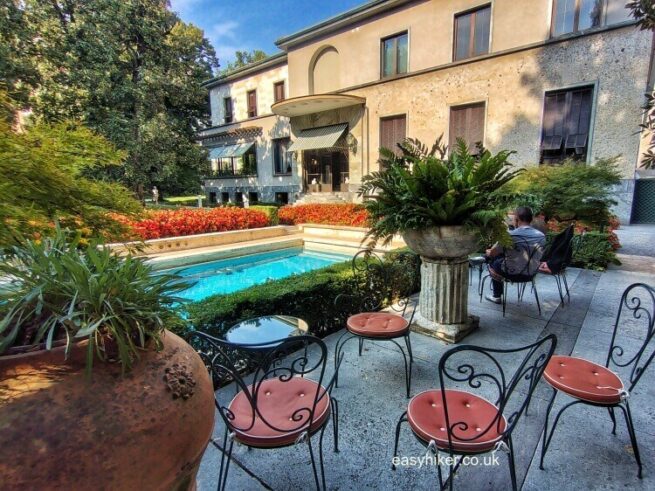
The interiors were restyled soon after the two sisters had moved in (there was apparently only so much modernism than they were willing to cope with), and when Gigina died in 2001 (aged 101: there must be something in the Quadrilateralo’s water – her sister also made it to 93), the house was inherited by the Italian equivalent of the National Trust (the FAI) which had it comprehensively renovated (at a cost of 6 million Euros).
The extensive Necchi art collection had been sold by the sisters while they were still alive, but other FAI treasures have since found a home in the villa (open from Wednesdays to Sundays, 1000 to 1800 hrs).
Some trivia about the building: during the Second World War, the house was requisitioned and became the operational HQ of Alessandro Pavolini, the Minister of Culture under Benito Mussolini’s Fascist government. And you can spot the villa in Ridley Scott’s crime drama House of Gucci, where it puts in an appearance as the residence of Rodolfo Gucci, played by Jeremy Irons.
But what has become of the Age Of Experiments? The skyline of Milan – and of any other modern city – gives a rather depressing answer: the race for the 20th century dominant architectural style was eventually won by the least interesting and least charming contestant, the swot of the class aka the International Style.
The people who developed Milan’s Quarter of Silence and those who footed the bill, meanwhile, should be honoured as Heroes of the Resistance who fought for a noble cause – and lost, falling silent. But the sound of their silence still reverberates through architectural history – as a powerful memento of what opportunities for better urban designs were missed, of what could have been. The vision that was planted in their brains still remains.