The Marche region may lie in the centre of Italy but if you can imagine a Tourist’s View Of The Country – in the style of Saul Steinberg’s famous View Of the World From Midtown Manhattanposter where every town, state and country beyond the Hudson River disappears in a blur of vague uncertainty – it would form part of the desert beyond Venice, Rome and Florence.
There is, however, one major attraction in Marche which can rival anything that more touristically famous regions can offer.
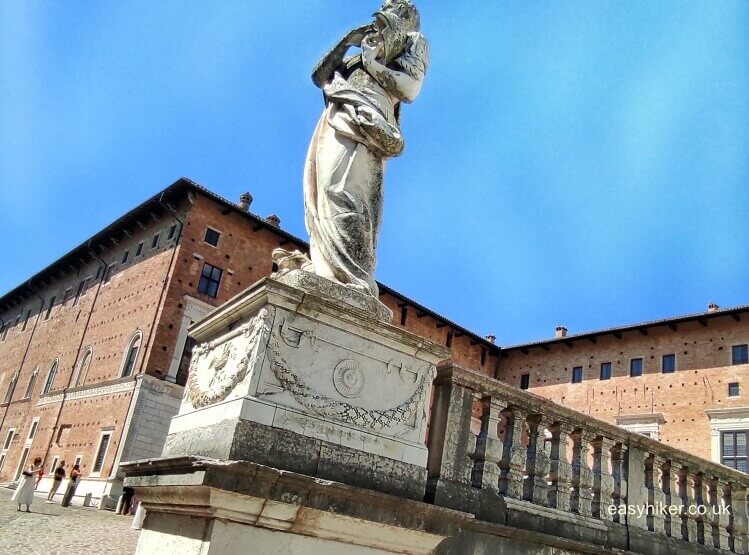
Urbino
The hilltop town of Urbino may be a little hard to reach (it has no train station, so you have to take the bus from Fano or Pesaro) but is certainly worth the effort as it is precious and unique even by Italian standards.
In a major city, it is difficult to stop the clocks and to preserve everything inside in the amber of historical accuracy – and part of Italy’s charm is that many of its most ancient cities (Rome, above all) have never really tried.
In towns without commerce and industry, however, this is a different matter. Not only is the trick easier to pull off, it can even produce highly attractive results. Ultimately, if the street life is bubbly and energetic: who cares that this is down to visitors from outside?
Urbino is a prime example for what such an approach can deliver.
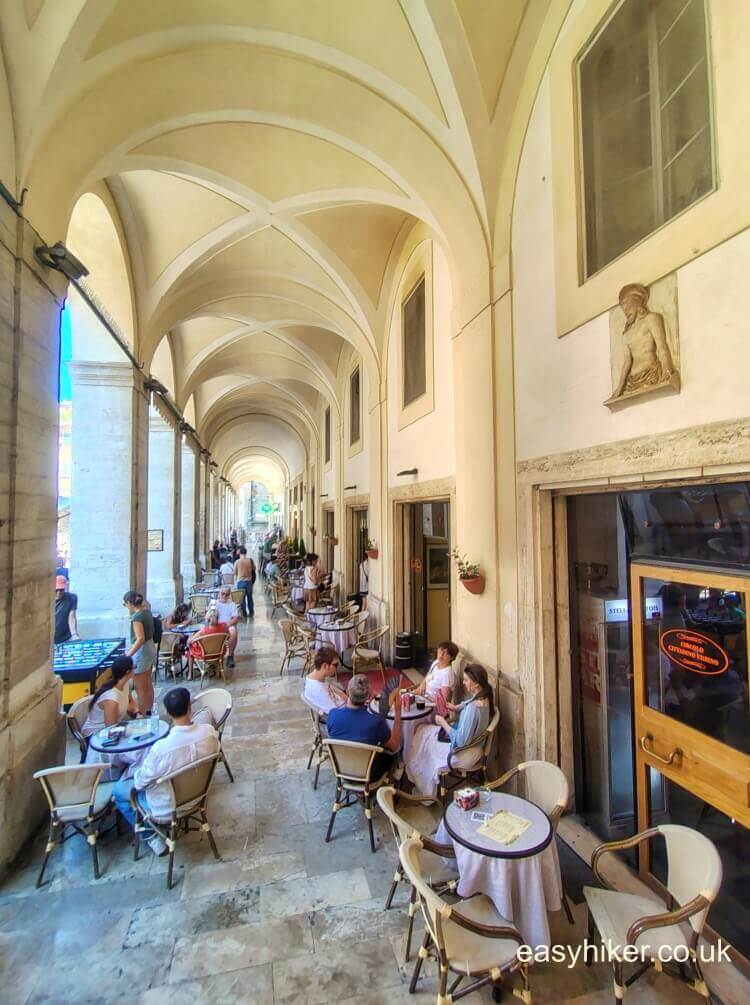
Urbino is so unique because it has come down to us straight from the Middle Ages. It may have been refreshed a few times in the last 800 years or so, but has been largely allowed to stay true to its character. Which is why UNESCO made the town a World Heritage Site way back in 1998.
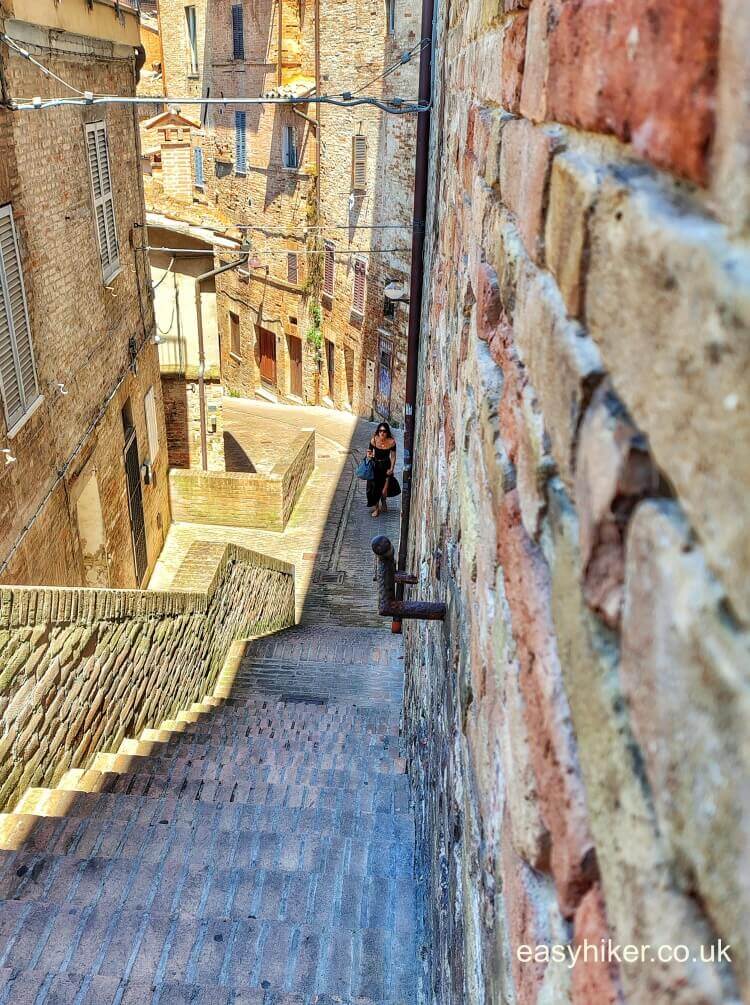
Much of Urbino’s fame rests on the 40 years when it was ruled by Federico da Montefeltro, the most famous scion of the aristocratic family that had taken charge of Urbino in the 1200s.
For much of the late 15th century, Urbino was an internationally recognised centre of Italian culture, welcoming some of Europe’s leading mathematicians, philosophers and artists – including Piero della Francesca, whose portrait of Duke Federico, meanwhile, …
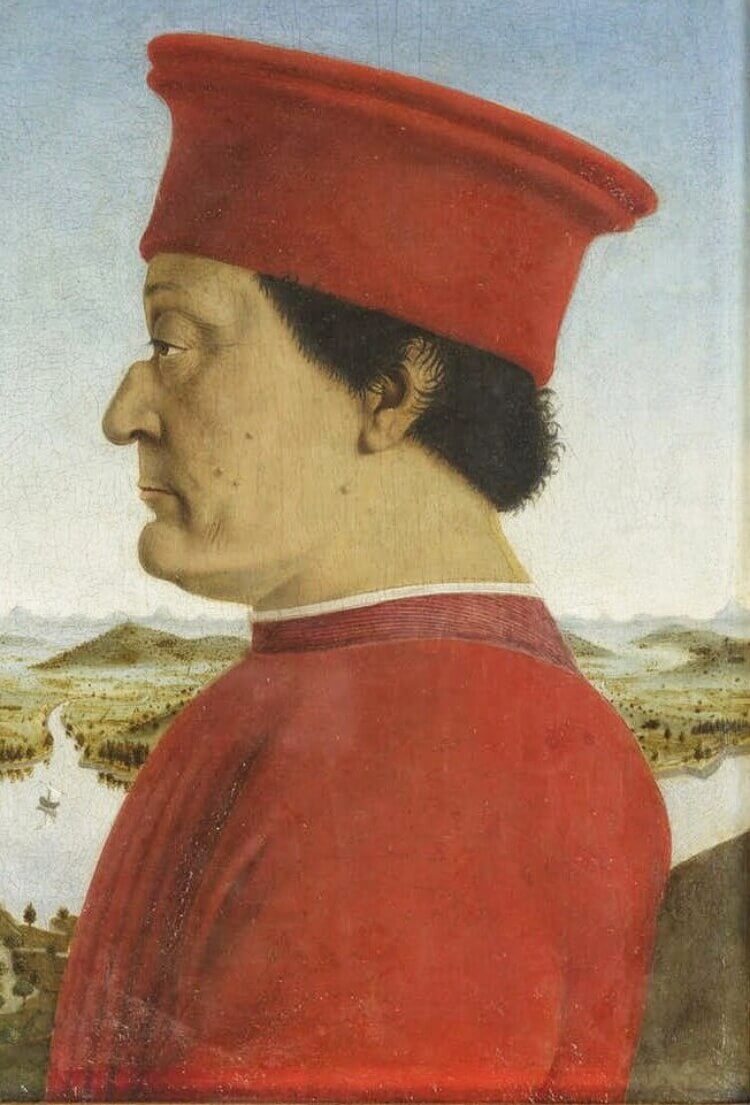
… also hints at the darker side of the Renaissance.
Federico had lost a part of his nose (and his right eye) in battle, since – outside of his philanthropism – it was his day job to fight and kill. Federico was a professional soldier, a leader of mercenaries who had also – as most modern historians believe – orchestrated the plot to murder his half-brother so he could assume his dukedom.
In fact, this period of European history was not all about carnivals and fancy paintings but, in fact, far more brutal and blood-soaked than the Middle Ages. In the light of the “humanistic” new reason, religious scruples about violence suddenly seemed quaint and old-fashioned.
Neither did it help that the popes themselves had largely abandoned their roles as moderating arbitrators of squabbles between various warlords, opting instead to enter the fray themselves with powerful armies.
After Federico’s death and the fall of the Montefeltro family, Urbino fell into neglect for almost 200 years. Things only brightened up when Cardinal Albani – who had been born in Urbino – became the new head of the Catholic Church as Pope Clement XI and made sure that his home town got a first-class facelift.
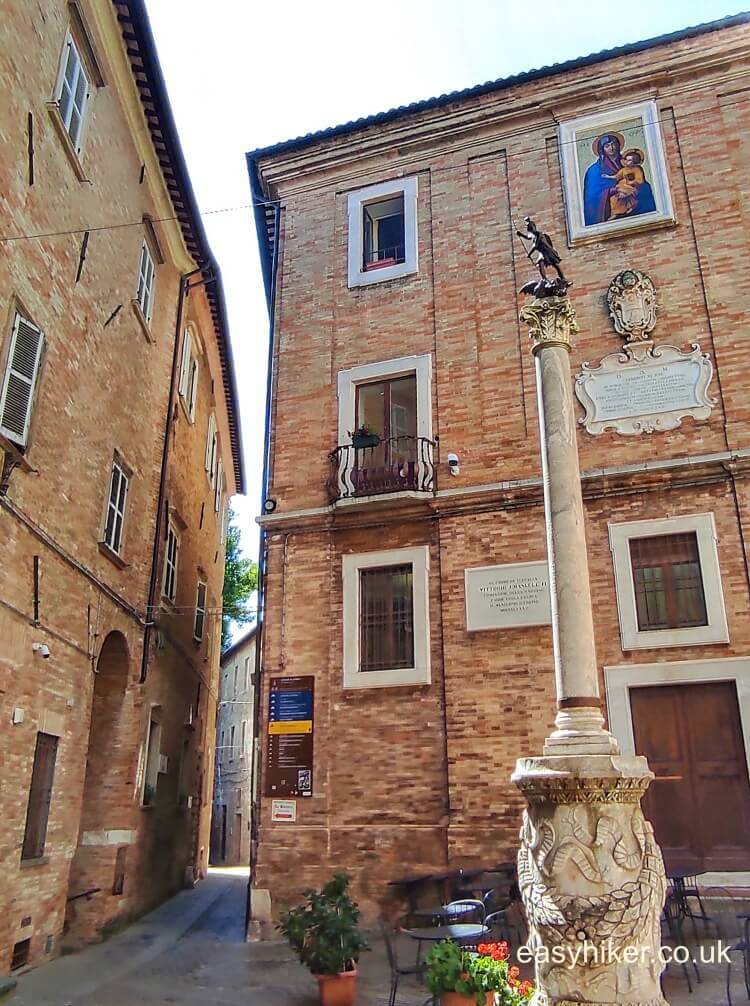
There is no statue in Urbino’s streets of Federico, and Pope Clement has a modestly-sized one that can be easily overlooked …
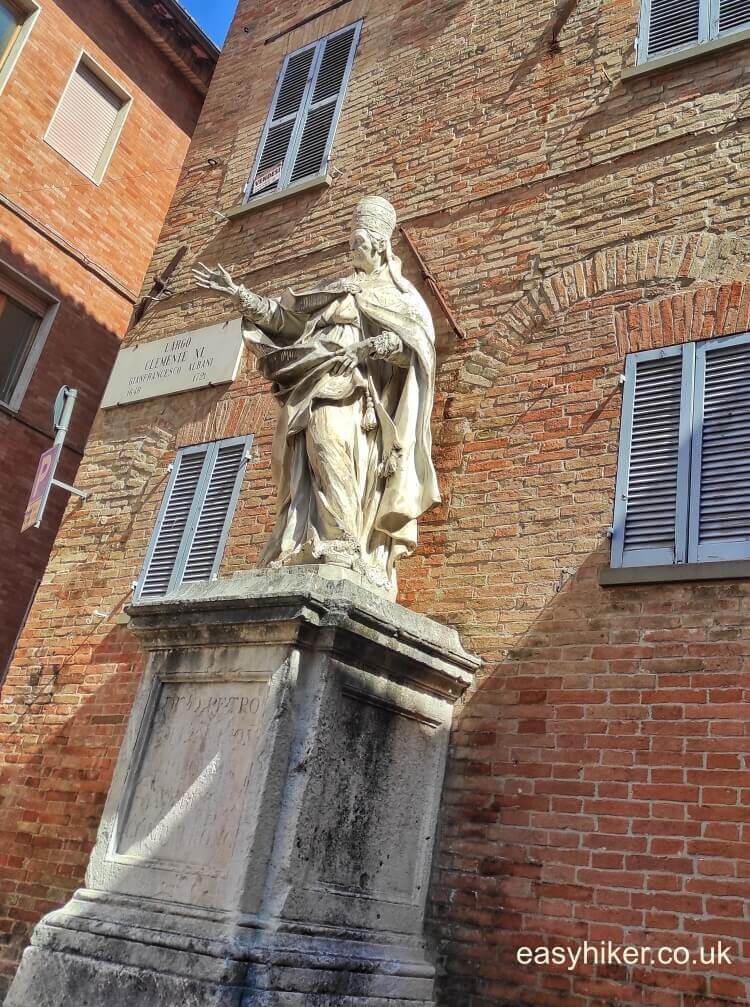
… although these are the two men who are most responsible for the way Urbino looks today.
The underlying urban fabric was created by the Renaissance warlord (including some of the town’s most outstanding buildings), …
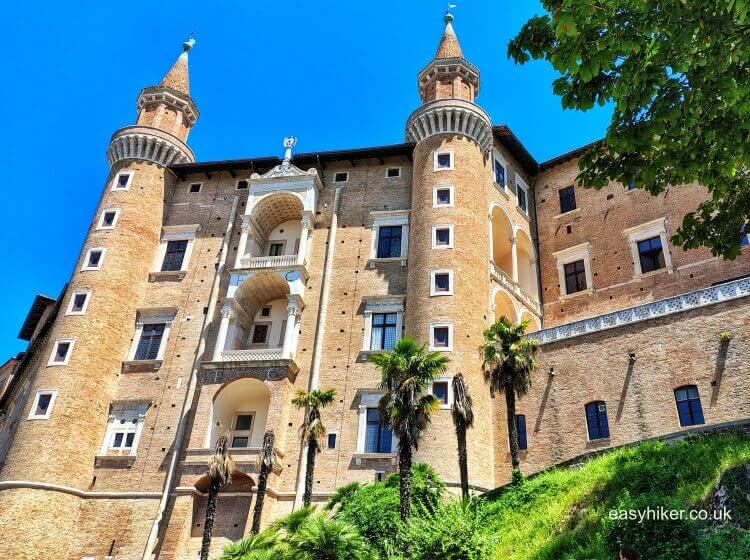
… while most of the ornamental features were added at the peak of the Baroque period, courtesy of the man in the Vatican, Urbino’s Prodigal Son.
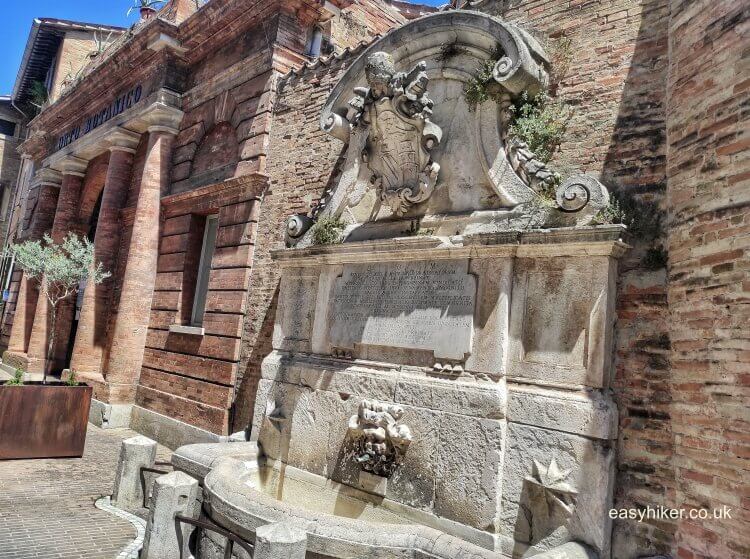
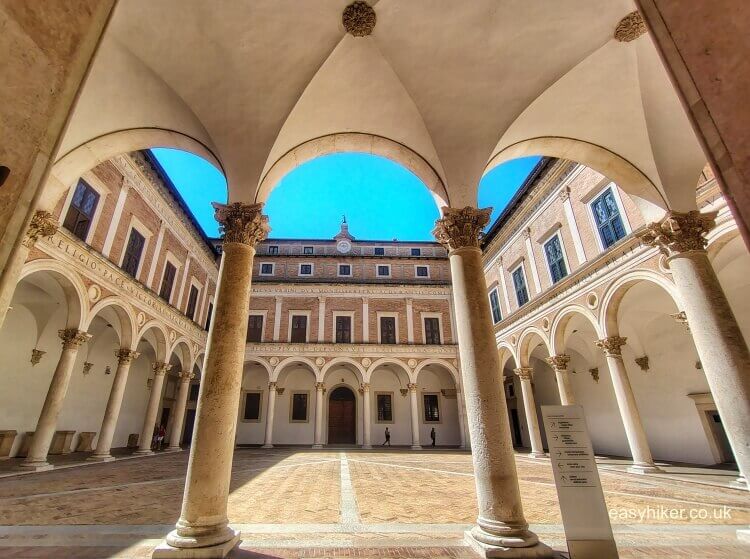
One might point out, therefore, that anybody in search of landmark monuments for Federico and Clement should just have a good look around. Si monumentum requiris, circumspice – in the words of the epitaph on Christopher Wren’s tomb in the crypt of St. Paul’s Cathedral.
The part of Urbino’s poster boy, meanwhile, has been given to the painter Raphael, who was born in Urbino but left when he was 17 to spend the rest of his short life in Rome as the favourite of the papal court and the capital’s high aristocracy. (Unlike Leonardo “da Vinci” and Michelangelo “Caravaggio”, he did not even bother to integrate the name of his hometown into his artist’s name.)
It may indeed be argued that the famous artist’s father was more important for 15th century Urbino than his son: Giovanni Santi was not only the court painter for the Duke but also his chief theatrical producer and director, some even say his Minister of Culture, the man who organised and oversaw the entire programme.
It is therefore fitting that the house where Raphael was born …
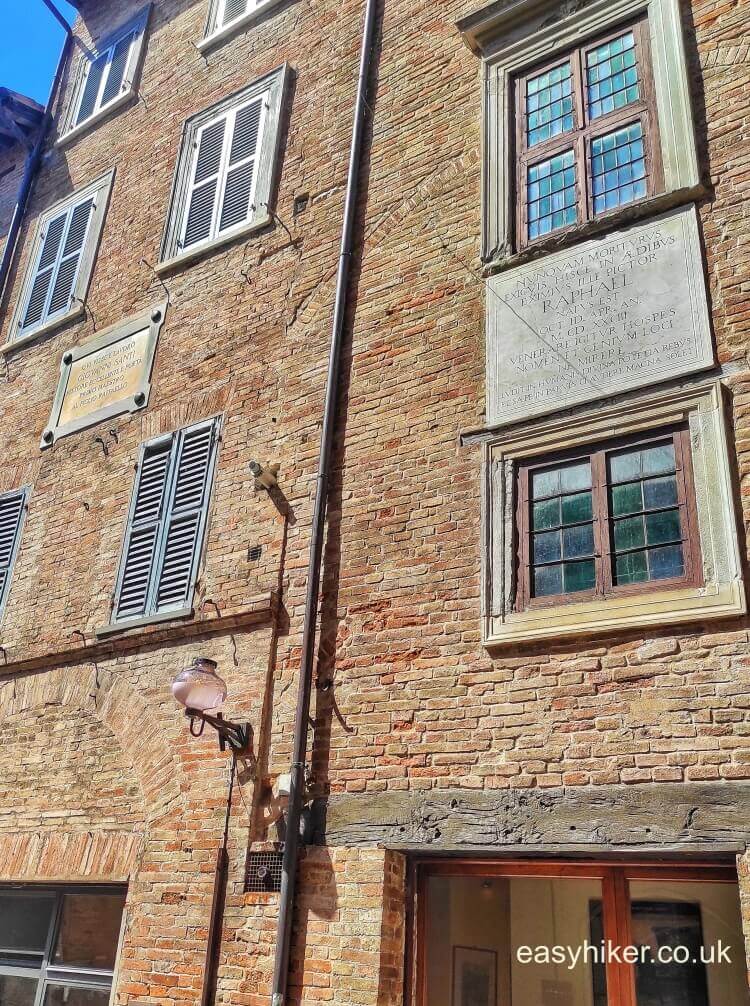
… honours the two men with (almost) equally sized municipal plaques. But while Giovanni Santi belongs to Urbino, his son belongs to the world.
If you want to experience Urbino through the eyes of young Raphael, you can follow his footsteps on a 10-stop walk through the town’s streets.
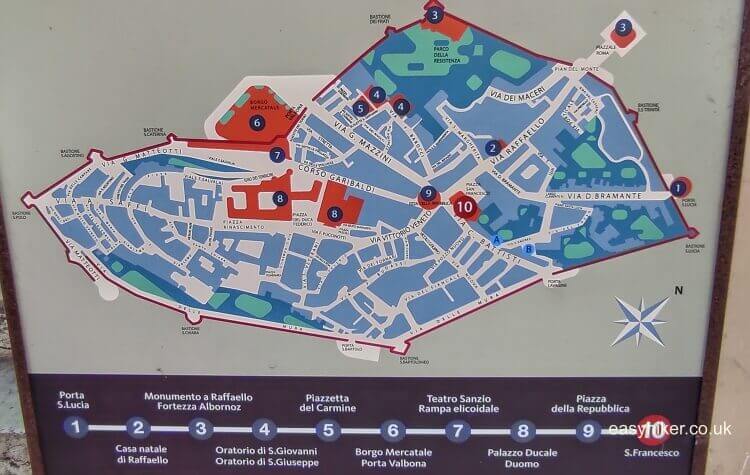
Some of the connections may seem a little forced (“young Raphael would surely have been familiar with this building”, that sort of thing), but overall, the trail provides a good way of familiarising yourself with the town’s charms and atmosphere.
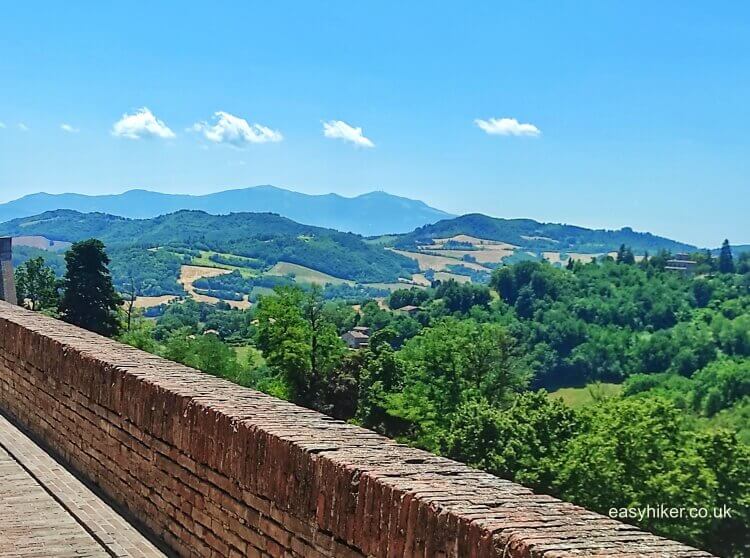
Two more tips. Make sure that you will also search for Urbino’s outer periphery near the 15th century fortifications. The central Italian countryside begins right outside the city walls: one moment you are in town, the next you would find yourself surrounded by farmland. This may be one of the keys to understanding how our medieval ancestors perceived towns and cities.
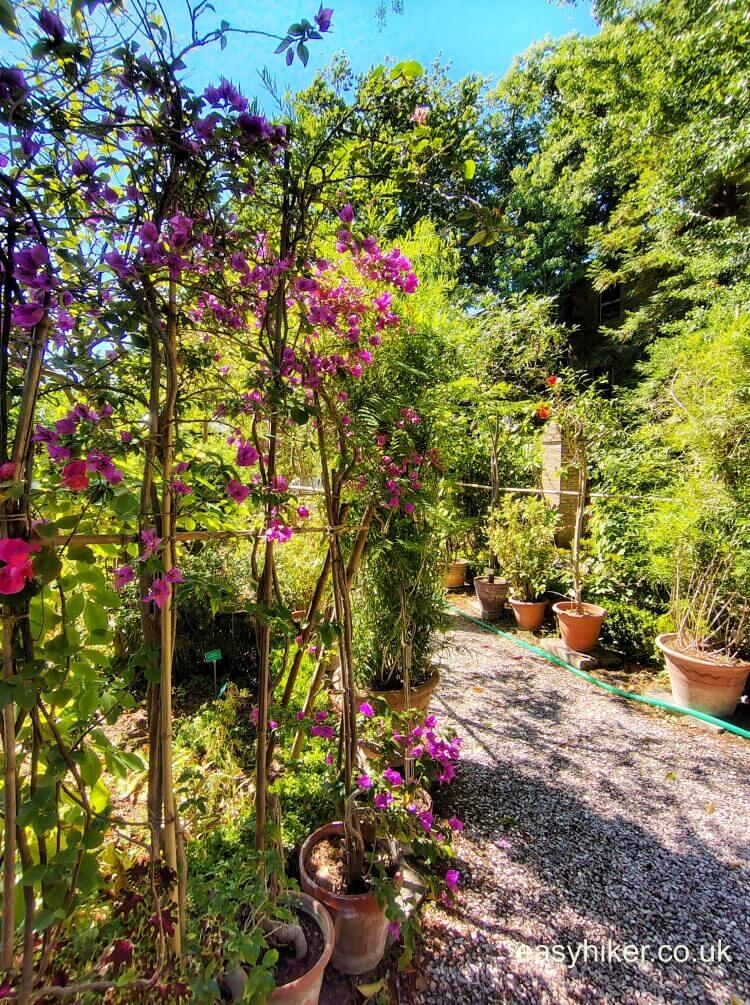
And do not miss the Botanic Garden on Via Donato Bramante, a short walk from the Santa Lucia shopping centre where the buses arrive.
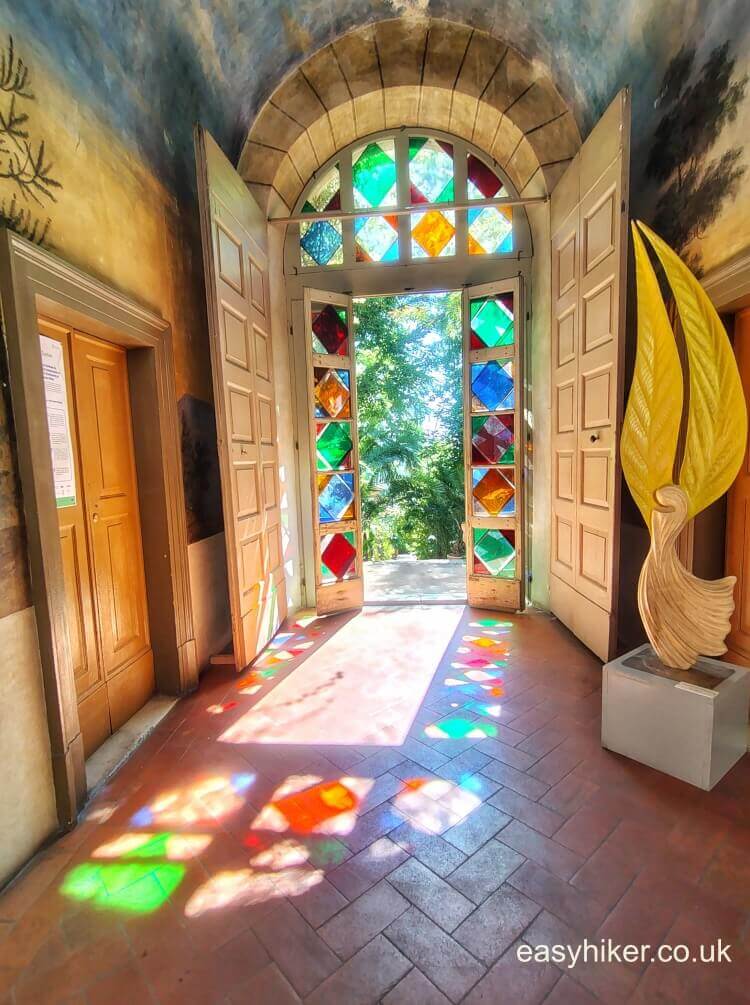
Not only does it shine like a a colourful jewel in the largely monochrome townscape, it also provides a haven of calm and serenity. There will be many visitors (it is free to enter), but while the garden is not large, it is full of nooks and crannies, and you will always find one that has been waiting just for you.
Finally, a few word about the one inhabitant of Urbino who really carried the name of the town throughout the world.
Like Raphael, she did not spend most of her life in Urbino – although, in her case, that relatively short period still accounted for almost 100 years – before she was first moved to Pesaro and after that to Florence where she still resides.
Unlike Raphael, however, she still carries the name of the town in her most commonly used name: the Venus of Urbino, fathered by Titian in 1534.
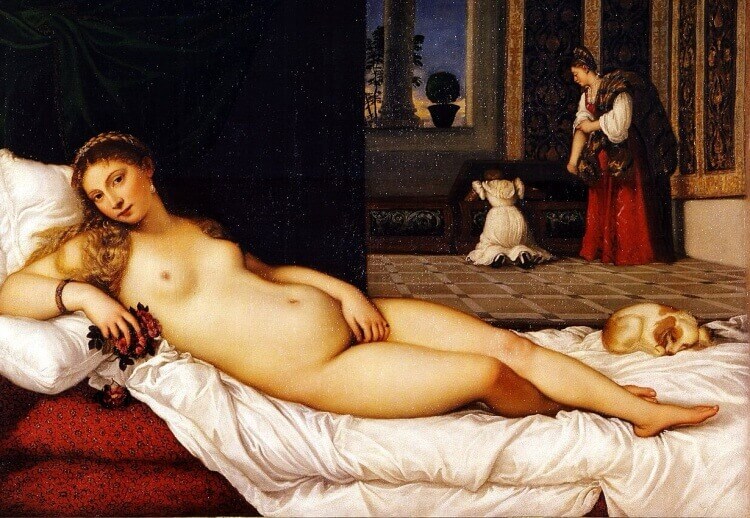
I only mention this undisputed queen of reclining nudes because she provides the fitting conclusion for a story about a town whose most influential citizens do not get the credit they deserve – while the glory goes to the popular and handsome. Injustice of this sort, it seems, is not a modern invention.