Some countries do city tourism well, others badly or not at all. At one end of the scale, you have France, Spain and Italy. Their great cities are firm fixtures on the global tourism itinerary, and most of these countries’ regional capitals have become popular destinations in their own right.
Toulouse and Strasbourg, Seville and Valencia, Bologna and Palermo: tell your friends that you have booked a weekend trip to any of these places, and they will nod their heads in appreciation of your connoisseurship.
On the other end of the scale, you have the UK: pick a holiday destination from a list of Britain’s ten largest cities not called London (Birmingham? Leeds? Sheffield, for crying out loud?) and your friends will think you have gone off your rocker. What the hell, they will be asking, is there to see in Birmingham?
Today, we are going to tell them.
Birmingham – A Monument To Industry
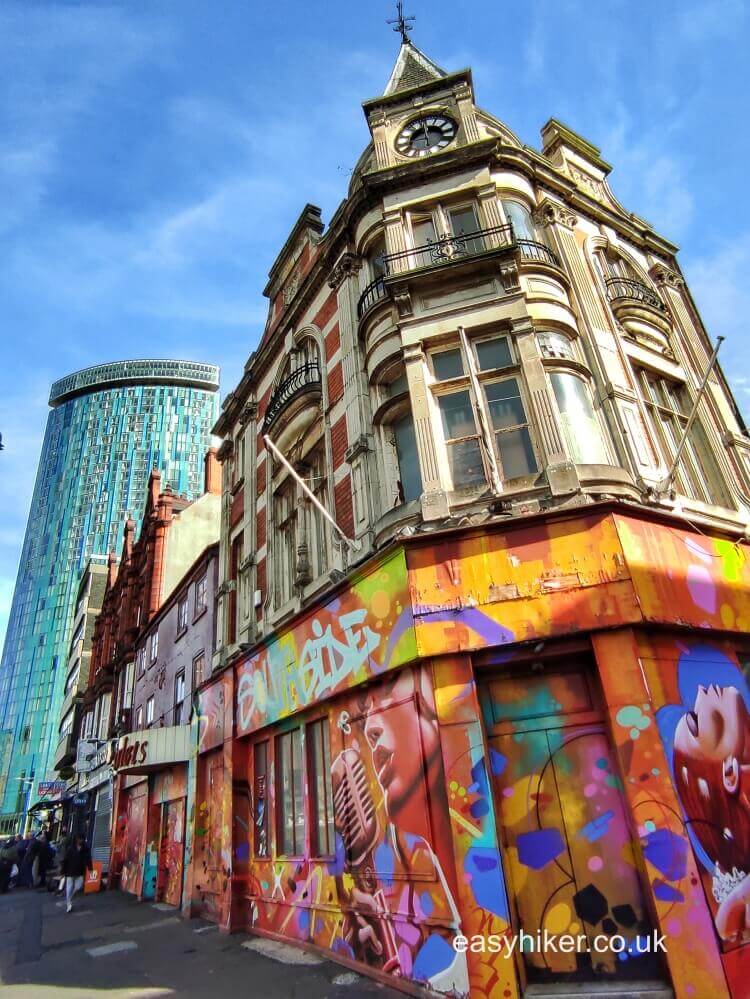
To do Birmingham justice, there is one thing you have to bear in mind: the city was not conceived to rival the tweeness of Cambridge or the sophisticated elegance of Bath. Birmingham was built as a monument to industry, and the city’s civic pride in its status as the workshop of the world – it was in fact the first proper industrial town on the planet – is oozing from every stone, column and public work of art.
Modern Birmingham owes much to the vision of a single man. What the Emperor Augustus was to ancient Rome and Baron Haussmann to Paris, Joseph Chamberlain was for Birmingham.
Chamberlain had been one of the leading industrialists in town before becoming the city’s mayor and, eventually, one of late Victorian Britain’s key political figures – he “made the political weather”, as Winston Churchill said, much of it favouring his home town and power base.
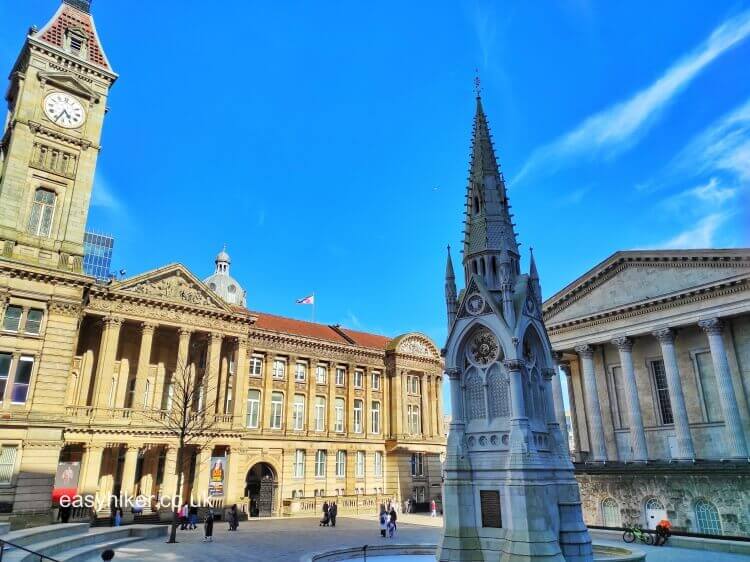
In 1880, the grateful city of Birmingham erected a Chamberlain Memorial in front of its City Hall – when the great man was a sprightly 44-year old with most of his political career still ahead of him.
On the larger stage of national politics, Chamberlain became the leading spokesman for the country’s manufacturing industry. Always aiming to secure markets and raw material supply chains, he pursued a fiercely imperialist line.
In his home town, meanwhile, Chamberlain was a “fiery red” (Churchill again), a social radical: building schools and public libraries, initiating slum clearing projects, forcing the owners of municipal utilities to sell their companies to the city government.
Joseph Chamberlain’s single most important architectural project was the redevelopment of the city centre around New Street just outside the central train station. Dilapidated tenement halls were replaced by a modern commercial estate around the newly created Corporation Street.
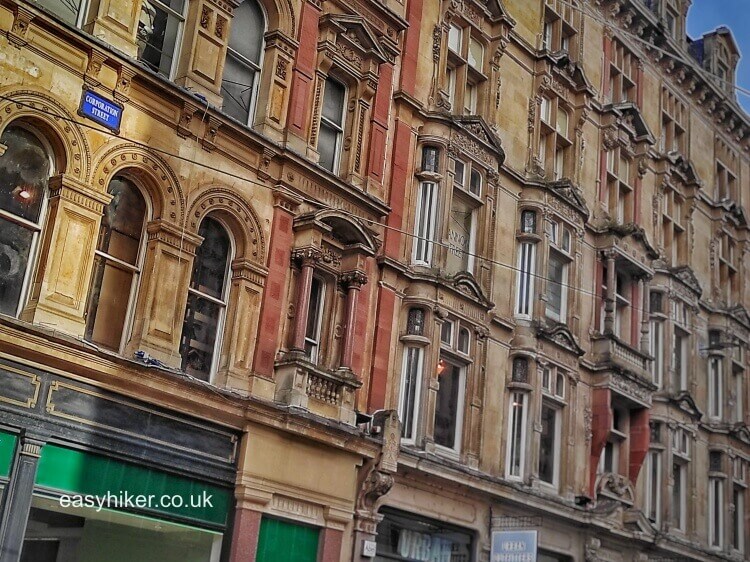
Mark the street’s name: no kings, no noblemen.
Chamberlain always wore his industrialist’s heart on his sleeve and was legendarily unwilling to compromise in the ruthless pursuit of his constituency’s interests (or his own). That did not always serve him well in his political career in London, but in Birmingham, for half a century, nobody dared to stand in his way. Which gave him the freedom to create a city in his own image.
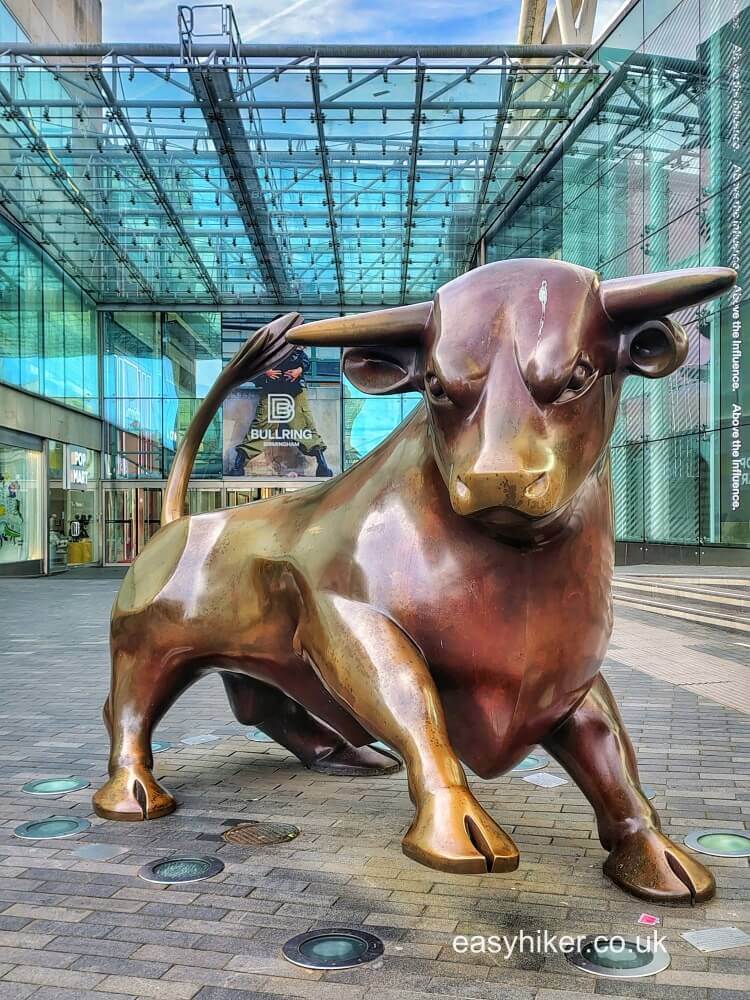
Birmingham was built not only as a monument to the manufacturing industry, but also to the pride such an industry instills in the artisans and craftsmen who prosper through their own skills and efforts. Birmingham, after all, was the workshop, not the factory of the world. Small entrepreneurs, engineers, inventors: they were the force that drove the city’s development.
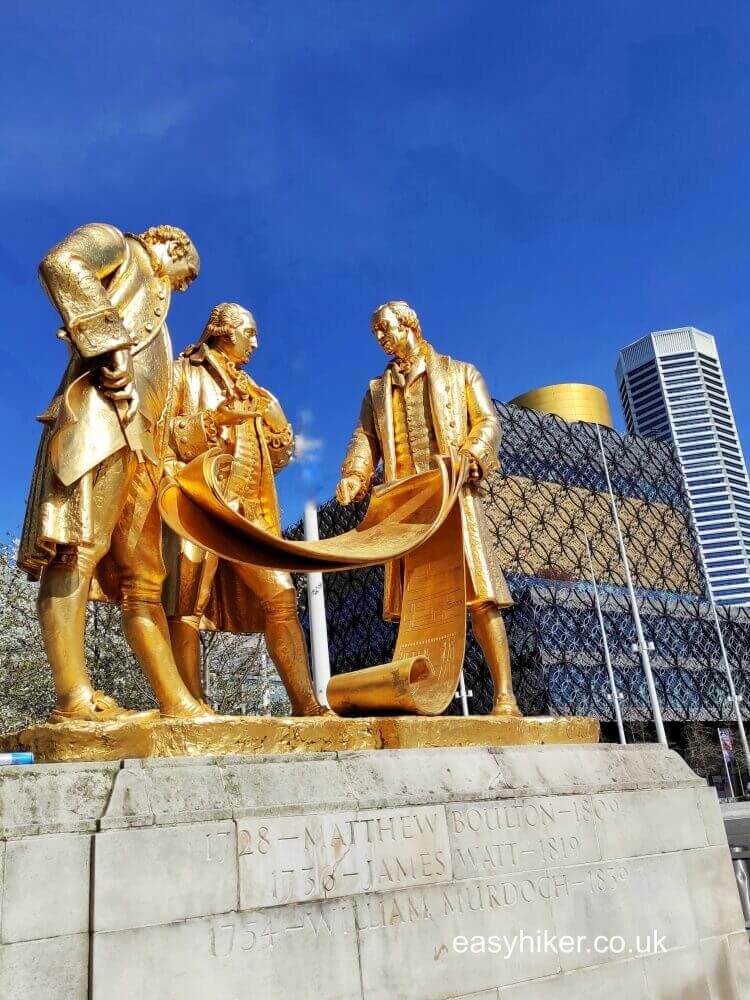
You can still sense their spirit on a walk through the town centre, from New Street and Broad Street, where you will pass the memorial for the three steam engine pioneers (Matthew Boulton, James Watt, William Murdoch), …
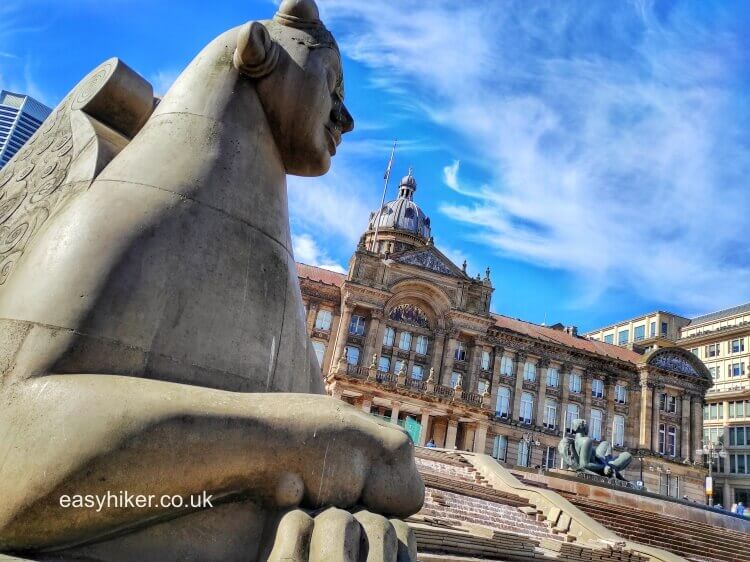
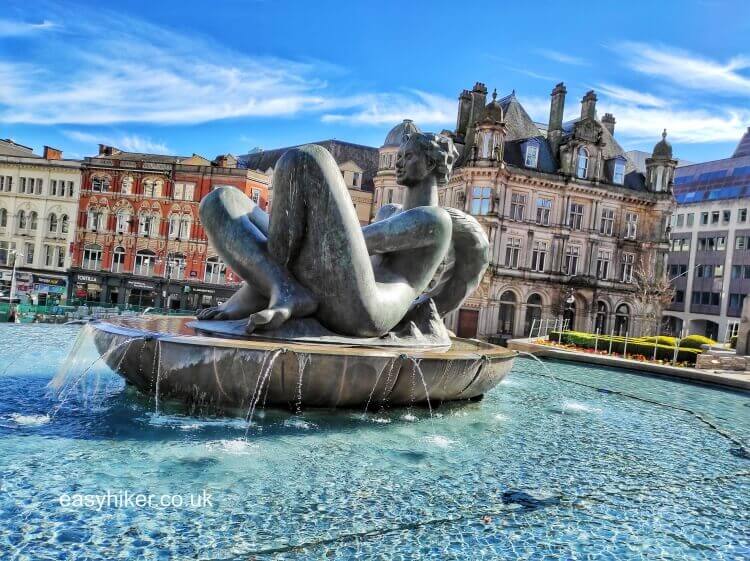
… via Victoria Square, the city’s showcase piazza ….
… to the area around the historic St Martin’s Church and the iconic Bullring shopping centre: big, bold and brash, that is what Birmingham has been from the Victorian era until today.
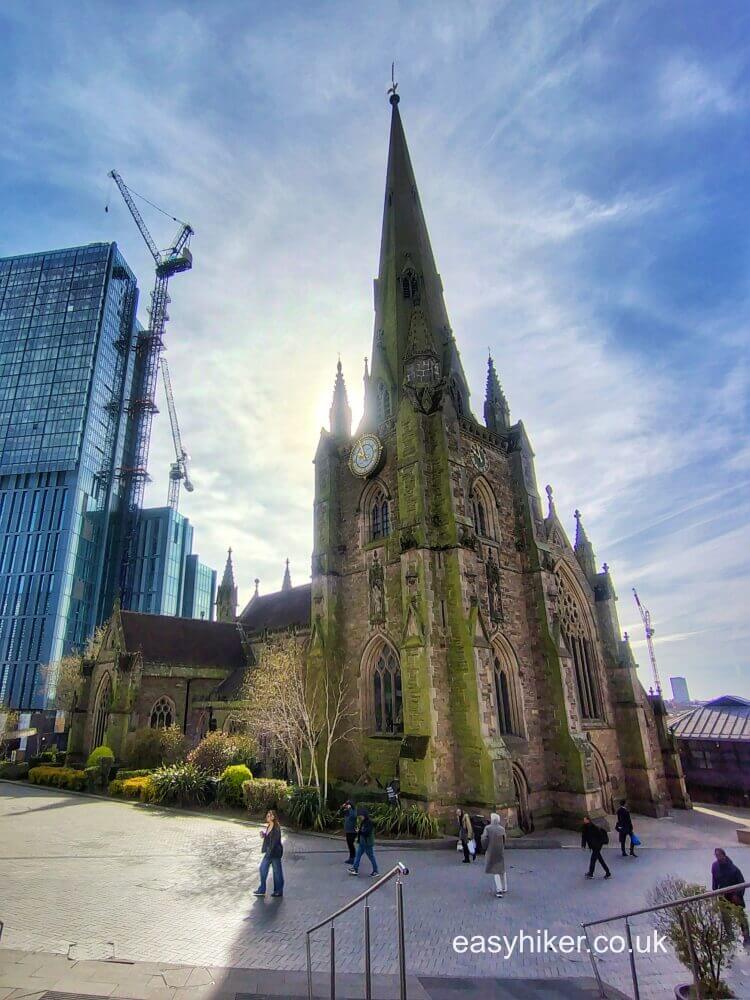
Unsurprisingly, perhaps, the city’s most scenic walking route also picks up this leitmotif. The Birmingham Canal Walk is, in its own way, another monument to industry.
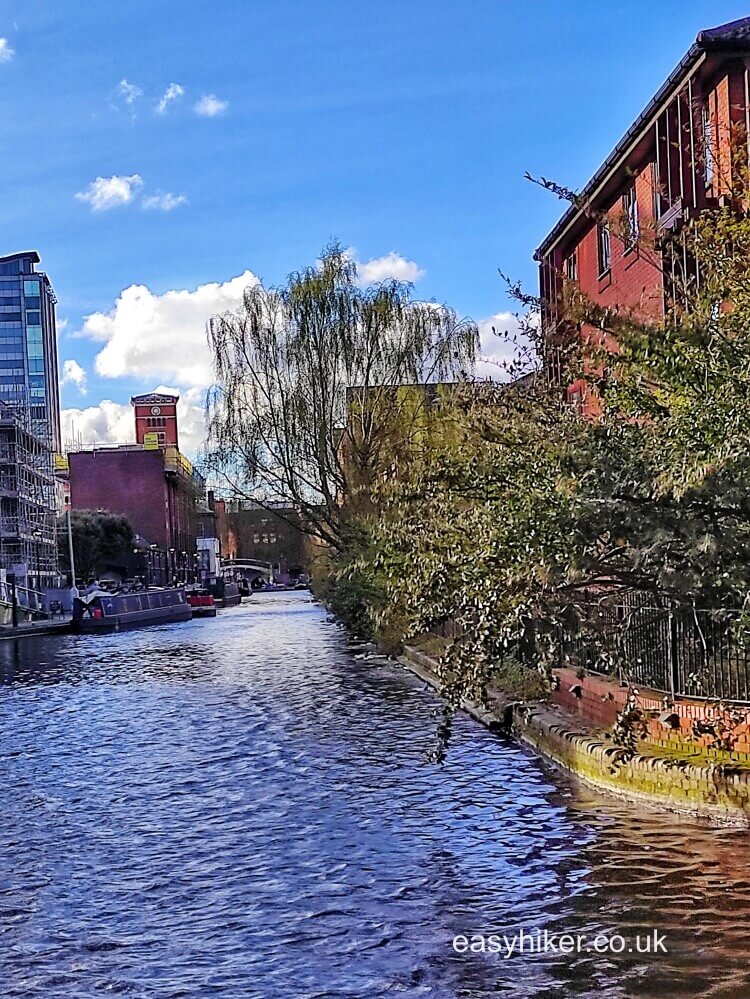
Birmingham, as the locals will be pleased to let you know, has more canals and more canal miles than Venice – in fact, three or four times as many. These canals may not look quite the same as their Italian cousins …
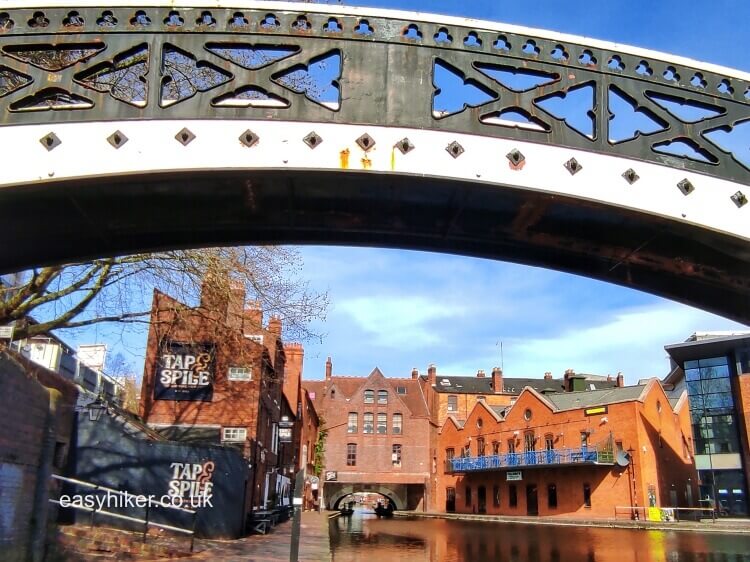
… but bear in mind that they also served a different purpose.
Birmingham was the place where – in addition to its own industrial products – a lot of “Black Country” coal was distributed across Britain. At a time when the national rail network was still in development, the inland waterways were the key arteries of the country’s industrial system. Birmingham’s Gas Street Basin, where two of the busiest canals met, was the central hub of the city’s 100-mile waterway network.
Such was the congestion in the Basin that, in 1817, gas lighting was installed beside the locks to permit round-the-clock operation. This area has since become the heart of Birmingham’s nightlife: Rock rather than Dock Around The Clock.
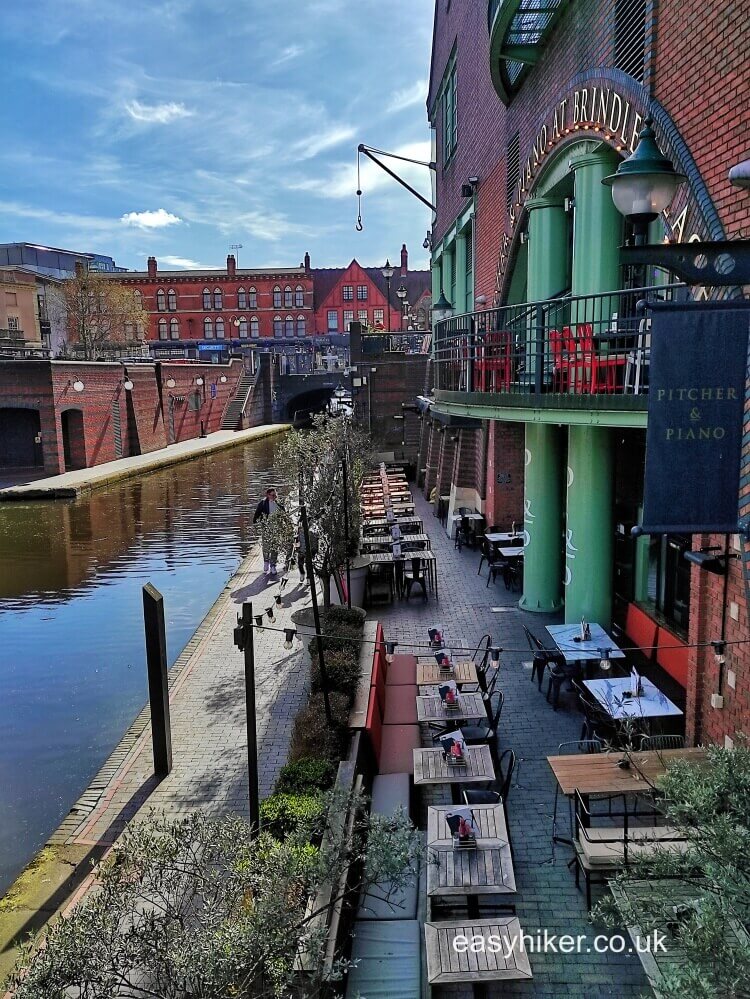
For the most picturesque views of the city’s canal network, concentrate on the section between Bishopsgate and the Utilita Arena.
At the canal junction near Birmingham’s prime concert and sporting venue, you can either continue straight or turn right towards Livery Street and the city centre.
Once you have left the bars and restaurants of the Gas Street Basin behind, it all calms down a bit, …
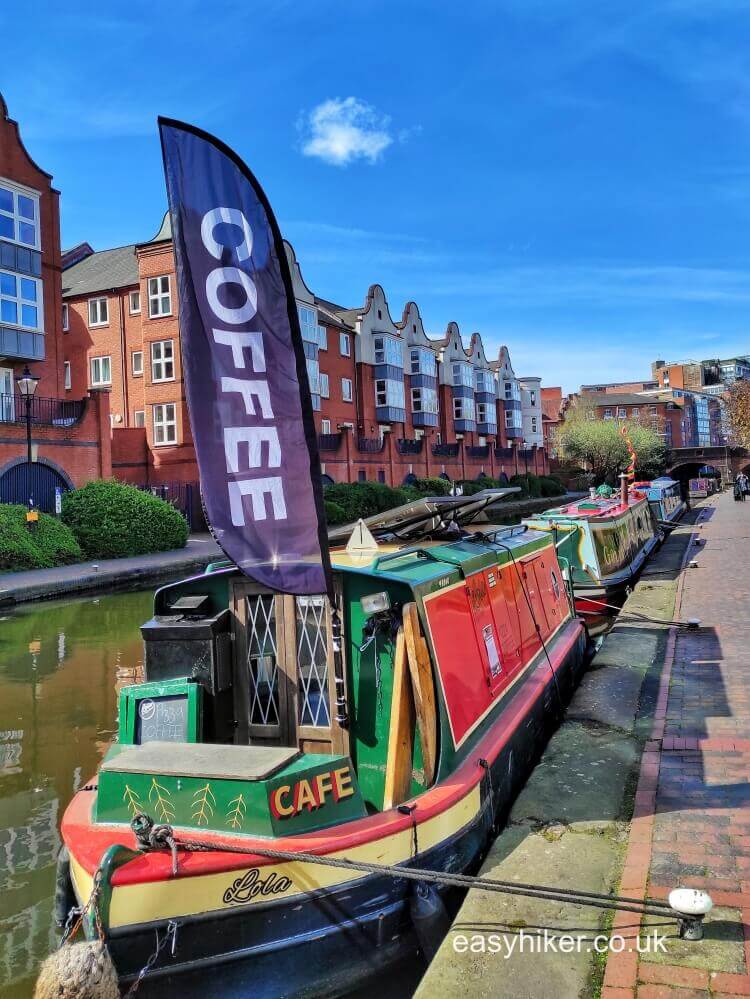
… but you will feel that it is worth continuing at least for a short while, if only to round off your canal walk on a note of serenity.
A visit of Birmingham will not suit all tastes. Some people point to the city’s “lack of history”, and there is a grain of truth in that. Birmingham indeed does not possess the multi-layered back story of a place like London, but it has a tradition of its own: a proud tradition of the new.
Right from the start, Birmingham has always been among the first to pick up new architectural trends – a tradition that continued into the early years of the 20th century …
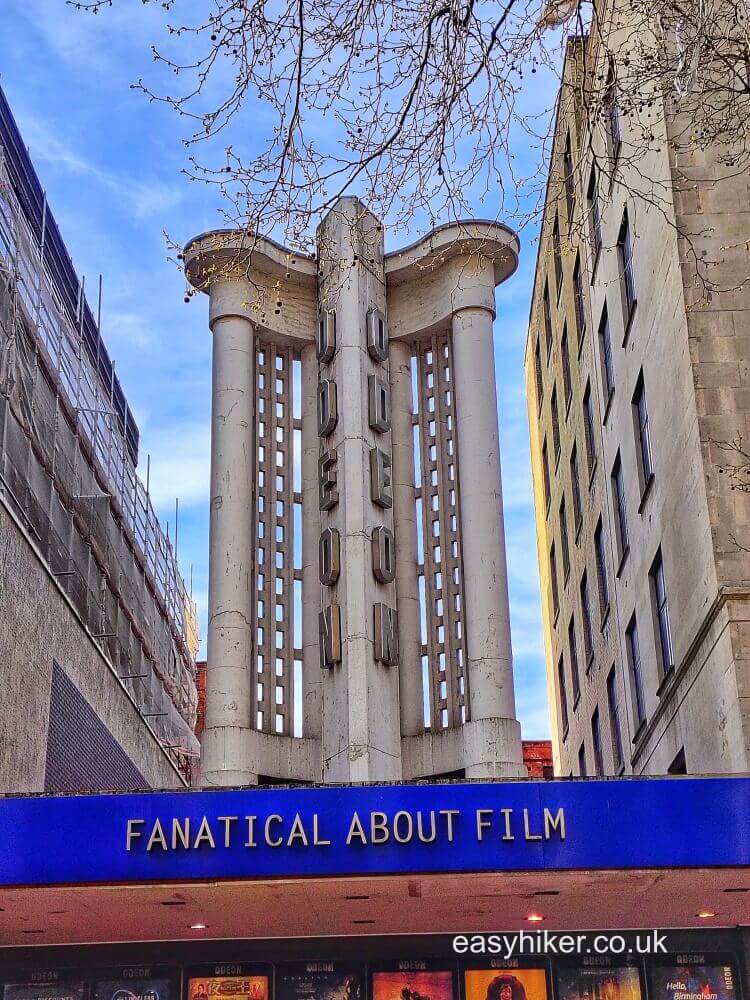
… and later into the space age 1960s.
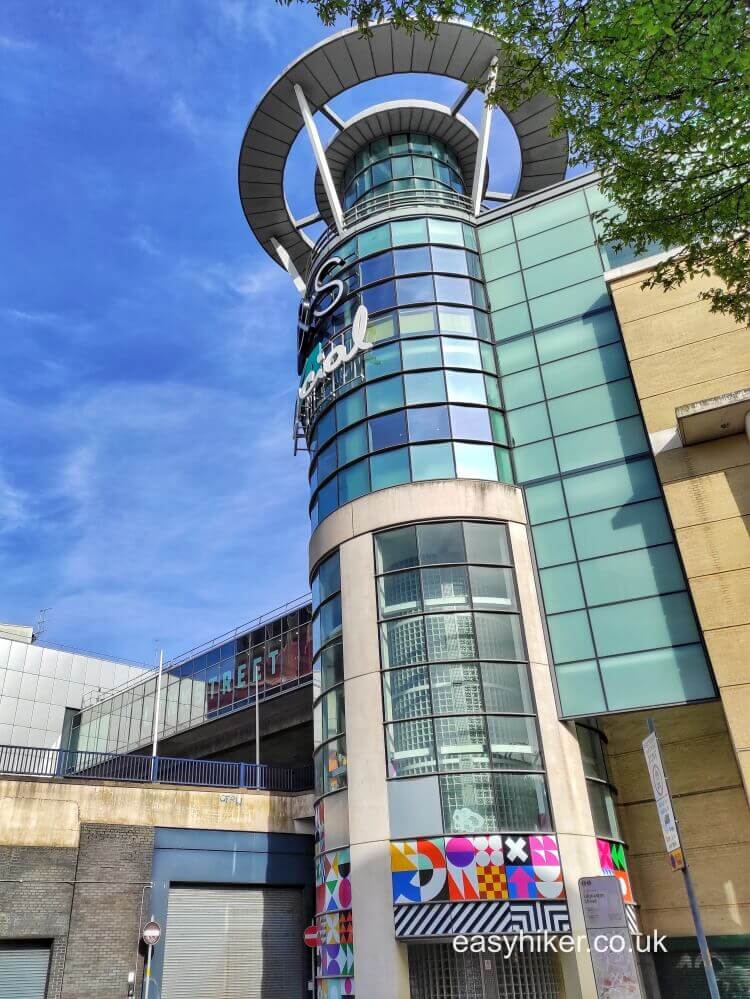
And it established a tradition of constantly blending seemingly diverse elements to shape a unique urban fabric: mixing the old with the new and existing traditions with those of new groups of people who had arrived from elsewhere.
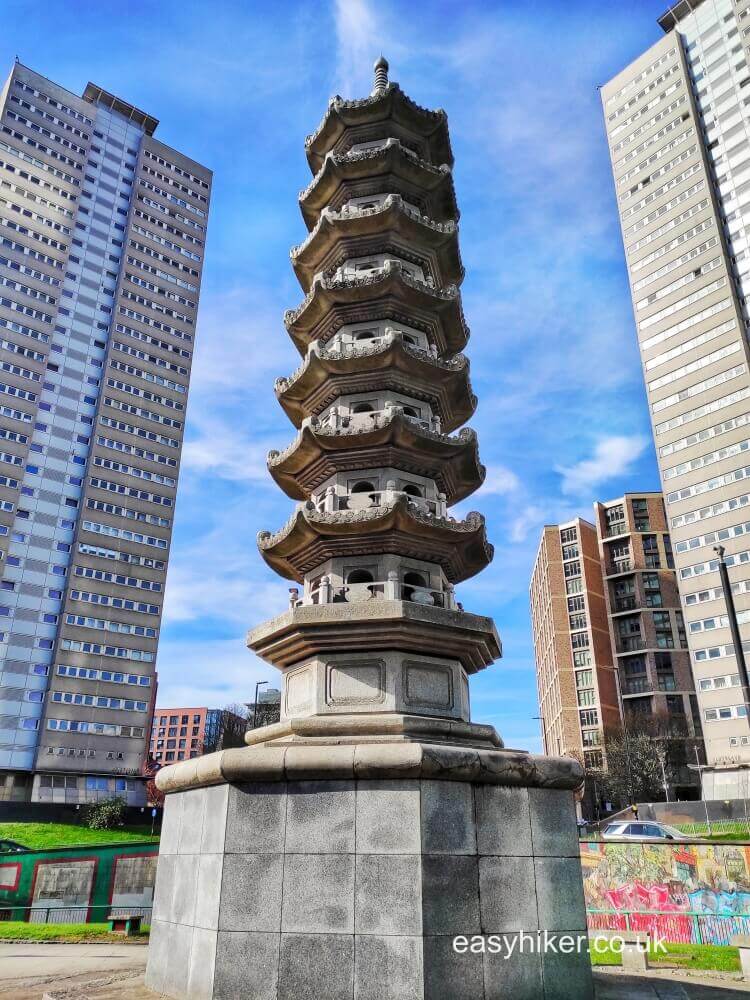
As a monument to industry, Birmingham is certainly not the prettiest place in Britain: not the beauty of the city-tourism ball. But if you listen to what she has to tell you, you will find that she is interesting and has a mind of her own: good company, in one word. Isn’t that, ultimately, the only thing that really counts?