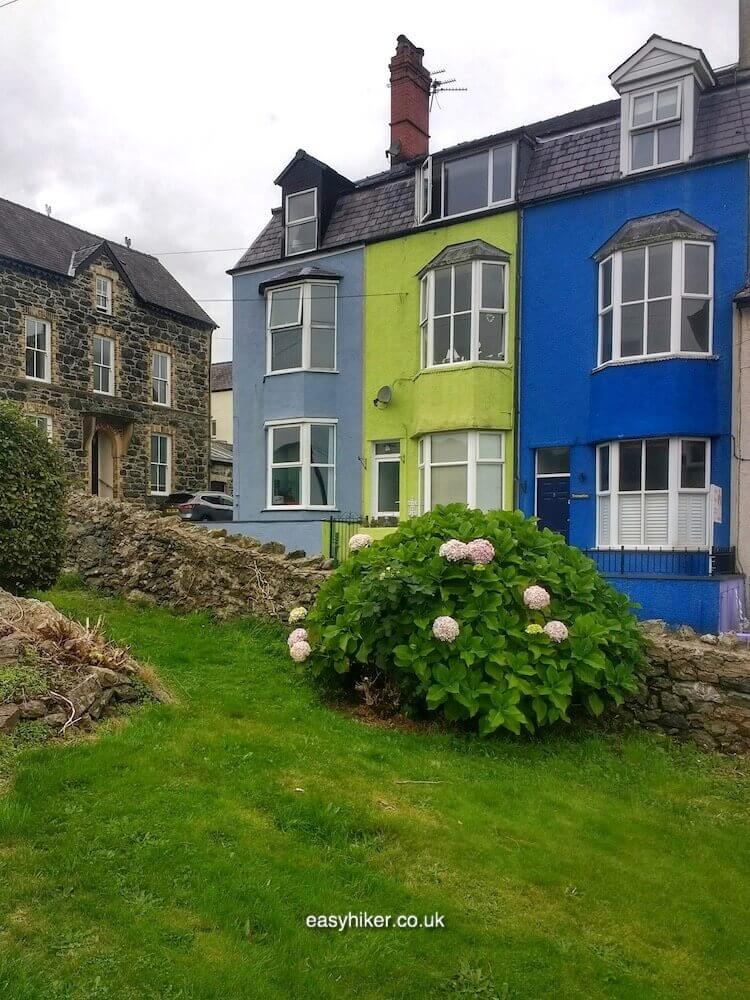
You can easily spend a long weekend and more exploring the charms and attractions of Anglesey. But, if you must, you can also experience all in one day, enjoying everything that the island has to offer in a single package:
Anglesey’s medieval history, …
… its rugged natural beauty, …
… mysterious Welsh traditions, …
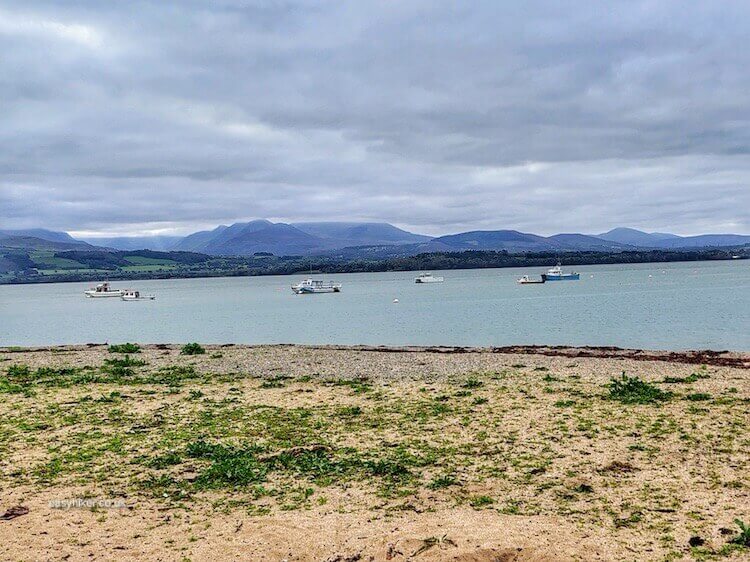
… and magnificent views of the Snowdonia mountains on the Welsh mainland.
Welcome to Beaumaris
The main attraction of this small town in the extreme southeast of the island is Beaumaris Castle, one of the four medieval fortresses that were recognized by UNESCO as a single World Heritage Site in 1986 and the only member of this quartet that stands on the island of Anglesey.
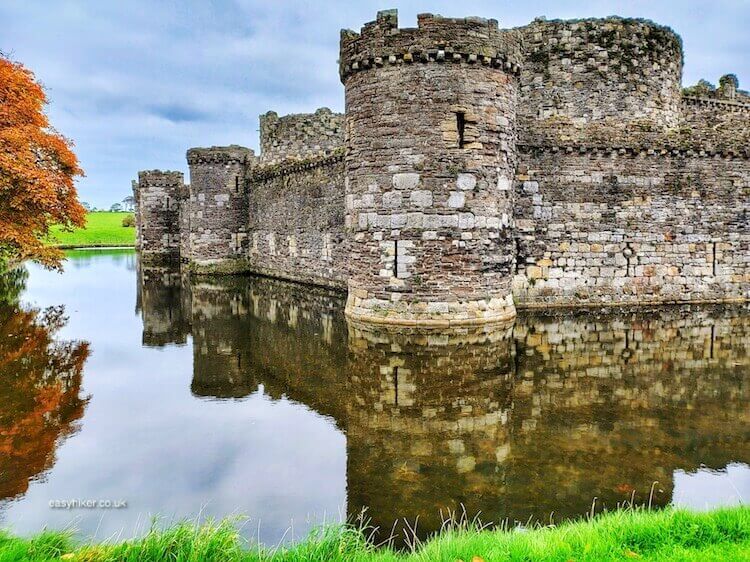
The four castles share a common history: all were commissioned by the English king Edward I over a short period (little more than a decade) in the 13th century to subdue and intimidate the people in Wales (the belligerent king’s latest conquest).
They then fell into neglect rather quickly and were only restored to their ancient glory in the 20th century. Within this quartet of Welsh castles, Beaumaris sticks out in more than one way.
Beauty, Bloodshed …
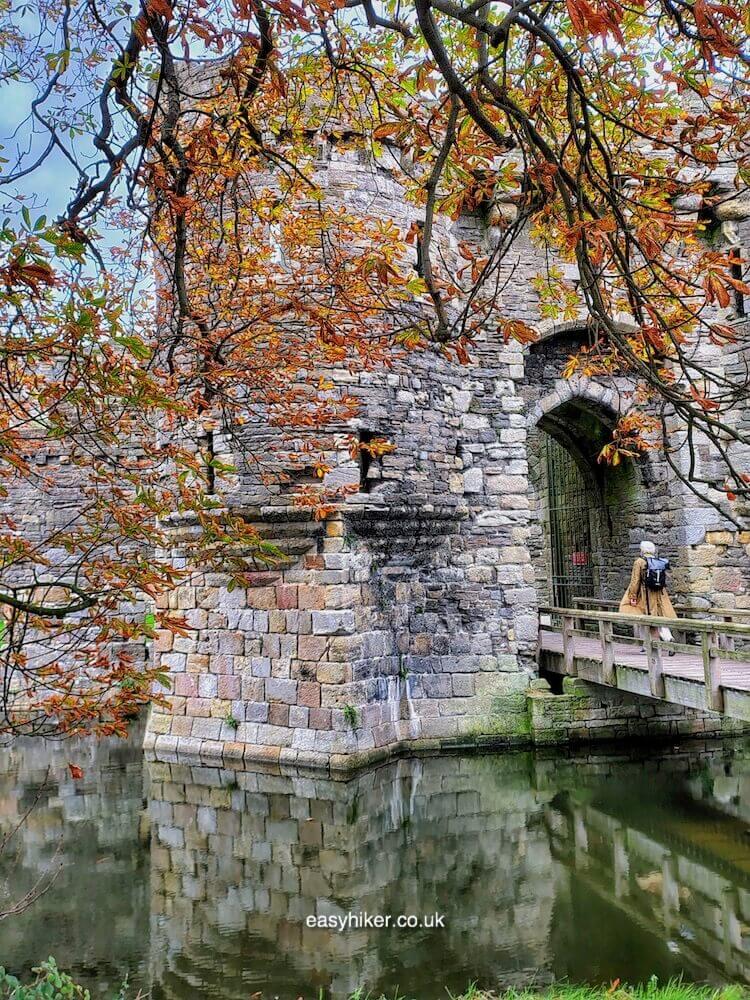
Firstly, through its sheer beauty. Beaumaris was the last of King Edward’s Welsh castles to be built, a good ten years after the other three, and clearly the masterpiece of the man who designed them all, known today as Master James of Saint Georges.
Beaumaris was planned on the grandest of scales and meant to serve not only as a military fortress but also as a royal residence, featuring a large palace inside the fortifications. Edward needed a stronghold on the island but clearly also fell for the scenic views of the Beau Marais, the “beautiful marshland”.
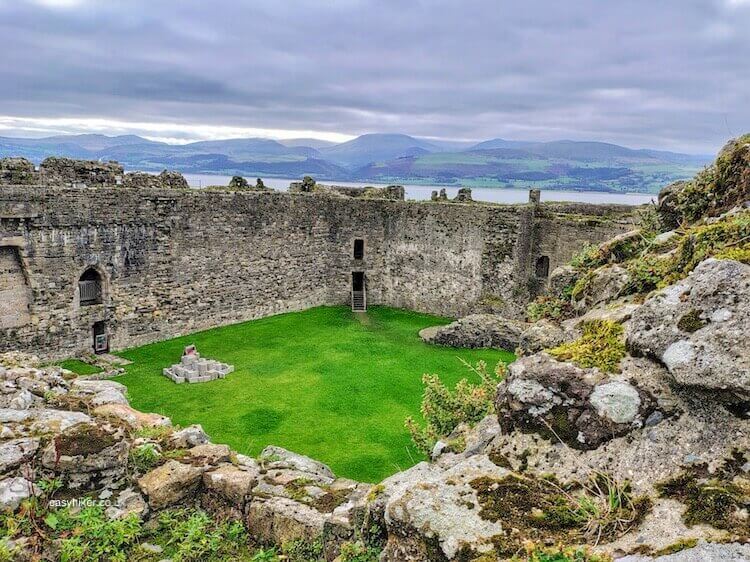
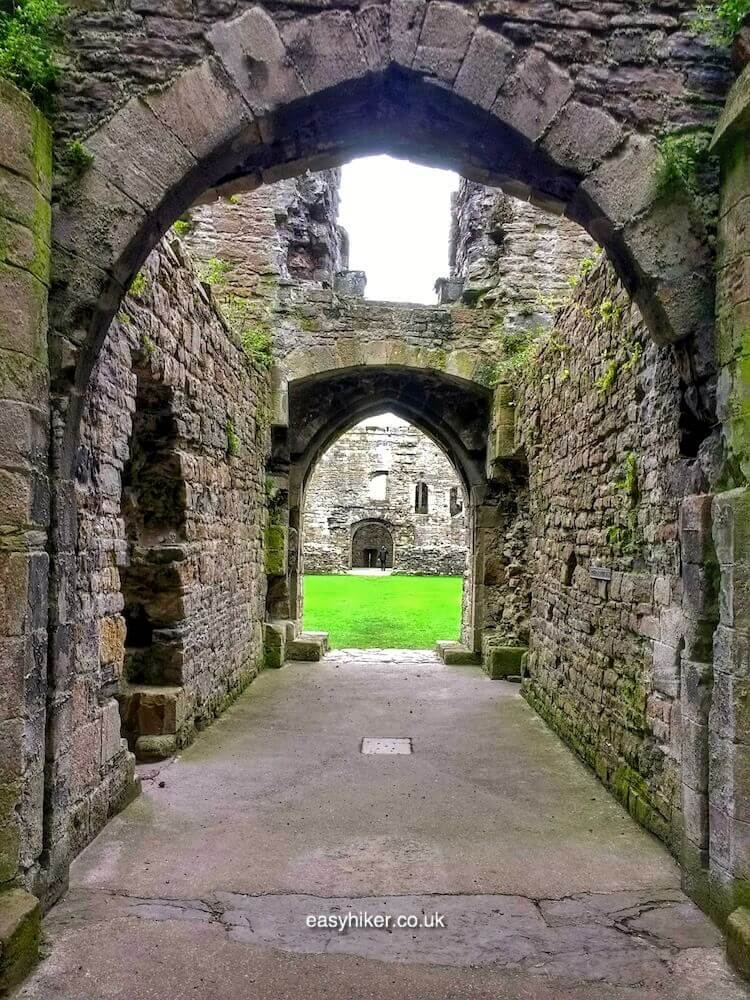
But this was also the castle where the royal money ran out. The fortifications were fully completed and invite today’s visitors for a walk on the ramparts …
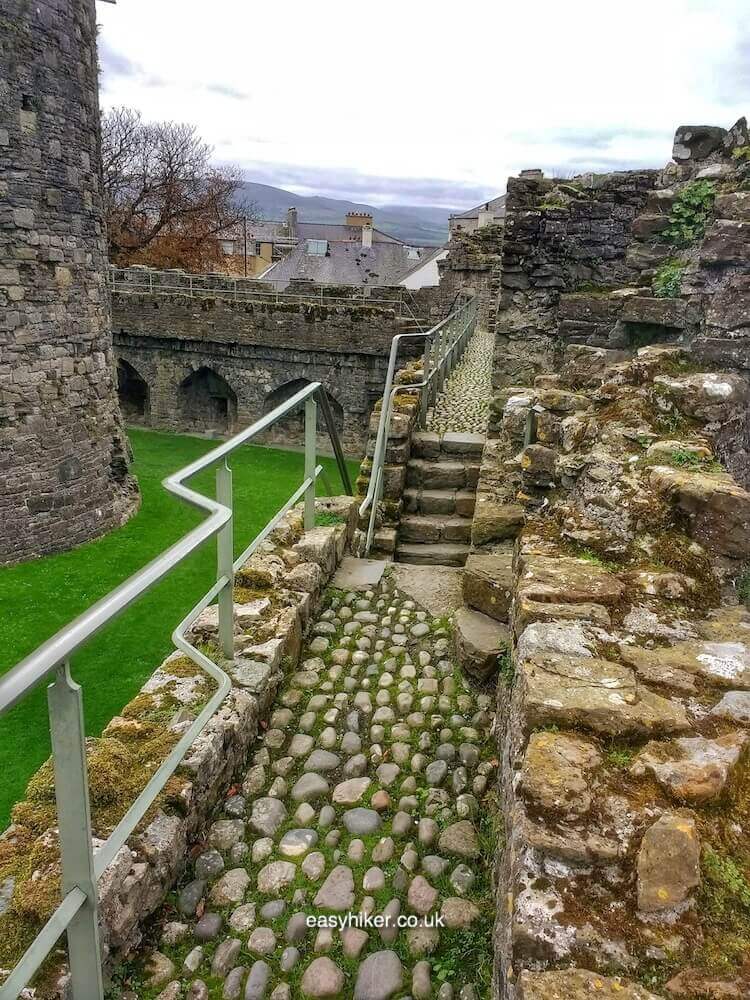
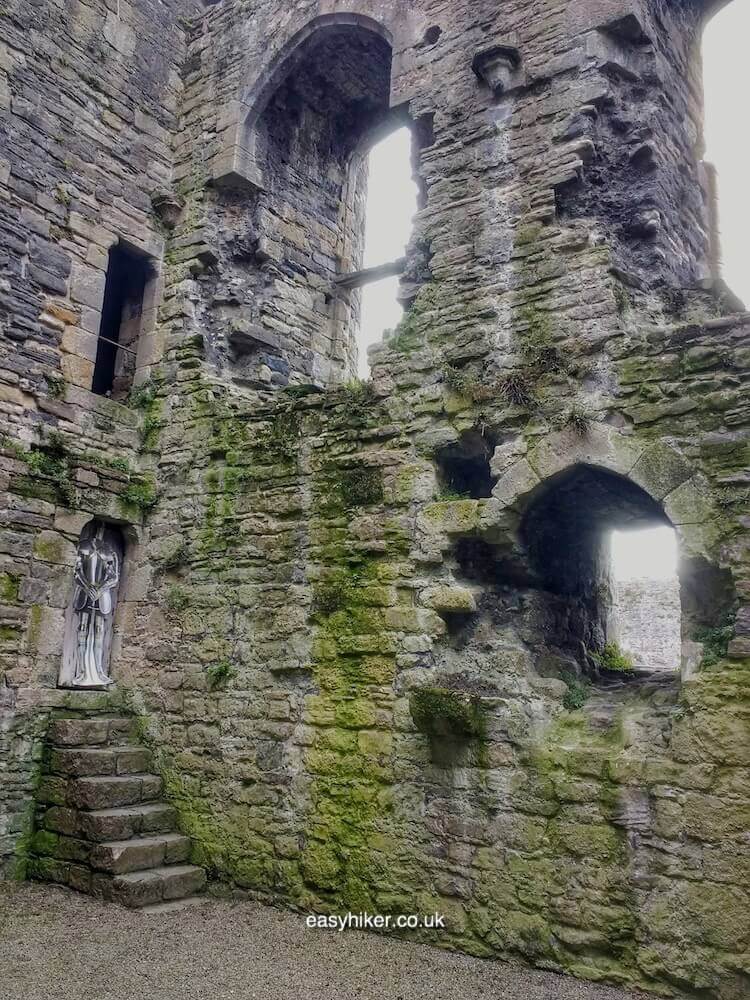
… but everything else, above all the palace inside, was abandoned in a semi-finished state: what you see today is essentially how Edward and Master James left it.
Some medieval buildings have dilapidation thrust upon them, but Beaumaris was already born in a dilapidated state: “deformed, unfinished, sent before its time into this breathing world scarce half made up”.
Virtually alone among all the medieval castles around Europe, Beaumaris was a ruin right from the start.
And thirdly, there is the brutality of its back story, savage even by Edward’s standards. The king did not want troublesome natives anywhere near his residence, so the entire near-by town of Llanfaes was razed, its houses set on fire and its population “resettled” – then, as now, a euphemism for being told to go to hell.
Edward, incidentally, was only the first English royal to fall for the scenic charms of Anglesey. The latest is Prince William who fell in love with the island when he was trained on the local RAF base as a helicopter pilot. William later said that he had never in his life seen somewhere as beautiful as Anglesey, and that he and his wife were looking forward to returning again and again over the years with their family.
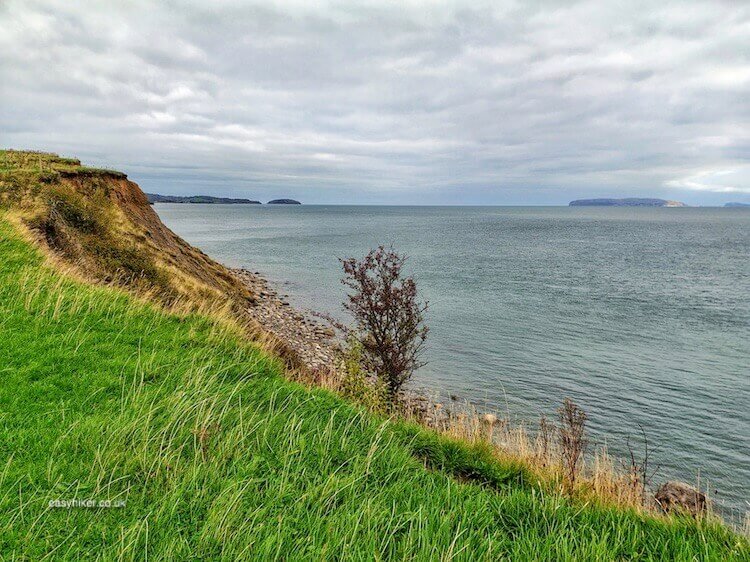
So what made both Edward and William fall in love with this particular corner of their realm? You can get an idea by taking a little walk on the Welsh Coastal Path.
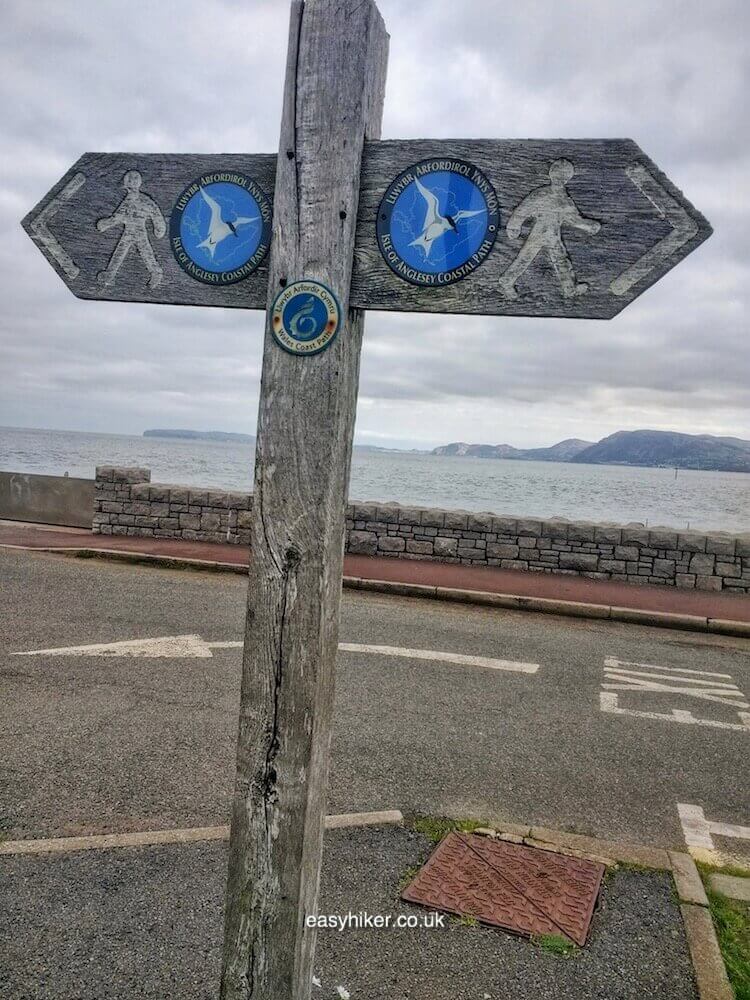
Turn left out of Beaumaris town for sea views and rugged cliffs. The entire coast in this area has been officially designated as an Area of Outstanding Natural Beauty, providing it with the kind of protection given to a building that has been listed.
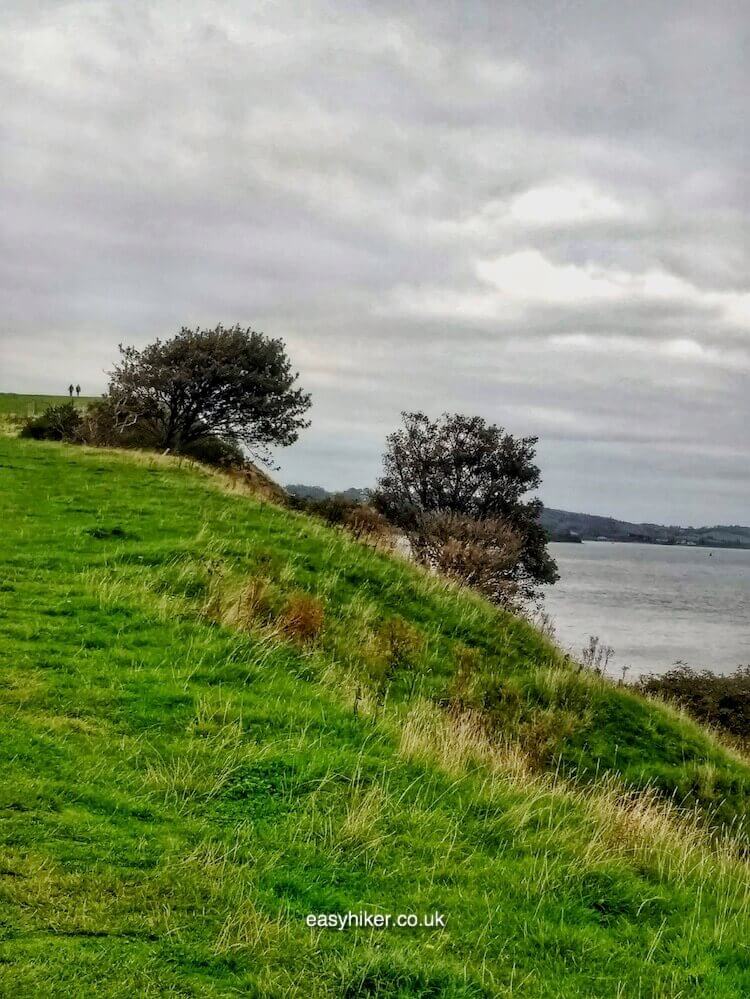
… and Celtic Traditions
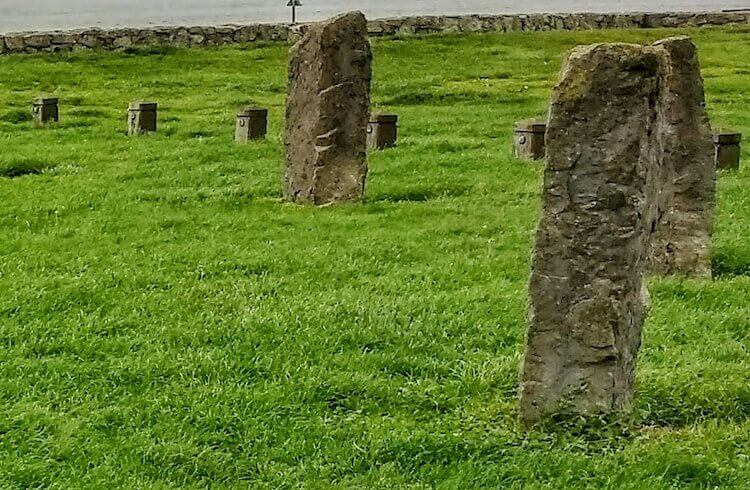
Alternatively, you can also turn right for the Beaumaris stone circle. One can easily imagine druids leaping around these menhirs in some mysterious solstice celebration 2000 years ago or more …
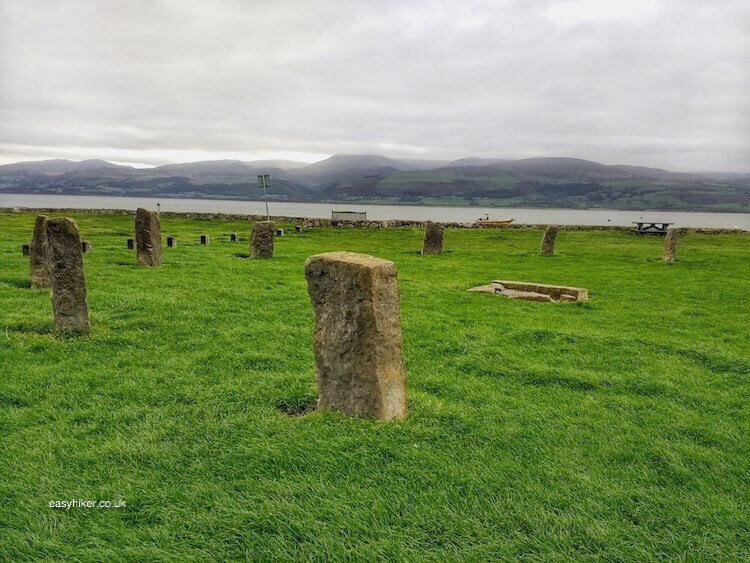
… but, in fact, the circle dates from 1996 and was created for the Beaumaris Eisteddfod.
Eisteddfods, week-long celebrations of the Welsh language and the country’s cultural traditions, are a big deal in Wales, so big in fact that the national Eisteddfods are advertised as the “largest poetry-and-musical festivals in Europe”.
In addition to that, some towns have their own annual events, which are obviously more modest in scale. And not only in Wales: Eisteddfods are held around the world in places as distant as California and Argentina, wherever there is a colony of folks with Welsh roots.
Beaumaris Castle was never finished, but the new settlement around it prospered and eventually became the largest town on Anglesey. Beaumaris has long since lost this mantle, but its mix of historic architecture and handsome buildings from a more recent period still attracts many visitors.
The coastal promenade, lined by hotels and restaurants, speaks not of the town’s brutal past but of a more gentle present, when the English no longer come as merciless invaders but as welcome summer guests.
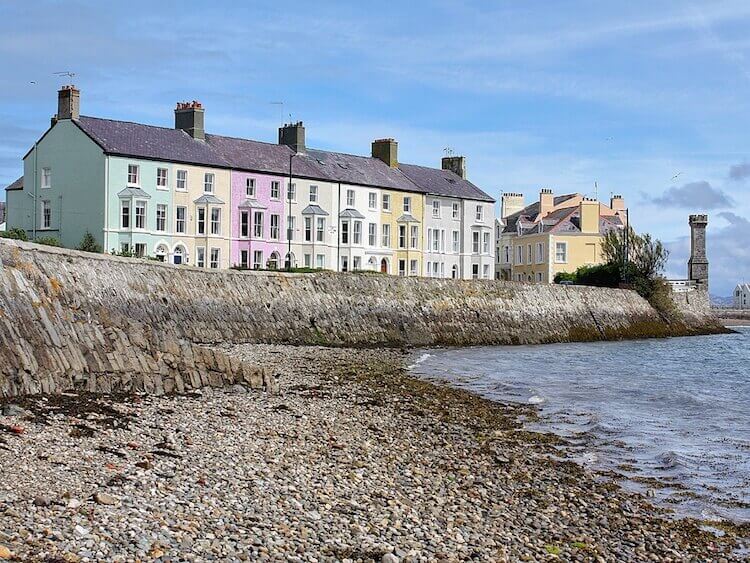
The best way to reach Beaumaris by public transport is the bus (no. 58, hourly services) from Bangor coach station. A tip: plan a brief stopover to take a closer look at the third in the trinity of the island’s famous buildings (the other two are Beaumaris Castle and the South Stack Lighthouse: the Menai Bridge …
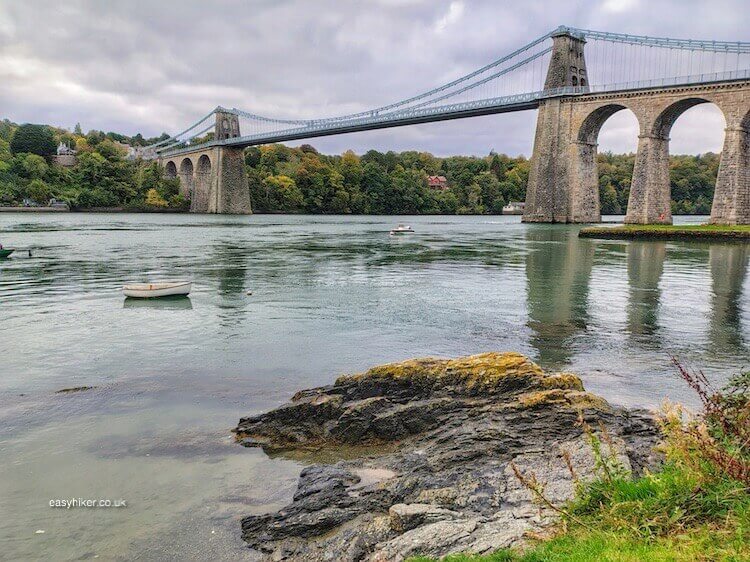
… has been crossing the Menai Strait at its narrowest point (400 metres) since 1826 when it was built by Thomas Telford as one of the world’s first large suspension bridges.
Let one 58 bus go by – and then perhaps another to take a leisurely stroll by the shore. You will find quaint public gardens and homes that are more reminiscent in colour and character of Ireland than of England. It is this mix of the Celtic and the Anglo-Saxon that accounts for much of Anglesey’s unique charm.