The Holocaust was the crime of the 20th century, but even within this bloodstained frame, the extinction of Poland’s and Warsaw’s Jews stands out for its exceptional cruelty: these people – who had done nobody any harm – were imprisoned, starved and told lies about their future while the infrastructure for their murder was being quietly prepared. The murderers did a thorough job of covering up: few visible traces remain from the Ghetto.
This is why today’s walk, an exploration of the area where the Warsaw Ghetto once stood, is also an act of detective work and an investigative search for the forensic evidence of history. Ultimately, it is an attempt to salvage memories of what happened.
Warsaw and the Crime of the Century
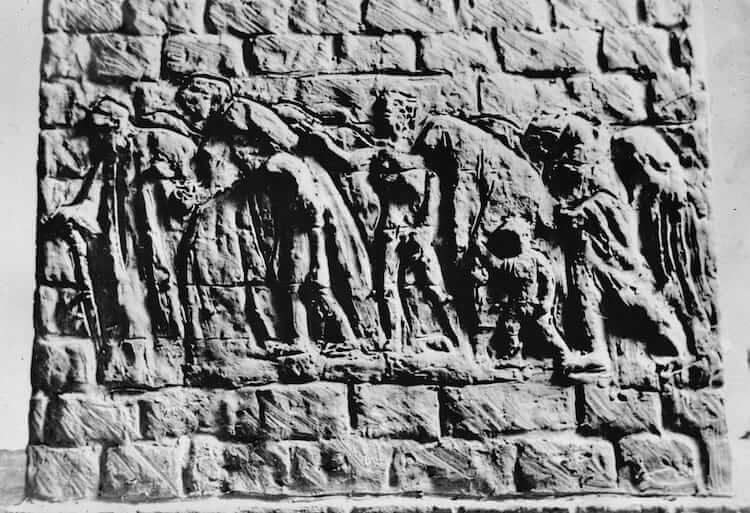
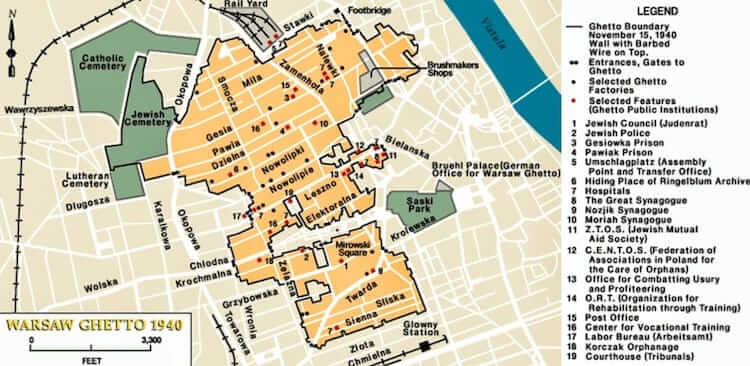
In October 1940, one year after the defeat of Poland’s nationalist government, the victorious German forces began to implement their plan of corralling all of Warsaw’s Jews into the Muranow quarter, a part of the city that already had a high concentration of Jewish inhabitants. At the time, Jews accounted for 30 percent of Warsaw’s population, and with more than 400,000 Jewish inhabitants, Warsaw was the second largest Jewish city in the world (beaten only by New York).
We begin our walk at the Wola-Ratusz tram stop. Across the road stood one of the main gates to the Ghetto. Walk southward down Zelazna Street until you arrive at the corner of Chlodna, one of the 22 places in modern Warsaw where a line of bricks marks the boundaries of the Ghetto.
This spot, however, is unique among all the others: it has not one but two such lines, one on either side of the road.
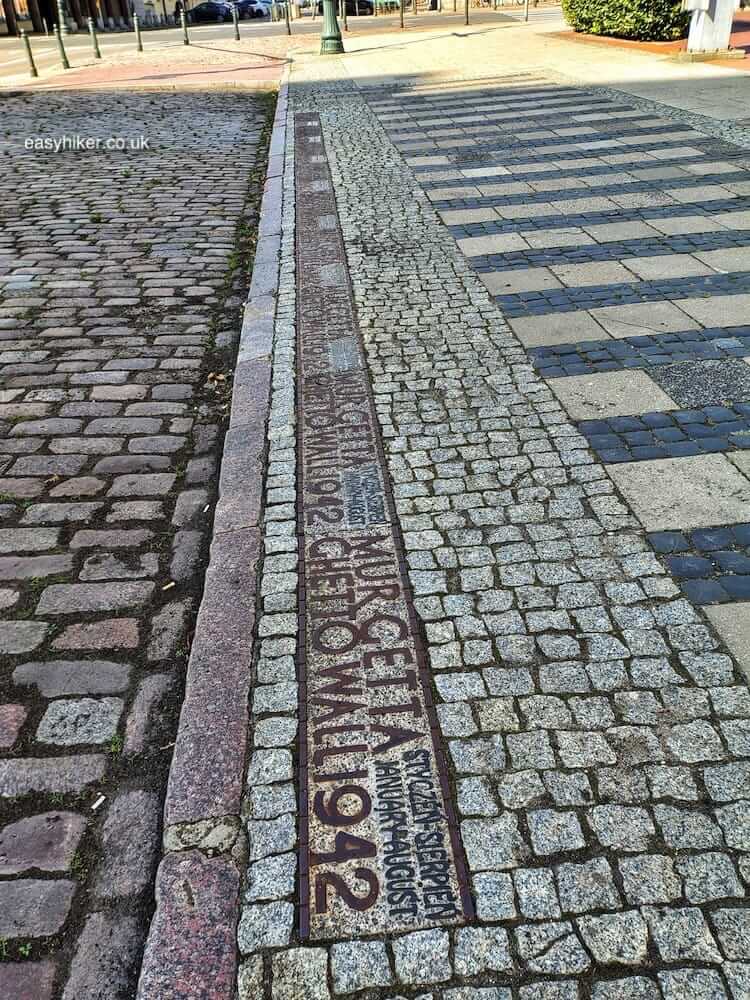
Chlodna at the time was a busy thoroughfare that would have been difficult to bypass by ordinary street traffic. So walls were built on either side of the pavement while the street itself remained open for the use of non-Jewish inhabitants.
The Jews living on either side of Chlodna, meanwhile, were not allowed to step out of their enclosure and were shot on sight when caught trying to escape.
Chlodna effectively divided the Ghetto in two, and when its Jewish inhabitants needed to go from one section to the other, they had to use a connecting bridge. This bridge stood right at the corner of Chlodna and Zelazna and is today marked by a monument that was created by Tomasz Tusch-Lec in 2011.
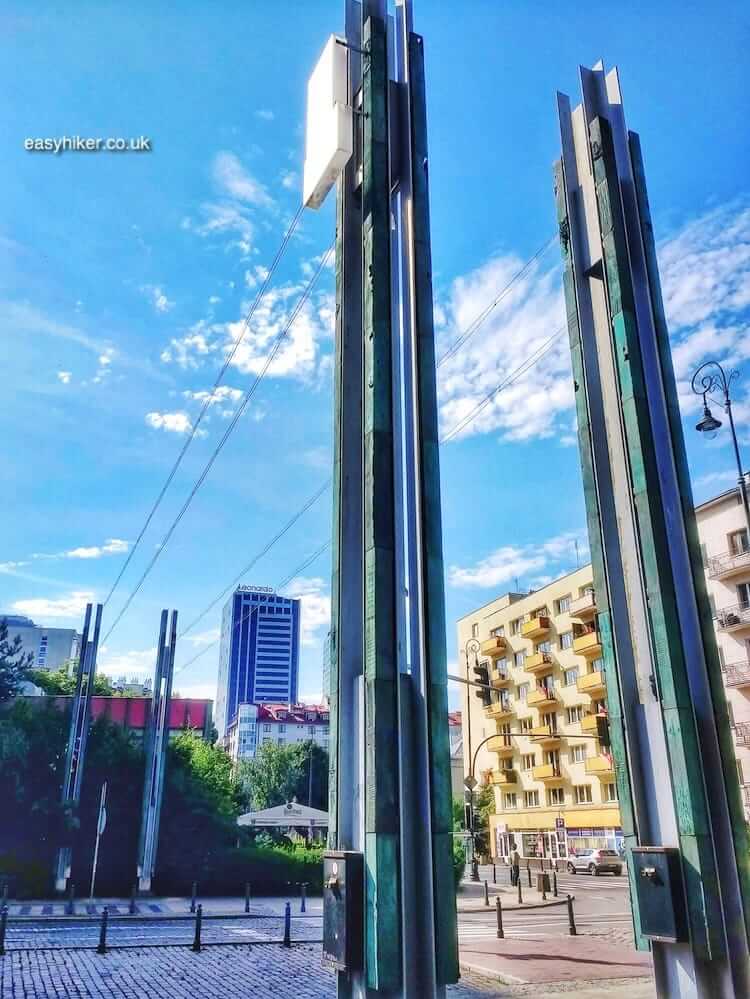
At night, optical fibers illuminate the ghostly outline of this “Footbridge of Memory”.
Look around you while walking further into Chlodna for a brief stretch: on the left hand side of the street (where the walls of the Ghetto were set back by one block), you will see quite a few pre-war buildings, but on the other side, everything is new. Of the buildings as well as of the inhabitants of the Ghetto, only a tiny fraction survived.
In fact, only a handful of buildings that were once inhabited by Jews in the Ghetto are still standing: four in Prozna Street a little further to the north, but those (nos. 7, 9, 12 and 14) were redeveloped to the point where they betray little about their history.
And then there is this.
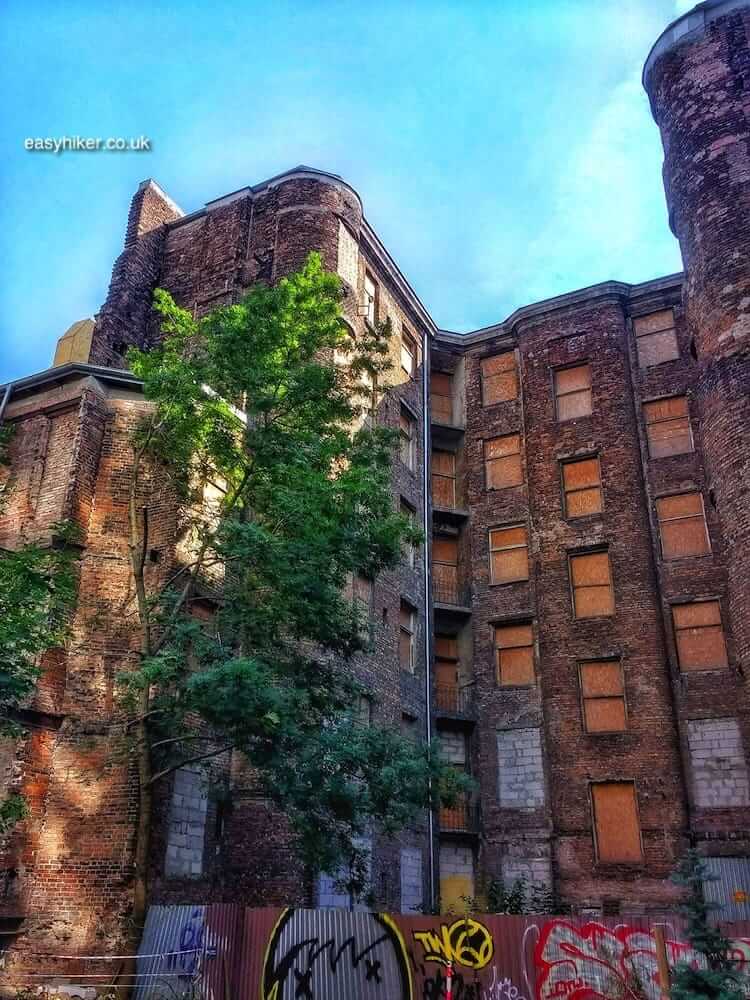
It is almost a miracle that the ruin of the former tenement building on 14 Walicow Street – about 400 metres after a right turn from Chlodna – is still standing. It was badly damaged in the war and several times close to demolition before activists finally managed to have it recognized as a monument. The building has been listed since 1980, but no money was made available for its restoration, which is why it has remained in its sorry present state.
Right opposite, on the other side of Walicow street, you can see one of the best preserved parts of the wall that surrounded the Ghetto. The wall was built by the inhabitants under the close supervision of German troops and was originally 3 metres high, topped with barbed wire.
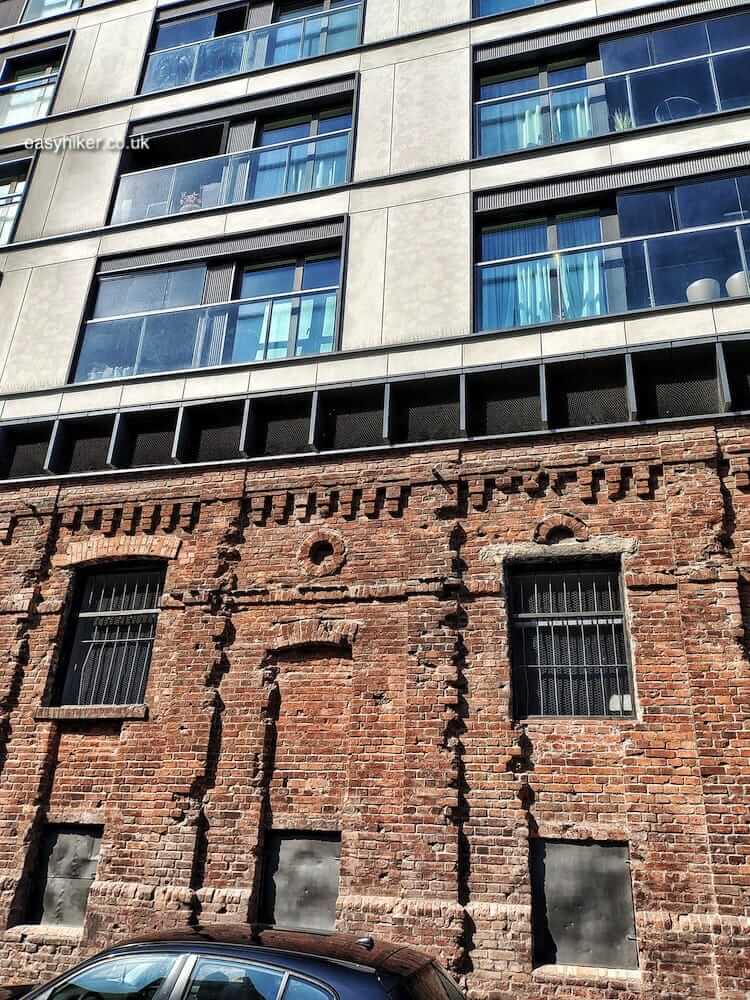
Walk to the end of Walicow Street, cross the busy main road near the intersection on your right hand side and continue into Zelazna for about 200 metres before turning left into Sienna. The piece of wall we are looking for here is located behind the parking lot at the end of the street, but if the big iron gate is locked, you can also proceed to the main road just behind Sienna (called Jana Pawla II), turn right and peek through the bushes.
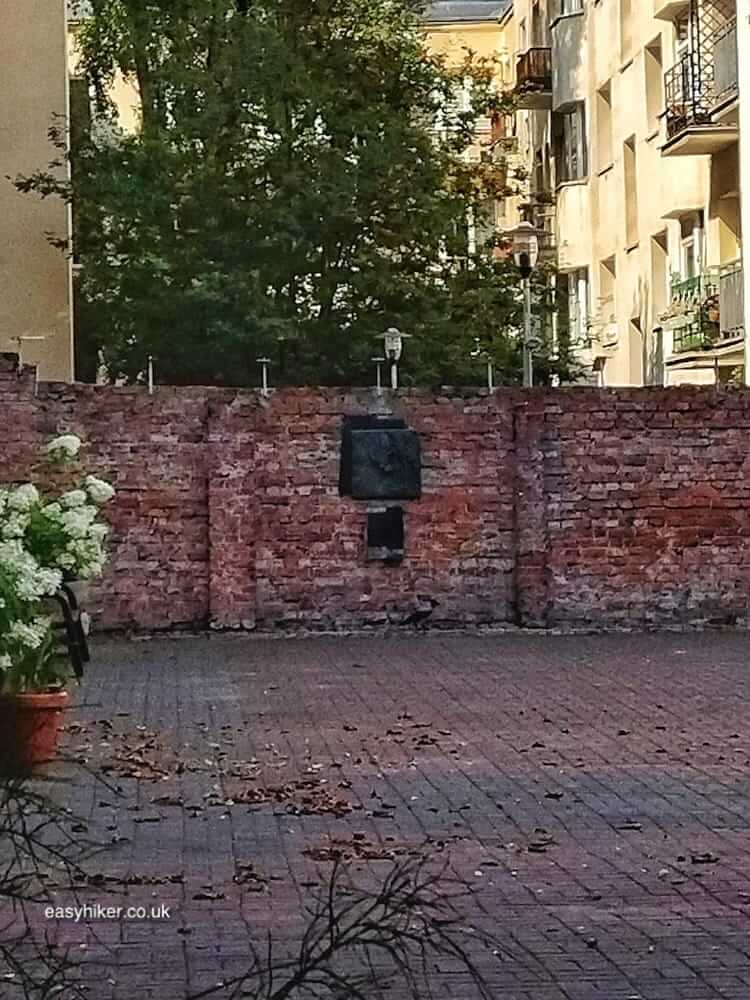
This wall – together with another section a few steps down on Jana Pawla – would have marked the southern boundary of the Ghetto. The section on this (the southern) side of Chlodna – the “small ghetto” – contains most of the visible evidence that remains from the Ghetto. By now, you have seen much if not most of it.
Next, we will take the tram (northbound line no.9 from Rondo ONZ3 at the large roundabout) to the “large ghetto” where little more than names and memories remains. This reflects the intensity of the fighting during the Ghetto uprising: the heroic and tragic last chapter of the history of Warsaw’s Jews.
In January 1943, news had spread across the Ghetto that the “places of resettlement” which had been promised to the inhabitants did not really exist and that all the people who were shipped out of the Ghetto were brought straight to a death camp.
Jewish partisans – of which there were about one thousand – encouraged their fellow Jews to defy deportation orders and to hide from the German authorities. Partisans also started scuffles at the Umschlagplatz itself, the Ghetto’s railway terminal where the deportees were instructed to gather for their journey.
To get to the Umschlagplatz Memorial, leave the tram at the station Stawki and turn right into the street of the same name.
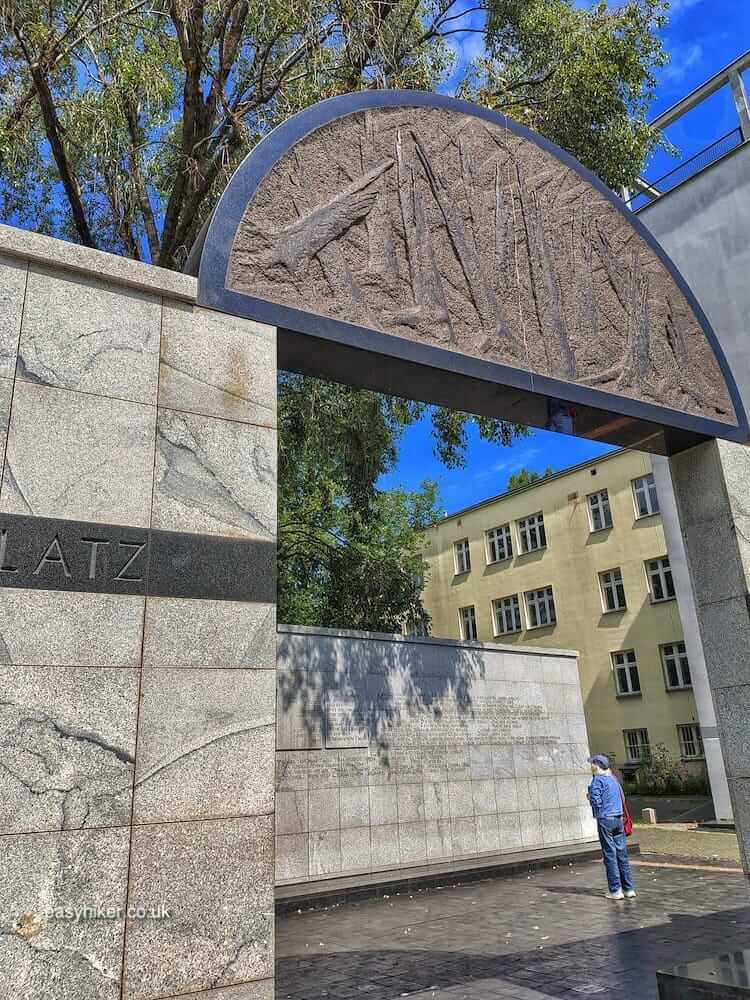
From the Memorial, continue further into Stawki before turning right into Dubois. After about 200 metres, you will arrive at the intersection with Mila Street. This is where, in May 1943, the Ghetto Uprising ended.
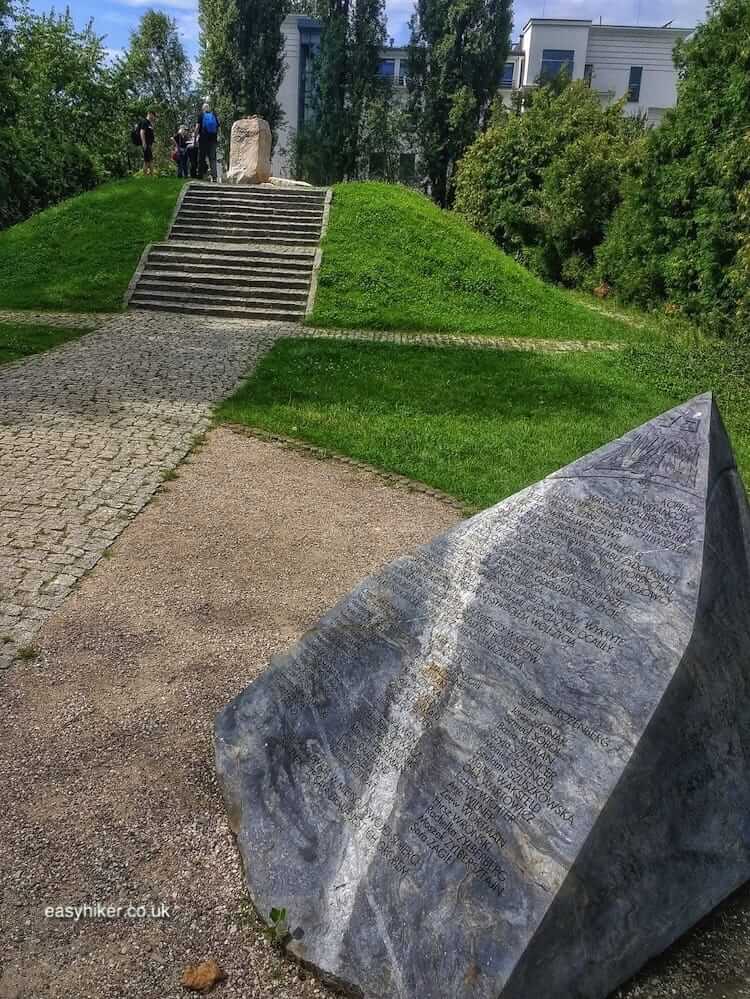
The place where the building on Mila 18 once stood, the command centre of the Ghetto Uprising, is today marked by a series of memorial stones, including the one that lists the 51 fighters who, in the Uprising’s final moments, killed themselves in the bunker underneath the building before they could fall into the hands of the SS death squads.
Today’s Mila Street veers off right from Dubois just behind the monument. Bear in mind that the modern numbering does not correspond with the topography of the old Ghetto street.
Take a look into the new-style Mila and – if you have the time – walk the 500 metres to the building that carries the street’s most famous number, also the title of a best-selling Leon Uris novel from the 1960s.
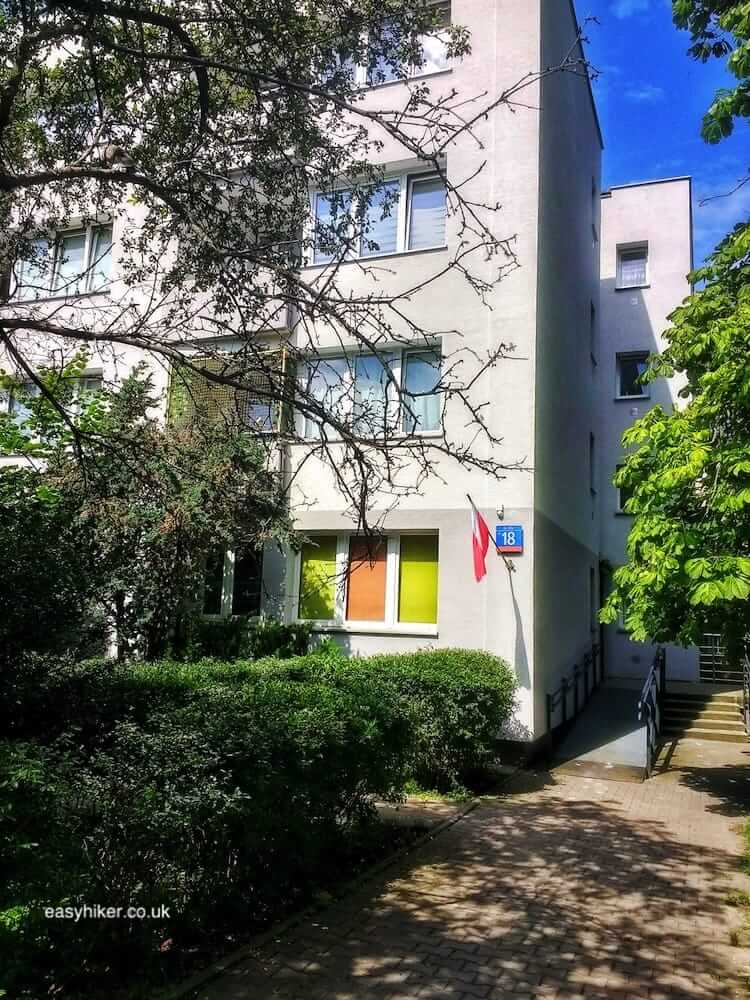
Then compare today’s Mila with this description from an information panel at the monument.
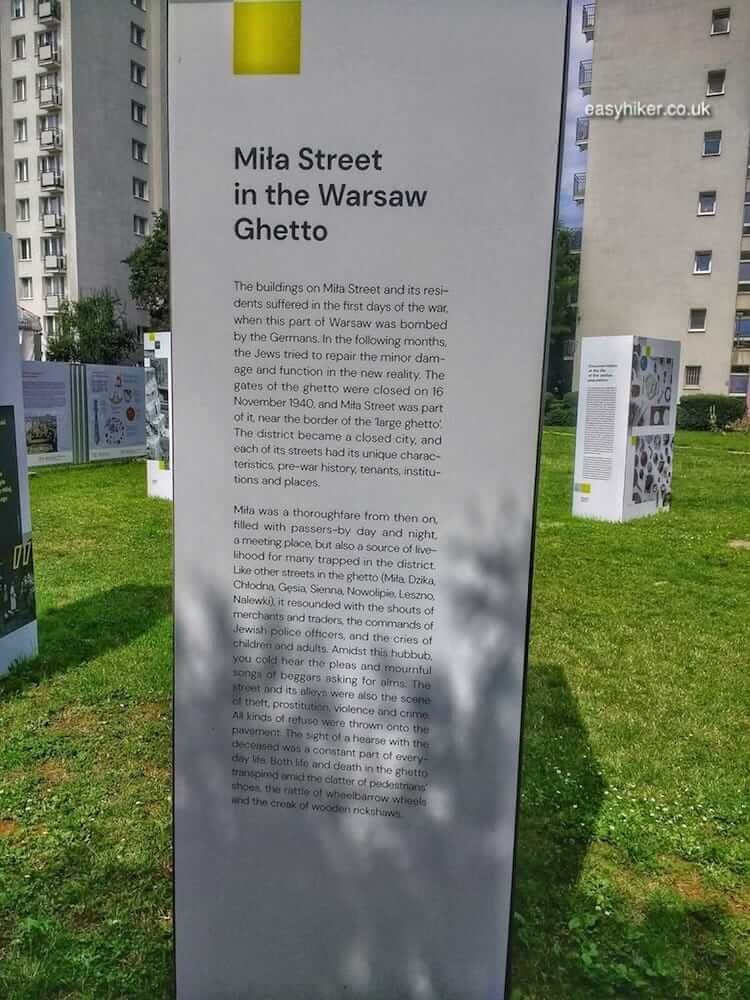
Return to the corner of Mila and Dubois, turning right into Zamenhofa for the Memorial to the Ghetto Heroes, Poland’s prime place of remembrance for the Ghetto Uprising.
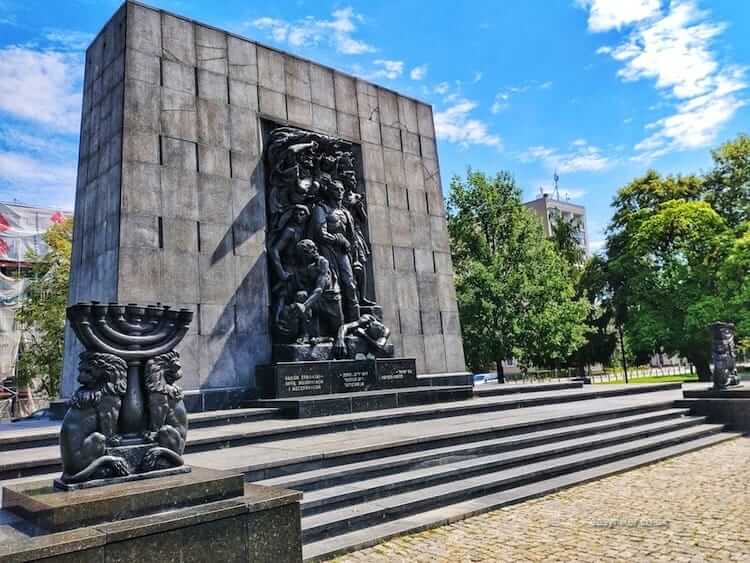
If you are getting a little confused by now, having explored the city through the lens of the Nationalist Uprising with us last week: don’t worry, you are not alone. One renowned historian claims that even the former German Chancellor Willy Brandt, in his famous gesture of atonement, taking the knee in front of the Ghetto Uprising Memorial, …
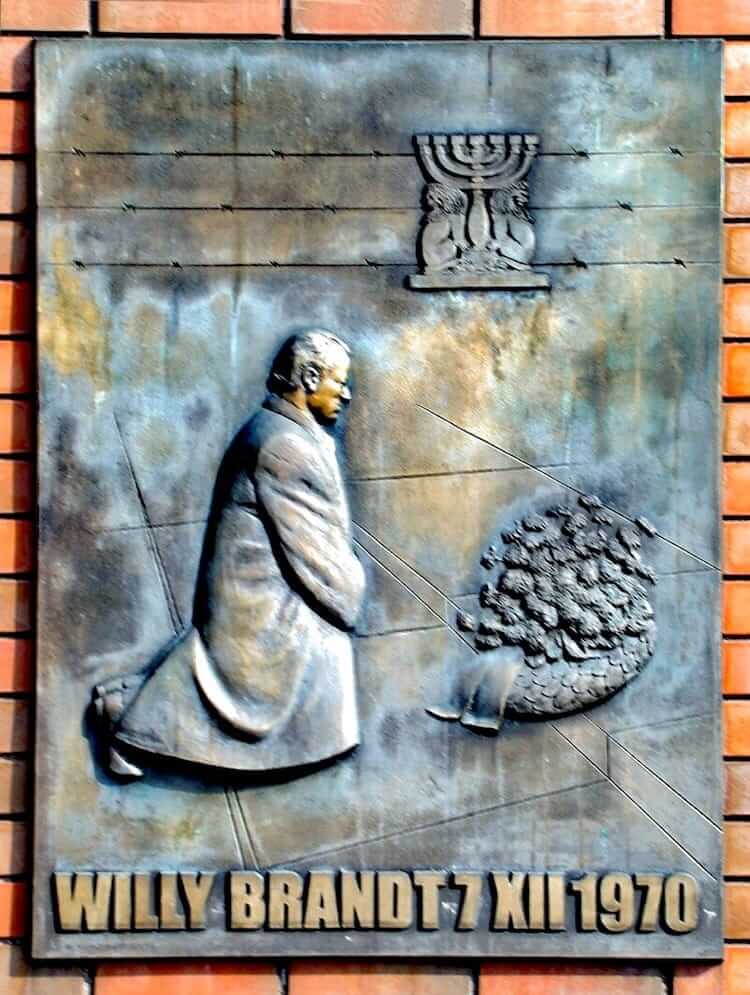
… was not altogether certain about the sequence of events and the ways in which the uprisings were connected. He would have known that there had been two, but may have been a little hazy of how they were separated by time and circumstance.
The truth is that the two had little in common. The Ghetto partisans got a few guns from the Polish resistance movement, but that was all the logistic assistance they received.
And while the Home Army uprising (one year later) represented a political gamble that went wrong, the Ghetto revolt was a desperate act of heroic defiance whose heroic defiance was its sole purpose.
The biggest difference, however, is this: while the destruction the Germans had wreaked on Warsaw was partly reversed after WWII, the eradication of Jewish life in the city was accepted as an irreversible part of history.
There are many Ghetto memorials in Warsaw, but what is remembered is the cruelty of the German forces, not Jewish life. It does not seem that there is much of an appetite for recreating that.
Behind the Ghetto Memorial, turn left from Zamenhofa into Mordechaia Anielewicza (the street was named after the Ghetto Uprising’s leader) and then right into General Andersa.
About 50 metres from the intersection, near the municipal park in front of you, stands another small monument that marks the location of the former Nalewki Street Ghetto Gate. It was this gate through which 2,000 German troops entered the Ghetto in the early hours of 19 April 1943, under the order of finishing the Ghetto’s passive resistance once and for all.
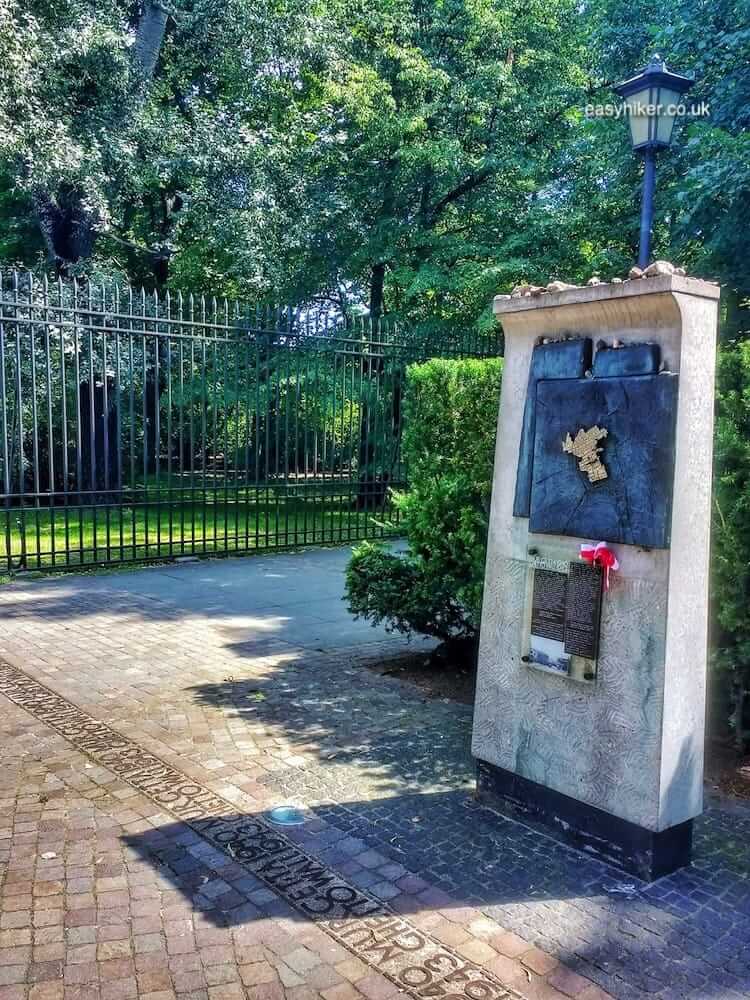
The Jewish partisans inside the Ghetto had known that this moment would come and were prepared to resist the Germans with everything they had – homemade explosives, pistols, a few automatic rifles, but above all their physical bravery.
Rather than engaging in messy and potentially costly street battles, the Germans opted to set the houses in the Ghetto on fire, block by block, and three weeks later, the SS commander could send the message to Berlin that “the Warsaw Ghetto is no more”. Out of the 400,000 inhabitants of the Ghetto, only a few thousand survived.
We finish our search for evidence and remains from the Crime of the Century at Tlomackie Street where Warsaw’s Great Synagogue once stood, for many years the largest Jewish house of worship in the world. On 16 May 1943, the SS blew up the building as a celebratory final act to their destruction of the Ghetto. It was never rebuilt.
But one Jewish building, almost miraculously, did survive the uprising: the adjacent library.
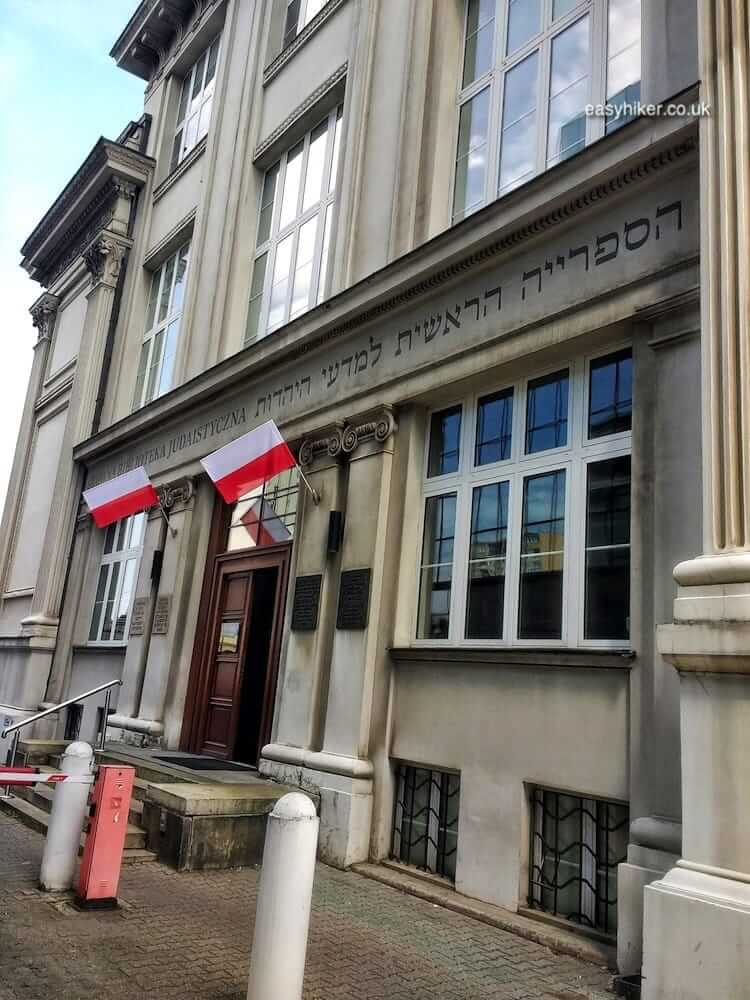
And frankly: what could be more fitting? After all, Judaism – since the destruction of the Second Temple – has largely been a religion of scripture and the mind. And when ideas survive, no defeat is ever final.
History may say alas, W.H. Auden wrote, but it cannot help or pardon.
Sometimes, however, it also manages to deliver a poignant epilogue.