Overtourism is in the headlines.
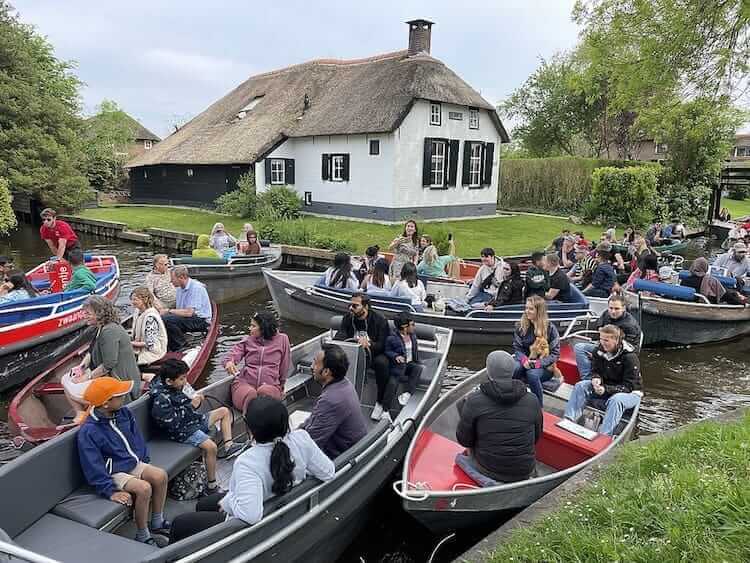
Natives in some of Europe’s favourite destinations are protesting, demanding restrictions and aiming water pistols at foreign visitors – for the time being, they still leave it at that.
For decades, tourists – inasmuch as they were thinking at all about the impact they were having on their host towns – thought they were welcome, happy to prop up the local economy by filling restaurants and the natives’ pockets. Suddenly, they are being told they are the villains. Well, are they? Are we?
For or Against Overtourism?
The case for the prosecution against overtourism can be summed up as follows.
1. Tourism raises the prices on the local housing market, making it too expensive for locals to rent. Eventually, it raises the prices of local services, too (shops, restaurants etc.).
2. Day trippers, cruise ship passengers and all-inclusive-resort guests travel in a bubble of their own culture but still get in the way of everyday lives, not least by straining vital resources, without buying as much as a meal, never mind locally owned accommodation for the night. On top of that, not enough of the money they spend lands in the pockets of local folks.
3. Tourism imposes its lowest-common-denominator sameness on local cultures, creating flattened identikit environments. Ultimately, tourists rob places of their soul, and when these places have become hollow shells, emptied of everything that had once made them stand out as interesting, the tourists move elsewhere. They are the locusts of the modern age.
All of these points may have some merit, but cannot be woven into a coherent argument. Cruise ship passengers, day trippers and all-inclusive-resort customers have no impact on the local housing market – and, never leaving the bubble of their own culture, are unlikely to contaminate the local culture from which they have so carefully quarantined themselves.
Conversely, AirBnB renters who do come into contact with local lives (and who do have an impact on local housing markets) also pump money into their host towns’ economies, eating in local restaurants, buying at local shops and renting from local families – who usually have invested considerable amounts of money in their rental properties. Which not only benefits the local economy but also preserves the overall quality of the urban fabric.
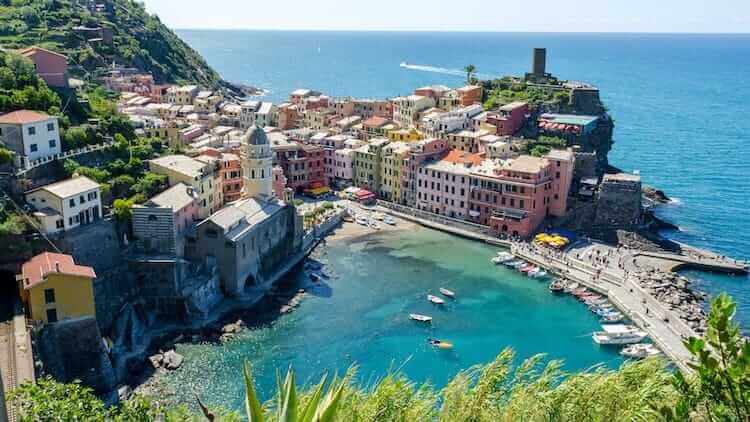
Resort towns have the weakest case of all. They invited the tourists in, after all, and now find that the people who have followed their invitation are the wrong kind of tourists. They use too much water, eat the wrong kind of food, do not spend enough money and, adding insult to injury, show a total lack of interest in the lives of the natives or their concerns.
What resort towns want is fewer but better tourists. A “better balance” is what they call it, but it feels more like “having their cake but refusing to serve it to Deirdre and Darren from Huddersfield”, as Michael Burk summed it up quite neatly on BBC radio’s Moral Maze (broadcast in the summer of 2025).
Is it a human right to live life in the same peaceful way as your ancestors, unencumbered by the presence of troublesome outsiders? We read a lot about the rights of the 50,000 Venetian residents: what about the rights of 30 million annual visitors?
The protests of people from cities such as Lisbon and Barcelona on overtourism cannot be dismissed quite so easily. Tourist rents inevitably distort the housing market. Working class people who can no longer pay the going rate for inner city flats are the ones who suffer, while bourgeois families – who own those properties – benefit.
But property prices have been rising across the western world for decades, even in places where tourists are relatively thin on the ground. Tourism may compound the effects of underlying inner city “gentrification”, but has not caused it. Not every problem in 21st century cities can be laid at its feet.
Bear in mind that many people in the low-wage segment of the employment market also benefit from tourism – and may even depend on it financially.
During Covid, half of the inhabitants of Venice who worked in the industry lost their jobs. Venetian pensioners, government employees and people from the professional middle classes, meanwhile, must have been pleasantly surprised that, all of a sudden, they could once again find a free table in their favourite restaurants. Finally, no more annoying strangers around!
In truth, the entire discussion is marked by a strong whiff of hypocrisy: good tourism is what I do, bad tourism what you do. Last summer, the Times (of London) wanted to publish a piece about the anti-tourism protests in Barcelona and tried to contact the protest leaders – only to find that they were all on holiday.
But what about the argument that tourism is turning the entire world into a bland, visitor-friendly theme park?
Well, let us take a look at those places where tourism has been around for long enough so that we would expect to observe such an effect.
Like Venice, for example, which has operated a tourist-centered economy for hundreds of years. Has this experience “flattened” the local culture – or “homogenized” Venice to an extent where it has become undistinguishable from any other destination in the world? There exists, as a matter of fact, such a homogenized, visitor-friendly version of Venice.
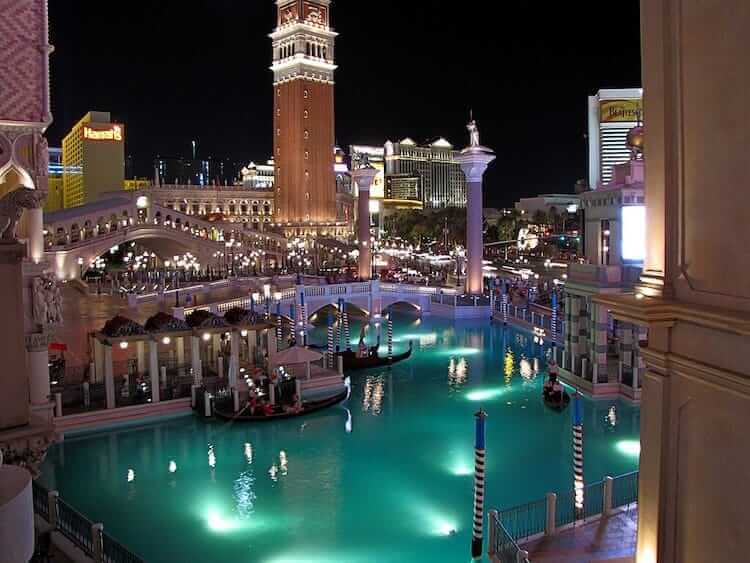
Go and see it when you visit Las Vegas, and let’s see whether you can spot the difference.
Or take Rome where tourism reaches even further back in time, at least to the Middle Ages when the city was the Christian world’s favourite pilgrimage site.
In her long history, Rome had to deal with unruly and rowdy visitors like the Imperial mutineers of 1527, the French invaders of 1849 and the Blackshirts from Mussolini’s March on Rome. It survived all of this unscathed.
Is there anybody who seriously suggests that this uniquely dynamic and buzzing place will not be able to survive the challenges posed by holiday makers from small towns in America and provincial Europe? That elderly cruise ship passengers, fearfully traipsing behind their umbrella-wielding guides, will manage to destroy Rome as we know it, achieving what even Alaric’s Goths failed to accomplish?
Conclusion: We should all relax a little and have faith in the resilience of our favourite destinations and their inhabitants. The world as we know it may or may not survive the 21st century, but if it does not, overtourism will not be the cause for its death.
Keep calm and carry on with your holiday plans, whatever they may be.