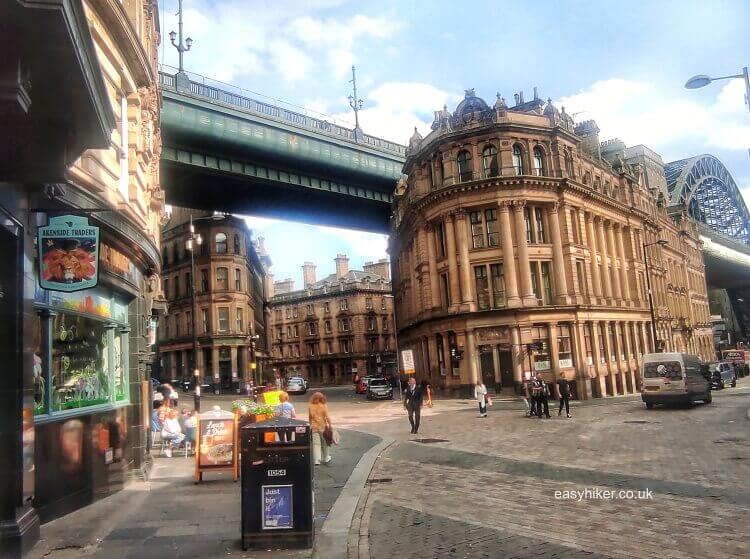
People come to Verona for a variety of reasons: to see its architecture, …
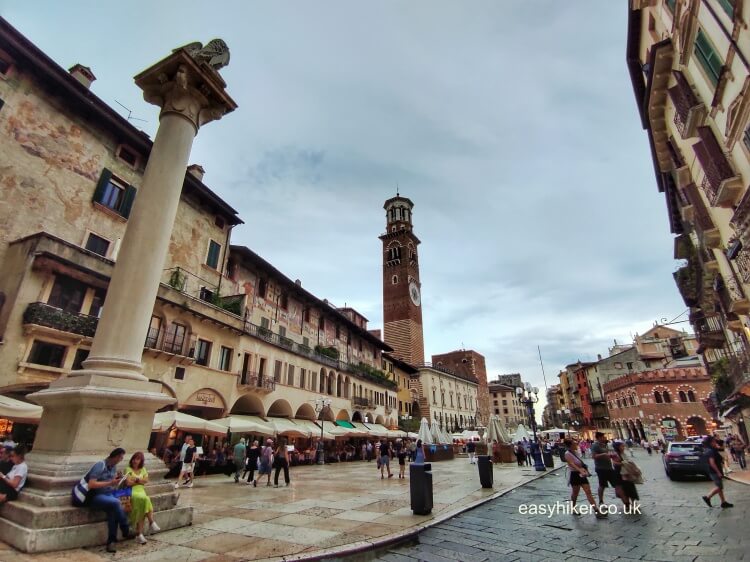
… to attend the world’s largest outdoor opera festival, …
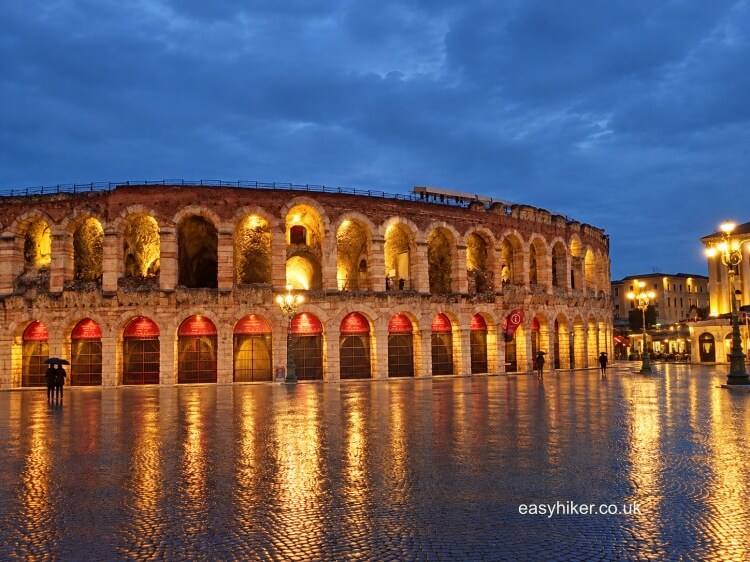
… and, of course, for Romeo and Juliet.
It is here, after all, where the most famous love story of them all is set and where the theatrical world’s best-known love scene takes place – although the Giulietta Balcony is probably best described as kayfabe for people who prefer poetry and fine literature to the not-quite-as-subtle delights of the WWF.
A Verona Riverwalk
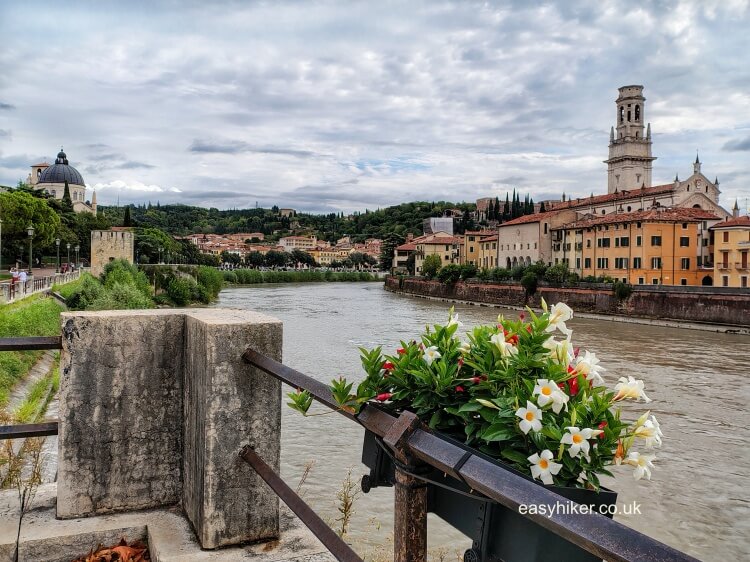
Nobody, meanwhile, visits Verona to walk along the river Adige. But you will meet a lot of people on the riverside trail who seem happy that they have sacrificed an hour or two for the experience.
The Verona riverwalk throws the scrummage of the city’s top attractions into relief – no, not “throw”: this walk would never do such a violent thing. “Gently steers” is more like it – by providing a welcome contrast of serenity and wide open spaces.
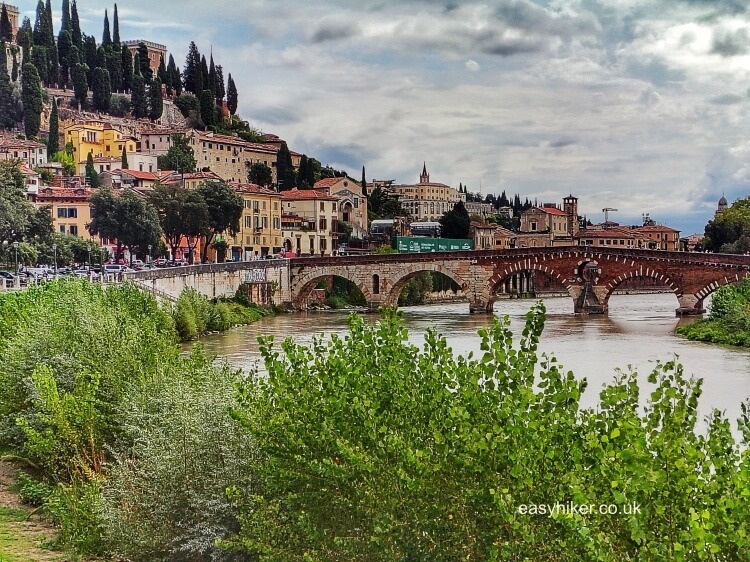
There is certainly no jostling for breathing room on the banks of the Adige, in contrast to the courtyard of La Casa de Giulietta. Over here, you will not need to wonder what has just hit you in the ribs (“It is not arm, nor face, nor any other part belonging to a man”) and there is nothing to tempt you into a violent over-reaction (“Fire-eyed fury be my conduct now!”).
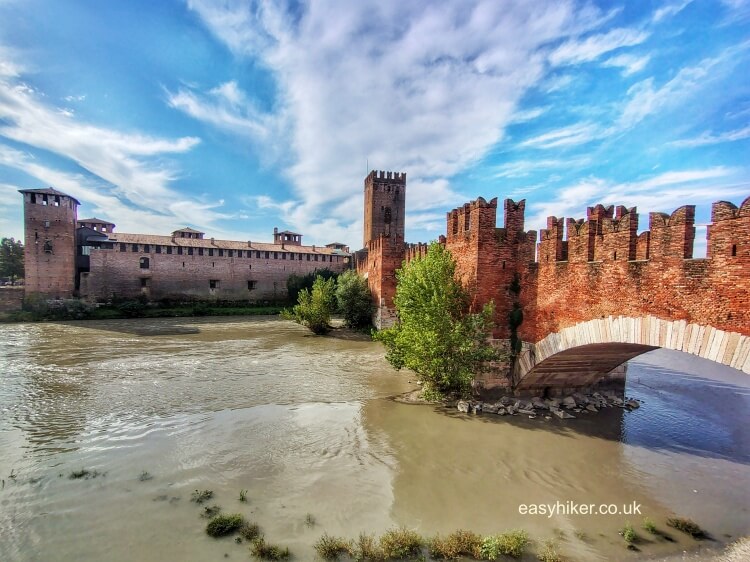
In fact, the busiest section of this Verona Riverwalk is the part where you approach the riverbank trail from the town centre, up to and on the footpath into the grounds of Verona’s medieval castle, the Castelvecchio.
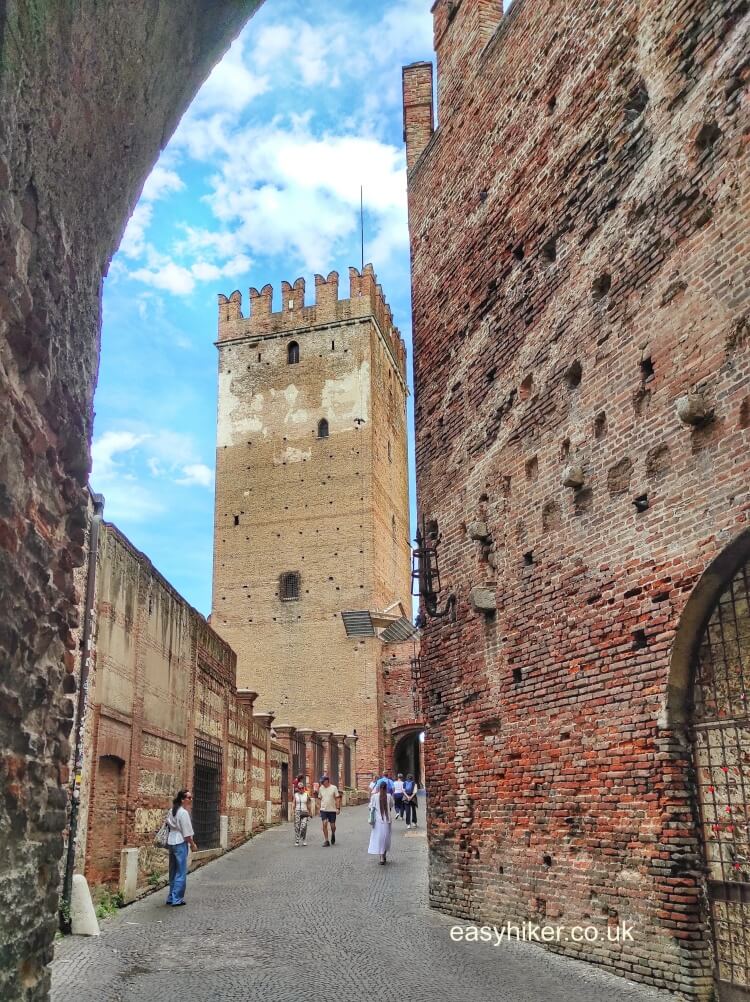
This footpath will lead you straight onto the 14th century Ponte del Castelvecchio. The river views that you will get from here might have been enjoyed by Romeo and Juliet, the Two Gentlemen and Petrucchio.
The play in which he features, The Taming Of The Shrew, is set in near-by Padua, but Petrucchio is described as a “gentleman from Verona” who has come to the neighbouring city to look for a spouse in the light of clearly set priorities . (“I come to wive it wealthily in Padua”, Petrucchio says in the play – to which Cole Porter, in Kiss Me Kate, adds the rhyme: “though you might say: what a cad you are”.)
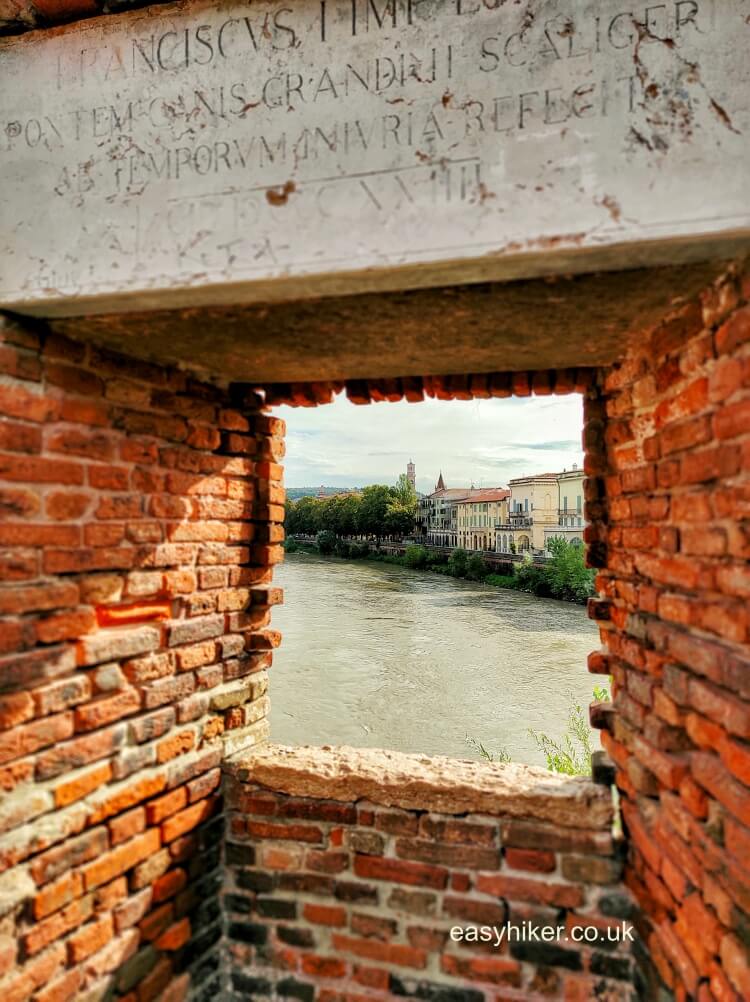
Once you have arrived on the far bank of the Adige, turn right past the back of the castle …
… in the direction of the Ponte della Vittoria that was built in the 1920s and dedicated to the Italian victories of WWI. The equestrian statues on the four pillars of the bridge were added in 1931 …
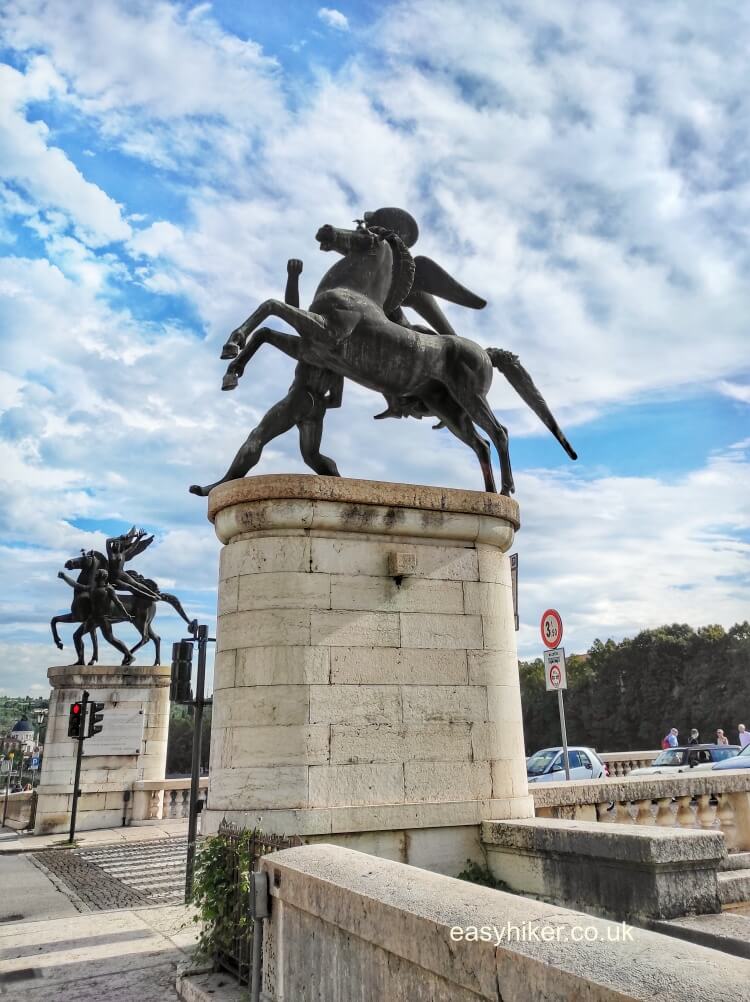
… as was the plaque with King Vittorio Emmanuelle’s declaration of war from 1915. At the time, some people in Verona would still have remembered the Austrian occupation of their own city, which had only ended in 1866.
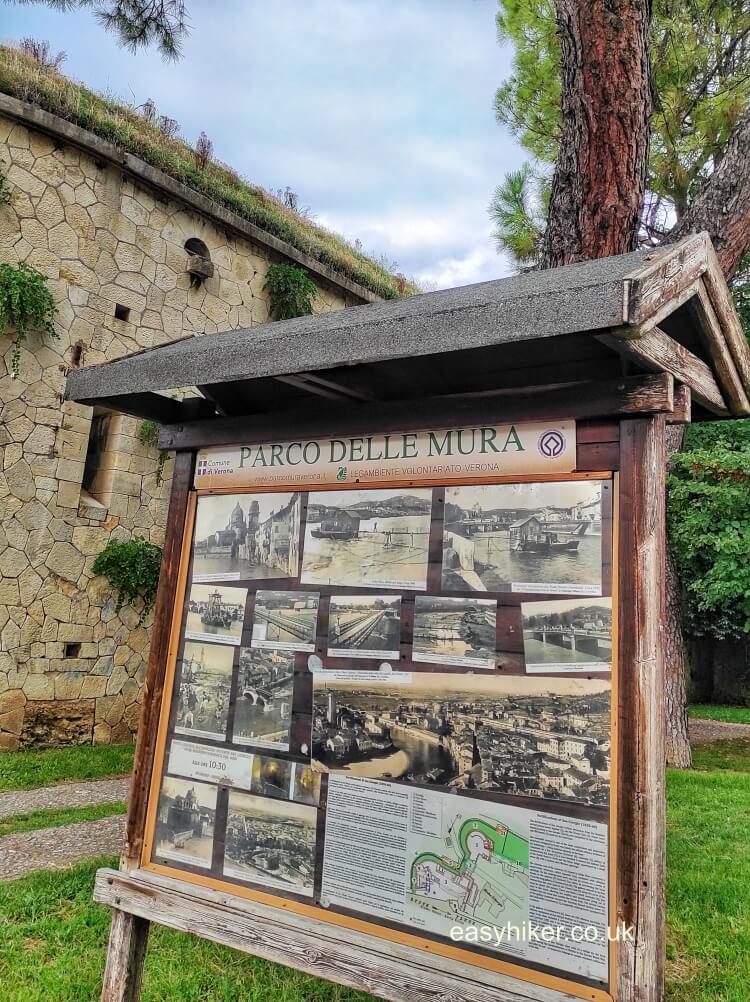
The Parco delle Mura that lies behind the next bend of the river contains defensive structures that the Austrians built during their 50-year-long reign over Verona as well as the walls and fortresses from the city’s 2000 years of history before that, starting with an ancient Roman stronghold. The Parco stretches inland for quite a bit, and there is a separate trail that can guide you around it over a distance of approx. 10 km.
Closer to the river, you can visit the Church and Monastery of San Giorgio in Braida, originally established in 1046 by Pietro Cadalo who would later gain some notoriety as the antipope Honorius II, …
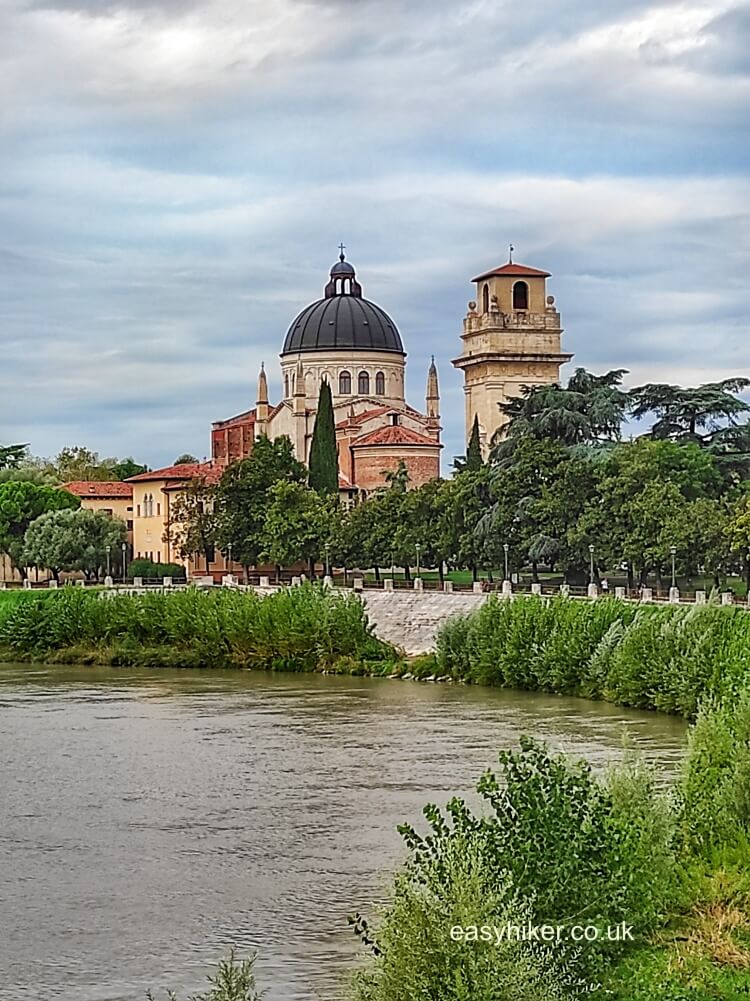
… although little is left from the medieval buildings which were replaced by High Renaissance structures in the 1500s.
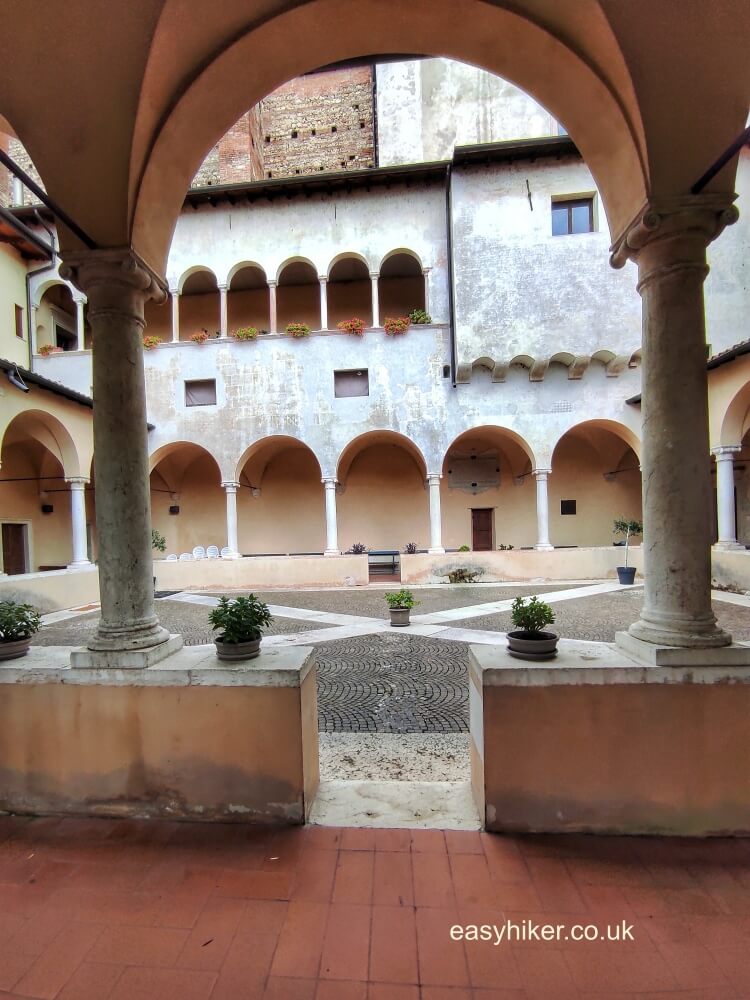
These were the halcyon days of the Veneto region when it – centered on Venice – was pretty much the cultural centre of Europe. That, at any rate, was what Shakespeare saw in it. He set more plays in contemporary Veneto – add Othello and The Merchant of Venice to the aforementioned three (mainly or partly) Verona-based plays – than in any other period anywhere else, not to speak about the Elizabethan England of his own time.
Verona’s history may have reached its high point in the 1500s but reaches much further back – and it is on the banks of the Adige where you can see how far.
You will pass the Piazza del Foro where the Romans established one of Northern Italy’s largest settlements in the 1st century AD.
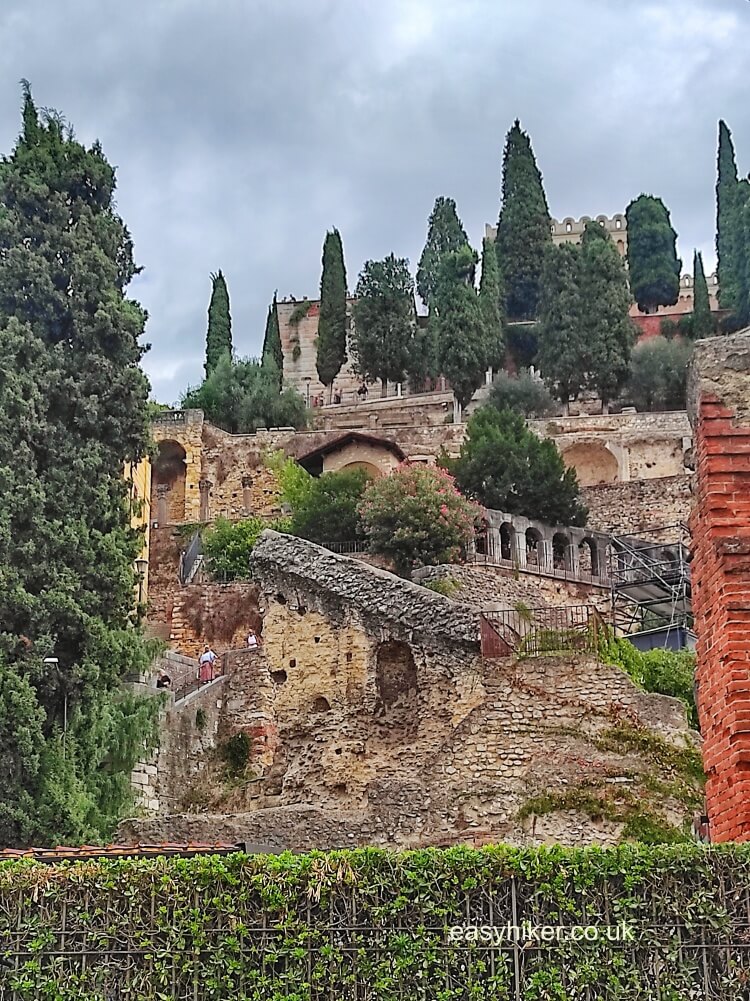
Right opposite the ruins of antiquity, you can see one piece of Roman infrastructure that still works and serves Verona’s citizens: the ancient Ponte Pietra, the city’s oldest bridge.
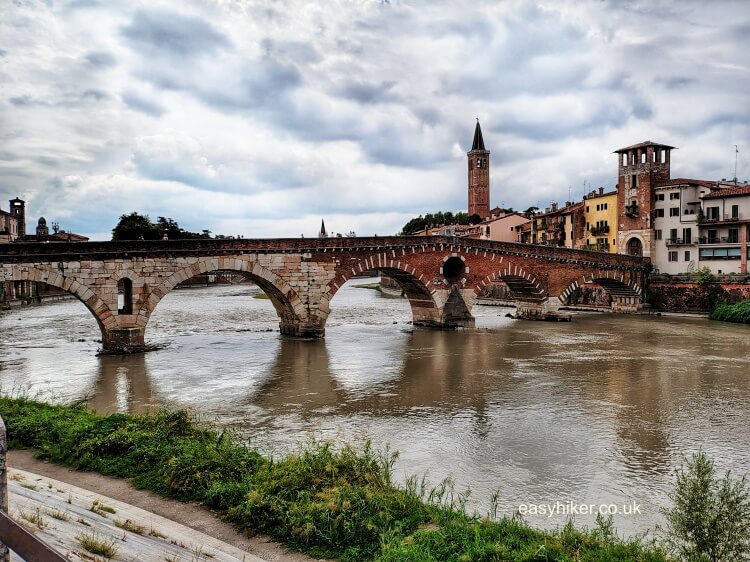
This is a good point to cross over into the old town. But before you go, take a closer look at the riverbanks: this is where Romeo and Juliet would have met (trysted?) if they had been real people instead of fictional characters.
You will perhaps be surprised to hear that the story of the star-crossed lovers may be rooted in real events after all. The Montagues and the Capulets were certainly based on actual people in 13th century Verona.
We know this because Dante name checks two noble families, the Montecchi and the Cappelletti, in his Divine Comedy – not mentioning any love drama (yet), that was added later by Italian writers in the 1400s and 1500s. But Dante hints at a violent local feud and an underlying tragedy (he refers to the two families as “already grieving”).
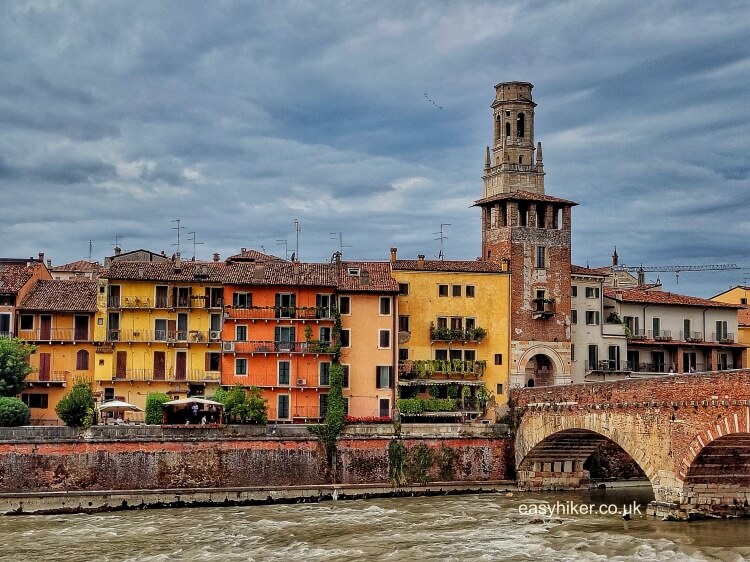
We also know from documents that the Cappelletti owned fortified palaces along the banks of the Adige River. Nearly all of Verona’s medieval riverbank residences, however, have disappeared over the centuries, the last ones during extensive works in the early 1900s to widen and dam the Adige. “Nothing ‘gainst Time’s scythe can make defence.” (Shakespeare again, though this one is from the Sonnets).
In other words: it is here, by the banks of the Adige, where the Romeo-and-Juliet crowd should stand, pushing handbags and umbrellas into the ribs and soft underbellies of fellow visitors.
On second thought, you will – together with all the other riverside walkers – be glad that they do not.