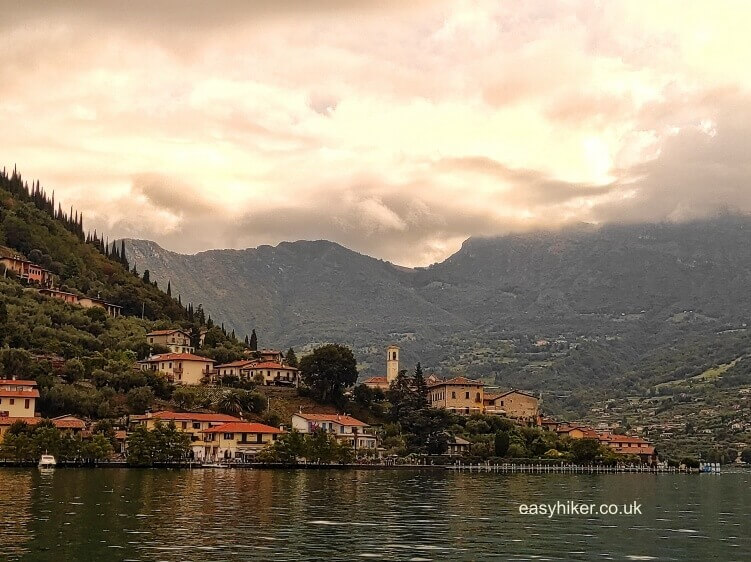
About 15,000 years ago, at the peak of the last Ice Age, hardened snow was accumulating on the Alpine mountains at such a rate that gravity eventually forced some of it down. Large ice sheets crushed into existing river valleys and cut deep trenches into the rock. Imagine an event similar to what happened in Nepal recently (similar in drama if not in cause) but with one thousand times the force.
You can still see the consequences of this event today: the wide and deep cuts that the ice shards carved into the Alpine rock eventually (at the end of the Ice Age) filled with water from melting glaciers, forming the large lakes on the foothills of Europe’s highest mountain range.
Italy has five of these Great Lakes, and four of them are major tourist attractions today: Lake Garda (no.1 on the list with 28 million overnight stays per year), the Lago Maggiore, Lake Como, and Lake Lugano. The fifth lake is the odd one out in the Italian Lake District, the one that is not on the global tourist itinerary and the only one that we have not written about – until today, that is.
Welcome to Lake Iseo
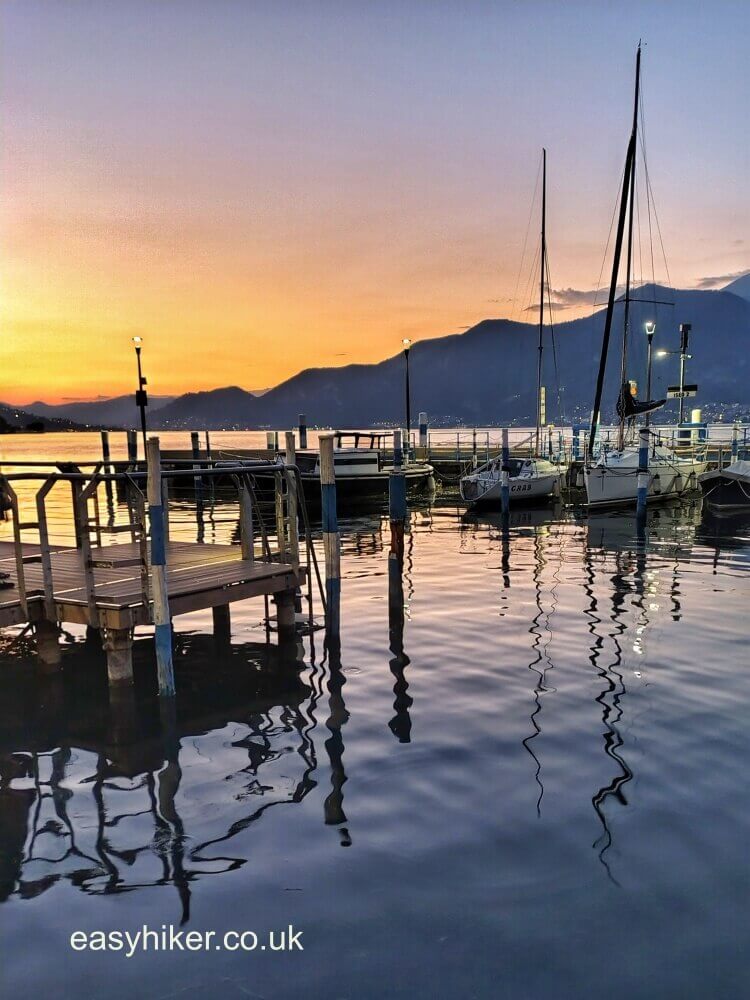
Lake Iseo sticks out in several ways. For one, it is the smallest of Italy’s Great Lakes. But it still measures 20 km from north to south and 60 km in circumference, so if you have travelled to the town of Iseo (a 45 minute train ride from Brescia) to hike once around the lake, do not forget to pack a generous time budget.
More importantly, Lake Iseo, in contrast to its four cousins, has not been developed for centuries as a luxury resort for members of the international nobility and wealthy industrialists from Milan. Commerce and industry – including smoky and smelly ones such as iron foundries and tanneries – have a long tradition on the shores of Lake Iseo. Even today, you can spot factories on the waterfront. Aristocratic palazzi and ostentatious 19th century residences, by contrast, are fairly rare.
But Lake Iseo also has something that the other lakes do not have: a large island in its middle, the largest inhabited lake island in Europe (it counts approx. 1500 inhabitants). Monte Isola makes for a great day trip destination, not least because it offers views of nearly all sides of the lake, if – mainly – from a distance.
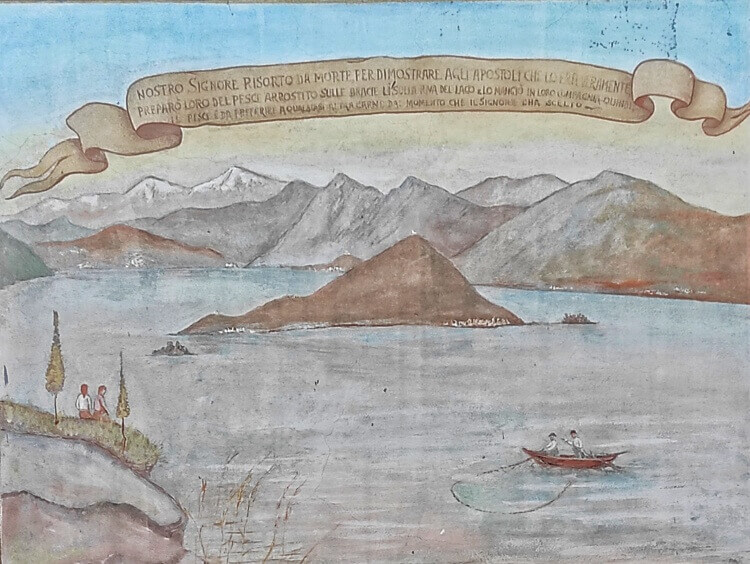
And since the whole of Monte Isola is classified as a single village, it challenges more European records: show me a village with a steeper interior gradient (more than 400 metres between lakeshore and mountain top) or one with a larger surface area (5 square km). Monte Isola is also, officially, one of the most beautiful villages in Italy (a member of the Borghi Più Belli club), but do not expect a central square of church and town hall with a ring of picturesque old buildings around them. Monte Isola is rather a collection of tiny and even tinier hamlets that are scattered along the perimeter road around the island.
This road is essentially an asphalted foot path in the south and east, while in the north and west it serves as an all-purpose country lane, albeit one with fairly light car traffic. It is walkable throughout, but the trail’s most scenic stretch runs along the islands’s southern shoreline.
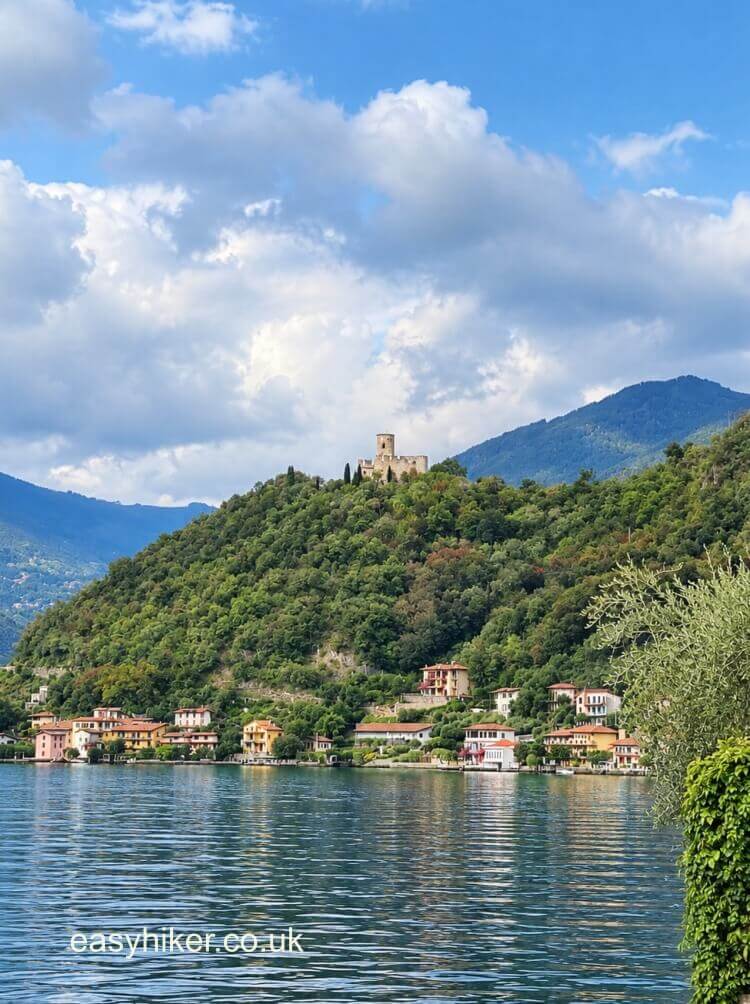
This is where Lake Iseo most resembles its fancier cousins in Italy’s Lake District. The lakeside villas may not be quite as sumptuous as those that line the Borromean Gulf of the Lago Maggiore but the trail offer views that are second to none.
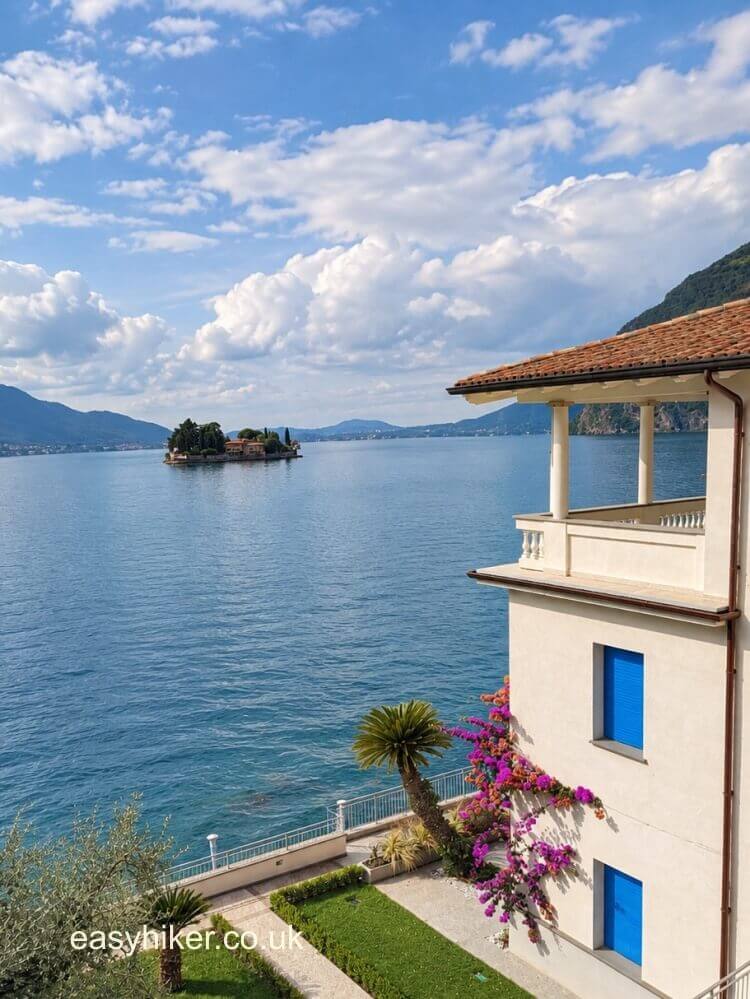
The lakeside, meanwhile, is clearly not inhabited by oligarchs only …
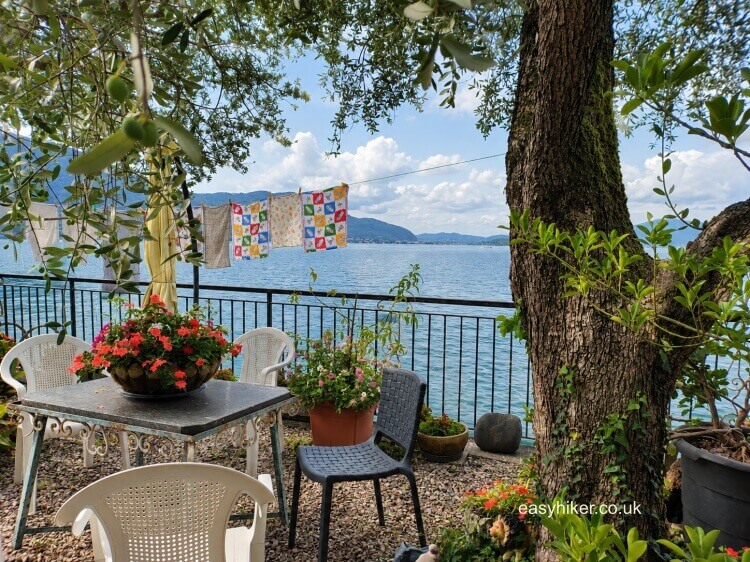
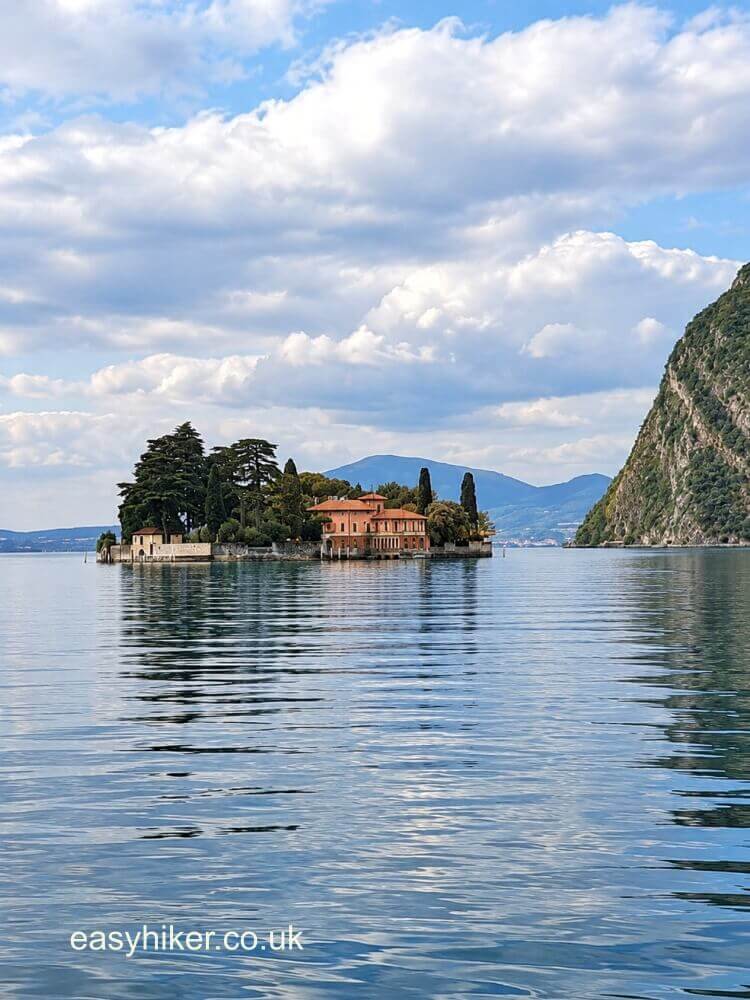
… although there are some posh people around, too. The Isola di San Paolo, an even smaller island opposite Monte Isola’s south coast, once accommodated a medieval priory and a sequence of local nobles before it was purchased by the Beretta family, the owners of the world’s oldest active gun manufacturing company (est. in 1526 at Gardone, a mere six km east of Lake Iseo). The house on the island – there is only one – is obviously their summer residence.
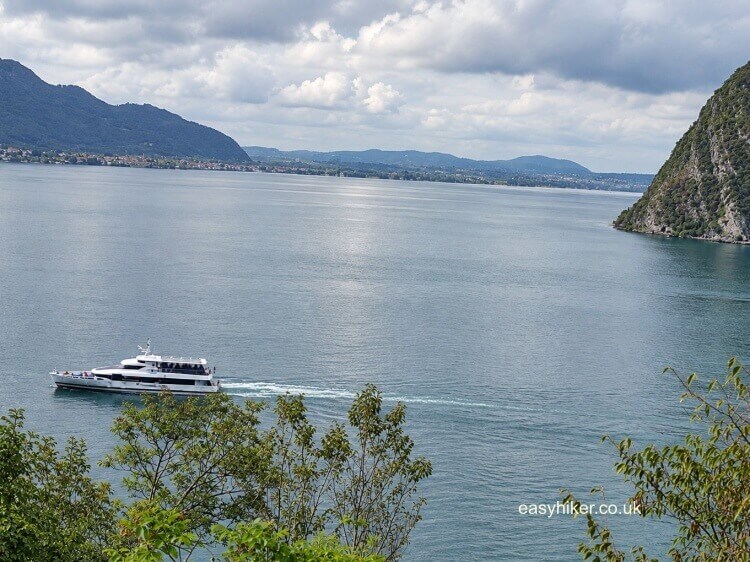
Follow the road when it takes a turn to the right and so you can take at least a brief look at the mainland coast opposite the island’s western side.
You can follow the trail all the way to Siviano and beyond, although this stretch is not quite as scenic, particularly when the road leads away from the lake. As a quid pro quo, you will find panoramic places for a rest …
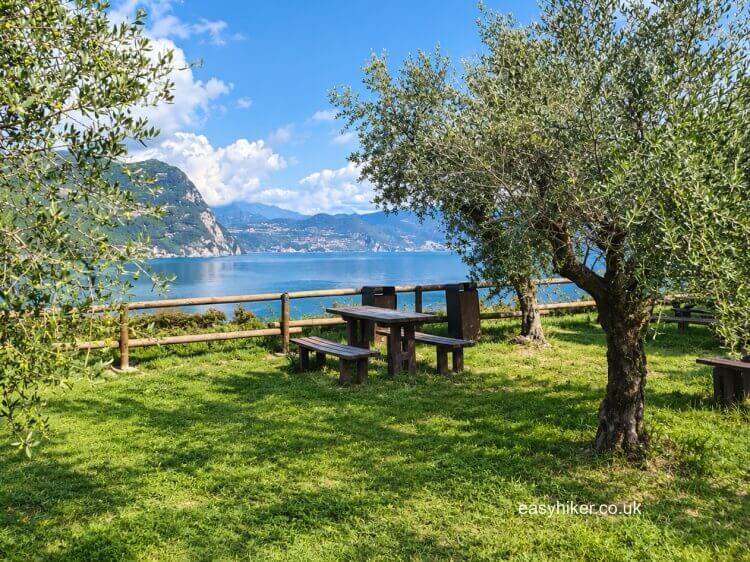
… and you get a nice view of Siviano as it slouches down towards the lake.
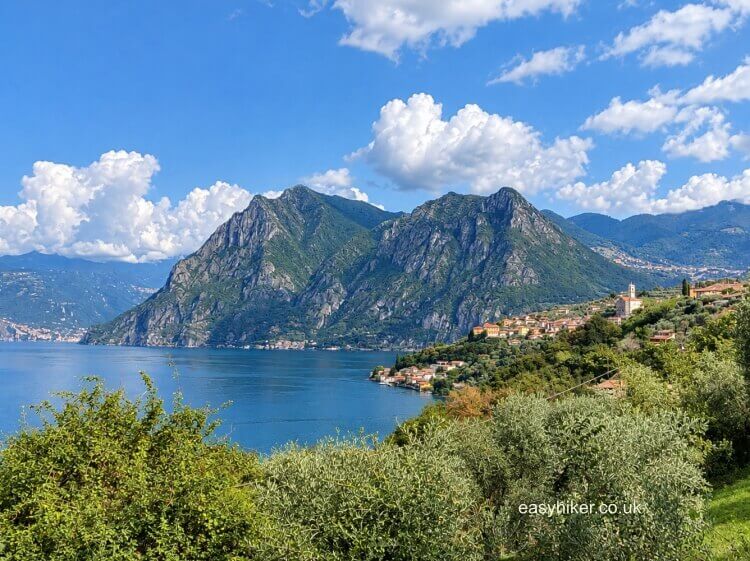
You can continue from there and complete the tour around the island (approx. 8 km long), but – as an alternative – can also take one of the buses to Carzano and Peschiera Maraglio. (You will occasionally come across a bus stop along the trail.)
Which is what we did. It was already past eleven, and we wanted to sample one of the many fish restaurants in Peschiera, which is not the largest settlement on the island (that would be Siviano) but the most lively and most scenic.
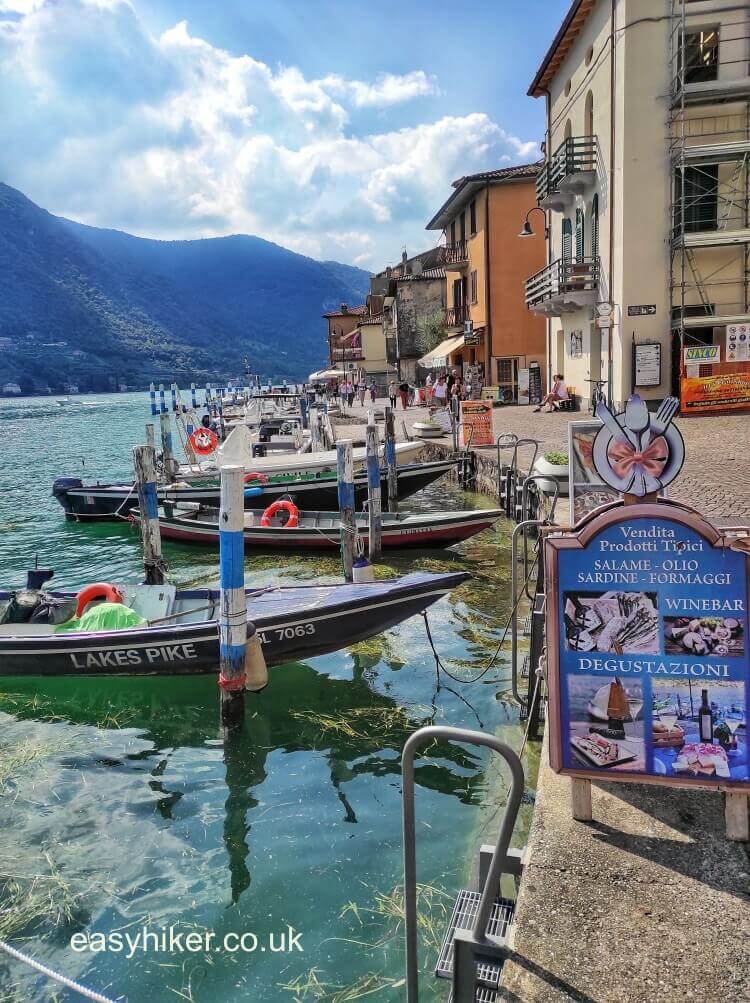
We continued our hike in the afternoon by walking up the eastern coast (past the Bald Cypress trees that were imported from the Louisiana swamps) …
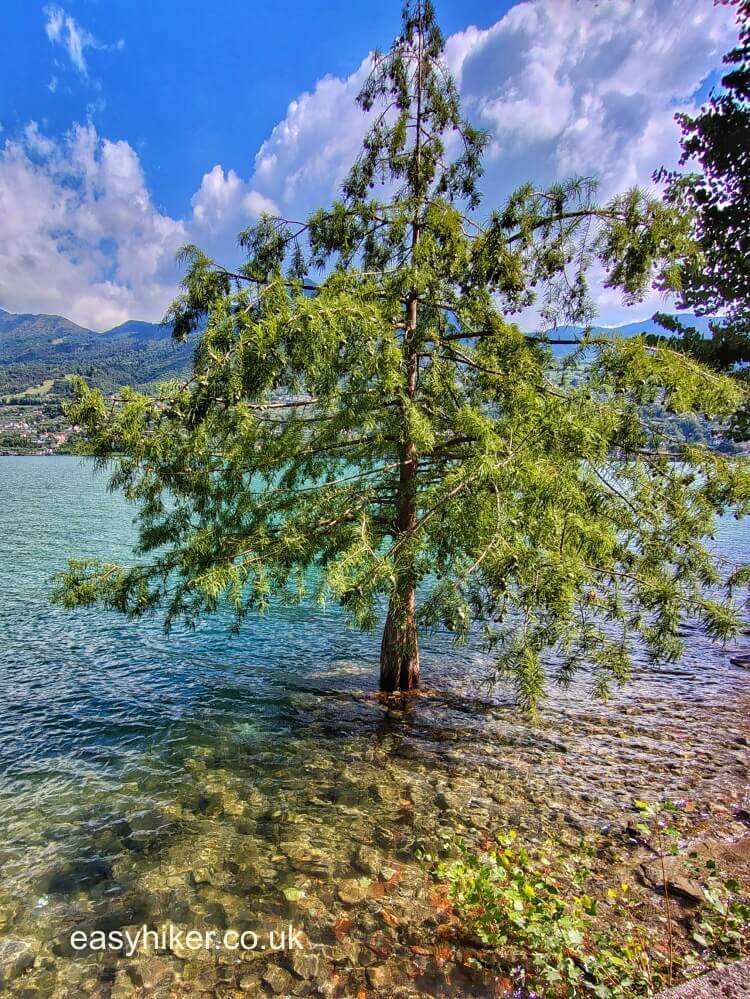
… all the way to Carzano (at the island’s northeastern corner) from where you can take a peak into the northern side of the lake.
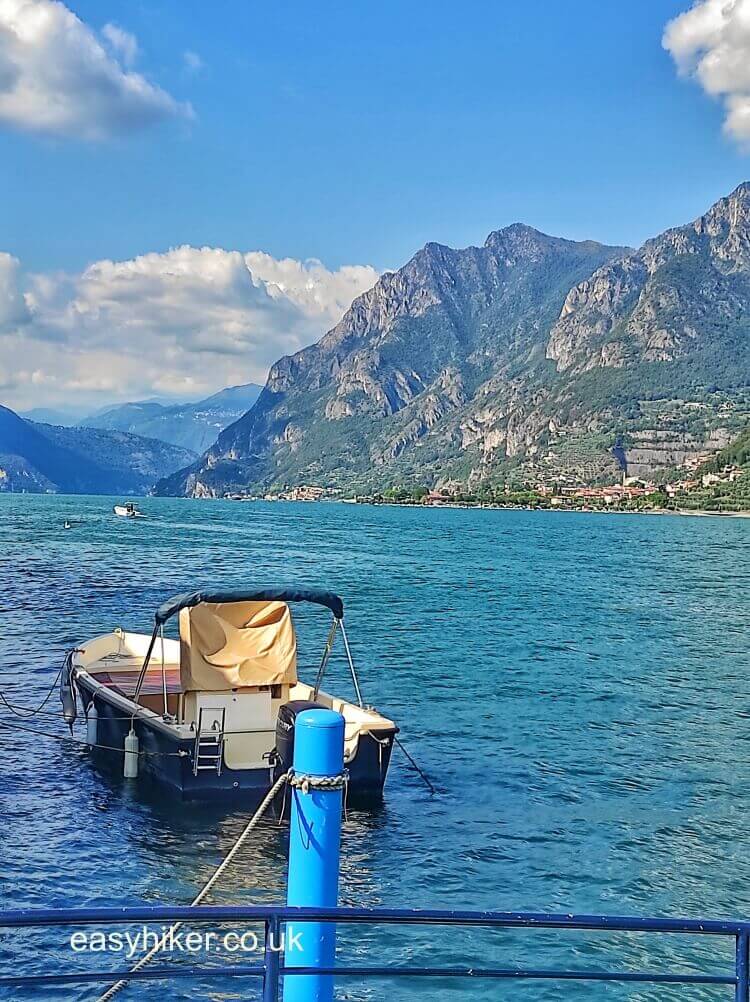
Peschiera is the island’s main ferry harbour, but boats to Iseo also leave from Carzano albeit less frequently. (Your ferry ticket is valid for all stops on Monte Isola.)
If you plan to walk around the island, you have to familiarise yourself with the ferry stops and time tables because, as you may have guessed, you can only reach and leave the island by boat.
This has not always been the case. Ten years ago, you could walk from the island to Sulzano and even to the small island of San Paolo. Which brings us to another unique selling point of Iseo in its rivalry with the other Great Italian Lakes: its worldwide fame, more specifically its fame in the world of Fine Arts.
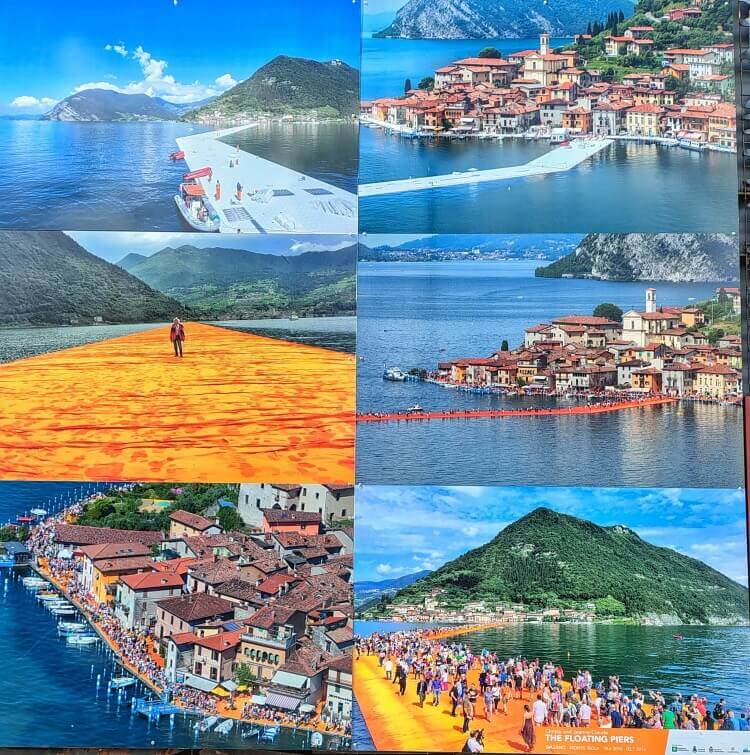
The Floating Piers of Lake Iseo was one of the last major projects of the Bulgarian artist Christo, who had acquired global fame through his monumental installations such as the Wrapped Reichstag in Berlin. After nearly 50 years of developing the concept and 22 months of in situ preparations around Lake Iseo, the piers – 70,000 square meters of fabric carried by a system of interconnected floating docks – were opened to the public in mid-June 2016 and closed in early July. Over the project’s 16-day run, an estimated 1.2 million visitors – up to 100,000 a day – crossed the walkways between Monte Isola, Sulzano and the island of San Paolo.
Since when it has been back to ferry traffic only. The good news is that you can catch frequent boats from Sulzano all year round. If, however, you plan to base yourself in other lakeside towns, be forewarned: outside of the season, ferries do not run as often as they do during the summer and sometimes not at all. But Sulzano has a train station, and the journey from near-by Iseo takes only 5 minutes.
Tip: Make sure you are one of the first passengers to board the ferry so you can pick a seat with a good view of the lake. During the short transit, you will be entertained by close-up views of San Paolo, and the approach of Monte Isola is one of the highlights of the trip, particularly on days when the island emerges slowly from the fog and mist (not a rare occurrence in this part of the world). A truly magic moment!