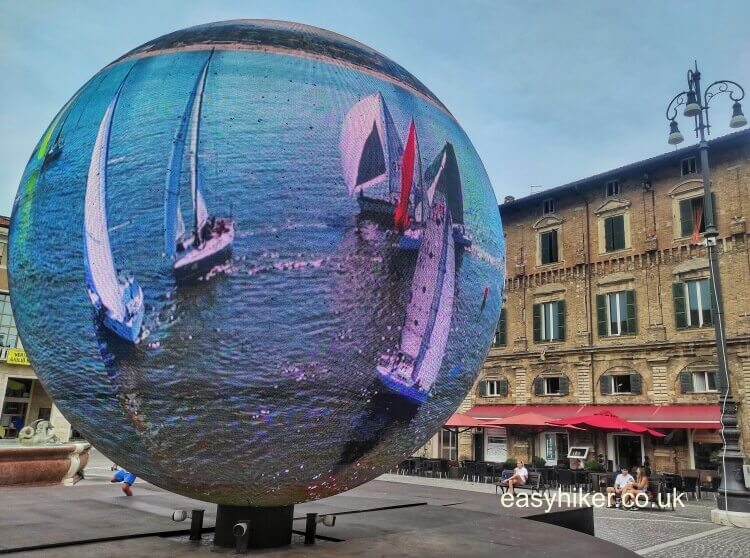
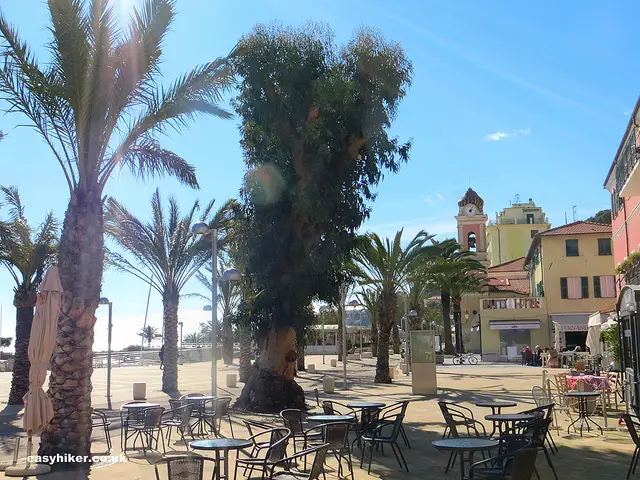
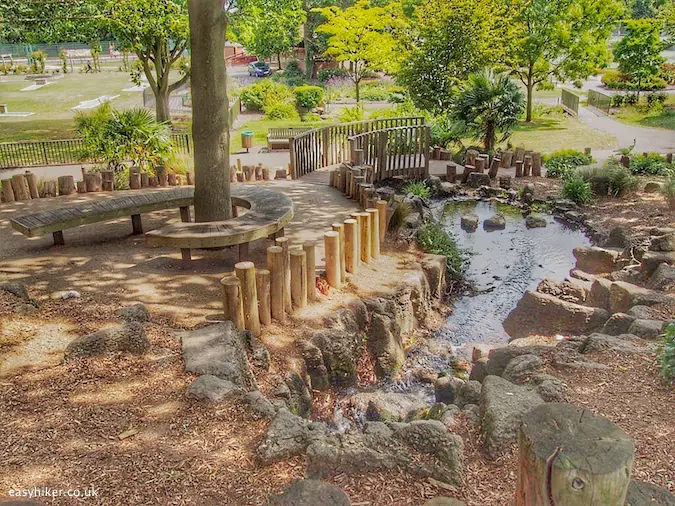
You want to break new ground: to find and explore a piece of unknown Italy? You are looking for a place with hotels, restaurants, railway connections and all the other mod cons (after all, you are a 21st century guy/gal who is not searching to “explore” anything on the back of a donkey, compass in hand) but also a town that you would be the first to visit in your circle of friends and colleagues? Ideally one that that none of the people you know has even heard about?
A Piece of Iconic Italy
If the answer to all of these questions is yes, then you have come to the right place. Welcome to the Easy Hiker Section of Iconic-But-Little-Known Italy, and welcome to Fano and Pesaro, two towns on the Adriatic coast which combine all that the country’s visitors are looking for: history and fancy architecture …
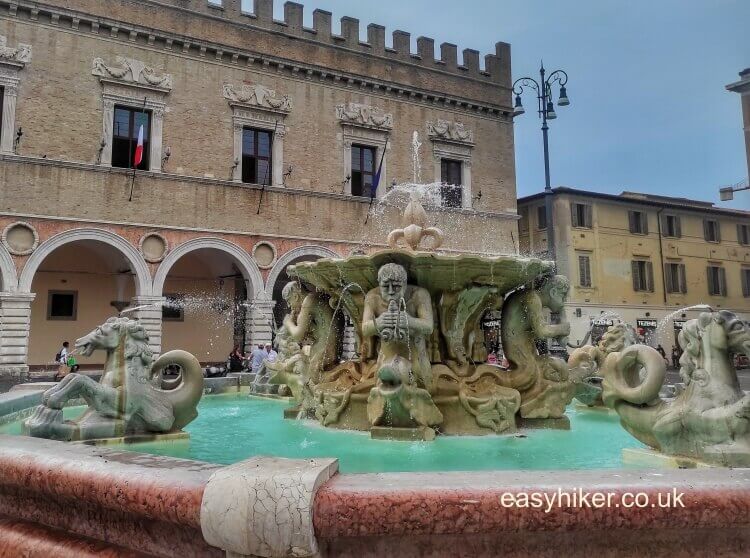
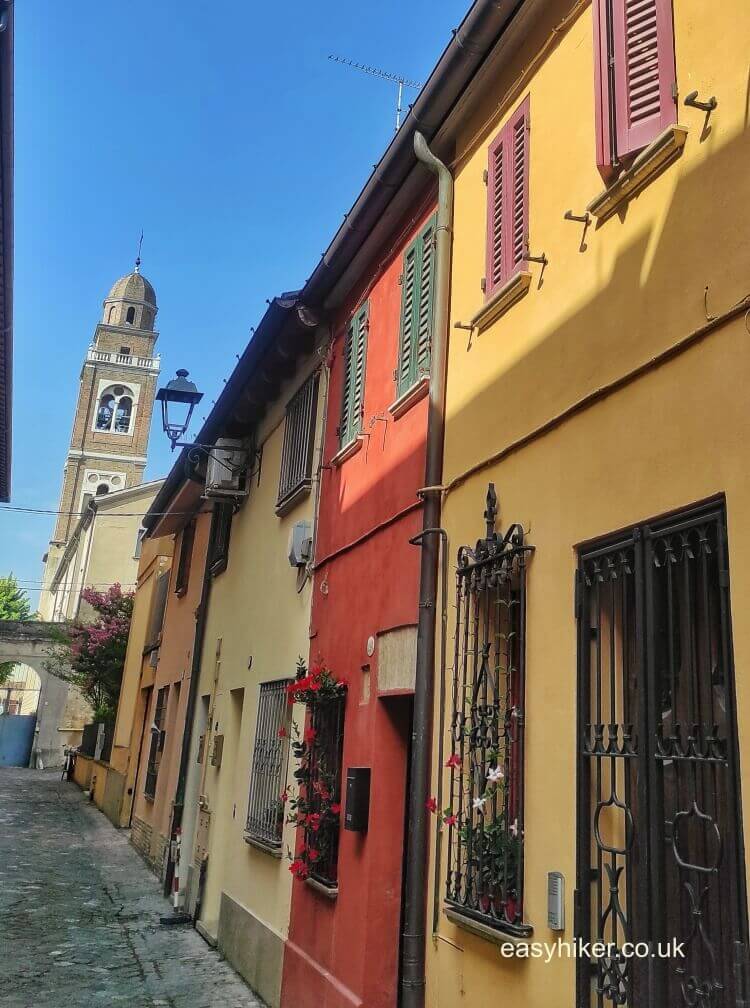
… scenic side strets steeped in charming colours …
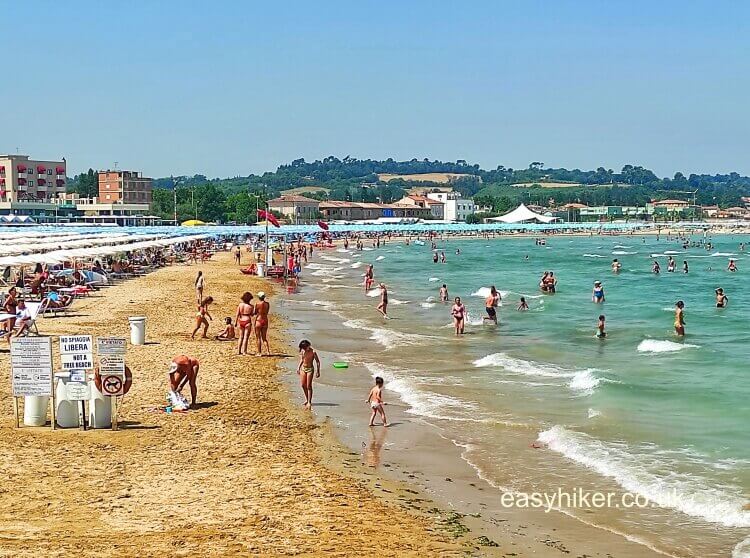
… and beaches upon beaches – sand, sun and sea as far as the eyes can see.
Although what catches these eyes are, first and foremost, beach clubs: for people who love them, the Marche coast is paradise. The train ride from Pesaro to Fano takes only 7 minutes, and if you were allowed to catch breath only when the beach on your left hand side is not lined by half a dozen rows of parasols, you would not reach your destination alive.
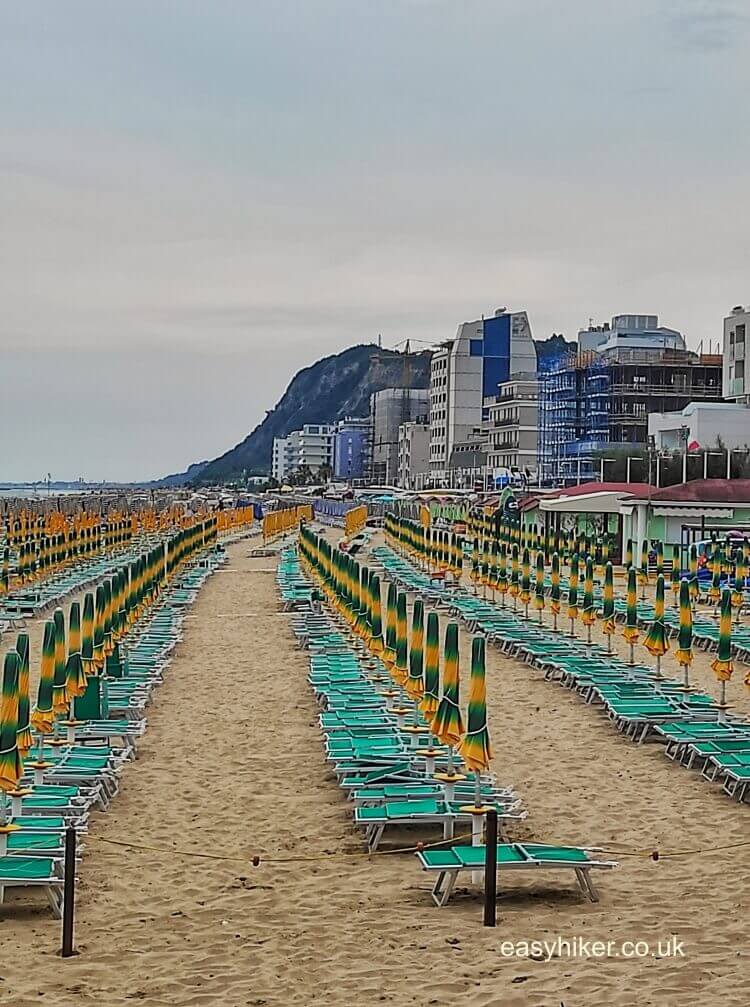
This is not quite what you had in mind? Well, sorry to hear that, but remember we said: you would be the first to visit “among your friends and colleagues”, not the first man from Planet Earth.
For your information: the Northern Adriatic coast (the resorts in the regions of Emilia-Romagna and Marchè) welcomes about 16 million tourists a year who together account for 55 million overnight stays, three times the volume of tourist traffic on the more fashionable Riviera.
Cesenatico and Cervia, Senigallia and Sirolo: ever heard of those? Probably not, I would assume – this is because roughly 90 percent of tourists in these places come from Italy.
In Riviera resorts such as Sanremo, Alassio and Portofino, the majority of visitors come from abroad – one key reason why, while these resorts may be overall less frequented, they are more internationally famous.
Here is another difference between Italy’s eastern and western coastlines. Beaches in Riviera towns are often bordering the old towns, where tourists and natives can then freely mix.
Many Adriatic towns, conversely, are split down the middle: one half of the town is populated by tourists, while the other half – a kilometre or so further inland – acommodates the Reservation For Indigenous People. Tourists may stray there once or twice a week: generally, there are no things to see in the native country that they would be interested in.
It would be logically incorrect to conclude, however, not to say unwise, that there are no interesting things to see there per se. As we shall demonstrate today on a stroll through the historic centres of Pesaro and Fano.
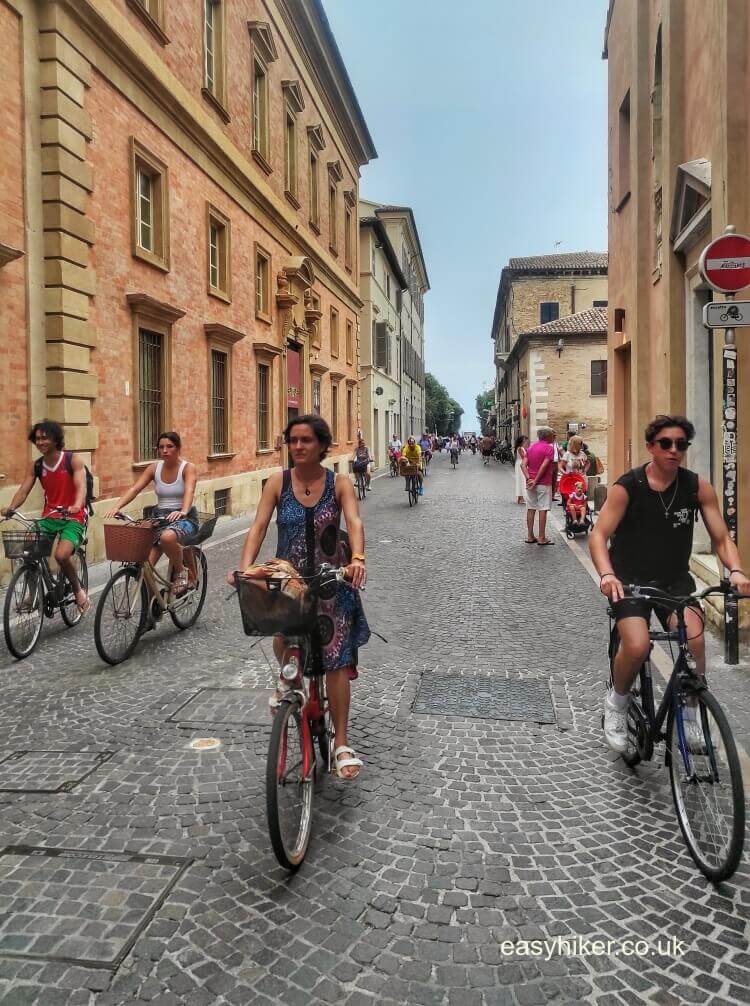
Of the two neighbouring towns, Pesaro – the provincial capital – is the bigger one. Pesaro has a lively downtown area where the first thing you may notice is that – unusually for Italy – most traffic seems to be conducted by bicycle.
In most parts of Italy, cyclists are men in lycra: people for whom a bicycle is a piece of sports equipment, not a means of transport. Here, everybody seems to ride a bike to get around town, men and women alike, the old and the young. That creates a pleasant and relaxed atmosphere. Pesaro’s old town wears a broad smile!
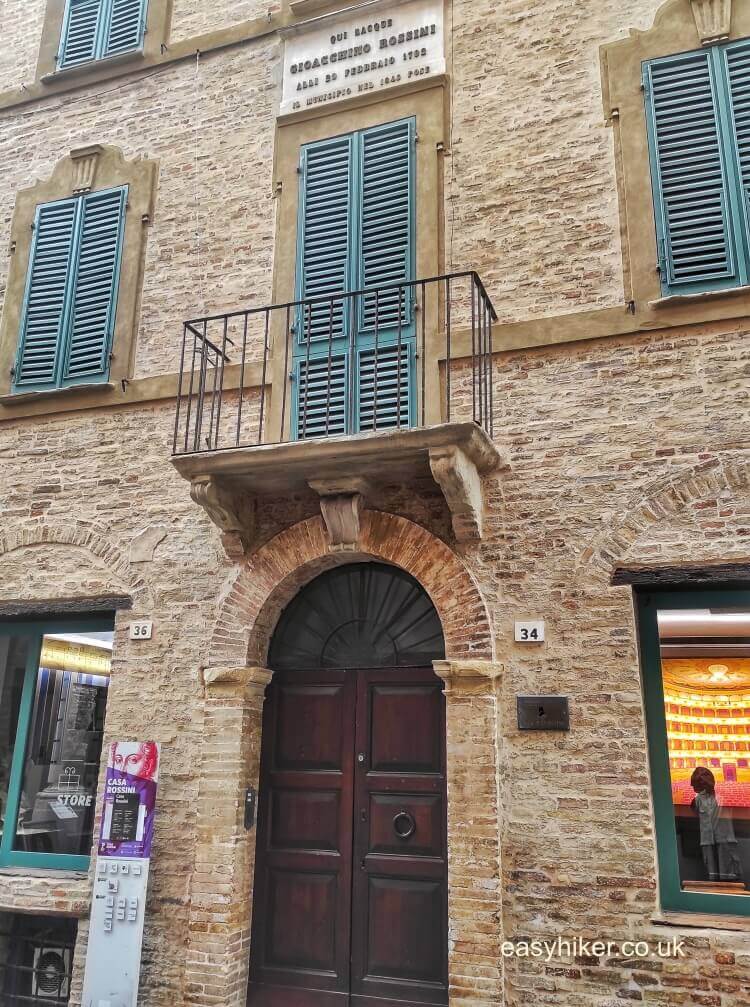
The centro storico is also where you can find Casa Rossini (on Via Gioachino Rossini 34), the place where the opera composer was born (famous for “The Barber of Seville” – and the Lone Ranger theme tune, aka the overture of William Tell).
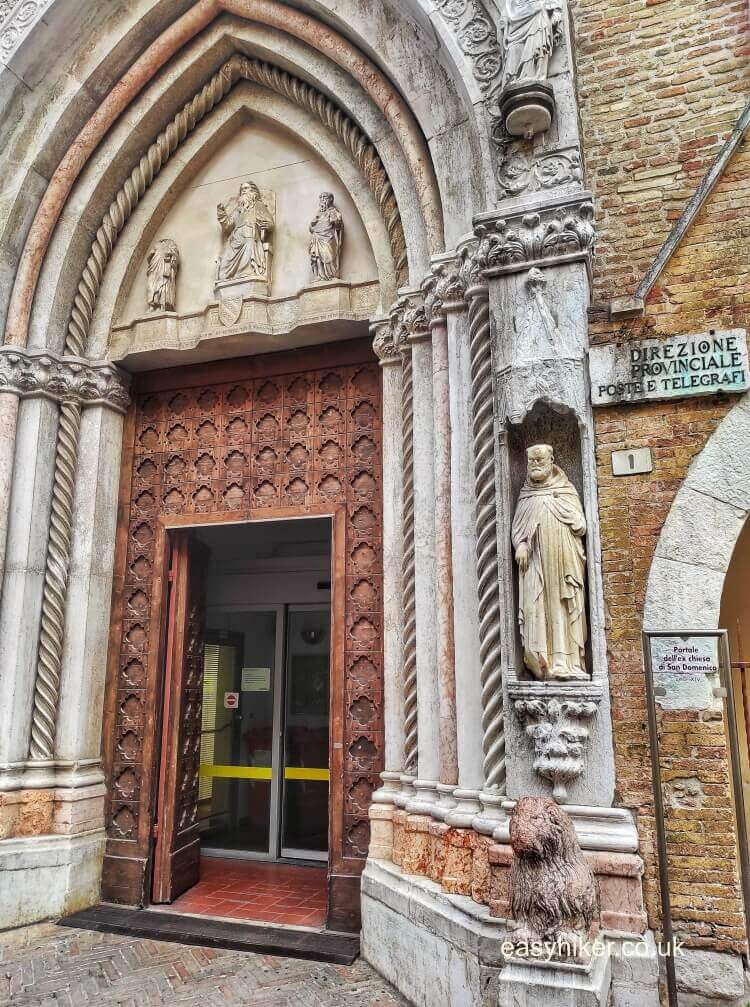
A few blocks from there, on Via Giovanni Branca, you can spot what very well might be the country’s holiest Post Office …
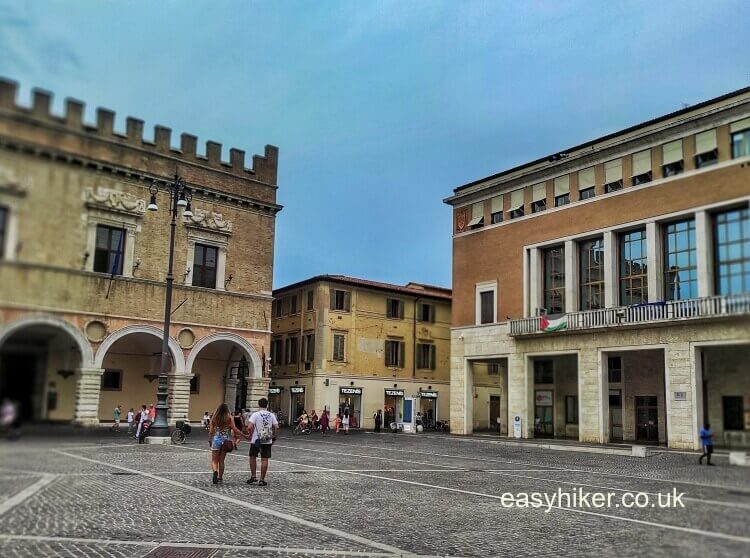
… and, a few metres away, a central piazza where buildings from 5 centuries blend into a single vision of peaceful unity, showing that there are still some things in Italy that never change.
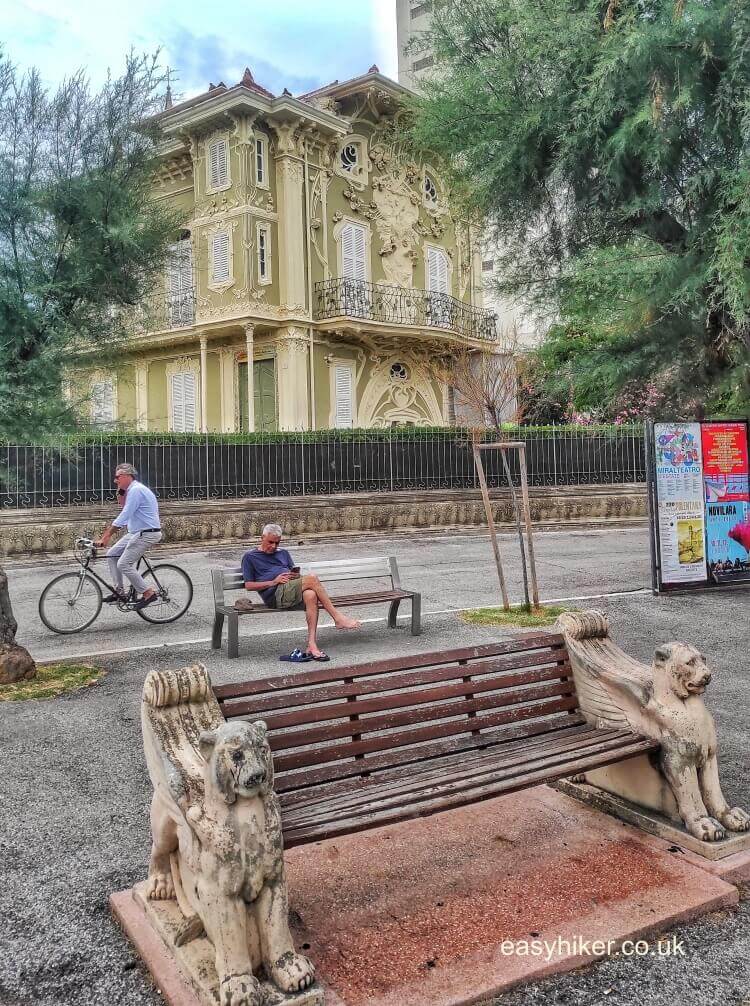
After that, you should take the short walk to the seaside district (down the Viale della Repubblica) if only to take a look at what has made Pesaro so popular – and at some of the town’s more edgy architecture.
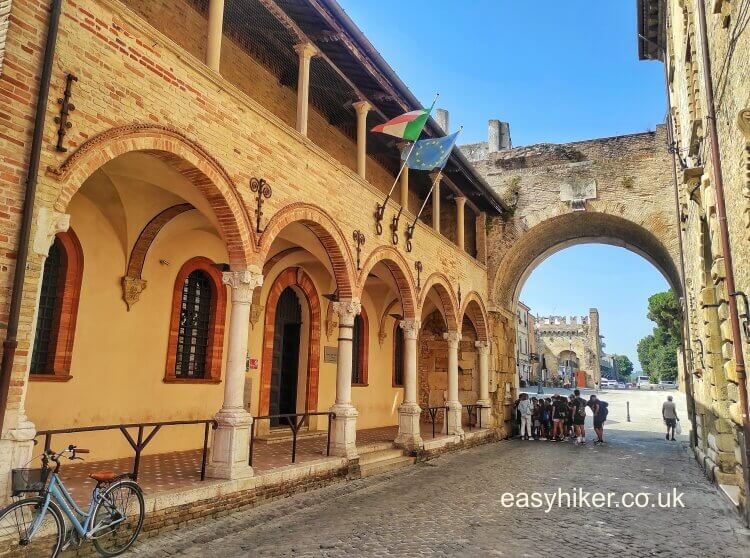
Fano – barely 10 kilometers down the Adriatic coast – shares much of Pesaro’s history: Ostrogoths and Byzantines (who, respectively, destroyed and rebuilt both towns in late antiquity), medieval civil wars, earthquakes. The two towns are united by their common Roman past, too, but this period feels more present in Fano because it has been brought back to life in the carefully reconstructed Fincio complex just behind the Augustan Arch from 2 AD.
If you read the information panels about the two towns’ history, you will encounter the same names over and over again: Sforza, Montefeltro, della Rovere, Malatesta – the clans of local medieval warlords who fought each other tirelessly in forever changing coalitions when they were not sitting for portraits by Piero della Francesca.
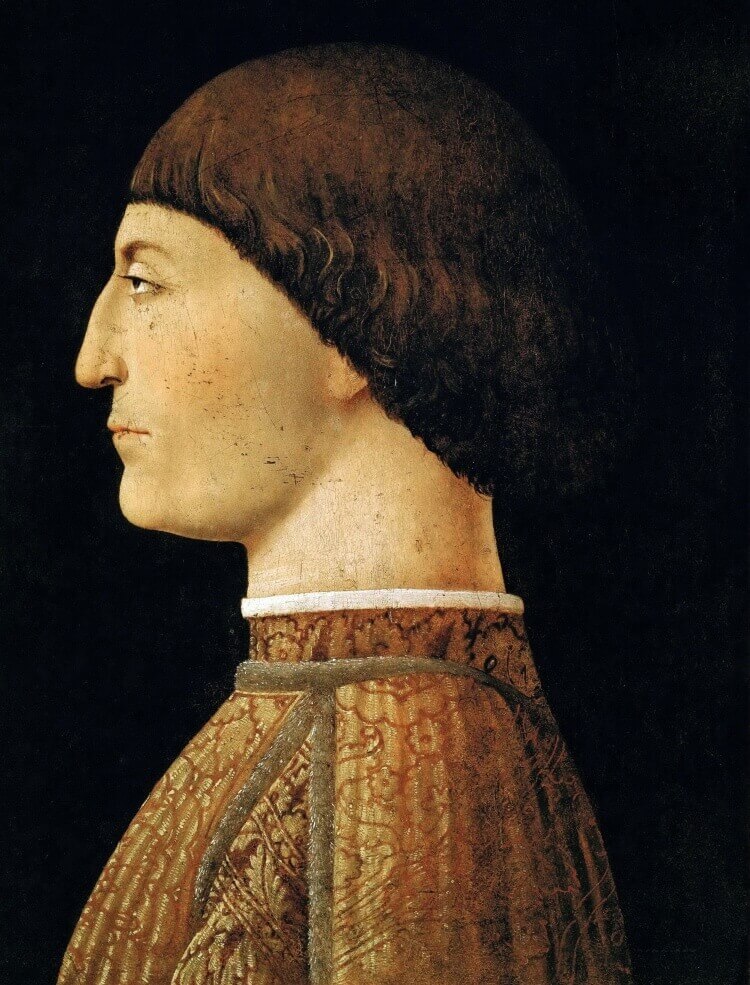
This is Sigismondo Malatesta: the most colourful of this quarrelsome bunch, canonized into hell – “damned for all time” – by the same papal court that he had so bravely fought for many times (in truth, to be fair, he had fought just as bravely against it, too).
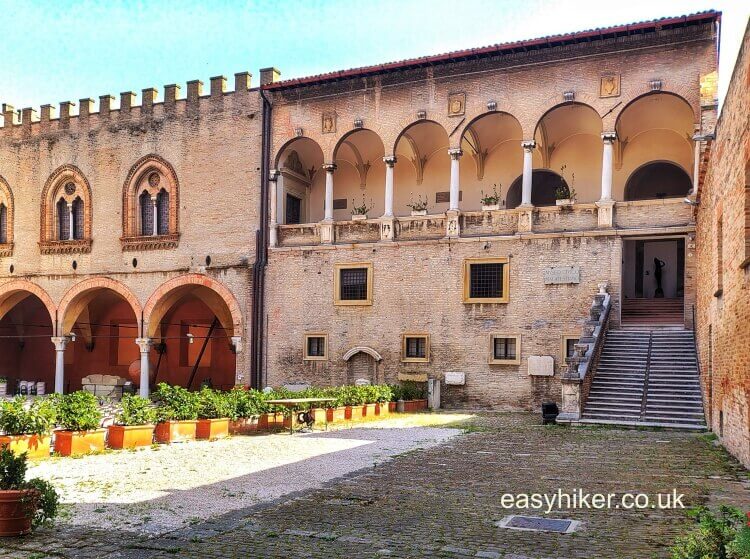
Fano was a centre of the Malatesta fief, and Sigismondo was the man who gave the family palace on Piazza XX Settembre its present shape.
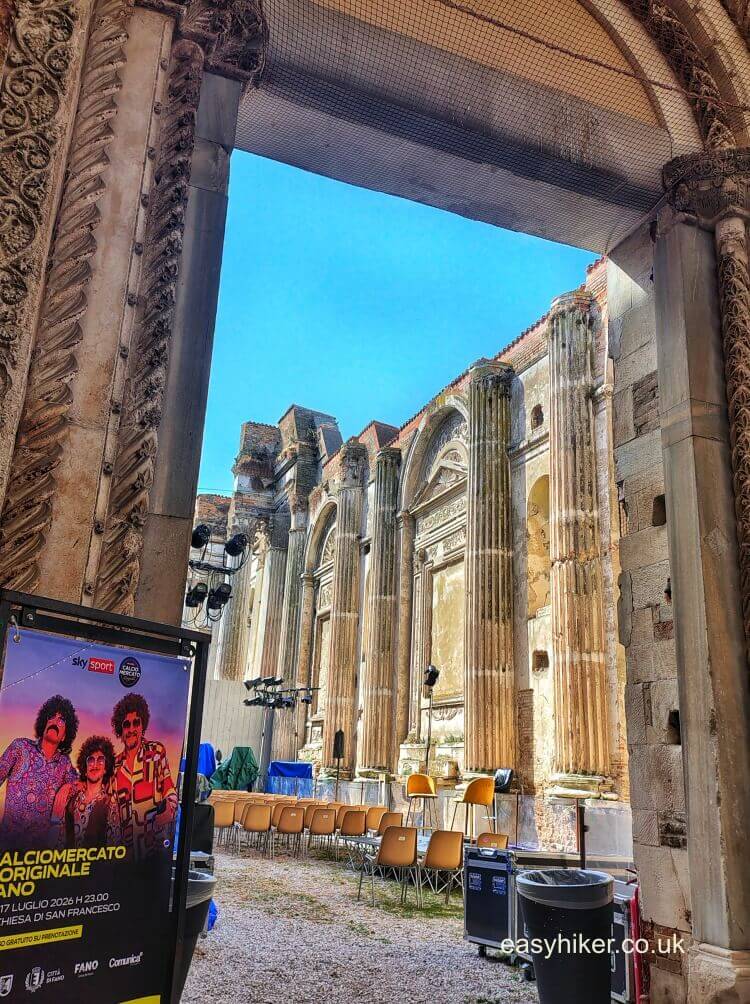
Overall, Fano has a wider range of interesting things to look at than Pesaro: things like the 13th century San Francesco Church on Via di San Francesco d’Assisi that was converted into an open-air event centre after it had been destroyed in an earthquake.
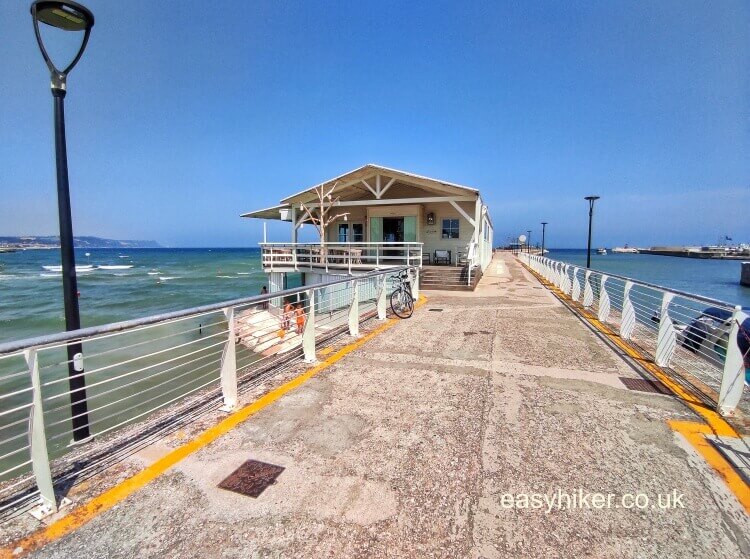
Walk to the seaside to take a look at the quadri, small huts from which locals used to lower fishing nets into the sea. (Why subject yourself to the dangers of the sea when you can go fishing from the comforts of your beachfront property?)
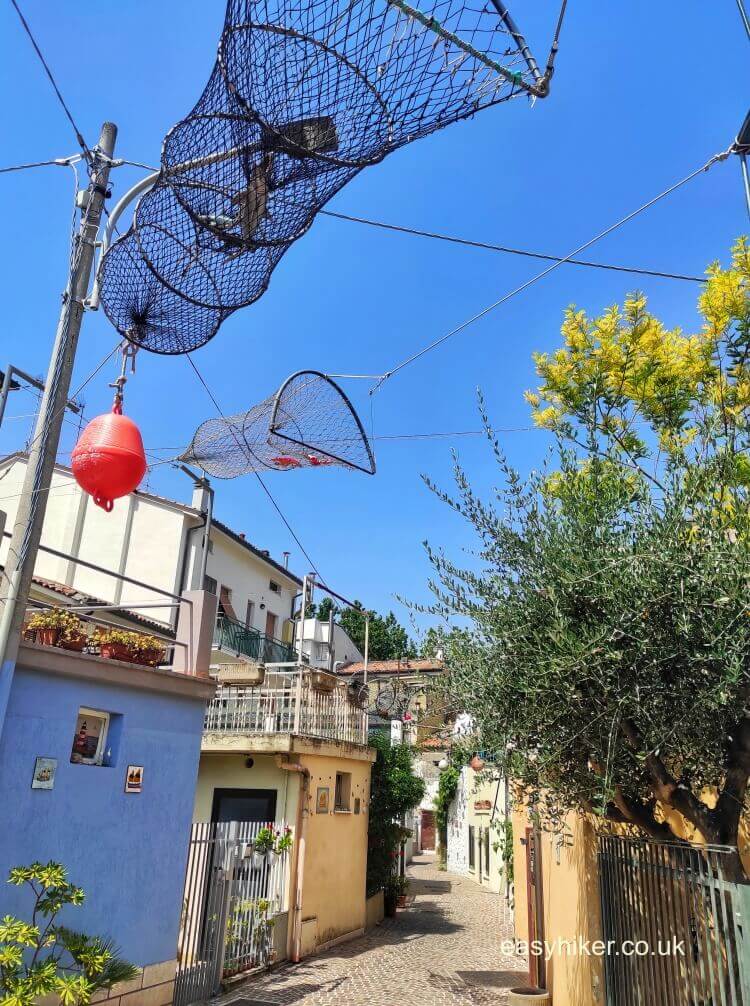
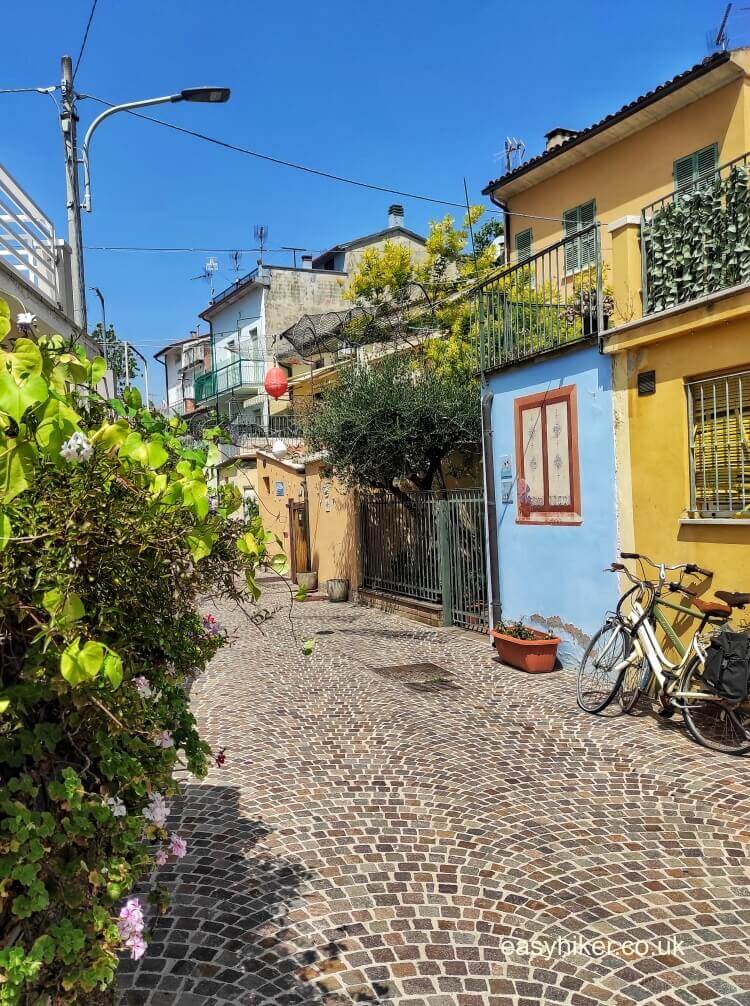
Nearby – up and down the Canale Albani – you will find the charming Squero neighbourhood of the town’s sailors and fishermen. Many of its streets – particularly around Via Vincenzo Franceschini – are richly decorated with plants, red lanterns and occasional paraphernalia of the inhabitants’ ancient trades such as sails and fish traps.
Overall, Pesaro and Fano have much in common: both blend modern seaside tourism with baroque architecture and the rustic charm of provincial Italian towns. Never mind finding a place where you would be the first to visit in your circle of friends: this is as good a reason to come and see a piece of iconic Italy.