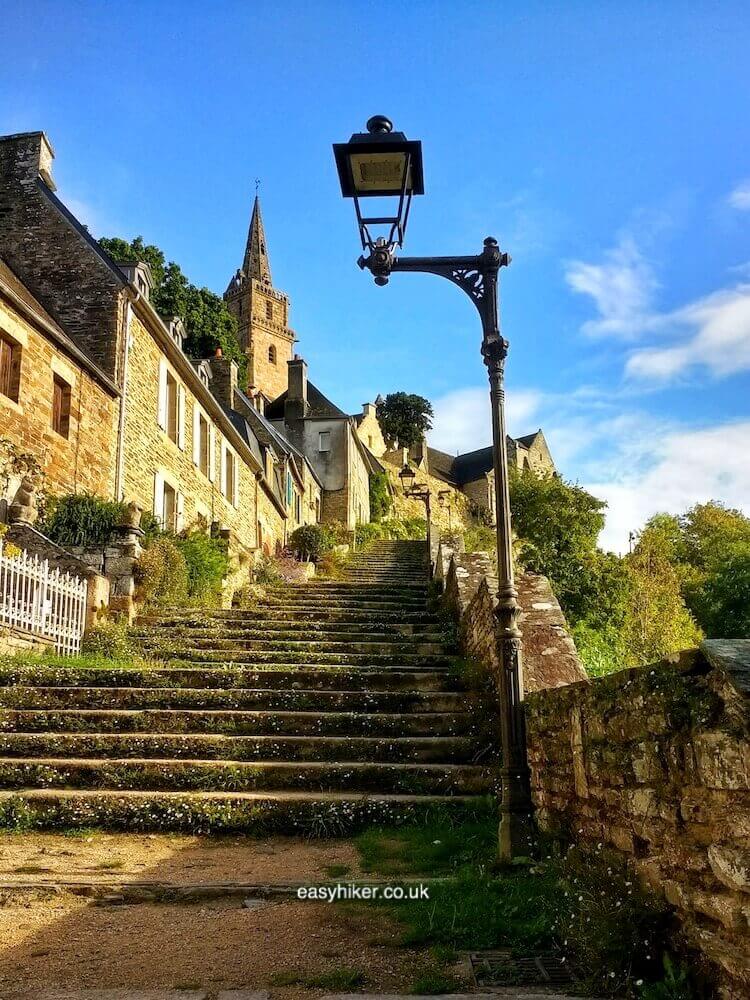
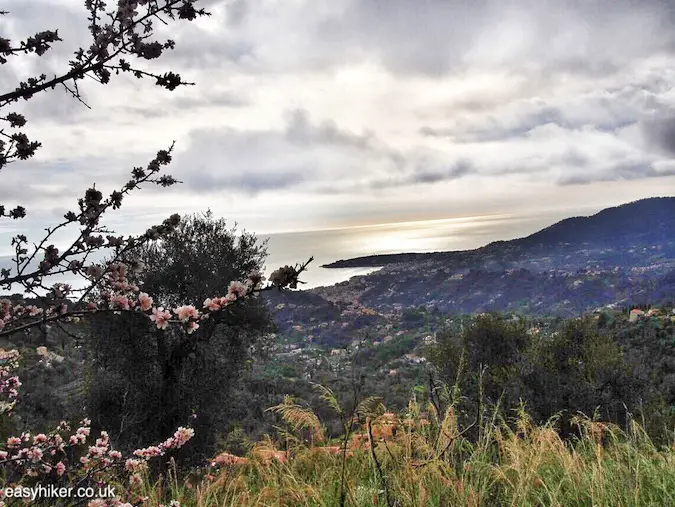
If we have so far – with last week’s post and the dispatches from our previous trip to Brittany – given you the impression that this corner of north-western France is all stone, sunshine and dramatic rock formations, then today’s visit to the Ile Grande provides the perfect opportunity for setting things straight.
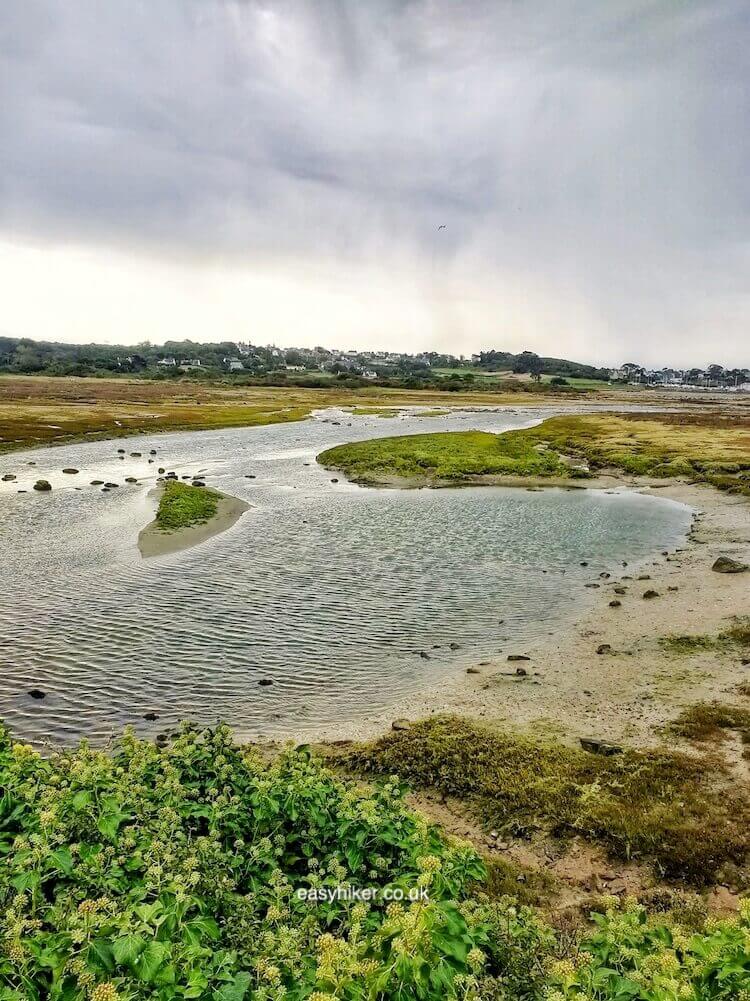
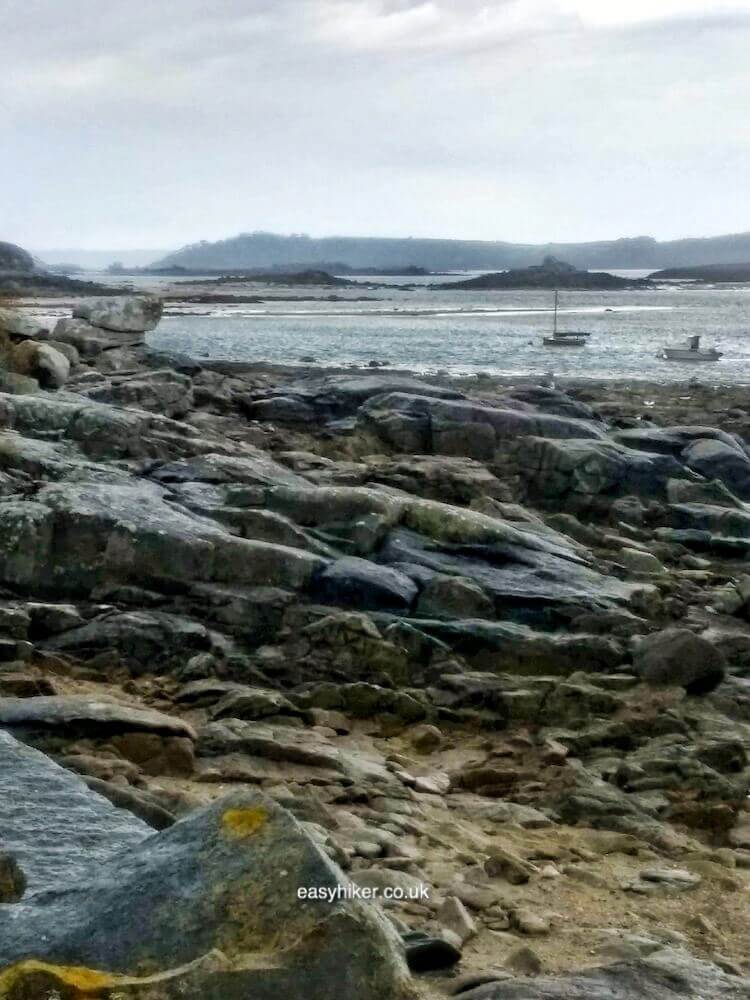
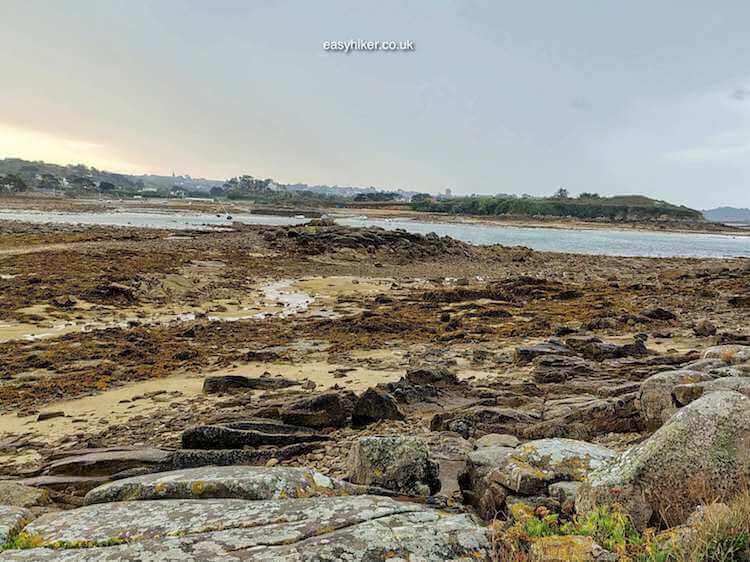
This island shows the other face of Brittany: featuring vast coastal expanses of sand, …
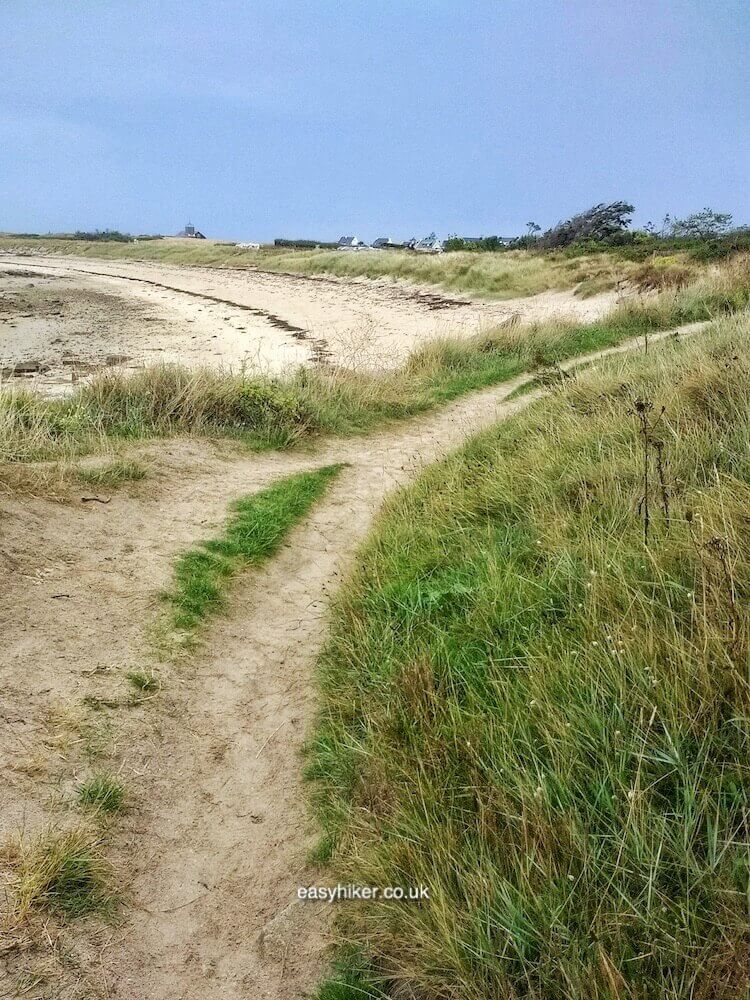
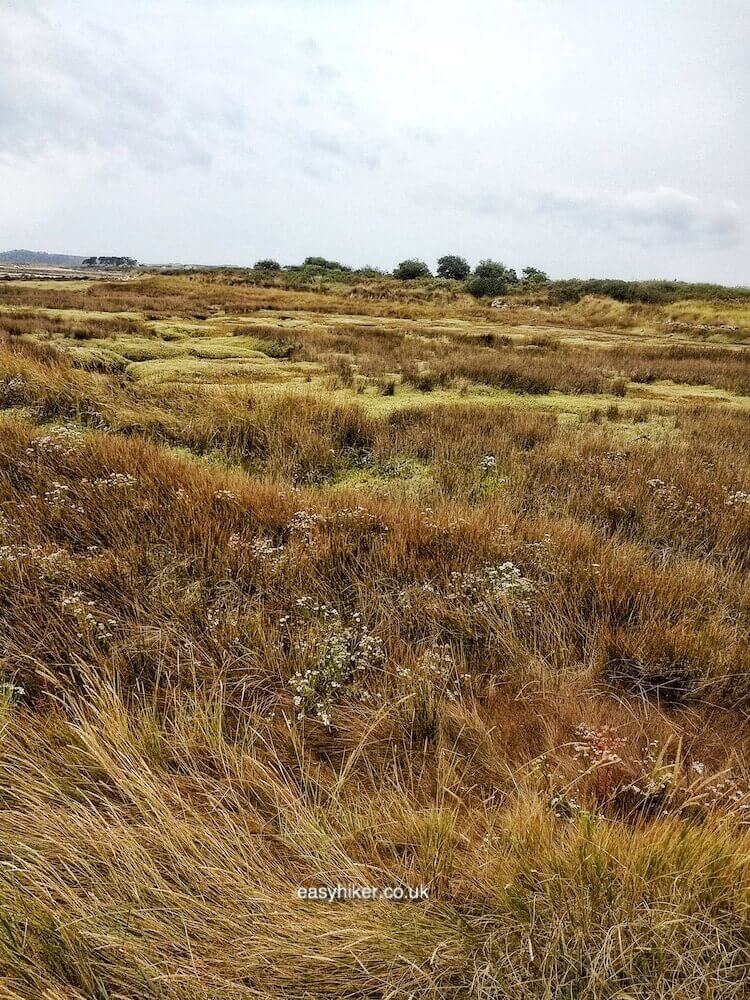
… equally vast expanses of grass further inland, …
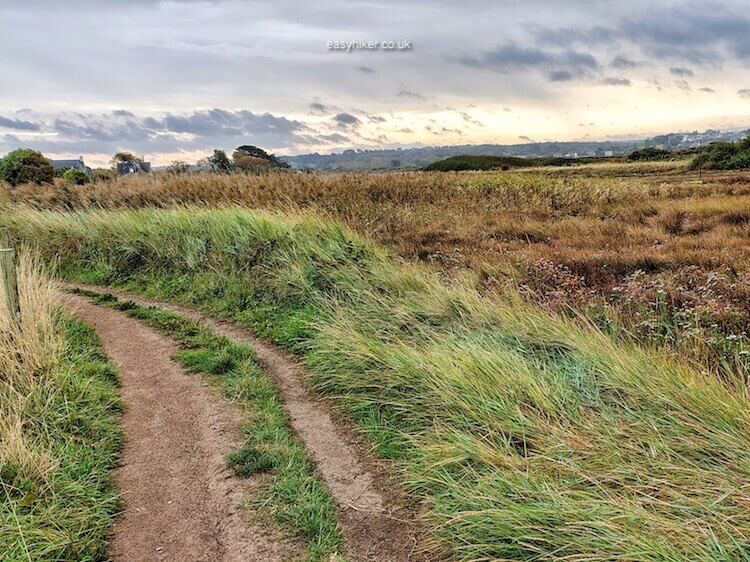
… and in between a strip of swampy marshland, the battlefield of the on-going war between sea and dry land where the front line is never more than a few steps away.
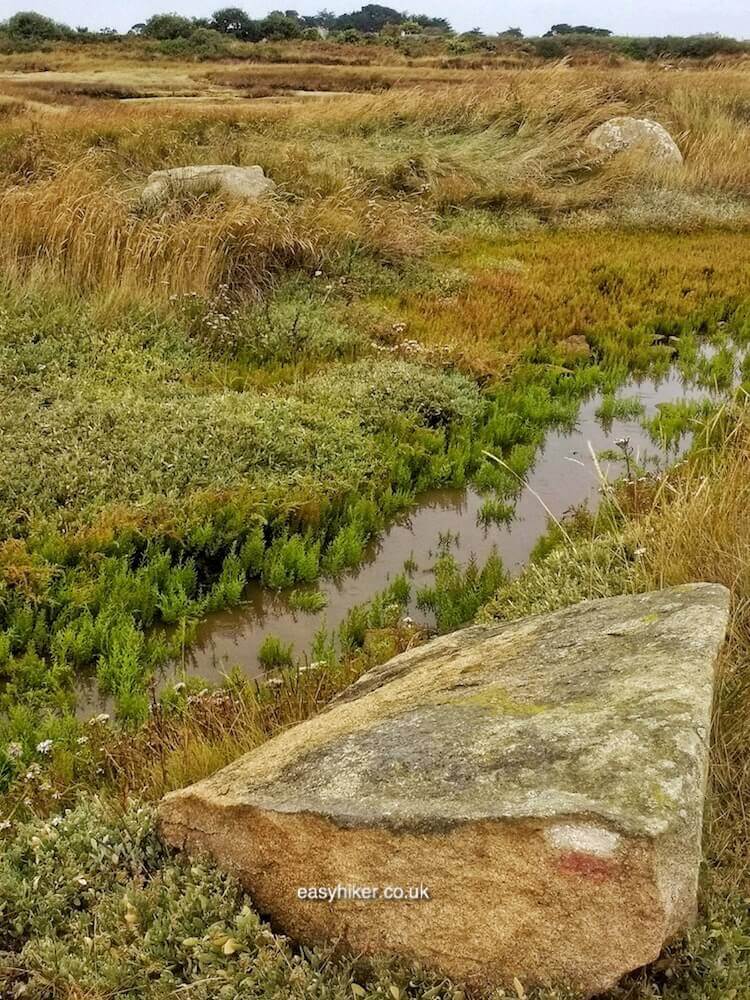
Now picture this scene with a background of leaden skies, wind and rain, and you will have an idea of what the Ile Grande is all about.
For the first time during our stays in Brittany this year, we got a taste of what the local weather is like for most of the year – which fit the mood perfectly, or, perhaps, did a lot to create this mood in the first place.
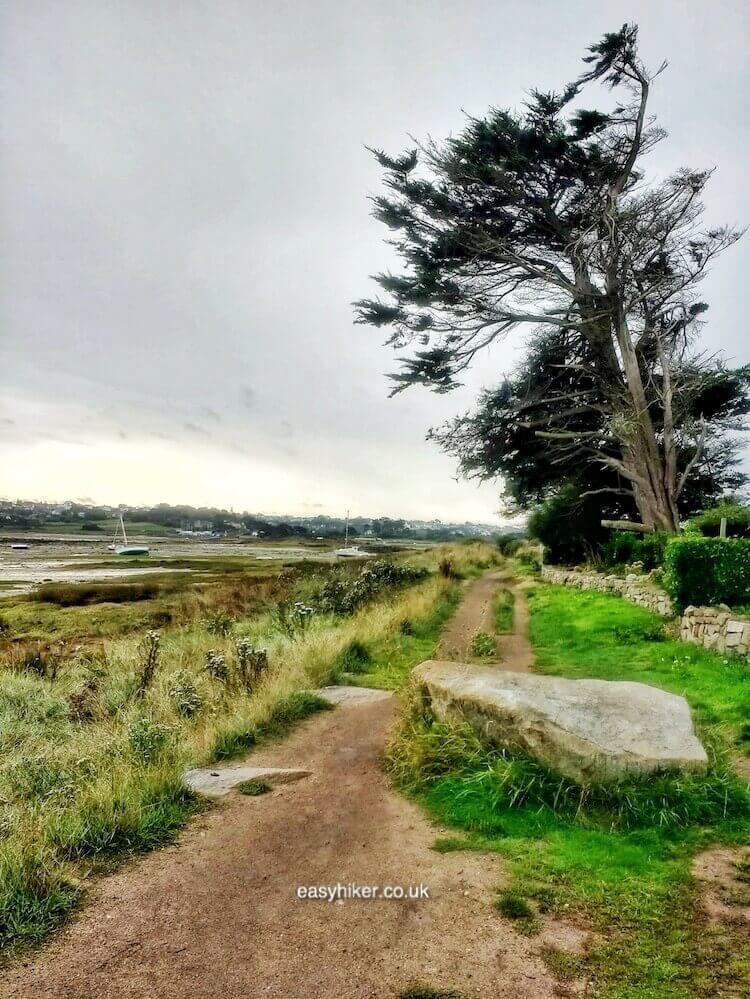
The Ile Grande provides a surprisingly stark contrast to the near-by coast on the mainland. Brittany, generally speaking, has not one but two coasts, the north and the west, and they differ vastly in look and in feel.
Technically, the Ile Grande belongs to the north coast, but what we saw during our visit reminded us of what we had experienced on a trip to Vannes and Quimper further south more than 20 years ago.
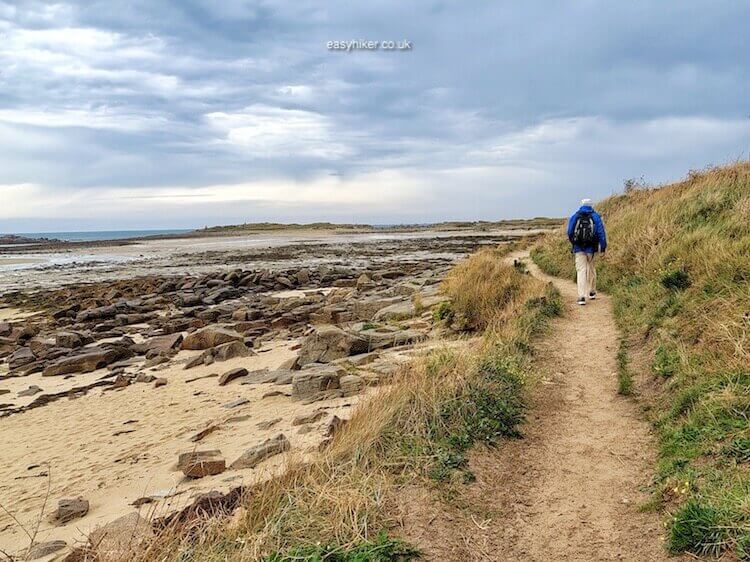
The Ile Grande is not a nature reserve. Quite a few people live here, camping sites are scattered all over the island, and a village sprawls out in the middle of it.
In places, the coastal path itself is lined with settlements, but on a wet and rainy day, these isolated patches of human presence exude no warmth. Every building looks like a candidate for the title of Bleak House.
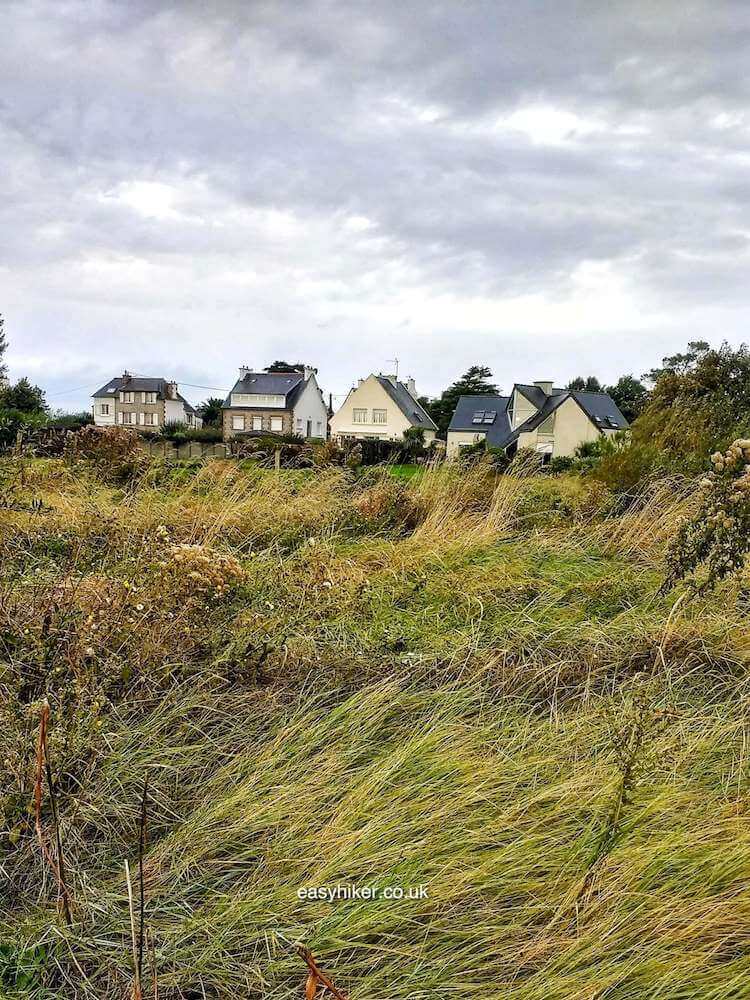
After a while, the human mind adjusts to the prevailing colour scheme, and you will appreciate small patches of sparkle that, in a different setting, would have gone unnoticed. The Ile Grande teaches you how to find joy in small graces. Can there be a more valuable lesson in life?
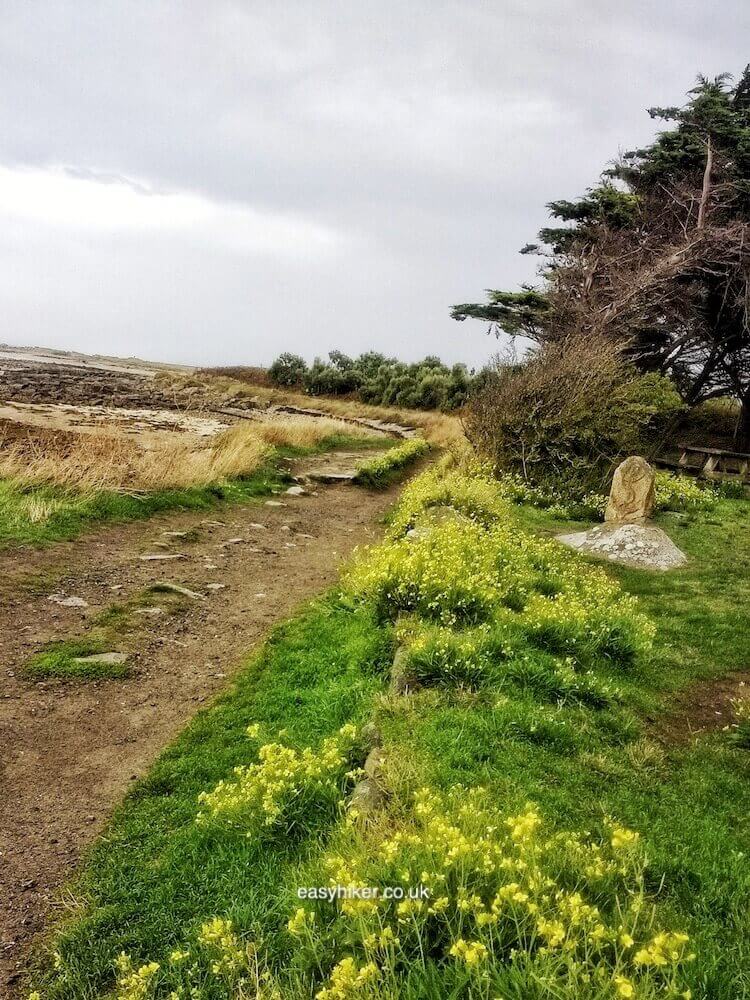
Ile Grande Shows the Other Face of Brittany
If you take the bus to the village in the centre of the island and make your way from there to the coastal path, the gloomiest bit of your walk comes first: the hike starts with an inland stretch towards the coast that sets the tone …
… although things lighten up a bit after that (sometimes, the only way is up).
If, however, you expect delightful coastal views, you have come to the wrong part of Brittany. There is beauty on the Ile Grande, but this beauty is grim.
I have always thought that some landscapes should come with a health warning. Places that are steeped in melancholy are fine for people who are blessed with a robust mental health and an essentially sunny disposition.
For folks like that, such trips are no more than fleeting excursions to an alien land of gloom and sadness, and no matter how temporarily downbeat the experience may leave them (wet feet can do that to you), as soon as they step on to the bus or the train back home, they will already be back to their optimistic and upbeat selves.
But people who are plagued by demons may be affected in different, deeper ways.
If you have the physical and mental strength for it, you can easily complete the 10-km-hike around the island. Whether I would recommend this, however, is a different question.
On a cold and rainy day, you are probably better off listening to the inner voice which tells you after a couple of hours that you have suffered enough.
We ourselves cut it short at roughly the half-way point of the circuit and made for the village centre – although you should not put up your hopes too high, this is not an Italian seaside resort.
There is, however, a small sit-down restaurant where they sell crepes and cider by the litre. This provided us with shelter from the storm and some entertainment while we were waiting for the bus to arrive.
Two things must be added in defense of the Ile Grande. If you are planning a holiday with two hikes, it makes no sense to do the same walk twice, which is always the risk if you turn left out of your base one day and right the next.
Finding significant contrast between neighbouring trails is not always easy, sometimes impossible, because natural environments generally do not change that quickly.
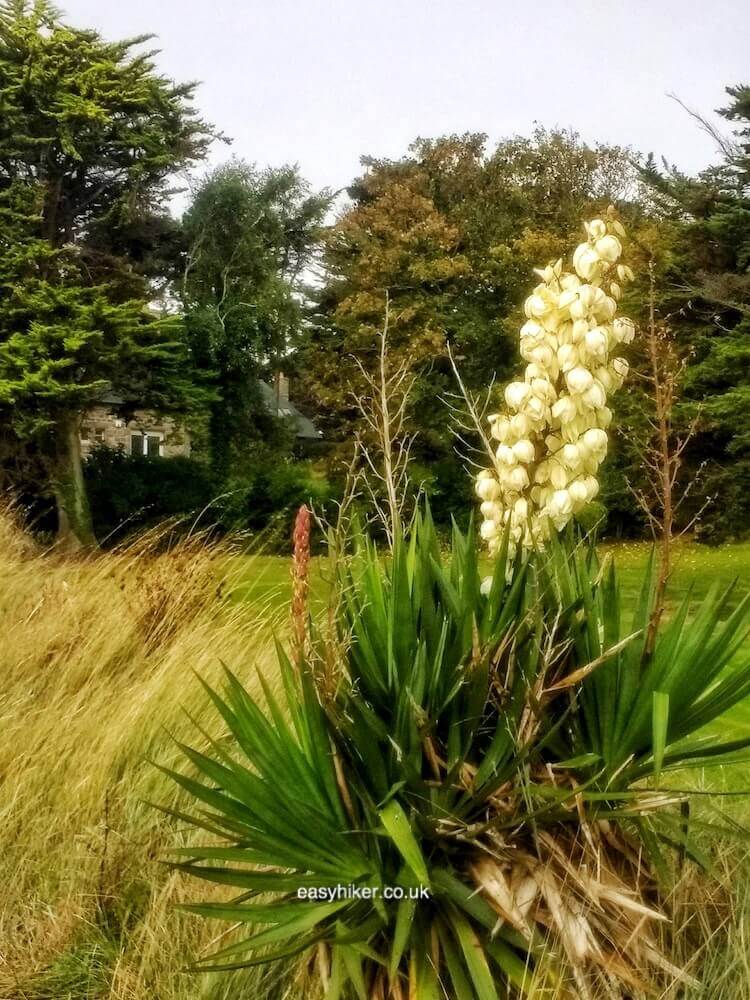
The Granite Coast of Brittany, however, offers such a contrast. And the Ile Grande, undeniably, does have charms of its own – it’s just that it presents them on a more subtle register, opting to reward attention rather than to overwhelm.
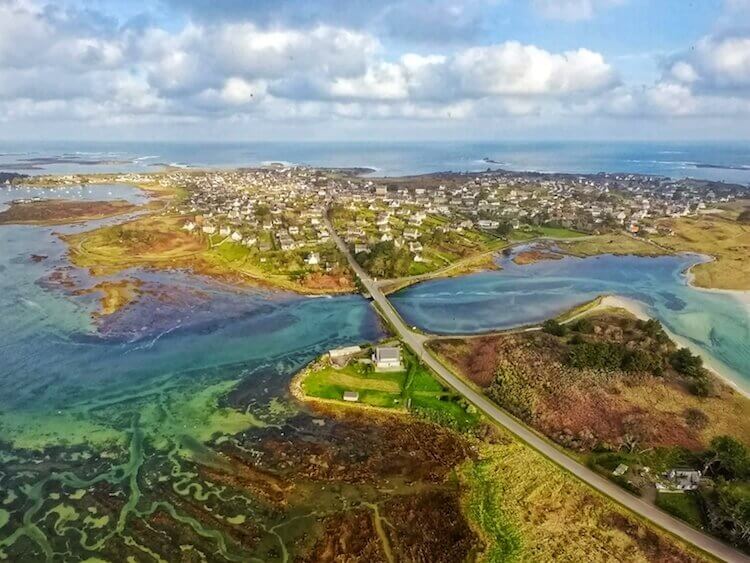
Secondly, today’s walk is a perfect loop. Line D buses from Lannion (see the schedule here) stop right on the bridge between the mainland and the Ile Grande (which may not be “grand” in any sense of the word but is a proper island, separated from the rest of Brittany by a narrow straight), allowing you to finish your walk at the exact point where you started it. Coastal walks rarely give you that option.
In our next post, we will show you that the north-western corner of France has more to offer than a coastal walk – and help you discover yet another face of Brittany: the one that is turned away from the sea, the sand and the rocky coastline. We can also promise you that the sun will again be out by then. Hope to see you next week!