Provence is famous for its pretty villages: their street markets, busy sidewalk cafes and colourfully decorated handicraft shops. Les Baux, however, one of the region’s top destinations, is not like that at all.
For one, you will find fewer sidewalk cafes and restaurants, certainly none that would line the high street.
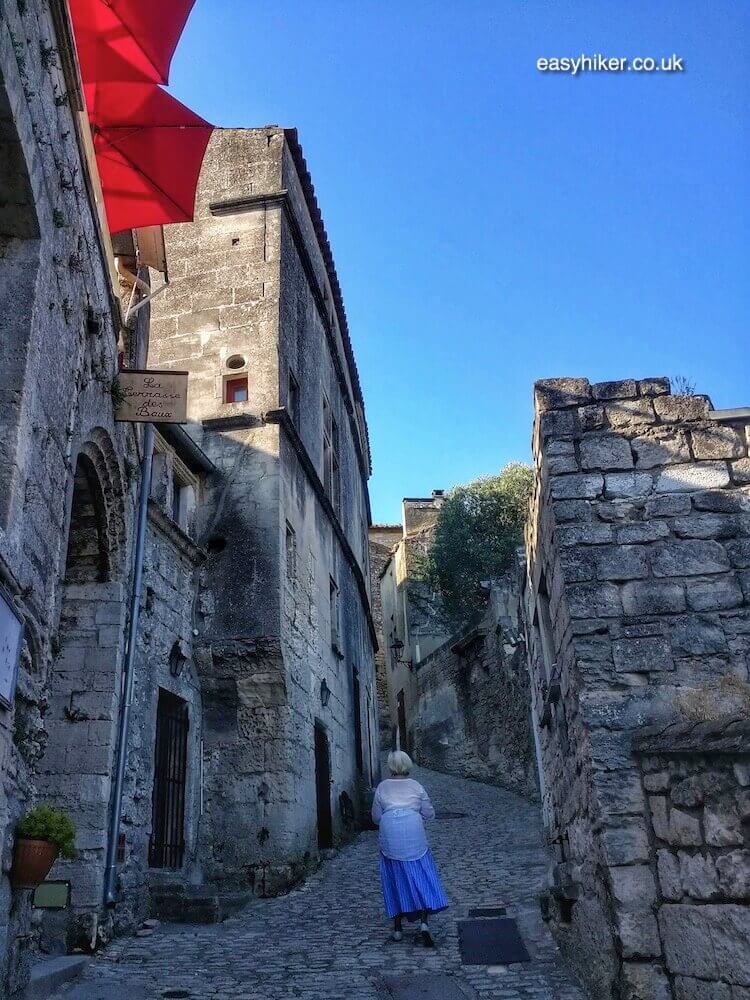
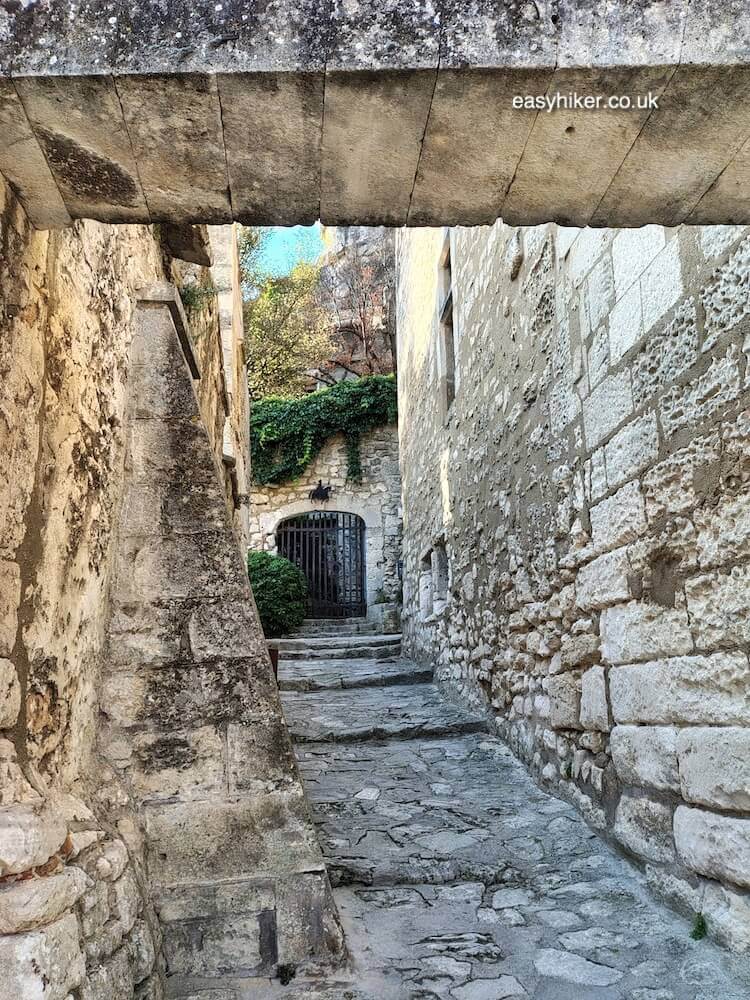
You will also find far fewer tourist shops – and where there are any at all, they huddle humbly in the shadow of mighty stonewalls and know better than to jostle for attention with some architectural feature that has been standing there for nearly 1,000 years.
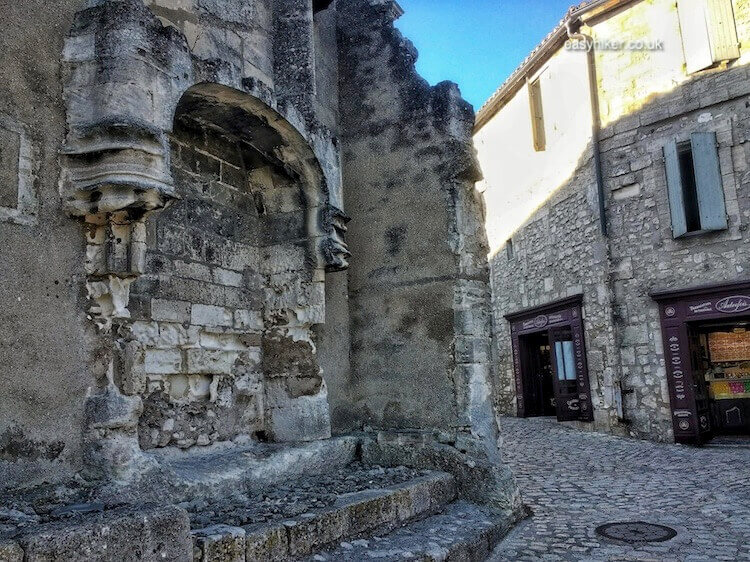
Les Baux is not a “pretty village”: it plays in an entirely different register. It is not “pretty” but beau in the grand manner: it’s magnifique.
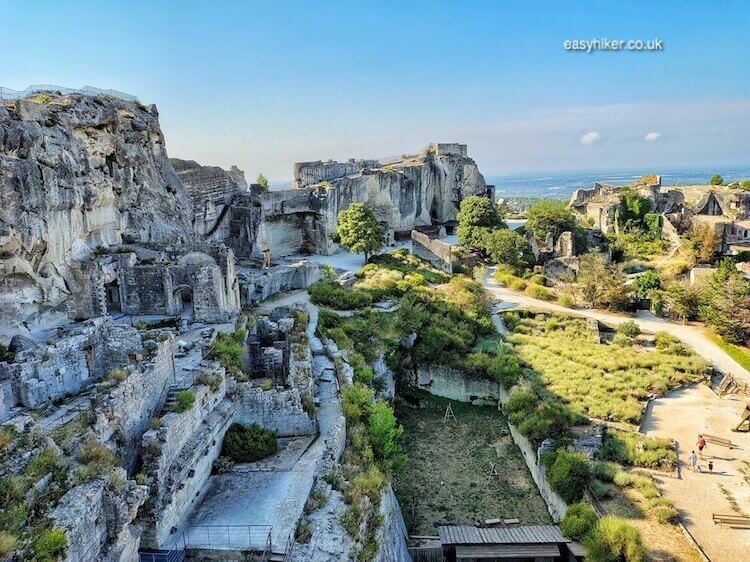
And it is not much of a village either: the hilltop quarter has only 25 permanent inhabitants. Even the downtown area in the valley underneath has a population of fewer than 300 people.
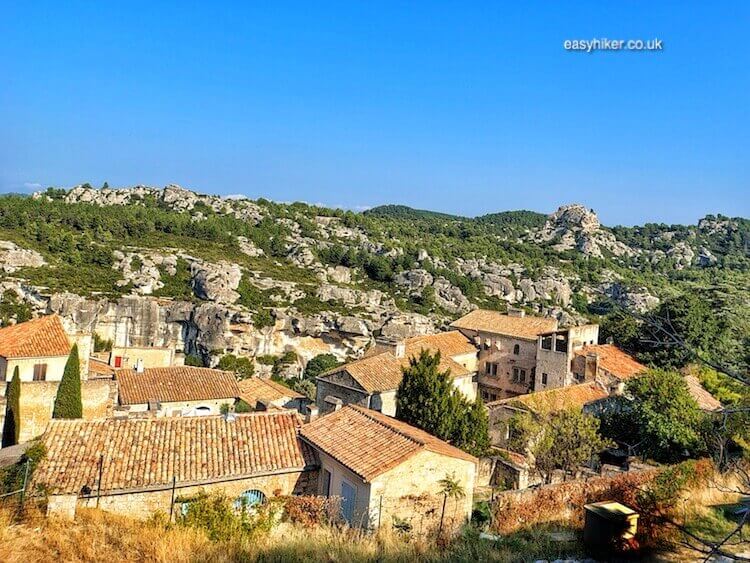
No wonder that the streets can seem so empty at times.
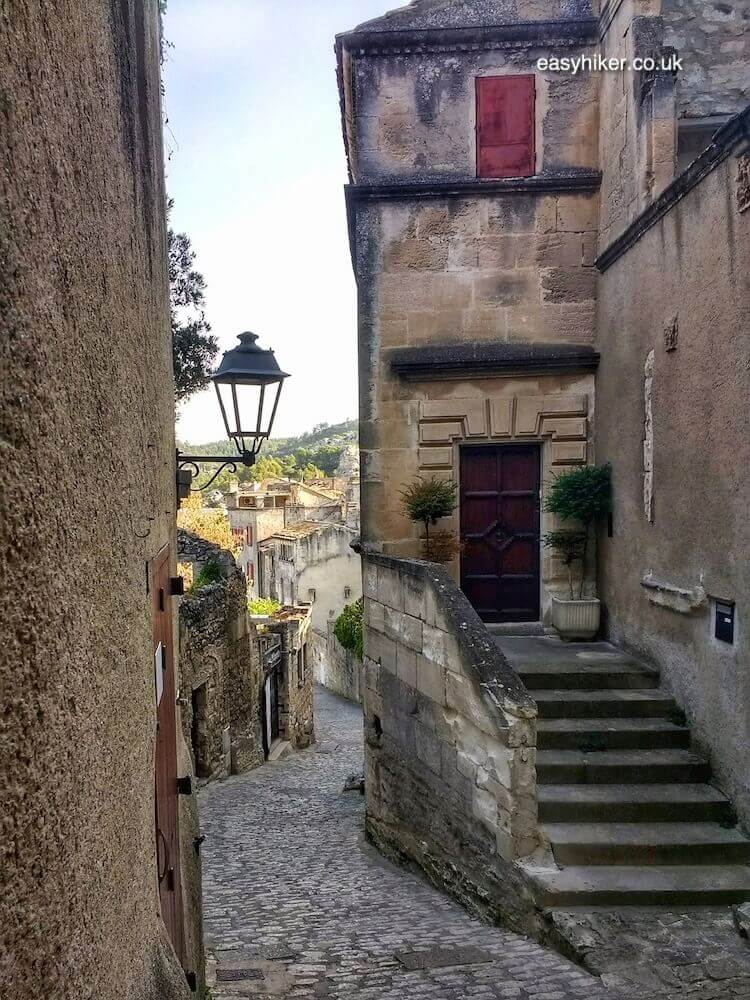
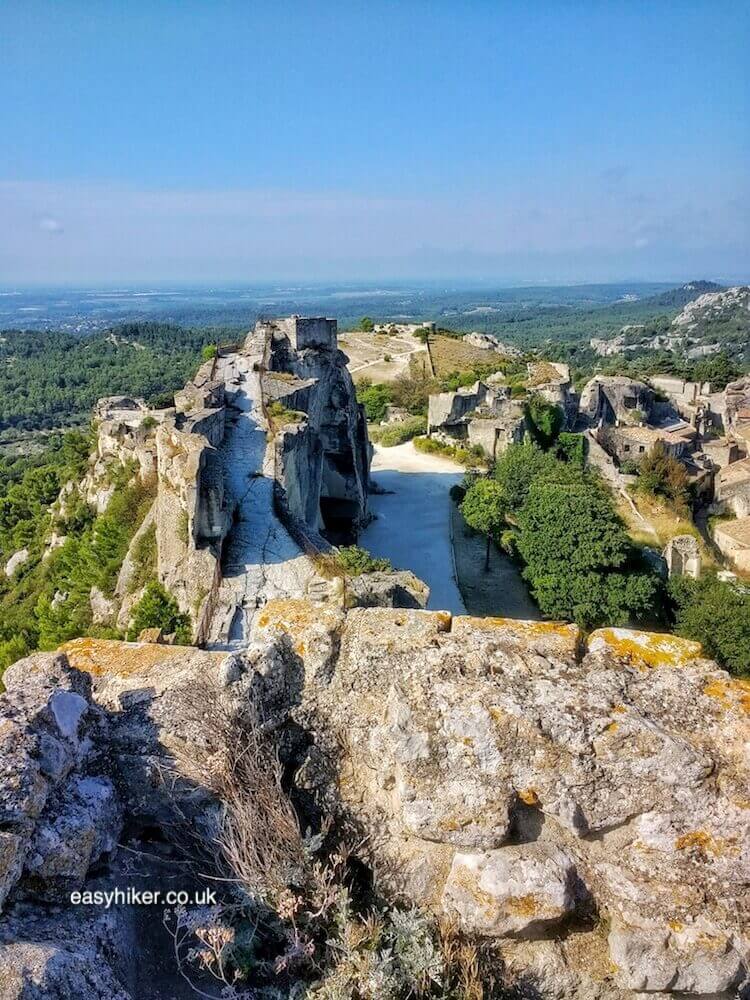
But Les Baux has one or two things that few other villages have – above all, a hilltop castle, even better than that: a ruined hilltop castle.
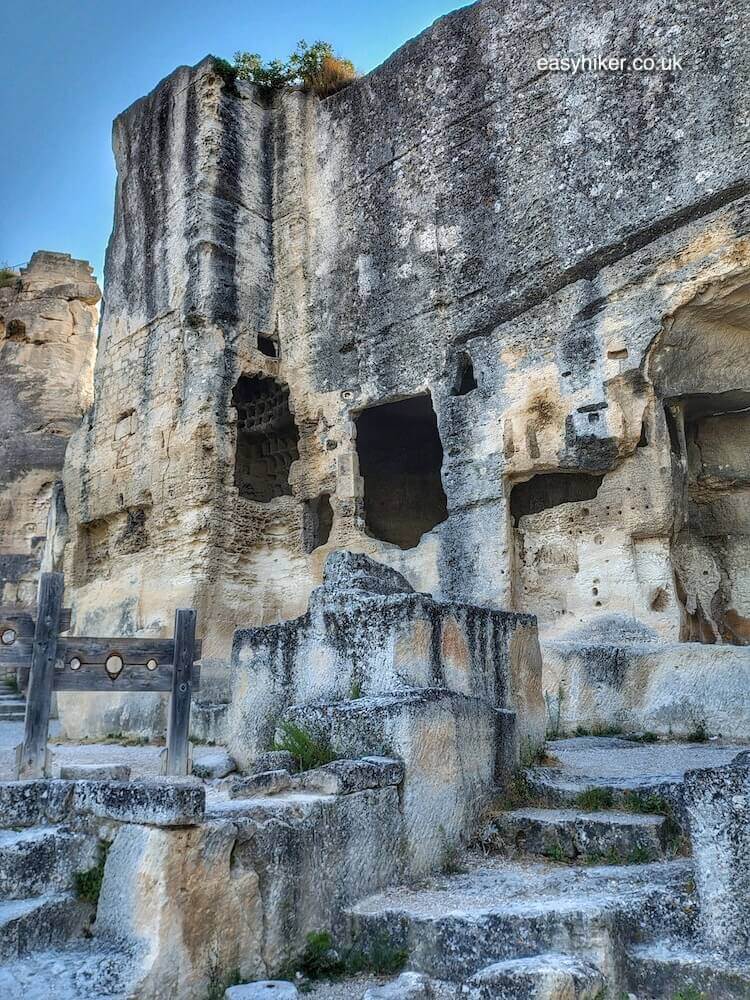
Why is that better? Because medieval castles that have been turned into palaces or military garrisons in later periods have lost their soul.
Les Baux, conversely, even in its dilapidated state, still breathes the spirit of the High Middle Ages, with its thick fortifications and patrol walkways in lofty heights.
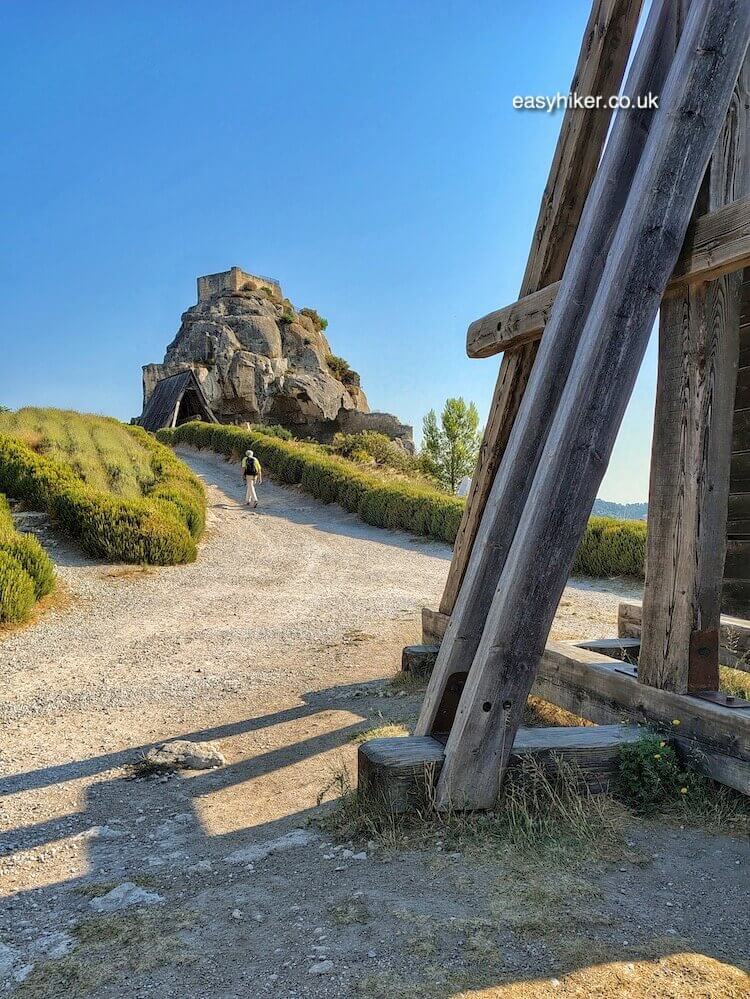
Contemporary siege equipment has been added by the people who run today’s museum. Trebuchets and battle rams tell the story of Les Baux: it was conceived as a weapon of war, and a weapon always remains a weapon, even in times of peace.
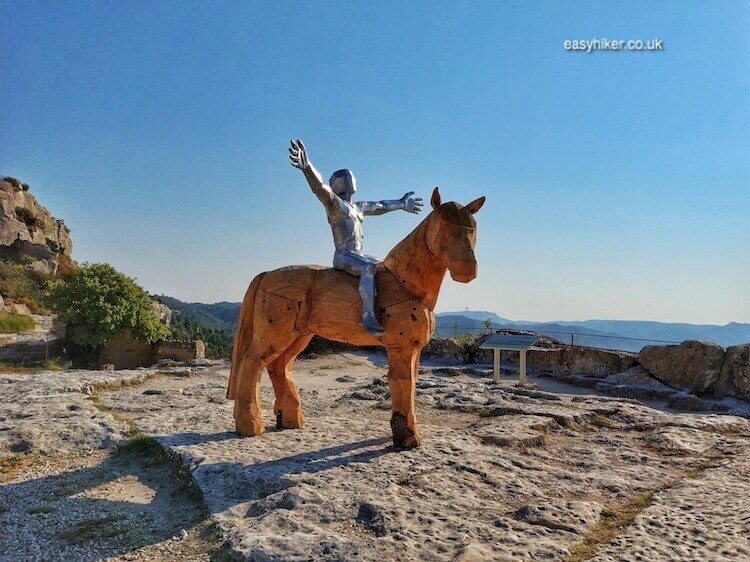
On top of that, the scenery has been decorated with carefully chosen modern sculptures that accentuate the monumental nature of the place …
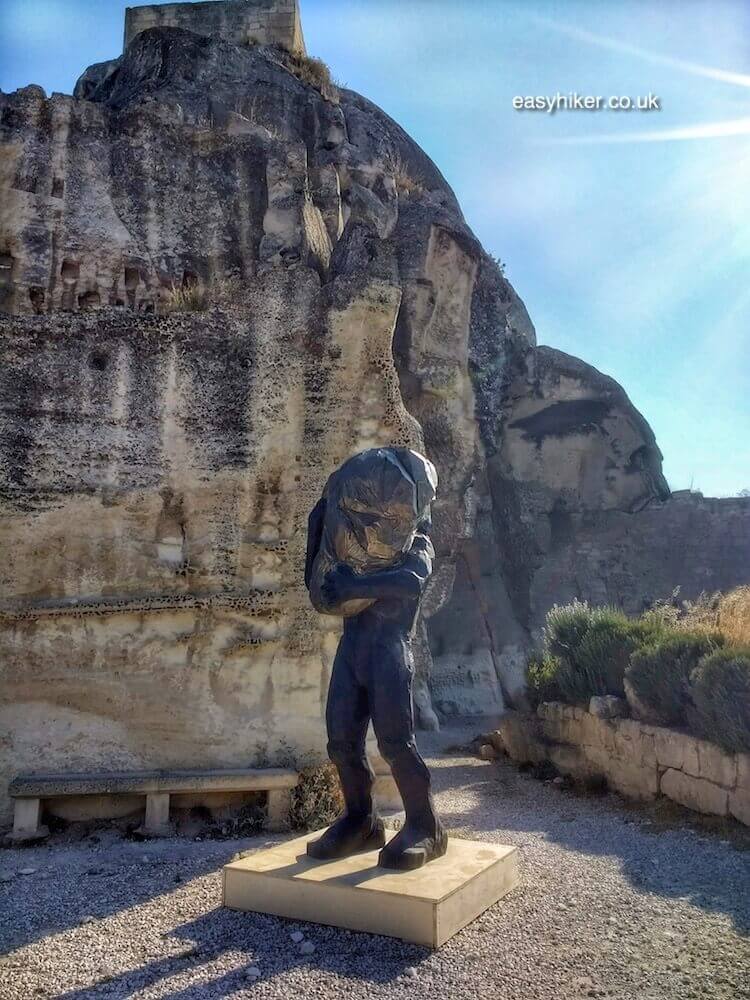
… and its archaic atmosphere.
There is only one place in the castle that I would have preferred to see without any such embellishments: the quarters to which – according to a medieval legend – the young prince of the castle returned after an absence of three years to wed his fiancée, only to find her lying asleep in a bedchamber, near death.
So he knelt down and bowed his head to pray for his beloved, and when he looked up …
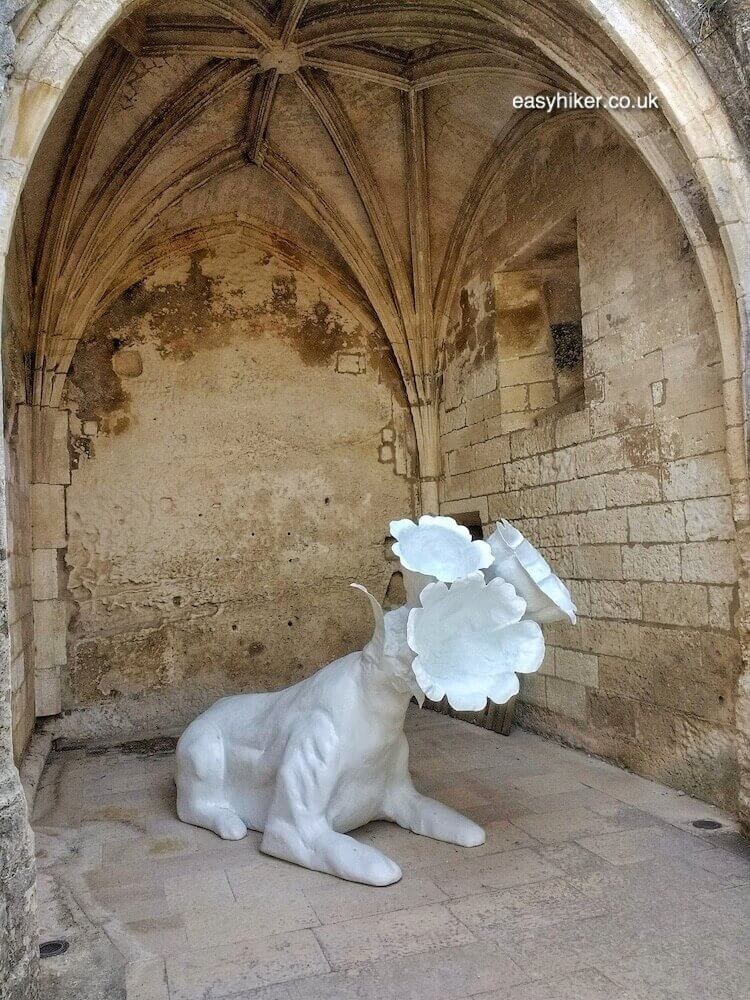
… she had stopped breathing, and the prince instantly died of a broken heart.
I think you see the problem – and why, on balance, it would have been better if the castle management had put the trumpet-headed cow alongside the rest of the herd. (You will find more of these creatures loitering around the castle.)
But since the prince and his princess led French and not American lives, their story had a second act: just when the princess was about to be buried, she woke up – and when she heard what had happened to her prince, decided to spend the rest of her life in silence and solitude.
She withdrew to a monastery, and when she died there after many years, the only wish she still had in this earthly life was fulfilled: she was reunited with her beloved betrothed in the grave that they have shared ever since.
Ah, the Middle Ages! But while legends may make you fall in love with an age of romance and chivalry, facts allow you to see the period for what it really was. They alone can help you understand why the castle is so impressive: why it resembles the skeleton of a beached whale – and why it lies in ruins.
So here we go: Les Baux was built at a time when independent aristocrats ruled the roost in Europe – and when they were almost constantly engaged in some sort of fighting, fending off each other and, occasionally, the pesky, meddling royals.
The Middle Ages as we know them came to an end when these pesky royals turned the tables: as they gained a firmer grip on their countries, they also gained in strength and power.
Suddenly, independent aristocrats in their insurmountable strongholds were no longer needed as the first line of defence against hostile intruders and became the enemy within. Some aristocrats read these changing tides of history correctly (and stripped their castles of their fortifications to turn them into non-threatening luxurious residences).
But others decided to defy and fight them. In this fight, the Marquis of Baux, like many other powerful nobles, lost his home and his title – to the more loyal Grimaldi princes of Monaco who hold it to this very day – but gained some sort of immortality after his fortress had been razed in 1633 (on the orders of Cardinal Richelieu).
The authentic piece of the Middle Ages which he had left behind, after all, still bears his name.
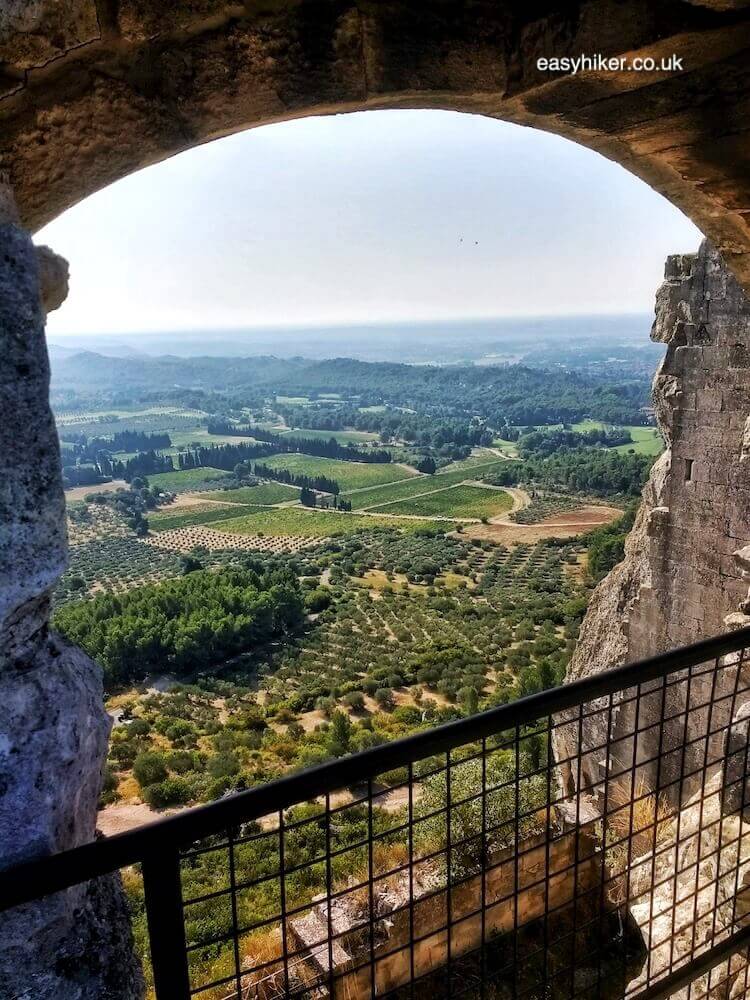
Before you finish the visit of Les Baux, we suggest you take a closer look at the valley you have been peeking at from the castle’s battlements for the last few hours, the so-called Val d’Enfer.
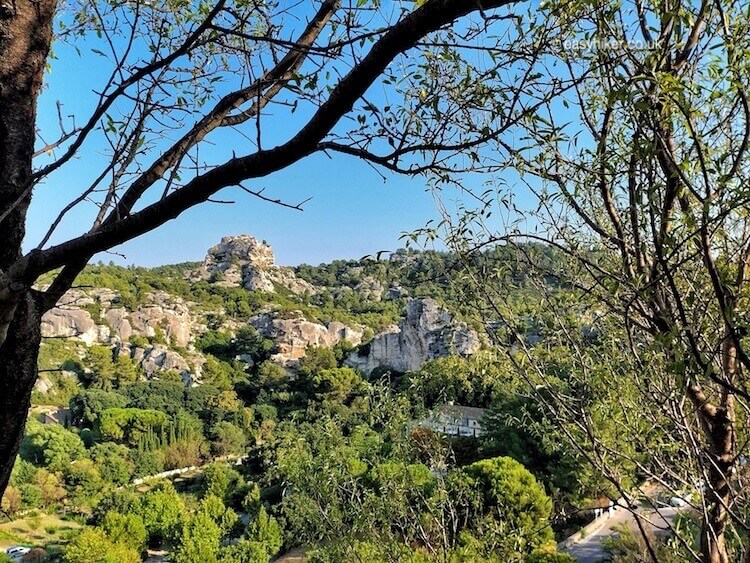
The easiest way to explore the valley is to walk down the country road – which dissects the Val d’Enfer – in the direction of the Carrières des Lumieres, which is extensively signposted since it is a busy art centre and event space.
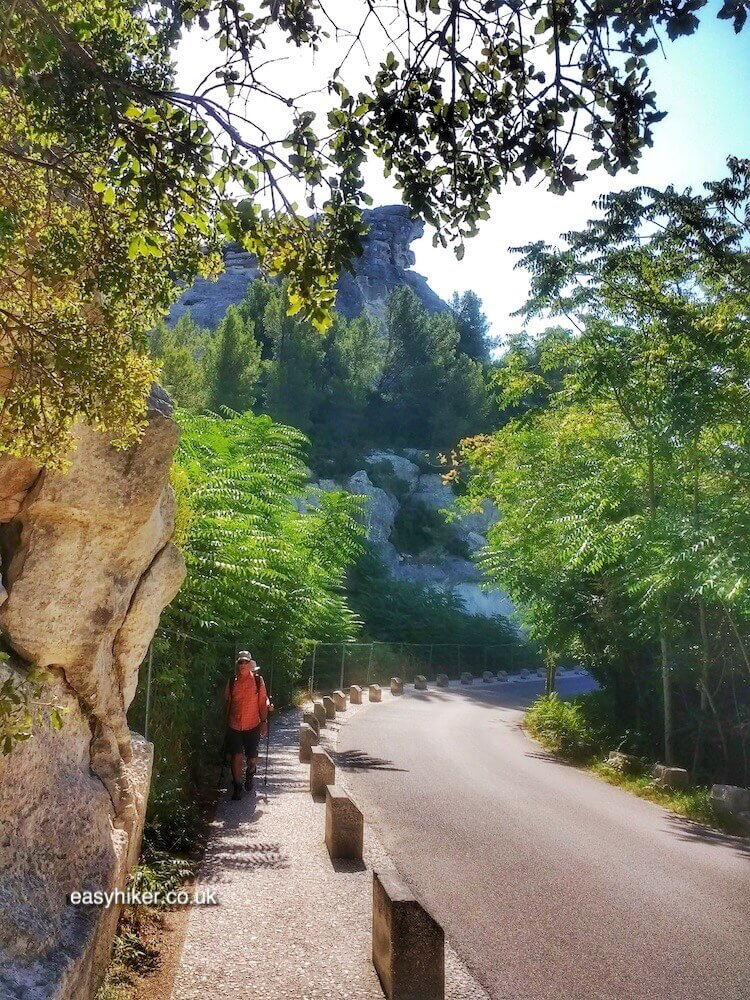
From there, small footpaths will take you a little deeper into the surrounding forests – which may hold a clue to the question: why is this place called the Valley of Hell?
On our own search, we failed to find a conclusive answer. All I can say is that we spotted something that looked like a tall gate. There seemed to be a smell of sulphur in the air – or was this just my imagination? Maybe I had spent an hour or two too many in the Middle Ages.
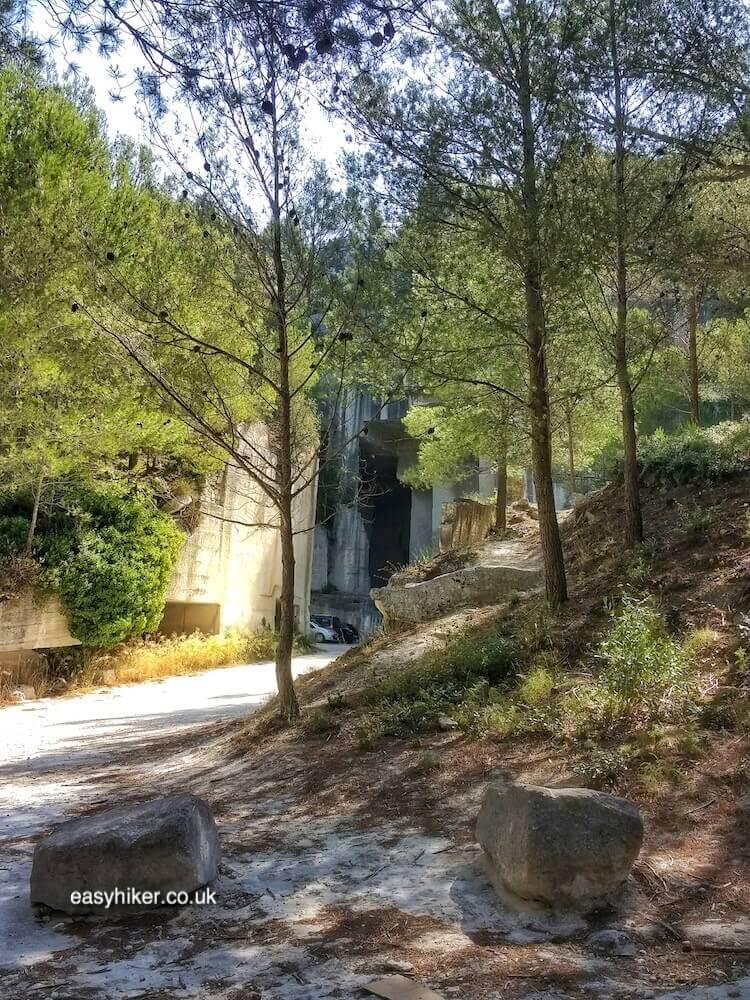
Finally, a practical note. You can travel to Les Baux by taking a bus (line no. 707) from Avignon, but only in July and August when the route is extended past Saint-Remy (its usual terminus) to Arles.
At any other time, you can walk from Saint-Remy to Les Baux via the Chemin d’Arles and Route des Baux. This is a fairly charming but still rather long route (7 km one way), and since doing this in both directions would take the “easy” out of “easy hiking”, we suggest to hire a taxi in Saint-Remy for the first leg of the journey and to use your own two feet for the return.
It would, at any rate, be a pity to miss the experience. The pretty villages of Provence resemble each other a lot, and their images that you hold in your mind will – after a while – blur and blend into one.
Les Baux, however, stands out: now and forever. It is made of the stuff that lasting holiday memories are made of.