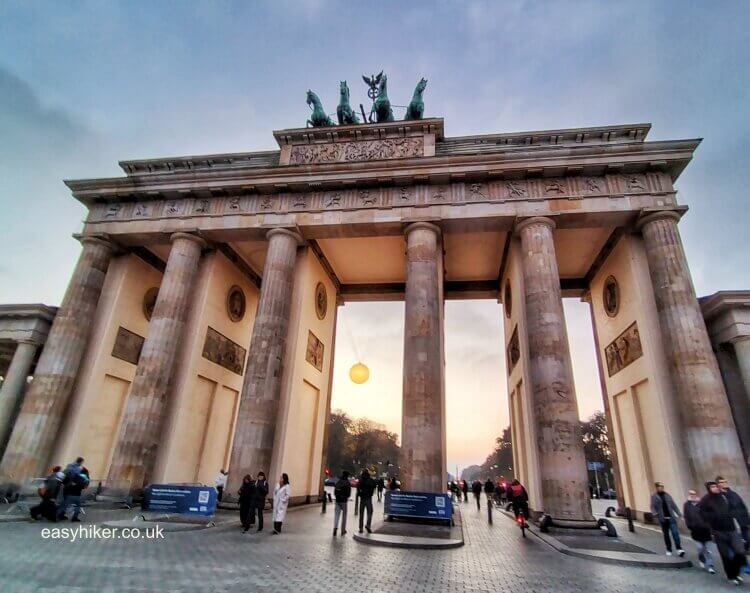
In Berlin, the ghosts of the past are everywhere: ruins and monuments, architectural projects of Nazis and Stalinists, Gestapo torture chambers and traces of the Wall that used to imprison 17 million people. This is the reason why Berlin is so fascinating. It has stood on the fronts of all the 20th century’s important battles – and it bears the scars.
Not all of these battles were fought with bombs and bayonets. Berlin was also the Frontstadt, the frontline town, in the cultural wars of the mid-century in which both sides applied more subtle weaponry. But these battles have left their traces in Berlin’s urban fabric, too, and it is to those that we shall turn our eyes today.
It is often forgotten that, for much of the 1950s, the rivalry between East and West was not yet the one-sided rout it would later become, and that it was by no means certain at the time who would eventually win the battle for the hearts and minds of the people.
This rivalry had its own special flavour in Berlin where the Iron Curtain was uniquely permeable. Berliners were crossing over from East to West on a daily basis, met people from the other side at work or chatted with them in shops. In the 1950s, Berlin was the eye in the storm of the Cold War.
Berlin – Battles for its Past and Future
The main practical challenge on both sides of post-war Germany’s internal border was the same: how to house the citizens of a country that lay in ruins. East Berlin had embarked on an ambitious building programme, and West Berlin wanted – needed? – to demonstrate that capitalists were not hell-bent on reconstructing the pre-war world but could also be forward-looking and progressive.
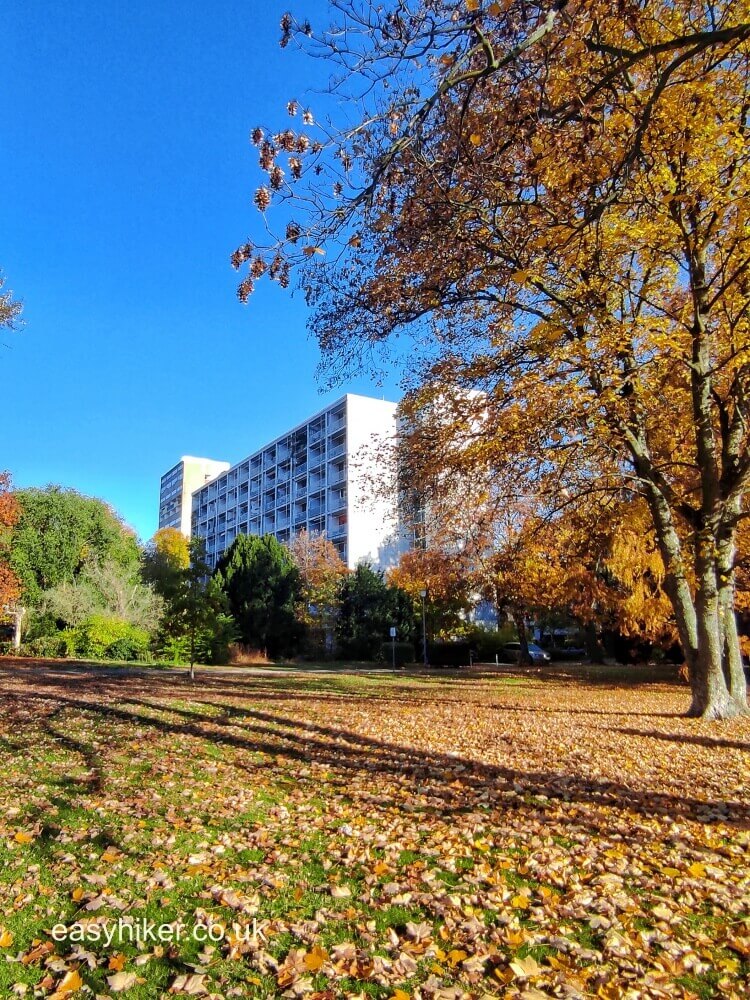
The opportunity to make such a statement arose when government funds were made available to rebuild the Hansaviertel near the Tiergarten, one of Berlin’s most heavily destroyed areas. The municipal authorities decided to turn the area between Hansaplatz and Tiergarten into the space for an exhibition of modern architecture, inviting designs for individual buildings from more than 50 internationally renowned architects.
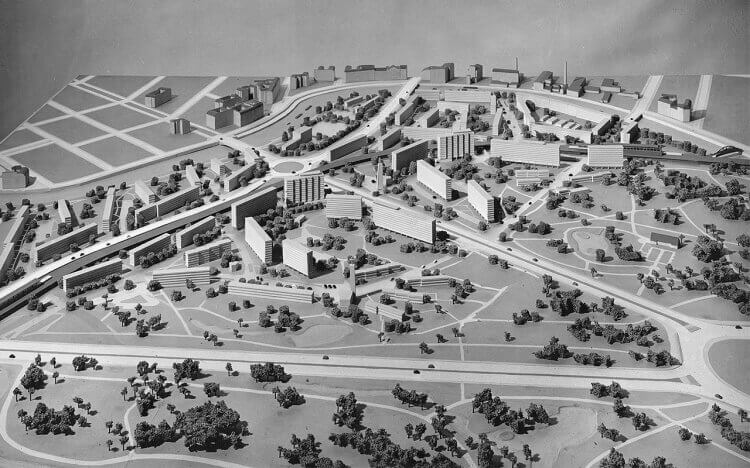
Key buildings for the Interbau 1957 were designed by starchitects of their time: Walter Gropius, the founder of the legendary Bauhaus school, …
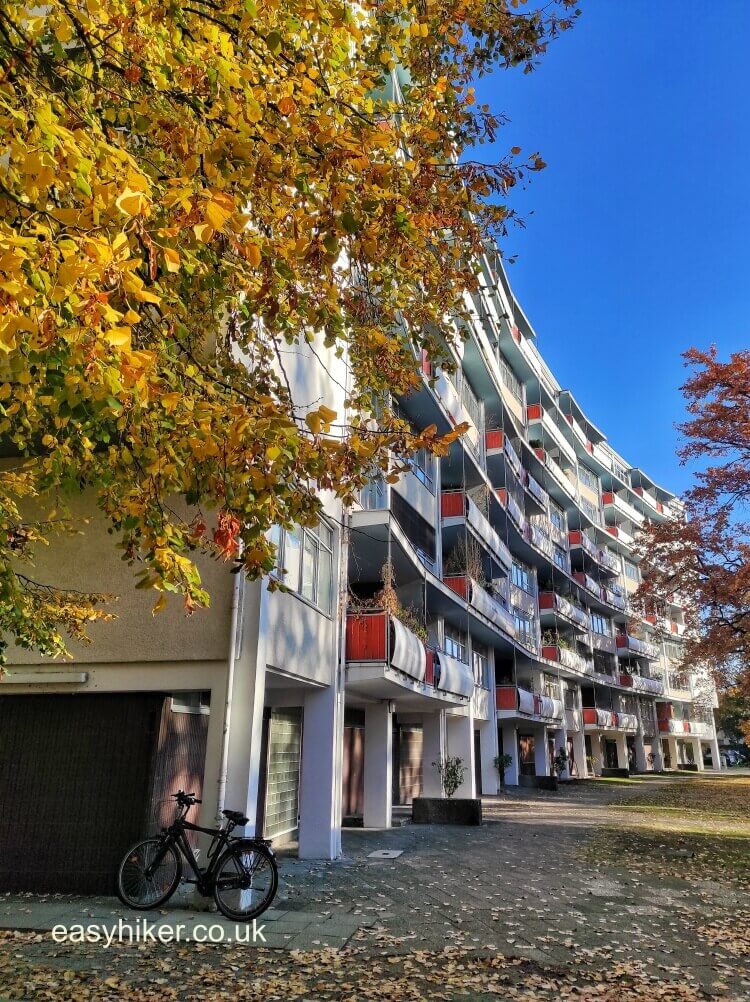
… Oscar Niemeyer who would go on to design most of the signature buildings in the new capital of Brazil (Brasilia), …
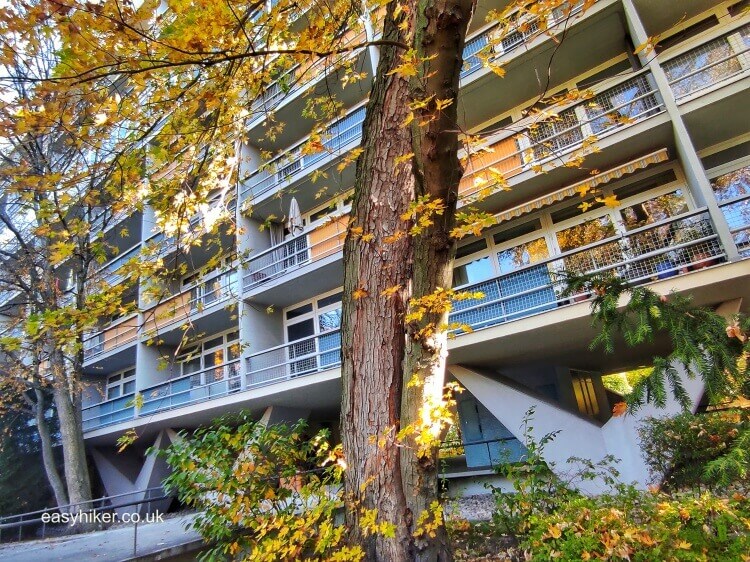
… and Alvar Aalto, the key pioneer in the development of “Organic Modernism” in architecture.
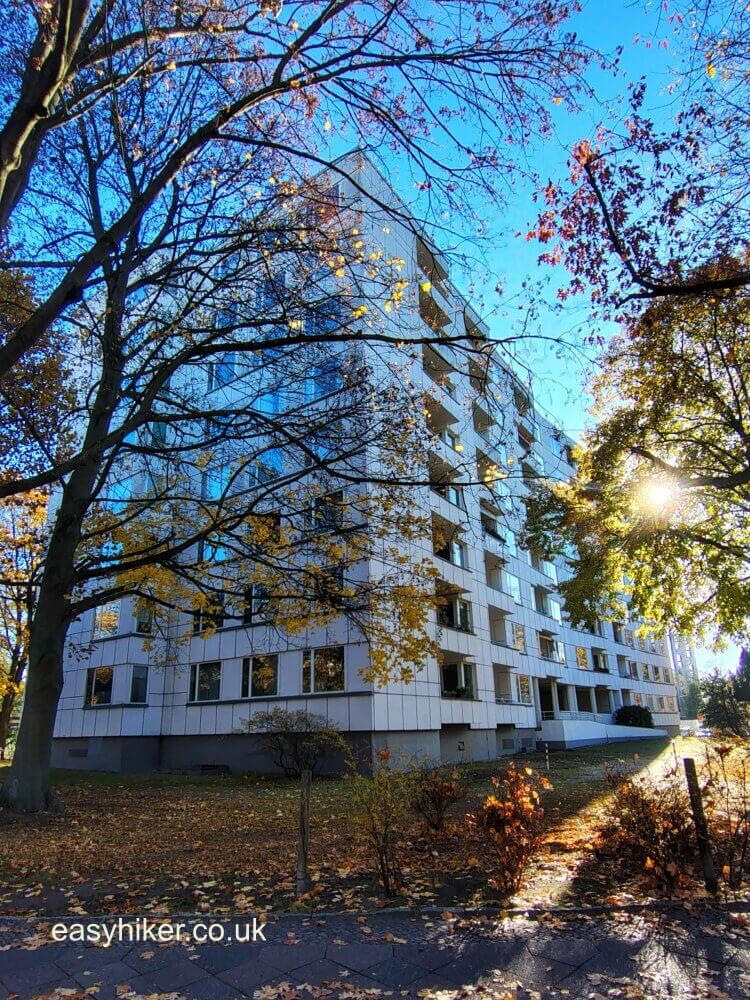
Was the Interbau project a success? It has certainly stood the test of time on the local property market. Homes in the quarter outperform most flats in pre-WWI residential buildings, the gold standard of Berlin’s real estate industry.
Interestingly, the buildings most in demand are also the buildings whose architects diverged most from the dogmatic consensus of the time. Gropius in his desire to sculpt individuality out of largely identical balconies (mainly by using an irregular distribution of coloured elements), Niemeyer in the imaginative design of the structural pillars, Aalto with the attempt to break up the unity of his design so that the buildings’ wings and even its individual flats offer some of the visual comforts of a single-family house in a forest.
But the project always wanted to be more than a jumble of starchitect-designed apartment blocks. Interbau 1957 was explicitly conceived as a model for the “city of tomorrow”, a pioneering design for modern urban life in a green space.
Two challenges stood at the top of the Interbau agenda. Firstly, the project had to develop a response to the issue of density. Pre-WWI quarters accommodated more than 350 people per hectare, outer suburban districts fewer than 50.
The Hansaviertel, trying to combine the benefits from both of these conventional forms of space management, aimed for a figure somewhere in between and ultimately decided to “buy” wide, unbuilt park-like exteriors at the expense of large high-rise tower blocks such as the Schwedenhaus, the largest Interbau building in terms of residential floor space.
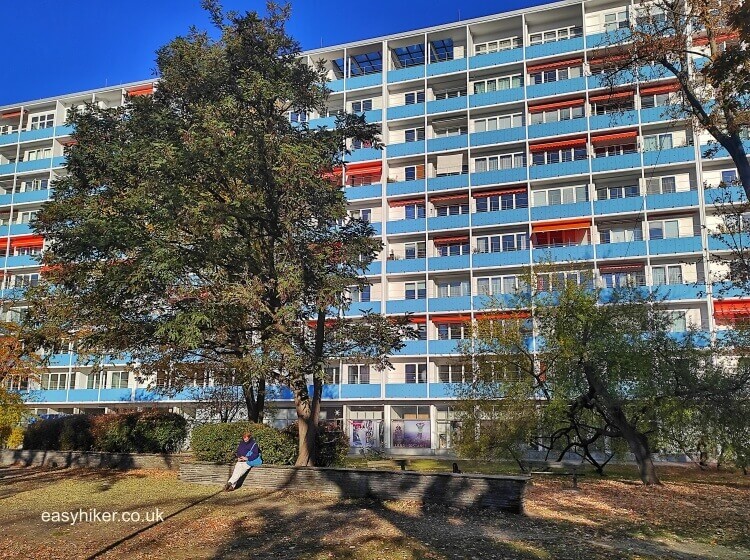
Secondly, it was decided to impose a strict separation of commercial and residential spaces. Such strategies of urban zoning have since fallen from favour and are only rarely used in modern town planning.
Urban life today is understood as street life, but without shared public spaces such as corner stores, cafés or restaurants, the streets may be pleasant and pedestrian-friendly, but where would one want to go?
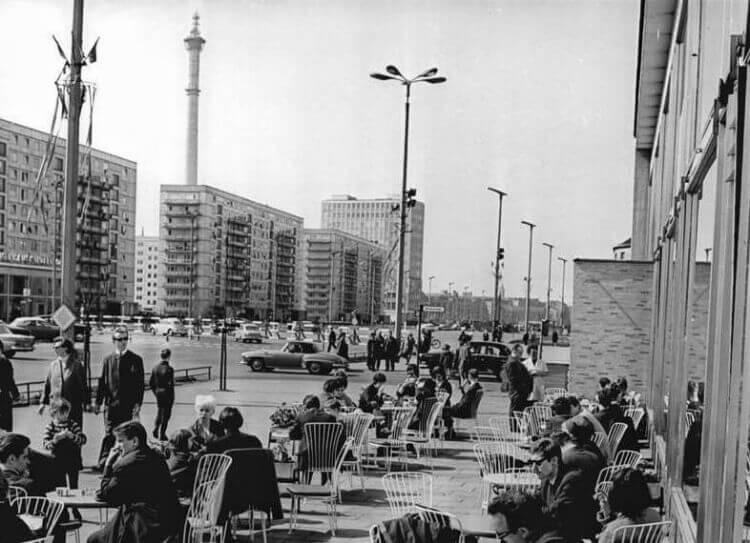
For a contrast, you may inspect East Germany’s prestige housing project alongside Karl-Marx-Allee to which Interbau 1957 was meant to give a response. This project is not universally beloved either, albeit for different reasons. (At the time, this boulevard in the centre of East Berlin was called Stalinallee, which may give you a clue to one of them.)
Feel free to go there, by any chance (the nearest underground station is Frankfurter Tor), but we suggest a more interesting contrast: the Nikolaiviertel.
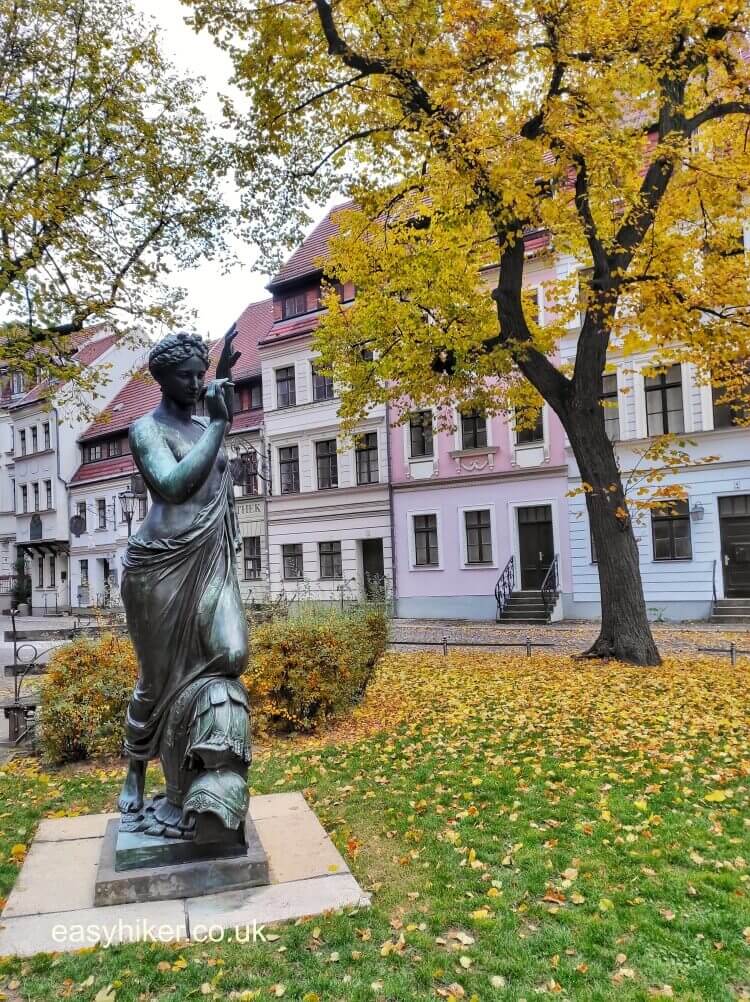
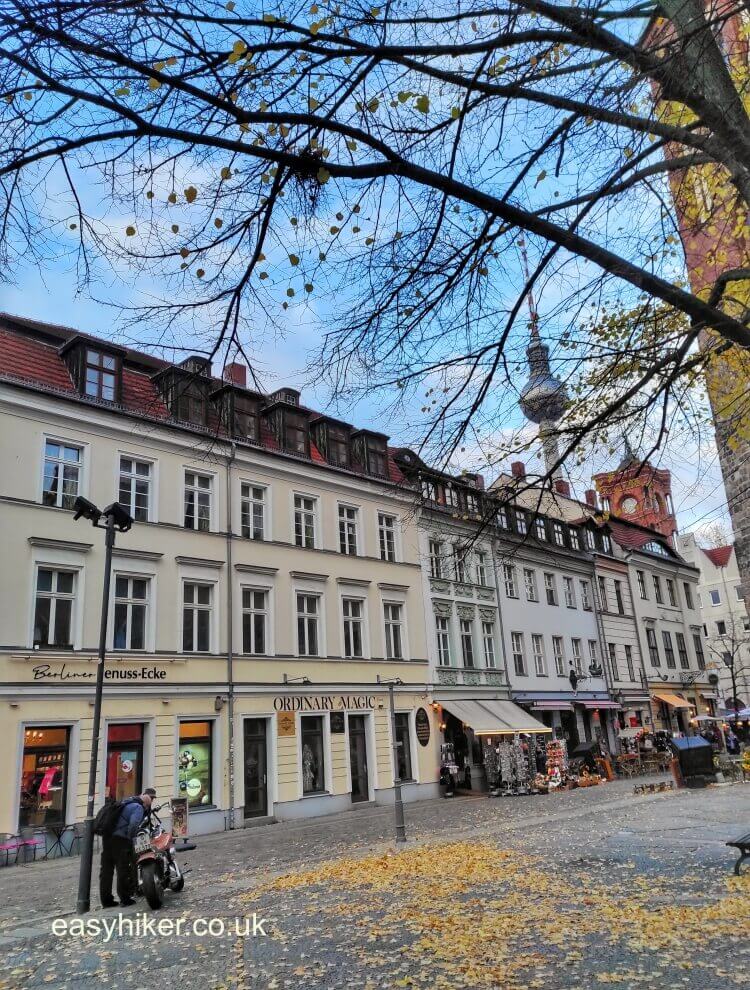
The Nikolaiviertel (subway station: Rotes Rathaus) is the oldest inhabited part of town, the nucleus around which Berlin was developed in the 18th century.
Like any such quarter, it is full of quaint shops, …
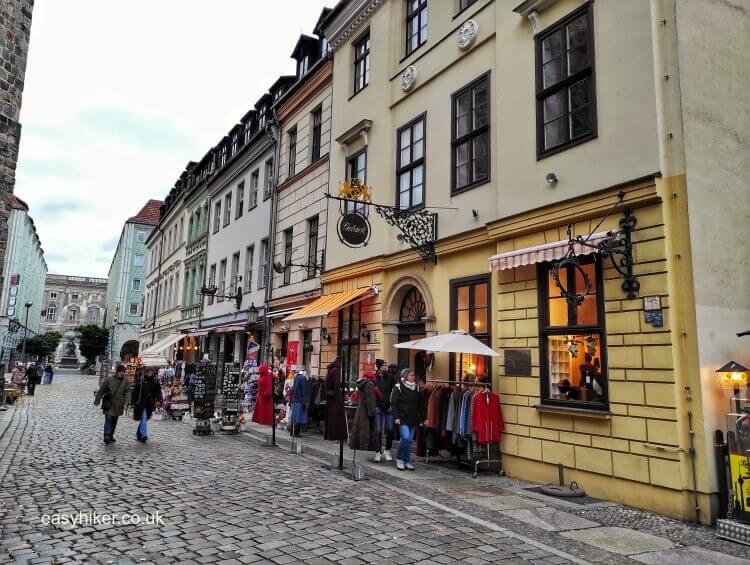
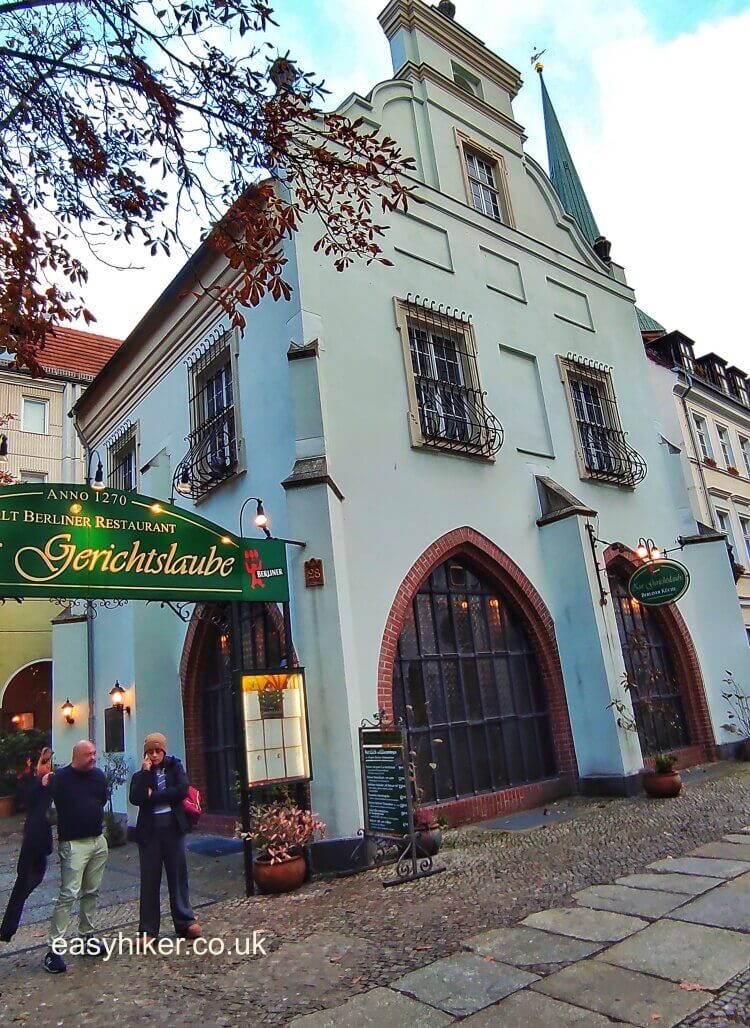
… offers places that invite diners not just to eat and drink but also to taste the flavours of days-gone- by, …
… and features buildings with a past like the Lessinghaus that today accommodates the offices of the Enlightenment philosopher’s publisher and occasionally hosts public readings of his works.
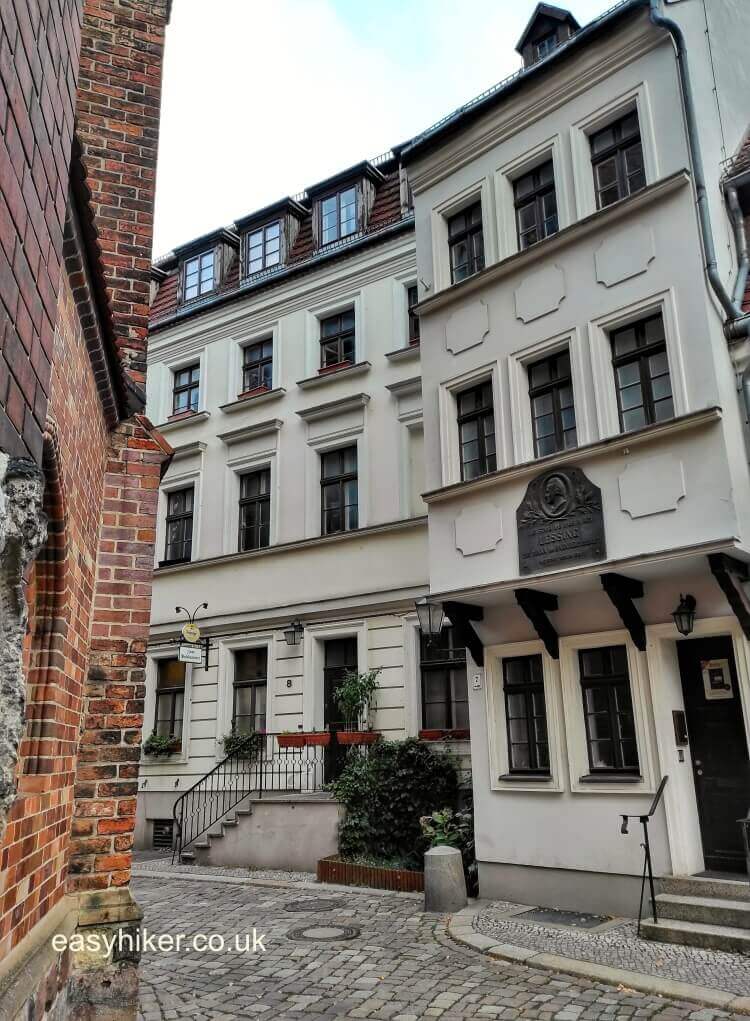
In fact, the Lessinghaus does have a past – but one that is even shorter than that of the modern Hansaviertel.
Like the quaint shops – and, in fact nearly everything else around – it was created in the mid 1980s, based on an 18th century drawing of the philosopher’s (near-by) home. The quarter’s historic restaurants such as the Nussbaum and the Gerichtslaube, meanwhile, had originally stood in other parts of Berlin and were freely “re-imagined”, while elements of the quarter’s historical urban fabric were used to recreate old facades in newly-built streets.
The truth is that almost all buildings in the Nikolaiviertel had been destroyed in WWII, and the whole area was a wasteland for 40 years …
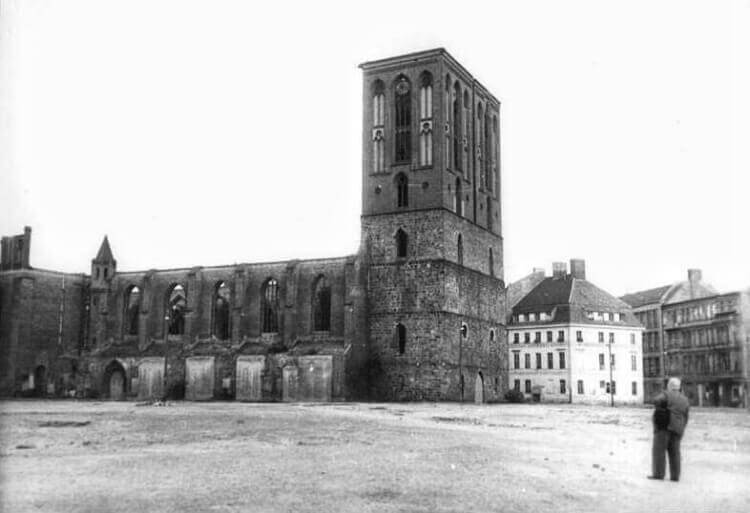
… until the East German government , once so proud of its innovative projects and so dismissive of West German attempts to recreate historical neighbourhoods, was ready to concede. They were not able to give their population freedom or consumer goods on the scale of West Germany, but they could create for their citizens (at least for 2000 of them) the nostalgic environment they seemed to be craving for.
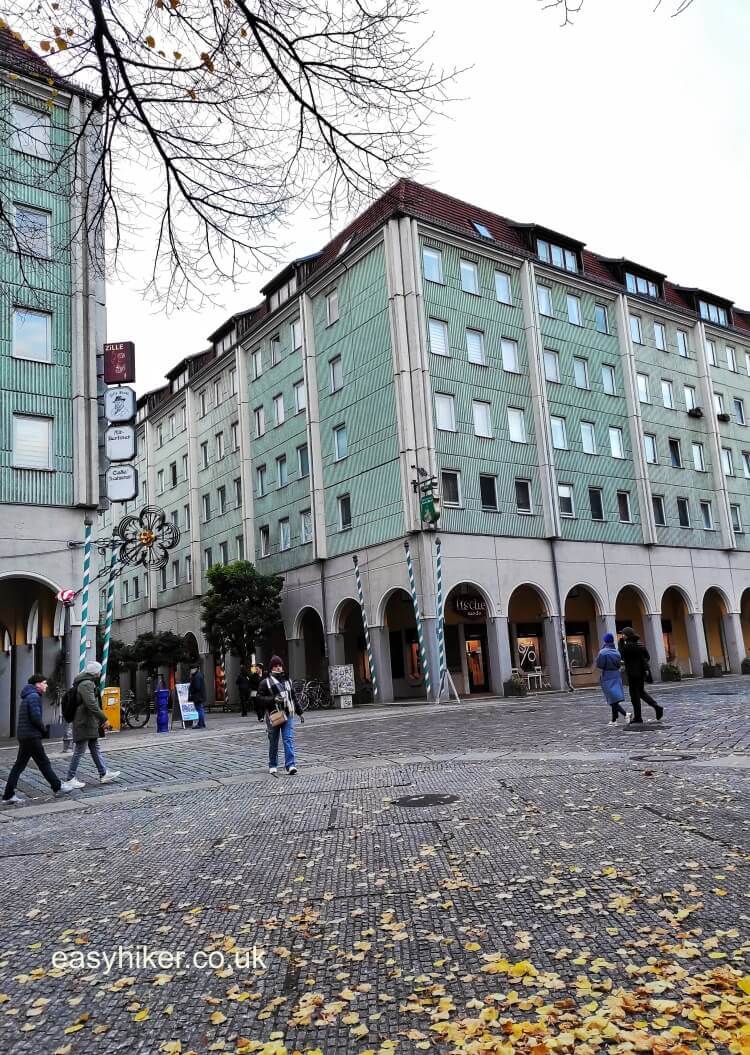
The question comes up again: was the project a success? The tourists certainly love it. The neighbourhood is always full of people browsing the shops or taking photos, and one wonders how many of them know or care about the Nikolaiviertel’s true history. It is said, however, that the Berliners themselves are a bit cynical about the whole thing and prefer to go elsewhere for a meal or a Sunday walk.
As for the Hansaviertel, it is a good idea to look at the property market where people are voting on this issue with their wallets. Prices in the Nikolaiviertel are roughly on a par with neighbouring inner city quarters and significantly higher than on the Karl-Marx-Allee, the first prestige project of the East German Republic. The Nikolaiviertel was fated to be the last.
Today, both the Hansaviertel and the Nikolaiviertel represent historic visions of Berlin’s future and past, visions from different perspectives on either side of the wall that tell us more about the time in which they were conceived than about the time they were meant to project.
Over time, they have become parts of history themselves – and have joined the monuments of other battles from the city’s complicated past.