Let’s play a game! Please think of famous British sights that you can name off the top of your head – three or four will do. And now please think: how many of these sights are located outside of London? I bet that for most of you the answer will be zero.
That, in a nutshell, is the unique characteristic of Britain’s Premier League of Tourism: one team has all the world-famous star players (the Tower of London, the British Museum, the Royal Palaces past and present, Big Ben etc. etc.) while the rest of the field is made up of little-known amateurs.
On the list of the UK’s most visited tourist attractions, the top ten places (and 17 of the top 20) are all occupied by sights in London. The highest ranked English sight out of London is Stonehenge (at no. 24). London counts more than 20 million overnight visits per year, Edinburgh (the UK’s no. 2) little more than 10 percent of that number. All of this makes Britain the most unbalanced tourism market among countries of comparable size in Europe.
For the traveller willing to leave the beaten track, however, this is good news. It makes the UK a land of opportunity, a country where it is still possible to discover hidden treasures: a rarity in over-travelled Europe.
And while there may be a reason why Blackburn, Barnsley and Wigan have such tiny numbers of visitors (the UK’s bottom three in proportion to their population), the country’s proud regional capitals with their own beauty spots, history, cultural traditions and interesting walking trails are surely worth a look.
In other words, places like
Newcastle
Beauty Spots
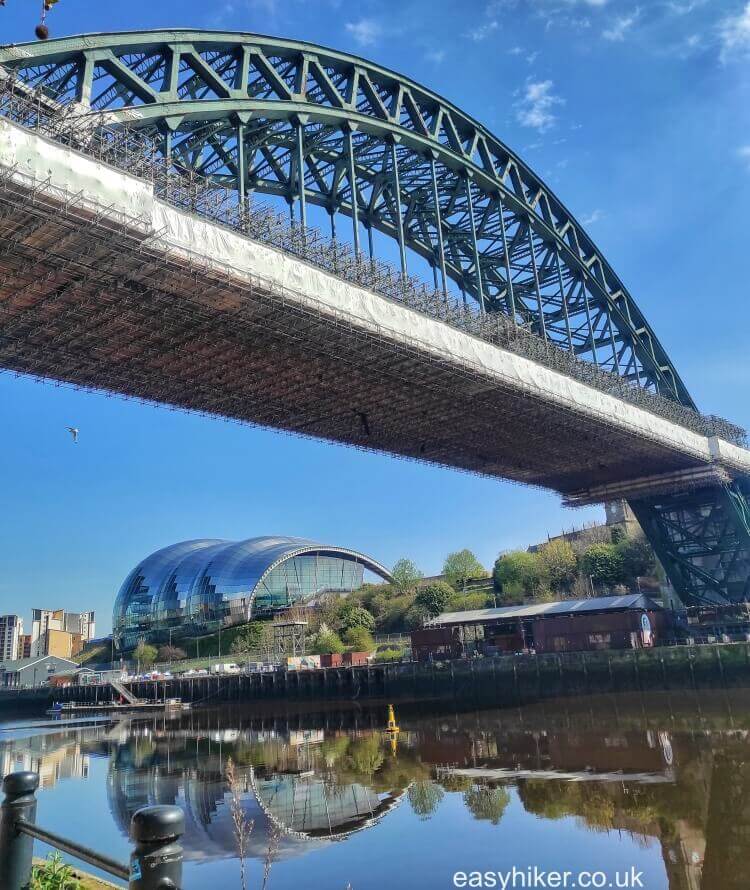
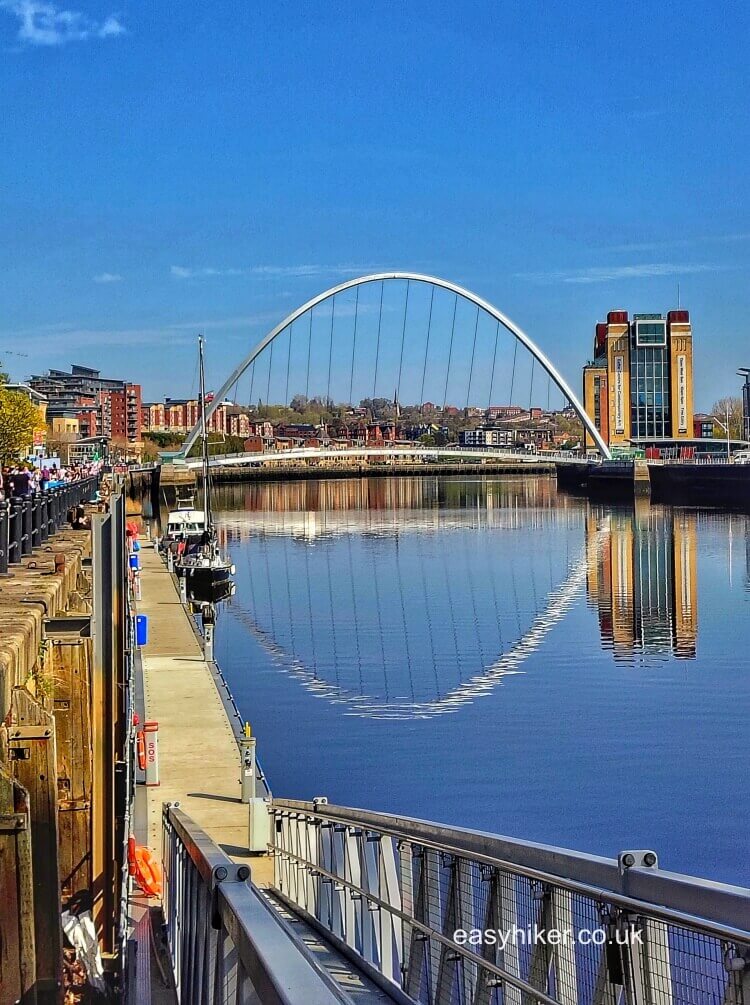
The visually most arresting sights of Newcastle are concentrated in the Quayside quarter near the city centre by the river Tyne. Four spectacular bridges connect Newcastle with Gateshead on the right river bank, most prominently the magnificently massive Tyne Bridge (see the picture above) and the architecturally daring as well as technologically innovative Millennium Bridge from 2001, the first tilting bridge ever to be constructed anywhere in the world.
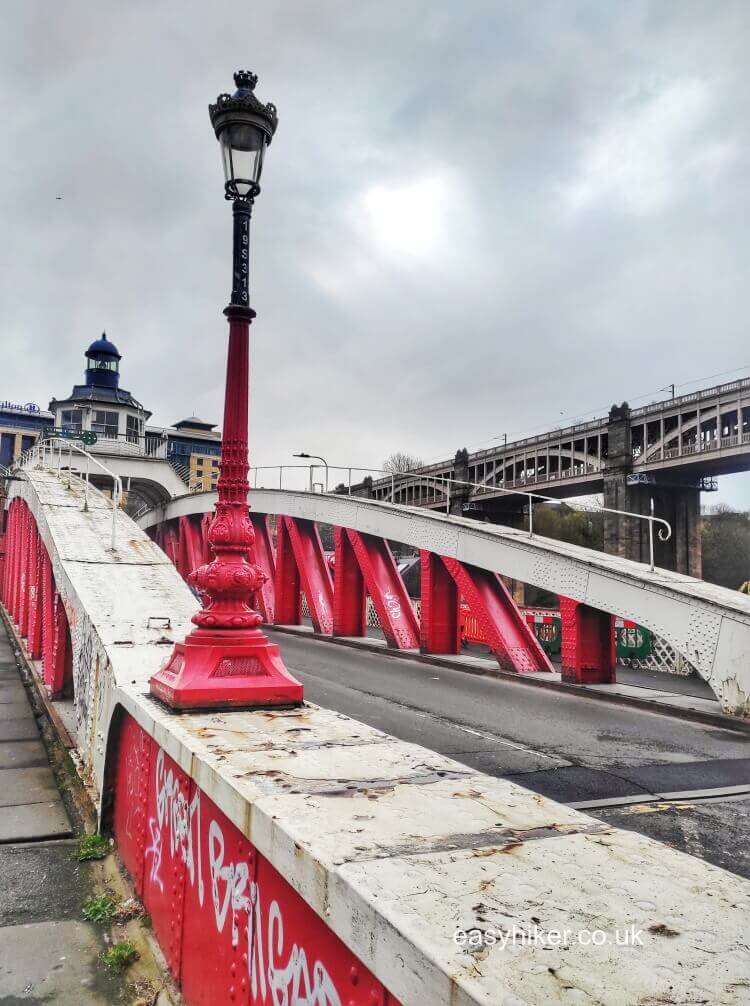
But there is also the High Victorian Swing Bridge – which stands (although no longer swings) in the place where the city’s oldest two bridges from Roman and medieval times once stood – …
… and (behind and above it) the High Level Bridge which allows you to cross the Tyne either by rail, by car or on foot (and which is the oldest of the four, dating from 1849).
What gives Quayside its unique scenic flair, however, is the way in which the Tyne Bridge of 1928 was fitted around the quarter’s grand Victorian buildings.
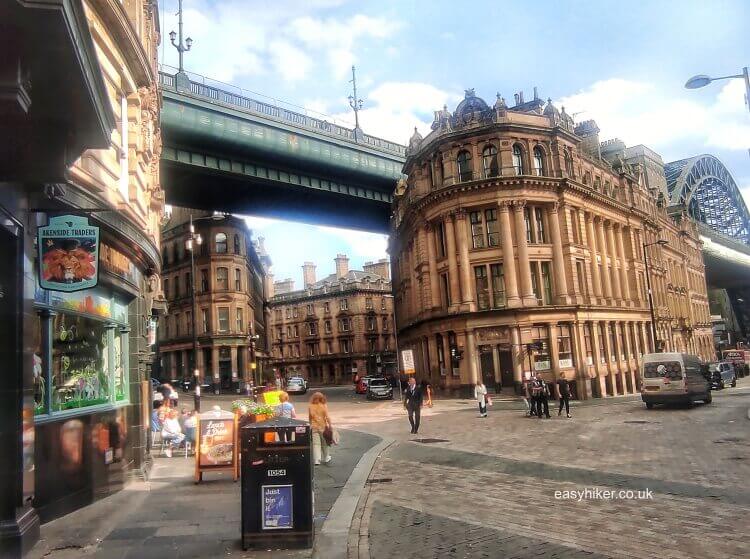
The town planners did what they could to preserve as much of the existing urban fabric as possible, but when there was a conflict, the bridge got the Right Of Way, and entire houses as well as some upper floors of existing structures had to be removed for the bridge’s construction.
History
While Northumberland, the area around Newcastle, has a long and chequered past – the local earls were painful thorns in the sides of English kings for centuries – Newcastle as it looks today is a new town.
Apart from a few medieval buildings of predominantly local interest such as the Castle Keep from the 12th century …
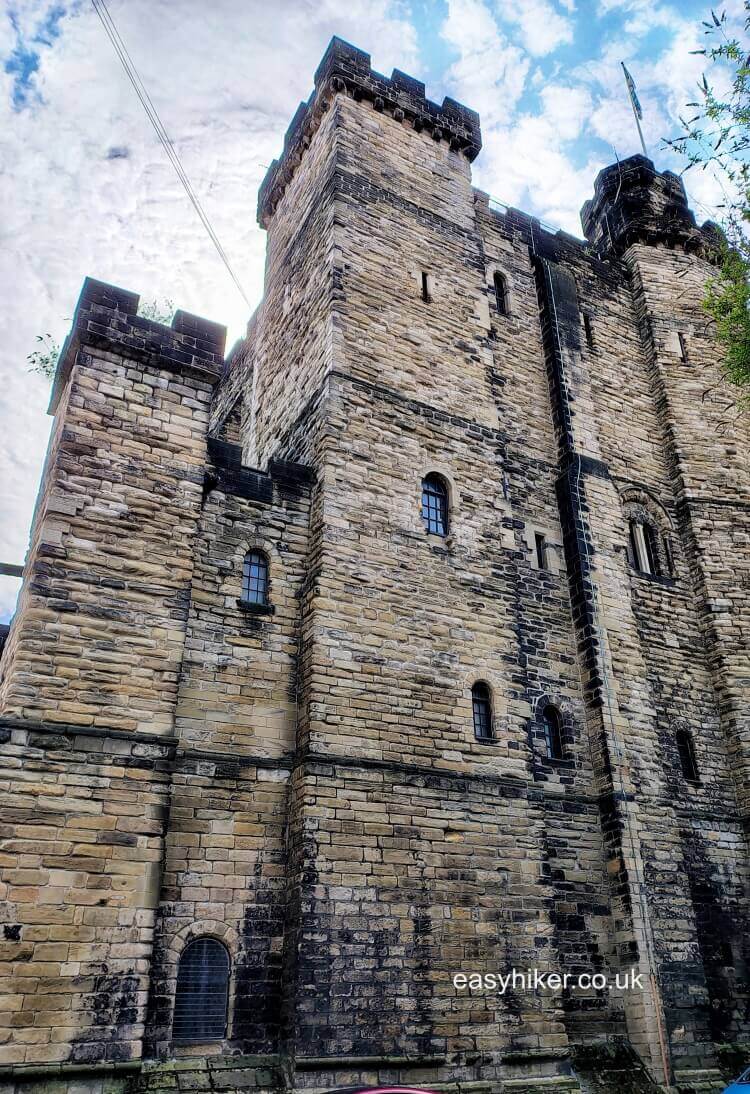
… the medieval street pattern is virtually all that remains from any period before the mid-1800s.
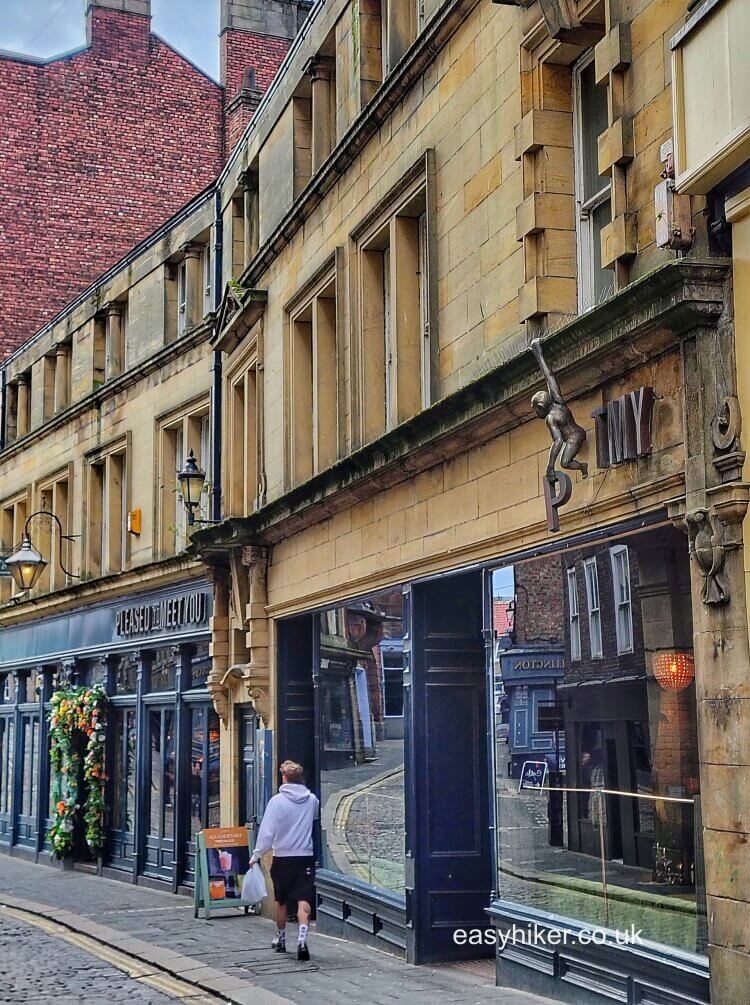
This is a consequence of Newcastle’s historic role as England’s first line of defence against hostile intruders from the North but is also the lasting effect of the Great Fire of 1854, which completely wiped out the historic waterfront of the old town. Only a single building in the entire Quayside quarter survived the catastrophe.
Modern Newcastle’s town centre was designed in the grand style which has since become known as Tyneside Classical. At the heart of the town centre stands the Monument that was erected to honour the 2nd Earl Grey …
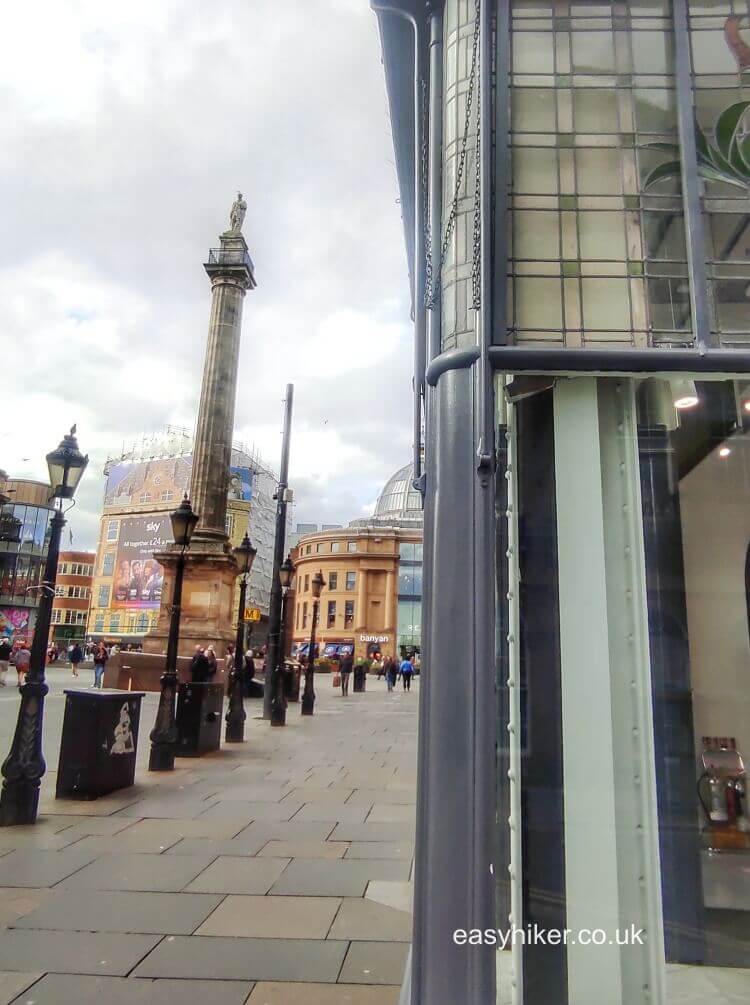
… a local boy (he was born on the family’s Northumberland estate about 50 km north of Newcastle) who served as England’s Prime Minister from 1830 to 1834.
Let’s play another game. What is the first thing that comes to your mind when you hear the great man’s name? Is it his introduction of the Reform Act, the country’s decisive step towards a democratically elected Parliament? Is it the abolition of slavery? Or is it his tireless advocacy of Catholic Emancipation?
I guess the answer is: none of the above. It’s tea, am I right?
The funny thing is that the nature of the connection between the Earl and the artificially flavoured tea that bears his name is anything but clear. All we know for sure is that tea to which fragrant oil had been added was first marketed as “Earl Grey” in the 1880s, 40 years after the politician’s death. Everything else is guesswork.
But with tea or without: the Earl Grey is big in Newcastle, and the street that crosses the town centre on its way to the monument, called Grey Street, …
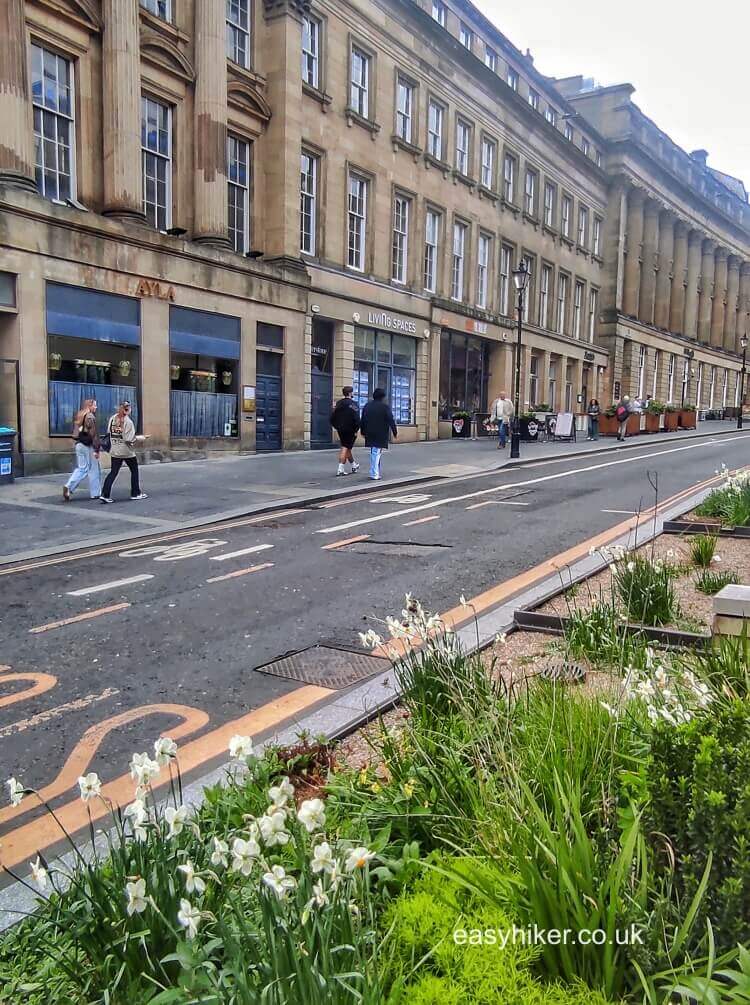
… is the city’s most elegant shopping mile – perhaps the entire country’s.
The poet John Betjeman certainly thought so (“not even old Regent Street in London”, he wrote, “can compare with that descending subtle curve”), as did the listeners of the BBC’s flagship radio news programme (“Today”) when they crowned Grey Street as the “Best Street of the UK” in a nationwide poll back in 2010.
Not all of Newcastle, meanwhile, has been constructed in Tyneside Classic. About 500 metres to the west of Grey Street, you can find St Mary’s Cathedral, one of Britain’s foremost examples of High Victorian Neo-Gothic …
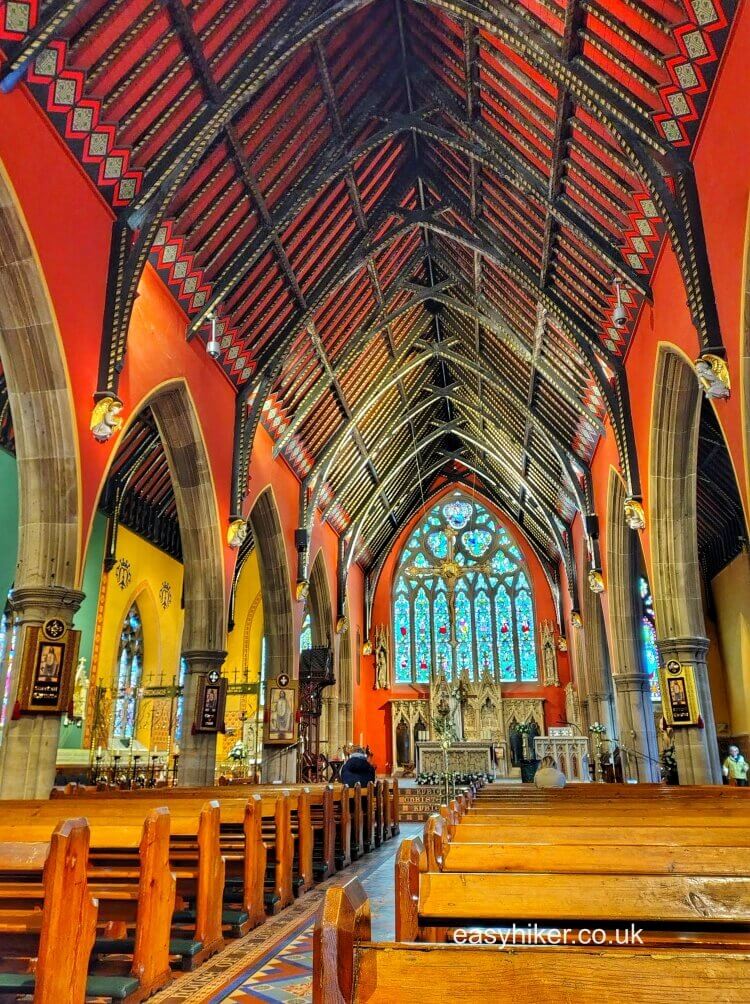
… and built by the style’s greatest master, Augustus Pugin, the architect of Big Ben and the adjacent Houses of Parliament. Definitely worth a look.
Cultural Traditions
Today, however, football is the cult that unites mankind all over the world, and large stadiums are the Cathedrals of the modern age: where modern people meet to celebrate their commitment to a common cause. There are few places in Europe where this is truer than in Newcastle.
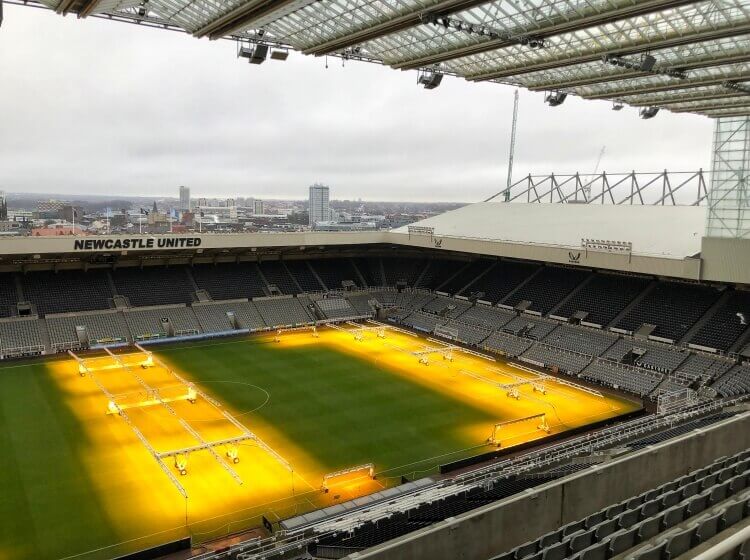
St James’s Park near the town centre, the stadium of Newcastle United, is the place where the city likes to celebrate itself: a place of congregation and worship. And of course, this temple – like all shrines across the world – is dotted with statues of mythical heroes from the past: the Saints and the Shearers.
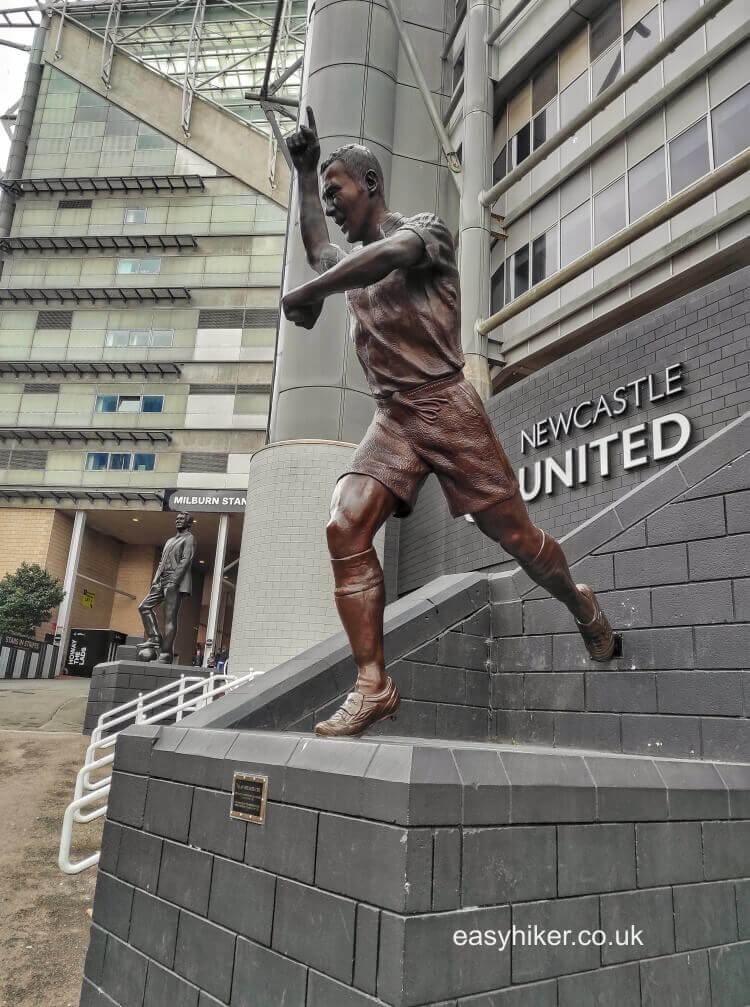
A second local tradition, meanwhile, is just as important: a tradition of openness and integration that is rooted in the industrial revolution. Sailors, merchants, workers: they all came to settle in booming Newcastle during the 19th century, and as a consequence, 37 percent of the city’s inhabitants were first or second generation migrants on the eve of WWI.
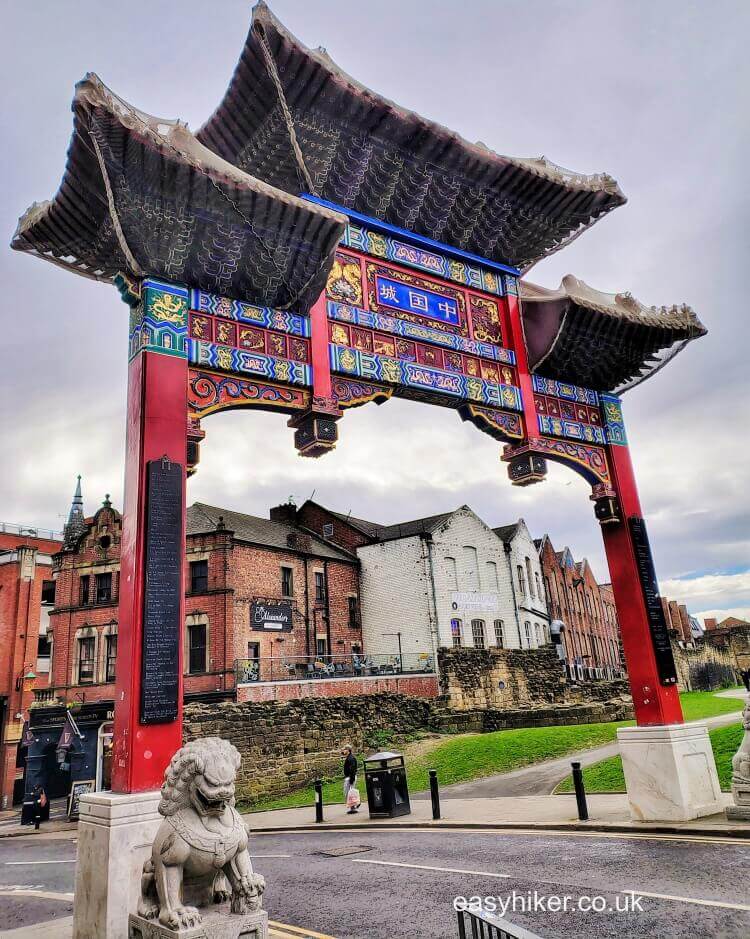
The Chinese were among the last to arrive (in the 1950s and 60s) but quickly made sure that their presence could not be overlooked. Which is why any visit of Newcastle should include a trip to the local Chinatown just across the football stadium.
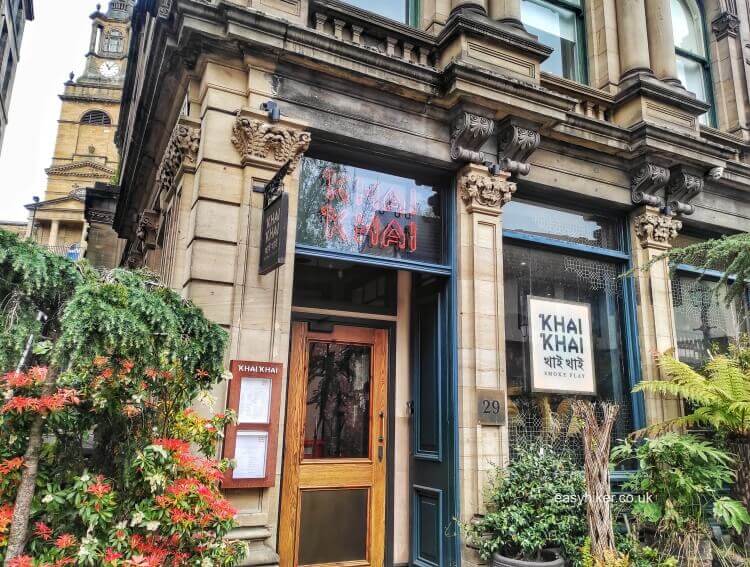
You may also want to visit one of Newcastle’s many smart Indian restaurants. The city does not have the long “curry house” tradition of London’s East End: its Indian eateries were high-end from the start, and as a result, Newcastle today has some of the UK’s most innovative balti and tandoori houses.
Interesting Walking Trails
Oops, it seems we ran out of space. So you will have to wait until next week to find out what there is to discover a little further afield. Hope to see you then!