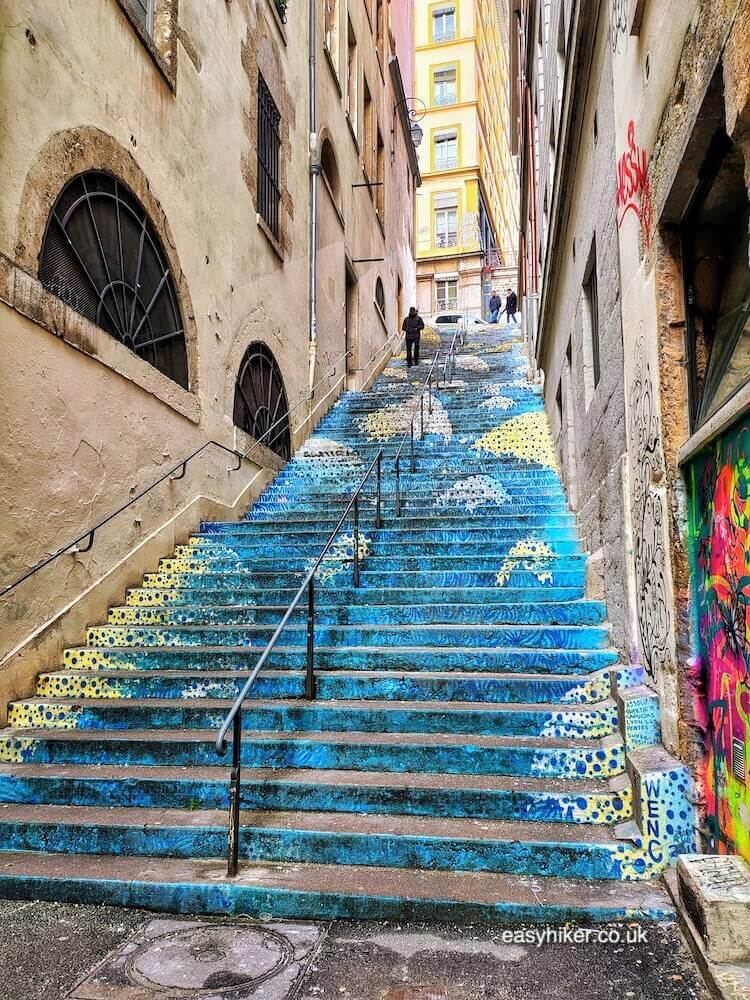
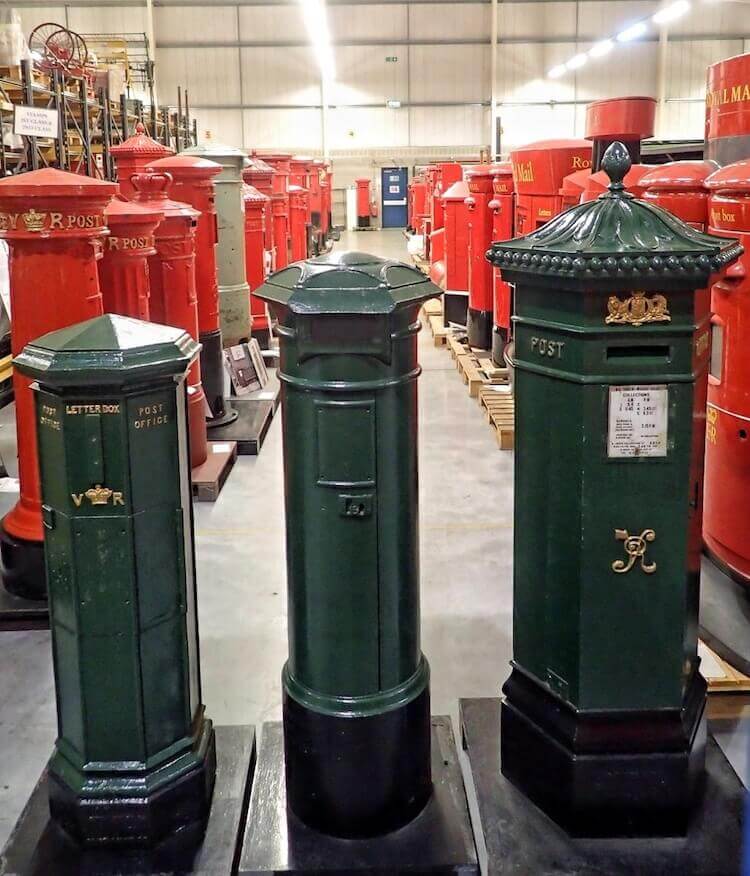
Over the years, the Easy Hikers have introduced you to subway systems, challenged you to follow in the tracks of the world’s most notorious serial killer, and one of our walks went up with a gradient angle of 90 degrees – inside a church tower.
Occasionally, we admit, we have come dangerously close to stating that “we decide what hiking is”, as Hermann Göring very nearly said – but you ain’t seen nothing yet, because today, we shall lead you into the corridors of apartment houses.
The Traboules of Lyon
I hesitate to say that these so-called traboules are Lyon’s main visitor attraction – after all, France’s second city offers so many other things: a romantic old town, two rivers (with a total of four scenic riverside walks), monumental works of public art on tenement walls.
But while at least some of these things can be found in other towns as well, Lyon has a unique selling point in the traboules that allow resident to trabouler (to “trans-ambulate”) between buildings without stepping into the street.
These indoor passages eventually came handy for silk weavers and members of the French resistance, but they were originally invented in the late Middle Ages for reasons and motives that are not altogether clear.
Nearly one thousand of these traboules of Lyon are said to exist today, approximately 50 of which are covered by an agreement between the residents’ associations (who keep the front doors of the buildings open every day from 7am to 7pm) and the municipal government which contributes to their upkeep. All that visitors need to do if they want to peek into this hidden world is to push the doors open – or, if there is one, push the PORTE button first.
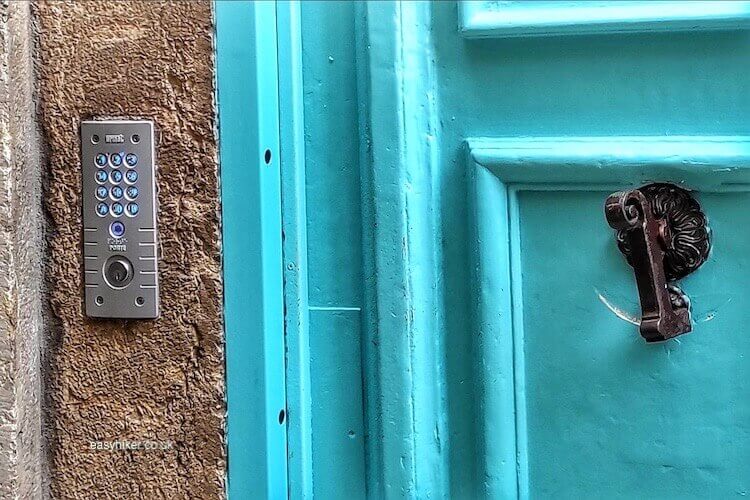
This agreement ensures that everybody wins. Curious visitors get to see something they cannot see anywhere else, the municipal government rakes in taxes from a buoyant tourist economy, and residents are happy because someone else pays for the upkeep of their buildings. What could possibly go wrong?
A lot, actually. Visitors, you see, are requested to keep quiet – and are, occasionally, reminded of their obligations …
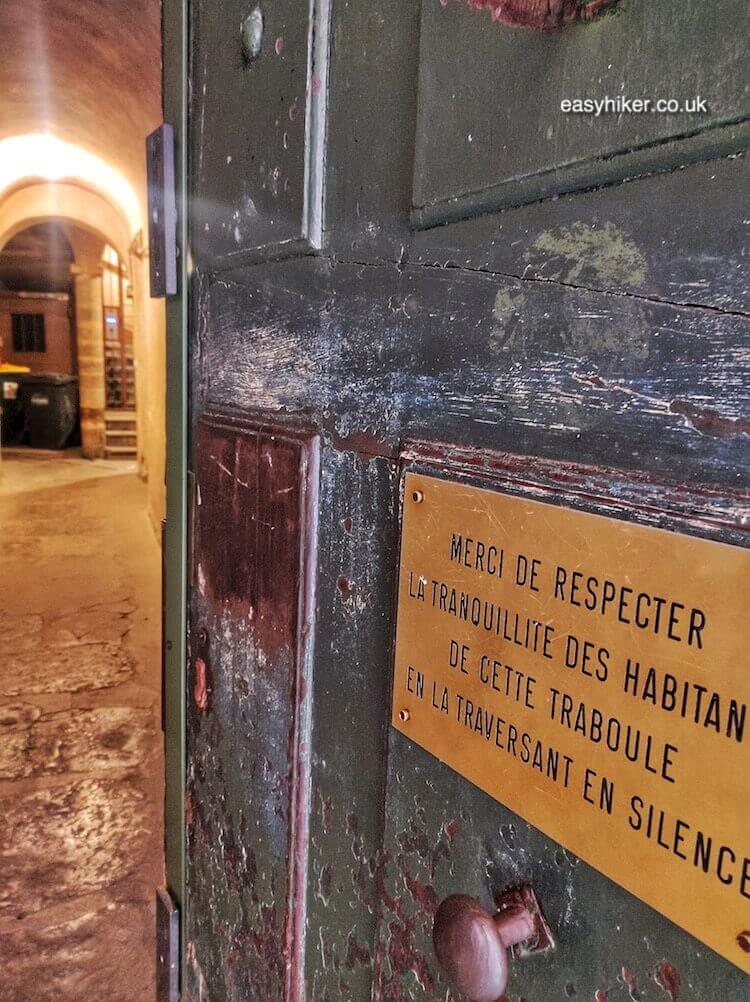
… but, alas, not everybody complies.
Noise levels among friends inevitably rise after a traditional lunch in one of the Old Town’s bouchons where no meal is complete without a good serving of the local red. And there are organized tours, too, which can feature as many as 15 or 20 people: in such large groups, the guides cannot whisper in everybody’s ear.
As a consequence, noise-sensitive residents, agreements be damned, keep the front doors of their buildings firmly shut – or may allow you in but without allowing you to roam freely.
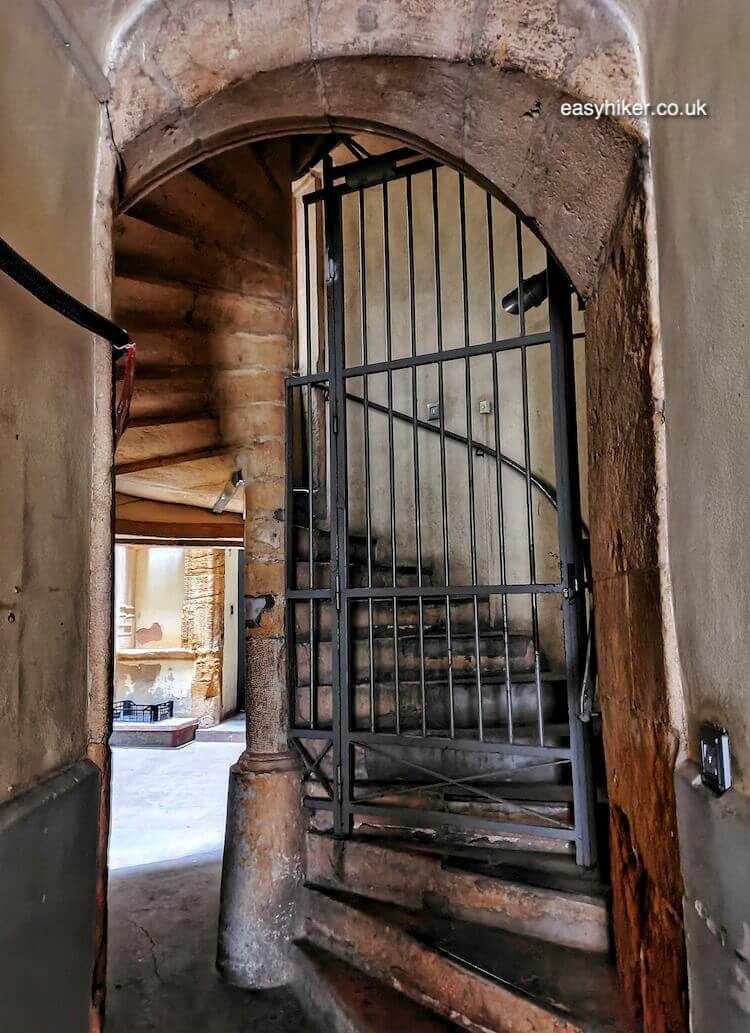
If, however, you are not discouraged by the occasional locked door and are happy with what is on show, a tour of the traboules can be a memorable journey.
The traboules are concentrated in two areas of the city, both of which are offering a different type of experience. We suggest to start your exploration of “Lyon behind the curtains” in the old town: for the simple reason that you will be going to Vieux Lyon anyway, and once you are there, you might as well give the traboules a go.
You can design a route with a catalogue of accessible traboules or follow one of the many existing routes that are described on the Internet.
Alternatively, you can keep things simple: start in front of the Cathedral, on the far side of the Fontaine de Saint Jean …
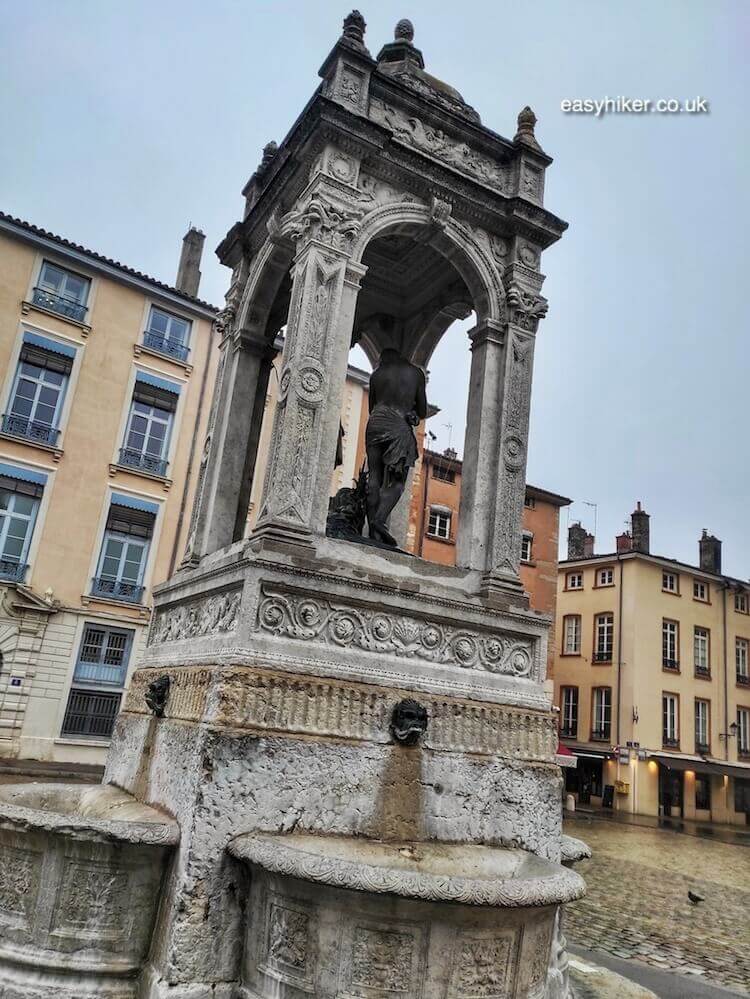
… and walk down Rue St Jean where almost every other house appears to be covered by the agreement (numbers 18, 26-27, 33, 40, 42, 50, 58).
And if you recognize the name of an adjacent side street from the catalogue of agreement buildings, you can make a little detour here and there.
So what is there to discover behind the front doors of the Old Town’s buildings?
Its courtyards, mainly. These range from the grandly historic …
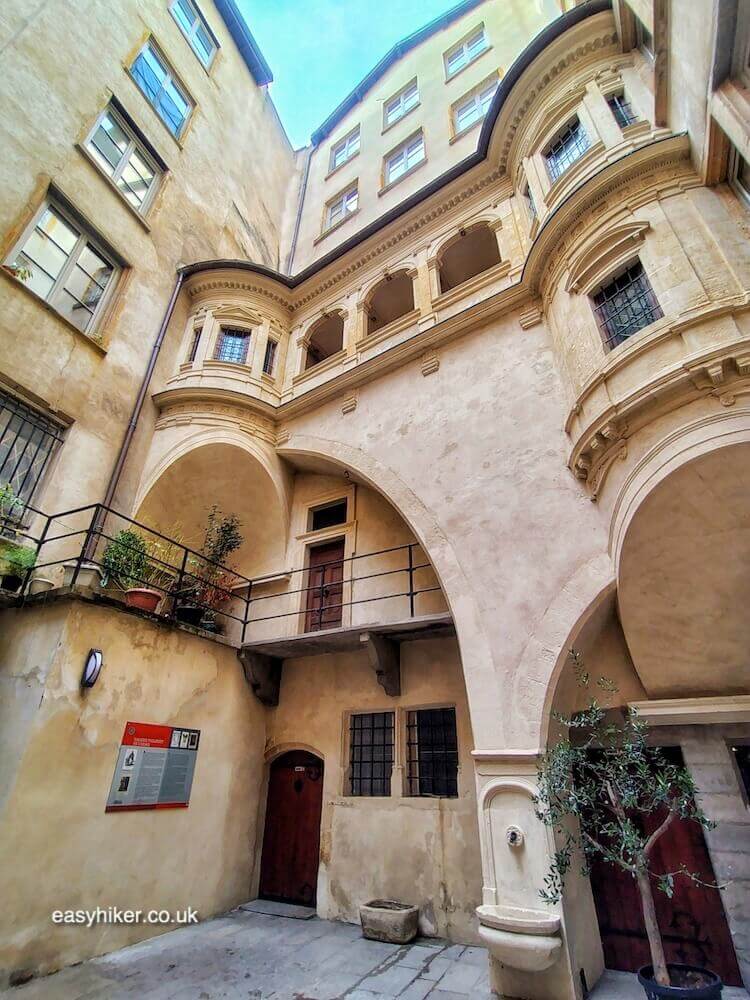
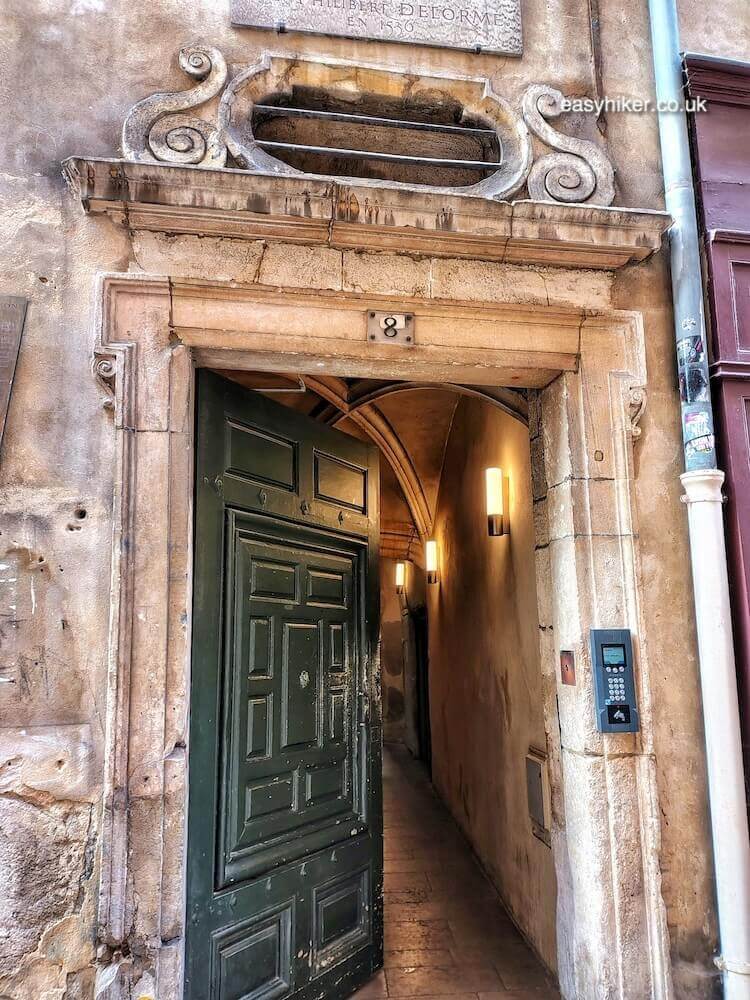
… (the courtyard of 8 Rue Juiverie from 1536 features an unconventional second-floor traboule) and the pleasantly picturesque …
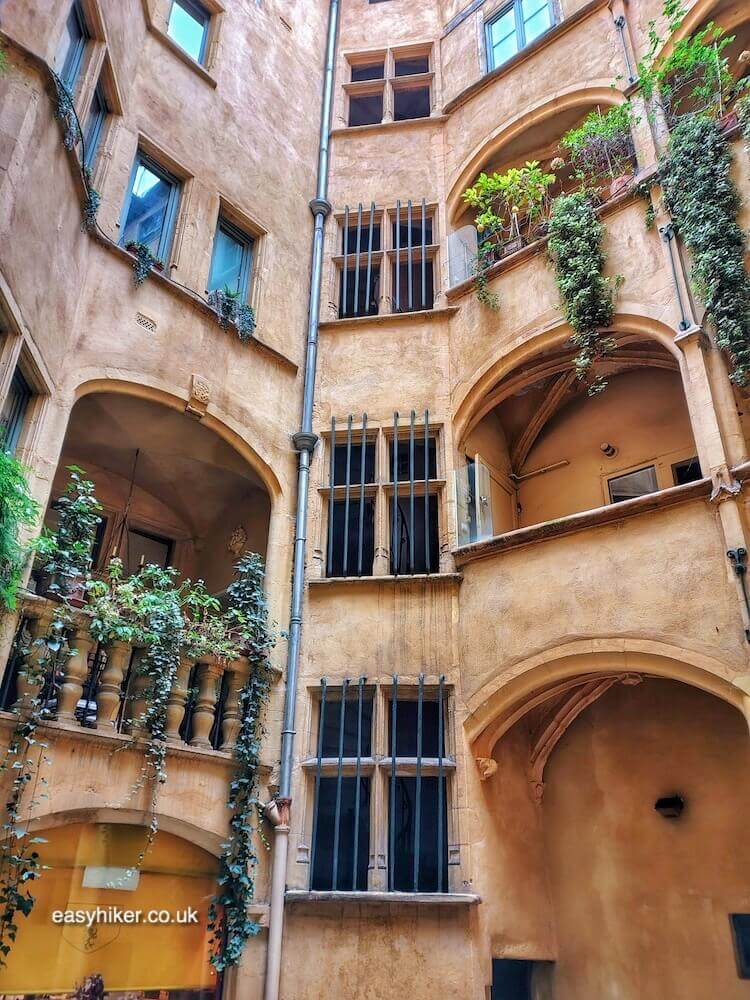
… to dungeon-like interiors that could have been designed by Piranesi …
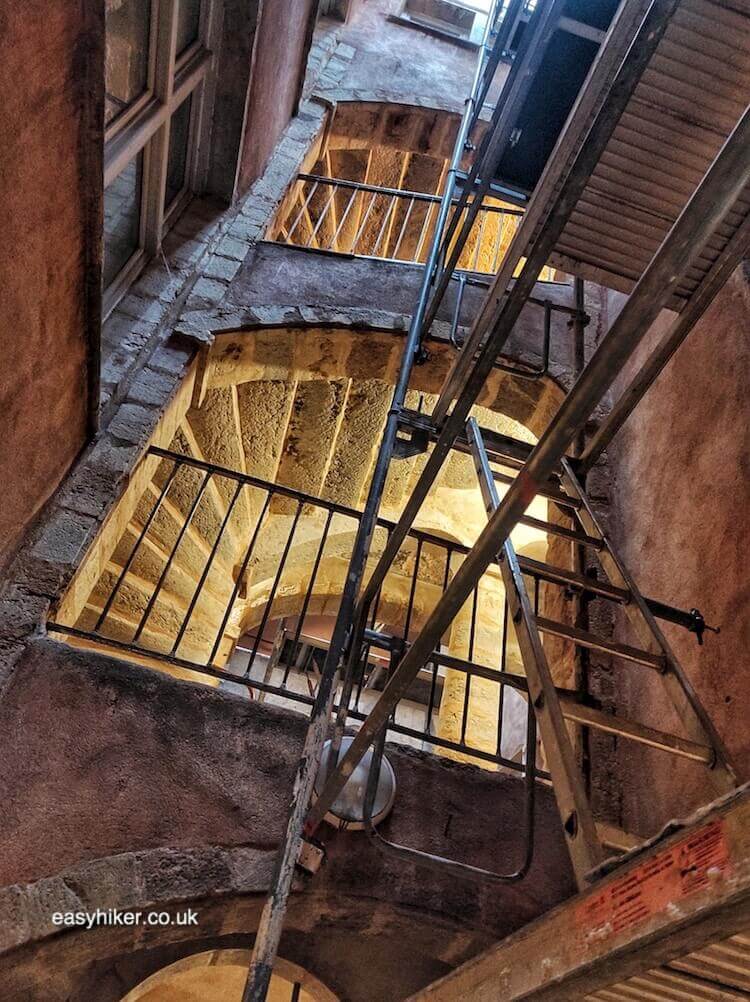
… and, occasionally, to the mundane.
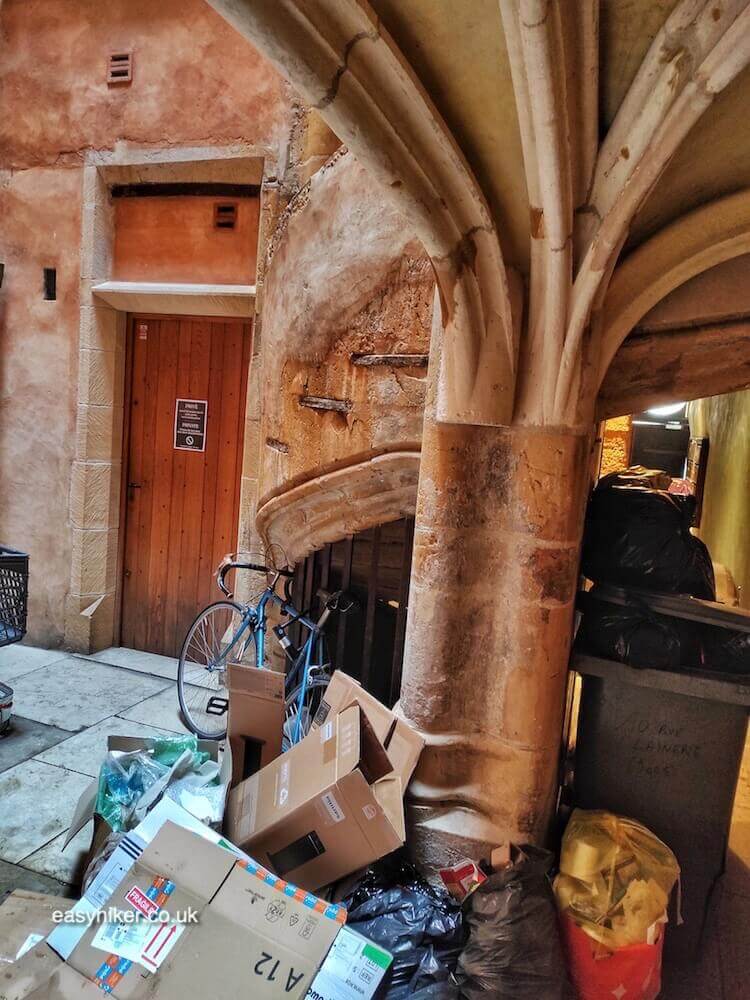
All right then: the downright scruffy.
But places like that have a purpose, too: they serve as useful reminders that, when modern life meets the Middle Ages, the results are not always scenic.
The buildings may look beautiful from the outside, but once you have stepped through the front doors, you are reminded that their interiors were designed for the requirements a different age – when, for example, the concept of “waste” in the modern sense was still unknown.
As, seemingly, was the modern concept of interior space.
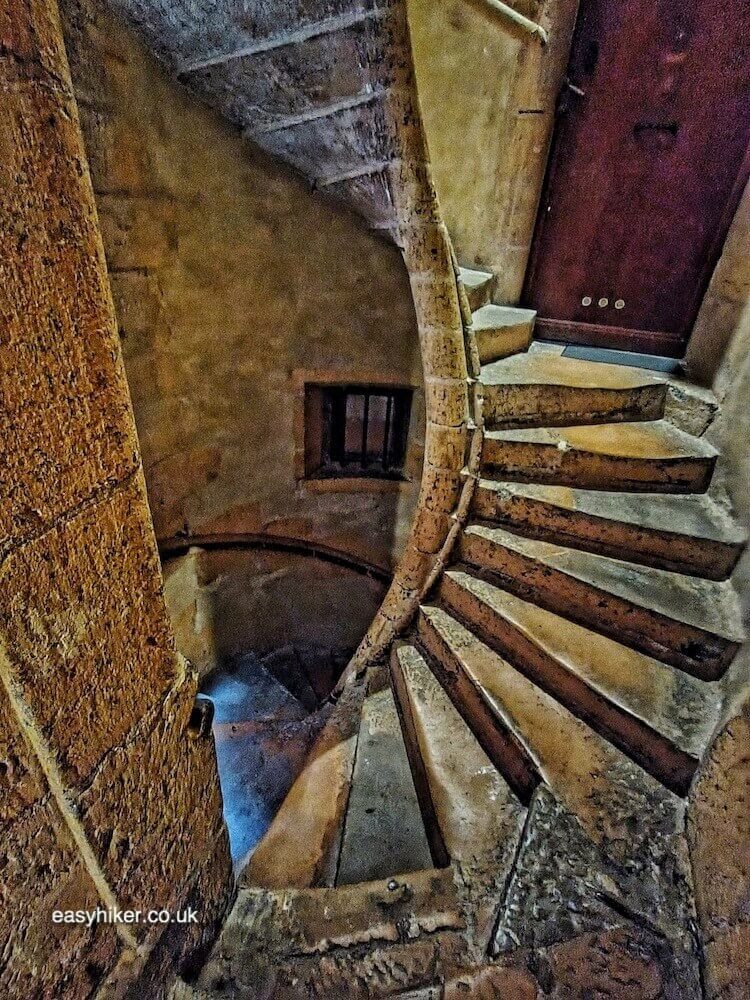
If you, having reached the end of the Rue St Jean, still have appetite for more, you can look for the traboules of the neighbouring streets.
Number one on your list should be the Rue du Boeuf with the courtyard at no. 16 …
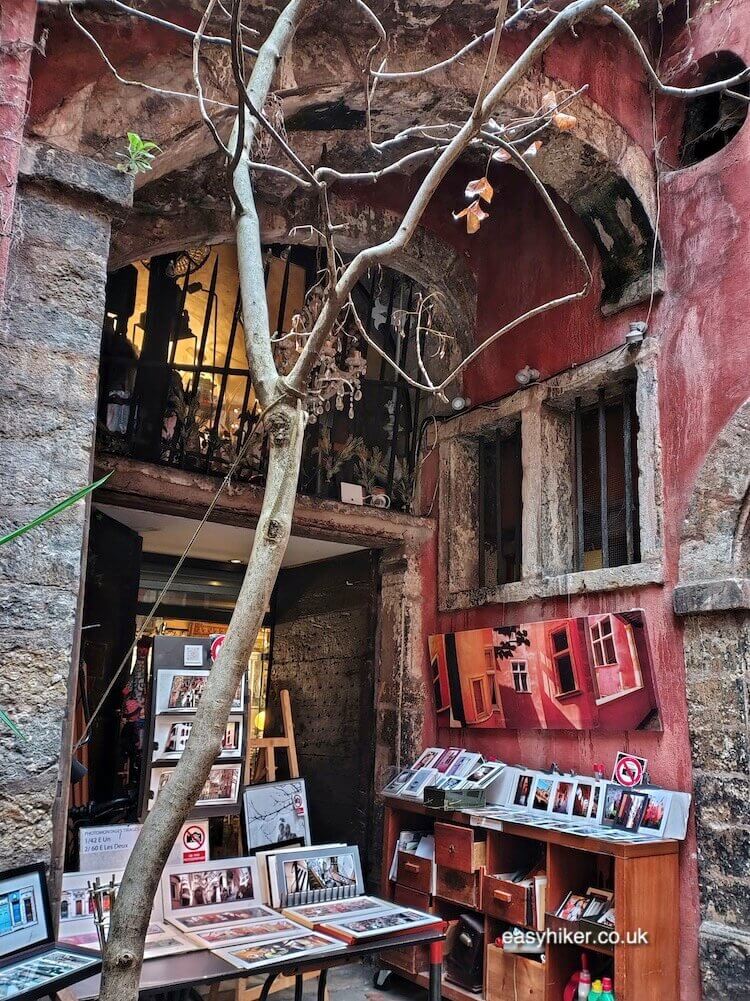
… that is lined by quaint little shops and that offers you a view (you cannot see anything from the street) of the Pink Tower, originally a stairway for the adjacent palace that goes back to the 16th century.
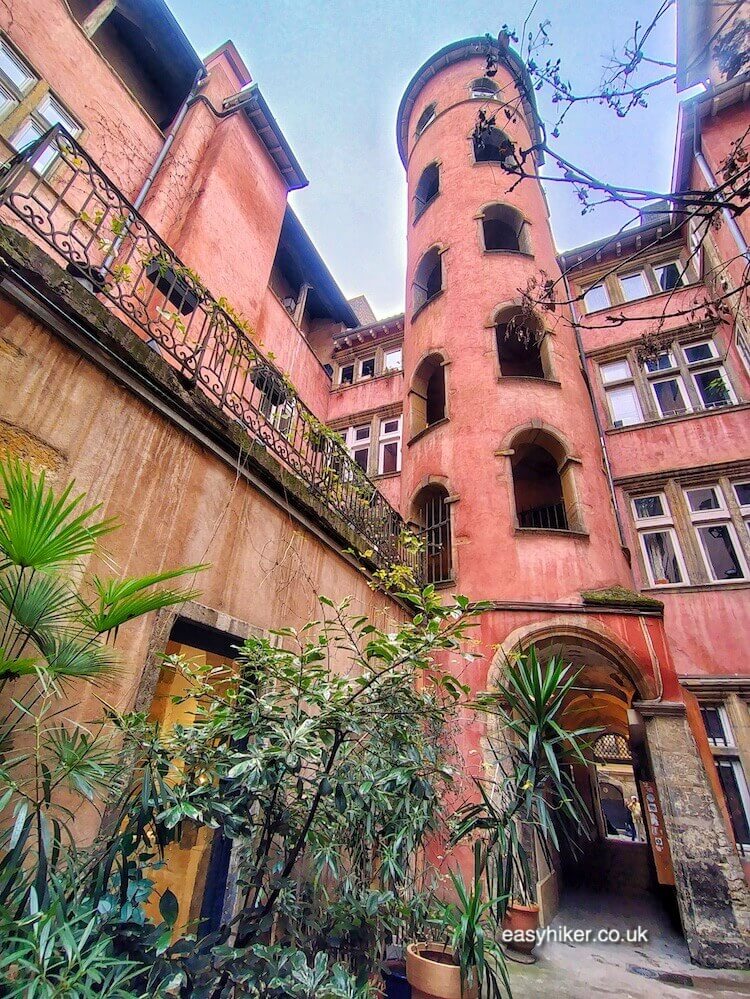
While Vieux Lyon offers a wide range of attractive courtyards, it may be a trifle short of actual traboules, but if you stumble upon one, such an indoor walk between buildings that share hundreds of years of urban history will be a highlight of your trip.
Famous old town traboules include the passage between 54 Rue St Jean and 27 Rue du Boeuf as well as the Traboule des Droits de l’Homme, which is located between 7 Rue Désirée and 4 Rue du Pavé.
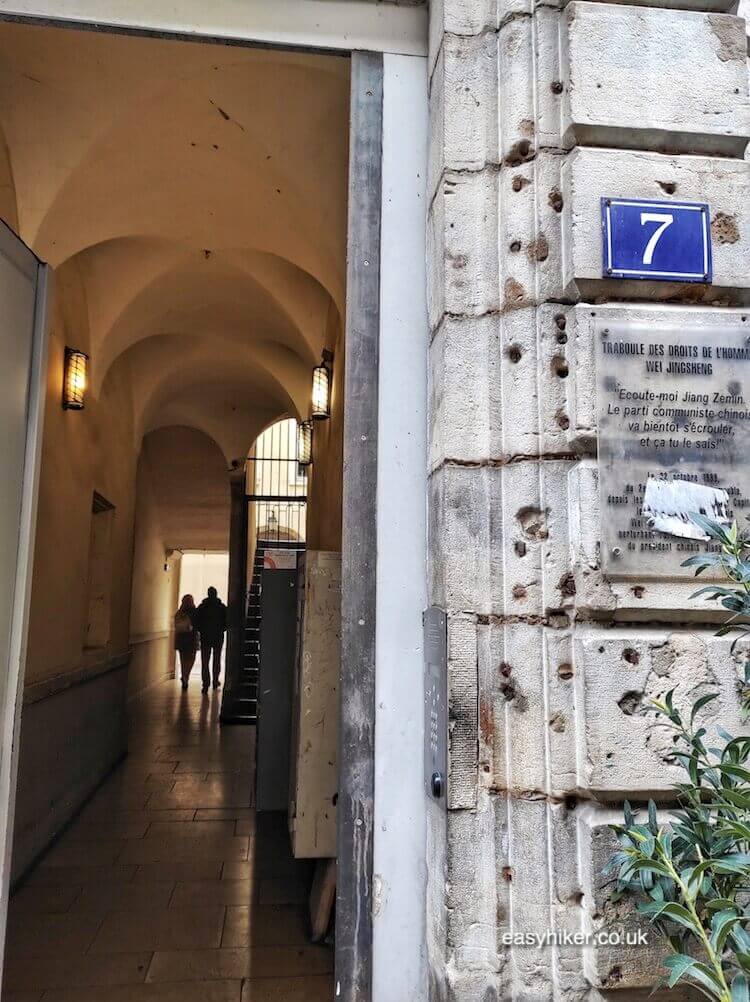
We will feature more of the traboules of Lyon next week when we visit the Croix-Rouge quarter in the north of the city centre – for a walk that is more airy and has more of an outdoors feel than today’s ramble through the old town backyards. Join us then!