There is one drawback about Anglesey: for a tourist destination, the island – not having many large towns – offers only a narrow range of places to stay and places to eat. This is why many visitors opt to stay on the Welsh mainland, which also makes it easier then to tour the sights on the inland side of the Mennai Strait: sights such as the Caernarfon Castle, one of the mightiest medieval fortresses in all of Europe.
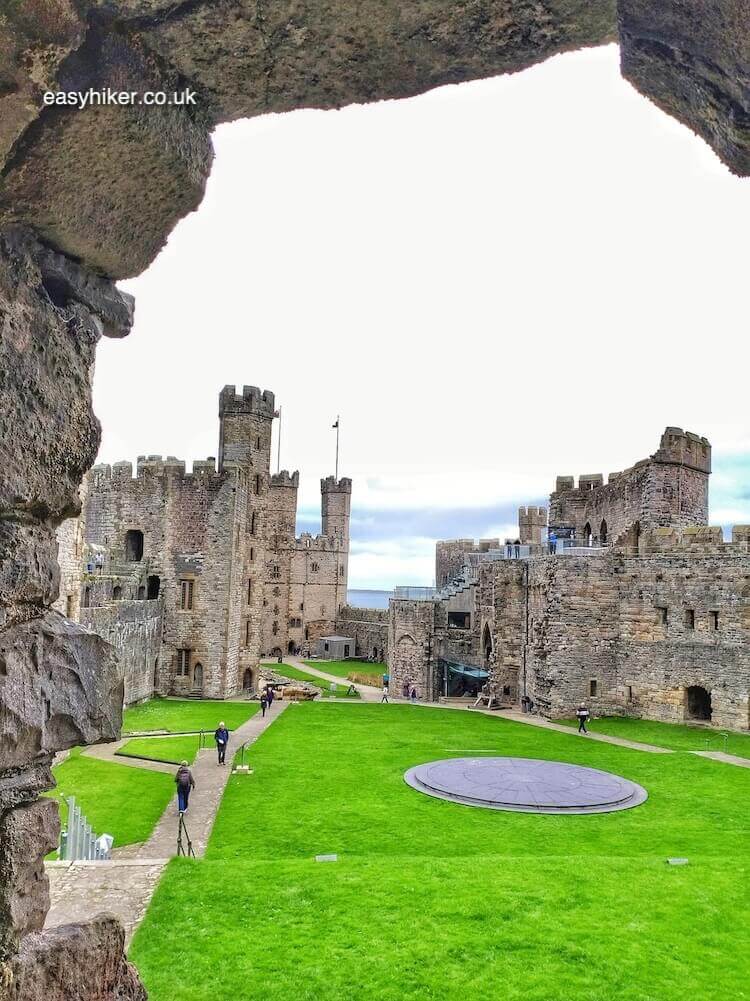
This is also where we went after spending two days on Anglesey. After our pair of coastal hikes, a walk on the ramparts of a castle may have sounded like the easy option. Much to our surprise, however, it turned out to be the most exhausting outing of our entire trip.
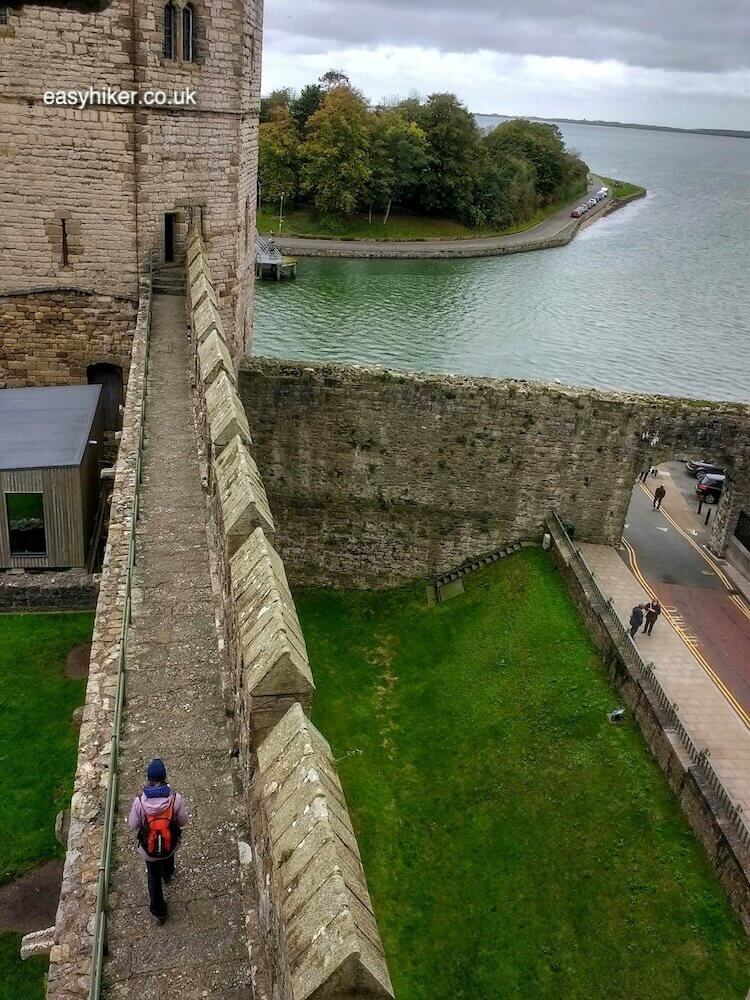
Much of this has to do with the nature of 13th century military architecture: its battlements are not always on the same level, allowing the defenders to move higher up, out of the enemy’s shooting range, or one level down to have a shot themselves.
The stairways between the battlements, meanwhile, have clearly not been built for the comfort of 21st century visitors: inside narrow towers, even narrower steps spiral up and down, and the only light that allows you to mind where you are going is the one that enters through the slits in the wall.
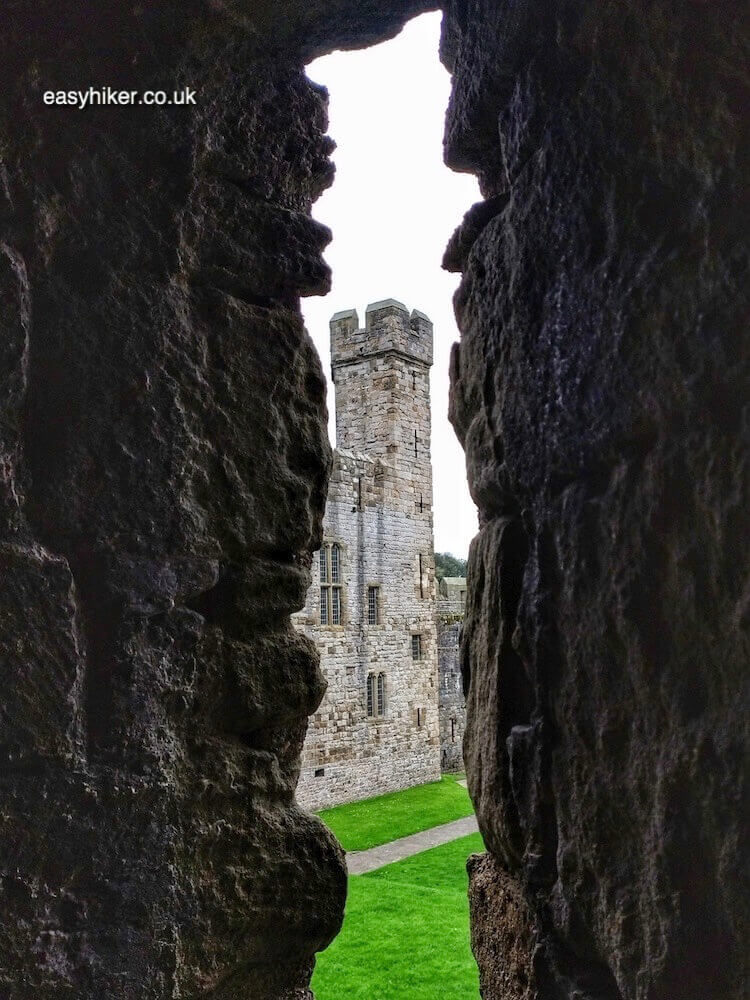
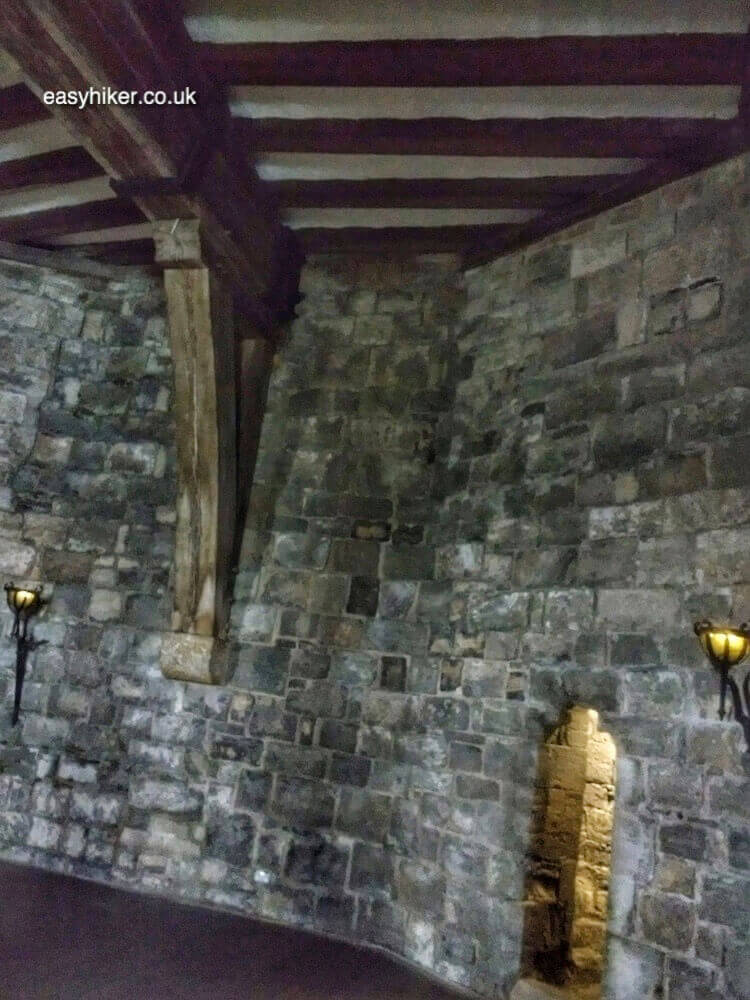
Caernarfon Castle is therefore best approached in a spirit of adventure and discovery. You never know what you will find behind the next door: you may be about to walk into some spooky, semi-lit vault …
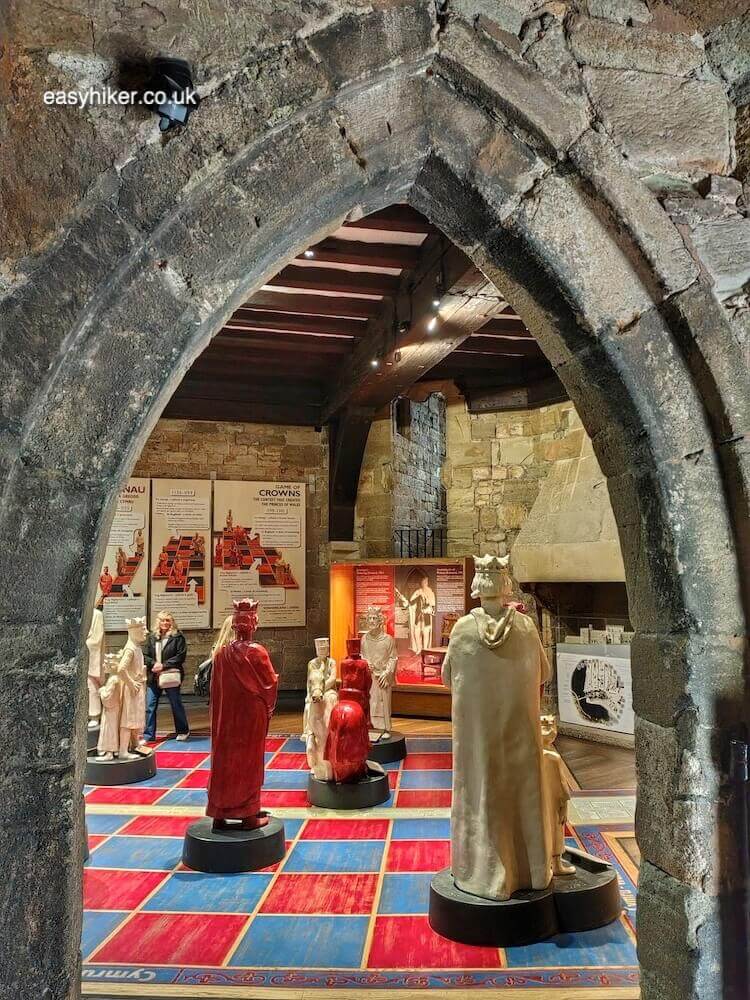
… or into an exhibit space that explains details from the castle’s 600-year history.
There are occasional signposts and directional arrows, but most of the time, you will be pretty much on your own. If you enter a new tower on the ramparts, it is not always clear if you are meant to walk up or down – and sometimes, after spending half an hour looking for a continuation of your walk, you discover that the only way forward is to walk down all the way and enter the next tower from the ground level.
You can (and should) take this in good adventurous spirit, but the experience can also be a little … well, exhausting, mentally as well as physically.
You will, however, be richly rewarded for your efforts. There are so many things to see!
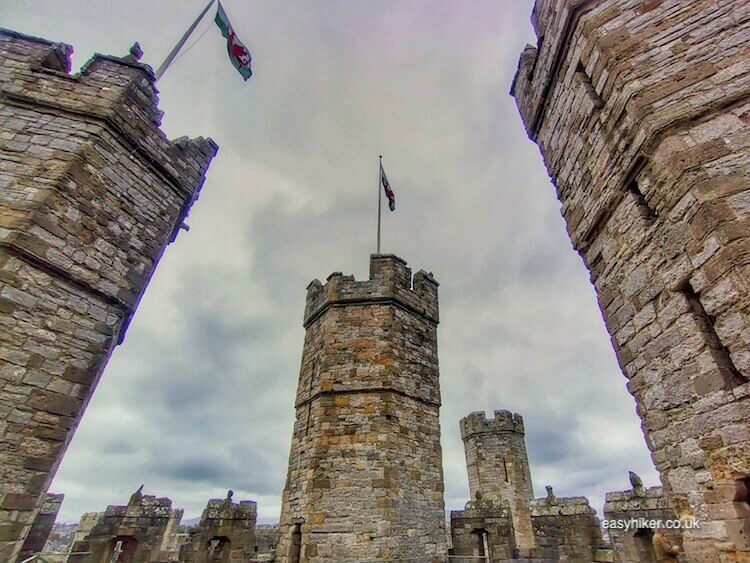
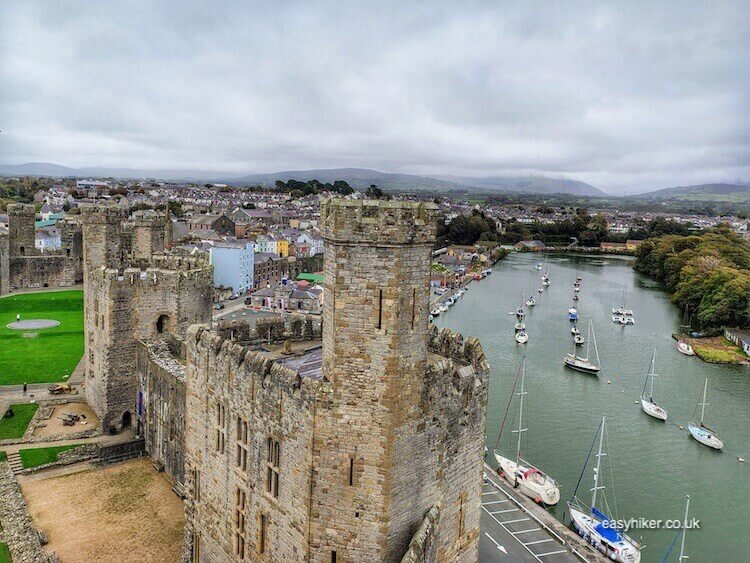
Not least because the balcony walk around the ramparts also doubles up as a kaleidoscopic city tour. The views from the battlements are constantly changing, offering different angles of the marina with the historic Quays (locally quarried slate was once exported from here to countries all over Europe and beyond), …
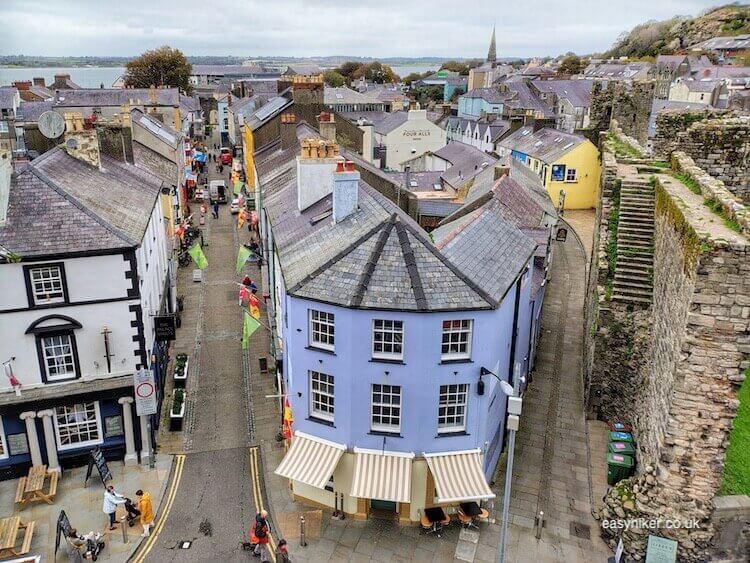
… and Caernarfon town. The walk therefore also serves as a preview of places that you might want to see at closer range once you have finished your visit of the castle.
Caernarfon Castle is a place where much history has been written, both ancient and modern, and it is – surprisingly – the latter which has the more intriguing chapters.
The fortress was built in the 1280s by Edward I as part of the campaign to secure his Welsh conquests – not, like most castles, to protect but to subdue the local population.
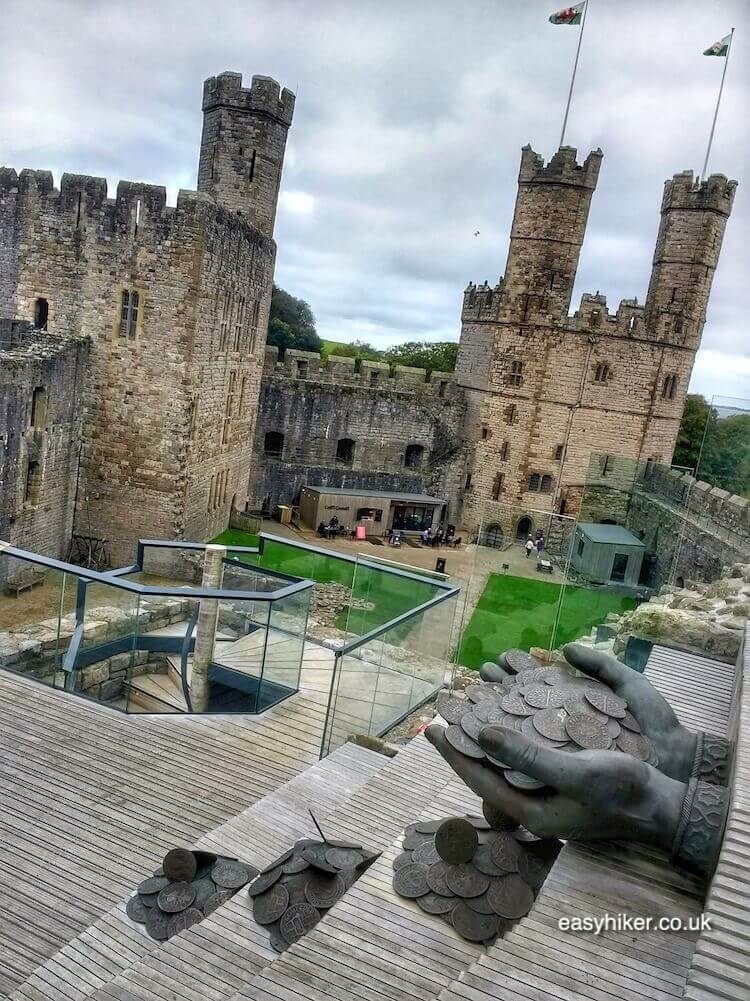
To illustrate the castle’s ambiguous place in Welsh history, the local artist Rubin Eynon has created several bronze sculptures of hands that created the fortress: the hands of workers and architects …
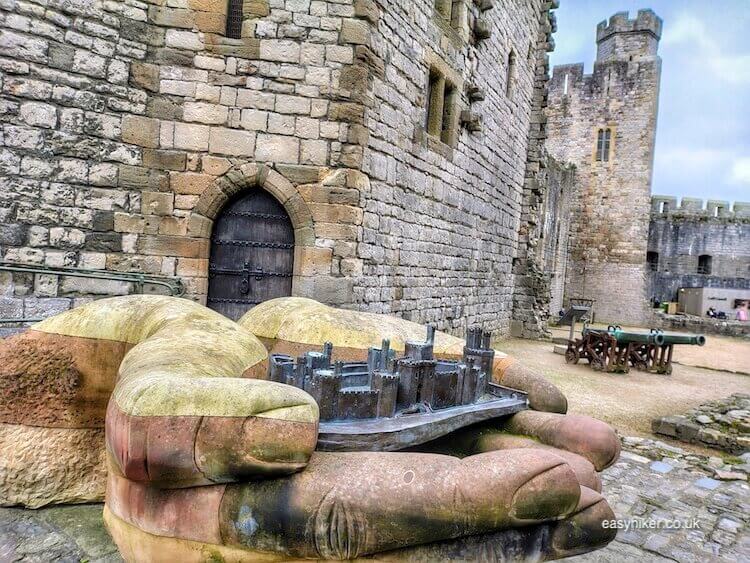
… as well as the hands of tax collectors.
The fortress lost its importance as a military stronghold when the Welsh resistance to English rule subsided in the 15th century. During the rule of the Tudor dynasty – which itself had Welsh roots – Caernarfon Castle was already a ruin, and it went further downhill from there.
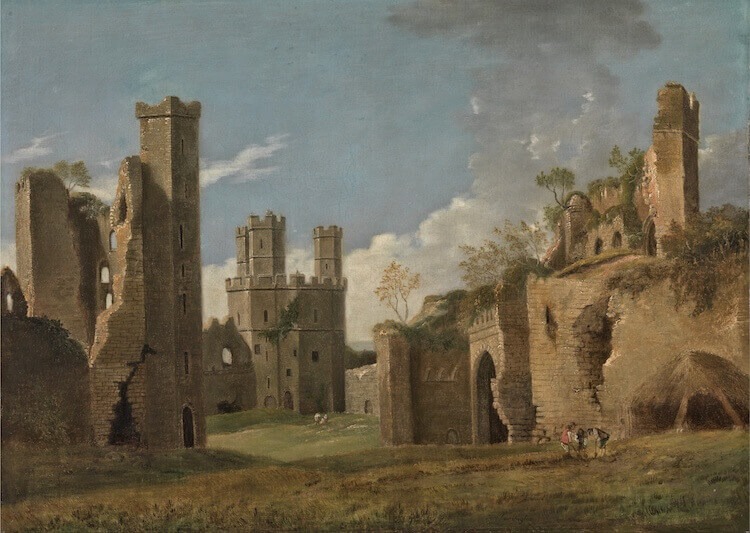
(Joseph Farington’s painting is from 1780.) Spare a thought for the architects who were commissioned to restore the site in the 19th century when the Middle Ages had roared back into fashion. They could not simply pop down to the Municipal Archive to ask for a copy of the building permits (Edward I was notoriously slack when it came to bureaucratic formalities), and there were virtually no detailed representations of the fortress from earlier centuries.
As a consequence, much of what you see today inside the fortified walls is inevitably a product of Victorian tastes and assumptions.
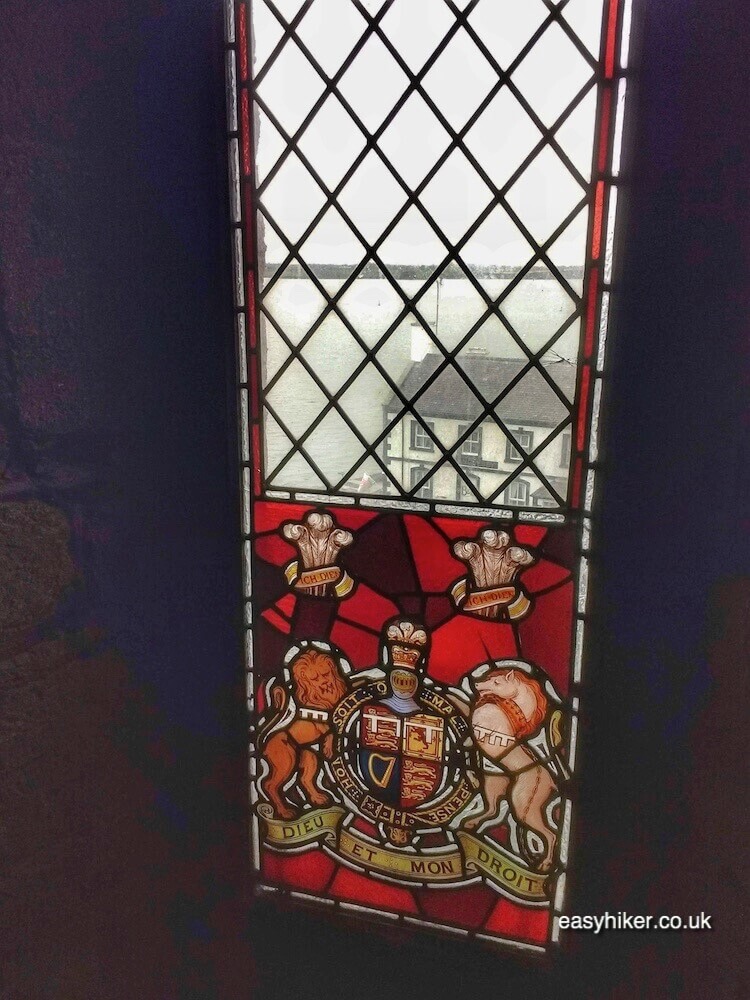
Caernarfon’s great moment in modern history came at the very end of the Victorian Age, when the castle and its grounds served as the stage for the ceremonial investiture of the Prince of Wales.
This title had been traditionally given to the heir of the English throne since 1301, but the investiture had never been publicly celebrated until 1911 when it was Prince Edward’s turn to step up to the plate (the star-crossed Edward VIII).
The idea of a public investiture has been revived only once since: in 1969 for Prince Charles (now King Charles), in a ceremony that owed as much to the flamboyant spirit of the 1960s as to the Celtic traditions of a bygone age. (“The Druids,” as Nigel Tufnell from Spinal Tap so memorably said, “nobody knows who they were, or what they were doing, but their legacy remains.”)
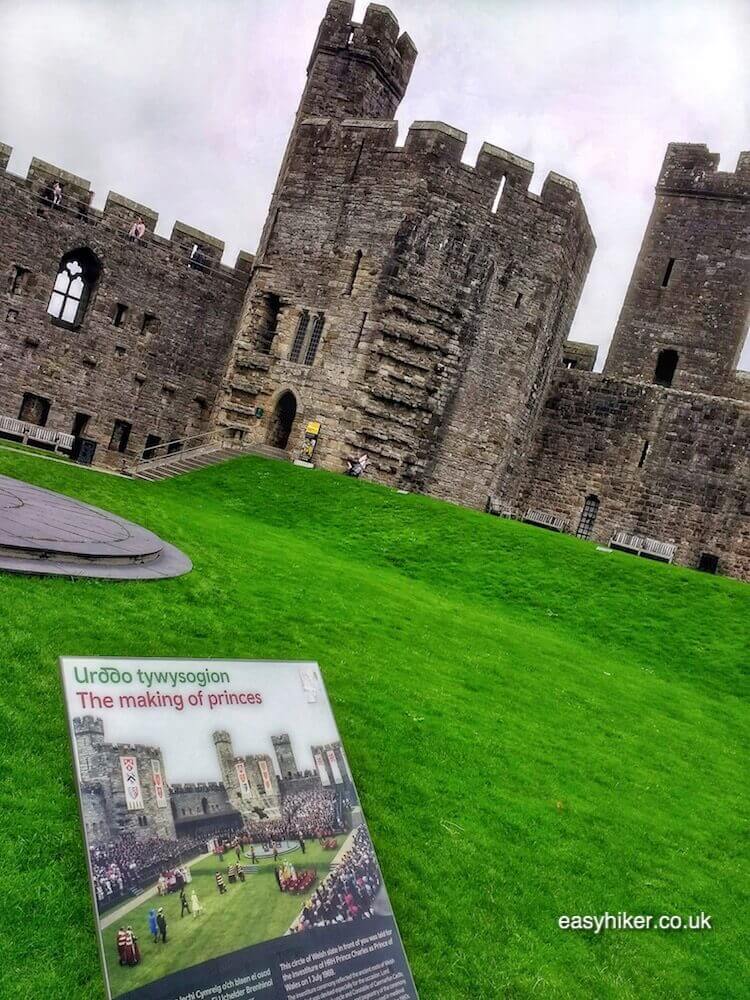
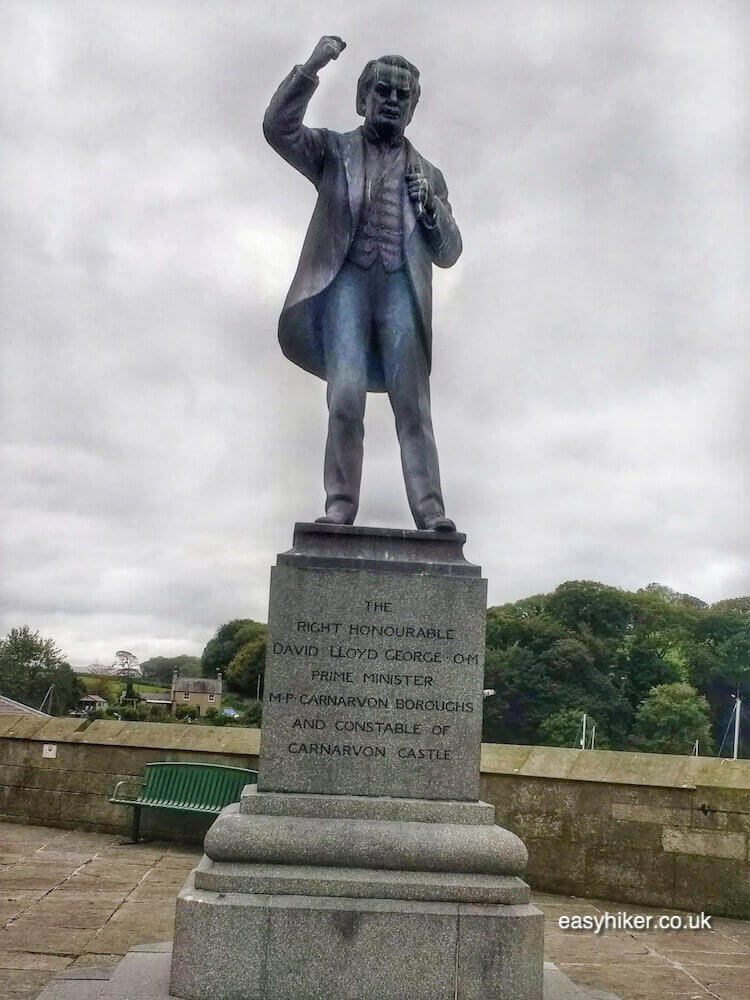
The 1911 “original” of a ceremonial investiture was very much the idea of Caernarfon-born David Lloyd George, the British Prime Minister at the time, who had spotted an opportunity for his home town to attract international attention and, perhaps, to spur an economic revival of sorts.
The plan worked like a dream, and when the town of Caernarfon – whose constituency Lloyd George represented in the British Parliament for 55 years – wanted to erect a statue for its most famous son, the city fathers decided to place it right next to the castle, which would not be what it is today without the wily manoeuvrings of the man who was, throughout his political career, known as the Welsh Wizard.
To round off your day in Caernarfon, we suggest a stroll through the medieval lanes and coastal promenades in the shadow of the castle’s walls. Caernarfon Town has a lively downtown area and protective fortifications of its own which date from the same period as the castle and which are also part of the UNESCO World Heritage Site.
Apparently – according to the local Tourism Office’s brochure – one part of Caernarfon’s coast, the promenade between the Anglesey Arms and the town borders, is locally known as the “South of France”.
This made us curious: the actual South of France, after all, is a part of the world that we know quite well. So we went to take a look …
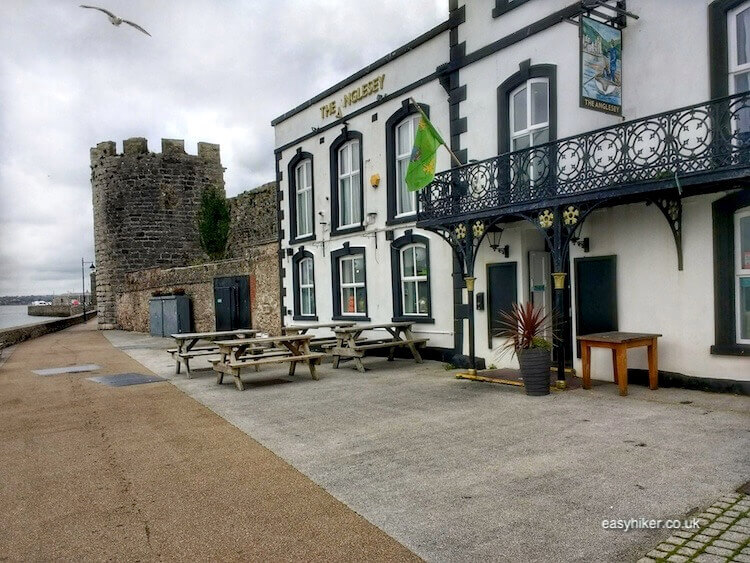
… and can report that we have never encountered anything quite like it on our home turf.
It is undeniable that Caernarfon’s coastal promenade has a certain rough-hewn charm, but as a replica of a Riviera seafront, it is somewhat unconvincing. If it’s authenticity that you are after, you will, all things considered, be better off at the Caernarfon Castle.