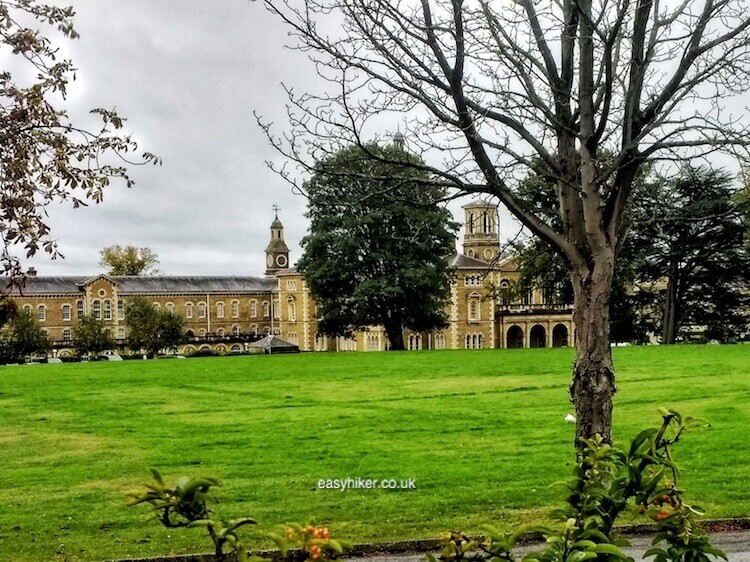
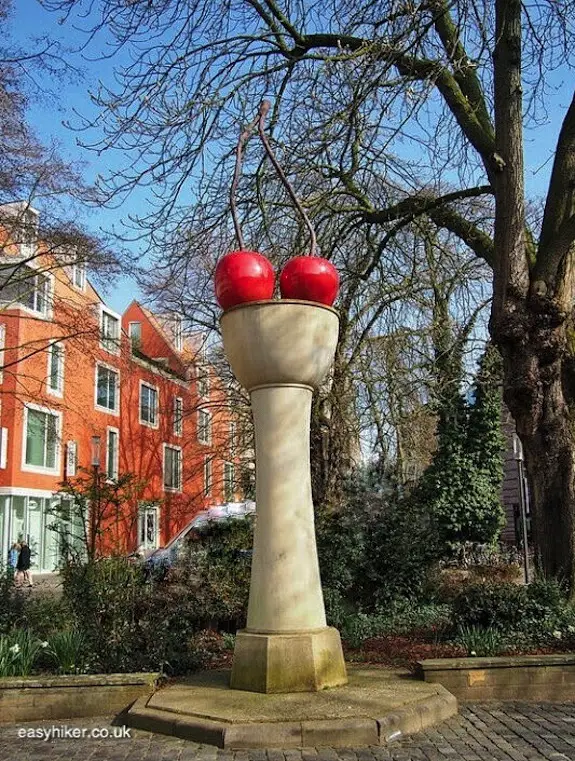
Traffic signs, street lights, bus stop shelters: street furniture is part of our lives, and we rarely ever give it a second thought. The pieces are one-dimensional: they have a specific job to do, and no other consideration – least of all aesthetics – seems to matter.
In fact, however, street furniture is a lot like the furniture in our flats: while certain items may be merely functional, others are also decorative, and some even have history behind them.
It is this latter type of street furniture on which we are focusing today.
Let’s Play Mailbox Bingo
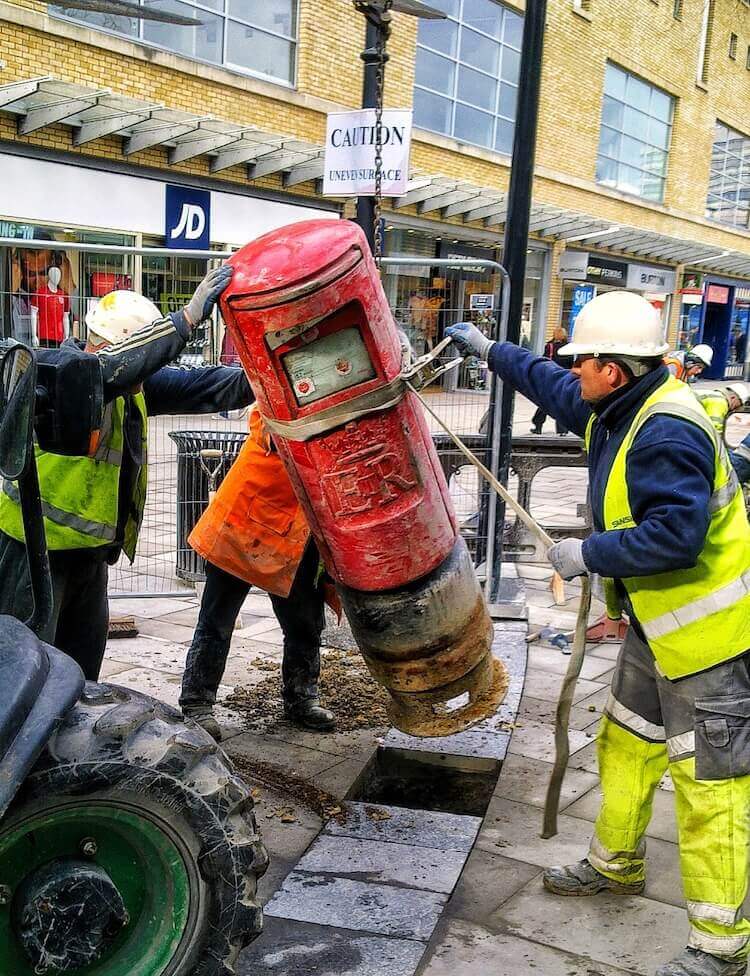
Mailboxes in England were first installed in the middle of the 19th century. Before that, people had to make their way to a post office or a franchise holder to send (as well as to receive) a letter.
This could be a very tiresome process – literally so: you may have needed to walk for miles to find the nearest “postmaster” – and, especially for women, one that was fraught with social risks. (Other people might be wondering: who could she be writing to?)
The first mailboxes were painted green to better blend in with the landscape, …
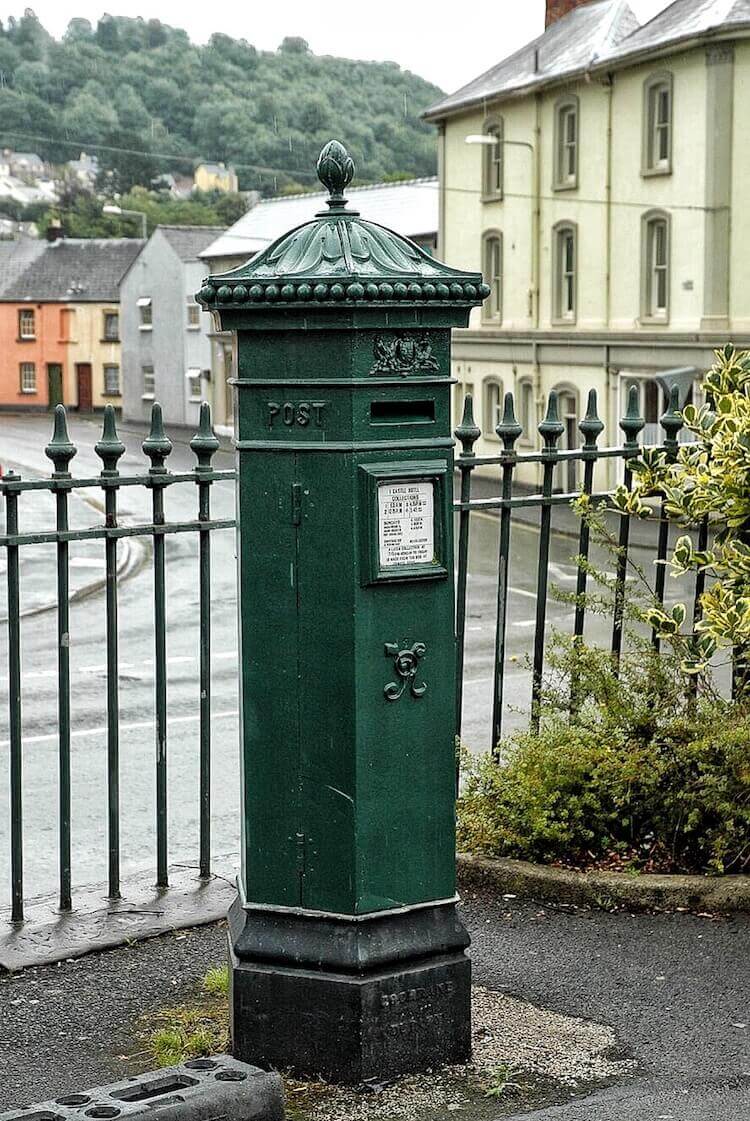
… but were soon turned red for the exact reason that they did not blend so well: red boxes easily stood out and could be spotted from quite a long way away.
Once that issue was out of the way, the design of the red cylindrical pillar boxes did not change significantly for almost 200 years – long enough for them to become beloved fixtures of Britain’s urban environment.
Today, every once in a mile, you will spot a box that has been lovingly decorated by members of the community. The Brits clearly love their mailboxes.
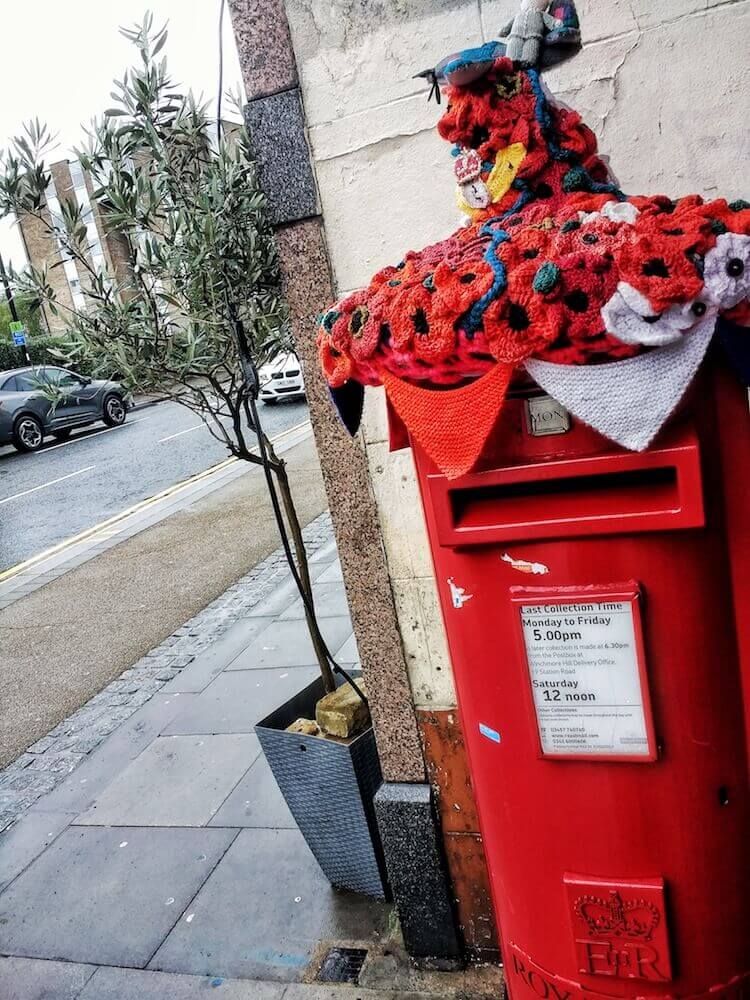
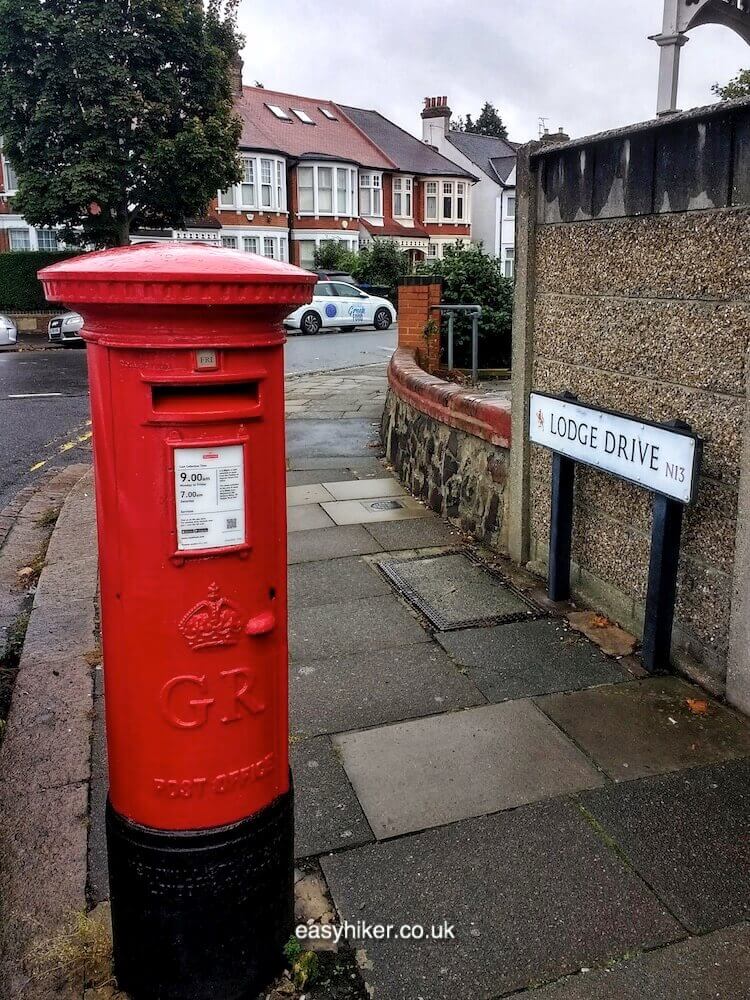
There is, however, one part of the boxes that occasionally undergoes a change of design: the panel on the front door always bears the cypher of the monarch who ruled the country when the box was first put up. This allows us to date the box, approximately at least.
Let this be your guide for our mailbox bingo!
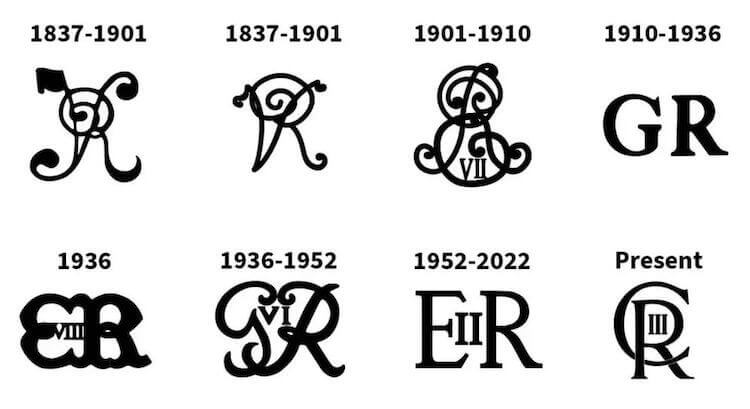
These cyphers share certain formal features: the R (for Rex or Regina), the crown (added by Edward VII) and the regnal number (only Queen Victoria neither has nor needs one).
Beyond that, however, the cyphers range in style from the stark minimalism of George V to the Rococo of Edward VII, managing to give us clues about the characters of the individual royals.
They also provide insights into the country’s urban and social history. New boxes were mainly added when new settlements were built or the network density was increased in line with demographic patterns.
There was rarely a need to replace them, since their cast iron shell made them virtually indestructible.
The box on our old street corner in London, for example, was badly damaged when a van that was parked right behind it went up in flames. For a while, it was locally known as “the only black mailbox in England”. But there it stands today, with a new coat of paint and shiny as new.
Think about it: the mailbox on your corner, whether freshly painted or covered with the patina of centuries, may have stood in the same place since the time when you could buy opium over any pharmacy counter but it was illegal to openly question the existence of God.
And you are using this box in exactly the same way as folks who roped little boys into their chimneys to scrub them clean from the inside, by folks who dyed their hair with arsenic and who curtain-walled their dining tables because the display of bare table legs was considered obscene.
These boxes should be in a museum – and while some of them are, …
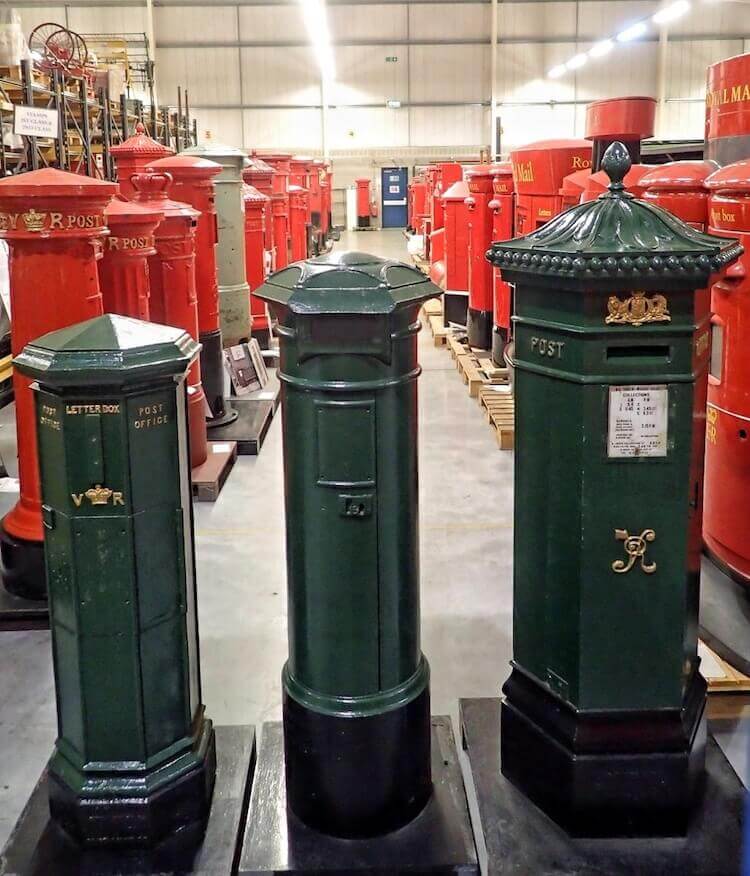
… thousands still hang around and do their job as the guardians of tradition: pieces of living history in our midst.
And as though that was not enough work for these senior citizens of Britain’s streets, we are about to assign them to do another job: to serve as the key features in our game of Mailbox Bingo.
This game is easy to play. If you live in the UK or are there on a visit, walk around the streets in your neighbourhood and see how many different mailbox cyphers you can spot.
Or, if you want to proceed more systematically, search first for the locations of local boxes on websites such as this one. Design a trail with a manageable number of boxes, say: ten – in densely populated areas, that should translate into a walk of about one hour. And then see what you can find.
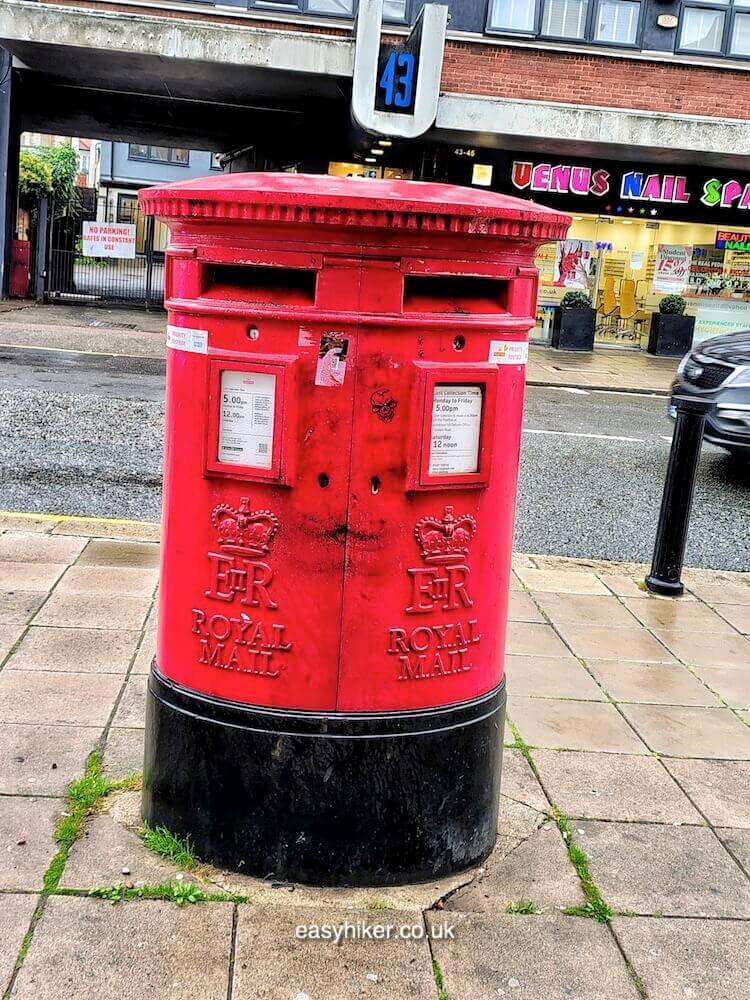
Half of the boxes you can spot will probably bear the cypher of Elizabeth II. There are approximately 100,000 red mailboxes boxes in the UK, and the Elizabethan ones account for roughly 60 per cent of this total.
The second most common cypher (about 15 per cent) belongs to George V, who ruled in the years on either side of WWI. This was a period when many new suburbs were created all over the country.
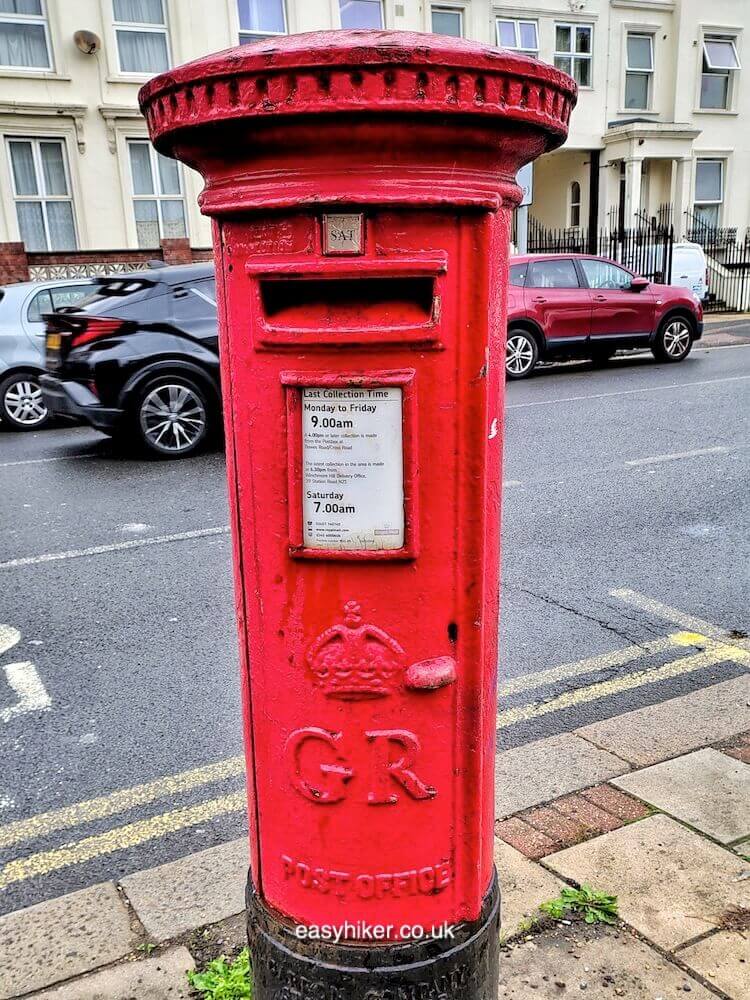
The other cyphers share the remaining quarter among them in roughly even measure. Edward VII reigned for only nine years at the beginning of the 20th century …
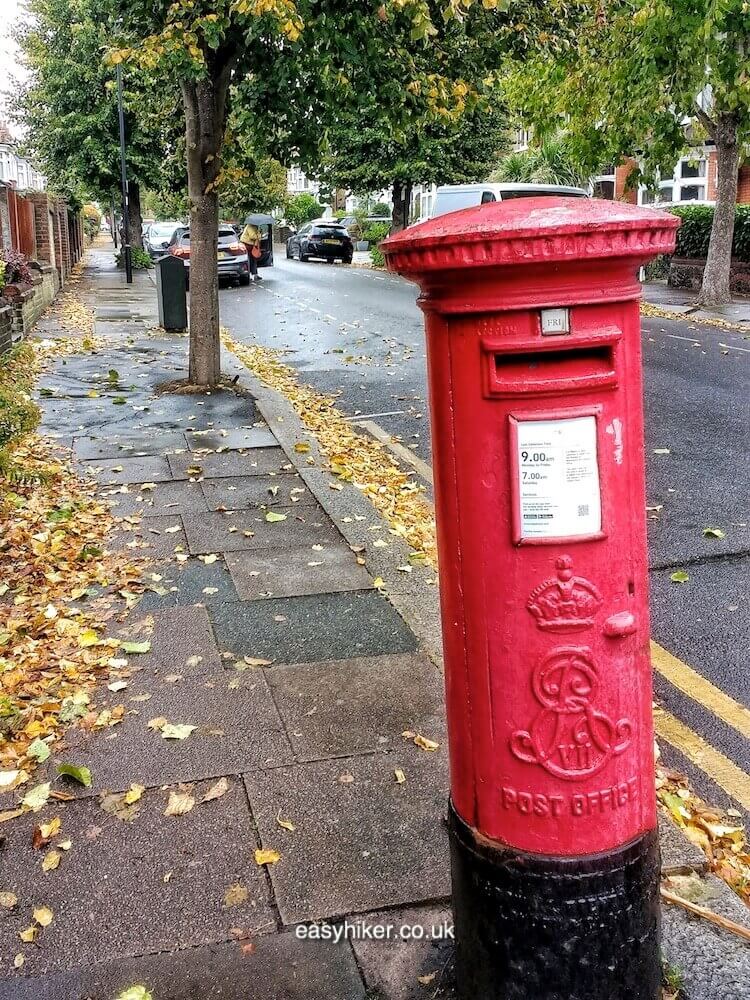
… and George VI (you may remember him from the Oscar-winning film The King’s Speech) ruled Britain during WWII when the country had more urgent matters to attend to than an extension of the mailbox network. That explains why the total of both monarchs’ boxes is relatively small.
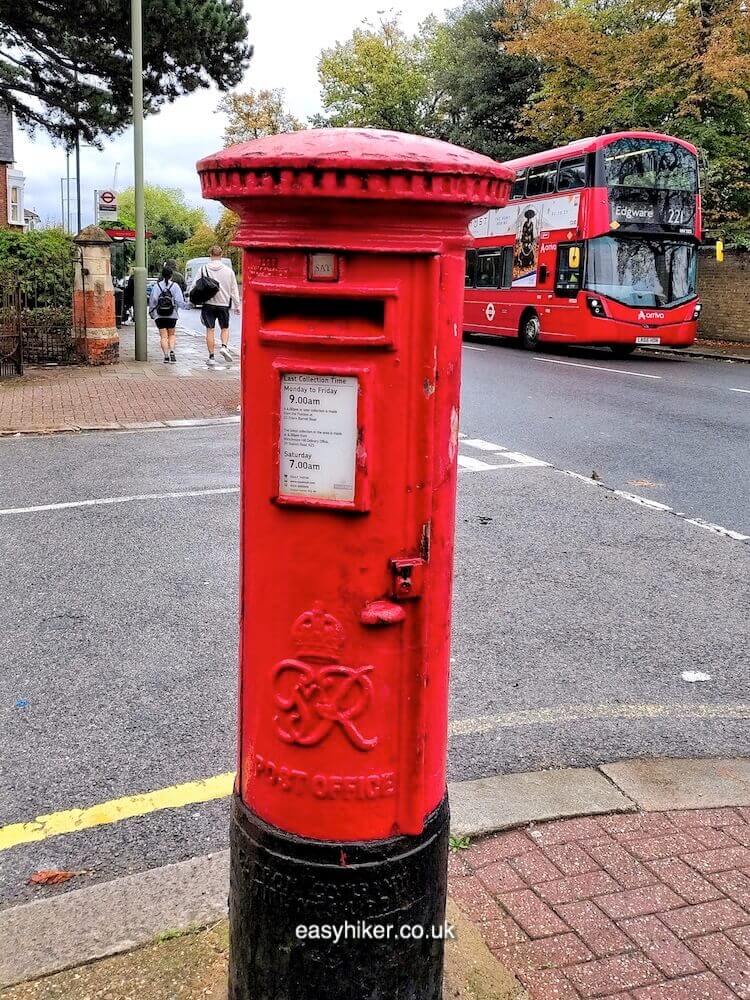
Boxes with Queen Victoria’s cypher come in two varieties. For the purposes of our game of Mailbox Bingo, either will allow you to tick off the challenge, the simplified and slightly more common version …
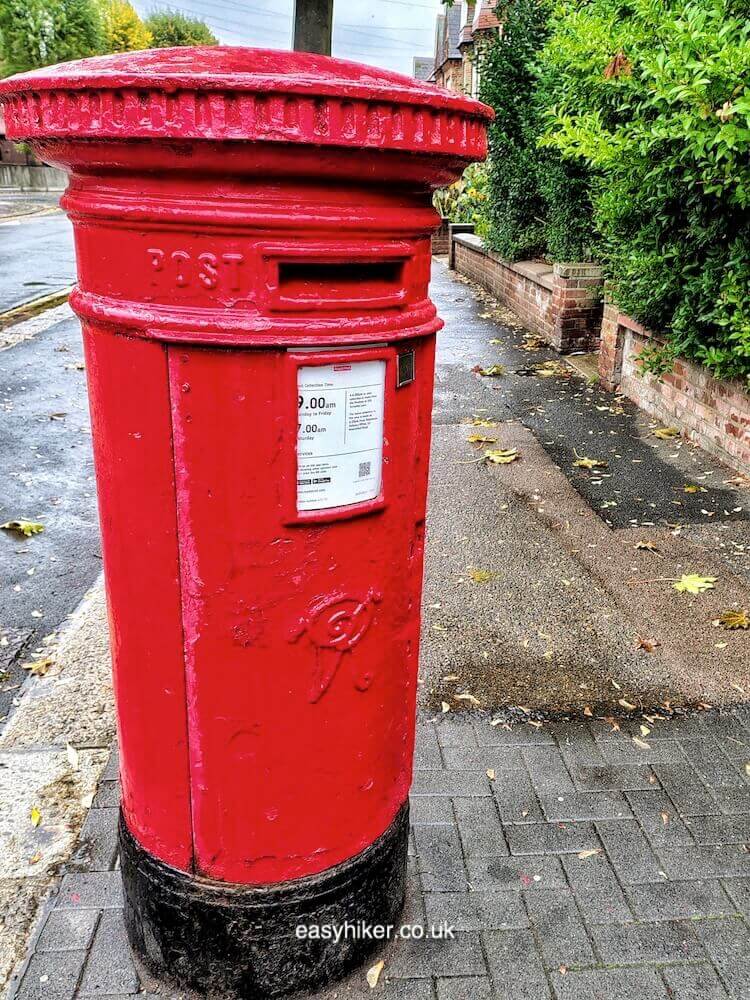
… as much as its more ornate predecessor. But feel free to award yourself an extra point if you can spot an older model.
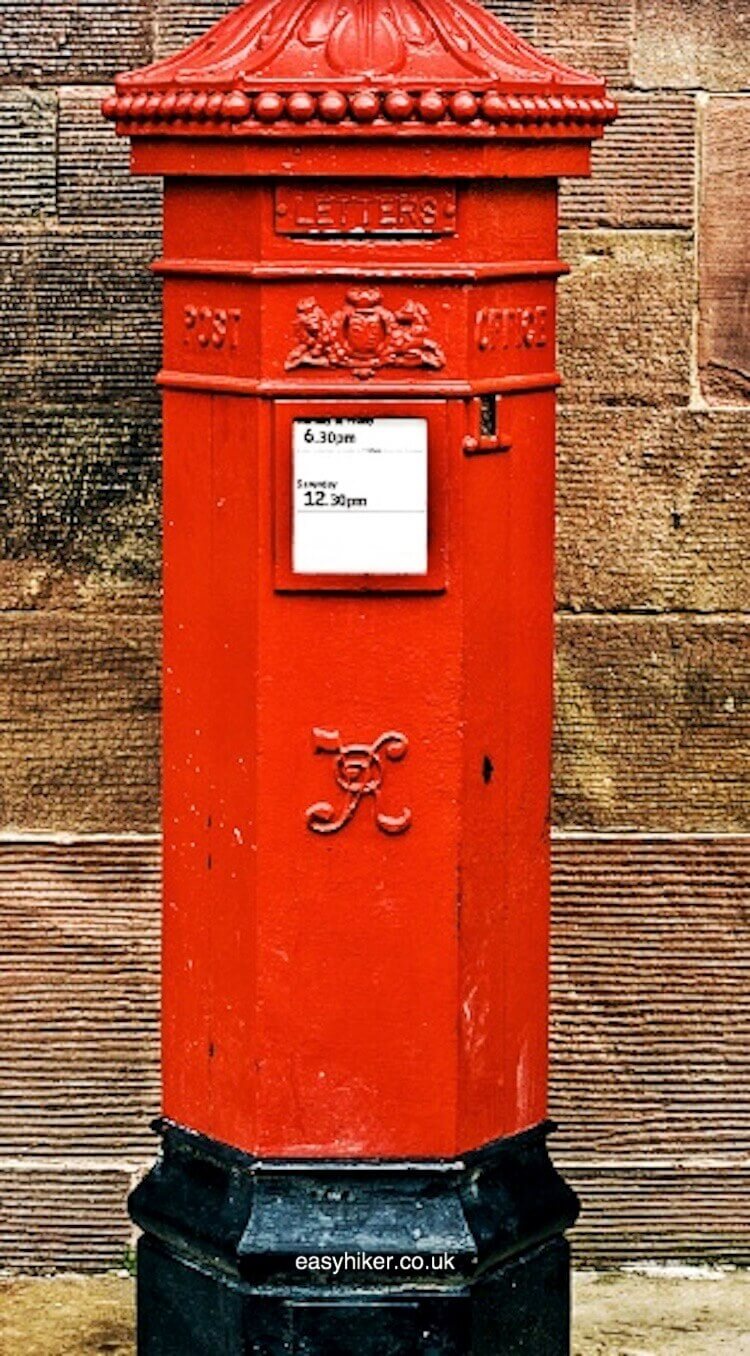
These five-and-a-half varieties combine for what I would call the Small Slam. For the full set, however, you will need an Edward VIII, the only really rare specimen.
Just 271 post boxes bearing Edward’s royal cypher were produced because he abdicated after less than one year in 1936, having been made to choose between the throne and the woman he loved. Some of his boxes were destroyed in WWII, others had their doors hastily replaced with those bearing the cypher of his younger brother and successor, George VI.
Only between 150 and 200 of Edward VIII’s boxes are thought to remain in the UK, but in our old corner of London, I found one close to our nearest underground station (Southgate). If you can also spot one on your own route: consider yourself a winner. BINGO!
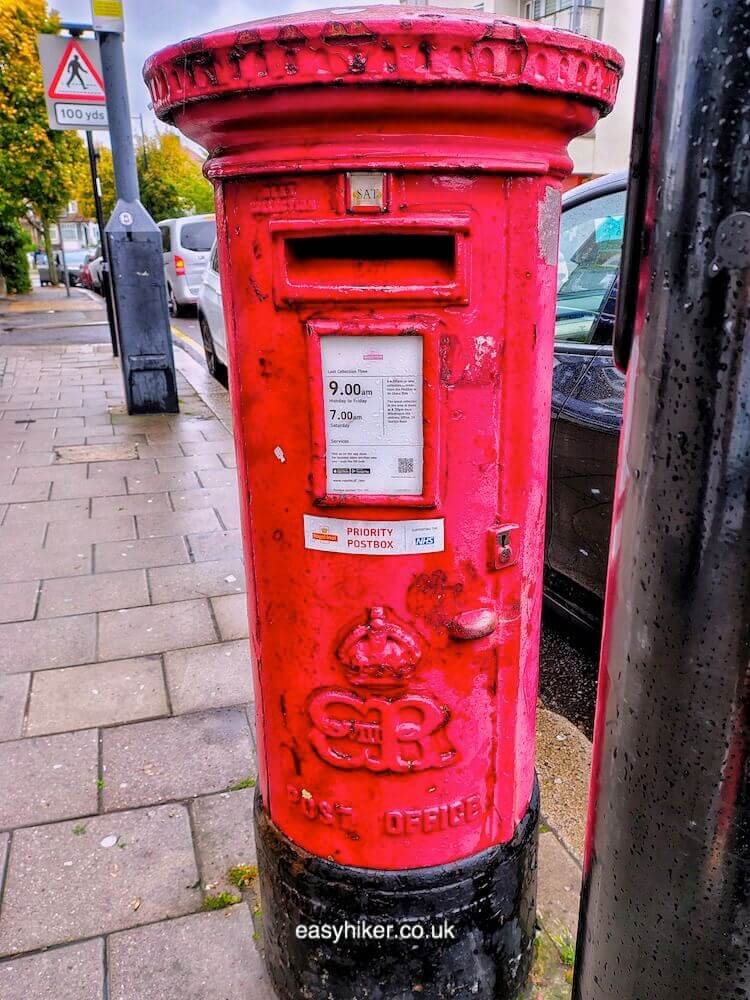
There is, however, one royal cypher that is rarer still, and that is the one of the present king. Only one mailbox bearing Charles III’s insignia has so far been put up (in Cambourne near Cambridge), and Charles has been king for 2 years.
At this rate, he would have to rule for another 540 years before matching even the modest output of Edward VIII. This may be stretching it a bit, even for a member of a family as famously durable as the Windsors.
At the end of your walk, count the different varieties of mailboxes that you have spotted, but don’t be disappointed if all you have found were Elizabeths and the odd George.
Mailboxes may be truly fascinating but not the only thing to discover on a walk through a British town that will turn out to be a lot less familiar than you may have thought. That insight may very well be the most valuable prize of all – as it certainly was for us.