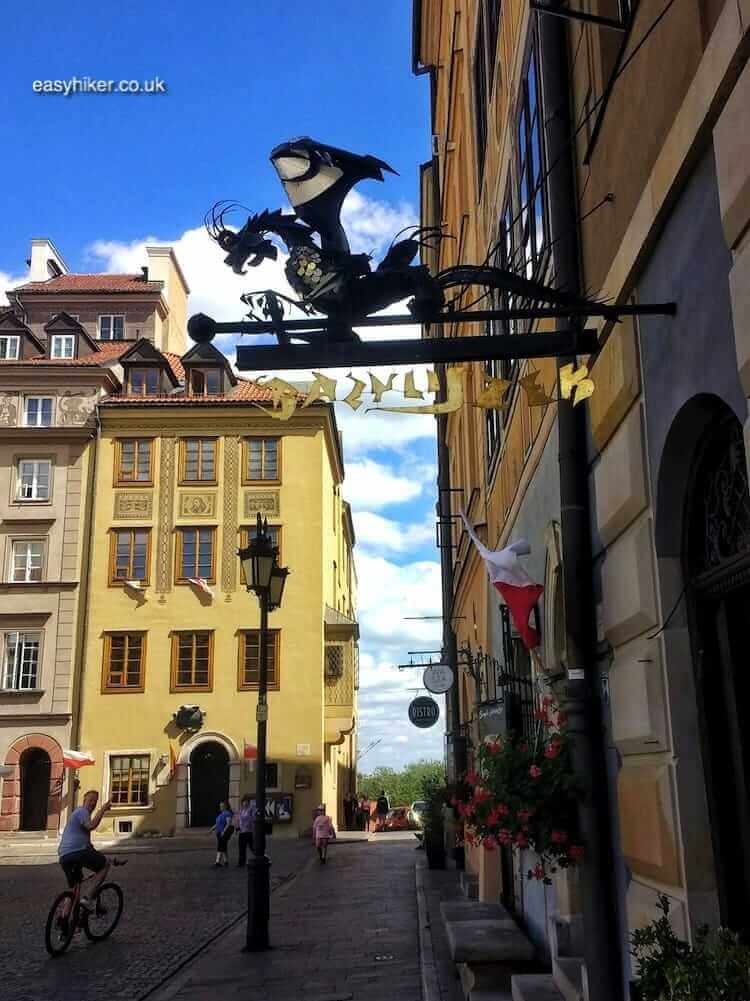
There are few cities in Europe that look as new as Warsaw.
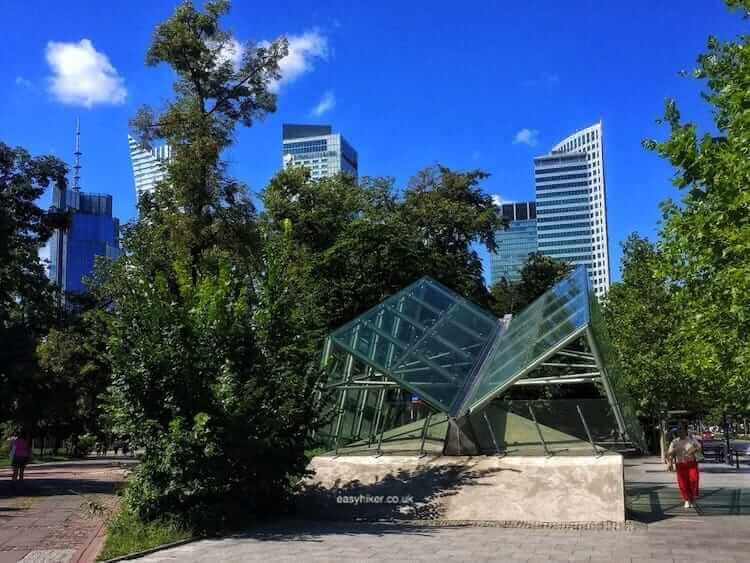
There are few cities in Europe that are as new as Warsaw. The Polish capital may look back on one thousand years of history, but you would be hard-pressed to find a building in town that was not built (or entirely rebuilt) after 1945. This is even true in the one quarter of town where not everything looks new.
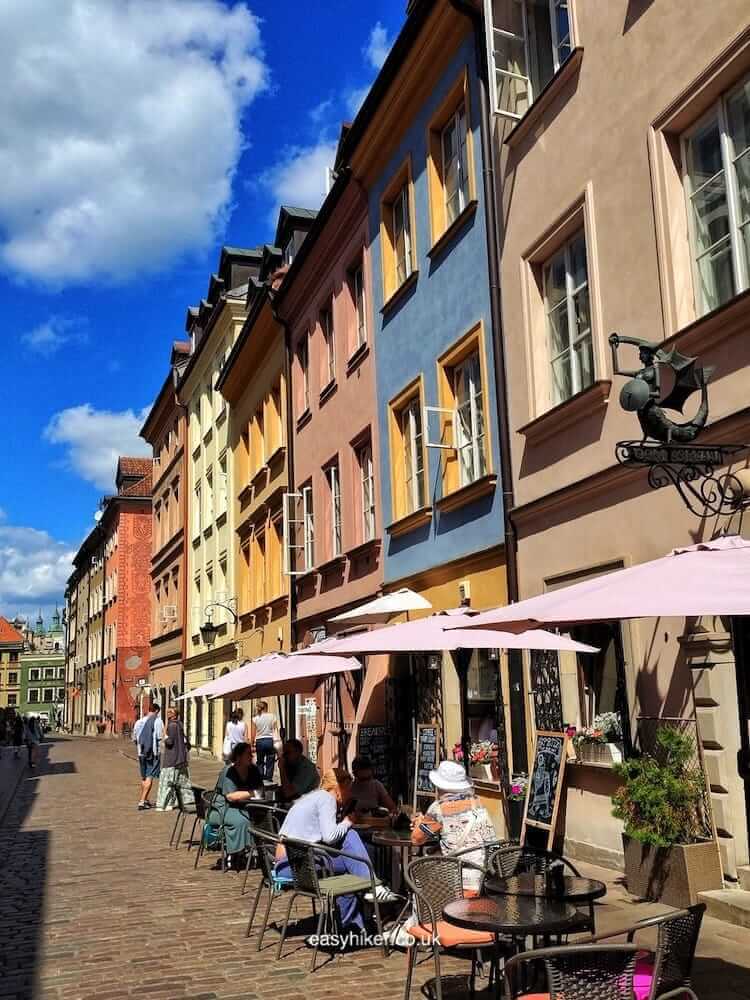
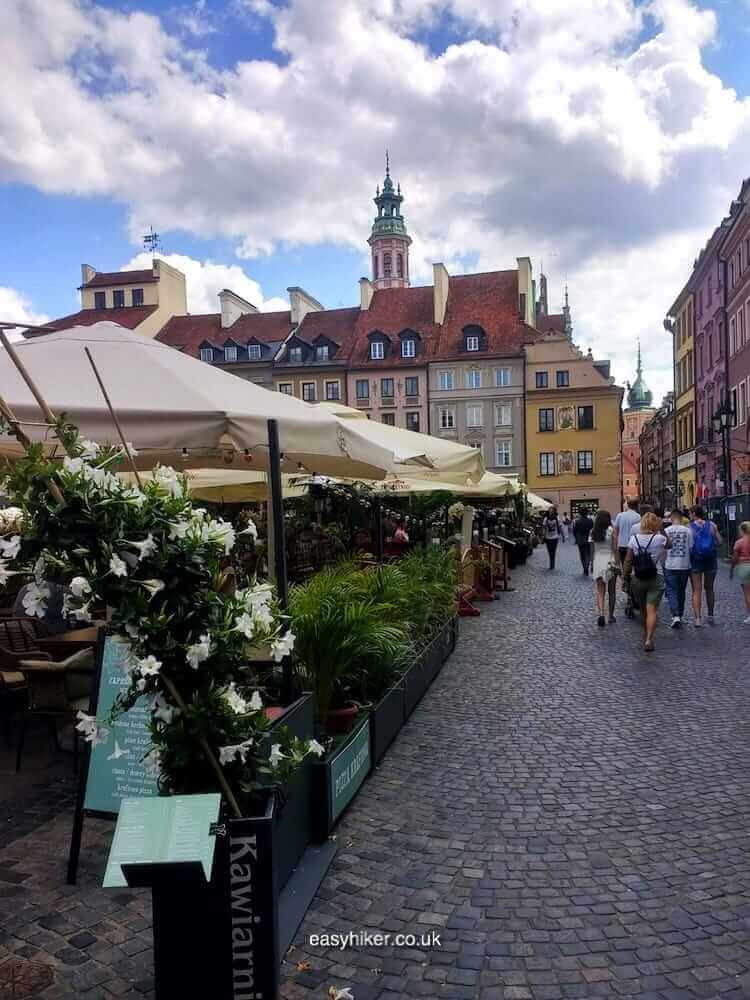
Warsaw’s ancient centre is, once again, its scenic and quaint self, …
… but 80 years ago, it was little more than a heap of ashes: the most heavily destroyed part of the most heavily destroyed city in post-war Europe. When some sort of peace finally came to Warsaw, 90% of its urban fabric lay in ruins. That is a scale of devastation similar to that of Hiroshima.
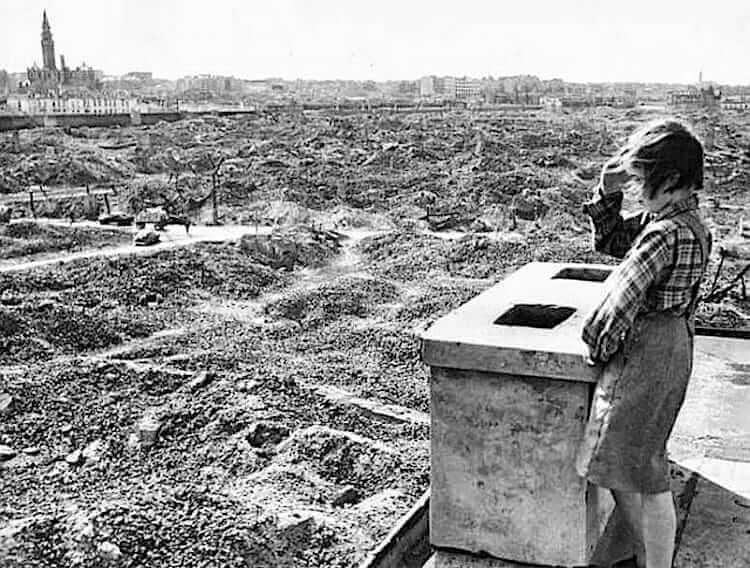
It was briefly mooted in 1945 to leave Warsaw in its state of utter destruction, as a monument to the horrors of war, and to rebuild the city in another place. Mooted it may have been, but seriously considered it never was.
The mood of the moment demanded an act of defiance and pride: show our enemies and the world that we can rise from the ashes. And since the Polish people did not have the means and wherewithals to reconstruct Warsaw in its entirety, they concentrated their efforts on the one quarter whose history was most closely linked to that of the nation: the city’s Old Town.
The scale of devastation in the two cities that have become metaphors for the destructive power of war may have been similar, but while all the damage in Hiroshima was done within seconds, the disappearance of the old Warsaw was a six-year long tragedy of several acts.
Almost 40% of the city’s urban fabric was destroyed as part of the German retaliation for the Nationalist Uprising of 1945, but even before that, much of Warsaw already lay in ruins.
10 percent of its building fabric had been wiped out by the bombing campaign of the 1939 German invasion, 15% went when the Jewish quarter was razed following the Ghetto Uprising, and the battles of the Nationalist Uprising one year later accounted for another 25%.
The Nationalist Uprising of 1944 is celebrated in today’s Poland as the ultimate act of National Heroism …
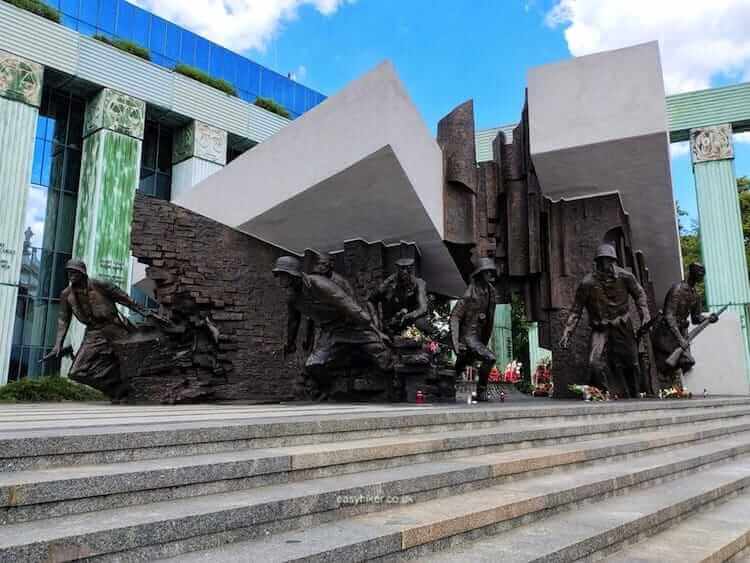
… although neutral historians take a somewhat more balanced view.
Today, we are going to explore this unique story of catastrophe and renewal in a walk, beginning where one of the fiercest battles of the Warsaw Uprising raged for a full four weeks.
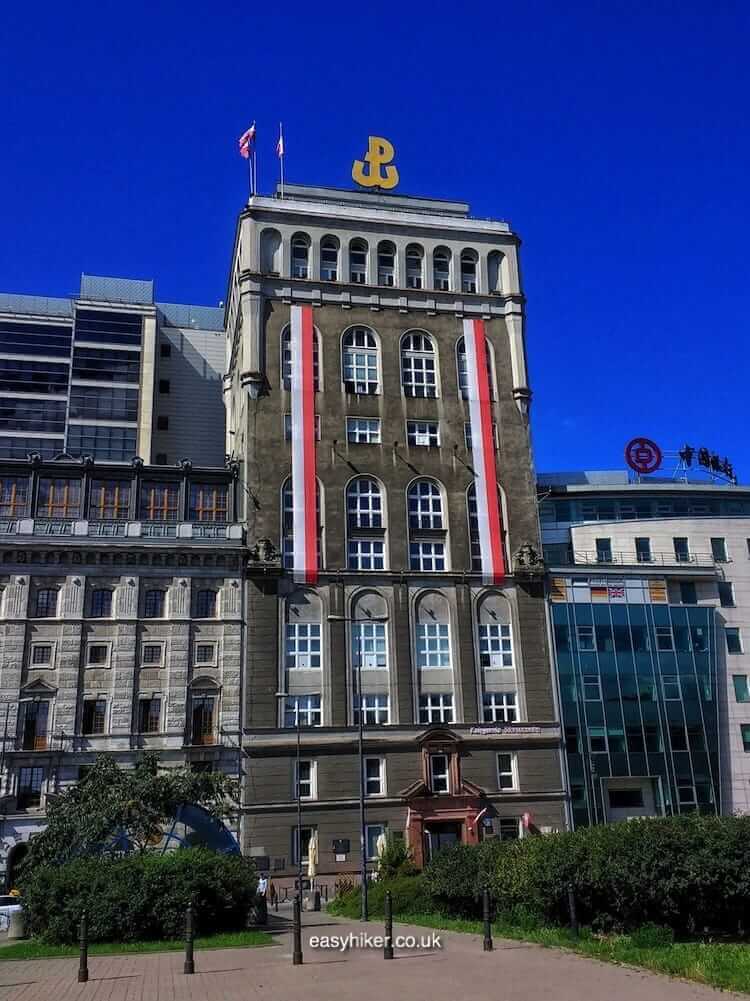
The PAST tower on 29 Zielna Street (near the central train station) may look fairly nondescript today, but when it was built (in 1908), it was the tallest building in Europe. For much of the interwar years, it served as Warsaw’s Telephone Exchange: the city’s window to the world.
PAST was one of the few trophy wins by the Nationalist Home Army in the summer of 1944, while more strategically important targets (such as bridges over the Vistula river) and more symbolically relevant ones (including all of the Royal Palaces) eluded them.
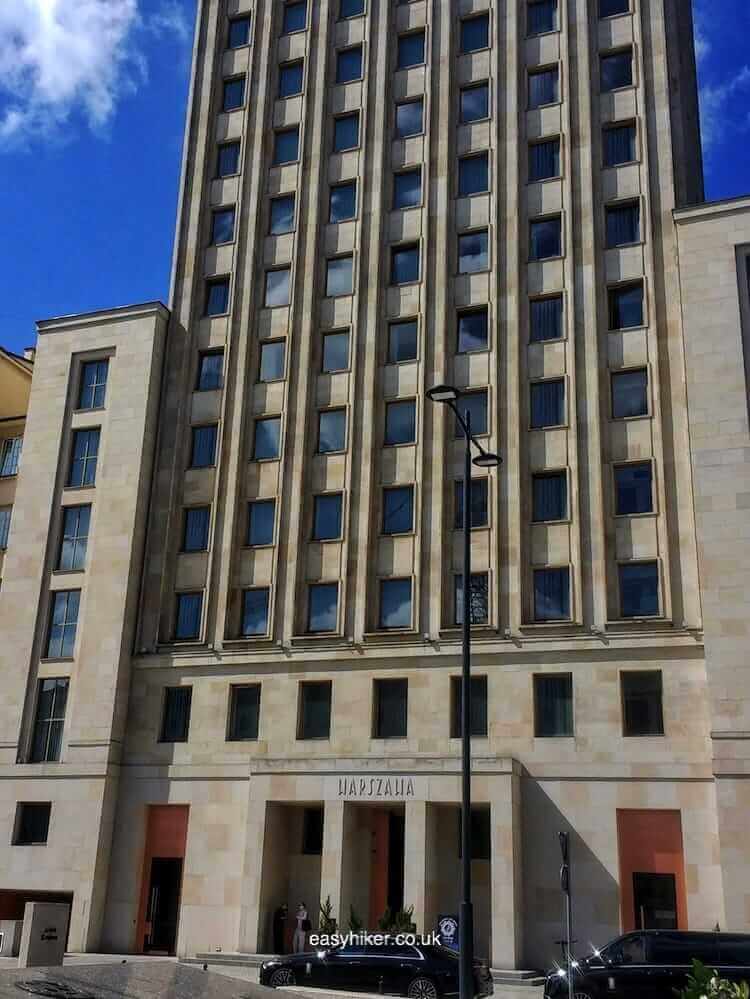
There was only one other such showcase conquest for the Home Army: the Prudential Building on Plac Powstancow (now the Hotel Warszawa), central Warsaw’s only skyscraper at the time, which stands approx. 500 metres away from Zielna Street behind the corner of Marszalkowska and Swietokrzyska.
So why did the Warsaw Uprising fail? Its objective was never to defeat the entire German Army (the Nationalist Home Army did not have the heavy artillery or the air support for that) but to briefly wrest control over the city from the soldiers in the garrison, supposedly demoralized men in let’s-save-our-own-skins-mode at the brink of being overrun by the Red Army (which was, at the start of the Uprising, a mere three-day march away).
This Home Army strategy failed on two counts: firstly, the Germans were not in the mood to give up control without a fight. They reacted furiously to the Home Army’s attacks, mercilessly bombing Warsaw’s residential quarters while standing their ground in the intense street battles.
Secondly, and even more consequentially, the Nationalists had expected to hold control over Warsaw only for a few days before the arrival of the Red Army who would then beat back any German reinforcements. The hope was to enter negotiations with the Russians about the future of Poland as the capital’s liberators, similar to what General de Gaulle was achieving in Paris at the same time.
But Stalin had no appetite for negotiations with the Polish Nationalists and was, at least that is what most modern historians think, happy to see the German reinforcements slowly grind down the Polish Home Army, reducing their number (by approx. 50%) and weakening their capacity for resisting a Soviet takeover.
By the time the final act of the tragedy unfolded, the Red Army had advanced to the right bank of the Vistula, in sight of the Old Town (the view of the river from the Gnojra Gora viewing platform shows how close they were) …
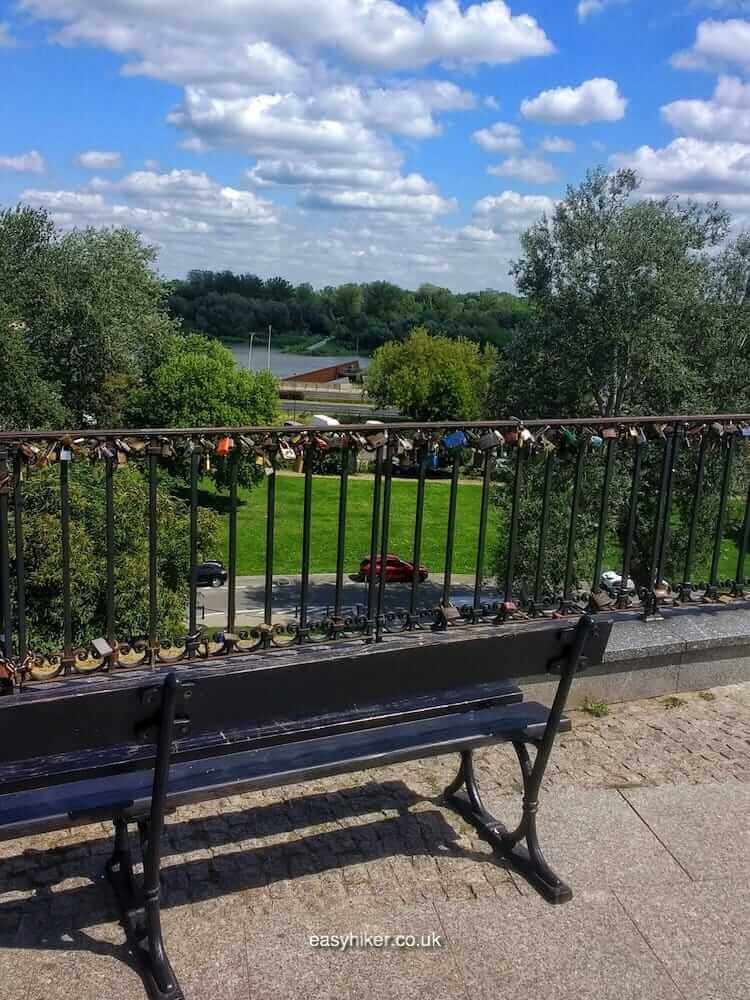
… where Russian soldiers were sunbathing on the far river bank (so it is said) while fresh and well-rested Death-and-Demolition squads, brought in from Germany, killed tens of thousands of civilians and set thousands of houses of fire.
One would have thought that the German Army’s High Command had more urgent matters to attend to with the allied armies in the West advancing just miles from the German border, but no: the destruction of Warsaw was regarded as a mission of top priority.
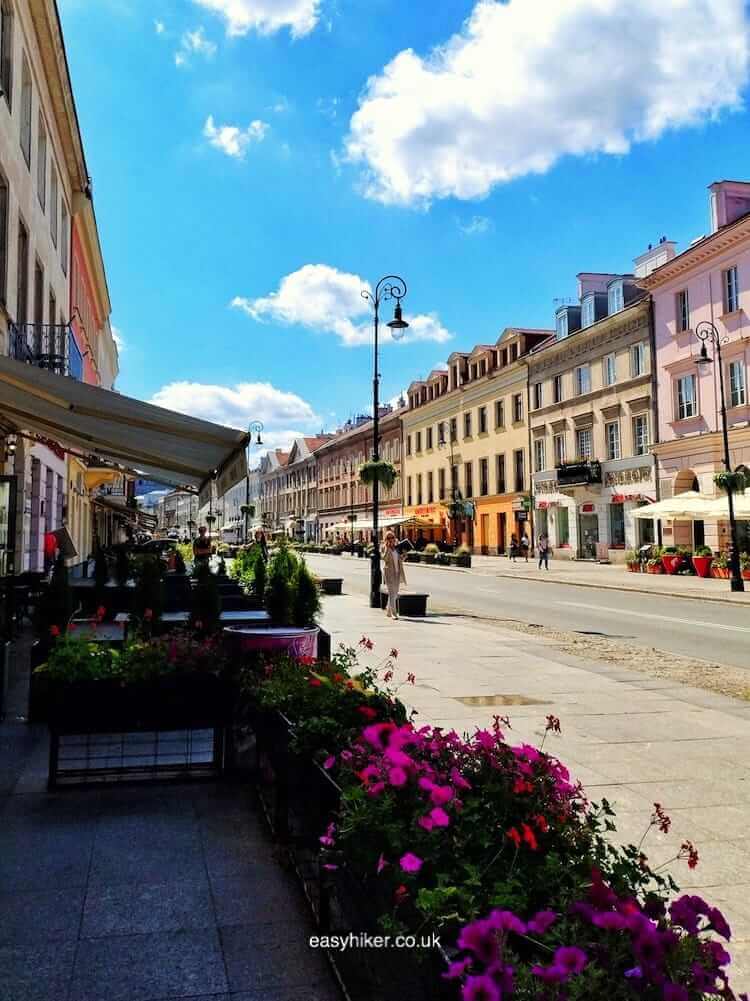
From the old Prudential Building, turn east (towards the University metro station) and left into Nowy Swiat Street, Warsaw’s main shopping mile, where the rather grim scenery of modern Warsaw takes a gradual turn for the better.
In order to understand the ideas underlying the reconstruction of Warsaw’s Old Town, it is important to know that the rebuilding effort was only partly based on photographic pre-WWII evidence. The objective was not to recreate the Polish capital as it had been in 1939 – an inevitably flawed compromise between architectural principles of beauty and the needs of a modern city – but something purer and more ideal.
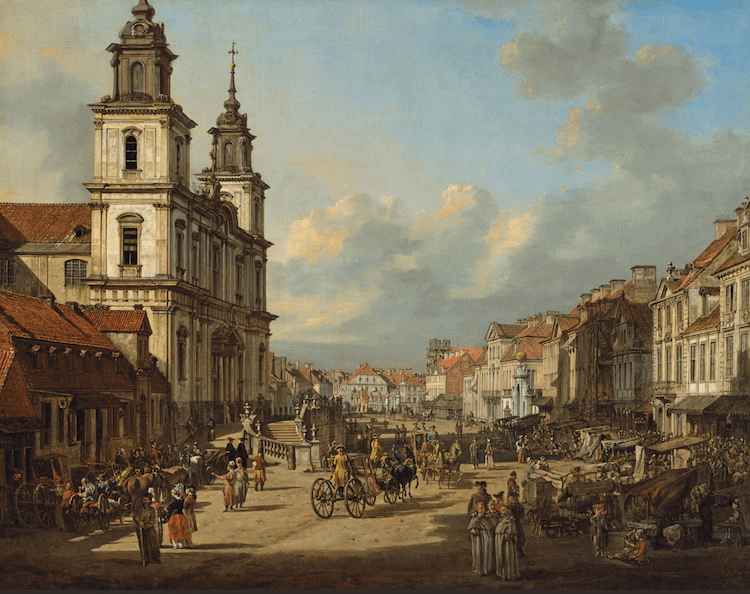
So wherever possible, the restoration committee took its cues from the works of the Italian painter Bernardo Bellotto who had served the Polish king Stanislaw Augustus as chief court painter in the 18th century and who had, just like his teacher and uncle (the great Canaletto whose name Bellotto occasionally assumed), taken a certain degree of artistic licence in his depictions of urban sceneries.
Many vistas of Warsaw’s modern cityscape – such as the view down Nowy Swiat with the Church of the Holy Cross on the left hand side – therefore may reflect Bellotto’s vision more than any reality that ever existed: a textbook case of life imitating art.
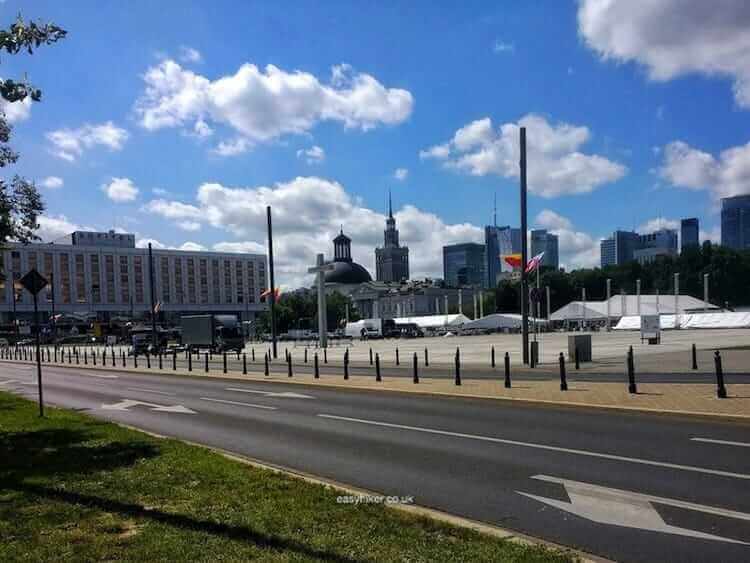
When reaching Ossolinskich Street, turn left for a look at Pilsudski Square: this is where the 17th century Saxon Palace served the German garrison as its HQ throughout the period of the occupation.
Before the Germans left, however, they razed the palace so thoroughly that, at the end, little more of it was left than a hole in the ground. This was one reconstruction too far even for the dedicated rebuilders of Warsaw.
Continue into Moliera and turn right into Senatorska for the grandest possible entrance into Warsaw’s Old Town. Plac Samkowy is bookended by the Royal Palace on your right and the Sigismund Column on your left hand side.
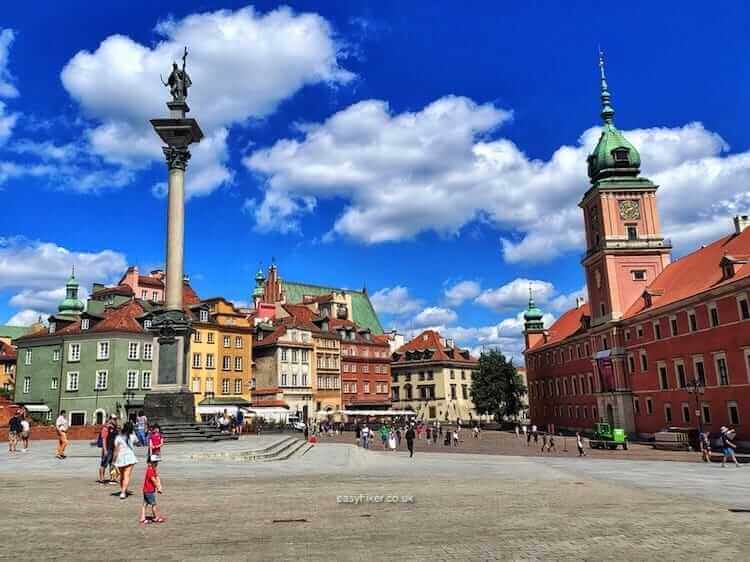
From here on, it is best just to stroll around and follow your instincts, turning into whichever side street may look most interesting.
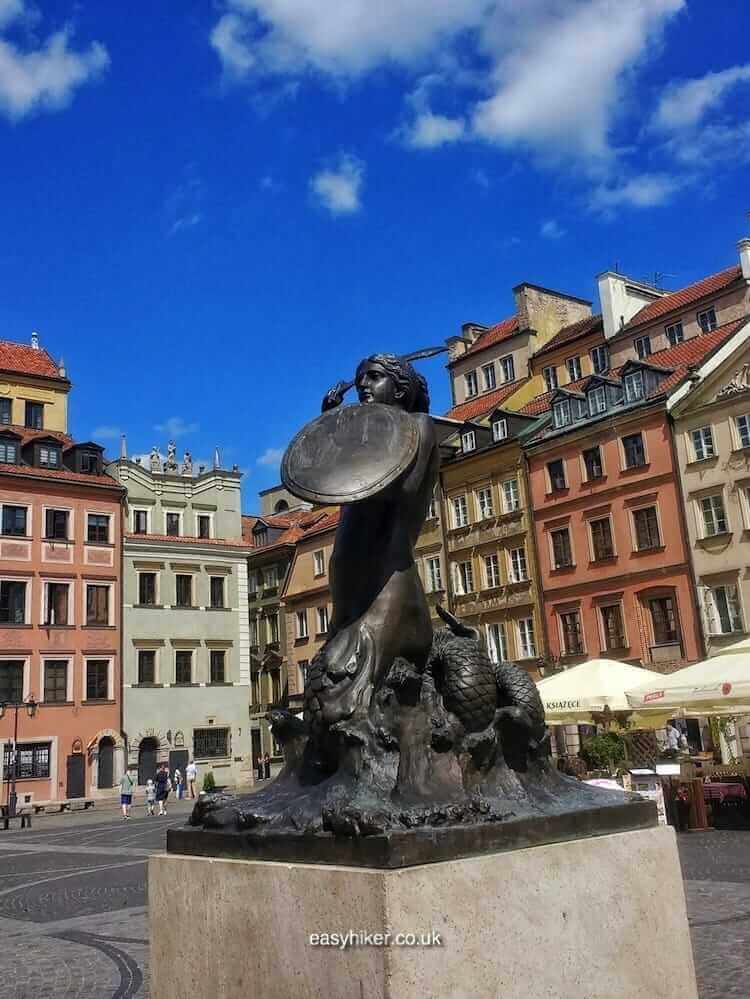
The Old town is quite small – not more than a quarter of a mile wide and about three blocks deep – so it is possible to see everything while zigzagging your way through a quarter that is steeped in history and full of ancient stories such as the myths of mermaids, …
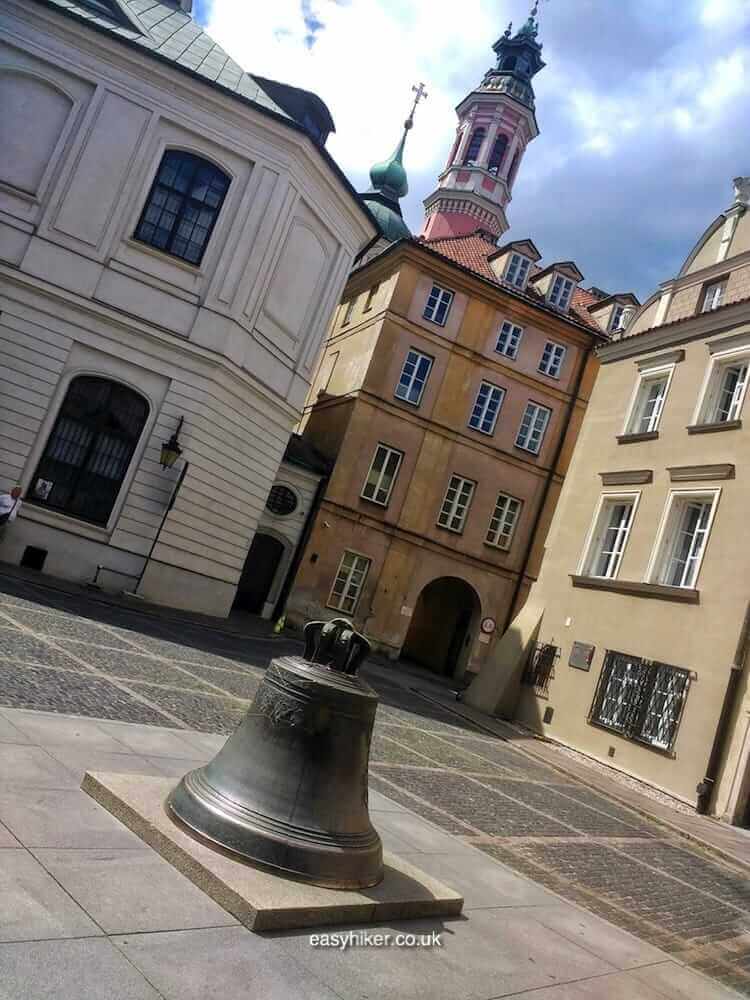
… stories of star-crossed lovers whose wedding bell – which never rang for them – is said to have magical powers (any prayer from the Wishing Bell, some people believe, will go straight to heaven), …
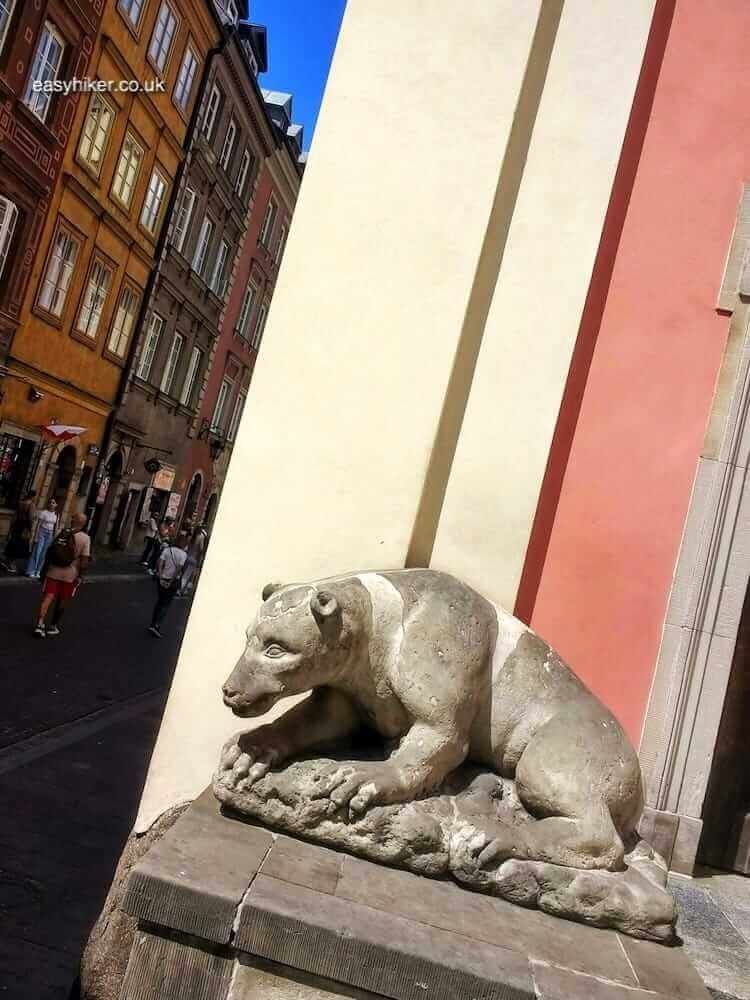
… and the tale of a Polish Tarzan of the Bears, a brave foundling who remains waiting – now in the shape of one of the animals that raised him – for the kiss of his one true human love.
But the greatest story of all is surely the story of Warsaw’s Old Town itself: a triumph of the human spirit over adversity and over all the monsters that hopelessness and despair can breed.