Today, we will be continuing our exploration of the traboules, Lyon’s hidden passages that connect neighbouring buildings and sometimes entire apartment blocks. We will do so, however, in a different part of town: in a quarter that has more of an airy feel than the occasionally claustrophobic Vieux Lyon …
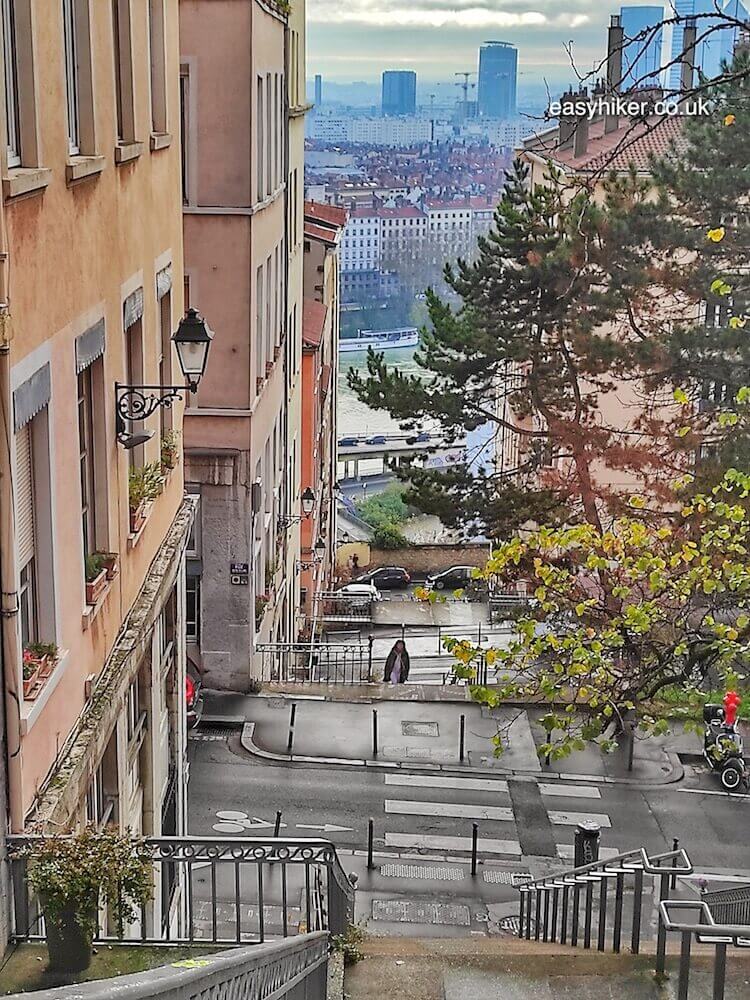
… and in a different manner.
Last week, you may remember, we invited you on a ramble through the old town that was half pick-and-choose (30 buildings in the area are covered by an agreement with the local tourism board that keeps the front doors of apartment buildings open for visitors … ) and half hit-and-miss (… but not all residents comply with its terms).
Today’s trip, conversely, is more of a conventional walk with a trailhead and a destination. It even comes with markers and directional arrows like a countryside hike …
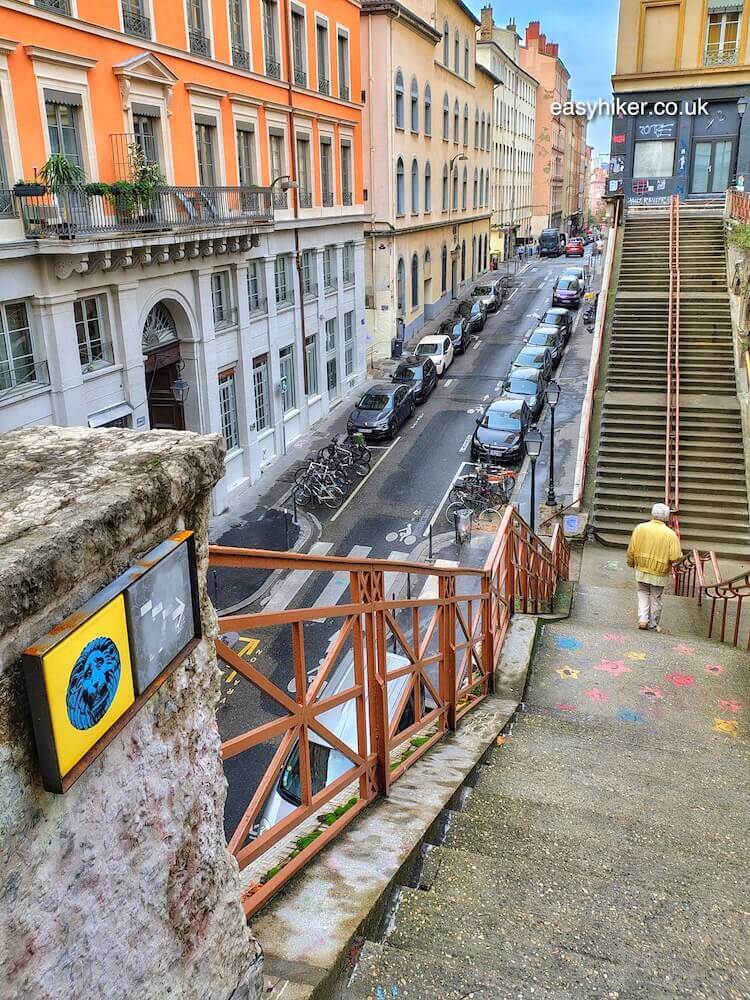
… and also features suggestions for detours (which is why the arrows sometimes point in different directions), ensuring that you see something other than corridors – things like the Place du Forez, for example, which was built in the 1790s to replace a convent that had been destroyed during the French Revolution, …
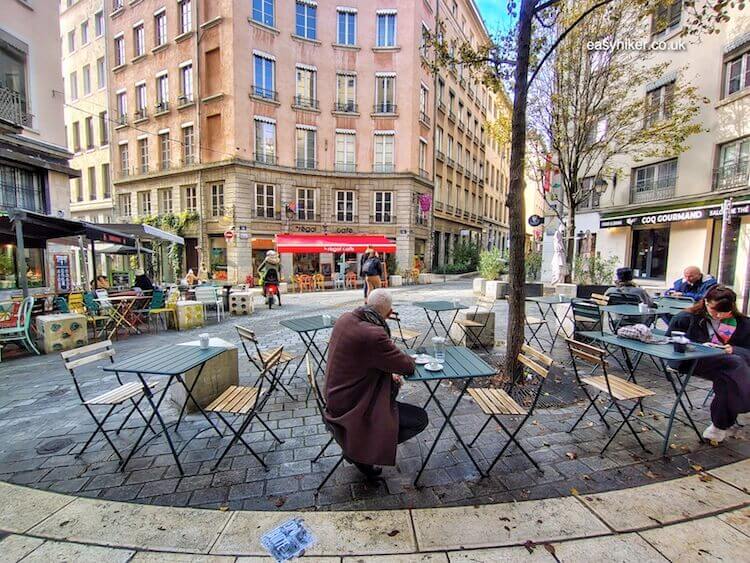
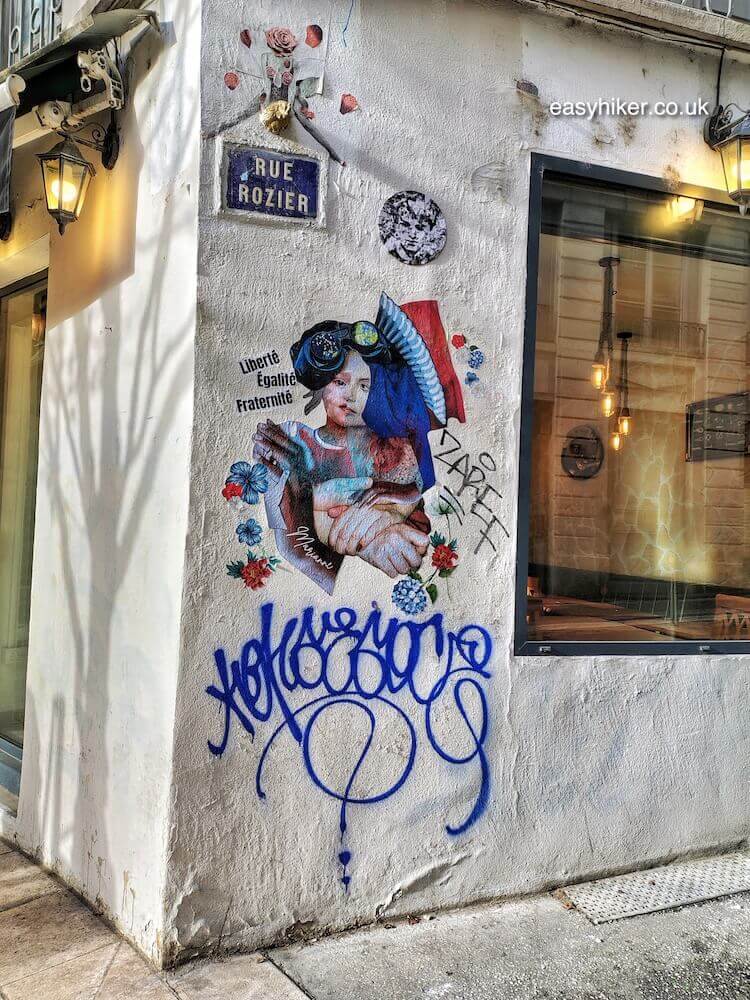
… and some of its side streets that still appear to celebrate the tie between the neighbourhood’s birth and the events of July 1789.
Traboules of the Croix-Rousse
But we start with a traboule – and not any traboule but the most famous of them all. The Traboule des Voraces is located on the Cours des Voraces (entrance on 9 Place Colbert, a short walk from the Croix-Paquet metro station) underneath a bold and seemingly modernistic building that was, in fact, constructed in 1840 as a home for workers in the local silk industry. A centre in the silk workers’ fight for unionisation and a hub in the popular uprisings of 1848 and 1849, the building has since been listed as a Monument Historique.
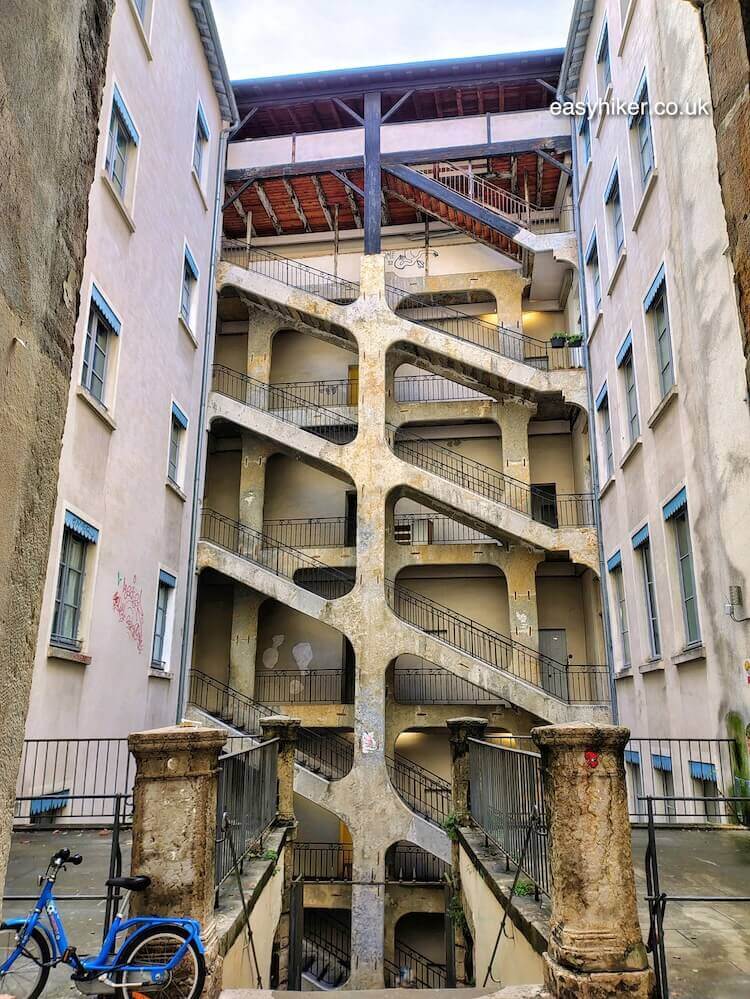
The Traboule des Voraces connects 3 houses on two different streets and starts on the ground floor of the courtyard’s main building. Follow the passage into the cellar …
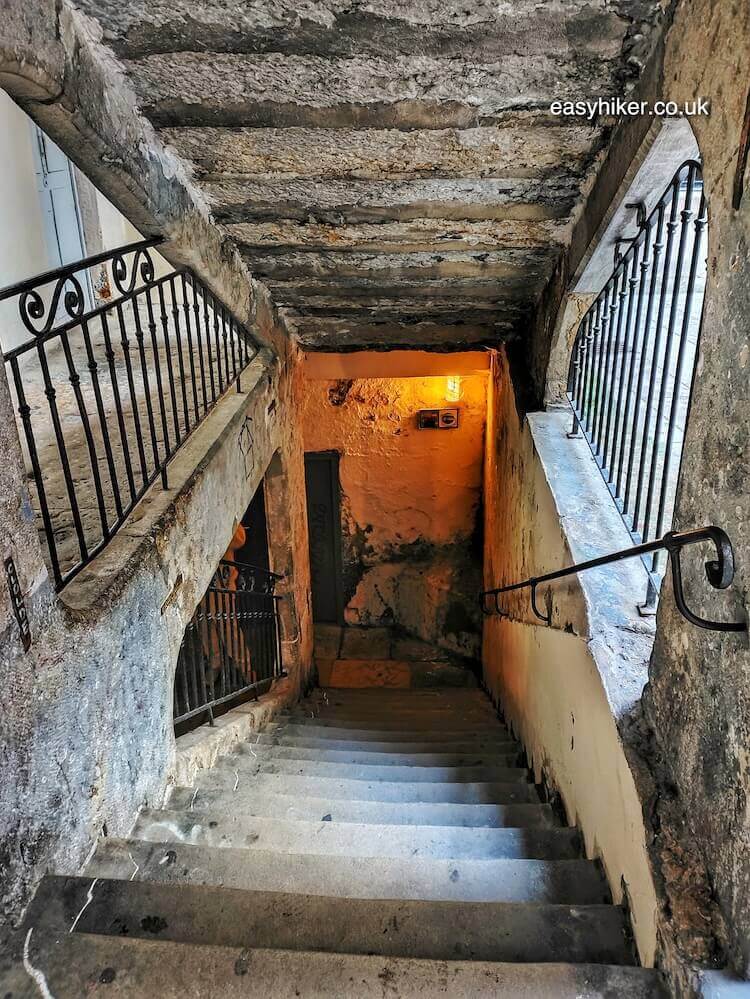
… and then through a labyrinth of internal walkways to the exit on 29 Rue Imbert-Colomès.
Now continue straight by crossing this street into the doorway of no. 20. Walk into the courtyard and down the stairway …
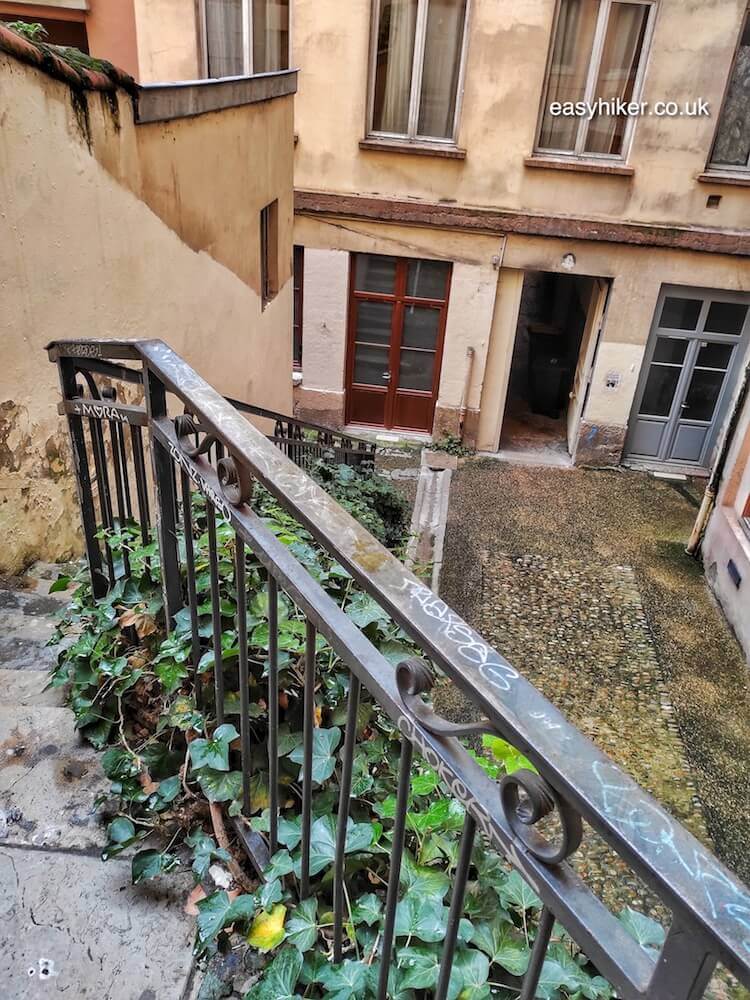
… to enter another corridor, coming out at the Rue des Tables Claudiennes.
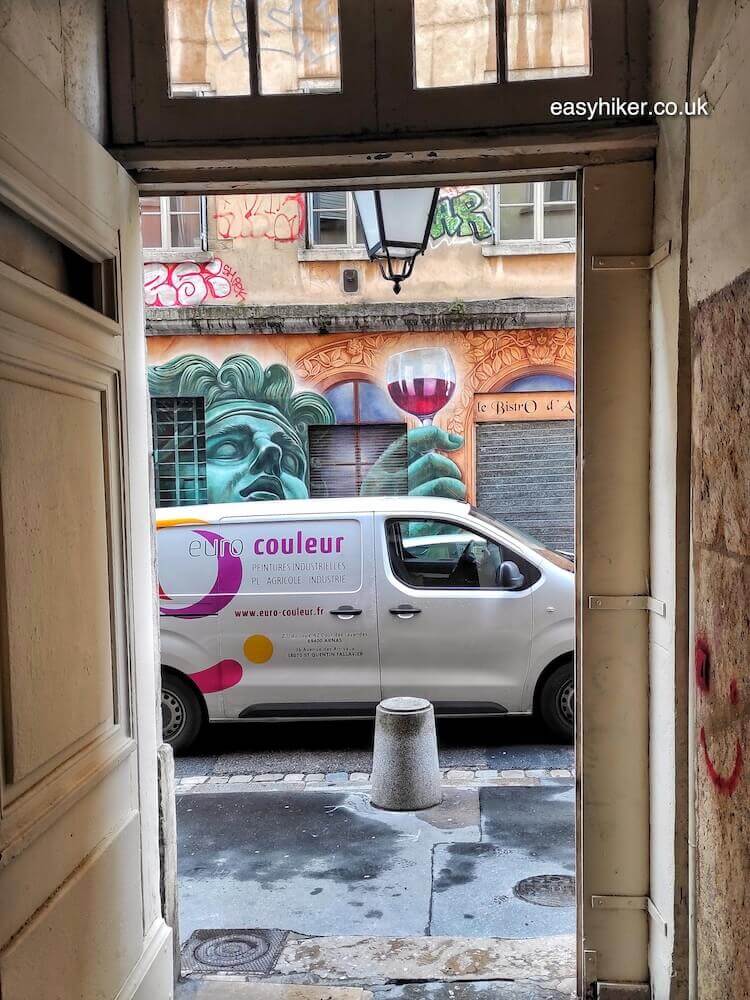
You are now two levels down from the Cours des Voraces, having travelled down the slopes of the Croix-Rousse hill while staying mostly indoors.
One can easily see that the traboules in this neighbourhood – one of the centres of the European silk-weaving industry since the late Middle Ages – came in handy as these indoor passages allowed the silk workers to protect their delicate wares from the vagaries of the local weather while transporting the silk down to the merchant boats.
On Rue des Tables Claudiennes, turn right and then left to cross Place Chardonnet and to descend the stairway on its far side.
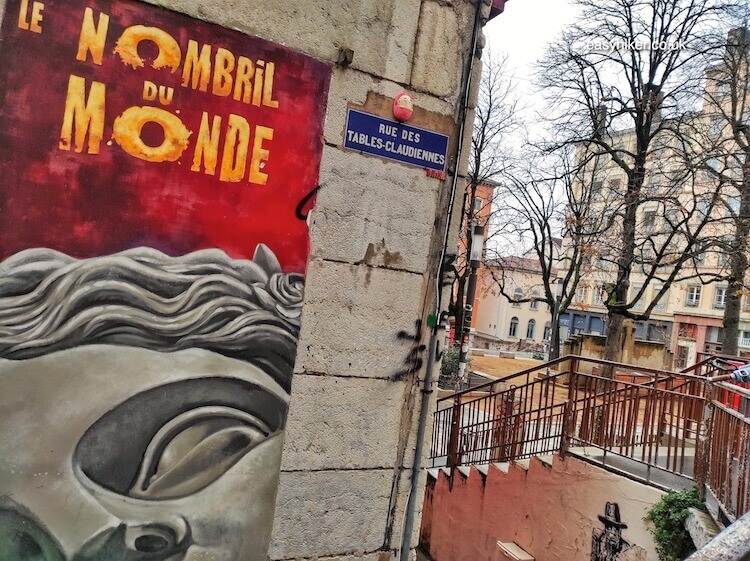
At the bottom of this stairway, turn briefly right to find the Escalier Mermet. This was also a much-travelled section of the silk workers’ downhill trail: when it was not possible to create a covered shortcut through the densely woven urban fabric, steep and direct external passages were the second best option , and this one was the busiest of them all.
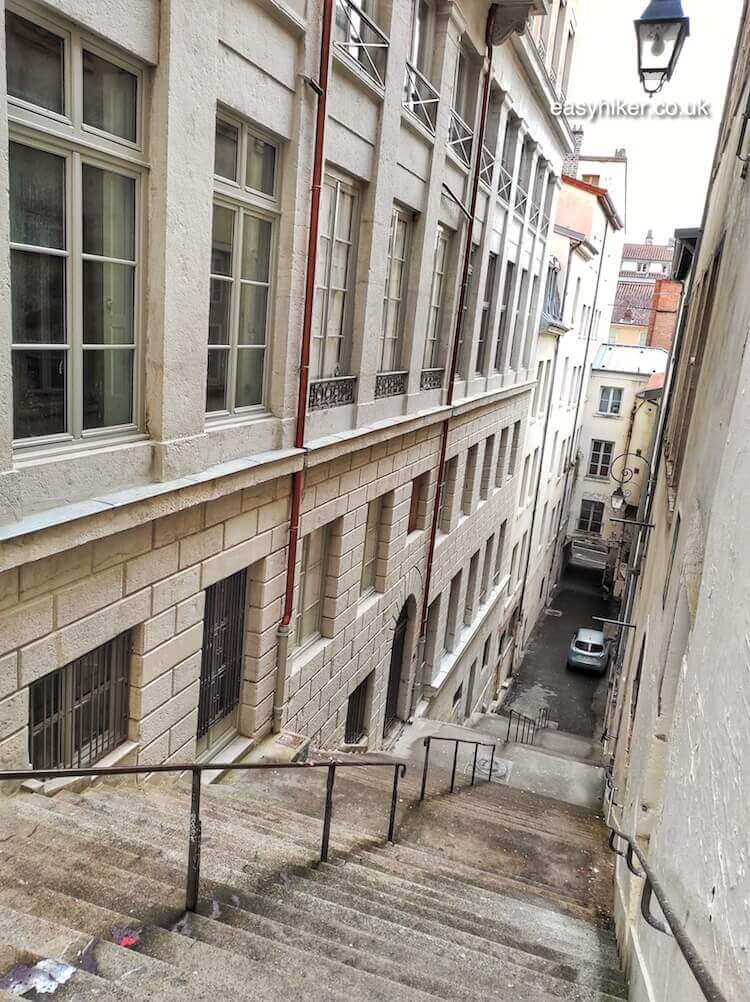
The Passage Mermet may look pretty scenic from the top on Rue Burdeau, but it is even more spectacular to look at from the bottom …
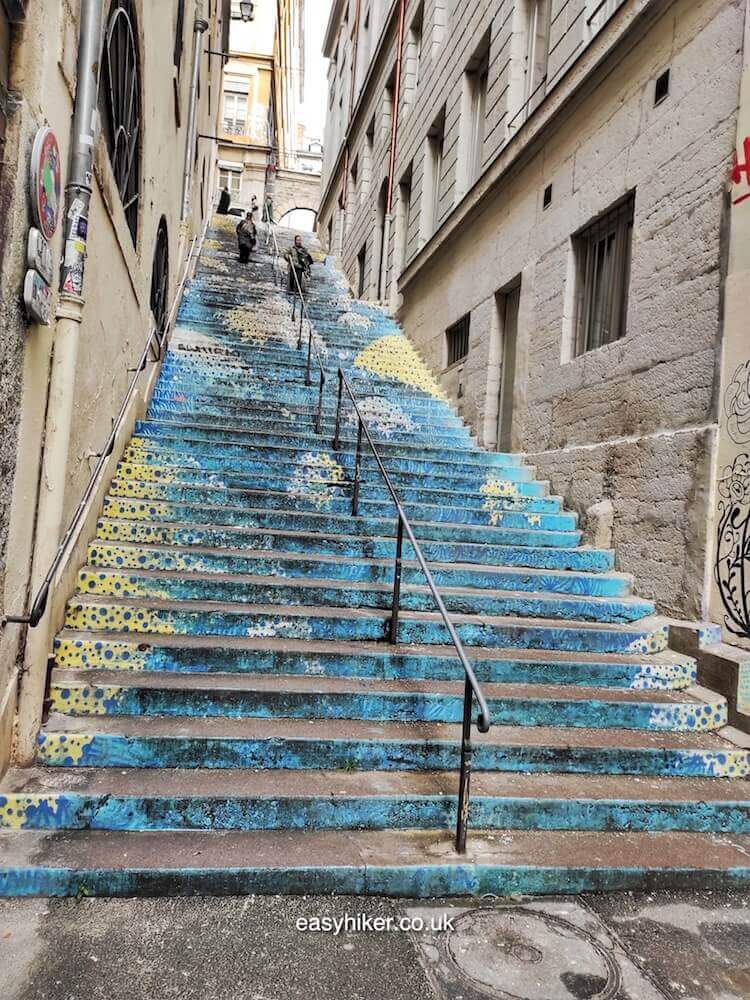
… although the canuts (which is what the silk workers of Lyon were called in the day) never saw the passage in today’s colourful glory: the steps were only painted in 2019.
The agreement between residents’ associations and the local tourism board covers a total of 22 traboules in the Croix-Rousse district (you can find a full list here.)
The Vanupied website suggests two different sightseeing routes (the maps are useful even if you do not speak French).
Alternatively – which is what we did – you can also follow the local Tourism Office’s Parcours des Voraces, a trail that includes many of the area’s traboules.
All three routes lead you to the old town – which is convenient, because from this centrally located part of town, you can easily proceed to visit all the other things that Lyon has to offer.
Or, perhaps, even continue your exploration of the subterranean city by taking a peek at the traboules and courtyards of Vieux Lyon.
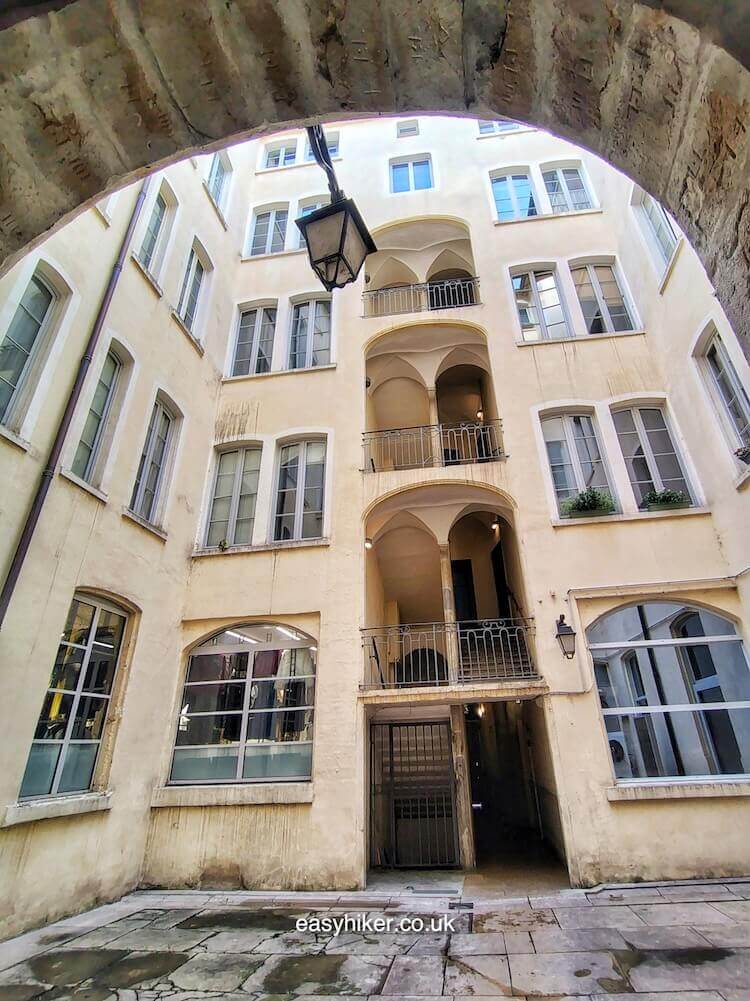
Such a double bill of traboules does not simply mean “more of the same”. It can be a rewarding experience, not only because the Croix-Rousse and the Old Town represent different urban environments: their traboules and courtyards themselves are also different. Both the architectural structures and the interior courtyard decorations on the Croix-Rousse are more modern, more functional, more “airy” in their own way.
Other Mysteries of the Croix-Rousse
The traboules on the hill are also less closely clustered. This is another reason for the “more airy feeling” of the experience: you spend more time outdoors. As a result, you also have more opportunities to discover things – which means, on the hill of Croix-Rousse, above all more baffling things.
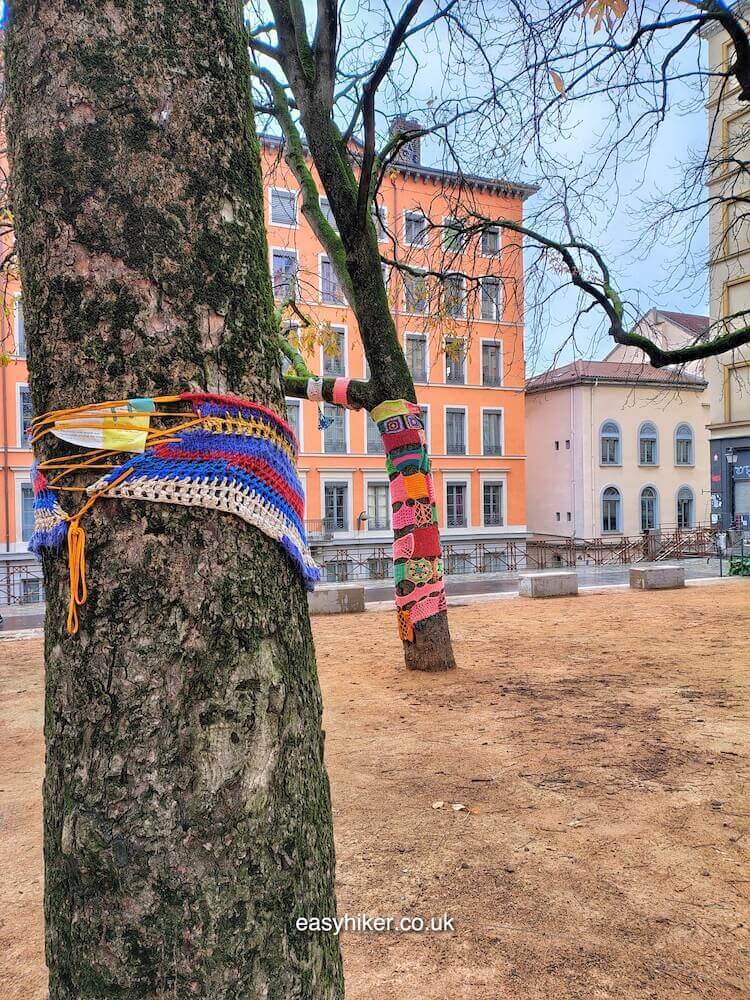
The quarter, after all, is not only a place where buildings are connected by hidden passages: this is also where trees have been dressed up against the cold …
… and where drainpipes are decorated with anthropomorphic flower pots.
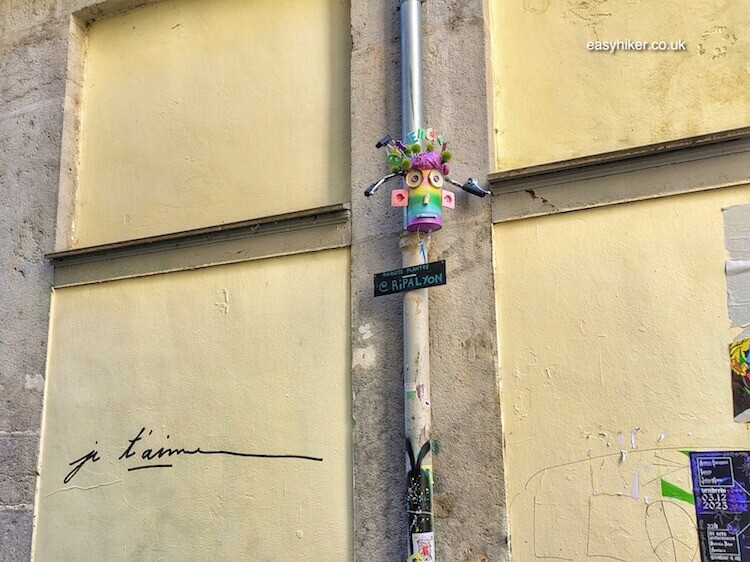
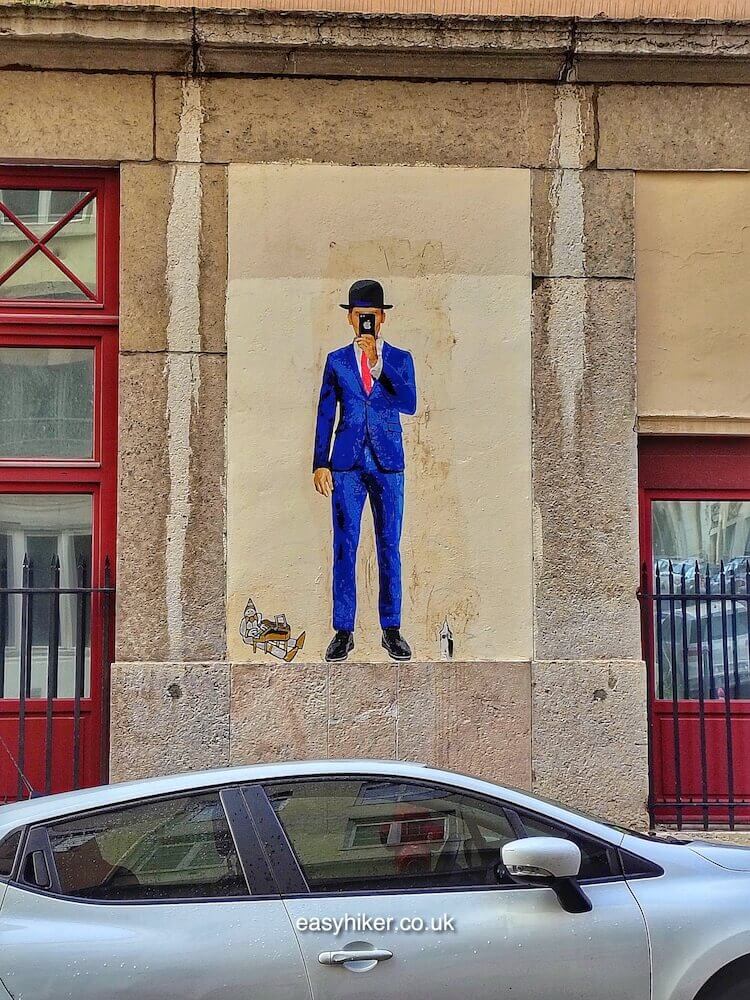
Discoveries such as these only add to a sense of mystery and wonder: a feeling of being surrounded by an every-day surrealism. The city of Lyon clearly contains more – and deeper – puzzles and secrets than its traboules.